

Plot Summary
The Suitcase at the Mill
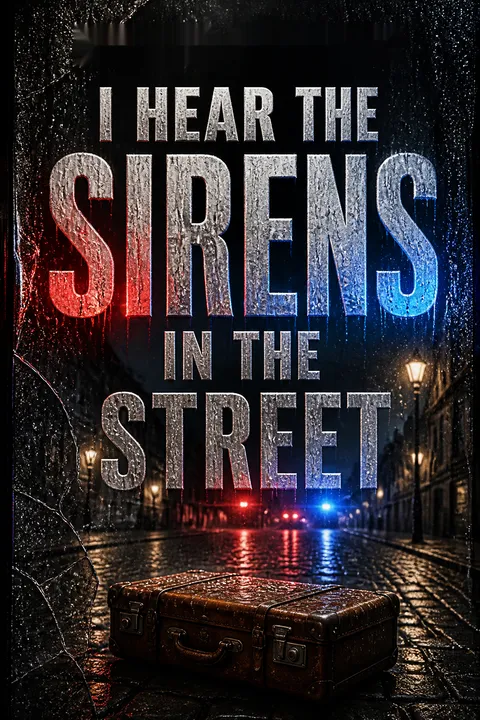
Detective Inspector Sean Duffy and his partner, Detective Constable McCrabban, answer a report of blood at an abandoned factory in north Belfast. After a security guard fires his shotgun at the plain-clothes detectives, they find a trail ending at a rubbish skip. Inside a suitcase lies a naked torso, cut off at the shoulders and knees.
The dead man is fit, deeply tanned, and unlike anyone likely to have been raised in the cold, sunless north. No identification is packed with him, and the body has been frozen, making the time of death uncertain. Duffy suspects a foreign visitor, a possibility that threatens to bring senior officers, diplomats, and political complications into a murder case already difficult to solve.
The body is both evidence and an absence: its missing head and limbs deny Duffy the usual route from victim to identity. In a place where violence has become routine, the elaborate disposal distinguishes this death from the familiar political killings. Duffy’s first task is therefore not simply to find a killer, but to establish whose death can command attention in a society that has learned to ration its concern.
Poison Beneath the Tattoo
Pathologist Laura Cathcart, Duffy’s girlfriend, finds Abrin in the victim’s throat and lungs, pointing to a deliberate poisoning. She also discovers a tattoo whose incomplete wording matches the motto of the American First Infantry Division.
Because freezing has obscured the time of death, her analysis of the victim’s last meal becomes crucial. Duffy wants to celebrate her work, but Laura tells him she has accepted a temporary teaching post in Edinburgh and is leaving almost immediately.
Their relationship has already grown strained, so he lets her go without asking her to stay. Meanwhile, Matty McBride cuts open the suitcase’s plastic address window and recovers a hidden card naming local owner Martin McAlpine. The clue sends Duffy toward a dead man’s household.
Laura’s departure and the victim’s missing identity expose two kinds of uncertainty Duffy cannot solve by force of observation alone. He reads clues professionally while failing to ask plainly what is happening between them. The address card, like the incomplete tattoo, is information almost concealed from view. The case advances through overlooked fragments, while Duffy’s private life stalls through what he chooses not to say.
The Widow's Old Suitcase
At the address, Duffy and Matty meet Emma McAlpine, a young widow whose husband, Martin, was a part-time Ulster Defence Regiment captain. She explains that Martin was shot on their farm and that, after his death, she donated his belongings, including the suitcase, to a Salvation Army shop.
Emma’s grief breaks through when she describes finding Martin alive and choking on his blood. Her account of the attack, however, troubles Duffy: a vicious guard dog did not intervene, and the shooting seems inconsistent with the alleged gunmen’s distance.
Emma says she cannot explain it. Duffy checks the Salvation Army and then examines the original investigation in Larne, where Inspector Dougherty’s thin file contains no useful forensic work. The suitcase link may be incidental, but Martin’s murder now looks poorly examined.
Emma’s grief is not a tidy invitation to sympathy. Her account carries both intimate pain and unanswered factual questions, forcing Duffy to keep compassion separate from proof. The shabby Larne file shows how institutional habit can make an unexplained death appear resolved once the IRA claims it. Duffy’s suspicion is not yet a conclusion, but it challenges the comfort of treating a recognized pattern as a complete explanation.
An American Goes Missing
Laura’s replacement, retired pathologist Dr Hagan, notices that the victim’s last meal was a Chicken Tikka Pot Noodle, first sold in November 1981. The clue narrows the period in which he could have died.
Duffy and his team contact American veterans’ groups and identify William O’Rourke, a Massachusetts widower and former IRS inspector who served with the First Infantry Division in the Second World War. His friends say he travelled to Northern Ireland to explore his Irish roots and had not been heard from since before Christmas.
He was a keen swimmer, fitting the victim’s unusual tan. Duffy’s team now has a name and a likely family, but the manner of death remains disturbing: O’Rourke was poisoned with a toxin so rare that local experts have never seen it used.
A cheap convenience food becomes a clock, turning an apparently useless detail into a boundary on the investigation. The identification of O’Rourke gives the corpse a history: war service, bereavement, and a trip undertaken after losing his wife. That history complicates the case without explaining it. Duffy is beginning to see that the victim’s past may matter, but every answer opens a larger question about what brought him to Northern Ireland.
The Dunmurry Dead End
Duffy reconstructs O’Rourke’s travels through Belfast and the north coast, then finds an unexplained seven-hundred-pound charge from the Dunmurry Country Inn, far above its modest room rate. Chief Inspector Brennan helps secure a search warrant.
The owner, Richard Coulter, is away, but employee Willy McFarlane claims O’Rourke paid extra to obtain Irish currency and produces a bank receipt. Duffy’s team searches the room, checks the garden greenhouse, and finds a discarded pot, but forensic testing reveals only a dead tomato plant.
The American Consulate offers limited cooperation, and its representative seems evasive when asked about the rare poison. With no Abrin, no witnesses, and no clear motive, Duffy’s most promising lead collapses into another locked door.
The investigation is repeatedly diverted by plausible explanations: a currency exchange, a greenhouse, a conspicuous but empty pot. Each is close enough to truth to consume time, yet incomplete enough to protect the people behind the case. Duffy’s impatience with bureaucracy is justified, but his confidence that persistence alone can overcome institutional obstruction is less secure. The dead end is not proof of innocence; it is a measure of how effectively evidence can be made to disappear.
The Verse in the Cemetery
An English-speaking woman calls Duffy and arranges to meet at a cemetery shelter, but stays hidden. He finds her message taped to a bench: a Bible reference that he cannot yet interpret. Returning to watch the graveyard from a neighbour’s window, he spots a woman in dark clothes and chases her between the headstones.
She escapes over a wall on a green trail bike. An army patrol later catches her, and she is taken to Whitehead Police Station under the name Alice Smith.
Before Duffy can interview her, two men claiming to be Special Branch officers remove her without fingerprints, paperwork, or proper identification. Special Branch denies sending them. Duffy is left with a disappearing suspect, an unexplained religious reference, and the suspicion that someone is testing him.
The woman’s clue turns Duffy into the subject of an investigation as much as its investigator. She controls the timing, the setting, and what he is allowed to know, while the false Special Branch pickup shows that ordinary police procedure offers little protection against unseen power. Duffy’s frustration is sharpened by a professional weakness: he treats the encounter as a puzzle to win before he understands what is at stake.
Dougherty's Last Investigation
Inspector Dougherty, the Larne officer who handled Martin McAlpine’s murder, is found shot outside his home. Duffy joins Chief Inspector Tony McIlroy at the scene and challenges the assumption that the IRA carried out an ordinary assassination.
The attackers’ bullets are scattered across a garage door, while Dougherty was shot at close range. Duffy learns that he recently questioned Emma about Martin’s death, then travels to Larne and confirms that Dougherty had asked about the ferry to Islandmagee.
This suggests he intended to return to the McAlpine farm. Duffy and McIlroy go there, where Emma’s formidable brother-in-law, Sir Harry McAlpine, tries to block their questions. The new murder makes Duffy’s doubts about Martin’s case harder to dismiss.
The second killing demonstrates how easily a political explanation can conceal a personal crime. Duffy notices not a spectacular contradiction but small technical irregularities: the shot pattern, the ferry fare, the dead inspector’s recent interest. His attention to procedure becomes a form of resistance to the province’s ready-made stories. Yet by reopening Martin’s death, he also enters a family and political structure far more powerful than the weak case files suggest.
The Salt Mine Witness
Duffy returns to Islandmagee and finds Emma in a disused salt mine beneath her farm, reading in a hidden chamber. She admits Dougherty came to accuse her of concealing something about Martin’s death, but says he was drunk and abusive.
She has no alibi for the night he was killed. Duffy also meets Sir Harry, a proud but financially strained landowner who insists the police have already failed his younger brother. Emma explains that the farm earns little and her income is meagre, weakening an obvious financial motive.
She remains composed under Duffy’s questions, neither pleading nor offering easy reassurance. Duffy leaves without arresting her, still unable to decide whether her calm reflects innocence, discipline, or a life shaped by rules he does not understand.
The salt mine gives Emma a refuge from weather, surveillance, and ordinary life, but it also makes her difficult to read. Her composure unsettles Duffy because it denies him the emotional cues he expects from a suspect or a grieving widow. Harry’s authority over land and access further complicates the interview. The scene makes uncertainty psychological as well as evidentiary: Duffy must confront the limits of his ability to interpret another person.
A Mob at Ambreena's Door
At home, Duffy is summoned by Bobby Cameron, the local UDA commander, to confront a mob outside Ambreena’s house. The East African student has come to Carrickfergus to study business, but unemployed neighbours accuse her of taking local jobs and demand that she leave.
Cameron expects Duffy to persuade her to go. Instead, Duffy sends Ambreena inside and tells the crowd that economic collapse, not one student, is responsible for the town’s lost work.
He draws his revolver when the men threaten to force entry, then keeps talking until a joke breaks the mob’s anger and the crowd disperses. Ambreena later leaves for Cambridge. The episode shows Duffy’s precarious position: he serves a hostile community yet refuses to let its prejudice define the law.
Duffy’s authority is strongest when he uses it to interrupt collective cruelty, but it depends on a fragile blend of force and persuasion. The mob’s grievance is real, its target chosen for convenience. By naming the economic causes behind the anger, Duffy briefly redirects it without pretending he can repair the town. His intervention distinguishes justice from mere order, while revealing how little either can accomplish against structural deprivation.
The Sergeant's Empty Chair
Sergeant Burke dies from a gunshot wound at home; the RUC calls it an accidental discharge, though Duffy and his colleagues suspect suicide. The death exposes the strain beneath the force’s official discipline.
Brennan is passed over for promotion, and Kenny Dalziel, a clerical officer, gets the vacant sergeant’s post instead of McCrabban. Duffy is ordered to stop pursuing O’Rourke’s murder and files it as inactive. After a minor theft investigation takes him beside the UDR base, however, he asks about Martin’s records.
Colonel Clavert reluctantly reveals that Martin managed informers. One, codenamed Woodbine, reported a suspicious man near the DeLorean factory shortly before Martin died. Woodbine is missing, and his name gives Duffy a new route into the case.
The force’s response to Burke’s death mirrors its response to unsolved murder: preserve function, suppress uncomfortable explanation, move on. Duffy’s demotion in influence is compounded by McCrabban’s rejection, while the case is officially buried. Yet the UDR file offers a counterweight to institutional defeat. Information survives in places the police do not routinely share, suggesting that the fragmentation of authority both obstructs justice and leaves unexpected seams for Duffy to find.
Fifteens and a Warning
Duffy brings Emma Martin’s belongings from the UDR base and asks whether her husband mentioned Woodbine or the DeLorean factory. She says he rarely discussed work and recalls nothing. While she prepares traditional fifteens, she mentions making a batch for one of Sir Harry’s American acquaintances.
Later, the mysterious woman calls again and tells Duffy that he has failed to find evidence she expected him to notice. Her accusation irritates him, but it also forces him to reconsider the first cryptic note.
Duffy has no proof Emma is involved in O’Rourke’s death, no proof Woodbine is connected, and no way to identify the caller. Still, her knowledge of the case suggests the missing evidence may be closer than his formal investigation has allowed him to see.
The ordinary domestic scene of baking sits beside an increasingly dangerous network of intelligence, money, and silence. Emma’s hospitality does not dissolve Duffy’s suspicion, but it makes the suspicion costly: he is drawn toward her even as he investigates her family. The caller’s criticism attacks his professional identity, yet it supplies no answer. Her method reproduces the case’s central difficulty, offering just enough information to expose Duffy’s blind spot.
The Factory's Golden Promise
Duffy visits John DeLorean’s Belfast factory to ask why Martin’s informant watched the plant. DeLorean describes industrial espionage as routine and insists the company has few secrets. During the interview, a reported bomb threat forces an evacuation; Duffy stops DeLorean from approaching the van until the Army bomb squad confirms it is harmless.
He drives secretary Gloria back toward Carrickfergus, and their evening together becomes an escape from the pressure around the case. The next morning, Gloria reveals that Sir Harry leased the Dunmurry land to DeLorean at a generous rate and has become his friend.
She also identifies Harry as the source of the American-style sweets she received. The apparent distance between the struggling estate and the factory’s celebrated promise suddenly narrows.
DeLorean’s factory is presented as an economic miracle, but the scene exposes how much of its public meaning rests on confidence and spectacle. Duffy’s insistence on the bomb protocol contrasts with DeLorean’s impatience, while Gloria’s personal connection delivers information no formal interview has produced. The romance offers Duffy temporary relief, yet it also demonstrates how easily intimacy can become a route through which the investigation advances.
Mussels Beneath the Trees
Duffy visits Emma again and accompanies her down to the shore to gather mussels, then through an ancient wood marked by offerings at a so-called fairy tree. She tells him Martin was a born-again Christian who respected her different beliefs, and she describes the estate’s failing farms and Harry’s debts.
They share dinner, ride horses, and spend the night together. Their intimacy makes Duffy more willing to trust Emma, but it does not erase her ties to a family she refuses to discuss freely.
At dawn, someone has smashed the windscreen of Duffy’s car and left a message insulting the police. The threat confirms that his presence on the estate is noticed. He returns to Carrickfergus bruised in spirit, newly attached to Emma, and less certain that affection can be separated from suspicion.
The landscape offers Duffy a rare experience of quiet, but the old tree’s offerings and the estate’s poverty place that quiet inside a history of belief and abandonment. His closeness with Emma is not a resolution of the case; it is a new vulnerability. The vandalized car brings public hostility back into the private encounter, showing that intimacy in this setting cannot remain outside the political and criminal pressures surrounding it.
Behind the Bedroom Mirror
The Bible reference finally makes sense to Duffy when he recalls Alice Smith and the idea of seeing through glass. He returns to McFarlane’s bed and breakfast and moves the dresser in room four.
Behind its mirror he finds O’Rourke’s Massachusetts driver’s licence, five hundred dollars, and a key marked for a Newburyport bank deposit box. Duffy tells no superior, knowing the case would be taken from him if he reported the discovery. He arranges leave, puts McCrabban in charge of the station, and books a flight to Boston.
Before leaving, he calls Emma and promises to see her again. The concealed items prove that O’Rourke expected someone might search his room, and Duffy is now choosing a risky private investigation over the safety of official procedure.
The mirror converts the earlier biblical clue into a method of investigation: Duffy must look behind the official surface, literally and institutionally. His decision to travel without authorization is not pure courage; it is also distrust, pride, and fear that higher authorities will bury the evidence. The hidden money and key suggest O’Rourke anticipated danger, while Duffy’s secrecy makes him increasingly responsible for the consequences of what he finds.
O'Rourke's Locked Box
In Newburyport, Duffy finds O’Rourke’s house cleared and his greenhouse empty. He opens the bank box and discovers photographs of DeLorean meeting three unidentified men. Before he can investigate further, men posing as police seize him, beat him, force alcohol on him, and stage a car crash.
A passing emergency worker pulls him from the burning vehicle. At the hospital, FBI agent Ian Howell admits O’Rourke was a Treasury agent investigating DeLorean, but says the FBI and Treasury had pursued the same problem without coordinating.
Howell does not know who killed O’Rourke and wants Duffy’s investigation suspended. He also reveals that O’Rourke grew rosary pea plants in Florida. The attack proves Duffy has crossed into a covert operation, but neither the photographs nor the federal agents explain the murder.
The American journey turns the local mystery into a conflict between agencies that possess power but not shared knowledge. Duffy is physically punished for discovering evidence, while the government’s apology and travel arrangements attempt to convert coercion into administrative tidiness. The revelation that O’Rourke was a Treasury investigator reframes his visit, but does not solve his death. Institutional secrecy has produced the same ignorance it was meant to control.
Skin in the Freezer
Back in Islandmagee, Duffy delivers stolen steaks to Emma and finds a patch of tattooed skin in Harry’s locked freezer, matching O’Rourke’s missing motto. Harry admits he and Martin abducted O’Rourke to learn what he knew about DeLorean’s covert drug shipment.
O’Rourke died by suicide in the salt mine, using Abrin he had prepared himself. Emma then confirms that Martin planned to report the scheme and that Harry killed him; she also says Harry killed Dougherty. Refusing to testify, she stays as Harry’s armed tenants surround the farmhouse.
Duffy and Emma return fire, but attackers throw petrol bombs onto the thatch. Harry sends a burning Bentley toward the house, and it explodes against the oil tank. Emma dies in the blast. Duffy survives, while the badly injured Harry is left behind.
The freezer skin converts conjecture into physical evidence, but the truth arrives too late to rescue anyone. O’Rourke’s suicide, Martin’s conscience, Emma’s loyalty, and Harry’s ambition form a chain in which each person’s attempt to control danger produces another death. Duffy’s attraction to Emma has not made him her savior; she chooses her own allegiance. The explosion collapses the private world that concealed the conspiracy, leaving justice entangled with irreversible loss.
Stripped of the Badge
After the explosion, Special Branch and American officials press Duffy to keep quiet about DeLorean and the O’Rourke investigation. The official account describes an accidental fire, and the press briefly casts Duffy as a hero before the United States releases details of his staged-looking drunk-driving arrest.
An internal tribunal cites his disobedience, unauthorized investigation, and conduct abroad. Duffy expects a reprimand, but the panel demotes him to an ordinary sergeant and removes him from CID.
He returns home, tears off his uniform, and considers resigning. The woman who sent the cryptic clues calls once more, explaining that powerful interests have reasons to leave him alive. Duffy writes a resignation letter, walks it to the postbox, then keeps it in his pocket rather than sending it.
Duffy’s punishment shows that solving a crime and securing justice are not the same achievement. He has exposed the hidden chain of events, but the state can still control the public account and discipline the officer who refuses its boundaries. His unsent resignation matters because it leaves his future unresolved: defiance has cost him a profession, yet he has not surrendered the identity he built through the work.
Epilogue
On a later foot patrol through Belfast, Duffy watches soldiers leave digestive biscuits at Bobby Sands’s grave, a gesture he finds too callous to join. At home, the power fails, and Radio Albania fills the dark with distant news.
By morning, television reports that DeLorean has been arrested in an FBI cocaine-smuggling sting. His Belfast factory shuts down, and thousands of workers lose their jobs. Duffy’s case has ended, but the economic promise that helped protect the scheme collapses with it, leaving the city no safer and no more prosperous.
The epilogue widens the story from one murder to the machinery of public consequence. The biscuits at Sands’s grave make political memory look both theatrical and cruel, while the blackout links private life to a city whose infrastructure can be severed overnight. DeLorean’s arrest confirms the criminal scheme but offers no consolation: the factory closes, and ordinary workers bear the cost of a venture they were asked to treat as salvation. Duffy’s knowledge arrives without power to repair what follows.
Analysis
The novel’s central problem is not a lack of evidence but the way evidence is divided, misread, and politically managed. Duffy has to work across institutions that do not share information: the RUC, the UDR, the American Consulate, the FBI, and the Treasury. Their separation produces blind spots that protect the powerful and strand the people closest to the violence. Even the IRA’s claims function less as reliable statements than as scripts that can be borrowed to make private killings look inevitable.
The book also examines the unequal value of lives. O’Rourke’s American citizenship draws diplomatic attention, while Martin’s death is filed as another predictable paramilitary attack. Ambreena is treated as a threat by neighbours who have lost their jobs to decisions made far beyond her control. The DeLorean factory, meanwhile, is granted symbolic importance as a promise of economic rescue, making scrutiny politically inconvenient. When that promise collapses, the workers who depended on it absorb the loss.
Duffy’s methods are both his strength and his danger. He notices the odd detail others dismiss, but he also trusts his own persistence enough to keep colleagues uninformed and to cross boundaries without protection. His relationship with Emma intensifies that conflict: affection offers him a glimpse of life beyond police work, but it cannot make her choices legible or undo the loyalties that govern her world. The ending refuses the consolations of a clean solution. Duffy learns what happened, yet the people responsible are not brought safely to justice, the woman he cares for is lost, and the institution punishes his disobedience more visibly than it confronts the forces that shaped the crime. Knowing the truth becomes an achievement, not a victory.
Review Summary
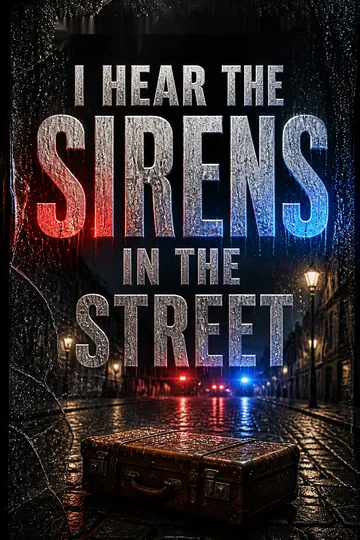
I Hear the Sirens in the Street is the second book in McKinty's Sean Duffy series, set in 1982 Northern Ireland during the Troubles. Readers praise the atmospheric setting, compelling protagonist, and well-crafted plot involving a torso found in a suitcase. The novel blends dark humor, gritty realism, and historical context. While some found certain plot elements implausible, most reviewers enjoyed the book's pacing, characterization, and depiction of the era. Many commend McKinty's writing style and plan to continue the series.
People Also Read

Characters
Sean Duffy
The stubborn Catholic detectiveDuffy is a Catholic detective inspector in the predominantly Protestant RUC, a position that makes him both an outsider and an insider in a divided society. He is observant, intellectually restless, and armed with a sardonic humour that helps him endure violence, bureaucracy, and loneliness. He trusts physical details more than official explanations, but his confidence can turn into stubbornness, and his instinct to act alone puts colleagues at risk of being left outside decisions that affect them. He wants to do useful work in a place many people are desperate to escape, even as he questions his own judgement and emotional maturity. His investigations repeatedly test whether personal loyalty and professional duty can coexist.
Emma McAlpine
The guarded Islandmagee widowEmma is a young widow with a history degree, a small farm, and a fierce attachment to the land where she grew up. She is intelligent, self-contained, and capable of practical work that Duffy’s urban assumptions initially obscure. Her husband Martin’s death has left her financially precarious and socially isolated, while her connection to the powerful McAlpine family complicates her independence. Emma values loyalty and personal privacy, and she resists being reduced to either a grieving victim or a suspect. Her interest in history, folklore, and the natural world gives her a private vocabulary that does not always align with Duffy’s evidence-driven worldview.
Sir Harry McAlpine
The embattled landed heirHarry is the baronet who owns the Islandmagee estate and the elder brother of Martin McAlpine. His title suggests inherited power, but the estate is burdened by debt, taxes, and land that produces little income. He is proud of his family’s history and protective of its privacy, yet he understands how to use political connections and personal authority. Harry’s relationship with Emma is shaped by both family obligation and the landlord’s power over her home. He presents himself as a practical custodian of a fading inheritance, a man whose ambitions and anxieties are difficult for outsiders to measure.
McCrabban
Duffy’s wary partnerDetective Constable McCrabban is Duffy’s colleague and closest professional partner, a new father and a Presbyterian with strong religious convictions. He is methodical, loyal, and often more cautious about procedure than Duffy, which allows him to see risks his superior prefers to ignore. His dry humour and steady presence temper Duffy’s impulsiveness, though rank keeps him from openly challenging every decision. McCrabban wants advancement and security for his family, but his sense of duty keeps pulling him into investigations that offer neither. Their partnership is built on trust, teasing, and the difficult boundary between friendship and command.
Matty McBride
The forensic-minded sidekickMatty is Duffy’s younger detective colleague, a forensic officer whose irreverence and complaints conceal real investigative skill. He notices the hidden address card inside the suitcase and often punctures Duffy’s self-seriousness with blunt practical observations. He likes fishing, music, and avoiding unnecessary danger, but he is capable of sustained work when a case demands it. His mix of competence and comic self-interest makes him a useful counterweight to Duffy’s appetite for risk.
Laura Cathcart
The departing pathologistLaura is the pathologist who examines O’Rourke’s remains and Duffy’s girlfriend. She is skilled, meticulous, and emotionally private, with a professional life that gives her a route beyond Northern Ireland’s violence. Duffy wants certainty about their relationship, but Laura does not make his uncertainty easy to resolve. Her work supplies essential forensic facts, while her decision to seek a temporary post elsewhere reflects a desire for intellectual and personal space.
William O’Rourke
The missing American veteranO’Rourke is a Massachusetts widower, former IRS inspector, keen swimmer, and decorated veteran of the First Infantry Division. His friends remember a courteous man who carried his grief quietly after his wife died. He travels to Ireland to explore his family roots, appearing at first to be an ordinary older tourist. His military past and government work suggest a disciplined, private character, but the people around him know little about the purposes he keeps to himself.
John DeLorean
The factory's magnetic founderDeLorean is the celebrated American automobile executive whose factory promises jobs and renewed industry in Belfast. Handsome, persuasive, and fiercely confident, he presents himself as a visionary capable of reshaping car manufacturing. His public importance gives him leverage with officials desperate for investment, while his ambition makes him impatient with caution and criticism. Duffy encounters him as both a powerful businessman and a man whose operation attracts unusual attention.
Chief Inspector Brennan
Duffy's weary superiorBrennan runs Carrickfergus RUC and manages a station under constant pressure from political violence, staff shortages, and career politics. He is blustery, funny, and often more perceptive than his complaints suggest. He gives Duffy room to work but worries about the consequences when the investigation reaches people with influence. His own private strains remain mostly hidden behind the routines of command.
Tony McIlroy
The ambitious assassination detectiveMcIlroy is a Special Branch detective and Duffy’s former colleague, polished, intelligent, and professionally ambitious. He treats attacks on police officers as a distinct investigative priority and has access to resources Duffy lacks. Their friendship allows frank disagreement, but McIlroy is more cautious about pursuing a theory without institutional support. He represents a path toward advancement that Duffy respects without wanting to follow.
The anonymous caller
The cryptic investigatorThe English-speaking woman who contacts Duffy offers clues while withholding her identity and motives. She is controlled, patient, and confident enough to judge Duffy’s abilities from a distance. Rather than hand over evidence, she tries to make him discover it himself. Her methods blur the line between assistance and manipulation, leaving Duffy uncertain whether she is a student, a journalist, an intelligence operative, or something else.
Ambreena
The student under threatAmbreena is an East African student at the University of Ulster studying business administration. She is far from her family and raising a young boy while her husband remains in Uganda. Her education and plans make her a target for neighbours who blame immigrants for the town’s unemployment. She meets Duffy during a frightening confrontation and represents a civilian life caught between economic hardship and local prejudice.
Martin McAlpine
The murdered UDR captainMartin is Emma’s husband and Harry’s younger brother, a part-time UDR captain who also handles intelligence and informers. He is remembered as intelligent, religious, and committed to his responsibilities. His relationship with Emma is described as respectful, even where their beliefs differ. His position inside the security forces connects the rural family to the wider conflict and makes his unexplained death consequential beyond the farm.
Bobby Cameron
The local UDA commanderCameron commands the local UDA and carries influence over Duffy’s neighbourhood. He is pragmatic, socially perceptive, and capable of acting as both a threat and a broker. Duffy owes him a personal debt, but their relationship remains shaped by unequal power and opposing ideas of authority. Cameron often understands a crowd’s mood well enough to redirect it, though his interests remain tied to paramilitary control.
Inspector Dougherty
The careless Larne investigatorDougherty is the Larne detective who originally investigates Martin McAlpine’s murder. Older, isolated, and worn down by drink, he represents a neglected corner of police work where routine can replace scrutiny. His thin case file becomes an important measure of what the authorities failed to examine.
Willy McFarlane
The evasive innkeeperMcFarlane works at the Dunmurry Country Inn, where O’Rourke stayed shortly before disappearing. A shifty former criminal with a taste for bluff, he provides a plausible account of the unusual charge on O’Rourke’s bill. His evasiveness keeps Duffy focused on the inn even when its visible evidence appears to lead nowhere.
Plot Devices
Abrin and rosary pea
A poison with a trailAbrin, derived from the rare rosary pea, identifies the method used on O’Rourke and gives Duffy a botanical trail to pursue. Its absence from local gardens makes the poison seem to point toward a specialist or an outsider. Later information links the plant to O’Rourke’s own horticultural knowledge, turning a presumed clue to the killer into evidence of his preparation and state of mind.
The hidden address and mirror
Evidence concealed in plain sightA sliver of address card hidden in the suitcase leads Duffy to Martin McAlpine’s widow. Much later, the biblical clue about seeing through glass sends him back to the Dunmurry inn, where a mirror hides O’Rourke’s licence, cash, and bank key. Both discoveries reward patient physical inspection, while the delayed payoff exposes how easily an investigation can overlook what is present but obscured.
The IRA code words
Violence disguised as politicsRecognized IRA claims make several killings appear to belong to the ongoing conflict. Duffy notices that a code word can be copied or misused, and that a political signature can divert investigators from personal motives. The device connects the murder of Martin McAlpine and the killing of Inspector Dougherty to the novel’s wider question of how readily both police and public accept a familiar explanation.
The First Corinthians note
A test of Duffy's sightThe anonymous woman leaves Duffy a reference to a passage about seeing through glass. He first treats the message as a cryptic provocation, then recognizes its connection to the mirror in O’Rourke’s room. The clue draws him toward evidence that official searches missed, while the caller’s refusal to explain herself keeps the distinction between help and manipulation unresolved.
Detective Sean Duffy Series

About the Author


Download PDF
Download EPUB
.epub digital book format is ideal for reading ebooks on phones, tablets, and e-readers.








