

Plot Summary
Prologue
Thirty-eight IRA prisoners seize hostages and escape from the Maze prison in 1983. Among them is Dermot McCann, an explosives expert who once shared a Derry schoolroom with police detective Sean Duffy.
After reaching Libya, Dermot is imprisoned by Gaddafi’s regime and fills a journal with memories and political thought. By the time the authorities release him, the old schoolmate has become a trained militant again, and Duffy senses that their paths will cross.
The opening sets personal memory against political machinery. Dermot is not introduced as a faceless terrorist but as the brilliant schoolboy Duffy once knew, which makes the coming pursuit intimate before it becomes operational. His journal also establishes a central tension: solitude can sharpen a person’s mind without making his convictions humane. The escape begins the plot, but its deeper work is to bind Duffy’s private history to a conflict neither man can simply leave behind.
The Force Turns on Duffy
A year after a damaging DeLorean investigation cost him his detective rank, Duffy is accused of striking a young man with a police Land Rover. He was riding in the back while his colleague Jimmy McFaul drove, but McFaul gives Internal Affairs a different account. The investigators threaten dismissal without pension unless Duffy accepts responsibility and resigns.
Believing the inquiry is fixed, he signs the prepared confession and leaves the RUC. With the work that organized his life gone, Duffy drinks heavily, neglects himself, and drifts toward suicide. His service revolver remains close, but so does the memory that he once killed a man. When MI5 agents arrive, they find a former detective with little left to protect.
Duffy’s removal is more than a career setback. The force makes him absorb blame for an incident he did not cause, exposing how institutions preserve themselves by sacrificing inconvenient individuals. His resignation then strips away the role that has contained his anger and given his days structure. The near-suicidal period is not presented as a clean descent or a sudden revelation; it is a daily erosion of appetite, self-respect, and purpose. MI5 can recruit him precisely because the institution has first made him vulnerable.
MI5 Restores the Detective
Kate Prentice and her colleague Tom ask Duffy to find Dermot, arguing that his school connection gives him an advantage over the police and intelligence services already searching. Duffy bargains for full restoration, back pay, a chosen posting, and an apology from Margaret Thatcher. He receives only a temporary return as a detective inspector, conditional on obeying the RUC and satisfying MI5.
He accepts anyway. The service gives him Dermot’s prison journal and a family dossier; a scratched-out drawing of Dermot’s ex-wife, Annie, points Duffy toward her and the women around the fugitive. He settles into Carrickfergus with former colleagues John McCrabban and Matty McBride, glad to investigate again, though he now answers to two masters.
The bargain restores Duffy’s vocation while withholding the security that vocation ought to provide. His badge is both a second chance and a leash: the RUC can still dismiss him, while MI5 can judge whether he is useful. The journal’s small drawing offers a more human route into Dermot’s world than surveillance reports can provide. Duffy’s instinct to read relationships is real investigative skill, but it also draws him toward old loyalties that may distort his judgment.
Derry Offers No Answers
In Derry, Dermot’s mother Maureen and sister Fiona refuse to help, while his uncle Jonty denies knowing where he is and threatens Duffy with a gun. The family has been displaced by feuding factions and the rise of drug dealers; Dermot’s sister Orla has vanished into the heroin trade. Duffy finds her in pimp Poppy Devlin’s off-license, beats Devlin’s enforcer, takes Orla out, and burns the premises to destroy the heroin supply.
He threatens Devlin into leaving Ireland, gives Orla’s family money and drugs to manage withdrawal, and returns her to Maureen and Fiona. They still refuse to reveal Dermot’s whereabouts. The rescue is an act of loyalty to people who reject his badge, not a successful intelligence operation.
Duffy’s intervention separates personal responsibility from institutional duty. He cannot make the McCanns trust the RUC, and he does not pretend that rescuing Orla will buy their cooperation. Instead, he acts because the family’s vulnerability is immediate and concrete. The scene also shows the political vacuum left by Dermot’s absence: the old paramilitary order has lost ground to dealers who control bodies through addiction rather than ideology. Duffy’s rough methods help one person, but they do not restore the world around her.
Mary’s Deadly Bargain
Mary Fitzpatrick, Annie’s mother, summons Duffy privately and reveals that her youngest daughter Lizzie died in the family pub four years earlier. The doors were locked and bolted from within, the windows barred, and a broken bulb lay in Lizzie’s hand, so police treated the death as an accident. Mary believes someone murdered her and asks Duffy to identify the killer.
In exchange, she promises to give him Dermot’s location. The arrangement changes the investigation: Duffy’s assigned search for an IRA fugitive now depends on reopening a case with no clear crime scene, no proven motive, and a grieving mother who will accept nothing short of certainty. Mary insists that Duffy keep Dermot out of the conversation with her family.
Mary turns grief into leverage, but her bargain is not merely transactional. She wants the law to do what the original investigation failed to do: recognize that her daughter may have been killed. Duffy must therefore serve two incompatible demands, the state’s pursuit of Dermot and a mother’s demand for truth. The locked pub gives the case its formal puzzle, yet the emotional force comes from Mary’s refusal to let an official label settle what happened. Her certainty may be insight, or it may be grief made immovable.
The Pub Defies Entry
Duffy reviews the original investigation with Chief Inspector Beggs, who maintains that Lizzie slipped while changing a bulb. Dr. Kent, the pathologist, believes a blunt blow and a forceful twist broke her neck.
Duffy examines the Henry Joy McCracken with Annie: the barred windows are secure, the cellar and roof offer no exit, and both doors carry heavy bolts that cannot be shifted from outside. Beggs’s search found no one hiding inside.
Duffy asks his former partner Laura, now a pathologist in Aberdeen, to assess Kent’s notes; she considers murder somewhat more likely than accident but cannot rule out a fall. Each physical test closes off an easy explanation, leaving Duffy with a sealed room and evidence that refuses to settle the question.
The room’s physical certainty intensifies the case’s moral uncertainty. Every ordinary route is inspected and rejected, yet the experts cannot convert suspicion into proof. The competing opinions also reveal different professional limits: Beggs privileges what the scene permits, Kent trusts his reading of the body, and Laura assigns probabilities without claiming certainty. Duffy’s investigation depends on holding these incompatible forms of knowledge together. The mystery is not solved by rejecting evidence, but by noticing that a true detail may have been arranged to misdirect.
The Fishermen Reappear
Duffy and McCrabban interview the three Belfast men who drank with Lizzie before closing: historian Arnold Yeats, chef Barry Connor, and political fixer Lee McPhail. Their accounts agree that they left around eleven, though McPhail discouraged the others from speaking to police.
Duffy later questions Lizzie’s boyfriend Harper McCullough, now married to Jane, and learns of a recent break-in at the law office where Lizzie worked. Harper’s grief appears genuine, and he remains convinced she was murdered.
Meanwhile, Annie tells Duffy she loved Harper before Lizzie did and had a brief affair with him after Lizzie’s death. Duffy and Annie sleep together, but she ends the encounter and decides to move to Canada. Their intimacy brings no lead, only a sharper sense of what the Troubles have cost her.
The interviews make intimacy an unreliable measure of truth. Harper’s visible grief seems to support his innocence, while McPhail’s distrust of police makes an ordinary omission look suspicious. Annie’s confession further complicates Duffy’s role: he is not a detached examiner of the Fitzpatrick family, but a man implicated in its old attachments. Their encounter offers consolation without repair. Annie’s plan to leave for Canada is an attempt to imagine a life not organized around Dermot, Lizzie, or the political claims made upon her.
Carrickfergus Takes a Hit
The IRA’s long-promised bombing campaign begins with coordinated attacks on police stations and army bases. Mortars strike Carrickfergus RUC; Duffy is injured, and Detective Constable Matty McBride and reserve officer Heather McClusky are killed.
Duffy misses Matty’s funeral at first, then leaves hospital against medical advice to attend. In the weeks afterward he recovers at home while the attacks continue and the Lizzie case stalls. McCrabban later finds that Connor once learned to pick locks as a teenager, but Connor denies knowing how to escape the pub.
Lee then tells Duffy that the burglars blamed for the law-office break-in did not commit it. That correction gives Duffy reason to revisit a theft everyone else had treated as petty and solved.
The bombing makes the political conflict physically immediate for Duffy: the institution that reinstated him is also a workplace where colleagues die. Matty’s death turns friendship into a measure of the cost of service, while Duffy’s recovery exposes the limits of his private stamina. The case resumes not through a flash of genius but through a colleague’s patient research and an informant’s reluctant correction. In this novel, investigative progress often comes after grief, delay, and the willingness to reopen a detail already filed away.
The Missing McCullough Will
Duffy questions Harry Wright, the solicitor who took over the office where Lizzie had clerked. Wright admits that the December break-in destroyed a cabinet and removed a file of wills, including the one made for Harper’s father, Tommy.
Lizzie had witnessed that will, and Harper declined Wright’s offer to replace it. Duffy checks the old account book, then Tommy’s medical records: the recovering stroke patient died thirteen days after Lizzie, officially of pneumonia, though the evidence raises questions. The will would have left Harper little of his father’s estate.
Duffy also realizes that the killer could have left the pub through the back door and returned during the confusion after police broke in, sliding the bolt across from inside. The apparent impossibility depended on no one noticing that brief return.
The missing will transforms the case from an abstract locked-room puzzle into a problem of inheritance, trust, and opportunity. The burglary matters because it removes not just a document but the only surviving witness to its contents. The solution to the bolt is deliberately mundane: the room was not impossible to enter, only misread in time. That modest mechanism reflects the novel’s suspicion of grand explanations. A crime can look supernatural when investigators assume that everyone’s movements have already been accounted for.
Harper Gives It Away
Duffy confronts Harper with the will’s record and the timeline. Harper admits that Lizzie helped plan the theft, believing it would let them inherit his father’s wealth; Harper, already drawn to Jane, feared Lizzie could expose him if he killed his recovering father.
He says he struck Lizzie with a rolling pin, snapped her neck, staged the broken bulb, and later bolted the back door while the police gathered around the body. Duffy has no court-ready evidence, but records Harper’s admission.
He gives the tape to Mary and urges her to consider the cost of revenge. Mary keeps her promise: she directs him to a cottage in Tongham, Sussex, where Dermot may appear. Annie, meanwhile, is preparing to leave for Canada, and Duffy understands that his work may end with both women beyond his reach.
Harper’s confession exposes the distance between emotional appearance and moral action. His grief may have been real, but it did not prevent him from killing Lizzie or from using grief as cover. Duffy’s method is ethically compromised: he threatens Harper to obtain truth he cannot prove in court. Mary’s exchange then transfers the question of justice to her, where revenge remains possible but not inevitable. Duffy’s warning acknowledges that solving a crime does not restore its victims or erase the choices made in response.
Dermot Reaches Tongham
Duffy joins MI5 surveillance at the Sussex cottage. Though the first search finds it empty and the information seems stale, he persuades Kate to keep watchers there. Dermot arrives with an armed accomplice, kills two officers in the observation van, and takes Duffy hostage. At the cottage, Dermot reveals that his team plans to assassinate Thatcher, but he gives Duffy a false detonation time.
When Dermot and his accomplice prepare to kill him, Duffy attacks, shoots Dermot in the stomach, and kills the fleeing accomplice. Dermot dies only after Duffy shoots him again. Before escaping in their car, Duffy learns enough to warn MI5 that a bomb is planted at the Grand Hotel in Brighton, where the Conservative Party conference is underway.
The confrontation forces Duffy to face the difference between arrest and survival. He wants Dermot alive, both as a suspect and as a source, but the ambush turns the pursuit into immediate violence. Their shared past cannot restrain Dermot’s political purpose, and Duffy’s own actions cross the boundary between stopping an attacker and executing a wounded man. The false time is another act of intimate manipulation: Dermot knows Duffy well enough to make his need to save lives part of the trap.
The Long War Remains
Duffy races to Brighton and reaches the Grand Hotel’s sixth floor just as Dermot’s Semtex bomb explodes. Five people die, and Duffy and Tom are badly injured; Thatcher survives because her security team quietly moved her after Duffy’s warning. In hospital, she promises that Duffy’s restored career is secure, while Kate reveals that the service kept his role secret.
Later, Kate describes a long British withdrawal from Ireland as a managed retreat, but her forecast offers Duffy no comfort. At the Giant’s Causeway, he considers escaping to Scotland. On the Rathlin ferry, he reads that Harper has been shot dead by masked men. Duffy steps ashore rather than boarding for Britain, choosing to return to the work and danger he had hoped to leave.
Survival here is not a clean reward. Duffy saves the prime minister but cannot prevent five deaths, and the state’s gratitude arrives wrapped in secrecy and political calculation. Kate’s strategic vision reduces decades of violence to a managed transition, yet Duffy has experienced its costs at the scale of a friend, a colleague, and a body under rubble. The ferry’s alternative route makes his final choice concrete. He stays not because he believes the conflict will soon end, but because departure has not dissolved his obligations.
Analysis
The novel binds two mysteries together without making either a simple allegory for the other. Lizzie’s death is a private crime whose solution depends on money, trust, and a small gap in a supposedly complete police timeline. The Brighton bombing is political violence operating at a national scale, yet it also turns on personal knowledge: Dermot understands how Duffy thinks and uses that understanding against him. In both cases, the decisive error is not lack of intelligence but confidence in an incomplete account.
Duffy’s divided loyalties give the investigation its moral pressure. He serves a police force that has mistreated him, works for an intelligence service that conceals its methods, and pursues a childhood friend who has become a mass-casualty threat. His actions do not resolve these contradictions. He saves Thatcher while failing to prevent civilian deaths, identifies Lizzie’s killer without securing a lawful prosecution, and warns Mary against revenge without controlling what follows. The book refuses the comforting equation of correct deduction with justice.
Its treatment of women sharpens that refusal. Mary insists that Lizzie’s life cannot be dismissed as an accident, Annie tries to imagine a future beyond the men and causes that have defined her, and Kate translates political history into a long strategy in which individual suffering is absorbed by national arithmetic. Each woman possesses a different kind of knowledge, but none has complete power over what that knowledge can change.
The ending leaves Duffy neither redeemed nor defeated. He could leave Ireland, and he knows the state has used him, yet he returns to the place that continues to claim his attention. His choice is less a patriotic commitment than an admission that understanding a violent world does not automatically free a person from it.
Review Summary
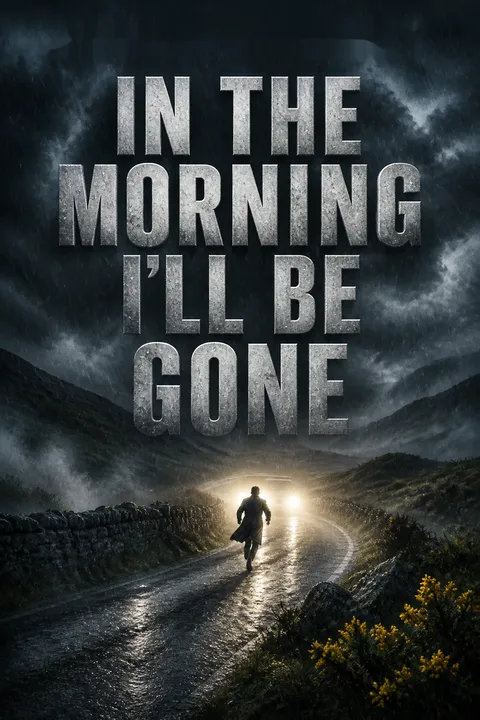
In the Morning I'll be Gone is the highly praised third installment in Adrian McKinty's Sean Duffy series. Set in 1980s Northern Ireland during the Troubles, it follows Detective Duffy as he investigates an IRA prison break and a cold case murder. Readers appreciate the book's atmospheric setting, witty dialogue, and clever plot twists. Many consider it the best in the series, praising McKinty's writing style and character development. The novel skillfully blends historical events with fiction, creating a compelling and authentic portrayal of the era.
People Also Read

Characters
Sean Duffy
The compromised detectiveA Catholic RUC detective in a force and society divided by sectarian suspicion, Duffy relies on observation, stubbornness, and a sardonic humor that often conceals hurt. He wants to solve crimes and restore order, but his career has taught him that institutions can punish honesty as readily as wrongdoing. His relationships with Dermot and the McCann family make his investigations personal, while his dependence on alcohol and tendency toward self-neglect reveal how much the work costs him. Duffy is not a detached genius: he needs colleagues, luck, and time to see what is in front of him. His defining struggle is to remain a policeman without pretending that the state he serves is innocent.
Dermot McCann
The fugitive bomb-makerDuffy’s former schoolmate, Dermot is intelligent, charismatic, politically committed, and skilled at turning patience into strategy. As a young man he seemed destined for academic or public life, but the violence in Derry drew him toward the IRA. He has a gift for holding an audience and for making his decisions sound like historical necessity. That confidence can shade into vanity: he expects others to recognize both his intellect and his importance. His connection to Duffy is charged by old admiration and old grievance, yet shared memories do not make their values interchangeable. Dermot represents the danger of treating political conviction as permission to sacrifice individual lives.
Kate Prentice
The intelligence operatorAn MI5 officer who recruits Duffy, Kate is composed, observant, and difficult to read. She understands both the procedural limits of intelligence work and the personal vulnerabilities that make people useful to it. Her respect for Duffy is genuine, but she does not share all the information she possesses, and her professional loyalty often requires concealment. She can show warmth without surrendering control, a combination that keeps Duffy uncertain about where their relationship ends and the service’s interests begin. Kate’s political horizon is much longer than Duffy’s immediate investigations. She thinks in generations and national outcomes, while he measures events through particular people and the evidence they leave behind.
Mary Fitzpatrick
The grieving motherMary is the formidable mother of Annie and Lizzie and the keeper of a family history shaped by Republican politics, loss, and distrust of the British state. Her grief over Lizzie has not softened into resignation; she wants a credible account of what happened and is prepared to bargain to obtain one. Mary’s manners can be hospitable, but her hospitality never makes her politically naïve. She reads Duffy’s motives carefully and recognizes his ability even when she distrusts his allegiance. Beneath her forcefulness is a mother’s fear that official indifference will turn her daughter into an unresolved file. Her moral certainty gives her leverage, but also brings her close to the logic of retaliation.
Annie McCann
The divided ex-wifeDermot’s former wife and Lizzie’s older sister, Annie is intelligent, politically skeptical, and more emotionally candid than the people around her. She has lived with the consequences of a husband’s imprisonment and public cause while trying to understand what she wants apart from both. Her affection for Duffy is entangled with shared memories, attraction, and disappointment in the choices he represents. Annie is neither simply loyal to Dermot nor free of him; she understands the rhetoric of the movement while noticing what it asks women to surrender. Her desire to begin again in Canada reflects a practical hope, not a denial of the past. She wants a life in which her own plans can finally matter.
Harper McCullough
The bereaved heirHarper is a wealthy Antrim builder, a former archaeology student, and a man marked by the loss of his father and his young girlfriend, Lizzie. He appears gentle and open, though the burden of inheriting his father’s company has pushed his own ambitions aside. His marriage to Jane and their approaching child suggest a settled life, but memories of Lizzie still shape how he speaks about the past. Harper’s wealth separates him from the families whose lives are governed by the Troubles, yet it does not protect him from grief or obligation. He is an important witness because he knew Lizzie intimately and because his family’s history intersects with the circumstances of her death.
Lizzie Fitzpatrick
The unanswered deathMary’s youngest daughter and Annie’s sister, Lizzie is a law student who has worked in her parents’ pub and in a solicitor’s office. Friends remember her as capable, athletic, and warm, while her family sees her as someone whose future was only beginning. Her death becomes the center of Duffy’s cold-case investigation, and the conflicting accounts of her final night reveal how differently people understood her. Lizzie’s professional competence matters as much as her family role: she was trusted with records and details that others overlooked. Though absent from most of the present action, her choices and relationships continue to shape it.
John McCrabban
Duffy’s steady colleagueA Carrickfergus detective sergeant and Duffy’s former colleague, McCrabban is practical, patient, and more perceptive than his self-deprecating manner suggests. He provides the grounded second opinion Duffy needs, examines the physical evidence without becoming intoxicated by a theory, and continues to help when the case turns personal. His religious convictions and quiet domestic life contrast with Duffy’s cynicism, but they do not prevent genuine friendship. McCrabban’s value lies in steadiness: he makes Duffy account for what he knows, what he merely suspects, and what he is too emotionally involved to see.
Tom
MI5’s anxious liaisonTom works with Kate on the intelligence operation and serves as Duffy’s wary connection to MI5. More procedural and less intuitive than Duffy, he trusts established security checks and institutional assessments. His doubts about the surveillance lead create friction, but he is not a caricature of bureaucratic incompetence; he is trying to manage a threat with incomplete information and limited authority. Tom’s presence shows the gap between intelligence work and police work: one system weighs probability and secrecy, while Duffy keeps insisting on the immediate consequences for people in danger.
Matty McBride
The young detectiveA young Carrickfergus detective constable, Matty is a loyal friend to Duffy and McCrabban. He enjoys fishing and the ordinary pleasures of life more than the grim prestige of police work, which gives his presence a welcome lightness amid the station’s constant strain. His hopes extend beyond the RUC, and he considers a future in Scotland rather than assuming that violence is the only life Northern Ireland can offer. Matty’s friendship with Duffy is direct and unpretentious; he admires him without demanding that he become a hero.
Orla McCann
The lost younger sisterDermot’s younger sister, Orla is bright and spirited in Duffy’s childhood memories, but her adult life has been shaped by addiction and exploitation. Her family’s shame and helplessness leave her especially vulnerable to people who profit from dependency. Duffy remembers her as a child rather than reducing her to her current condition, which informs his decision to intervene. Orla’s presence reveals how political families can lose control of their own homes while competing factions and drug dealers claim authority over the streets.
Fiona McCann
The protective sisterFiona is Dermot’s sister and Orla’s sister, a former nurse who has returned to Derry after years in America. She is fierce in defending the family from police scrutiny and deeply wary of anyone who might use their vulnerability against them. Her anger toward Duffy reflects both political conviction and the practical damage the family has endured. Beneath her hostility is a capacity for care, especially when Orla needs help. Fiona’s experience makes her one of the few people positioned to manage the difficult consequences of Orla’s return.
Dr. Kent
The dissenting pathologistAn elderly country physician who performed Lizzie’s autopsy, Dr. Kent believes the injuries do not fit the official account of an accidental fall. He is old-fashioned in manner and technique, but his instincts are grounded in decades of medical practice. His conviction gives Mary hope while complicating Duffy’s need for evidence that can withstand scrutiny. Kent is willing to reconsider records and assist with further inquiries, though Duffy must keep him from turning suspicion into public certainty too soon.
Laura
Duffy’s pathologist exDuffy’s former partner, Laura is a pathologist who has left Northern Ireland for an academic position in Aberdeen. She is professionally precise and emotionally candid, willing to review the medical evidence without promising more certainty than it supports. Her reunion with Duffy exposes the life he might have had if he could detach himself from the work and the place. She cares about him, but she has chosen a different future and does not disguise the habits that worry her.
Lee McPhail
The useful fixerA tall Belfast political fixer with a criminal past, Lee moves easily among politicians, paramilitaries, and local power brokers. He distrusts the police and refuses to hand over people simply because an officer asks, but his own code is not the same as loyalty to any one faction. Lee is shrewd about self-interest and skeptical of the grand political language used by both sides. His knowledge of Belfast’s informal networks gives Duffy access to information ordinary police channels cannot provide.
Barry Connor
The guarded chefBarry is the proprietor and chef of Belfast’s celebrated Le Canard and one of the three men who drank in Lizzie’s pub on the night she died. He is nervous under police attention and protective of the life he has built, which makes his silences difficult to interpret. His past includes a youthful brush with burglary, but his adult identity is built around food and work. Duffy must distinguish between a suspicious history and actual evidence rather than treating the two as interchangeable.
Arnold Yeats
The candid historianA British historian at Queen’s University, Yeats is an eccentric lecturer and one of the fishermen who last saw Lizzie. He values candor enough to resist pressure from his friends when police seek witnesses. His academic interest in history makes him attentive to context, though he remembers only part of the crucial evening.
Jim Fitzpatrick
The grieving fatherMary’s husband and the father of Annie and Lizzie, Jim is a former pub owner from a prominent Republican family. He is a large, formidable man whose grief has driven him toward heavy drinking and withdrawal. His love for his daughters is visible even when he cannot speak easily about their loss.
Margaret Thatcher
The threatened prime ministerThe British prime minister is a distant political authority whose government shapes the security landscape in which Duffy works. Her presence at the Brighton conference makes the IRA’s threat a national crisis rather than a local operation. She is disciplined, forceful, and certain that an elected government must not yield to terrorist violence.
Plot Devices
The locked pub
An impossible crime sceneLizzie is found in the Henry Joy McCracken with its doors bolted, its windows barred, and a damaged bulb in her hand. The apparently sealed room encourages police to classify her death as an accident and gives Duffy a physical puzzle to test against witness accounts. Its solution depends not on a hidden passage or an exotic trick, but on a movement during the confusion after the body is discovered. The device turns attention toward chronology, access, and the assumptions investigators make about who was where.
The missing will
A motive hidden in paperworkA burglary at Lizzie’s former law office appears to be a minor theft until Duffy learns that a file of wills vanished. The surviving account book records work on Tommy McCullough’s will and Lizzie’s role as witness. Because the original and its copy were stored together, the document’s contents cannot be easily recovered. This device links Lizzie’s legal work to Harper’s inheritance and gives Duffy a motive that the original investigation never considered. It also shows how administrative details can preserve evidence after the central object has disappeared.
Conditional reinstatement
A badge with stringsMI5 secures Duffy’s return to the RUC as a detective inspector, but his appointment is temporary and subject to the approval of both his police superiors and the intelligence service. The arrangement restores his professional identity while making him accountable to competing institutions. It gives him the authority and access required to pursue Dermot, but also ensures that his independence is never complete. The device places personal recovery inside a political bargain and keeps Duffy uncertain about whether the state values his judgment or merely his usefulness.
The Sussex safe house
A lead that becomes a trapMary’s information sends Duffy and MI5 to an apparently unused cottage near Brighton. Duffy reads the empty house as a place the IRA may return to, while colleagues view the lead as stale and expensive. The surveillance operation makes patience a tactical choice and places Duffy close enough to Dermot for their pursuit to become personal. The cottage also connects the local cold case to the national threat surrounding Thatcher’s conference. Its emptiness is not proof that the lead is useless; it is the interval before the danger arrives.
Detective Sean Duffy Series



About the Author



Download PDF
Download EPUB
.epub digital book format is ideal for reading ebooks on phones, tablets, and e-readers.








