

Plot Summary
Twelve at the Table
Gerry Fegan, a former Republican gunman recently released from prison, drinks in a Belfast pub beneath the stare of twelve people only he can see: the dead he helped make. Their number includes a teenage boy he killed on the orders of his old friend Michael McKenna. At a graveyard, the boy’s mother has confronted Fegan and asked where her son was buried.
Fegan tells her the location, hoping the truth will quiet his torment. Instead, the boy’s ghost presses him toward another killing. When McKenna arrives, Fegan remembers the politician’s role in the boy’s torture and execution, and discovers that McKenna now wants him silent and useful again. The boy points Fegan toward the pistol hidden beneath his bed.
The opening makes guilt both intimate and political. Fegan’s dead are not an abstract tally: the boy has a mother who still searches for a grave, and McKenna’s friendly visit carries the old coercion into the new political order. Fegan’s confession to the mother is an attempt to make one concrete repair, but he expects relief without yet accepting responsibility for what repair might demand. The ghosts can be read as supernatural witnesses or as guilt given bodies; either way, they refuse the public fiction that a prisoner’s sentence settles the moral account.
One Bullet for McKenna
Fegan forces McKenna to drive to an isolated patch of ground by Belfast’s docks, where the city’s new waterfront development shines across the river. He makes the politician phone his barman with a false account of where they are, then listens as McKenna recalls their boyhood and insists that the murdered teenager deserved his fate.
Their memories expose the bargain beneath their friendship: McKenna recruited Fegan into the movement, then let him do the killing while he climbed toward power. Fegan shoots him in the car and fires again to make sure he is dead. When he counts the spirits afterward, the boy has vanished. Eleven remain, and the killing has pulled Fegan out of his alcoholic paralysis.
The first killing is neither a clean revenge fantasy nor a simple break with the past. Fegan uses the same instrument that once made him valuable to McKenna, but this time he acts on behalf of a victim rather than a political organization. The false phone call and second shot show that his old professional habits remain intact. What changes is not his capacity for violence but the story he tells himself about its purpose. The boy’s disappearance offers a dangerous promise: that another death might purchase peace.
The Returning Scot
In Dundalk, Scottish-born former soldier Davy Campbell works with Eugene McSorley’s inept Republican dissidents, whose plans barely extend beyond small-town robberies. When television reports McKenna’s murder, Campbell’s interest is unmistakable, and soon his government handlers summon him to Armagh.
They send him back to Belfast to investigate Fegan and the death of Vincie Caffola, a feared Republican enforcer. Their concern is less about justice than the fragile power-sharing government: a public feud could unsettle the Assembly.
Campbell has spent years embedded among paramilitaries, killing to protect his cover and reporting to British intelligence. Back in Belfast, he claims to have abandoned the dissidents and approaches McGinty’s faction, while the police investigate a Lithuanian trafficking connection to McKenna.
Campbell’s parallel plot makes the peace process feel less like a settled condition than an operation being managed from several directions. Intelligence officials, party figures, and police all want a version of events that prevents political collapse, even when that version obscures crimes. Campbell’s long performance among militants also complicates the distinction between observer and participant: survival has required him to inhabit the violence he is meant to monitor. His return places the novel’s two damaged men on converging tracks, each working under a private account of what the conflict has made necessary.
The Wake and the Outcast
At Michael McKenna’s wake, Fegan meets Marie McKenna, the politician’s estranged niece, beside his coffin. She has been shunned by Republicans since she began a relationship with Catholic police officer Jack Lennon and wrote for a Unionist newspaper. Fegan recognizes her isolation when she leaves the crowded house, and accepts a lift from her.
In the car, Marie apologizes for thinking McKenna deserved his death; Fegan tells her she was right. The admission unsettles them both. Marie has lost her partner and stands apart from her own family, while Fegan has no life beyond the people he killed. Their brief exchange gives him a reason to seek her out, though he has not yet chosen whether he will help or harm her.
Marie and Fegan recognize one another through exclusion, but their injuries are not equivalent. Marie has been punished for crossing sectarian boundaries; Fegan has earned his isolation through violence. His agreement that McKenna deserved death briefly suspends the expected roles of loyal niece and loyal comrade. It also gives their connection its tension: Marie is capable of seeing beyond a person’s reputation, while Fegan may mistake being understood for being absolved. The scene begins a relationship in which empathy creates obligations rather than erasing what either person has done.
Springfield Road Burns
Vincie Caffola, a brutal Republican enforcer unhappy with the party’s support for policing, helps turn a street disturbance into a riot before McKenna’s funeral. He directs youths to gather missiles and petrol bombs, then celebrates when they hit police officers. Fegan follows him into an alley as the police charge the crowd.
There, with two ghosts of tortured UDR soldiers watching, Fegan kills Caffola and makes the death resemble an accidental choking. The police question Fegan but fail to connect him to the killing. At the funeral, Paul McGinty publicly blames the police and threatens to withdraw his party’s support for them. He turns Caffola’s death into leverage against the party leadership and the British government.
The riot compresses the book’s central political contradiction into one street: the old machinery of violence can still be activated, but now it serves the ambitions of politicians who publicly condemn it. Caffola treats children, police, and cameras as pieces in a performance; McGinty later converts the result into political capital. Fegan’s private killing slips into this public spectacle, where competing lies make accountability difficult. His ghosts give the alley a different audience from the press: they register the personal debt that political theater keeps trying to conceal.
A Threat Becomes a Walk
McGinty tells Fegan to visit Marie at her flat and advise her to leave Belfast, presenting the threat as a friendly warning. Fegan delivers it, but then insists that he wants to protect her and her five-year-old daughter, Ellen. On an evening walk, Ellen takes his hand, and Marie hears him describe Ronnie Lennox, a Loyalist prisoner who taught him woodworking in the Maze and left him an old Martin guitar to restore.
Fegan admits he is trying to make amends, though he cannot yet explain how. At Marie’s home, he eats dinner with her and Ellen, shares in the child’s delight over a film, and keeps watch after they go to bed. For the first time, his care involves living people.
The guitar and the child’s hand offer Fegan alternatives to the identity built around his gun. Ronnie taught him a craft that depends on patience, while Ellen trusts him without knowing his history. Neither gesture cancels his violence; each makes its consequences harder to evade. Marie’s response is likewise not simple forgiveness. She allows closeness while resisting the political community’s demand that she disappear. The domestic scenes give Fegan something to lose, changing protection from an abstract claim into a responsibility directed toward particular people.
Confession Without Absolution
Fegan seeks a private confession from Father Eammon Coulter, the priest who once stood by while Fegan executed wounded British soldiers. He admits killing McKenna and Caffola, blaming the ghosts that demand payment. Coulter grants absolution but tells him the guilt itself must remain his burden.
Fegan has an opportunity to kill the priest for his part in the old execution, but cannot do it and returns home to drink instead. The next day, Coulter warns Marie that McGinty’s men may hurt her and Ellen unless she leaves. He has also revealed Fegan’s confession to McGinty. Fegan nearly turns his gun on himself, then remembers the promise he made to protect Marie and her daughter.
The confession separates religious forgiveness from moral repair. Coulter can perform the ritual, but he cannot make Fegan’s victims irrelevant, and Fegan knows it. The priest’s own history of fear and compromise briefly makes him a fellow bearer of guilt; his later disclosure turns that intimacy into exposure. Fegan’s failure to kill him initially suggests a capacity for restraint, but restraint alone does not protect Marie. The return to whiskey reveals how quickly old anesthesia reasserts itself when Fegan cannot imagine a future that includes both accountability and continued life.
Bricks at the Door
McGinty sends Eddie Coyle and Campbell to intimidate Marie, using a brick attack meant to frighten her into leaving. Fegan intervenes outside her flat, disarms Coyle, and breaks his face with the brick. Police arrest Fegan, but an officer secretly connected to McGinty enters his cell and beats him while threatening Marie’s safety.
McGinty wants Fegan alive and available for his orders, so the police release him after Coyle refuses to accuse him. The episode shows how the supposed institutions of order can be used as another arm of paramilitary coercion. Fegan leaves custody battered, with his promise to Marie now bound to a direct threat against her and Ellen.
The assault makes coercion visible at two levels. Coyle’s brick is crude and public; the officer’s beating is hidden inside a police cell and carries the authority of the institution it corrupts. For Fegan, violence against Marie is no longer a distant possibility he can answer later. Yet his own response, beating Coyle nearly to death, risks reproducing the same logic of force. The scene tests whether protection can be separated from domination when every available actor treats fear as a tool.
The Man in the Bathroom
Campbell follows Fegan home and slips into his house intending to kill him quietly. Fegan, already waiting with his Walther, disarms him in the bathroom and learns that McGinty has ordered his death. Campbell proposes that Fegan confess to the police, but Fegan rejects a return to prison and identifies a more intimate betrayal: years earlier, Campbell framed two Loyalist thugs as part of a plot against McGinty, allowing Fegan to torture and kill them.
Campbell admits enough to confirm Fegan’s suspicion, then escapes during a struggle, wounded by Fegan’s shots. The encounter changes Fegan’s pursuit from a sequence of ghost-directed killings into a reckoning with the men who made his past violence serve their ambitions.
Campbell’s deception exposes how Fegan’s apparent agency has repeatedly been organized by other people. He chose the trigger, but Campbell and McGinty supplied a false story that made innocent targets appear dangerous. This does not absolve Fegan; it clarifies the structure in which he acted and the self-deception that let him keep acting. Campbell’s proposed confession offers legal exposure as a substitute for confronting the whole network. Fegan refuses because he distrusts both the prison and the political order that once used him.
Coulter’s Last Night
Believing Marie has taken McGinty’s ticket to London, Fegan hides in Coulter’s house and waits for the priest to return. He kills Coulter in his bed, convinced that the priest’s complicity in an earlier execution and his betrayal of Fegan’s confession make him another creditor. Then Fegan takes a bus toward the airport, carrying weapons, money, and a false identity.
Marie has not boarded the plane. She drives away from the terminal with Ellen and collects Fegan, rejecting exile imposed by McGinty. They head for Portcarrick on the coast, where Marie once vacationed as a child. At the isolated hotel, its reluctant owner finally rents them a room, and a local couple offers them food. The refuge is kind, but it cannot stop Fegan’s pursuit.
Coulter’s death marks Fegan’s return to deliberate violence after a brief attempt at restraint. His reasons are morally tangled: the priest is guilty of cowardice and betrayal, but Fegan also knows that a ghost’s demand has become his own chosen action. Marie’s refusal to board the plane rejects the idea that safety requires surrendering her home, while her rescue of Fegan turns their bond into a shared risk. Portcarrick offers hospitality rather than absolution, a temporary place where Fegan can experience ordinary care without being free of what follows him.
The Sergeant in Snow
Fegan leaves Marie and Ellen at Portcarrick and returns to Belfast to learn why the ghost of an RUC officer still follows him. He abducts Patsy Toner, McGinty’s solicitor and fixer, and breaks the lawyer’s fingers until Toner identifies Brian Anderson, a sergeant who has sold police information to Republicans since the 1980s.
Fegan remembers his first assassination: McGinty sent him to shoot Anderson in front of the sergeant’s young son, who saw the killing. Fegan finds Anderson and kills him in Toner’s car, completing the old officer’s debt. When he returns to the coast, however, Marie and Ellen are gone. The hotel owner says a limping man with reddish hair came asking after Fegan.
The flashback shifts the meaning of Fegan’s first kill. The child who witnessed it was not a random casualty of a mission but the son of an officer McGinty had already marked through Anderson’s betrayal. Fegan’s present revenge is therefore inseparable from the original act of political outsourcing. Toner’s broken fingers produce information, not justice, and Anderson’s death cannot return the child to the moment before the shooting. By leaving Marie and Ellen temporarily, Fegan also discovers the cost of pursuing every ghost alone.
Portcarrick’s Empty Room
Campbell and Coyle find Marie and Ellen near the hotel and force them into a van. Campbell threatens the child when Marie tries to escape, then takes them toward Bull O’Kane’s farm, where McGinty plans to settle matters away from witnesses.
O’Kane, an old Republican power broker who still profits from fuel laundering and dogfighting, has already shown McGinty that political office has not erased his authority. At the farm, O’Kane takes Ellen from Marie and uses the dogs to frighten them into obedience.
He also reveals that Marie once had a secret relationship with McGinty, who still resents her for ending it and choosing a police officer. By the time Fegan arrives, the hostages are leverage in a contest between old violence and new political calculation.
The coastal refuge fails because the political order can reach beyond Belfast, carrying its threats into private space. O’Kane’s farm makes the old economy of violence literal: animals are trained to attack, captive bodies are bargaining chips, and political figures rely on the enforcer they publicly outgrow. The revelation of Marie and McGinty’s past complicates Fegan’s sense of her without making her responsible for McGinty’s choices. The abduction also collapses Fegan’s competing duties into one immediate fact: his violence has helped create the danger, but Marie and Ellen are now in it.
The Bull’s Pit
At the farm, Fegan finds Marie and Ellen held while O’Kane prepares to execute him. Campbell has been exposed as a British intelligence agent and tortured; when he wakes, he seizes Coyle and kills O’Kane’s son, Pádraig.
O’Kane’s shotgun blast kills Coyle and mortally wounds Campbell, while also injuring O’Kane and another gunman. Fegan kills Campbell, then spares O’Kane after extracting a promise to leave Marie and Ellen alone. He shoots his way past another guard and reaches McGinty, who has taken Ellen hostage.
Fegan makes McGinty waste ammunition, frees the child, and strangles the politician in a struggle. The dead woman’s ghost still confronts him, showing that killing those who ordered the violence cannot restore those the violence erased.
The farm’s bloodshed destroys the fantasy that a single enemy can contain the violence. Campbell’s exposure, O’Kane’s authority, and McGinty’s political survival strategy collide in a chain reaction that no participant fully controls. Fegan rescues Ellen and kills McGinty, but the outcome is not redemption: the dead woman’s empty arms make the limits of revenge visible. His choice to spare O’Kane is significant because it interrupts the cycle at one point, even as the rest of the farm becomes another ledger of bodies.
No Shadow Follows
After McGinty dies, the woman who carried a baby among Fegan’s ghosts refuses to vanish. Fegan asks for mercy, and Ellen’s question about where the woman’s baby has gone brings a moment of tenderness that Fegan cannot manufacture for himself. The ghost finally leaves.
Fegan takes Marie and Ellen south to Dundalk, where he pays two sailors to hide him aboard a cargo ship and arranges care for his wounded shoulder. Marie tells him she will turn him in if they meet again, but he gives her his number in case danger returns. He does not ask her to forgive him or promise a reunion. As he walks toward the ship, only his own shadow remains.
The ending offers neither absolution nor reunion. The apparition’s departure follows an encounter with Ellen’s uncalculated compassion, but it does not erase the deaths Fegan caused or repair the family he leaves behind. Marie’s warning preserves her agency and refuses to convert intimacy into pardon. Fegan’s departure is both protective and punitive: he removes himself from the child’s future while accepting that his own future must be elsewhere. The final absence of ghosts suggests a reprieve from haunting, not proof that the moral account has been settled.
Analysis
The novel locates the afterlife of political violence not in a settled historical past but in ordinary relationships that cannot escape it. Fegan’s ghosts give individual form to deaths that party speeches, intelligence reports, and police briefings repeatedly translate into leverage. The ambiguity of the apparitions matters: whether they are supernatural or psychological, Fegan cannot dismiss them as public relations, and they refuse the convenient division between an innocent state and guilty militants. His guilt is personal, but his actions were cultivated by men who recruited him, supplied targets, and kept their own hands clean.
The book also tests what peace means when political institutions are built partly by former combatants. The Assembly, the police service, and the media have changed Belfast’s daily life, yet McGinty and O’Kane continue to wield patronage, threats, illicit money, and violence. The British officials’ preference for stability over disclosure echoes the local politicians’ manipulation of facts. This is not an argument that peace is false. Rather, it shows that peace can become an alibi if institutional survival is treated as more important than accountability.
Fegan’s relationship with Marie and Ellen introduces a possible life beyond violence, but the novel refuses to make intimacy a cure. Ellen’s trust and Marie’s empathy create obligations that are more demanding than revenge because they require Fegan to imagine consequences before acting. He repeatedly fails to separate protection from force, and his final departure is therefore neither heroic escape nor complete redemption. The ghosts’ partial withdrawal offers release from haunting, not restoration of the people he harmed. Fegan can leave the city, but he cannot make the past harmless. The story’s final moral pressure lies in that distinction: accepting responsibility may begin with action, yet no action can return the dead or guarantee that the living will forgive.
Review Summary
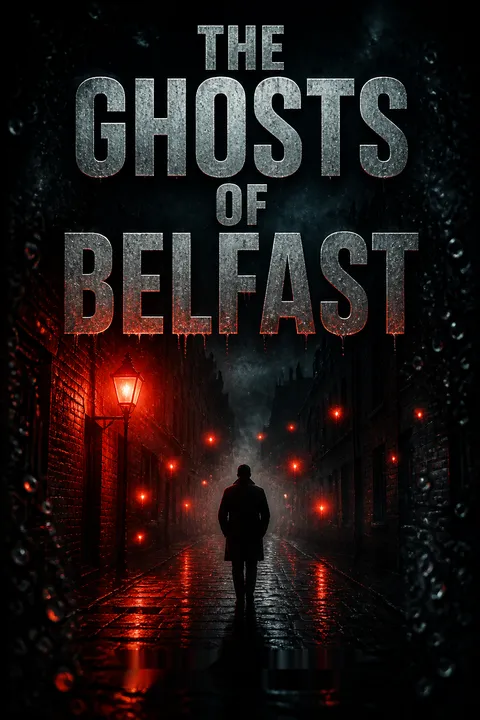
The Ghosts of Belfast is a gritty, violent thriller set in post-Troubles Northern Ireland. Readers praise Neville's compelling narrative, complex characters, and authentic portrayal of Belfast's dark underbelly. The story follows Gerry Fegan, a former IRA hitman haunted by the ghosts of his victims, as he seeks redemption through vengeance. While some found the violence excessive, most appreciated the book's exploration of guilt, redemption, and the lasting impact of sectarian conflict. Many consider it an impressive debut and a standout in the crime genre.
People Also Read



Characters
Gerry Fegan
Haunted former gunmanFegan is a lean, taciturn former Republican assassin whose years in prison have not quieted his memories. He drinks to blunt the presence of twelve dead people who appear around him, and he distrusts the public language that recasts killers as heroes or political prisoners. Skilled with his hands, he restores a guitar and remembers the craft of his father and his prison mentor, Ronnie Lennox. Fegan is capable of patience and tenderness, especially with Marie and Ellen, but those qualities coexist with a practiced capacity for violence. His central struggle is not simply whether he can stop killing; it is whether he can accept responsibility without treating punishment as the same thing as repair.
Davy Campbell
Embedded Scottish soldierCampbell is a Scottish-born former Black Watch soldier who has spent much of his adult life among Belfast paramilitaries. Quick, physically capable, and alert to shifting loyalties, he treats danger as both a profession and a source of identity. His years of assumed belonging leave him unsure where an ordinary life might begin, even as handlers tell him that the conflict is winding down. Campbell can recognize the incompetence and hypocrisy of the men around him, but his own methods have been shaped by deception and violence. His practical intelligence makes him a dangerous counterpoint to Fegan’s haunted moral reasoning.
Marie McKenna
Estranged Republican nieceMarie is a journalist and the niece of Republican politician Michael McKenna. Her relationship with a Catholic police officer and her work for a Unionist newspaper have made her an outcast in the community where she grew up. She is a devoted mother to Ellen, wary of men who mistake protection for authority, and determined not to let inherited political loyalties dictate where she can live. Marie is emotionally perceptive without being naïve; she can recognize Fegan’s remorse while still demanding honesty from him. Her refusal to hate the family that rejects her is a deliberate ethic, not a sign that she is willing to be controlled.
Paul McGinty
Republican political operatorMcGinty is a polished Belfast Republican politician who has moved from street activism into the new institutions of power. He understands how to manage public appearances, exploit press attention, and turn political instability into leverage. Beneath that fluency is the old paramilitary instinct to control people through favors, threats, and violence carried out by others. He regards loyalty as a resource and expects former comrades to remain available when needed. His ease in presenting himself as a peacemaker while using the tactics of the past makes him an especially revealing figure in a city trying to decide what peace requires.
Bull O’Kane
Borderland Republican bossTerrance Plunkett O’Kane, known as the Bull, is an old Republican power broker based near the border. A physically imposing man who values direct control, he runs criminal enterprises alongside his political influence and expects loyalty to be demonstrated through obedience. He has survived successive eras by adapting his business while keeping his authority intact. O’Kane distrusts the polished language of Belfast politicians, whom he sees as dependent on the street force they would prefer to outgrow. His farm, his men, and his dogfighting operation reveal how much of the old order remains active beneath the new political surface.
Ellen McKenna
Marie’s trusting daughterEllen is Marie’s five-year-old daughter, lively, observant, and quick to decide whether she likes someone. She delights in shoes, jumping, coloring, and television, and she approaches Fegan without knowing the violence in his past. Her trust gives him an experience of ordinary affection that he has long denied himself. Ellen is not a symbol to her mother or to Fegan; she is a child whose safety depends on the adults around her making choices she cannot control.
Michael McKenna
Fegan’s old political friendMcKenna is a senior Republican politician and Fegan’s childhood friend. He once helped draw the isolated boy into the movement, then relied on Fegan and others to carry out violence while he pursued political influence. He presents himself as a man committed to peace, yet retains the instincts of a commander when challenged. His bond with Fegan is built from real shared history as well as manipulation, making the break between them more than a clash between a killer and a politician.
Vincie Caffola
Republican interrogatorCaffola is a powerful, brutal Republican enforcer who has made a reputation for extracting information through torture. He is loyal to the movement’s old hierarchy but resents its willingness to support policing and political compromise. His physical strength masks a limited political imagination: he understands force more readily than negotiation. Caffola’s presence reminds Fegan of the work he once did for men who preferred to keep their own hands clean.
Patsy Toner
Party lawyer and fixerToner is a small, shrewd solicitor who presents himself publicly as a human-rights lawyer while serving Republican interests. He uses legal access, personal contacts, and inside information to smooth the party’s operations. His long friendship with Fegan gives him a familiarity that can seem protective, but he is ultimately more loyal to the political network than to individual confidences. Toner’s role shows how influence survives the transition from street organizations to formal institutions.
Father Eammon Coulter
Compromised Belfast priestCoulter is a Catholic priest who has spent years ministering in a community shaped by paramilitary power. He can offer ritual comfort and recognizes that fear has compromised his own choices, yet he has also kept silent when he might have intervened. His relationship with Fegan is burdened by the violence they both remember and by the confidential authority of confession. Coulter embodies the difficulty of distinguishing survival from complicity when every choice carries consequences.
Ronnie Lennox
Prison workshop mentorLennox is a Loyalist prisoner and former ship’s carpenter who teaches Fegan woodworking and guitar repair in the Maze. His expertise gives him a way to pass on knowledge across the prison’s sectarian divisions. He is patient with materials and people, even as illness narrows his future. The restored Martin guitar becomes a lasting reminder that Fegan has learned to make and mend as well as destroy.
Brian Anderson
Compromised RUC sergeantAnderson is a Royal Ulster Constabulary sergeant whose career has been shaped by an injury received early in his service. He has worked in administrative roles and maintained a covert relationship with Republican figures, passing them information about police officers. His position connects official authority to the same informal networks that govern the streets.
The boy’s mother
Bereaved mother seeking truthThe unnamed mother has spent years searching Belfast graveyards for a son whose body was secretly buried. When she recognizes Fegan, she asks him for the location rather than a political explanation. Her grief gives the novel’s first decisive pressure a human face: she wants evidence that her son existed and a place where she can mourn him.
Edward Hargreaves
British minister managing falloutHargreaves is a British minister responsible for Northern Ireland. He views the region largely through the demands of political management and his own career, and he pressures the police leadership to protect the power-sharing settlement. His detached calculations contrast with the local consequences of the decisions he treats as expedient.
Geoff Pilkington
Hard-pressed police chiefPilkington is the Chief Constable of the Police Service of Northern Ireland, a practical former street officer with a sharp understanding of political pressure. He resists sacrificing officers simply to preserve appearances, even as his force is caught between paramilitary influence and government demands.
Pádraig O’Kane
The Bull’s imposing sonPádraig is O’Kane’s broad, physically imposing son, involved in maintaining the farm and his father’s operations. He follows his father’s instructions and reinforces the sense that O’Kane’s authority extends through family as well as political organization.
Plot Devices
The Twelve Dead
Guilt made visibleFegan sees twelve people he helped kill, including soldiers, police officers, Loyalists, a butcher, a mother, and her baby. The apparitions follow him through pubs, homes, streets, and the countryside, and their number falls as certain deaths are avenged. Their reality remains uncertain: they may be supernatural witnesses or the embodied form of Fegan’s guilt. Either way, they individualize the costs of violence that political rhetoric reduces to strategy and statistics.
The Falling Count
A revenge countdownThe book’s section headings count down from twelve toward one as Fegan’s ghosts disappear or change after particular killings. The count gives his pursuit a clear, thriller-like forward motion, but it also raises a moral question: does each death settle a debt, or merely make the living imitate the dead? The structure finally resists a simple tally, because even after Fegan has killed the men he believes responsible, the mother’s ghost still demands something he cannot provide through violence.
Campbell’s Cover
A spy inside the factionCampbell’s years among Republican militants allow the novel to connect paramilitary rivalries with British intelligence and government priorities. His false allegiance gives him access to McGinty’s circle, but protecting it has required him to kill and to help construct a false account of earlier violence. The device complicates the usual distinction between investigator and criminal: Campbell gathers information for the state while participating in the systems he is meant to monitor. His cover also becomes a source of danger once old decisions are exposed.
The Martin Guitar
A craft beyond violenceThe old guitar Ronnie Lennox leaves to Fegan links prison, memory, and the possibility of a life organized around making something rather than destroying it. Fegan restores its frets carefully, guided by the patience he learned in the workshop. The instrument does not solve his guilt or become a magical symbol of reform. Instead, it offers a concrete counter-image to his work as an assassin: an object that requires attention, balance, and the willingness to preserve what someone else valued.
The Peace Process
Power under a new nameThe recently formed power-sharing government provides the political weather around the murders. McGinty exploits the fear that violence could collapse the Assembly, while O’Kane’s criminal operations and the street enforcers remain part of the practical machinery behind political authority. British officials and police leaders also prioritize stability, sometimes at the expense of truth. The process is not presented as meaningless: it has changed public life and limited the appetite for renewed conflict. But the novel shows how fragile peace remains when its institutions depend on people who profited from the old order.
Jack Lennon Series

Download PDF
Download EPUB
.epub digital book format is ideal for reading ebooks on phones, tablets, and e-readers.








