

Key Takeaways
Study billionaires as powerful stories, not plug-and-play recipes
The appeal is personal. At Sun Valley, aspiring entrepreneur Dushime Gashugi camped near a billionaire gathering with signs asking Gates, Bloomberg, and Bezos for advice. His quest captures a wider belief: that the rich possess a transferable formula for success. The book argues that this belief is reinforced by memoirs, celebrity coverage, and the American ideal of the self-made individual. In a 2022 survey, 63 percent of respondents said they admired billionaires or wanted to be one.
Stories are not explanations. Billionaire success accounts often spotlight grit and ingenuity while leaving out advantages such as education, networks, government research, and favorable policies. The account may be inspiring and still incomplete. Treat it as a story to investigate, not a recipe to copy.
What's striking is how aspiration turns wealth into evidence of character. A billionaire's biography feels like a map because it gives an individual face to an otherwise abstract economic system. That can motivate ambition, but it also encourages readers to mistake survivorship for instruction: the winners' habits are visible, while the people who took similar risks and failed are mostly absent. The useful question is not whether a successful person worked hard, but which conditions made that effort unusually scalable. Admiration need not be abandoned; it becomes more intelligent when separated from uncritical imitation.
Tech genius is real, but the garage myth hides its scaffolding
A market was invented. Gates and Paul Allen pitched Altair a BASIC programming language before they had written it, then raced to deliver. Gates also saw that software could be sold as intellectual property, rather than freely shared as many computer hobbyists expected. Microsoft’s licensing deal for MS-DOS let it sell the system to manufacturers beyond IBM, creating a much larger market than a single hardware partnership.
The origin story leaves things out. Gates had access to computers at an elite school, and his mother helped open a path to IBM through her civic connections. Federal research helped build Silicon Valley’s technical base. The familiar young-founder tale also hides how a narrow, masculine image of the programmer discouraged women and others from entering the field.
The book does not deny individual brilliance. It asks what brilliance needs in order to become a fortune. That distinction resembles the difference between invention and innovation: a clever idea matters, but distribution, contracts, public infrastructure, and access to capital determine whether it changes an industry. Origin myths compress that whole system into a lone founder, making structural advantages look like personal magic. At the same time, the myth can energize people who have been excluded from traditional routes to power. A better account preserves ambition while widening the cast of contributors.
A platform's dominance can turn innovation into exclusion
Scale changed the judgment. In the 1990s, Microsoft’s Windows software ran most personal computers. The company used its position to secure favorable contracts with computer makers, and bundled Internet Explorer with Windows as the web browser market emerged. Competitors argued that these tactics used dominance in one market to suppress rivals in another. The federal government sued Microsoft in 1998, and the case made Gates a modern Rockefeller in the public imagination.
The same company looked different from inside. Microsoft executives saw themselves as defending a business in a fast-moving industry. Regulators and competitors saw a giant able to tilt the playing field. The episode shows how practices that seem like ordinary competitive defense to a company can look like market foreclosure to everyone locked out.
This conflict turns on a central problem in technology markets: success can make the next round of competition less open. Network effects and familiar products create real value for users, yet the same advantages can make it difficult for challengers to reach them. Neither the company's innovation nor its market power alone settles whether conduct is harmful. The key questions concern choice, entry, and whether a dominant firm is winning by improving its product or by controlling the route to customers. The book's Rockefeller comparison is useful as a warning, not a claim that every large company is identical.
A philanthropic halo cannot erase image-making or private misconduct
The public role was cultivated. After Microsoft’s antitrust battle damaged Gates’s reputation, he stepped back from daily leadership and became the prominent face of the Gates Foundation. Communications staff coached speeches, managed media access, and emphasized family, science, and charitable work. The shift reflected real philanthropic activity, but it was also a deliberate effort to make the billionaire legible as a global problem-solver.
The image had limits. News of Gates’s repeated meetings with Jeffrey Epstein, a convicted sex offender, and reports of marital affairs challenged the polished persona. Gates said he regretted meeting Epstein, explaining that he had hoped the financier could connect him with donors. French Gates said the relationship contributed to the breakdown of trust in their marriage. The contrast showed how quickly public virtue can be unsettled by private choices.
A public image is not simply true or false. It selects real traits, arranges them into a coherent story, and leaves some facts outside the frame. That is why a philanthropic record can be substantial while its presentation still deserves scrutiny. The Epstein association matters not only as a reputational error but as a test of how access and influence can dull ordinary standards of judgment. Yet reputational damage should not substitute for evidence about specific conduct. The book's strongest point is the need to hold achievements and failures in view at the same time.
Use private money to accelerate health gains, not dictate them
A market gap became a mission. Gates directed philanthropic money toward diseases neglected by commercial research because poor communities could not create profitable demand. He called this approach catalytic philanthropy: using money where it could speed a solution or draw in other actors. The foundation helped establish GAVI, which uses purchase guarantees to encourage vaccine production for poorer countries, and supported COVAX during Covid-19. The foundation had committed more than $2 billion to pandemic response efforts by 2023.
Results are tangible, but incomplete. The book reports that maternal mortality fell 34 percent and deaths among children under five fell 60 percent over the two decades ending in 2020. Yet vaccine supply delays and disputes over patent waivers exposed the limits of buying access through existing systems. The foundation favored partnerships with pharmaceutical companies over freely shared production rights.
The strongest case for this model is practical: a donor can fund neglected research, coordinate institutions, and accept risks that governments or companies may avoid. Measurable improvements matter, especially when preventable illness is the cost of inaction. But metrics can identify what is countable more easily than what communities themselves consider urgent. And a system that solves access by negotiating with patent holders may deliver doses while preserving the power imbalance that made access scarce. The productive question is not whether private philanthropy works, but who defines success and who has a voice in choosing the means.
Demand local knowledge and independent scrutiny from mega-foundations
Expertise can travel badly. The Gates Foundation often designs a strategy centrally, then finds partners to carry it out. In Bihar, India, it backed a telemedicine and social-franchising project intended to improve rural care. The plan struggled because assumptions about internet access, local demand, and the incentives of clinics did not hold. Disease-specific teams also had trouble coordinating, since a model suited to one illness or region did not necessarily suit another.
Influence needs checks. The foundation’s award to Indian Prime Minister Narendra Modi for sanitation drew criticism because the decision appeared to overlook his record on other issues and relied on government claims that were not publicly tested. The book describes a broader concern: grant recipients may depend on the foundation’s money while having limited power to challenge its priorities or methods.
Technical expertise is indispensable, but expertise without feedback can become a sophisticated form of guesswork. Local knowledge is not a decorative addition to a plan; it can reveal that the problem has been framed incorrectly or that the proposed service will not fit existing lives. Independent evaluation also matters because a funder should not be the sole judge of its own success. The counterpoint is real: local practices can be unequal or ineffective, and outside resources can help challenge them. Accountability therefore means combining evidence, local participation, and transparent reasons for decisions, rather than treating any one source as infallible.
A pledge to donate half is not enforceable delivery
A promise can still help. The Giving Pledge, launched by Gates, Melinda French Gates, and Warren Buffett, asks billionaires to commit to giving at least half their wealth to charitable causes during life or at death. By 2023, 243 billionaires had signed. The campaign created a forum for wealthy donors to discuss giving and helped philanthropy become part of billionaire culture.
But the commitment is loose. The pledge is not legally binding, and its organizers do not track whether signers follow through. Private foundations must generally distribute at least 5 percent of their assets annually to retain tax-exempt status, while donor-advised funds have no comparable annual payout deadline. In 2021, about $234 billion sat in donor-advised funds. Money can therefore receive charitable tax treatment well before it reaches an organization doing public work.
The pledge's value depends on what it is meant to accomplish. As a conversation starter among wealthy people, it may encourage giving that would not otherwise happen. As a measure of money reaching people or institutions, it is inadequate without disclosure, timelines, and clear accounting. This distinction matters because public praise often attaches at the moment of commitment, while the cost of waiting is borne elsewhere. A private donor may reasonably need time to choose carefully, but the public should not confuse intention, assets placed in a charitable vehicle, and funds actually put to use.
When a marriage funds an institution, private rupture becomes public risk
Two people shaped one foundation. French Gates initially stood in the shadow of her better-known husband, then built a distinct role focused on women’s rights, family planning, and gender equality. She pushed to be treated as a principal, not merely as Gates’s partner. In 2015 she founded Pivotal Ventures, which combines investing, advocacy, and philanthropy to support women and girls.
The divorce exposed dependence. The Gates Foundation’s origin, leadership, and public identity were closely tied to the couple. When they announced their separation in 2021, employees and grant recipients worried about funding and decision-making. French Gates stayed for a transition period, then left in 2024 with $12.5 billion to pursue her own work. The episode reveals how a powerful private institution can depend on a personal relationship that its beneficiaries cannot control.
French Gates’s independent work illustrates a broader institutional lesson: formal equality requires more than sharing a title. It requires access to information, authority over priorities, and room to develop an independent judgment. The foundation's temporary uncertainty also shows why organizations built around founders face a governance problem even when the founders are effective. Personal commitment can give an institution energy and clarity, but it can also make continuity fragile. A transition plan is not bureaucratic fussiness; for grantees whose work depends on funding, it is part of responsible stewardship.
Judge billionaire fortunes against the unequal starting line
Self-made does not mean self-created. Gates grew up in an affluent, stable family, attended Lakeside School, and had early access to computers. His mother’s network helped Microsoft get an introduction to IBM. Such advantages do not erase his talent or work; they complicate claims that fortunes reflect individual merit alone. The book notes that many billionaires labeled self-made came from middle- or upper-middle-class backgrounds.
Risk is easier with a safety net. A person with family resources can take a bold chance while knowing failure need not mean ruin. Economic mobility has also weakened: research cited in the book found that about nine in ten people born in 1940 earned more than their parents, compared with roughly half of those born around 1980. The billionaire story obscures the narrowing odds facing everyone else.
Fairness does not require pretending that effort and skill are irrelevant. It requires distinguishing contribution from the conditions that made contribution possible. A stable home, good schooling, useful networks, and the ability to survive failure are forms of capital, even when no one writes them on a balance sheet. This also changes how risk is understood: the same gamble can be courageous for one person and financially survivable for another. Biography can honor agency without turning unequal access to opportunity into proof that the system rewards merit evenly.
Private wealth can govern public life without winning a vote
Money reaches beyond charity. Billionaires fund political campaigns, buy media organizations and sports teams, and reshape cities through investment and philanthropy. The book cites an analysis finding that billionaires supplied 15 percent of contributions to the 2022 midterm elections. It also describes how Gates Foundation funding can influence research agendas and the priorities of international health organizations, even when the foundation is not a government.
Good intentions do not settle authority. A foundation may help fund neglected work, but its resources can steer public priorities without the ordinary accountability of elected institutions. The question is not whether wealthy people should be barred from contributing. It is whether decisions affecting many people should depend so heavily on a few private fortunes, with limited transparency and few ways for affected communities to object.
The book's central concern is not simply that billionaires are rich, but that private wealth converts economic advantage into agenda-setting power. A grant, a campaign donation, or a city redevelopment project may produce benefits, yet each also gives the donor leverage over shared priorities. That is a different kind of power from ordinary consumption. The democratic challenge is to preserve room for experimentation while ensuring that public institutions remain capable of setting rules, taxing wealth, and hearing from affected people. Philanthropy can complement public action; it cannot by itself supply public consent.
Analysis
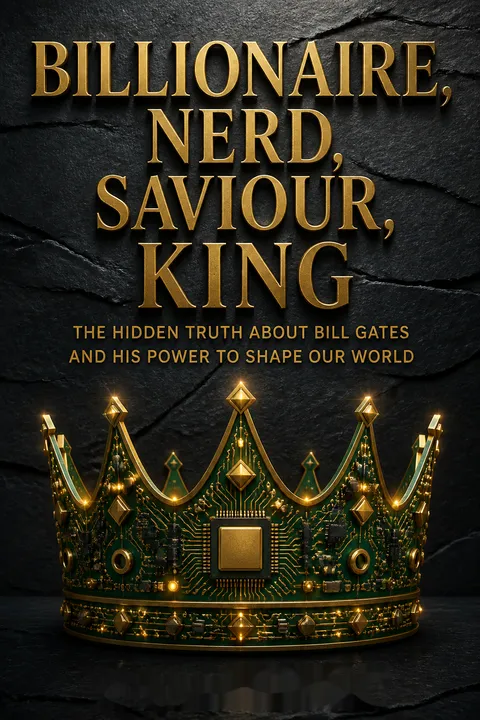
The book works as a biography of Bill Gates, but its deeper subject is how a society turns concentrated wealth into moral authority. Gates’s public identities move from nerd founder to monopolist, philanthropist, global health advocate, and compromised celebrity. Each change is connected to real conduct, but also to institutions that shape what the public sees: Microsoft’s communications operation, foundation media teams, journalists, and the cultural appetite for individual heroes. The result is not a simple story of a mask falling away. It is a study of how multiple, sometimes contradictory versions of one person can each contain truth.
The most important tension is between measurable benefit and democratic legitimacy. The foundation has helped direct money toward neglected health problems and supported vaccine systems with broad reach. Those achievements do not answer who should choose priorities, whose evidence counts, or how recipients can challenge a donor. Conversely, criticism of private power does not erase the lives improved by funded programs. The book is strongest when it holds both propositions together rather than treating impact as a defense against scrutiny or influence as proof of failure.
Its reporting also makes the gap between public and private life consequential. Gates’s management style, the foundation’s deference to its founders, French Gates’s struggle for equal authority, and the personal controversies around Epstein all illuminate how much institutional power can gather around one person. The marriage and the foundation were not identical, but their close association made private change a public concern for employees and grantees.
The broader implication is that exceptional wealth is not only a distributional question. It is a question of governance. When private fortunes finance research, public health, media, political campaigns, and urban development, society must decide what accountability should accompany that influence. The answer cannot be that private donors must never act, nor that beneficial outcomes excuse concentrated discretion. The more durable standard is plural authority: independent evaluation, transparent decisions, meaningful local participation, and public institutions strong enough to set common priorities. Gates’s story matters because it reveals both what one fortune can accomplish and what one fortune cannot legitimately decide alone.
Review Summary
Billionaire, Nerd, Savior, King receives mixed reviews, with an average rating of 2.98 out of 5. Many readers criticize the book for not focusing enough on Bill Gates and instead offering a broader critique of billionaires and philanthropy. Some appreciate the critical perspective on Gates and billionaire philanthropy, while others find it biased and unfocused. Complaints include repetitive content, lack of new information, and misleading marketing. A few readers praise the book's insights into Gates' later life and philanthropy, but overall, opinions are divided.
People Also Read






Glossary
catalytic philanthropy
Funding meant to accelerate changeThe Gates Foundation's approach of directing money toward problems where it may speed up progress, support innovation, or attract other funders and institutions. It applies a strategic investment logic to charitable giving, with social outcomes such as lives saved or improved crop yields standing in for financial returns.
Giving Pledge
A public giving commitmentAn initiative launched in 2010 by Bill Gates, Melinda French Gates, and Warren Buffett. Signers publicly commit to give at least half of their wealth to charitable causes during their lifetimes or through their estates. The pledge is voluntary, not legally binding, and its organizers do not verify whether signers fulfill it.
donor-advised funds
Charitable accounts with donor directionAccounts held by a sponsoring organization, such as a financial institution, where a donor contributes money and receives charitable tax treatment. The donor can recommend which charities receive grants, while the sponsor legally controls the assets. Unlike private foundations, donor-advised funds have no general annual payout requirement or deadline for distributing the balance.
disability-adjusted life years
Years of healthy life lostA public health measure, abbreviated DALYs, used to estimate the burden of disease by combining years lost through premature death with years lived in less than full health. One DALY represents one year of lost health. The Gates Foundation used such metrics to compare health needs across populations and guide grant-making.
Gates effect
Funding reshapes local prioritiesA term used by a public health professional to describe how the Gates Foundation's priorities and money can influence which health problems receive attention and which organizations gain resources. A nonprofit or region working on a foundation priority may attract more funding than one addressing a less emphasized need, potentially changing local staffing and institutional focus.
ovarian lottery
Fortune determined by birthplaceWarren Buffett's phrase for the profound differences in opportunity that come from the circumstances of a person's birth, including where they are born. Gates used the idea to express the unfairness of a child's health prospects varying sharply between wealthy and poor countries, regardless of the child's own choices or abilities.
Great Gatsby inequality curve
Inequality predicts inherited advantageA concept associated with economist Alan B. Krueger describing the relationship between inequality in one generation and economic mobility in the next. Where wealth is concentrated, children from affluent families tend to have greater access to opportunities, making it harder for children from poorer families to move upward and allowing inequality to persist across generations.
Download PDF
Download EPUB
.epub digital book format is ideal for reading ebooks on phones, tablets, and e-readers.








