

Key Takeaways
Treat publication as a possible outcome, not the payment for writing.
The desk is the reward. Lamott grew up watching her father write each morning, and learned that the work could be meaningful even when it was difficult and financially uncertain. Her first book came from writing about her father’s brain cancer. She expected publication to deliver lasting affirmation. Instead, early reviews hurt, praise was mixed, and a book deal did not magically fix her self-esteem or finances. She says it took four books before she stopped being a struggling artist.
Keep the motive close. Publication can bring recognition, a career, and quiet satisfaction, but it cannot guarantee peace or a sense of worth. The daily practice, the discovery of a sentence that feels alive, and the chance to see the world more closely are rewards available before a publisher says yes.
What's striking is how the book separates creative practice from the unstable marketplace that surrounds it. This resembles the distinction between intrinsic motivation, satisfaction in an activity itself, and extrinsic rewards such as status or money. The distinction is useful because publication depends on gatekeepers and timing as well as craft. Still, external recognition is not trivial: it can fund time, connect a writer to readers, and make a private practice public. Lamott's point is not to pretend those rewards do not matter, but to avoid letting them become the only evidence that the work mattered.
Shrink the task until you can see the next sentence.
Make the work visible. A huge subject, such as an entire childhood or a novel, can feel impossible to begin. Lamott recommends narrowing attention to one small scene, paragraph, or exchange. She calls this a one-inch picture frame: a way to focus on the small piece of the imagined world that can be described now, without needing to know the whole story.
Move one piece at a time. Her father helped her older brother with a school report on birds by breaking the overwhelming assignment into manageable units. The lesson is not to plan every step in advance. It is to begin with what can be seen. A novelist can make progress much as a driver travels through darkness, using the small stretch of road illuminated ahead rather than demanding a view of the whole route.
This method turns an intimidating project into a problem of attention and scale. In behavioral design, a task is easier to begin when its first action is clear and limited. The picture-frame metaphor also protects discovery: a writer need not settle the book's meaning before drafting a scene. One caution is that small units need some continuity. A writer can finish many polished fragments without building a whole, so periodic review is needed to see how the pieces connect.
Let the first draft be bad enough to reveal what matters.
Draft before judging. Lamott argues that capable writers rarely produce elegant first versions on command. A rough draft gives the imagination room to produce material that a self-conscious writer might censor too soon. It can be overlong, sentimental, confused, or funny in the wrong places. Its job is to exist, not to impress anyone.
Revise with a different mind. When Lamott wrote restaurant reviews, she first poured out pages of clumsy description and then returned the next day with a pen. She cut excess, found a stronger opening, and shaped the ending. She compares perfectionism to muscles tightening around a wound: an attempt at protection that can prevent movement and healing. Drafting calls for permission; revision calls for judgment. Mixing those jobs too early can silence the work before it has material to shape.
The distinction between generating and evaluating is central to many creative processes. A rough pass lowers the cost of experimentation, while a later editing pass can apply standards without interrupting every emerging thought. The approach does not mean that every first impulse is valuable or that revision can rescue any draft. It means the writer postpones the verdict until there is enough evidence to judge. The advice is especially helpful for perfectionists, but a writer who drafts quickly may need the opposite discipline: slowing down to notice what the first pass has overlooked.
Collect precise details before deciding what your story means.
Notice before interpreting. Lamott's class exercise about school lunches begins with familiar objects: bread, jam, carrots, and how a lunch was wrapped. As she and her students write, the details reveal the social rules and family anxieties hidden inside an ordinary meal. In her own draft, a boy who stood apart from the other children unexpectedly becomes the most compelling figure. She had not planned him; writing uncovered him.
Save what might disappear. Lamott carries index cards to record overheard speech, sensory impressions, memories, and sudden ideas. A brief note can later restore a whole scene, such as cousins drinking sweet water from a relative's elaborate but incomplete lemonade setup. She also describes an article taking shape through observation at the Special Olympics. The subject emerged from particular people and moments, not from a thesis imposed in advance.
The practice joins field observation with memory. A small sensory cue can retrieve a larger network of associations, and writing those details down prevents the mind from smoothing them into a generic summary. The strongest detail is not merely decorative: it can disclose status, care, embarrassment, or grief. Yet collecting can become its own form of procrastination. Notes become useful when the writer returns to them, tests their relevance, and lets some go rather than treating every remembered detail as sacred.
Quiet the inner broadcast so instinct can offer material.
Notice the mental noise. Lamott names the inner stream of self-praise and self-attack Radio Station KFKD. Its opposing voices can make a writer feel either destined for greatness or hopelessly untalented, often within the same hour. She recommends noticing the chatter, then using a small ritual, prayer, or steady breathing to return attention to the work.
Listen, then test. Lamott calls intuition Broccoli: the quiet, less controlled sense of what a character or scene might need. A writer can let an unexpected detail or action appear in a draft, then decide during revision whether it rings true. Her method is not to choose between instinct and reason. It is to quiet premature judgment during invention, then bring a cooler eye to the pages afterward.
The paired ideas describe a practical sequence: reduce self-monitoring enough to generate possibilities, then evaluate them deliberately. Research on problem-solving has found that incubation, a break from conscious effort, can sometimes help people find solutions, although it is not a substitute for sustained work. The metaphor of an inner radio also makes self-criticism easier to observe as mental activity rather than unquestionable fact. Intuition remains fallible, especially when fear or wishful thinking disguises itself as insight, so the later test against character and context matters.
Build plot from what your characters want, fear, and do.
Let people generate events. Lamott advises writers to learn their characters' habits, loyalties, secrets, and strongest desires before forcing them through a predesigned plot. A character's decisions create consequences, conflict, and change. The story needs something at stake, but the stakes should grow from what the characters care about. One useful short-story structure she shares is ABDCE: Action, Background, Development, Climax, and Ending. It offers a route through a story, not a substitute for believable people.
Rebuild when the story fails. After an editor told Lamott that her second novel contained appealing people but lacked a clear, functioning story, she laid the manuscript's sections across a floor and rearranged them. She wrote a chapter-by-chapter treatment to clarify what happened and why. The book ultimately worked, but only after she stopped protecting scenes she loved and made the relationships and consequences legible.
Character-driven plotting treats causality as a consequence of human motives rather than a sequence of mechanical surprises. That can make a story feel emotionally inevitable without making it predictable. The editor's response to Lamott's draft also shows that beautiful prose and sympathetic characters do not automatically create narrative momentum. A structural formula can diagnose missing stages, but it can also become a template that flattens unusual stories. Its best use is provisional: a map to revise against, not a rule that outranks the people on the page.
Choose readers who tell the truth without making cruelty a virtue.
Seek useful honesty. Lamott describes writing groups as a source of encouragement, deadlines, perspective, and company. She also warns that workshops can turn critique into performance, with participants competing to deliver the harshest judgment. In one class, a student bluntly dismissed a beginner's story. Some of the criticism was fair, but the manner risked discouraging the writer rather than helping the work improve. Honest response, Lamott argues, can be direct without being humiliating.
Build a small circle. A group of four students who met regularly became close over several years. Only one had published an article, yet the group helped its members finish work and endure discouragement. Lamott also relies on trusted readers who can identify slow openings, unclear motives, or weak endings. Feedback is most useful when it combines care for the writer with attention to the page.
This is a model of psychological safety applied to creative critique. People take larger risks when they can expect respect, while specific criticism gives them information that praise alone cannot provide. The group in Lamott's example also supplies social accountability and reduces the isolation of solitary work. Kindness, however, should not become automatic approval. A helpful reader distinguishes the writer's dignity from the draft's current limitations, then offers observations concrete enough to support a next revision.
Turn private experience into a gift by writing in your own voice.
Tell what you know. Lamott's first book grew from writing about her father's illness while he was still alive to read the work. Years later, she wrote about her close friend Pammy as cancer took her life. In both cases, the writing began as a present to someone she loved, and as an attempt to make a difficult experience useful to others. She urges writers to risk emotional honesty rather than hiding behind an admired writer's style or a polished but distant voice.
Shape truth responsibly. Lamott treats personal memory as material, not as automatic proof that every detail belongs in print. She advises changing identifying characteristics when writing about real people, especially when the work could expose them to harm. The aim is to preserve emotional truth while making a deliberate choice about privacy, fairness, and what the reader needs to understand.
Writing from lived experience can turn a private ordeal into recognition for people who have felt similarly alone. Lamott's stories make that transformation concrete: a book can serve a loved one while also reaching strangers. The ethical complication is equally important. Emotional truth does not erase another person's privacy, and changing superficial details may not be enough if a person remains identifiable. The writer's responsibility is therefore double: to avoid falsifying the experience and to consider the consequences of making someone else's life public.
Treat jealousy as information and raw material, not a verdict.
Name the envy. When a writer friend became successful, Lamott felt resentful rather than generous. She describes the feeling as tied to deprivation and the old sense that other families or people had what she lacked. Trying to force herself to feel happy only deepened the shame. Talking with trusted people helped her understand the envy; humor made it bearable, and writing turned it into material she could examine.
Choose what to do next. Lamott did not pretend that insight made her instantly delighted for her friend. She eventually told the friend she needed distance from the friendship. The episode shows that a difficult emotion can reveal longing, insecurity, or an unequal relationship, without dictating a cruel response. Writers can use the uncomfortable feeling to understand themselves and other people more precisely.
Jealousy often combines comparison with a fear of exclusion, so treating it as proof of bad character can add shame without changing the underlying need. Lamott's route from resentment to inquiry is useful: identify what the other person's success seems to threaten, then decide whether a boundary or a change in perspective is needed. Writing can make the emotion observable rather than letting it silently govern behavior. Still, not every envy points to an old wound; sometimes it accurately registers a real imbalance or an ambition that deserves practical attention.
Analysis
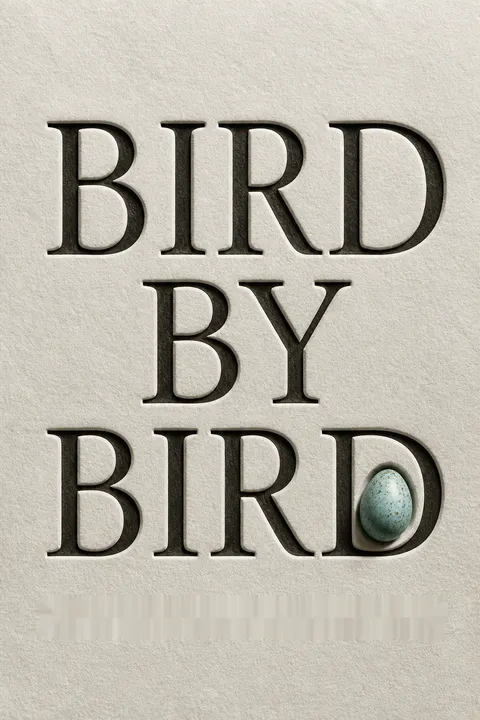
Bird by Bird is a writing manual carried by memoir rather than a clean sequence of rules. Lamott moves from the routine of sitting down to the practical problems of drafting, character, plot, feedback, and publication, while repeatedly returning to her father, her friends, her students, and her own anxious inner life. That structure matters: the advice is persuasive because it is tested against embarrassment, grief, rejection, and unfinished work, not presented as a guaranteed route to success.
Its most coherent model is a cycle of attention. The writer notices a detail, writes before knowing its final meaning, discovers unexpected material, revises with judgment, and brings the result into contact with readers. The process alternates receptivity and control. Lamott's images of a small writing task, an emerging photograph, and an unruly draft all resist the fantasy that a finished work can be planned into existence from a position of perfect certainty. Her practical contribution is to make uncertainty survivable without romanticizing it.
The book also argues that craft and ethics cannot be cleanly separated. To portray a character well requires attention to motives and contradictions, including those the writer dislikes. To write about lived experience requires courage, but also discretion toward people who share that experience. This is a stronger claim than simply saying that honesty makes good prose: truthful attention can increase compassion, while publication and exposure can still harm.
A limitation is that the book's ideal of daily writing may be harder to follow for people with little privacy, time, or security. Its advice is most useful when treated as adaptable practice, not a moral test of commitment. Its enduring insight is that writing is not chiefly a performance of talent. It is a discipline of seeing, attempting, listening, revising, and offering an account that may help another person feel less alone.
Review Summary
Bird by Bird receives mostly positive reviews for its humorous and encouraging approach to writing. Readers appreciate Lamott's personal anecdotes, practical advice, and emphasis on perseverance. Many find the book inspiring and relatable, with useful tips for overcoming writer's block and self-doubt. Some criticize Lamott's self-deprecating tone and occasional insensitive remarks. While experienced writers may find familiar advice, beginners and aspiring authors often praise the book as a valuable resource for understanding the writing process and developing discipline.
People Also Read



Glossary
Short assignments
Small, finishable writing tasksA method of replacing an overwhelming writing project with a limited unit of work, such as one scene, paragraph, or exchange. The task is narrow enough to begin without knowing the whole story. Completing small assignments builds momentum and generates material that can later be revised and connected.
One-inch picture frame
A narrow focus for draftingLamott's image for limiting attention to the small piece of a story that can be described now. The writer might focus on one character entering a room or one paragraph establishing a setting. It reduces the pressure to understand the entire project before beginning and helps turn a large, vague intention into a concrete task.
Shitty first drafts
Unpolished exploratory draftsLamott's term for early versions written without demanding immediate elegance or correctness. Such drafts let writers discover images, language, and direction that self-editing might suppress. They are not intended for readers in their raw form. Their value lies in providing material for later selection, clarification, and revision.
Polaroid
A story that emerges graduallyLamott's metaphor for how a piece of writing can clarify itself during drafting. A writer begins with an image or subject that attracts attention, without fully knowing what the work means. As details accumulate, unexpected people, themes, or connections become visible. The developing draft reveals the story instead of merely executing a complete plan.
Broccoli
Quiet creative intuitionLamott's playful name for the less deliberate inner sense that may tell a writer what a character or scene needs. Listening to it means allowing unexpected ideas to appear before the rational mind rejects them. The material still needs to be tested and revised; intuition is a source of possibilities, not a guarantee that every impulse is true.
Radio Station KFKD
Inner praise and self-attackLamott's name for the mental chatter that alternates between grandiosity and self-loathing. The imaginary station distracts writers with claims of exceptional talent, predictions of failure, comparisons, and anxieties. Noticing the chatter, then returning attention to the page, can help writers work without mistaking every passing judgment for reliable information.
ABDCE
A story-structure sequenceA short-story structure Lamott attributes to writer Alice Adams. Its letters stand for Action, Background, Development, Climax, and Ending. The sequence begins with engaging action, supplies relevant context, deepens the characters and their stakes, brings events to a consequential turning point, and shows what remains afterward. It is a starting structure, not a universal formula.
Plot treatment
A chapter-by-chapter story planA prose account of a book's chapters that explains what happens, who is involved, and how each section leads to the next. Lamott used one to clarify a novel whose characters and scenes were compelling but whose overall story was unclear. Writing the treatment helped her identify missing transitions, motivations, and consequences before completing another draft.
Emotional acre
A character's private inner worldLamott's metaphor for each person's distinct interior life and boundaries. Imagining a character's acre means considering what that person values, fears, cultivates, neglects, or refuses to let others control. The writer may never describe the metaphor directly, but exploring it can produce more specific behavior, dialogue, and choices.
FAQ
What's "Bird by Bird: Some Instructions on Writing and Life" about?
- Overview: "Bird by Bird" by Anne Lamott is a guide to writing and life, offering practical advice and personal anecdotes to help writers navigate the creative process.
- Writing and Life: The book intertwines lessons on writing with insights into life, emphasizing the importance of honesty, perseverance, and finding one's voice.
- Personal Stories: Lamott shares her own experiences, struggles, and triumphs as a writer, providing a relatable and humorous perspective.
- Encouragement and Support: The book serves as a source of encouragement for writers, reminding them that the journey is as important as the destination.
Why should I read "Bird by Bird"?
- Practical Advice: The book offers practical writing tips that are accessible and easy to implement, making it valuable for both novice and experienced writers.
- Inspiration: Lamott's candid and humorous style inspires readers to embrace their imperfections and continue writing despite challenges.
- Life Lessons: Beyond writing, the book provides insights into living a meaningful life, dealing with self-doubt, and finding joy in the creative process.
- Relatable Stories: Readers will find comfort in Lamott's personal stories, which highlight the universal struggles and joys of being a writer.
What are the key takeaways of "Bird by Bird"?
- Shitty First Drafts: Embrace the concept of writing terrible first drafts as a necessary step in the creative process.
- Short Assignments: Focus on small, manageable writing tasks to avoid feeling overwhelmed and to make steady progress.
- Finding Your Voice: Discover and cultivate your unique voice by writing honestly and authentically.
- Perfectionism: Let go of perfectionism, which can stifle creativity and prevent you from completing your work.
What is the "Shitty First Drafts" concept in "Bird by Bird"?
- Embrace Imperfection: Lamott encourages writers to accept that their first drafts will be messy and imperfect, which is a natural part of the writing process.
- Creative Freedom: Writing without the pressure of perfection allows for greater creativity and exploration of ideas.
- Revision Process: The first draft is just the beginning; it provides material to refine and improve in subsequent drafts.
- Overcoming Fear: Accepting the inevitability of a "shitty first draft" helps writers overcome the fear of starting and the paralysis of self-doubt.
How does Anne Lamott suggest dealing with writer's block in "Bird by Bird"?
- Acceptance: Recognize that writer's block is a natural part of the creative process and not a personal failure.
- Small Steps: Focus on writing small amounts each day, even if it's just a few sentences, to keep the momentum going.
- Change of Scenery: Take breaks, go for walks, or engage in other activities to refresh your mind and gain new perspectives.
- Trust the Process: Have faith that inspiration will return and that the unconscious mind is working even when you're not actively writing.
What is the "Short Assignments" method in "Bird by Bird"?
- One-Inch Picture Frame: Lamott uses the metaphor of a one-inch picture frame to illustrate focusing on small, manageable writing tasks.
- Avoid Overwhelm: By concentrating on short assignments, writers can avoid feeling overwhelmed by the enormity of a larger project.
- Build Confidence: Completing small tasks builds confidence and creates a sense of accomplishment, encouraging further progress.
- Incremental Progress: This method emphasizes the importance of steady, incremental progress in writing.
How does Anne Lamott address perfectionism in "Bird by Bird"?
- Voice of the Oppressor: Lamott describes perfectionism as the voice of the oppressor, which stifles creativity and prevents writers from taking risks.
- Embrace Messiness: She encourages writers to embrace the messiness of the creative process and to focus on progress rather than perfection.
- Perfectionism's Illusion: Perfectionism creates the illusion that flawless work is possible, which can lead to procrastination and self-doubt.
- Freedom in Imperfection: Letting go of perfectionism allows writers to experiment, make mistakes, and ultimately produce more authentic work.
What are the best quotes from "Bird by Bird" and what do they mean?
- "Bird by bird, buddy. Just take it bird by bird." This quote emphasizes the importance of tackling writing projects one step at a time, breaking them down into manageable parts.
- "Perfectionism is the voice of the oppressor." Lamott highlights how striving for perfection can hinder creativity and prevent writers from completing their work.
- "You own everything that happened to you. Tell your stories." This encourages writers to embrace their personal experiences and use them as material for their writing.
- "Almost all good writing begins with terrible first efforts." This quote reassures writers that initial drafts are often rough and imperfect, but they are a crucial part of the process.
How does Anne Lamott suggest finding your voice in "Bird by Bird"?
- Authenticity: Write honestly and authentically, drawing from your own experiences and perspectives.
- Experimentation: Try different styles and voices until you find one that feels natural and true to you.
- Silence Critics: Ignore the internal and external critics that may discourage you from expressing your true voice.
- Persistence: Keep writing regularly, as consistent practice helps develop and refine your unique voice.
What role does humor play in "Bird by Bird"?
- Coping Mechanism: Lamott uses humor as a way to cope with the challenges and frustrations of writing and life.
- Engagement: Humor engages readers, making the book enjoyable and relatable while delivering valuable lessons.
- Perspective: It provides perspective, helping writers not to take themselves too seriously and to find joy in the creative process.
- Connection: Humor creates a connection between Lamott and her readers, fostering a sense of camaraderie and shared experience.
How does Anne Lamott address the theme of jealousy in "Bird by Bird"?
- Inevitable Emotion: Lamott acknowledges that jealousy is a common and inevitable emotion among writers.
- Self-Reflection: She encourages writers to reflect on their feelings of jealousy and understand their root causes.
- Use as Material: Lamott suggests using jealousy as material for writing, turning it into a source of creativity rather than a hindrance.
- Perspective Shift: By shifting perspective, writers can focus on their own growth and achievements rather than comparing themselves to others.
What is the significance of the title "Bird by Bird"?
- Origin of the Phrase: The title comes from a story about Lamott's brother, who was overwhelmed by a school project on birds, and their father's advice to take it "bird by bird."
- Metaphor for Writing: It serves as a metaphor for the writing process, emphasizing the importance of tackling projects one step at a time.
- Approach to Challenges: The phrase encourages writers to approach challenges incrementally, focusing on small tasks rather than the entire project.
- Philosophy of Life: Beyond writing, "bird by bird" reflects a philosophy of life, advocating for patience, persistence, and breaking down overwhelming tasks.
About the Author


Download PDF
Download EPUB
.epub digital book format is ideal for reading ebooks on phones, tablets, and e-readers.








