

Key Takeaways
Map a bird’s world by its senses, not by human experience.
One label hides many worlds. A kiwi moves through darkness using smell and touch; a falcon finds fine detail at great distance; an owl can locate prey beneath snow by hearing. Calling all of them simply “birds” tempts us to imagine one shared experience, but their sensory equipment and daily lives differ sharply. Even a sense familiar to humans, such as vision, can operate in ways people cannot directly experience, including sensitivity to ultraviolet light.
Infer carefully from evidence. Researchers approach these private worlds through anatomy, brain activity, and behavior. The kiwi’s tiny eyes and enlarged smell-processing regions suggested its unusual reliance on scent before experiments showed it could find food beneath soil. No method gives direct access to another creature’s subjective experience, but multiple kinds of evidence can build a credible account of how it perceives and acts.
The book’s most useful shift is from asking whether birds possess a human-like sense to asking what information matters in a particular bird’s life. That is a practical form of humility: perception is not a weaker or stronger copy of ours, but a system shaped around different tasks. The limit is important, too. Anatomy can suggest what an animal detects, while behavior can show what cues guide its choices, but neither fully reveals the felt quality of that experience.
Ask what each eye is built to do, not whether it sees better.
Vision has competing jobs. A falcon’s eye is built for sharp detail: its retina can pack about one million cones into a square millimetre in its visual hot spots, compared with roughly 200,000 in humans. A tawny owl’s eye instead admits more light, making it far more sensitive in dim conditions. No eye can maximize both sensitivity and detail at once. The bird’s ecology helps explain the trade-off: a predator spotting distant prey needs different visual equipment from a nocturnal hunter.
Birds also see color differently. Many have four types of color-sensitive cone, including one for ultraviolet, while humans have three. Plumage that appears identical to us can therefore differ to birds, with consequences for mate choice. Some birds also favor one eye for particular jobs. In domestic chicks, different early exposure to light helps shape this division of visual labor.
This is a reminder that “better eyesight” is too blunt a measure. Vision is a collection of capacities, and a visual system can excel at one while sacrificing another. The same principle applies to cameras and other engineered sensors: design follows the signal a system needs to detect. The book also shows why human judgments about color are especially risky. A trait may look unimportant through human eyes yet matter greatly to the animal evaluating it.
Read bird calls as acoustic tools shaped by habitat and danger.
Sound is built for its setting. A bird’s call has to travel through its particular environment. Low-pitched, sustained sounds carry more effectively through dense forest than many high-pitched calls, while birds in noisy cities may sing louder or shift their pitch to remain audible. Researchers call the weakening and blurring of sound over distance attenuation. Carolina wrens even respond differently to degraded songs, behaving as if the singer is farther away.
Hearing separates signal from clutter. Guillemot chicks and parents identify each other among the calls of a crowded colony, much as people follow one conversation at a busy party. Owls take sound localization further: facial feathers collect sound, and differently positioned ear openings help pinpoint prey hidden from sight. Some birds can also distinguish rapid song details that human listeners hear as a single continuous trill.
Birdsong is not merely a message sent into the air. Its usefulness depends on the landscape, background noise, and the listener’s ability to separate one signal from many. That makes sound a form of ecological design, not just vocal display. The comparison with a crowded conversation is illuminating, but it should not imply that birds parse sound exactly as people do. Similar problems can be solved by different sensory machinery.
Look to bills, feathers, and skin for birds’ tactile intelligence.
A hard bill can be sensitive. Ducks have touch receptors concentrated in their bills, including a specialized area at the tip. This helps them sort edible items from mud and gravel while feeding in murky water. In probing birds such as knots, bill receptors can detect pressure changes caused by prey hidden in wet sand. Kiwis have a richly supplied bill tip as well, and may combine touch with smell as they search underground.
Touch also manages bodies and relationships. Tiny filoplumes, hair-like feathers linked to nerve endings, help birds monitor feather position. Touch receptors in the brood patch help an incubating bird regulate contact with eggs, while stimulation helps maintain the hormonal state associated with incubation. Allopreening, when one bird grooms another, may remove parasites and support social bonds. The recipient’s relaxed behavior suggests comfort, though the experience of the bird doing the grooming is harder to establish.
Touch is easy to overlook because it is less visible than a bird’s eyes or song. Yet it connects foraging, flight, incubation, and social behavior. The book’s examples make the sense tangible: a bill can function both as a tool and as a sensory surface. That dual role cautions against equating appearance with ability. A structure that seems tough or blunt may still deliver highly precise feedback, while the behavior it supports can have several functions at once.
A blunt beak can still sort dinner by taste.
Taste is not confined to tongues. Researcher Herman Berkhoudt found about 400 taste buds in a mallard’s mouth, including clusters near the bill tip and inside the jaws. Their position helps explain how a duck can distinguish acceptable food from unpleasant-tasting food as it handles a morsel. Birds have relatively few taste buds compared with humans, but they can respond to familiar categories such as sweet, bitter, sour, and salty. Hummingbirds, for example, detect differences in the sugar concentration of nectar.
Some foods warn predators. The hooded pitohui of New Guinea carries powerful toxins in its skin and feathers, derived from beetles in its diet. Local people knew the bird’s unpleasant qualities before researchers identified the toxins. This does not prove that every predator reacts as a human would. It does show why taste studies must test the senses of the animal doing the eating, rather than treating human reactions as universal.
Taste illustrates how a mistaken assumption can persist when researchers use the wrong anatomical landmark. Looking only at the tongue missed receptors elsewhere in the mouth. The toxic pitohui makes the broader point: sensory systems shape both what an animal eats and how it avoids becoming food. Still, a warning signal is effective only for receivers that can detect and learn from it. The predator’s sensory world, not the bird’s vivid appearance to people, determines whether the defense works.
Restore smell to bird biology, species by species.
Old assumptions had weak foundations. For decades, many ornithologists doubted that birds could smell well. Audubon helped cement that view after failed tests with concealed carcasses, but the experiments used decaying food that turkey vultures tend to avoid, and he may have studied a different vulture species from the one he intended. Later anatomical work found large smell-processing regions in species such as kiwis, petrels, and turkey vultures.
Smell can guide food and travel. A kiwi can locate food buried under soil, and seabirds called petrels respond to dimethyl sulfide, a compound released when tiny ocean life is consumed by krill. The compound may reveal productive patches of sea to birds searching for prey. Researchers describe this kind of scent information across the ocean as an olfactory seascape. Smell’s importance varies by species, and brain size alone is an imperfect guide to its strength.
The history of bird olfaction shows how a confident conclusion can outlast poor experimental design. It also demonstrates the value of linking anatomy to behavior: a large smell-processing region is suggestive, but tests of what a bird actually detects are stronger evidence. The olfactory seascape idea extends the usual picture of migration beyond visible landmarks. Its promise depends on understanding how scents disperse and how birds combine them with other cues.
Separate a migratory compass from the map that says where home is.
Direction and location are different problems. A compass tells a bird which way to travel; a map tells it where it is relative to its destination. Researchers use the phrase map and compass for these two parts of navigation. Experiments with European robins found that they changed their migratory orientation when researchers altered the surrounding magnetic field, evidence that the birds can use it as a compass.
Long journeys expose the puzzle. Geolocators revealed that a bar-tailed godwit can fly from Alaska to New Zealand in a nonstop journey of roughly 11,000 kilometres over eight days. Such tracking shows where birds go, but not by itself how they know the route. Magnetic cues may supply both directional and location information, and the book describes proposals involving light-sensitive processes in the eye and magnetic material in the beak. The exact mechanisms remain unsettled.
Separating the map from the compass clarifies why migration is not a single navigational trick. A bird needs a heading, information about its position, and ways to correct error along the route. Tracking devices reveal movement with extraordinary detail, but a route drawn on a screen is not an explanation of how it was chosen. The proposed magnetic mechanisms are compelling precisely because they remain testable hypotheses, rather than a complete account of the bird’s internal navigation.
Treat bird emotion as a testable question, not a sentimental verdict.
Behavior alone can mislead. A goose staying beside its dead partner invites an emotional interpretation, but the observation cannot establish what the bird felt. Stronger evidence comes from combining behavior with physiology. Birds exposed to predators can show increases in corticosterone, a stress hormone. In one comparison, great tits reacted behaviorally to both an owl and a harmless finch, but the owl produced the stronger hormonal response.
Stress changes social life. When food became scarce at a guillemot colony, adults that normally tolerated and protected neighboring chicks attacked them instead. The book presents chronic stress as one likely contributor to this breakdown in cooperation. Such findings matter for animal welfare, but they do not prove that birds experience emotions exactly as humans do. They support a careful conclusion: birds have physiological and behavioral responses consistent with fear, distress, and attachment, while the subjective experience remains inaccessible.
The distinction between observable response and inner feeling is not a reason to dismiss animal emotion. It is a reason to make claims proportionate to evidence. Hormones and behavior can converge to show that a situation matters to an animal, even when they cannot translate that state into a human feeling-word. This approach also has practical consequences: welfare decisions need not wait for certainty about consciousness before taking credible signs of suffering seriously.
Study senses together, and let evidence revise the story.
Real perception is integrated. A robin hunting earthworms may use sight, hearing, or both. One experiment seemed to show that robins relied on vision, but later tests removed visual clues and found that birds could still locate worms by sound. In the wild, multiple cues may work together. Flamingos that appear at distant wetlands after rain pose another unresolved puzzle: they might respond to weather, pressure changes, or other signals, but the evidence does not yet settle the question.
Science advances by correction. Anatomical descriptions, behavioral tests, and newer tools such as brain imaging each reveal different parts of a sensory system. A claim supported by one experiment remains provisional, especially when that test cannot exclude other senses. Birkhead’s account repeatedly shows researchers revisiting accepted conclusions, improving methods, and changing their minds when better evidence appears. Unanswered questions are not a failure of science; they mark where the next useful test can begin.
The book’s account of sensory research is also a lesson in scientific method. A behavior that looks like evidence for one sense may actually depend on another, and no single tool resolves every ambiguity. This is especially relevant to complex systems, where several inputs arrive together and influence the same decision. The productive response to uncertainty is not to guess more confidently, but to design tests that separate competing explanations.
Analysis
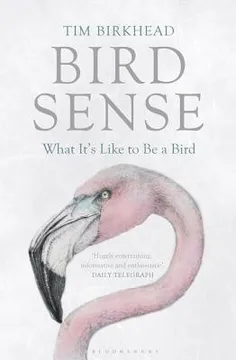
Bird Sense is a work of natural history, sensory biology, and scientific history built around a deceptively simple question: what is the world like for a bird? Its answer is not a single portrait, but a collection of species-specific worlds. The kiwi’s attention is organized around scent and touch; the owl’s around sound; the falcon’s around fine visual detail. That diversity is the book’s central argument and its strongest defense against casual anthropomorphism.
The narrative structure makes scientific correction part of the subject. A mistaken conclusion about vulture smell survives because a flawed test seems decisive. A duck’s taste receptors remain overlooked because investigators look mainly at its tongue. These episodes show that the history of science is not a smooth accumulation of facts. It is a record of assumptions, instruments, incentives, and methods shaping what researchers can notice. The personal field stories give these revisions human stakes without replacing evidence with anecdote.
The book’s recurring method is triangulation: infer sensory ability from anatomy, test behavior under controlled conditions, and, where possible, examine neural activity. Each source has limits. A large brain region can suggest a capacity without proving how it is used. A behavioral response can be ambiguous. A physiological signal can establish that a stimulus matters without revealing subjective experience. The argument is strongest when those imperfect measures converge, and most cautious when the question concerns consciousness or emotion.
A broader implication follows. Human perception is not a neutral window onto nature. It is one biological solution among many, and even familiar categories such as color, sound, and taste depend on the receiver. This challenges not only popular ideas about birds but also research practices that treat human senses as the default measuring device. The book does not claim that another animal’s inner life can be fully recovered. It argues, more usefully, that careful observation can narrow the gap between imagination and evidence, while leaving room for what remains unknown.
People Also Read




Glossary
Lateralisation
Specialized left-right brain functionsLateralisation is the division of some processing tasks between the brain’s left and right hemispheres. In birds, this can lead to different uses of the two eyes, such as scanning for predators with one eye while using the other for close-up foraging. The pattern can improve the ability to handle more than one task at a time.
Cocktail-party effect
Picking out important soundsThe cocktail-party effect is the ability to focus on a meaningful sound while other sounds compete for attention. Birds in noisy colonies or choruses must identify the calls of their own partners or species among many voices. Studies of starlings suggest that they can distinguish individual songs even when other songs play at the same time.
Echolocation
Locating objects from echoesEcholocation is a way of detecting surroundings by making sounds and interpreting their returning echoes. Oilbirds and cave swiftlets use audible clicks to navigate in dark caves. Their system is less precise than the high-frequency echolocation used by bats, and the birds appear unable to detect very small obstacles.
Bill-tip organ
Touch-sensitive bill structureThe bill-tip organ is a concentration of touch receptors in the bills of some birds, including parrots and ducks. It helps them handle food and discriminate among objects through touch. In ducks, this sensitivity supports feeding in muddy water, where the bird can sort edible items from grit without relying on clear vision.
Allopreening
Preening another birdAllopreening is the act of one bird grooming another, often around the head and neck, areas the recipient cannot easily reach itself. It may remove dirt or parasites, and it can occur after social conflict or between pair members. The behavior is associated with social relationships, though its precise functions can vary.
Olfactory seascape
Ocean patterns revealed by scentAn olfactory seascape is the distribution of odor cues over the ocean that may help seabirds locate feeding areas. Dimethyl sulfide, released when krill consume phytoplankton, can indicate regions where prey may be concentrated. Petrels and albatrosses respond to this chemical, and tracking studies suggest some use odor while searching for food.
Map and compass
Position plus travel directionThe map and compass model separates two tasks in navigation. A compass provides a direction of travel, while a map provides information about the bird’s location relative to its destination. Birds may use magnetic, solar, or stellar cues for direction, but identifying their position is a separate problem that researchers continue to investigate.
Emlen funnel
Cage for measuring migration directionAn Emlen funnel is a small, cone-shaped cage used to study migratory behavior in birds. A bird’s movements leave traces on inked or paper-covered surfaces, indicating the direction and strength of its migratory restlessness. The apparatus allows researchers to test orientation under controlled conditions, including changes to visible stars or magnetic fields.
Corticosterone
Bird stress-response hormoneCorticosterone is a hormone released by birds during stress. It helps mobilize energy for an immediate challenge, such as escaping a predator, but prolonged elevation can harm health and reproduction. Researchers measure changes in corticosterone alongside behavior to assess how strongly birds respond to threats or other stressful conditions.
Social monogamy
A breeding pair arrangementSocial monogamy describes a male and female that form a pair and cooperate in rearing offspring. It does not necessarily mean that their sexual relationship is exclusive. Genetic studies have shown that extra-pair mating and offspring occur in many bird species, so social pairing and sexual exclusivity must be distinguished.
Download PDF
Download EPUB
.epub digital book format is ideal for reading ebooks on phones, tablets, and e-readers.








