


Plot Summary
Three Wives, One Body
Officers arrive at the remote ranch while Rachel Nelson, Blake’s first wife, is canning potatoes. She insists there is only one Mrs. Nelson, though two other wives share her home. The police tell her that Blake’s body has been found beside the river. Tina, his second wife, is picked up in Salt Lake City while seeking drugs; Emily, the youngest, is found wandering near the ranch.
The women are brought separately to the station, where Rachel identifies Blake in the morgue. His face is badly swollen, his neck bears strangulation marks, and his sacred garments have been removed. The police cannot yet decide whether he killed himself or was murdered. Rachel rejects suicide, even as she remembers that the wives sometimes hated him.
The opening makes the household itself part of the mystery. Rachel’s careful canning and insistence on religious propriety contrast with the police discovery of a body whose injuries resist a tidy explanation. The three wives are not introduced as a unified grieving family but as strangers forced to share a suspect’s shadow. Their different responses, Rachel’s controlled faith, Tina’s raw grief, and Emily’s baffled detachment, establish that the same marriage has left each woman with a different account of what love and harm looked like.
Bruises Beneath the Garments
Officer Brewer questions each wife alone and finds that their versions do not align. Rachel says Blake went fishing after a disagreement she considers settled, while Emily remembers walking away from the house and hearing the canning machine.
Tina admits the wives fought on Rachel’s wedding anniversary but conceals how heated it became. Brewer notices bruises on Rachel’s arm and Emily’s ear, then learns Emily has a cracked rib. Blake’s missing fingers, especially the ring finger, make an animal attack seem less convincing.
The wives also describe the ranch’s isolation, Blake’s survivalist projects, and his habit of choosing which wife shared his bed. Brewer begins to suspect that the death is connected to the family’s conflicts, not simply the desert.
The investigation turns domestic habits into evidence. A loud canning machine can establish where someone might have been, while bruises reveal conflict that the women’s religious language has taught them to minimize. The missing ring finger is both forensic clue and emotional emblem: marriage is not an abstract institution here, but a contested claim on a man who divided affection unevenly. Brewer’s method challenges the wives’ practiced accounts without assuming that any single account is complete. Their omissions are not merely evasions; they are adaptations to a household where privacy, obedience, and survival have become entangled.
The Anniversary Staircase
Emily’s account of the ranch reaches back to the anniversary fight that left her hurt. While exploring Blake’s papers, she finds a birth certificate for Rayne Ambrosine, a name she recognizes as Rachel’s real one, and discovers that Rachel has a history connected to a notorious religious compound.
When Emily confronts her, Rachel pushes her down the stairs. Blake takes Emily to a hospital, where doctors find a broken rib and older injuries. He later tells Rachel to forgive herself and treats the assault as a domestic matter.
Rachel returns to routine rather than admitting what she has done. For Emily, the injury confirms that the household’s claims of sisterhood do not protect her from violence. The hidden document gives the police a motive for Rachel’s silence.
This episode exposes how secrecy reproduces power inside a home that claims to be built on spiritual equality. Emily’s snooping is a bid for knowledge in a life where others control her movement and information; Rachel’s violence answers that bid with the blunt authority she learned in childhood. Blake’s response, soothing the household without demanding accountability, preserves the structure rather than repairing the harm. The birth certificate also makes identity feel precarious: Rachel’s carefully maintained name is a shelter, but its secrecy leaves her vulnerable to anyone who discovers what lies beneath it.
A Funeral Goes Sideways
After the police release the wives to a temporary house, Rachel resumes cooking and funeral planning, while Tina and Emily struggle to decide how to live beside her. Emily chooses a funeral home that rejects the women because their plural marriage violates church rules.
At Blake’s funeral, his mother, Adelaide Nelson, delivers a glowing account of her son that omits his wives and distorts his work. Emily protests publicly. Rachel, meanwhile, is overwhelmed by fragments of a white bedroom and a woman she cannot place.
Adelaide grips Rachel’s arm and accuses her of knowing who harmed Blake. Police arrive before the service ends and arrest Rachel on suspicion of murder. The funeral leaves the wives exposed to the family’s judgment and turns Rachel’s buried past into an active police question.
The funeral is a public contest over who gets to define Blake. Adelaide claims the respectable son she raised, while Emily insists that the man they lived with cannot be reduced to a spotless church biography. Rachel’s breakdown shows how the performance of composure is failing under pressures she cannot yet name. The funeral home’s rejection and the family’s distance also make the wives’ social isolation concrete: even mourning requires them to negotiate institutions that deny the legitimacy of their bond. The arrest converts these private disputes into an official story with Rachel at its center.
The Homestead Returns
In custody, Rachel admits that she grew up at the Sunshine Homestead, a polygamous compound raided after its leader, known as the Prophet, was accused of abusing children. She ran away as a teenager, but police returned her to the community before it was eventually dismantled.
Rachel has hidden this history from her wives and from Brewer. The detectives also learn Blake recently drove to Waynard’s Creek, where former Homestead families live, and that he fought with Rachel after contacting her relatives.
Because Blake may have been seeking another wife, the visit looks like a source of jealousy and a possible motive. Rachel’s therapist notes and medication deepen police concern, while the discovery of a second phone hints that Blake kept parts of his life secret.
Rachel’s past alters the meaning of her present without making her history a simple explanation for violence. Her reflexive fear of police comes from a childhood in which authorities returned her to danger, so silence has been protective as well as deceptive. Blake’s visit to Waynard’s Creek appears to connect that history to the murder, but the link remains ambiguous. The investigation’s attention to medication risks treating trauma as evidence of unreliability. By placing Rachel between institutional suspicion and religious conditioning, the story asks how a survivor can be believed when the habits that once kept her safe now make her appear evasive.
No Fourth Wife
Tina, fearing she will relapse if left alone, stays with Emily despite their distrust of Rachel. The two drive to Waynard’s Creek, expecting to find the woman Blake may have been courting. A cousin named Marsha greets them with a rifle and refuses to discuss outsiders’ attempts to buy the old Homestead land.
She confirms Blake had visited, but says men came asking about the property and its rumored secret cemetery, not to purchase a wife. Before sending the women away, Marsha gives Tina a number Blake left with her, attached to a photograph of a woman called Dakota Jessop.
Tina and Emily realize their first theory may be wrong. The contact, and the land question behind it, give them a new direction while showing how fear still governs the abandoned community.
The road trip gives Tina and Emily a shared task before it gives them trust. Marsha’s rifle makes the cost of curiosity immediate: the former Homestead community has reason to fear people who arrive asking questions. Her refusal is not a clue that neatly solves the case, but an encounter with the continuing consequences of isolation. Most importantly, the women revise their theory when evidence contradicts it. That change distinguishes investigation from mere suspicion and opens a plot line in which land, history, and the secrets of a closed community matter as much as romantic jealousy.
The Phone in the Box
Police unlock Blake’s hidden phone and find intimate recordings of Tina engaging in consensual strangulation play with him, a practice connected to her former work as a sex worker. Because Blake’s body was strangled and mutilated, Tina’s past gives detectives an apparent means and a troubling history.
Rachel’s lawyer offers a plea deal that would spare the other wives prosecution for bigamy. Tina pushes into the interrogation to challenge the deal, using her experience with police procedure to argue that Detective Carlson is compromised by his involvement in the Homestead raid.
The strategy unsettles the interview but cannot prevent officers from arresting her when they reveal the phone. Tina’s relationship with Blake, once a private source of intimacy, becomes the strongest evidence against her.
The phone makes intimacy legible to the state in the most damaging possible form. A consensual practice, hidden because of shame and religious scrutiny, can be recast as a method of murder when the same physical act appears in a death investigation. Tina’s experience teaches her how to resist police pressure, but it also makes her seem more suspicious. Her intervention for Rachel is therefore both tactical and relational: she risks her own freedom to disrupt a plea that would sacrifice one wife to protect the others. The scene complicates the difference between evidence and interpretation.
Emily Takes the Blame
Emily tells the police that she followed Blake to the river, strangled him with a belt, and struck him with a gardening tool. She claims she cannot remember what happened afterward and accepts the prospect of execution because she believes death could cleanse her sins.
Her confession leads police to release Tina, whose account of the bedroom recordings is consistent with consensual sex. Brewer remains doubtful: Emily is small, the disposal story does not fit the evidence, and key details suggest she knows more than she admits.
Emily also explains that Blake sometimes hit her under a doctrine of marital discipline, though she defends him as a man who tried to manage a difficult household. Her confession is a sacrifice shaped by religious fear, not a reliable account of the killing.
Emily’s confession shows how a person trained to lie can use that skill in the service of loyalty. She wants to protect Rachel and may also hope that extreme sacrifice will restore a bond with her estranged mother. Her understanding of blood atonement gives the confession a spiritual logic that the detectives cannot share. Yet her defense of Blake alongside her account of beatings captures the confusion of coercive relationships: affection does not erase harm, and naming harm does not require reducing a person to a monster. Brewer’s skepticism keeps Emily’s performance from becoming the case’s final truth.
Dakota’s Desert Deal
Tina persuades Rachel to drive with her to Las Vegas, where they find Dakota Jessop at a real estate firm. Dakota explains that Blake wanted to buy the former Homestead, whose acreage crosses into Nevada and could support a casino.
The sale is complicated by records indicating that some people were buried in a second, unmarked cemetery. A photograph identifies the mysterious contact as Aunt Meg, a former Homestead nurse and one of the Prophet’s wives. Rachel recognizes the woman from her childhood, though she cannot yet recall the full history.
The office file shows that Blake explored a deal involving the land, but the women leave before learning everything. Their discovery replaces the fourth-wife rumor with a more dangerous question: what was buried there, and who wanted it kept hidden?
The land deal expands the murder’s possible motives without proving one. The border gives a remote religious community economic value, while the secret cemetery makes its past an obstacle to development. For Rachel, the photograph is more than identification; it is a visual intrusion into a memory her mind has kept fragmented. Tina’s professional knowledge of real estate helps the pair navigate a world Rachel has never entered, shifting their relationship toward practical cooperation. Their investigation now joins two forms of concealment, the legal paperwork around property and the psychological defenses built around childhood trauma.
The Locker Behind Heaven
Back in Salt Lake City, Tina convinces Rachel to enter the temple and search Blake’s work locker. They use their temple recommends to pass through the building, then force the locker after finding no fingerprint lock.
Inside are papers showing Blake had arranged to buy the Homestead with money advanced by the Vegas firm. His plan was not a casino: he expected to mine copper and other minerals, a scheme that fits his grand survival projects and financial recklessness.
A missing map and photographs of a clinic revive Rachel’s memories. When Bishop Young catches the women, he takes their recommends and bars them from the temple. Their break-in costs them a spiritual refuge but gives Rachel material evidence that her nightmares refer to a real place.
The temple search reverses the expected meaning of sacred space. The women enter a place that has governed their identities, then violate its rules to learn what Blake concealed. The documents show that his plans were neither purely altruistic nor purely criminal; they mixed a possible sanctuary for his family with speculative ambition and debt. Rachel’s loss of her recommend is a real rupture, not just a symbolic gesture, because the document once represented her arrival in a safer faith. Her willingness to risk it marks a change from obedience toward a more self-directed loyalty to the women beside her.
The Red Graveyard
After the wives separate, Rachel returns to the abandoned Homestead and finds the clinic and the red-colored burial ground hidden in the scrub. Memories return of bleeding as a teenager after an assault by a cousin, being taken to Aunt Meg’s makeshift clinic, and miscarrying.
She remembers carrying the remains in a blue shoebox and burying them beneath a tree, with Aunt Meg allowing her to hide what had happened. Rachel also sees that Aunt Meg’s memorial records her death years earlier.
The revelation shakes Rachel’s belief that Aunt Meg might have returned to threaten her. Meanwhile, Tina goes back to the ranch and discovers Blake’s severed fingers sealed in a jar of potatoes, evidence that someone used Rachel’s canning supplies to hide or preserve them.
The graveyard is a material record of what the community tried to make unseeable, but Rachel’s memory complicates the meaning of its graves. She discovers that she once buried a miscarriage there, not a murdered infant, and that Aunt Meg could show compassion within an abusive system. This does not absolve the community; it reveals how care and coercion could occupy the same rooms. The fingers in the pantry bring the distant past back into the present as forensic evidence. Rachel’s private coping strategy, burying memories in mental boxes, can no longer contain either history.
The Mother Behind the Gun
Emily, still held by police, finds Aunt Meg’s old online writings and learns that the nurse had been accused of making vulnerable babies disappear. The trail is chilling, but investigators confirm Meg died years ago.
At the river, Emily recovers the gardening ax hidden among the roots, then realizes the evidence points toward someone else. Adelaide has already reached the ranch. She traps Rachel in the storehouse, sets fire to it, and corners Tina with a gun. Adelaide admits she attacked Blake after he pursued the Homestead purchase and faced excommunication.
She believed his departure from the church would condemn him, and that killing him would secure his place in heaven. Her confession exposes religious devotion transformed into a mother’s claim of ownership.
The true antagonist emerges not from the most remote cult secret but from the respectable family that seemed to stand outside it. Adelaide’s motive fuses love, control, and theology: she treats Blake’s soul as something she must manage, even at the cost of his life. Her reasoning echoes the coercive systems the novel has exposed, though she acts from a different social position. The ax and the burning storehouse connect earlier clues to immediate danger. Emily’s recovery of the weapon marks her movement from fabricated certainty toward genuine discernment, even as Adelaide tries to silence everyone who might expose her.
Fire, Blanks, and Brine
Rachel turns Blake’s dangerous pressure canner into an escape tool. She over-tightens its fittings until it explodes through the storehouse wall, allowing her to crawl from the fire.
Adelaide has already injured Tina and left her in the house, but Tina has hidden the gardening ax and secretly replaced the ammunition in Blake’s rifle with blanks. Rachel arrives armed and, believing Adelaide’s claims about Tina, fires at her. The blank round makes noise without killing Tina.
Tina pretends to be badly hurt until Adelaide turns away, then strikes her with the rifle and knocks her unconscious. Emily returns from the river after surviving Adelaide’s shove. The three wives reunite as police sirens approach, while Adelaide’s attempted cover-up collapses.
The climax converts the household’s ordinary objects into instruments of survival. Rachel’s canner, once a symbol of domestic duty and Blake’s hazardous ingenuity, becomes an improvised breach in a trap. Tina’s knowledge of performance, acquired through years of surviving men who underestimated her, lets her stage weakness and create an opening. Rachel’s shot tests whether she can trust Tina without certainty; the blank bullet makes that choice survivable. Their rescue depends less on perfect faith than on practiced attention to one another, a fragile form of solidarity built under pressure.
A Family Reclaimed
Police arrive and take Adelaide into custody, ending the immediate threat. The investigation confirms that Emily did not kill Blake, though her false confession and concealment of the ax bring consequences. She receives community service rather than the capital punishment she had expected. Rachel and Tina must now reckon with the accusations they made against each other and with what they failed to see in Blake’s life.
Rachel learns that Mr. Nelson had helped guarantee the ranch and that his family’s disapproval shaped Blake’s choices. The three wives choose not to return to their isolated household as it was. Instead, they begin to imagine the Homestead land as a place where women can live without being controlled or hidden.
The legal outcome does not erase the harm that preceded it. Emily’s confession has real consequences even though it was false, and the wives’ survival does not instantly make them trust one another. What changes is the scale of their responsibility: they can decide what their shared life will mean rather than letting Blake, a church authority, or the state define it for them. Mr. Nelson’s financial support also complicates the family portrait, showing that blame and care can coexist. The ending shifts from solving a death to deciding what the survivors will build.
Epilogue
Five months later, Rachel, Tina, and Emily have taken control of the Homestead and are turning it into a refuge for women escaping abuse, addiction, and the community’s old rules. Rachel handles construction and food storage, Tina manages legal and financial matters, and Emily makes jewelry and cakes.
Emily’s community service has helped her grow more confident, while Rachel has begun speaking openly about her past. They still miss Blake, but no longer organize their lives around his approval. Tina considers a date with Detective Carlson, and the three women make room for a future that belongs to them.
The ending refuses to make recovery a clean break from the past. The women reclaim the Homestead, the physical site of their childhood histories and the land that drove Blake’s final schemes, by changing its use. Their skills once confined to domestic labor, street survival, or secrecy become practical tools for a community they control. Rachel’s public speaking, Emily’s creative work, and Tina’s legal competence make healing visible as action rather than a declaration. Their possible future with a husband remains a choice under discussion, not a return to the old arrangement. The refuge is an answer they build together, not a promised cure.
Analysis
Black Widows makes the murder mystery inseparable from the women’s struggle to decide whose version of family counts. The first question is who killed Blake, but the deeper question is how each wife learned to interpret control as love, duty, or rescue. Rachel’s domestic order protects her from memories she cannot face; Tina’s bravado protects her from dependence; Emily’s imaginative detours keep her company when adults have failed her. Their accounts contradict one another because their lives have taught them different forms of self-protection.
The novel also distinguishes religious belief from institutional power without treating faith as a simple villain. Sacred language offers the wives comfort and belonging, yet the same language authorizes secrecy, gender hierarchy, and violence. Adelaide’s attempt to save Blake’s soul turns maternal care into possession. At the Homestead, the Prophet’s authority likewise makes children and wives subordinate to an imagined divine plan. The danger lies not in belief alone, but in a system that grants one person the right to define another’s salvation.
The investigation exposes how evidence can be distorted by stigma. Tina’s sexual history makes her seem guilty; Emily’s false confession seems persuasive because she is already considered unstable; Rachel’s trauma makes her silence look like deception. The detectives must separate what the women did from what others assume women like them are capable of. In this way, the book’s twists are not arbitrary reversals. They reveal the cost of reading people through stereotypes instead of listening to their histories.
The resolution does not restore the marriage or erase the past. Instead, the wives reclaim the land and the domestic skills that once confined them, using them to make a refuge for others. Their new family is not founded on perfect trust, but on shared work, argument, and the growing ability to tell one another the truth. Healing becomes less a return to innocence than a change in who gets to make the rules.
Review Summary
People Also Read






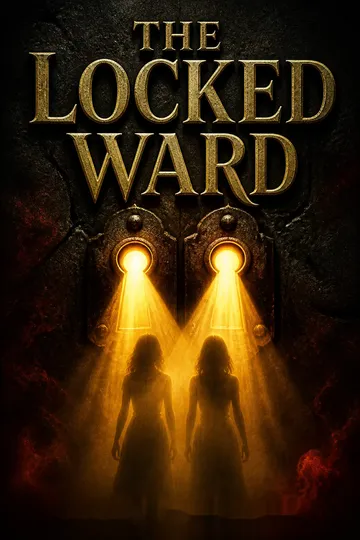


Characters
Rachel Nelson
The guarded homemakerRachel is Blake’s first wife and the household’s cook, organizer, and keeper of its provisions. College educated but shaped by a closed religious childhood, she values routine, privacy, and obedience because they make an unstable world feel manageable. She is perceptive about practical needs and far less fluent in emotional ones, often using work to avoid feelings she cannot name. Her relationship with Tina and Emily is strained by jealousy, control, and the unequal authority she has inherited as first wife. Rachel’s deepest conflict is between the safety of keeping painful memories sealed away and the risk of allowing other people to see her clearly.
Tina Keidis
The streetwise survivorTina is Blake’s second wife, a recovering addict from Las Vegas who knows how to read danger, manipulate a situation, and protect herself. Her bluntness and sexual confidence conceal a deep fear of abandonment, rooted in a childhood without reliable care. She was drawn to Blake because he offered rescue and affection, but the plural marriage repeatedly reopens her sense of being unwanted. Tina distrusts authority, yet her criminal experience gives her a sharp grasp of police tactics and legal risk. Her humor can cut, but it also gives the other wives a way to speak about pain without being swallowed by it.
Emily Martinelli
The watchful dreamerEmily is Blake’s youngest wife, a former diner waitress raised in a strict Catholic household. She seems timid and distractible, often retreating into old television mysteries, food, and elaborate imaginings. Beneath that appearance, she notices patterns others overlook and understands what it means to live under someone else’s rules. Her relationship with her mother is marked by estrangement, and she longs for a family that will not send her away. Emily struggles to distinguish fantasy, memory, and fear, but her curiosity and capacity for loyalty make her more resourceful than the others initially expect.
Blake Nelson
The charismatic husbandBlake is the husband shared by Rachel, Tina, and Emily. A salesman of food-storage equipment, he is charming, devout, and drawn to grand schemes involving survival, land, and religious destiny. Each wife experiences a different Blake: Rachel remembers the college sweetheart who made her feel chosen, Tina the man who helped her through addiction, and Emily the husband who promised a family and brought her into unfamiliar rules. He can be generous and attentive, but he also controls the household and leaves his wives to absorb the consequences of his plans. His need to be admired shapes the family’s rivalries.
Adelaide Nelson
Blake’s formidable motherAdelaide is Blake’s mother, a polished and devout woman who measures family life against the conventional faith and reputation she has worked to preserve. She disapproves of her son’s plural marriage and regards his choices as a threat to the family’s spiritual future. Her formal appearance and tightly managed emotions make her difficult for the wives to read. She is especially invested in Blake’s approval and place within the church, while her relationship with her husband is restrained and emotionally distant. Adelaide embodies the respectable face of religious authority, with expectations that can be as controlling as the more openly radical beliefs the women encounter.
Officer Brewer
The patient investigatorBrewer is the Salt Lake City officer leading much of the inquiry into Blake’s death. She is observant and persistent, noticing the wives’ injuries and the gaps between their accounts. Her experience with domestic abuse makes her attentive to signs that the women themselves may dismiss or excuse. Brewer tries to balance sympathy with the need to test evidence, and she does not accept a confession simply because it would close the case. Her approach contrasts with more punitive investigators and gives the wives a chance to be heard without promising that the police will understand their world.
Detective Carlson
The hard-edged detectiveCarlson is a detective with a personal history connected to the Homestead raid. He begins from suspicion and a belief in the obvious explanation, but he can recognize when institutional certainty is outrunning the evidence. His rough manner masks guilt about the way authorities entered the compound and frightened children they meant to protect. Carlson’s exchanges with Tina are combative because both understand how power works in an interrogation room. He is willing to listen when the case becomes more complicated, though his sympathy does not erase his obligation to the department.
Bishop Young
The church gatekeeperBishop Young is the local religious authority who counsels Blake and oversees the wives’ access to the temple. He is committed to preserving the congregation’s rules and reputation, even when those rules intersect with private violence. His influence over Blake and the wives comes through spiritual approval, discipline, and the power to revoke religious privileges. Young presents himself as a guardian of faith, but he is more concerned with conformity than with understanding the women’s experience.
Hunter Nelson
Blake’s restrained fatherHunter Nelson is Blake’s father, a practical shopkeeper who values work, order, and traditional church life. He has a distant relationship with his son and rarely communicates affection directly. His reserved manner leaves Adelaide to dominate family interactions, while his financial choices quietly shape what Blake can attempt. Hunter’s disapproval of plural marriage is sincere, but he is not simply a symbol of cruelty; his grief and belated gestures reveal the limits of a man who has spent a lifetime keeping emotion behind routine.
Dakota Jessop
The Vegas RealtorDakota is a Las Vegas real estate agent who knows the market surrounding the former Homestead. He explains the property’s border location, development value, and the obstacle posed by its rumored unmarked cemetery. His professional discretion makes him cautious about what he reveals, but he recognizes that Blake’s family is searching for answers. Dakota provides the bridge between the wives’ domestic mystery and the larger land transaction.
Marsha
The wary cousinMarsha lives among former Homestead families at Waynard’s Creek. She approaches strangers with a rifle because outsiders have repeatedly come asking about the land. Her guardedness reflects a community that remains isolated and fearful even after the Prophet’s arrest. Marsha has little power to change her surroundings, but she offers Tina and Emily a crucial lead when she decides they should know more.
Aunt Meg
The Homestead nurseKnown to the Homestead children as Aunt Meg, she served as a self-appointed medical worker in the compound. Her position placed her near childbirth, illness, and the private spaces controlled by the Prophet. Rachel remembers her as frightening, while fragments of memory also suggest she could show compassion to people with little power. Aunt Meg’s name survives in stories and documents even as her actual history remains difficult for former residents to establish.
The Prophet
The compound’s rulerThe Prophet is the leader of the Sunshine Homestead and the father of Rachel’s childhood community. He used religious language to demand obedience and built a hierarchy in which favored wives enjoyed comfort while other families endured deprivation. His authority shaped the children’s understanding of God, family, and the outside world. Even after his imprisonment, his teachings continue to influence those who remain loyal to him.
Plot Devices
The wives’ rotating viewpoints
Three competing accountsRachel, Tina, and Emily narrate events from distinct emotional and linguistic perspectives. Their accounts overlap around Blake’s death but diverge in what they notice, conceal, or consider important. The shifting viewpoints let the reader revise judgments as new memories and evidence emerge. Each woman is unreliable in a different way: Rachel compartmentalizes, Tina protects herself with performance, and Emily blurs observation with fantasy. The device makes the mystery psychological as well as forensic, since solving it requires listening to what each wife cannot yet say plainly.
The second phone
Intimacy becomes evidenceBlake’s concealed phone contains recordings of his consensual sexual relationship with Tina. Because his death involves strangulation, the recordings encourage investigators to interpret Tina’s history as proof of motive and means. The phone also reveals how Blake kept important parts of himself private from his other wives. Its evidentiary force depends on context: a private act becomes incriminating when stripped of its consent and history. The device complicates the distinction between sexual secrecy, shame, and criminal proof.
The red graveyard
Buried history surfacesThe hidden cemetery near the Homestead connects the land deal to Rachel’s childhood memories and the compound’s concealed medical practices. Its existence makes the property difficult to sell and gives several characters reasons to investigate it. For Rachel, the graves are also tied to a miscarriage she buried in secret, so the location carries personal shame alongside communal history. The graveyard turns the landscape into an archive: what the former residents were forbidden to discuss remains physically present beneath the desert scrub.
Rachel’s mental boxes
Memory under pressureRachel has learned to manage distress by separating painful experiences from daily life. Memories return through sensory fragments, including white beds, medical gloves, a blue shoebox, and the color of the desert earth. This structure lets the reader encounter her childhood in pieces rather than through a single explanatory flashback. The fragments initially misdirect her toward Blake, then gradually distinguish her husband from the man who abused power at the Homestead. The device dramatizes trauma’s uneven recall without treating memory as a simple puzzle that can be solved on command.
The pressure canner
Domestic tool becomes escapeBlake modifies a faulty industrial canning machine for the ranch’s survivalist food store. Rachel knows it is powerful and dangerous, while the other wives fear its noise and pressure. The machine first establishes Blake’s reckless ingenuity and Rachel’s years of labor. During the final crisis, Rachel uses its ability to build pressure to rupture the storehouse wall and escape the fire. A tool associated with preserving food and maintaining the household becomes the means by which she refuses to be sealed inside it.

Download PDF
Download EPUB
.epub digital book format is ideal for reading ebooks on phones, tablets, and e-readers.








