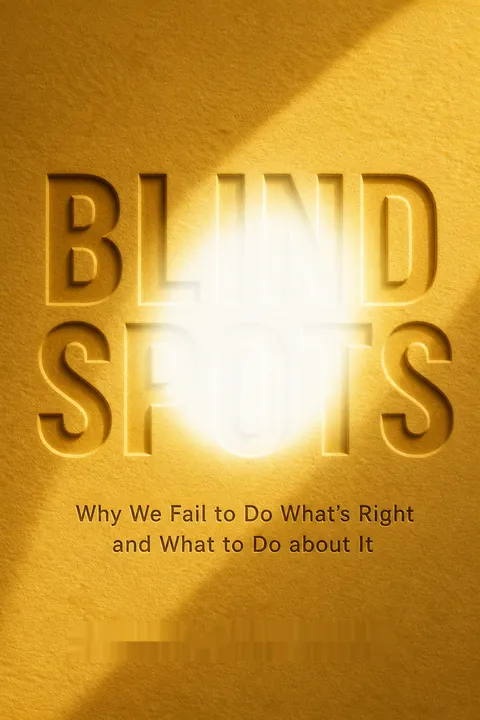


Key Takeaways
Treat ethical failure as a visibility problem, not just a character flaw
Good intentions are insufficient. The book’s central idea, bounded ethicality, describes how predictable limits in attention, judgment, and self-awareness can lead people to harm others while believing they are acting appropriately. This differs from deliberate corruption: a mortgage lender may focus on closing loans without fully seeing the consequences for borrowers, while a regulator may miss how lobbying shapes judgment. People also rate their own ethics more highly than others’ ethics, even though everyone cannot be above average.
The Challenger illustrates the cost. Engineers and managers assessed shuttle safety using only launches with known O-ring problems, overlooking the comparison data from launches without them. Under pressure, they failed to see the pattern that could have warned them. The point is not that every failure is innocent, but that character-based explanations miss the ordinary processes that make preventable harm seem invisible.
What's striking is how this account moves ethical analysis from the question of who is bad to the question of what information and incentives make harm hard to see. That shift can improve prevention: systems can be examined before a crisis, rather than waiting for a villain to emerge. It also carries a risk. Explaining misconduct psychologically can sound like excusing it. The useful distinction is between understanding how a decision went wrong and deciding who remains accountable for the decision and its consequences.
Name the ethical stakes before optimizing a decision as business
Classification shapes conduct. Ethical fading occurs when the moral aspects of a choice recede from view, so a person treats it as a business, legal, or technical problem instead. The book argues that many ethics programs assume people already recognize a dilemma, an assumption that fails when ordinary work language and goals hide who may be harmed. Calling a shuttle launch a management decision, for instance, can make human risk feel like a secondary concern.
Slow thinking helps, but is not automatic. System 1 is quick, intuitive, and effortless; System 2 is slower and more deliberate. Under time pressure or mental overload, people rely more on intuition, and framing a choice as avoiding a loss can distort judgment. A useful response is to pause when instinct and analysis disagree. Each can audit the other: calculation may expose self-serving impulses, while discomfort may flag something the calculation omitted.
The emphasis on naming is powerful because categories direct attention. A spreadsheet labeled only with cost and probability may not contain a place for dignity, fairness, or foreseeable harm. Adding ethical language is not a magic cure, however. People can recognize a moral issue and still choose badly, especially when authority, pressure, or incentives are strong. The practical value lies in making moral consequences part of the decision’s working description, where they can be discussed rather than left outside the frame.
Audit favors and hiring for the people quietly excluded
Kindness can distribute unfairness. In-group favoritism is the tendency to favor people who resemble or belong to one’s own group. A recommendation for a relative or an extra chance for a familiar applicant can feel generous, yet scarce opportunities mean someone else loses access. At the University of Illinois, a shadow admissions route admitted applicants backed by influential officials, despite weaker records than many students admitted through the usual process.
Bias can operate without conscious hostility. The book calls ordinary prejudice the way everyday categorizing can produce implicit stereotypes, even among people who reject prejudice explicitly. In a hiring example, a recruiter’s enthusiasm for minority candidates did not prevent his later recommendations from favoring white candidates. The Implicit Association Test compares how quickly people pair categories, but its ability to predict individual behavior is contested. Its results are best treated as a prompt to examine decisions, not a verdict on character.
This section reveals why good intentions are a weak fairness test: the decision maker sees the person receiving help, while the people displaced remain abstract. A stronger audit examines patterns across outcomes, including who receives interviews, offers, exceptions, and access to influential advocates. The IAT can be informative as a cue for scrutiny, but a single score should not substitute for evidence about behavior. Process checks matter because unconscious associations are difficult to correct through self-confidence alone.
Use an outsider’s fairness test before claiming your share
Self-interest can rewrite fairness. Egocentrism is the tendency to notice one’s own contributions and interpret ambiguous evidence in one’s own favor. In a study of four-author research papers, the authors’ combined estimates of their contributions averaged 140 percent of the total. Each person could be sincere and still leave others feeling shortchanged. Similar distortions appear in couples’ estimates of housework and in disputes where opposing sides remember different facts as decisive.
Scarcity magnifies the bias. Fishing groups in a simulation each judged their own harvest share fair, but their claims together exceeded the total sustainable catch. The authors recommend judging fairness from behind a veil of ignorance, a test associated with philosopher John Rawls: evaluate the arrangement without knowing which position will be yours. This is especially useful when resources are limited, evidence is uncertain, and each party can tell a plausible story about deserving more.
The key insight is not simply that people are selfish. It is that people can sincerely build a fairness argument from the evidence most available to them, especially their own effort and sacrifice. A role-blind procedure can interrupt this pattern by making the rule acceptable before anyone knows who benefits. Such procedures do not resolve every value conflict, and they may overlook unequal starting conditions. Still, they turn fairness from a contest of confidence into a question about whether the same rule works from every seat.
Plan for your future self to choose differently under pressure
The decision-maker changes with the moment. The should self reflects considered principles; the want self responds to immediate desire, pressure, and self-interest. People often predict that the should self will prevail, then act differently when a real incentive appears. In one study, most women predicted they would challenge an interviewer’s inappropriate questions, but none refused to answer when actually asked. The abstract forecast did not capture the desire to get the job.
Memory can protect the self-image. Afterward, people may reinterpret choices, forget inconvenient details, or gradually shift their standards. A consultant who first pads a timesheet by a small amount may come to treat the practice as normal. To reduce this gap, imagine the concrete pressure before it arrives, rehearse a response, and make a commitment visible to someone trusted. Review decisions soon afterward, before memory has had much time to turn a self-serving story into the official version.
This is a practical account of why moral resolutions often collapse at the point of action: plans are made in calm conditions, but choices occur amid social and material pressure. Rehearsal and precommitment help by moving some effort out of the hot moment. Yet preparation cannot anticipate every dilemma, and public commitments can become performative. The strongest safeguard combines advance planning with honest review, so a person can learn from a lapse rather than either denying it or treating one mistake as proof of a fixed identity.
Look for incentives and distance that hide others’ misconduct
Observers have blind spots too. Motivated blindness is failing to notice another person’s wrongdoing when recognizing it threatens the observer’s interests. Auditors paid by clients, for example, may unconsciously favor those clients. Indirect blindness describes judging an action less harshly when harm is carried out through an intermediary. In the book’s drug-pricing example, people criticized a company less when it sold a medicine to another firm that then raised the price, even though patients still faced the harm.
Gradual change and outcomes distort judgment. People are less likely to detect misconduct that worsens in small steps than a sudden violation. They also tend to judge a decision by its result, not just by the process used. That can delay criticism until victims are visible. When evaluating conduct, examine who benefits, who performs each step, how standards changed over time, and whether the same process would seem acceptable if it had produced a different outcome.
These patterns show why accountability must follow the structure of an action, not just its most visible actor. Delegation can diffuse responsibility, while a gradual shift can make each new breach seem only slightly worse than the last. A useful countermeasure is to compare cases side by side and track changes over time. Still, outcome-based concern is not inherently irrational: actual harm matters. The danger is treating a lucky result as proof that a risky or unfair decision was sound.
Replace ethics theater with systems that reward the right means
Rules can produce the behavior they target. Organizations often rely on codes, training, targets, monitoring, and penalties. But narrow goals can cause employees to ignore everything not measured, while weak fines can recast a moral duty as a purchasable service. In one day-care example, late pickups increased after parents were charged a fee. The penalty changed the perceived question from whether to arrive on time to whether staying late was worth the price.
Culture often beats the handbook. Informal norms teach employees what is really rewarded, tolerated, and punished. Enron had a formal ethics code, yet its culture elevated competition and financial success. By contrast, the book describes a safety culture in which people can raise concerns without being punished. Leaders should inspect actual incentives, workplace stories, euphemisms, and the fate of people who speak up. A code is useful only when daily practice supports its message.
This section’s strongest contribution is its focus on the gap between official values and lived expectations. Employees learn from promotions, workload, silence, and peer reactions, often more than from a signed policy. That insight also cautions against assuming every compliance system backfires: enforcement can deter harmful conduct when well designed and credible. The design question is whether rules clarify responsibility and support ethical judgment, or merely teach people to calculate detection risk and search for loopholes.
Treat manufactured doubt and policy inertia as ethical hazards
Institutions can normalize preventable harm. The book traces failures in tobacco regulation, auditing, and climate policy to conflicts of interest, political pressure, and public inattention. Tobacco interests prolonged uncertainty about health risks; accounting firms resisted reforms that threatened profitable client relationships. In each case, decision makers could demand conclusive proof of a specific harm while ignoring how the structure itself predictably created risk.
Delay has a strategy. Status quo bias is the tendency to favor existing arrangements over change, even when change could bring broad benefits. The authors describe tactics used to preserve that inertia: obscure the evidence, demand a definitive smoking gun, and shift the public argument as old claims become untenable. Citizens and officials should ask who benefits from uncertainty, what evidence is being withheld or discounted, and whether waiting for certainty transfers costs to people with less power or to future generations.
The institutional lens expands responsibility beyond individual choice. A policy can be corrupting even when participants follow formal rules, if the arrangement predictably rewards distortion and blocks correction. The book is persuasive that uncertainty can be strategically exploited, though uncertainty itself is not proof of bad faith. A careful response distinguishes genuine scientific disagreement from manufactured doubt by examining evidence quality, incentives, and whether claims change when earlier defenses fail.
Build ethical choices into defaults, rehearsal, and decision systems
Make the better action easier to choose. At the individual level, anticipate pressure, rehearse a principled response, and use precommitments that limit tempting shortcuts. At the organizational level, identify informal pressure points and make it safe to raise concerns. At the societal level, design choices around predictable human behavior rather than assuming everyone will pause and reflect.
Small design choices can have large effects. Organ-donation systems with opt-out defaults have far higher consent rates than opt-in systems, though people retain a choice. The book also notes that expressing fuel use as gallons per mile can make savings clearer than miles per gallon. A delayed start date for a policy can increase support by giving people time to consider long-term benefits. These approaches do not replace informed consent or debate; they make consequences more visible and constructive choices easier to enact.
The practical thread running through these interventions is design: ethical behavior becomes less dependent on heroic self-control when choices, feedback, and defaults support it. This is a powerful complement to moral education, which can tell people what matters without changing the conditions under which they decide. The important boundary is transparency. Defaults and framing can serve public interests, but they can also manipulate. A sound intervention preserves meaningful choice, states its purpose openly, and gives affected people a way to challenge the design.
Analysis
Blind Spots reframes ethics as a problem of human judgment under pressure, not merely a contest between virtuous and corrupt people. Its most important move is to connect three levels that are often studied separately: the individual who fails to notice a moral dimension, the organization that rewards behavior without regard to its means, and the institution that preserves rules benefiting a narrow group. The same mechanisms recur across these levels. Attention narrows, self-interest shapes interpretation, responsibility disperses, and convenient stories preserve a favorable self-image.
The book’s examples make this mechanism vivid. Challenger managers did not need to desire a disaster to make a disastrous decision; they could focus on incomplete data and a launch schedule. Auditors did not need to consciously falsify an assessment for client dependence to compromise judgment. A person who recommends a relative can feel generous while contributing to an unfair allocation. Such examples help explain why ethics codes and exhortations alone often fail: they treat awareness and intention as if they were reliable starting points.
The framework is strongest as a diagnosis and as a guide to prevention. It encourages audits of incentives, information flows, informal norms, and policy defaults. Its account is less complete when moving from explanation to moral responsibility. If bias is pervasive, institutions must compensate for it, but individuals still make choices and can be held accountable for foreseeable harm. The challenge is to avoid both extremes: treating every failure as deliberate malice, or treating predictable bias as an excuse.
The most useful conclusion is procedural. Ethical improvement requires practices that expose conflicts, compare alternatives, preserve dissent, and review decisions before outcomes rewrite the story. These safeguards cannot settle every disagreement about what is right. They can, however, reduce the chance that the relevant people, harms, and trade-offs disappear from view before a choice is made.
Review Summary
Blind Spots explores how people often behave less ethically than they believe, due to psychological biases and blind spots. The book examines unintentional unethical behavior in individuals and organizations, offering insights from behavioral ethics research. Readers found it thought-provoking and relevant, particularly for business and leadership contexts. Some praised its clear arguments and practical implications, while others felt it was repetitive or dry at times. Overall, reviewers appreciated the book's examination of ethical decision-making and its potential to help readers recognize their own blind spots.
Glossary
Behavioral ethics
How people behave ethicallyA field that studies how people actually behave when they encounter ethical questions, rather than only how they should behave according to moral principles. It examines psychological influences such as attention, incentives, social pressure, and self-interest to explain why conduct can diverge from a person’s stated values.
Bounded ethicality
Unseen limits on ethical conductSystematic psychological constraints that can lead people to make choices harmful to others, despite those choices conflicting with their conscious beliefs and preferred values. These limits often operate without awareness, so a person may not recognize that a decision has ethical stakes or that self-interest has shaped their judgment.
Bounded awareness
Missing relevant informationThe tendency to exclude important information from judgment by placing narrow or arbitrary limits around a problem. A decision maker may focus on data that is immediately available or on a single assigned task, while overlooking information needed to understand consequences. The omitted information can be visible and relevant without entering awareness.
Ethical fading
Moral stakes recede from viewA process in which the ethical dimensions of a choice become less salient or disappear from consideration. Workplace goals, incentives, language, and routines can make a dilemma appear to be only a business, legal, or technical decision. When the moral dimension fades, people may act against their own values without experiencing the choice as an ethical test.
System 1
Fast intuitive thinkingA mode of thought that is quick, automatic, effortless, implicit, and often emotional. It efficiently handles many routine decisions, but can rely on shortcuts and immediate impulses. Under overload or time pressure, people may depend on it even when a decision has important ethical consequences that deserve more deliberate attention.
System 2
Slow deliberate thinkingA mode of thought that is conscious, effortful, explicit, and more analytical than intuitive processing. It supports careful comparison of options and consequences. The book argues that important ethical decisions warrant this kind of reflection, while also emphasizing that deliberate analysis should be checked against feelings that may reveal omitted harms or concerns.
Want self
Immediate, self-interested preferenceThe aspect of a person that responds to immediate desires, emotions, pressure, and short-term rewards. It can dominate when an actual decision arrives, even if the person previously expected to follow more considered principles. The term helps explain the gap between planned ethical behavior and choices made in the moment.
Should self
Considered principles and idealsThe aspect of a person that reflects deliberate judgment about what one ought to do, including ethical commitments and long-term aims. It often shapes predictions and plans made before a decision, but may lose influence when immediate incentives, stress, or visceral needs become salient.
Motivated blindness
Overlooking self-serving misconductThe failure to notice another party’s unethical behavior when recognizing it would conflict with the observer’s interests. A financial, professional, or social relationship can bias what information people perceive and how they interpret it. The bias may operate without a conscious decision to protect the other party.
Indirect blindness
Discounting harm through intermediariesThe tendency to judge misconduct less harshly when a person or organization causes harm through another party rather than acting directly. The intermediary can make the original actor seem distant from the outcome, even when the consequences are foreseeable. Comparing direct and indirect versions of a choice can help expose this distortion.
Outcome bias
Judging decisions by resultsThe tendency to evaluate the quality or ethicality of a decision based on what happened, rather than on the process and information available when the choice was made. A harmful outcome can make a decision seem worse, while a fortunate outcome can make a poor process appear acceptable. The bias can delay scrutiny until damage becomes visible.
Ordinary prejudice
Bias from everyday categorizingThe book’s term for prejudice that can emerge from ordinary processes of categorizing, perceiving, and judging people. These implicit associations can affect even individuals who consciously reject discrimination. The Implicit Association Test is discussed as one way to detect associations, though the book notes that its ability to predict individual behavior is contested.
Agnotology
The production of ignoranceA term used for the cultural production of ignorance rather than knowledge. In the book, it describes how organized interests can preserve uncertainty by obscuring or disputing evidence, as tobacco companies did when communicating about smoking and disease. The concept directs attention to how confusion can be actively cultivated, not merely arise from a lack of information.
Status quo bias
Preference for existing arrangementsThe tendency to favor the current state of affairs over a proposed change, often because potential losses from change feel more important than possible gains. The book connects this inertia to institutional reform: when evidence is uncertain or change imposes immediate costs, existing arrangements can persist even when they create broad, long-term harm.
Future lock-in
Delayed policy builds supportA choice-design technique in which a policy is scheduled to take effect in the future rather than immediately. The book’s research suggests that a delay can make people more willing to support policies they believe are beneficial but dislike in the short term. Advance notice can also give individuals and organizations time to adjust.
Ethical sinkholes
High-risk organizational conditionsAreas of an organization where ethical misalignment is more likely because of conditions such as uncertainty, time pressure, short-term focus, or isolation. These conditions can narrow attention and weaken the influence of ethical standards. Identifying them helps leaders target safeguards where informal pressures are most likely to undermine stated values.
About the Author
Download PDF
Download EPUB
.epub digital book format is ideal for reading ebooks on phones, tablets, and e-readers.








