

Plot Summary
The Arena's Impossible Choice
Zuz's body lies at Brexley's feet when Istvan Markos orders her, Hanna, and Scorpion to fight. Brexley refuses to obey the man who trained her, and Hanna refuses to kill her friends. Istvan answers by bringing Hanna's parents into the stands and having Albert shot when she hesitates. Scorpion offers himself to spare Brexley, but Hanna, in grief and fury, turns on Brexley instead.
Brexley knocks Scorpion unconscious, then fights Hanna without defending herself fully, hoping Hanna can survive by appearing to satisfy Istvan. Before Hanna can kill her, Brexley's uncle Andris intervenes. Istvan rejects his offer to take her place, instead forcing Andris and Brexley into a duel where only one may leave alive.
Istvan's contest is not really a test of allegiance. It is a machine for manufacturing guilt: every available choice requires someone to harm a person they love, while the ruler reserves the right to change the terms. Brexley recognizes the trap and tries to redirect Hanna's violence toward herself, but her attempt also reveals how little control she has over the spectacle. Hanna's refusal to become an executioner is treated as treason, while her father's death turns her grief into the very weapon Istvan wants. The arena makes political obedience intimate and bodily, converting private bonds into leverage.
Andris's Last Gift
Andris accepts the arena's terms with the resolve of a man who believes Brexley must live, while she cannot bear to fight the uncle who once raised her. He tries to reveal that she is more than Istvan understands, but Brexley insults Istvan loudly enough to drown him out. The guards throw Andris into the fire.
Brexley breaks free long enough to reach him, but his burns are beyond healing, and she obeys his plea to end his suffering with a gunshot. Istvan praises her survival as though it were a successful lesson. Later, four guards corner Brexley in a shower, but she beats them down. Warwick arrives, and their intimacy rekindles the bond that restores her dormant power and awakens the name The Grey.
Brexley's mercy is inseparable from violence: the act that releases Andris from pain also makes her the person who kills him. The difference between those meanings cannot be settled by intention, which is why Istvan's congratulation feels like another assault. He tries to claim her action as proof that his training worked, but Brexley refuses his interpretation even as the deed changes her. Warwick offers neither absolution nor a way around grief. Their renewed connection instead gives her a means to endure it, while its return awakens a power whose scale she still cannot measure.
The Factory Beneath Them
Warwick takes the blame for the shower-room attack and is sent to the hole, leaving Brexley imprisoned among the people she hopes to organize. Brownies Opie and Bitzy carry messages, while Brexley asks Rosie, Hanna, Nora, and the others to study guard routines and search for a way out. A new prisoner, Tracker, appears alive despite the group believing he died.
He says HDF recovered him from a coma, and Brexley suspects he was used in Istvan's experiments. When a human prisoner dies by suicide, Brexley's power briefly returns the woman's spirit to her body, but the woman dies again. Nora then reveals that Istvan's factory has three underground levels and a rail link, and that Albert had learned enough to fear him before he was captured.
Věrhăza turns observation into a survival practice. Brexley cannot command guards or use her full magic, so she builds a different kind of power from scraps of information, informal loyalties, and the small creatures other prisoners overlook. The failed attempt to return the dead woman is especially revealing: Brexley's gift can cross a boundary, but crossing it does not mean she controls what lies beyond. Nora's account connects the prison's daily labor to a much larger logistics system. The factory is not merely a site of cruelty; it is infrastructure designed to move the consequences of cruelty outward.
A Revolt Too Soon
Brexley turns her scattered observations into an escape plan, hoping to open the factory gate during the next Games, when guards will be distracted. She learns from Killian, the fae ruler who designed Věrhăza, that the exits are protected by powerful Druid spells, with the factory gate the least secure point. The plan breaks early when Kristof attacks Rosie and Killian kills him with a guard's baton.
Prisoners surge into revolt, and Brexley tries to loosen the gate's spell. The gate opens, but she has not done it. An HDF convoy waits beyond it, and the fleeing prisoners run into a prepared ambush. Istvan arrives with reinforcements, recaptures the revolt's survivors, and announces the Games will happen that night.
The failed escape is caused by an act of protection, not by a lack of courage. Killian's refusal to let Rosie be assaulted ignites a revolt before Brexley's group is ready, and the prison's design turns their first opening into a funnel for mass capture. Brexley's mistake is not simply overconfidence in her magic. She has mistaken access for control: the gate can move, but that does not mean the route beyond it is free. The ambush exposes how thoroughly Istvan has planned for resistance. His system does not need to prevent every rebellion; it can make rebellion serve as a pretext for tightening its grip.
The Arena's Living Beasts
Istvan gathers Brexley's friends in the arena and presents them to political allies, including Czech Prime Minister Leon, the fae noble Sonya, and her son Iain. Killian recognizes Iain as the spy who bombed his palace. Istvan then releases hungry, oversized animals among the prisoners. Brexley and Warwick organize the others into pairs and find torches and poles, but the animals overwhelm them.
Maddox dies trying to save Warwick from a bear. Grief and fear tear through Brexley, and lightning and wind answer her before she can direct them. Every animal in the arena dies. Istvan watches her new power closely, then orders guards to seize Brexley. Warwick offers himself as well, and Istvan takes them both away for testing.
The arena makes a brutal distinction between skill and scale. Brexley's group can improvise weapons, divide threats, and protect one another, but none of those tactics can match the force released against them. Maddox's death pushes Brexley past deliberate action into an ungoverned response, and the resulting slaughter saves the survivors while revealing that her power may not distinguish between what is necessary and what is merely nearby. Istvan sees the same event differently: not as a warning about uncontrolled magic, but as evidence that Brexley might be useful. His interest transforms rescue into capture, since extraordinary survival only increases her value to him.
Blood Is Not a Cure
In Istvan's underground laboratory, Brexley discovers rows of fae being drained and human patients held in tanks after receiving fae essence. Istvan claims the treatment cures disease, though his subjects remain dependent on him and some die from blood clots.
He has placed his son Caden in a tank and believes Brexley's blood can create a stronger human-fae species. Dr. Karl takes Brexley's blood for a transfusion trial, but the recipient dies violently.
Lena, a worker forced to serve the lab, secretly warns Brexley that Istvan plans a public demonstration. When Istvan orders Warwick's essence transferred directly into Caden, Brexley's rage overwhelms her restraints. She unleashes wind and lightning, shatters the tanks, and floods the laboratory.
Istvan's experiments borrow the language of medicine while removing the conditions that make healing ethical: consent, transparency, and care for the person receiving treatment. He can point to a cured illness, yet the supposed cure depends on turning bodies into resources and hiding the fatal risks. Brexley's blood seems to promise a shortcut to power, but the failed transfer demonstrates that biological material cannot be treated as a simple recipe. Her eruption destroys the apparatus and interrupts the procedure, but not cleanly. The flood is at once resistance and catastrophe, a force that saves people in the moment while leaving her unable to know who else it has killed.
The Children Behind Bars
The laboratory flood leaves Caden alive, and Warwick's touch helps bring him back to consciousness. Caden reveals that he had been pretending to serve his father, but he will not leave the building because his mother, Rebeka, is imprisoned there. Warwick pulls Brexley toward the escape route, yet she stops at a cell of starving fae children.
She breaks its lock while Warwick fights the guards behind her. The children lead them toward the upper level, where Brexley and Warwick shoot their way through a second checkpoint. One child is killed, and another is wounded, but most escape through a gate into the railway station. Brexley and Warwick stay behind long enough to cover them, then flee toward the Savage Lands.
Brexley's decision to free the children complicates the usual arithmetic of escape. Warwick sees the immediate danger and wants them moving; Brexley sees the people who will be abandoned if survival means only saving the strongest adults. Their disagreement is not a contest between compassion and pragmatism, since both understand the danger. It is a dispute about what survival is for. The children contribute actively to their own escape, locating stairs, finding keys, and helping one another, rather than functioning only as symbols of innocence. Their losses keep the rescue from becoming a clean moral victory.
The Border Ambush
Wounded and pursued, Brexley and Warwick find refuge in a butcher shop run by Gawel, an old associate of Warwick's who removes the bullets from their bodies. Beneath the shop, an opium den gives them a brief place to rest and lets their physical and magical connection recover.
Brexley then follows the fae book's visions to Killian's cabin, where Tad, the Druid she thought dead, has preserved both the book and the nectar. Warwick is reunited with his sister Eliza and nephew Simon. Before the group can make a larger plan, a raid catches them near the border. Kalaraja, a fae operative working for Istvan, drugs Brexley and Warwick and returns them to Věrhăza.
This apparent refuge restores several things the prison stripped away: Warwick's physical strength, Brexley's access to the book, and the possibility of family beyond the immediate circle of prisoners. Yet relief also creates exposure. The opium den is a place of shelter because Warwick has old ties there, while the cabin's protections cannot erase the trail left by their movements. The sequence shows that intimacy and recovery are not exits from political danger; they are brief conditions in which people can recover enough to act again. Kalaraja's capture ends that breathing space by converting their renewed connection into another route back to confinement.
The Nectar's Keepers
At the cabin, Tad explains that Brexley's mother, Eabha, and her necromancer clan are returning to their former state after Brexley brought them back from death. Their magic cannot hold them in human life indefinitely.
The nectar has also grown stronger, drawing power from Brexley's bond with Warwick. Eabha appears outside the cabin and communicates through the necromancers' link, warning Brexley not to yield to the nectar's lure. That night Brexley nearly reaches for it, but Warwick pulls her away.
Later, she senses the prison through her connection to Scorpion and witnesses guards kill Sloane while beating Killian. The vision convinces her that the rescue cannot wait. She and Warwick decide to seek help from Brexley's uncle Mykel in Povstat.
The cabin gives Brexley answers that are also losses. Her mother is present, but the return of the clan's necromantic condition means that their reunion cannot restore the ordinary family life she imagined. At the same time, the nectar offers an increasingly seductive answer to grief: more power, perhaps even the power to undo what cannot be undone. Eabha's warning matters because it comes from someone whose presence is itself precarious. Warwick becomes Brexley's counterweight, not by taking away the temptation but by reminding her that a choice remains. The killing of Sloane then turns that private struggle outward, making delay feel like complicity.
The Return to Věrhăza
Brexley, Warwick, and Zander leave the cabin to reach Mykel, with Eliza insisting on joining them. At the border, HDF fighters ambush the group. Warwick and Brexley fight back, but Kalaraja shoots them with drug darts, and both are taken alive. Back at Věrhăza, Istvan gives Brexley a black uniform and a goblin-metal collar that suppresses her power.
He uses her punishment to teach the prisoners that anyone who helps her will be shocked as well. Brexley finds Rosie, Hanna, Birdie, and the others badly abused, while Warwick is forced to shovel coal beside the machinery. Killian is missing, and Scorpion tells Brexley that he was beaten after trying to protect Rosie and has been sent to the hole.
The return reverses the temporary freedom of the cabin and makes captivity more dangerous because Brexley now knows what the prison contains. Her black uniform marks her as an outsider, while the collar turns her body into a control panel Istvan can use to punish everyone around her. This is a deliberately social form of coercion: the guards want prisoners to associate Brexley's resistance with their own suffering. The sight of her friends' injuries tests whether she can remain strategically quiet. Her instinct is still to intervene, but the prison has made clear that individual courage can be weaponized against a whole group.
The False Ally's Reveal
When Brexley attacks three guards who try to seize Rosie, Birdie, and Hanna, Boyd electrocutes her and throws her into the hole. There she finds Killian and Tracker, who has also been chained up after a fight. Brexley realizes that the pill-altered soldiers can pass through Druid wards, a weakness that could expose the cabin and the nectar.
Before she can act on the discovery, Istvan brings his prisoners to the arena. Tracker appears beside him in HDF uniform and admits, through his actions, that his return and imprisonment were a deception designed to learn where the nectar was hidden. He has retrieved it. Istvan kills Leon, asserts control over the leaders present, and announces that he will rule their region.
Tracker's betrayal exploits a vulnerability more intimate than a breached wall: Brexley's willingness to believe that someone left for dead might still be rescued. His cover works because it uses a plausible history, a believable injury, and her own guilt as camouflage. The Druid-ward revelation is therefore not merely tactical information; it is knowledge that has to be guarded from people close enough to weaponize it. Once Tracker delivers the nectar, Istvan no longer needs to pretend that his project serves an alliance of equals. The public killing of Leon makes explicit what the experiment's politics have implied: partnership was only a temporary arrangement until Istvan could claim command.
The Prisoners Become Predators
Istvan sends Brexley and her allies into the arena against the former HDF guards transformed by his pills. They move with human coordination but possess abnormal strength and a near-animal appetite for violence. Samu kills Nora by hurling a metal rod into her, and Hanna is left grieving while the others try to stay alive.
Brexley, Warwick, Caden, and Birdie fight the mutated soldiers, but the men keep recovering from wounds that should be fatal. Joska attacks Brexley, and she and Warwick bring him down with a metal bar through his neck. Before the fighters can decide whether he is truly dead, explosions strike the prison. The surviving prisoners take the blasts as a chance to flee toward the factory floor.
The mutated guards embody Istvan's political fantasy in physical form. He wants soldiers who can be directed like people but fight without the limits that make people vulnerable. Their bodies retain enough recognition to target old loyalties, yet their altered pain response makes ordinary combat rules unreliable. Nora's death shows how quickly grief must be deferred when the next attack is already underway, a forced compartmentalization the prison has trained into everyone. The bombs interrupt the arena's managed violence with an outside assault, but they do not restore order. They create a narrow opportunity, and the prisoners have to use it before the system closes again.
Tad Opens the Gate
The prisoners flood the factory while Tad works to break the prison's Druid spell. Brexley and Warwick guard him until the gate releases, then follow Istvan's convoy through the tunnel. A collapse blocks the vehicles, and the pair reach the surface to find Mykel, Eliza, and Zander leading a Povstat force against HDF.
Istvan tries to escape with Simon and the nectar. Warwick runs after the convoy, but the spelled gate electrocutes him and stops him cold. Brexley reaches his body and forces his heart to beat again. Tad has opened the way out, but Simon is still in Istvan's hands, so Brexley and Warwick press on through the rubble while the prison battle spreads behind them.
The escape is built out of cooperation across different kinds of power. Tad can undo the spell only by confronting it directly, while Brexley and Warwick protect him, and Mykel's force turns the prison's external perimeter into a contested battlefield. Yet freedom remains uneven: the gate opens for the prisoners but can still incapacitate Warwick, and the convoy carries away Simon and the nectar. Brexley's effort to restart Warwick's heart echoes her earlier attempts to cross the border between life and death, but this time their shared bond supplies a path back. The rescue has become a race in which the objective is no longer only escape.
Istvan's Final Confession
Warwick and Brexley catch up to Istvan near the Elizabeth Lookout Tower, where HDF and Povstat forces are fighting. They take out his guards, but Istvan holds Simon at knifepoint and forces Warwick to back away. He then reveals that he killed Brexley's father, Benet, after discovering Benet was helping fae and planning resistance.
Istvan had hidden the truth while raising Brexley, letting her grieve a death he had caused. When he presses the knife to Simon, Brexley seizes the fallen nectar and breaks her goblin-metal collar. Her magic surges beyond her control. Ghosts attack soldiers on both sides, and her lightning strikes the battlefield. Tad steps between her power and Simon, takes the blow, and dies.
The revelation about Benet changes Brexley's memories retroactively. The man who shaped her training was also the person who killed the father she mourned, making care itself part of Istvan's long deception. Faced with Simon's immediate danger and the accumulated weight of every loss, Brexley takes the nectar without first establishing what it will do to her. Its power gives her the means to strike back, but it also strips away the careful distinctions that usually govern her loyalties. Tad's death is the devastating cost: he protects a child from the force she has unleashed, making the catastrophe a consequence of both her power and his compassion.
The Grey Without Restraint
When Tad falls, Brexley understands that her magic has killed people throughout the battlefield, including Povstat fighters and prisoners who were not her enemies. The nectar lies emptied of power nearby, but her own force remains frighteningly vast. She has also nearly killed Simon and cannot tell whether her next surge will spare anyone.
While Warwick pursues Istvan, Brexley retreats from the scene, overwhelmed by guilt and the realization that she has become a danger to the people she meant to protect. Her action has stopped neither Istvan's escape nor the political crisis, and she does not return to Warwick's side. She vanishes into the surrounding darkness, leaving the survivors to face the dead she has made.
Brexley's final crisis is not a simple fall from heroism into villainy. It is the collapse of the distinctions on which her self-understanding depended: protection becomes lethal force, rescue becomes collateral damage, and righteous anger becomes indistinguishable from the power she opposes. The nectar does not create her grief or her capacity for violence, but it amplifies both beyond her ability to direct them. Her disappearance is therefore an act of fear and responsibility at once. By leaving, she prevents another immediate encounter with the people she might harm, yet she also abandons the relationships that could help her regain control.
The Wolf Follows Her
Warwick sees Istvan escape in an SUV with Tracker, Olena, and Ivanenko, and chases until a sound draws him back. Simon emerges from the woods, bleeding but alive, and Warwick carries him to Eliza. The reunion brings relief, yet Warwick soon feels the bond between himself and Brexley vanish. He returns to the battlefield and finds Tad dead, bodies scattered across the ground, and Brexley gone.
Ash and Scorpion confirm the scale of the loss, but Warwick cannot remain with the survivors. He searches the forest for Brexley, following the absence where their connection used to be. The novel ends with Simon safe among his family, Istvan still free with the nectar's political prize, and Warwick setting out to find the woman he loves.
The closing shift to Warwick's viewpoint gives the ending a second emotional register. His first duty is immediate and concrete: he finds Simon and returns him to Eliza, securing one small pocket of safety amid the wreckage. Only then can he confront Brexley's absence. The bond that usually lets them locate and steady one another has become a void, so pursuit replaces mutual contact. This is not a completed rescue but a promise of further conflict. Istvan escapes, the nectar's fate remains unsettled, and Brexley's power has outgrown her ability to trust herself. The final image holds love and danger together without pretending one can cancel the other.
Analysis
Blood Lands makes power visible through the body. Istvan's regime does not rely on ideology alone: it imprisons people, alters soldiers, drains fae, stages public executions, and turns prisoners into labor. Its central political claim is that violence can be justified as protection or progress, whether the object is a nation, a sick patient, or a family. The novel repeatedly tests that claim against consequences that cannot be prettified. A medical procedure kills its subject. A rescue leaves children dead. A magical victory kills people who were not its target.
Brexley's gift is defined by crossings: human and fae, life and death, discipline and instinct. The name The Grey gives this in-between condition an identity, but not a moral answer. She can return a spirit briefly, draw strength from Warwick, and command the dead, yet none of these abilities grants perfect judgment. Her deepest danger is not that she feels too little. It is that grief, love, and rage can become indistinguishable once amplified by power. The ending refuses to resolve that problem through a single act of heroism. Brexley saves people, harms others, and withdraws because she fears what she may do next.
Warwick offers an alternative to Istvan's possessive model of loyalty. He protects through mutual dependence, allowing Brexley to draw on his strength even when the exchange costs him. Still, love cannot make her choices safe or absolve her when they go wrong. The book's emotional force comes from holding both facts together: intimacy can keep someone alive, but it cannot control the consequences of power.
The cliffhanger widens the story rather than closing it. Istvan remains at large, political alliances have shifted, the nectar's fate is uncertain, and Brexley has disappeared after a catastrophe of her own making. The most urgent question is no longer only whether she can defeat the people who exploit power. It is whether she can live with the power she has used, and whether the bonds that once steadied her can reach her now.
Review Summary
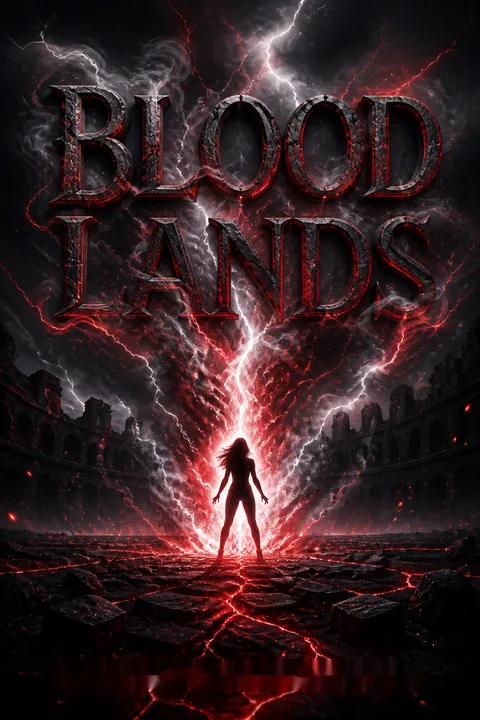
Blood Lands receives mixed reviews, with an overall positive rating. Many readers praise the intense action, character development, and addictive nature of the series. However, some criticize the repetitive plot elements and lack of progression. The book is described as dark and emotionally charged, with high stakes and brutal scenes. Fans appreciate the chemistry between characters and the world-building, while others feel the series is being stretched unnecessarily. Despite divided opinions, most readers express eagerness for the final installment.
People Also Read

Characters
Brexley Kovacs
The death-defying heirBrexley is a trained HDF fighter raised in Istvan Markos's household, taught to strategize, obey, and survive. Her relationships with the fae complicate the human-versus-fae loyalties she was taught to accept, while her instinct to protect vulnerable people repeatedly puts her in danger. She carries unusual powers connected to death, spirits, and an ancient source of magic, though she does not fully understand their limits. Her defining tension is between discipline and impulse: she can read a political trap, yet grief or fear can drive her to act before she knows the cost. Her resilience is not emotional invulnerability. It is the effort to keep choosing other people while carrying losses she cannot neatly resolve.
Warwick Farkas
The wolf-bound protectorWarwick is a feared fae warrior whose reputation for violence conceals fierce loyalty to the people he calls family. He and Brexley share an extraordinary magical connection that lets them sense, strengthen, and sometimes physically reach one another across barriers. He responds to danger with direct action, often placing himself between Brexley and harm, but his protectiveness can become controlling when he believes she is about to risk herself. His intimacy with her is as intense as his combativeness, and their relationship gives both of them access to strength they cannot summon as easily alone. Beneath the legend is a man who fears loss but rarely softens that fear into words.
Istvan Markos
The calculating generalIstvan is a senior HDF leader who once served as Brexley's guardian and instructor. He prizes discipline, influence, and political advantage, viewing people as assets whose loyalties can be purchased or coerced. He is adept at making cruelty sound like necessity and uses institutions, public spectacle, and personal history to control those around him. His investment in Brexley is never merely familial; he admires her intelligence and strength while expecting them to serve his ambitions. The contradiction makes him especially dangerous: he can express pride in her even as he engineers situations designed to break or exploit her.
Andris Takacs
Brexley's chosen familyAndris is Brexley's uncle by affection and history, a resistance leader who has been part of her life since childhood. His loyalty comes from love rather than blood or political convenience, and he offers her a model of leadership rooted in responsibility to others. He has experienced enough loss to understand that sacrifice is not romantic, yet he believes that people can still choose how they face danger. His bond with Brexley carries the warmth of a parent and the trust of a comrade. He is one of the few people able to remind her that survival matters because of the people and causes that remain.
Scorpion
The fierce fae confidantScorpion is a tattooed fae fighter with a blunt manner, a dangerous presence, and deep affection for Brexley. Their magical connection makes him a trusted ally, though the closeness between them does not displace her bond with Warwick. Scorpion balances tenderness with humor and is willing to take a personal risk to protect someone else. He understands the cost of combat and does not confuse bravado with courage. His relationships with the resistance and the other fighters give him a role as both a capable combatant and an emotional anchor when Brexley is overwhelmed.
Hanna Molnár
The conflicted soldierHanna is a human soldier raised within the same HDF culture as Brexley. She begins with a fierce hatred of the fae and a strong attachment to military obedience, but personal experience has complicated the categories she was taught to trust. Her relationship with Scorpion and her longstanding friendship with Brexley expose the conflict between institutional loyalty and individual care. Hanna is capable and disciplined, but she is not immune to grief, pressure, or fear for her family. Her struggle reflects the cost of being asked to prove allegiance by betraying the very people who have mattered to her.
Caden Markos
The divided heirCaden is Istvan's son and Brexley's childhood friend, raised alongside her in the same political household. Their history gives them a fluency with one another that persists even when circumstances make trust difficult. Caden has been trained to inherit power, yet his emotional loyalties do not always fit the ruthless worldview his father promotes. His reserve can make him difficult to read, especially when he is under pressure to perform obedience. He is caught between family expectation, political ambition, and the attachments formed before he understood the machinery surrounding him.
Killian
The imprisoned fae rulerKillian is a powerful fae leader who designed Věrhăza to prevent escapes, a fact that becomes painfully relevant when he is imprisoned there himself. He is polished, strategic, and guarded, with a history that reaches far beyond his public role. His authority rests not only on status but on the hard-earned ability to read people and plan several moves ahead. Brexley has a distinct connection with him, and their conversations expose his humor, old wounds, and private ideals. He is accustomed to command, yet captivity forces him to rely on others and confront the limits of his own design.
Tad
The ancient Druid guideTad is an exceptionally old and powerful Druid who has mentored Brexley and understands more than most about the magic shaping her life. His knowledge is vast, but it does not make him omniscient: he cannot simply undo every consequence of magic or guarantee a safe outcome. His physical frailty contrasts with the scale of his abilities, and he often depends on the practical care of those around him. Tad approaches Brexley with affection and caution, trying to help her understand a power that exceeds familiar categories.
Rebeka
The hidden political consortRebeka is a human political figure with a long history alongside Istvan and a close friendship with Nora. Her position once gave her access to elite circles, but she is perceptive enough to notice when the person beside her becomes dangerous. She values loyalty and tries to shield others from information that could put them at risk. Her disappearance leaves those who knew her searching for answers, and her relationship with Caden ties private family history to the struggle over political power.
Tracker
The ambitious field operativeTracker is a human fighter associated with the elite unit serving Brexley's uncle Mykel. He is physically capable, competitive, and proud of his skill, but his sense of status is fragile when he feels excluded or undervalued. He measures himself against the fae around him and is sensitive to the possibility that loyalty will not earn him equal standing. His mixture of competence and resentment makes him difficult to read, especially in a world where every faction competes to define what strength means.
Nora Molnár
A mother turned informantNora is Hanna's mother and Rebeka's longtime friend. She once accepted the security and money Istvan offered her family, choosing not to investigate signs that his factory concealed something monstrous. Captivity forces her to confront the price of that compromise. Nora is observant and practical, able to share details about the factory's tunnels and transport routes when an opening appears. Her care for Hanna remains central, but she also develops a more honest view of her own past choices.
Rosie
The defiant performerRosie is a performer and fellow prisoner whose quick wit and emotional openness distinguish her from people trained to conceal every weakness. She cares deeply about the others in the group and acts when someone nearby is in danger, even when silence would be safer. Her history leaves her vulnerable to guards who mistake her past for permission to abuse her. Rosie refuses to let that abuse define the whole of her identity, though the prison's violence takes a visible toll.
Ash
The observant fae allyAsh is a fae prisoner and close friend within Brexley's circle. His unusual, gentle manner and affinity with the natural world make him seem different from the hardened fighters around him, but he is not passive when danger comes. He can read the emotional current of a room and uses humor to puncture tension. His loyalty is expressed through practical action, especially when a plan requires people to trust one another quickly.
Maddox
The loyal resistance fighterMaddox is a combatant in the resistance and one of Scorpion's closest comrades. He approaches danger with the reflexes of someone used to protecting a team, not merely himself. His place among the fighters comes from accumulated trust and shared hardship rather than rank alone. He is part of the brotherhood that gives Brexley a wider sense of family beyond her childhood home.
Birdie
The fearless climberBirdie is a small, agile fighter whose size conceals surprising strength and nerve. She is quick to read a physical problem and find an unconventional route through it, making her especially useful when the group needs weapons or a way past larger opponents. Birdie combines confidence with a teasing sense of humor, and she does not wait for permission when action is needed.
Kitty
The resilient resistance fighterKitty is a fae fighter in the resistance, accustomed to working alongside people with very different temperaments. She is practical under pressure and contributes to the group's defense rather than seeking attention. The hardship of imprisonment tests her endurance and narrows the room she has to express herself, but her place in the resistance remains rooted in solidarity and shared purpose.
Lukas
The wounded loyalistLukas is a fae soldier connected to the Prague resistance and a member of the group trapped at Věrhăza. He is emotionally direct, especially where family is concerned, and carries old hurt about the people who left his life. His combat skills coexist with a sharper vulnerability than he likes to show. Lukas's loyalty is built from chosen comradeship, making betrayal by someone within that circle especially difficult for him to accept.
Eliza
Warwick's determined sisterEliza is Warwick's sister and Simon's mother. She is protective without being timid, and she insists on participating in dangerous plans rather than being sheltered by the men around her. Her relationship with Warwick is affectionate but not submissive; she knows his instincts and challenges his overprotectiveness. Eliza also develops a close bond with Zander, whose care for her and Simon becomes increasingly difficult to disguise.
Zander
The steadfast fae allyZander is a former soldier and trusted ally of Killian and Andris. He is measured and compassionate, often trying to anticipate danger before it reaches the people he cares about. His protective instincts can lead him to speak for Eliza when he should listen, but his concern comes from genuine attachment rather than a desire to control her. He combines military competence with a capacity for tenderness.
Eabha
Brexley's distant motherEabha is Brexley's mother and a member of a necromancer clan. Her circumstances have left her emotionally and physically remote from the daughter she barely had a chance to know. She communicates through the unusual bonds shared by necromancers and regards the protection of the nectar as a duty that can outweigh personal feeling. Beneath her restraint, she carries affection and pride in Brexley, though their connection is burdened by history and magic.
Iain
The underestimated courtierIain is a young fae who appears mild and unassuming in Killian's household. His low rank and quiet manner make him easy for powerful people to overlook. He is connected to Sonya and to the political struggle surrounding Killian's rule. Iain's place in elite circles shows how a person can use invisibility as a form of access, though his ambitions and loyalties are not immediately clear.
Sonya
The ambitious fae nobleSonya is a fae noble descended from an old courtly line and connected to the Czech political leadership. She believes ancestry and power should restore her kind to a position she considers rightful. Her intelligence is paired with a talent for using personal relationships as political instruments. She can appear polished and controlled, but her loyalties are governed by ambition rather than simple allegiance to either humans or fae.
Boyd
The prison's brutal enforcerBoyd is a fae guard who has learned to survive by aligning himself with whoever holds power. He uses intimidation and calculated cruelty to control prisoners, and he understands how to make violence serve as a warning to everyone watching. His contempt for Brexley is sharpened by the belief that she has disrupted the order he wants to preserve. He is more than a blunt instrument: he watches for weakness and uses it deliberately.
Mykel
The resistance commanderMykel is Brexley's uncle and a leader in Povstat, the resistance movement challenging Istvan's expanding power. He commands people and resources beyond Brexley's immediate circle, making him a necessary ally in any effort to confront the prison and its wider political network. His relationship to Brexley carries both family significance and strategic weight. He is not present for much of the story, but his decisions affect the possibilities open to the resistance.
Plot Devices
The Nectar
A dangerous power sourceThe nectar is an ancient, immensely powerful substance tied to Brexley's unusual magic. It can intensify her abilities, attract her through a powerful sense of connection, and become more potent when she and Warwick share energy. Istvan wants it as a means to strengthen himself and expand his control. The substance is not a neutral tool: its power can overwhelm Brexley's judgment and turn a desire to protect people into indiscriminate destruction. Its changing strength also links personal magic to political danger.
Fae Essence Treatments
Manufactured soldiers and curesIstvan's experiments transfer fae essence into humans, either through pills or through laboratory procedures. The treatments give human soldiers fae-like strength, but the outcomes vary. Some subjects become dangerously feral, while others die after receiving blood from Brexley. Istvan presents the work as a medical advance and a way to create a stronger species, concealing its casualties and the dependence it creates. The experiments connect his prison system to his military expansion.
The Shared Bond
A living link between fightersBrexley and Warwick's magical connection lets them sense one another across distance and, at times, share energy or appear to each other when physically separated. The bond can strengthen them, help Warwick recover, and give Brexley a way to endure pain. It also deepens as their relationship grows, becoming more powerful and more difficult to separate from their other magic. The link is a source of comfort, but it can also be depleted or disrupted by drugs, goblin metal, and the demands they place on it.
Věrhăza's Wards
A prison built to hold magicKillian designed Věrhăza as a near-impregnable prison, using deep construction, guarded exits, and Druid spells to restrict escape. The factory gate and the tunnels linking the facility to a railway station become crucial parts of the prison's geography. The wards do not affect every kind of power equally, however, and the artificial magic of Istvan's altered soldiers can bypass protections that block natural fae magic. That flaw turns the prison's defenses into a threat to the sanctuary where the nectar is hidden.
The Games
A political theater of violenceIstvan's arena contests force prisoners to fight under conditions he controls, turning executions into public entertainment and political demonstrations. He manipulates personal relationships to make each contest crueler, using family members and allies as hostages or opponents. The Games also let him display new threats, including mutated soldiers and dangerous animals, while observing which prisoners can be exploited. For Brexley, the arena repeatedly tests the line between survival and complicity, and its spectacle helps Istvan disguise political terror as order.
Savage Lands Series




About the Author
Other books by Stacey Marie Brown
Download PDF
Download EPUB
.epub digital book format is ideal for reading ebooks on phones, tablets, and e-readers.








