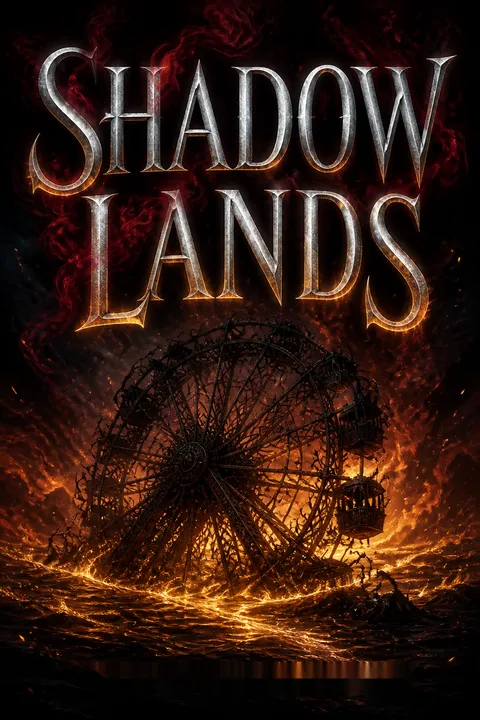


Plot Summary
Prologue
Brexley runs through the night carrying the box of nectar and the knowledge that she killed Tad, the Druid who tried to protect her. Her uncontrolled magic also killed hundreds during the prison escape.
Convinced that staying near Warwick and the others will put them in danger, she keeps moving until exhaustion drops her beside a stream. The opening leaves her alone with the two forces she fears most: the power she carries and the possibility that she herself has become its most dangerous instrument.
The opening makes flight both an act of protection and an evasion of grief. Brexley leaves because she believes separation can shield the people she loves, but her self-condemnation narrows her identity to the worst thing her power has done. The box is not merely a weapon she carries away; it is a material version of her divided sense of self, at once life-saving and destructive. By beginning after catastrophe, the story asks whether responsibility means disappearing or learning to remain present without denying the harm one has caused.
Sonya Takes Budapest
Two weeks after Brexley vanishes, Warwick and Ash watch Sonya move into Killian’s Budapest palace and claim authority while General Markos remains missing. At the rebel base, Killian, Mykel, Scorpion, and Caden argue over the next threat. Caden’s mother, Rebeka, reveals that Markos built another laboratory in Ukraine and kept its plans in his HDF office safe.
Before Caden can explain how he knows the safe’s location, Warwick identifies it too, drawing on a mysterious connection with him. The shared knowledge confirms that Markos’s experiments altered both men. Since the group cannot find the Ukrainian lab without the plans, Killian decides they must infiltrate HDF.
Sonya’s takeover turns political uncertainty into a concrete contest over territory, while Rebeka’s revelation widens the danger beyond Budapest. The uncanny overlap between Warwick and Caden’s knowledge makes the laboratory plot personal: Markos has not simply built weapons, he has altered the bodies and boundaries of people around him. The scene also sets up competing models of authority. Killian wants control because he is responsible for a city, but his allies challenge his right to decide alone. Crisis therefore tests leadership as coordination, not merely force.
Rosie Volunteers
Killian rejects Rosie, a human former stage performer, when she offers to infiltrate HDF, arguing that she cannot defend herself. Rosie insists that her acting experience makes her unusually suited to deceive soldiers, and the team accepts her proposal. Scorpion goes to the black market for hidden cameras and earpieces, accepting a binding future favor from his contact.
At the market, he brings the withdrawn Hanna with him and coaxes her to eat. Her animal-like hunger frightens her, but Scorpion reassures her that she is not becoming one of Markos’s monsters. The contact warns that royal bounty hunters are coming for Brexley and the nectar, adding another pursuit to the team’s mission.
Rosie’s offer contests the assumption that combat skill is the only useful form of courage. Her performance history becomes operational expertise, while Killian’s reluctance exposes how quickly protection can become paternal control. Scorpion’s market trip gives care a practical shape: he cannot cure Hanna’s trauma, but he can get her out of bed and back into contact with food and other people. Her frightening appetite complicates that recovery. The black-market favor also makes the rescue effort morally costly before it begins, showing how survival in this world binds people through debts as well as loyalties.
The Dockside Ambush
At the boat docks, Scorpion, Hanna, and Caden meet the arms dealer while Birdie keeps watch. Armed attackers surround them. Hanna senses that the assailants are like her, human subjects altered by the fae pills, and Caden suddenly releases a force he cannot explain. Warwick and his fighters arrive in time to break the attack.
Back at the base, the group identifies the dead attackers as Sonya’s men, but Hanna’s warning suggests she is building an army from the same formula. Warwick later learns through Opie and Bitzy that Sonya has reopened Halálház, expanding the old prison into a vast testing site. The discovery changes the mission from gathering intelligence to preventing mass production.
The attackers make the cost of Markos’s research visible in people who have been transformed into weapons and sent against their former allies. Hanna’s recognition matters because she is both a witness and a possible future version of the soldiers she identifies. Caden’s unexplained power offers a parallel warning: the boundary between human and fae is being crossed by coercion, not choice. Warwick’s sub-fae informants add an irreverent counterpoint, but their report is grave. The prison’s conversion into a factory shows that individual experimentation has become organized policy.
The Circus Shelter
A fae ringmaster named Jethro finds Brexley unconscious beside a stream and brings her to Circus Mystique, a traveling home for people rejected by ordinary fae society. Brexley uses the name Laura and earns her place by mending clothes. At a performance, the crowd’s cheering throws her back into memories of the prison Games, and her panic releases lightning that destroys the tent lights.
Esmeralda, the troupe’s fortune teller, recognizes the danger around her. Brexley later learns that Tad’s spirit can reach her through Esmeralda. He urges her to learn control over her own magic rather than depend on the nectar, and she begins training among the spirits of the dead.
The circus offers belonging without demanding that Brexley pretend to be unharmed. Her usefulness is modest and tangible, a repaired garment rather than a heroic victory, which lets recovery begin in ordinary labor. Yet the performance shows that trauma is not past merely because she has escaped its location: applause recreates the sensory pattern of the Games and triggers dangerous magic. Esmeralda and Tad give her a path beyond both denial and self-punishment. Their instruction reframes control as a practiced relationship with power, not a claim that she can erase what it has done.
Inside Markos’s Office
Rosie and Killian slip into HDF through a hidden gate, guided remotely by Caden. Instead of quiet barracks, they find hundreds of soldiers drilling under Sergiu, the Romanian politician’s son once positioned to marry Brexley. When their equipment loses connection, Rosie’s acting helps them pass an HDF instructor, Bakos, who recognizes their distress signal and creates a distraction.
In Markos’s office they hide as Lieutenant Andor meets with Kalaraja, a hired killer searching for Brexley. The men confirm that the Unified Nations has sent bounty hunters and that an assault on Killian’s base is imminent. Rosie and Killian take files from Markos’s safe, then race to warn their people.
The infiltration overturns the group’s assumption that HDF is merely a weakened human institution. Its empty corridors conceal an army whose discipline and alliances point toward a larger regime. Rosie’s performance skills prove useful under pressure, but Bakos’s intervention adds an older loyalty that survives political upheaval. The office scene sharpens the novel’s account of power: Andor believes he can profit from changing masters, while Kalaraja treats people as contracts and targets. Their plans reduce Brexley to an object of pursuit, foreshadowing how the fight over the nectar repeatedly threatens to erase her personhood.
The Castle Evacuation
Warwick, Scorpion, and their team learn that Sonya has filled the abandoned prison’s cages with pill-altered victims and is preparing to attack. By the time they reach Killian’s base, Sonya’s forces and HDF troops are closing in from opposite sides. Mykel orders an evacuation.
Kitty refuses to leave her bed until Ash apologizes for abandoning her emotionally; his appeal restores enough of her will for Warwick to carry her out. Bombs strike the castle as the survivors escape into the park. Warwick sees Brexley with the circus troupe, but she cuts their link before he can reach her. He stays behind with Ash and others to hold off the attackers, buying the civilians time to flee.
The evacuation turns abstract military strategy into a question of who can be persuaded to keep living. Kitty’s recovery begins not with an order but with Ash acknowledging the injury he caused, a reminder that intimacy can repair what command cannot. Warwick’s glimpse of Brexley offers recognition without reunion; she still believes distance is necessary, and he must choose between pursuing her and protecting people in immediate danger. The castle’s fall also marks a shift in the group’s status. They no longer defend a base from safety; they become displaced fighters carrying their community with them.
The Powder Escape
The defenders are nearly surrounded when Scorpion uses Rosie’s recovered gunpowder and Kek’s telekinetic power to ignite the attackers’ roof. The blast scatters soldiers and gives the group a narrow route out, though several are wounded. Hanna is shot and briefly buried under a body; Scorpion refuses to leave her, and she struggles against the pull of the pill army before choosing to run with him.
The survivors hide in a butcher’s cellar, where Caden attacks Warwick over their shared connection and jealousy about Brexley. Birdie interrupts Caden’s spiral and draws him into a fierce, impulsive encounter. By dawn, the group has stolen motorcycles and fled the city under fire.
The escape depends on collaboration rather than a single hero’s strength: Rosie supplies the powder, Kek moves it, and the others hold the line. Hanna’s decision to leave the soldiers is therefore a fragile act of agency, not proof that her transformation has ended. Caden’s confrontation with Warwick reveals that his anger is entangled with grief for the life he expected and fear of what Markos made him. Birdie does not soothe him with reassurance; she meets his volatility directly. Their encounter begins as an outlet for new fae instincts, while hinting at emotional ties neither is ready to name.
The Road to Ukraine
The group travels toward Ukraine with Markos’s laboratory plans and no safe route back to Budapest. Near a military camp, Hanna is drawn toward the altered soldiers and nearly exposes herself. Scorpion pulls her away and listens as she asks him to kill her if she becomes a mindless monster. He refuses, insisting that he will stay beside her while they find another way.
Their fear and desire finally break through their hostility, and they sleep together in the woods. Meanwhile, Caden and Warwick’s shared essence intensifies, making their movements and anger echo one another. By the time the group reaches Ternopil, Scorpion has committed himself to Hanna’s survival, even though neither knows what the pills have done to her.
Hanna’s request converts an uncertain medical threat into an intimate ethical burden: she wants control over the possibility of becoming dangerous, while Scorpion refuses to equate uncertainty with a death sentence. His answer is not a promise that she will recover, but a promise not to abandon her. That distinction makes his commitment more credible and more demanding. The surrounding links between characters complicate autonomy further. Caden cannot simply reject Warwick’s essence, and Brexley’s choices affect both men. The story repeatedly asks how to love someone without mistaking protection for ownership.
The Ternopil Trap
At Ternopil’s abandoned carnival grounds, Tracker and his pill-altered soldiers ambush the group. Rosie is shot, while Hanna vanishes with the departing troops, unable to resist their pull. Brexley reaches Warwick through their restored link and lends him her power; he uses it to cut through the attackers, but the effort leaves him depleted.
Rosie’s life is slipping away when Brexley gives her a tiny piece of the nectar. The substance revives her and transforms her into a fae. Brexley reunites with Warwick and the others, but the rescue does not restore what they had before. She must face their anger over her disappearance and the losses they suffered while she was gone.
The ambush forces several forms of loss into the same moment: Rosie’s mortal body fails, Hanna chooses the army over the people trying to save her, and Warwick must accept power from Brexley without knowing what it will cost her. The nectar’s use on Rosie is an act of urgent care, but it also demonstrates how easily extraordinary power can make irreversible decisions on another person’s behalf. Brexley’s return does not erase the consequences of leaving. The scene makes reunion conditional on truth: love may survive absence, but it cannot substitute for accounting for the harm that absence caused.
The Dark Hunters Arrive
After the battle, two royal hunters find Brexley: Ember, a rare Dae, and Eli, a Dark Dweller who can transform into a bladed predator. They were sent to retrieve the nectar and kill Brexley if necessary, but Ember recognizes familiar magic in her. At an inn near Kyiv, Tad uses the fae book to show how their lives intersected during the Fae War.
Ember’s power was among the magic that entered Brexley before birth, when her mother’s spell, the dying queen’s magic, and the collapsing barrier converged. Brexley is not simply human, fae, or Druid. Ember and Eli agree to help stop Markos, while Tad entrusts the dangerous nectar to Killian.
The revelation gives Brexley’s difference a history rather than treating it as an isolated exception. Her body is the site where multiple catastrophes and acts of protection met, so her power carries both inheritance and accident. Ember’s recognition also revises the meaning of kinship: family can be formed through shared magic and linked histories, not only blood or upbringing. Yet the revelation does not make the nectar safe. Entrusting it to Killian acknowledges that Brexley’s connection to it is precisely what makes her vulnerable to its call.
The Kyiv Labyrinth
With Olek’s maps, the group enters Kyiv through Cold War tunnels and hidden passages threaded with dangerous fae doors. Ember guides them around the portals. At the underground complex, they discover trains, tanks, pill shipments, and an immense laboratory where captured fae are drained to manufacture soldiers. Hanna, now working as a guard, recognizes the intruders and triggers the alarm.
Scorpion restrains her while the others fight through armed technicians. The scale of Markos’s operation confirms that destroying one laboratory will not undo the damage already distributed. Warwick and Brexley plant explosives among the tanks and equipment, then retreat toward a reinforced shelter as the complex erupts behind them.
The underground route makes history itself part of the danger: old military infrastructure has been repurposed to sustain a new regime. The fae doors add literal uncertainty to a mission already compromised by hidden loyalties. Finding Hanna among the guards brings the larger atrocity back to one recognizable person, forcing Scorpion to treat the woman he loves as a threat without ceasing to recognize her. The laboratory’s industrial scale also resists the fantasy of a clean victory. Destroying the machinery is necessary, but the pills and altered people have already escaped the building.
A Father’s Last Bargain
Caden catches up with Istvan inside the collapsing compound. His father praises the experiment that made Caden stronger and offers him power, status, and revenge against Warwick. Caden rejects the bargain and attacks, but an explosion interrupts them before he can finish the fight. Istvan escapes through the chaos.
When Caden is trapped by armed guards, Birdie runs to warn him; Istvan shoots her instead. Caden reaches her as the remaining explosives destroy the bunker, and the group escapes aboard a departing freight train. Birdie survives, but her wound leaves Caden shaken by how much he has come to need her. The train carries them away with weapons, but also toward Markos’s forces.
Istvan’s offer works because it speaks directly to Caden’s old wound: the desire to be recognized by the father who made approval conditional. Rejecting it is not a simple triumph over temptation; Caden must give up the possibility that becoming more powerful will finally make him valued. Birdie’s injury exposes the emotional stakes he has tried to call mere desire. The failed confrontation leaves Istvan alive and free, so personal refusal does not equal political victory. The train escape preserves the group’s lives while carrying them deeper into a war whose scale they still underestimate.
The Train Runs West
The freight train stops beside a Slovak military camp filled with Markos’s troops. Cal and Simmons distract the guards with gunpowder, allowing the group to slip away. Zander, scouting for Mykel, finds them and leads them to a concealed safe house. There, Rebeka treats the wounded, Kitty is alive and directing the household, and Scorpion struggles to keep Hanna through withdrawal.
The group learns that the train carried weapons toward the Hungarian border, confirming an imminent invasion. Their shelter does not last: Markos tracks down the refuge, and Esmeralda and Olek arrive carrying the nectar just before his forces attack. Tad places the object in Killian’s hands because he believes Killian can resist its temptation.
The train’s destination reveals that the laboratory was only one part of a military supply chain. Zander’s arrival supplies not just shelter but proof that Mykel’s scattered resistance still functions. Within the refuge, Kitty’s return to practical leadership contrasts with Hanna’s unstable recovery; both are survivors, but healing does not proceed at the same speed or in the same form. The nectar’s transfer to Killian is a moral wager. Tad judges him capable of resisting power, yet the next siege will test whether judgment against one’s own desire can hold under direct threat.
The Refuge Falls
Markos’s troops surround the safe house and threaten the people inside, including children. Brexley and Killian step out rather than risk a massacre. During the fighting, Istvan seizes Rosie and retreats with her toward Budapest. The necromancers, led by Brexley’s mother Eabha, arrive and attack the soldiers, giving the survivors a chance to regroup.
Killian gives the nectar to Brexley, admitting that he would surrender any weapon to save Rosie. Brexley accepts the responsibility but refuses to let grief dictate the next move. With the refuge burning and their numbers thin, she tells Mykel they can still summon an army of the dead. They set out for Budapest to rescue Rosie and stop Istvan.
The refuge’s collapse makes the conflict intimate again: Istvan targets the relationships that give his opponents a reason to resist him. Killian’s choice to surrender the nectar for Rosie confirms that his political ambitions no longer outrank the people he loves, but it also returns a dangerous object to Brexley. Eabha’s arrival complicates the meaning of rescue, since her necromancers defend the living through control of the dead. Brexley’s plan accepts that no option is morally clean. She moves forward not because she has escaped guilt, but because waiting would leave others to suffer.
The Dead Join Battle
Budapest’s defenders meet Istvan’s forces outside Leopold as Sonya arrives with her own army. She reveals that Romania has secretly backed her and that her troops have already defeated forces Istvan expected to command. Kalaraja shoots Andor, then attempts to serve Istvan. Mykel’s plan sends the necromancers’ skeletons out of the Danube carrying weapons, and the dead advance on the living armies.
In the fighting, Brexley kills Boyd, the man who engineered Warwick’s imprisonment. Lukas and Kek are killed by Iain and Sonya, devastating Ash and the rest of the group. Sonya and Iain escape. Killian finds Rosie chained beside Istvan, but when he tries to reach her, the drug-altered fighters Joska and Samu attack him.
The battle turns political intrigue into visible collapse: alliances shift, commanders betray one another, and the dead become combatants because the living have already exhausted ordinary means. The skeleton army’s effectiveness does not make its use ethically neutral; it makes the war’s broken relationship with death impossible to ignore. Personal victories arrive beside irreparable losses. Brexley settles an old account with Boyd, yet Lukas and Kek die before the group can secure the city. The deaths also expose the limits of power: no leader, bond, or magical ability can guarantee that the people one loves will survive.
The Nectar’s Last Storm
As Joska and Samu overwhelm Killian, Brexley drives them back with lightning and reaches Rosie. The chaos knocks the nectar from her pocket, and Istvan eats a large piece, gaining access to its magic. Brexley cannot overpower him alone, but Ember recognizes that the nectar contains magic from her own family line.
With Eli and Warwick anchoring them, Brexley and Ember draw the power out of Istvan until the magic breaks and the nectar goes inert. Caden shoots his father, but Brexley delivers the fatal blows, naming the lives Istvan destroyed. The battle ends with the group alive but scarred, and with Lukas and Kek among the dead. Brexley keeps the emptied shell, unsure whether its power is truly gone.
The climax resolves the novel’s central question through shared power rather than solitary mastery. Brexley cannot safely command the nectar as an extension of herself, but Ember’s kinship with its magic makes a joint act possible. Their anchors matter because the struggle is relational as well as supernatural: each woman draws on another person’s presence to withstand the force. Caden’s final restraint is equally important. Brexley kills Istvan, but first she prevents Caden from becoming defined by the revenge his father cultivated. The inert shell leaves the victory morally incomplete.
A Country Rebuilt
After the battle, Brexley becomes Killian’s partner in rebuilding Hungary while he reshapes HDF into the House of the People. They open the old divide between Leopold and the Savage Lands, restore public spaces, and legalize prostitution with protections for workers.
Rosie helps Kitty run a safer establishment, while Rebeka and Mykel work to repair Prague. Hanna begins confronting what the pills have done to her, and Scorpion stays beside her.
Brexley eventually gives the recovering nectar to Eabha’s necromancers, knowing she cannot guard it without being drawn back to it. The survivors face continuing threats from escaped experiments and leaders beyond Hungary, but the country has begun to change under a government meant to serve its people.
The political resolution is deliberately practical. Rebuilding streets, opening institutions, and protecting sex workers turn liberation from a battlefield event into a set of policies that affect ordinary life. Brexley’s refusal of permanent co-rule keeps her future open, while her work with Killian shows leadership as shared labor rather than inherited spectacle. The nectar’s surrender is a harder victory than defeating Istvan because it requires relinquishing a source of power she still feels as part of herself. The ending grants repair, not erasure: the nation and its survivors remain vulnerable, but they are no longer organized around one dictator’s will.
Epilogue
Three months after the battle, Brexley and Warwick are rebuilding their life in Budapest while she works beside President Killian. She gives the returning nectar to her mother’s necromancers, choosing separation over the danger of keeping it.
Later glimpses show Caden and Birdie trying to build a future together, Scorpion helping Hanna face the changes in her body, and Ash finally turning away from drink and drugs to pursue those responsible for Lukas and Kek’s deaths. The country is recovering, but the escaped experiments and surviving conspirators leave unfinished dangers beyond its borders.
The epilogue measures recovery through choices rather than a declaration that everyone is healed. Brexley relinquishes the nectar, but its return to her mother’s hands costs her a final connection to family. Caden, Scorpion, and Ash each face grief differently: one must forgive, one must remain present through illness, and one must stop anesthetizing loss before he can act. Their brief futures preserve unresolved pain instead of smoothing it away. The rebuilt city is therefore not a reward that cancels the dead. It is a shared obligation to make a different world from the wreckage they inherited.
Analysis
Shadow Lands treats power as an intimate problem before it becomes a political one. Brexley’s magic can kill without her intention, but the danger is not simply that she is too powerful. It is that she has learned to interpret responsibility as solitary containment. She runs from the people who might help her, then discovers that isolation leaves her less able to distinguish her own gifts from the nectar’s. Her development depends on accepting limits, sharing action, and allowing others to decide what risks they will take beside her.
The novel’s romances test that principle from several angles. Warwick’s bond with Brexley is intense enough to blur the boundary between protection and possession; Rosie insists that Killian’s rank cannot govern her choices; Scorpion’s attachment to Hanna requires him to remain present without claiming he can cure her. Caden and Birdie likewise expose how desire unsettles identities built for approval. In each relationship, love matters most when it does not erase the other person’s agency.
The political plot extends the same conflict into institutions. Markos turns prisons, laboratories, and military supply lines into machinery for manufacturing obedience. Sonya uses her own patience and alliances to build a competing regime. Neither is defeated merely by identifying the villain. The resistance must defend civilians, negotiate with outsiders, and decide what kind of government should replace authoritarian rule. Killian’s eventual partnership with Brexley is therefore a civic choice as much as a romantic one.
The dead remain central to the book’s ethics. Brexley’s spirits, Eabha’s necromancers, and the skeleton army refuse the comforting idea that war can be cleanly finished. The dead can help the living survive, but their presence insists on remembrance and cost. The final choice to surrender the nectar recognizes that some power cannot be made safe through good intentions alone. The novel’s hard-won hope lies not in returning to innocence, but in building relationships and institutions capable of limiting what any one person can do.
Review Summary
Shadow Lands received mixed reviews as the final book in the Savage Lands series. Many readers found it action-packed and satisfying, praising the multiple POVs and character development. However, others felt it was rushed, overly long, and focused too much on coupling side characters. The intense romance and violent themes were appreciated by some but criticized by others. While some readers were disappointed with the ending, many still considered it a fitting conclusion to the series, highlighting its dark fantasy elements and complex world-building.
People Also Read




Characters
Brexley Kovacs
The GreyBrexley is a resilient young woman raised among HDF elites who has survived imprisonment, exploitation, and the loss of her father. Her instinct is to protect others, but responsibility easily curdles into self-blame, making her prone to flee when she believes her presence is dangerous. She carries unusual powers connected to life, death, spirits, and the nectar, and must learn that having power does not mean she can safely use every source available to her. Her bond with Warwick gives her a fierce form of intimacy, while her history with Caden tests whether affection can change without being erased. Brexley’s leadership emerges through action and accountability, not a desire to rule.
Warwick Farkas
The legendary WolfWarwick is a feared fae warrior whose reputation for brutality conceals a deep attachment to the few people he calls family. He approaches vulnerability as a threat and often converts fear into anger, especially when Brexley is absent or endangered. His fierce bond with her gives his violence a direction beyond revenge, though it also makes him confront the difference between protection and possession. Warwick’s loyalty to Ash, Kitty, Eliza, and the wider group shows that his capacity for care predates Brexley, even when he resists acknowledging it. His connection to Caden forces him to live with an unwanted reflection of himself and to recognize that shared power does not automatically create trust.
Killian
The exiled fae lordKillian is the fae ruler of Budapest, shaped by childhood hunger, piracy, and a lifelong drive to prove himself worthy of power. His polished authority is partly a performance that keeps old shame and insecurity out of view. Prison forces him to confront the cruelty of the institution he built, while his growing attachment to Rosie challenges his belief that leadership requires emotional distance. He can be controlling when afraid, particularly with people he wants to protect, but he is also capable of revising his judgment when confronted with his own mistakes. His relationship with Brexley is marked by mutual respect and a shared understanding of what it means to lead under pressure.
Scorpion
The guarded protectorScorpion is a hardened fae soldier who keeps work, sex, and emotional attachment carefully separated. Having grown up with abandonment and loss, he treats distance as a form of self-preservation and hides tenderness behind sarcasm and intimidation. His bond with Brexley makes emotional connection unavoidable, while Hanna challenges his instinct to dismiss care as weakness. He is a practical fighter and resourceful black-market operator, but his most difficult work is learning to remain present when he cannot control another person’s recovery. Scorpion’s fierce loyalty to his chosen family is real even when he claims not to need anyone, and his devotion becomes most visible when someone else is at risk.
Caden
The altered heirCaden is the son of General Istvan Markos and Brexley’s childhood friend. Raised to be a disciplined HDF heir, he has long sought his father’s approval and believed that duty could earn love. His experience of captivity and experimentation dismantles his certainty about human and fae identities, while Warwick’s essence introduces power he neither chose nor understands. Caden’s feelings for Brexley are entwined with nostalgia for a safer childhood, so their changing relationship asks him to separate love from the comfort of the past. His attraction to Birdie unsettles his carefully controlled self-image and exposes desires he had learned to suppress.
Hanna
The changed HDF survivorHanna is a former HDF soldier whose life is violently altered by Markos’s experiments. Before her capture, she is trained, proud, and accustomed to understanding the world through the categories her military taught her. Trauma and the pills leave her frightened of her own instincts, especially when she senses kinship with the altered soldiers. Her recovery cannot be reduced to a single act of courage or romance; she needs time, care, and the right to name what she fears. Scorpion’s loyalty offers a steady presence, but Hanna’s struggle remains her own. She is defined by her tenacity as much as by the changes imposed on her.
Rosie, also known as Nina Petrov
The fearless performerRosie is a human performer who has used her acting ability, sharp judgment, and stubborn independence to survive abuse and exploitation. She refuses to let others reduce her to either her past or her vulnerability, and she insists on choosing her own risks. Her skills make her valuable to the resistance in ways that combat training cannot, while her relationship with Killian challenges his habit of hiding behind rank and restraint. Rosie wants a future in which she can work and make decisions without being owned or protected into helplessness. Her transformation into fae further unsettles the identity she has fought to define for herself.
Ash
The wounded loyalistAsh is Warwick’s longtime friend and part of the small family he built through hardship. A warm, sociable tree fairy, he often keeps the group connected through humor and practical help. He has complicated history with Kitty, but their bond is deeper than romance and shaped by shared survival. Ash is also generous enough to put others first, a strength that makes his grief especially destabilizing when loss overwhelms him. His relationship with Lukas and Kek shows how readily he can give affection, though accepting support for himself is harder.
Birdie
The fearless sharpshooterBirdie is a small, blunt, highly capable fighter whose humor and confidence conceal a history of hardship. She refuses to be intimidated by status, danger, or Caden’s changing temper, and she can read emotional denial with unnerving accuracy. Her relationship with Caden begins in conflict and physical intensity, but her interest in him is not based on rescuing or reforming him. She challenges the version of himself he performs for his father and for the world. Birdie’s closeness to Scorpion and the other fighters comes from years of earned trust, not easy sentiment.
Mykel Kovacs
The displaced resistance leaderMykel is Brexley’s uncle and a leader trying to protect Prague and its people after losing his base and many followers. He is practical, politically experienced, and willing to make difficult decisions, though the strain of responsibility can make him impatient with disagreement. His resemblance to Brexley’s father gives her a living connection to a family history she barely knew. Mykel’s relationship with her is affectionate but complicated by guilt, loss, and the work of learning to trust one another. He values stability, but he understands that rebuilding requires more than restoring old institutions.
Rebeka Markos
The survivor and healerRebeka is Caden’s mother and a survivor of Markos’s cruelty. For years she performed the role expected of a powerful man’s elegant wife, keeping her own needs and judgments out of view. Beneath that composure is a shrewd, determined woman who understands how political ambition works because she lived beside it. Her bond with Caden is strained by their shared trauma and by years in which she could not protect him. As she begins working with the resistance, she finds purpose in practical care and in helping others recover.
Tad
The guiding DruidTad is a powerful Druid and Brexley’s trusted friend, known for his insight and determination to protect her. He understands the dangers of magic more clearly than she does, but he does not confuse instruction with control. Even after death, he seeks ways to guide her through Esmeralda and the spirit world. Tad’s relationship with Brexley is familial, built on trust rather than blood. He helps her face the limits of her power without treating her as monstrous for the harm she has caused.
Esmeralda
The reluctant seerEsmeralda is an elderly fortune teller with genuine spiritual gifts, a sharp tongue, and little patience for romanticized mysticism. Her seer role is partly a performance for paying visitors, but her ability to perceive spirits and auras is real. She uses humor, complaint, and bluntness to keep other people from turning her into a sacred symbol. Her bond with Tad makes her a bridge between the living and the dead, even as she insists on remaining herself. Esmeralda’s affection often arrives disguised as irritation.
Jethro
The circus ringmasterJethro leads Circus Mystique, a traveling community for fae and outsiders who have nowhere else to belong. He is charismatic, watchful, and difficult to read, but his leadership is built on a clear rule: the troupe protects its own. He recognizes that Brexley’s danger could bring violence to everyone in his care, yet he still gives her a place and a chance to contribute. Jethro values privacy because many performers carry histories that would be dangerous if exposed. His stage persona and private judgment are both forms of protection.
Ember
The royal Dae hunterEmber is a rare Dae, born of high demon and pure fairy heritage, and works as a royal hunter alongside Eli. She is direct, capable, and suspicious of power that has no limits. Her unusual lineage leaves her both formidable and vulnerable to assumptions about what she can control. Ember’s relationship with Eli is affectionate and candid, grounded in partnership rather than hierarchy. Her ability to navigate fae doors and her knowledge of royal politics make her valuable to the resistance, while her recognition of Brexley’s magic opens an unexpected sense of kinship.
Eli Dragen
The Dark Dweller hunterEli is a Dark Dweller and royal hunter who can shift into a deadly, bladed creature. He is formidable in a fight, irreverent in conversation, and fiercely loyal to Ember. His confidence is partly a performance, but his commitment to protecting his partner and confronting threats is absolute. Eli understands the political danger surrounding the nectar and the super-soldier experiments, though he is not eager to pretend the mission is clean or simple. His presence brings knowledge of the wider fae world into a conflict the rebels had been fighting largely on their own.
Eabha
Brexley’s distant motherEabha is Brexley’s mother and a necromancer whose life was shaped by secrecy, duty, and the dangerous magic surrounding her daughter’s birth. She is not an ordinary maternal presence; years of separation and her clan’s mission have made their relationship difficult to inhabit. Her actions are guided by the necromancers’ responsibility to keep the nectar out of the wrong hands. Eabha communicates with Brexley through a fragile bond, offering a connection that is powerful precisely because it arrives so late and in such limited form.
Sonya
The calculating usurperSonya is a politically patient fae leader who understands how to turn appearance, alliances, and military planning into authority. She has studied earlier rulers and knows that power is easier to seize when others underestimate her. Her ambitions extend beyond taking a palace; she wants to shape a hierarchy in which fae dominate humans. Sonya’s treatment of her son Lukas reveals how little family loyalty restrains her political decisions. She is a strategic antagonist because she can wait, adapt, and use other people’s assumptions against them.
Istvan Markos
The ruthless generalIstvan is Caden’s father and a general whose devotion to power has distorted every personal relationship around him. He treats people as assets, heirs, experiments, or obstacles, and he can make cruelty sound like national necessity. His ambition is reinforced by a belief that his intelligence entitles him to control others. Istvan’s most damaging influence is not only the violence he orders, but the way he teaches Caden to mistake conditional approval for love. He is an antagonist whose conviction in his own righteousness makes negotiation dangerous.
Kitty
The formidable madamKitty is a longtime member of Warwick and Ash’s chosen family and the owner of a brothel. She is practical, sharp, and naturally skilled at organizing people and resources. Her confidence depends on control of her own space, which is why the loss of her business and the abuse of prison weigh so heavily on her. Kitty is not softened into a caretaker; she remains demanding and unsentimental, even with people she loves. Her loyalty to Ash and Warwick spans centuries of shared survival, pain, and mutual obligation.
Lukas
Sonya’s estranged sonLukas is a guard and adviser who has spent much of his life trying to understand his mother’s lack of affection. He is quiet, dutiful, and more emotionally perceptive than he first appears. His attraction to Ash and his closeness with Kek give him a place where he can be accepted without performing the role of a political heir. Lukas’s reserved manner should not be mistaken for passivity; he fights effectively and remains loyal to the people who treat him as a person rather than a tool.
Kek
The blue-haired demonKek is a blunt, mischievous demon with telekinetic abilities and a taste for challenging anyone who takes themselves too seriously. She often uses humor to make danger bearable, but she is also a committed fighter who understands the risks of protecting a chosen family. Her connection to Ash and Lukas offers a rare balance between playful affection and hard-won trust. Kek does not conceal her appetites or soften her opinions to make other people comfortable. Beneath the jokes is a fiercely protective companion.
Zander
The loyal horse-shifterZander is a horse-shifter and a capable scout who serves the resistance and remains close to Eliza and her son, Simon. He is steady, useful under pressure, and comfortable taking responsibility for people’s safety. His loyalty is not based on rank; he earns trust by showing up and doing the work. Zander’s relationship with Warwick is complicated by his closeness to Eliza, whose brother remains fiercely protective. He is a reminder that family can grow through reliable care rather than blood alone.
Kalaraja
The mercenary trackerKalaraja is a lethal hired tracker who changes employers when the reward or opportunity shifts. He is observant, patient, and skilled at finding people who believe they have disappeared. His history with Killian gives their conflict a personal edge, while his work for powerful leaders makes him dangerous beyond his own fighting ability. Kalaraja trusts payment more than loyalty and treats information as a commodity.
Plot Devices
The nectar
Power with a costThe nectar is a small, ancient substance formed when the magic surrounding Brexley’s birth was absorbed and altered. It carries immense Otherworld power and can strengthen or transform those who consume it, but its force is difficult to contain and can drain those connected to it. Brexley is especially vulnerable because it is tied to her own origin. The substance drives the competing hunts, tempts characters who believe they can use it for good, and repeatedly forces them to decide whether immediate power is worth long-term harm. Its apparent depletion does not erase the danger it represents.
The fae book
History made visibleThe fae book can take people into scenes from the past and reveal connections that ordinary memory cannot hold. It shows how the fall of the barrier, the death of the Seelie queen, Brexley’s birth, and the survival of Warwick and Eli are linked. Rather than providing a simple explanation, the book makes characters experience history as a place they can enter and witness. It turns exposition into an emotional confrontation with the events that shaped the present, while also suggesting that lives separated by time may be bound by shared magic.
The fae pills
Bodies turned into weaponsMarkos’s pills introduce fae essence into human subjects, creating soldiers whose bodies and instincts change. The process produces mindless attackers in some cases, but his later experiments generate stronger, more intelligent creatures. The pills let Markos build an army from vulnerable people and extend his power beyond conventional military recruitment. Hanna’s exposure makes the device personal, since she can sense and is drawn toward those altered like her. The changing results also prevent the resistance from assuming that destroying one laboratory will end the threat.
The shared essence
Unwanted bonds of powerMagic and essence link several characters in ways they did not choose. Brexley can reach Warwick and Scorpion through a spiritual connection, while Markos’s experiment leaves Caden sharing part of Warwick’s essence. These links carry emotion, sensation, and sometimes physical strength across distance. They help the group find and protect one another, but they also complicate privacy and autonomy. A bond can offer support, yet it can expose people to another’s rage, desire, or grief without consent. The device makes intimacy both a source of survival and a problem characters must learn to negotiate.
Necromantic spirits
The dead enter the fightBrexley can perceive, communicate with, and direct spirits, while her mother’s clan practices a more formal necromancy. Spirits help Brexley understand the cost of her power and become an unconventional force in battle. The necromancers can also animate skeletons to carry weapons, turning the dead into an army when the living resistance lacks numbers. This power is not presented as a clean solution: it unsettles allies, requires discipline, and makes the war’s casualties physically present. The device connects the political fight over the living to the story’s question of who has the right to command the dead.
Savage Lands Series


About the Author
Other books by Stacey Marie Brown
Download PDF
Download EPUB
.epub digital book format is ideal for reading ebooks on phones, tablets, and e-readers.








