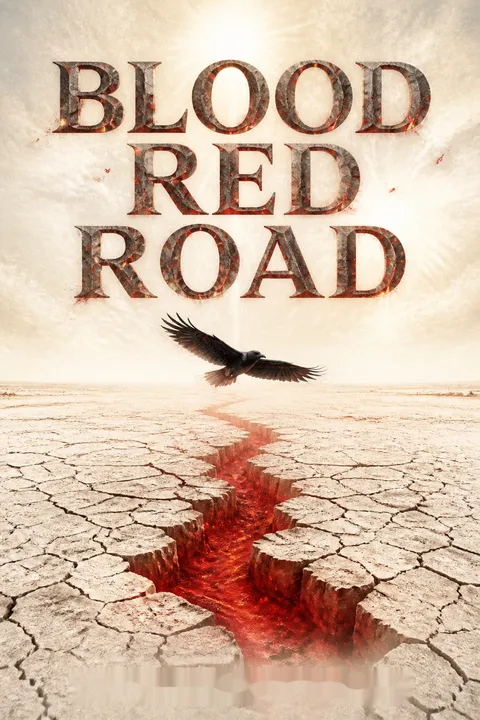


Plot Summary
Red Rain at Silverlake
At Silverlake, drought has thinned the lake, the family’s food, and their father Pa’s grip on the present. Saba depends on her golden-haired twin, Lugh, while keeping their younger sister Emmi at a distance. During a rare dust storm, four black-robed horsemen arrive with their neighbor Procter John, who identifies Lugh as the boy they seek.
Lugh runs, but the riders rope and bind him. Pa finally rouses himself to fight beside Saba, then a Tonton bolt kills him. Saba attacks in fury and is wounded, but cannot stop the men from riding away with Lugh. As rain begins over the dead father and dying lake, Saba promises to find her twin.
The raid turns Saba’s private dependence on Lugh into the engine of the plot. Her family’s isolation has seemed like a shelter, but Procter’s betrayal shows that it has only made them easier to watch. Pa’s fatal hesitation carries the same cost: belief in a fixed destiny has left him unable to act until the danger is already upon them. The rain arrives only after he is dead, an exact and cruel consequence that gives Saba reason to distrust both prophecy and consolation.
The Last Walk Home
Saba and Emmi drag Pa’s body home and burn the tire-walled shack as his funeral pyre. Saba tells the nine-year-old she will leave her with Mercy at Crosscreek, then follow Lugh alone. The journey exposes how little Saba understands Emmi’s needs: when the child’s feet blister, Saba finally carries her and makes a dragger for the rest of the way.
Mercy receives them with food and clean water, then explains that she, Pa, and Saba’s mother once knew the dangerous town of Hopetown. The horsemen are likely Tonton, agents of its rulers. A traveler named Trask had praised Lugh’s midwinter birth, and Procter had apparently watched him ever since. Mercy gives Saba her mother’s heartstone before Saba departs.
Saba’s first acts as the surviving eldest are practical, but grief makes them harsh. She treats Emmi as an obstacle because she has mistaken dependence on Lugh for the whole of love. The blistered feet interrupt that logic: care becomes a physical obligation, not a feeling Saba can postpone. Mercy complicates Pa’s legacy by revealing that his secrecy may have protected the children, even as it kept them ignorant. The heartstone offers a different kind of guidance, rooted in desire rather than a predetermined fate.
The Ring Beneath Sand
Saba crosses Sandsea, where shifting dunes uncover a buried settlement and then swallow it again. In the wreckage, Nero finds Lugh’s broken green-glass necklace, proof that her twin left a trail. Saba presses on, only to discover Emmi has stolen Mercy’s horse and ridden after her. Their reunion is angry and frightened, but Saba cannot send her back alone.
Soon a wind-driven landboat approaches. Its owners, Rooster and Miz Pinch, offer a ride toward Hopetown. Saba accepts because they can get her there faster, despite Emmi’s distrust. The Pinches drug their supper; when Saba wakes, she and Emmi are chained inside the boat. Miz Pinch intends to sell Saba as a cage fighter and uses Emmi’s safety to keep her obedient.
The green ring converts Saba’s promise into something she can follow, while Emmi’s arrival forces her to confront the cost of treating her sister as expendable. Yet Saba’s urgency also leaves her vulnerable: she recognizes danger in the Pinches but accepts their offer because speed matters more to her than caution. The capture repeats the story’s central pressure in a new form. Saba wants to protect the people she loves, but her impatience and possessiveness can put them in harm’s way.
The Angel Enters Hopetown
Hopetown is crowded, chaotic, and controlled by the Tonton, who patrol its gates and enforce the Cage Master’s rule. The Pinches deliver Saba and Emmi to him. Saba recognizes DeMalo, a black-armored commander whose gaze leaves her shaken, but the Cage Master cares only that she can fight. Miz Pinch shaves Saba’s hair and takes her mother’s heartstone.
She chains Saba in a transport hut and makes Emmi work, striking the child whenever Saba resists. At the Colosseum, the crowd watches fighters battle until one loses twice and must run through a gauntlet of spectators. Saba’s first opponent nearly overwhelms her before her survival instinct takes over. She wins, and the Pinches begin turning her violence into profitable entertainment.
Hopetown makes violence both spectacle and labor. The cage does not merely threaten Saba’s life; it recruits the very capacity that once helped her survive and sells it back to a crowd. Miz Pinch’s threats against Emmi expose Saba’s most exploitable attachment, while the stolen heartstone removes an object tied to her mother and her private hopes. DeMalo’s unsettling attention suggests that Saba has entered a larger conflict than she understands, but the immediate machinery of the Cage leaves her no room to investigate.
Helen Names the Fields
A month in Hopetown makes Saba the unbeaten Angel of Death, though her victories leave her haunted by the girls she defeats. A new fighter, Helen, hears her nightmares and becomes her confidante. Helen recognizes the midwinter detail in Lugh’s abduction: her father, Trask, had been the spy who reported his birth to the King.
She reveals that the rulers need an eighteen-year-old boy born at midwinter for a midsummer sacrifice, believing his death will renew the King’s power. Lugh has been taken to Freedom Fields, where chaal is grown and slaves are controlled through the drug. Before Helen can tell Saba more, the chaal-crazed guard Mad Dog takes her away. Saba never sees Helen again and blames herself for their careless conversation.
Helen’s revelation changes the meaning of Lugh’s abduction: he is not a prisoner held for leverage but the intended center of a political ritual. Chaal links private suffering to public control, dulling workers and turning spectators into a bloodthirsty crowd. Helen’s death also sharpens Saba’s guilt, which tends to make her claim responsibility for dangers she cannot command. Her grief has expanded beyond her family, but she still measures herself by whether she can personally prevent every loss.
The King Recognizes Her
Saba reaches Maev, leader of the Free Hawks, through Emmi, who has learned to slip into the fighter block with the water carriers. Maev agrees to help free the fighters, and Saba proposes losing three bouts so the crowd will demand the Angel of Death’s gauntlet run. In the exercise yard, Saba also meets Jack, a cocky new male fighter who warns her that she is playing a dangerous game.
After Saba deliberately loses her first bout to Epona, the King visits the cells in the antique costume from Rooster Pinch’s book. Saba realizes that the King is Vicar Pinch, who once traveled with Rooster and Miz Pinch. When he sees her twin birthmark, he interrogates her about it. She lies, but his interest makes the danger unmistakable.
Saba’s scheme depends on manipulating the crowd’s appetite for violence, a risky reversal in which the spectacle might become cover for escape. Her deliberate loss is therefore an act of control, but it also means surrendering the identity that has kept her alive. The King’s attention to her birthmark connects her body to the same system that has claimed Lugh. Jack’s warning offers another kind of knowledge: he sees the danger in Saba’s plan, though she has no reason yet to trust him.
The Gauntlet's Broken Line
Saba loses her remaining bouts, but Vicar Pinch changes the gauntlet route to place the execution directly beneath his balcony. With the Free Hawks unable to reach her, Saba climbs the Cage, leaps to a tower, and drops through a shack roof into the streets. Ash, a Hawk, intercepts her and leads her through a tunnel into the women’s cells.
They release the fighters and ignite explosives, setting Hopetown burning. Saba learns that Jack is trapped in the men’s Cooler and runs back through smoke to free him. Together they emerge into the fleeing crowd and reach the Hawks at a breach in the palisade. Emmi is there, safe. Their escape leaves Hopetown in flames, but Rooster and the Pinches pursue them aboard the Desert Swan.
When Pinch relocates the gauntlet, the logic of Saba’s plan collapses in public. Her escape then depends not on winning the crowd but on climbing out of its frame entirely. Returning for Jack is a crucial choice: Saba risks herself for someone she barely knows, extending the loyalty once reserved almost exclusively for Lugh. The burning town is both a successful revolt and an unstable beginning. Freedom has been seized, not secured, and the pursuing landboat makes that distinction immediate.
The Desert Swan Breaks
At Hopetown’s northeastern edge, Saba and the Hawks ride out as the Desert Swan bears down on them. Maev’s fighters split apart to avoid being run over. Saba, Maev, and Ash turn back to attack the boat with crossbows. Their arrows strike the Cage Master, who falls beneath the vehicle when a wheel breaks and the Swan overturns.
Miz Pinch is thrown clear and dies from the impact. Saba finds Rooster and Vicar Pinch pinned beneath the wreck, apparently lifeless, then shoots Miz Pinch as repayment for her abuse of Emmi. The group leaves Hopetown behind and rides to the Free Hawks’ camp at Darktrees. There, Saba reunites with Emmi, who clings to her, while Saba prepares to pursue Lugh again.
The overturned Swan seems to settle the immediate threat, but the word apparently matters: Saba has seen bodies in wreckage before and cannot know what the accident has truly ended. Her shot at Miz Pinch is vengeance, not a rescue, and it marks how far the cage has carried its logic into Saba herself. At Darktrees, Emmi’s embrace makes the cost of their separation plain. Saba can no longer pretend that her single-minded pursuit leaves her sister untouched.
No One Stays Behind
At Darktrees, Maev offers Saba a place to rest, but Saba keeps pressing toward Freedom Fields. She learns that Ash and Epona want to follow, while Emmi refuses to be left behind. When Emmi hits a hanging target with Lugh’s slingshot, Saba sees that her sister has practiced in secret and can contribute more than Saba assumed.
Jack argues that Emmi has the same right to search for Lugh as Saba does. Saba relents and lets her come. Maev gives Saba a ring that can summon the Hawks if the journey turns desperate. As the small party leaves, Saba begins to accept help from people she barely knows and to treat Emmi as a capable companion rather than a burden.
Emmi’s accurate shot does more than establish a useful skill. It reveals how Saba’s contempt has concealed the child’s private persistence. The decision to bring her is not a declaration that the journey is safe; it is a recognition that love cannot be reduced to deciding for someone else. Maev’s ring likewise makes trust practical, a promise of aid with a clear means of calling it in. Saba’s circle of responsibility widens through action, even while her fear keeps urging her to narrow it.
The Trap Catches Friends
As Saba’s party crosses a ruined Wrecker city, Emmi spots riders behind them, but Saba dismisses her warning. Jack later sees a light moving down from the ridge, and the group lays a pit trap across the road. Ash and Epona tumble into it. They have left Darktrees against Maev’s orders because they believe the danger at Freedom Fields reaches beyond Lugh.
Saba tries to send them back, angry that more people are complicating her mission. Jack points out that they came to help and that Saba cannot demand loyalty while refusing it. She reluctantly lets them stay. Their choice turns the expedition from a private search into a group effort, though Saba still struggles to accept that distinction.
Saba’s failure to believe Emmi repeats an old habit: she trusts her own urgency more than another person’s perception. The pit trap reverses that imbalance by placing Ash and Epona, who have chosen their own risk, directly in Saba’s path. Their insistence that the crisis is larger than one rescue unsettles her narrow focus. Jack does not erase her fear or force a moral conversion; he names the inconsistency between the help she needs and the help she rejects.
The River Takes Them
A sudden storm floods a mountain gorge while Saba, Emmi, and the others try to cross. Emmi falls into the current, and Jack pulls her onto his horse. Saba is swept downstream among bones washed from an old mass grave, then clings to an iron spike above a waterfall. Jack reaches her by rope and hauls her from the water.
They argue, kiss, and arrive at the One-Eyed Man, where Jack seeks help from his old friend Ike. The huge innkeeper punches Jack before accepting his request, then agrees to join with Tommo, a deaf boy he has taken in. Ike’s welcome establishes that Jack’s past contains debts and friendships he has not explained. Saba accepts the extra help because it may bring her closer to Lugh.
The flood strips away Saba’s illusion of self-sufficiency in literal terms: she cannot outfight a current or climb from the falls alone. Jack’s rescue deepens their attraction, but their argument shows that intimacy does not instantly resolve mistrust. At the tavern, Ike’s punch supplies a different measure of loyalty, one grounded in a long and complicated history. Saba accepts allies not because she suddenly stops guarding herself, but because the mission has made isolation an untenable strategy.
Ash Marks the Trail
Beyond the One-Eyed Man, the travelers find four men hanged from a lightning-scarred tree, their faces and hands marked with ash. Jack explains that the sign warns people away from Freedom Fields. When Saba demands the truth, he admits that the Tonton enslaved him and Ike there.
Workers are kept compliant with chaal mixed into their water; Jack and Ike escaped by avoiding it and picking their chains during a storm. Saba now understands that the King’s influence is maintained by forced labor, not merely belief.
The group presses through the Devil’s Teeth toward a dried mountain lake. Jack’s old scars and the ash-marked dead make the approaching rescue more than a matter of finding Lugh: the Tonton’s territory is built to punish anyone who resists.
The ash on the dead gives the Tonton’s power a visible grammar: territory is announced through bodies, and fear is meant to travel farther than the patrols. Jack’s account connects the drug in Hopetown’s streets to the labor system that feeds the King’s power. His history changes the moral stakes without making him a flawless guide; he withheld information because he expected to manage Saba’s choices for her. The approaching lake forces the group to act on knowledge acquired too late for comfort.
The Lake Opens Below
The dried lakebed is riddled with cracks, and the group cannot cross before night. Jack explains that enormous pale hel wurms rise from underground to hunt after dark. They release their horses and build a ring of burning wood, preparing vodka-soaked arrows and firebrands. The creatures emerge by the hundreds. The group aims for their eye sockets, but the attack overwhelms their defenses.
Jack and Ike hold the line while Saba refuses to leave them. A giant wurm slashes Saba’s shoulder before the creatures retreat from something even larger below. Jack carries the feverish Saba across the remaining distance. She wakes in a cave near Freedom Fields on midsummer day, badly weakened but still in time to reach Lugh.
The lake turns the landscape itself into an antagonist, forcing the group to make a collective defense rather than rely on individual skill. Saba’s refusal to leave Jack and Ike marks a change from her earlier willingness to treat companions as delays. It is brave, but not cost-free: her infected wound nearly prevents her from reaching Lugh. The creatures’ sudden retreat hints at a deeper threat without explaining it. Survival here comes from coordinated work, not the solitary force Saba once believed she needed to be.
Midsummer's Stolen Fire
From a ridge above Freedom Fields, Saba sees chained workers harvesting chaal and a palace faced with shimmering discs. The group divides its tasks: Ash prepares horses, Emmi and Tommo wait at a distant meeting point, and Jack and Epona create a diversion by flooding the crop through the irrigation channels.
Saba and Ike infiltrate the ceremony disguised as Tonton, then cut Lugh from the post where he is tied for sacrifice. The flood draws guards away, and they escape with him. Tonton chase them across the palace grounds. Epona is trapped on a roof, and Saba shoots her rather than let the guards capture and torture her. The party rides on with Lugh, but Saba carries the weight of the choice that made her friend’s death certain.
The rescue succeeds because every ally takes a defined risk: the diversion attacks the King’s source of power while Saba and Ike move through the ceremony. Lugh is saved from the ritual, but escape does not mean protection for everyone. Epona’s final choice is made under pursuit, and Saba’s shot is an act of mercy that also leaves her with a lasting wound of guilt. The moment tests the difference between survival and rescue. Saba can bring her brother back, but she cannot make the journey undo its costs.
Pine Top Turns Red
At the tire-dump meeting point, Lugh and Saba discover that Emmi was captured after a frightened horse bolted. Jack predicts that Vicar Pinch will use her to bargain, so the survivors choose Pine Top Hill for a defensive stand. Pinch arrives with Emmi and hidden Tonton reinforcements, demanding Saba in exchange for the child.
Saba submits, but the Free Hawks and western-road raiders charge in before Pinch can secure her. DeMalo cuts Saba’s bonds and turns against the King, helping the allies win the battle. Saba pursues Pinch into the red Hoodoos and kills him there. Returning to the battlefield, she finds that Ike died protecting the others. Lugh is free, Emmi is safe, and the victory has cost another friend.
Pinch’s hostage bargain attacks Saba at the precise point where her loyalties have changed: she now values Emmi’s life as fully as Lugh’s. Her surrender is not passivity but a deliberate choice under coercion, and the arriving allies prevent the King from controlling its consequences. DeMalo’s sudden reversal is effective because his allegiance has always seemed personal rather than principled. Saba’s pursuit of Pinch settles the immediate threat, but Ike’s death refuses a clean triumph. The group wins freedom without escaping grief.
The Road Runs West
The survivors burn Ike on a warrior’s pyre while Tommo grieves beside the man who took him in. Maev and the Hawks depart with their allies, leaving Saba, Lugh, Emmi, Tommo, and Jack to decide what comes next. Saba suggests returning to Mercy at Crosscreek, but Lugh rejects a return to the life they left behind and proposes traveling west to the Big Water.
Emmi agrees. Jack says he must first attend to other business, but promises to find Saba again. She gives him the heartstone, now warm between them, as a way to find her. As the siblings ride west, Lugh asks Saba to lead because he no longer knows the way. She moves ahead instead of following.
The final direction answers the opening image of Saba always trailing Lugh, but it does not erase their closeness. He asks her to lead because their shared past no longer supplies a map for the future. The choice of the Big Water rejects both a return to Silverlake and a simple restoration of the old family order. Ike’s funeral and Jack’s departure leave grief and uncertainty unresolved. Saba’s growth appears not as independence from everyone, but as the capacity to move forward while carrying their bonds with her.
Analysis
Blood Red Road makes destiny a political instrument as often as a private belief. Pa reads the stars to endure the drought and the grief that has hollowed out his family; the King turns a birth under a winter moon into justification for a human sacrifice. Between them, Saba has to decide whether the future is something to decipher or something people make through action. The book never needs to prove which cosmology is correct. Its moral emphasis falls on what characters do with the stories they believe.
Saba begins with a narrow definition of loyalty: Lugh is the person she protects, while Emmi is an irritating reminder of the family’s loss. The journey makes that hierarchy untenable. Emmi’s persistence, hidden skill, and repeated efforts to keep up reveal how much Saba’s neglect has obscured. Saba’s growth is not a sudden transformation into a gentle person. She remains fierce and impatient, but increasingly recognizes that protection without listening can become another form of control.
The novel’s institutions turn human capacities into commodities. The Cage sells Saba’s survival instinct, while chaal converts dependence into a means of governing workers and spectators alike. Freedom Fields extends that same logic into agriculture and ritual: labor, belief, and even a young man’s life are treated as resources belonging to the King. Against this machinery, the companions’ small acts matter because they are specific. Ike takes in Tommo; Maev offers help without demanding repayment; Jack shares knowledge he once withheld; Saba risks herself for people beyond her original family.
Victory does not restore the past. Lugh returns altered, Emmi has grown beyond Saba’s old picture of her, and Epona and Ike are lost. The westward journey offers no guarantee of safety, only a new direction. The final reversal, with Lugh asking Saba to lead, captures the change most clearly: their bond survives, but its old arrangement no longer determines who must follow.
Review Summary
Blood Red Road receives mostly positive reviews for its unique post-apocalyptic setting, compelling characters, and fast-paced plot. Readers praise the strong heroine Saba and her quest to rescue her brother. The distinctive writing style, using dialect and unconventional grammar, divides opinion but many find it adds authenticity. Some criticize the predictable romance and underdeveloped world-building. Overall, the book is lauded for its action, adventure, and memorable characters, though the sequels receive mixed reactions.
People Also Read



Characters
Saba
The relentless twinSaba is a resourceful hunter and fighter whose world has narrowed around her twin brother, Lugh. She reads loyalty as an absolute duty, but often mistakes her fierce protectiveness for permission to decide what others can bear. Grief makes her impatient, suspicious, and cruel to Emmi, while danger rewards her nerve and quick judgment. Her roughness is partly armor: she has learned to suppress tenderness because dependence feels like another way to be wounded. Saba’s defining tension is between moving alone, which seems faster and safer, and accepting the obligations that come with a wider circle of care. She is observant and brave, but her growth depends on learning that courage can include listening.
Lugh
The golden twinLugh is Saba’s twin, born two hours before her, and the person she has trusted most throughout her life. Golden-haired, strong, and generous, he resembles their mother in his ease with laughter and other people. He has helped keep the family alive while their father withdrew into grief, which gives him a practical confidence Saba often mistakes for effortless certainty. Lugh is protective of both sisters, but he also wants a life beyond the isolation of Silverlake. His skepticism about their father’s star reading challenges Saba’s inherited beliefs, even as his own judgments can be blunt. Their bond is intimate, loving, and complicated by Saba’s assumption that she must always follow him.
Emmi
The overlooked sisterEmmi is Saba and Lugh’s nine-year-old sister, small for her age and accustomed to being treated as an inconvenience. Saba blames her for their mother’s death, while Lugh gives her the affection and attention Saba withholds. Emmi is stubborn, observant, and far less helpless than her older sister assumes. She learns by watching, keeps quiet when she expects anger, and carries her own grief without always making it visible. Her need to belong does not cancel her courage or agency. Emmi’s presence forces Saba to confront the difference between protecting a younger sibling and silencing her. She wants to help find Lugh, but also needs Saba to recognize her as family in her own right.
Jack
The elusive allyJack is a quick-witted, self-reliant fighter with a crooked nose, silver-gray eyes, and a habit of deflecting sincerity with jokes. He is skilled at reading danger and improvising, though his instinct to keep secrets can make him seem slippery. Beneath the easy charm is a steadier, more compassionate man, shaped by experiences he does not readily share. He respects Saba’s strength but also challenges her tendency to confuse isolation with control. Their attraction grows through rescue, argument, and reluctant trust rather than effortless agreement. Jack’s loyalties are difficult to read at first, partly because he has learned that dependence can be dangerous. His humor is both genuine warmth and a means of keeping others from seeing what hurts.
Pa (William)
A grieving star-readerSaba, Lugh, and Emmi’s father, William, is a star-reader who believes that lives and deaths are written in the sky. Since his wife’s death, grief and drought have drawn him away from his children and into rituals meant to summon rain. He once seemed playful and capable, but the family remembers him through the contrast between that man and the withdrawn father he became. His faith comforts him while also narrowing what he believes can be changed.
Mercy
The guarded healerMercy is a practical, sharp-eyed woman living in a hidden valley at Crosscreek with her wolfdog, Tracker. She helped Saba’s mother during childbirth and remains one of the few adults the family can turn to. Her broken ankle has not made her dependent; she has learned to manage with the resources around her. Mercy distrusts grand explanations and looks instead to immediate needs, yet she respects the beliefs that mattered to her friend.
Maev
The Free Hawk leaderMaev leads the Free Hawks, a band of women fighters who survive through discipline, solidarity, and occasional robbery. She is shrewd about risk and less easily impressed by bravado than Saba expects. Maev offers practical help without pretending that Saba’s mission is simple, and she can recognize when a personal rescue connects to a larger danger. Her authority comes from experience and from keeping faith with her people, not from claiming certainty.
Ike
The giant innkeeperIke is a huge, generous innkeeper at the One-Eyed Man and Jack’s old friend. He has a booming presence, a sharp sense of humor, and a practical understanding of the dangers around Freedom Fields. He is protective of Tommo, whom he has taken in, and treats loyalty as something proved through action. His warmth does not make him naive: Ike knows what coercion looks like and what escape can cost.
Ash
The blunt strategistAsh is a capable Free Hawk with a direct manner and a clear eye for logistics. She helps organize the dangerous break from Hopetown and is willing to challenge Saba when the younger woman mistakes urgency for good judgment. Ash values collective action, yet she is not afraid to take initiative when a plan begins to fail. Her bluntness is less contempt than a refusal to waste time.
Epona
The fierce fighterEpona is a tough, resourceful fighter whose strength is matched by her loyalty to her companions. She can read a fight quickly and remains steady when others are overwhelmed. Though she initially meets Saba inside the Cage as an opponent, Epona’s deeper allegiance is to the people she considers her own. She is brave without being careless and has her own reasons for accepting danger.
Tommo
The observant apprenticeTommo is a deaf boy taken in by Ike after being abandoned. Thin, watchful, and resourceful, he follows spoken conversation by reading lips and communicates with gestures as well as words. He is eager to be useful, especially to Ike, and proves capable with a slingshot and as a lookout. His quietness should not be confused with passivity; Tommo notices more than many people realize.
Helen
The perceptive fighterHelen is an older fighter in Hopetown who understands that the Cage offers no real route to freedom. She is observant, gentle in her approach to Saba, and willing to risk trust even in a place where weakness can be exploited. Her knowledge of the Tonton and Freedom Fields comes from family history, giving her a perspective Saba cannot find elsewhere.
DeMalo
The unreadable commanderDeMalo is a high-ranking Tonton commander, distinguished by metal armor and a guarded, watchful presence. Others defer to him, but his authority does not make his motives easy to understand. He appears controlled where Vicar Pinch is theatrical, and his silence gives Saba little basis for deciding whether he is a threat or something more complicated. He is difficult to read because he reveals so little.
Vicar Pinch
The painted tyrantVicar Pinch rules through spectacle, fear, and control of the chaal that sustains his power. He dresses himself as a legendary Sun King and expects those around him to treat the performance as proof of authority. His appetite for ritual and public obedience conceals a brittle, vindictive temperament. Pinch sees people as instruments of his own survival, especially when their bodies or labor can serve his plans.
Rooster Pinch
The nervous pedlarRooster Pinch is a small, nervous pedlar who travels the desert aboard the landboat Desert Swan with his formidable wife. He talks readily, dresses in scavenged materials, and is fascinated by the old world’s books and writing. His eagerness to appear harmless contrasts with the rougher business he and his wife pursue. Rooster is fearful of conflict, but he is not simply a comic presence.
Miz Pinch
The brutal traffickerMiz Pinch is a powerful, intimidating woman who runs the Desert Swan and treats other people as commodities. She is physically imposing, quick to punish disobedience, and adept at using a loved one as leverage. Her control over Rooster is reinforced by fear, while her dealings in Hopetown reveal a talent for recognizing what others can be made to do. She is cruel without being careless.
Procter John
The silent neighborProcter John is the family’s only nearby neighbor, a taciturn rider who visits Silverlake periodically. His brief appearances make him seem more like a fixture of the isolated landscape than a confidant. He keeps his thoughts to himself, which leaves Saba unsure how much he knows about the world beyond their home.
John Trask
The passing strangerJohn Trask is a traveler who briefly stayed with Saba’s family around the time the twins were born. Half-starved and poorly clothed, he attracted attention with his unusual interest in Lugh’s birth. His visit is remembered as a small, strange incident whose significance was not apparent to the people who witnessed it.
Nero
Saba's black-feather scoutNero is the crow Saba raised by hand after finding him fallen from his nest. He rides her shoulder, scouts ahead, and behaves with a confidence that makes him seem almost human to the siblings. Saba trusts his instincts even when she cannot understand them. Other people fear crows as omens, but Nero’s importance to her is personal: he is a companion who has stayed through every change in the family’s fortunes.
Mad Dog
The chaal-addled guardMad Dog is a Hopetown watch captain whose chaal use makes him volatile and unpredictable. He enjoys testing his authority over the fighters and uses confinement to punish resistance. His behavior shows how the drug can turn a guard’s power into a threat even to those already imprisoned.
Cage Master
The arena's ownerThe Cage Master runs Hopetown’s fighting arena and profits from the crowds’ appetite for blood. Greedy and self-important, he treats the fighters as property and their deaths as part of the business. His authority depends on the Tonton and the spectacle he stages for the town.
Plot Devices
The heartstone
Desire's hidden compassSaba’s mother gave the smooth pink stone to Mercy, who passes it on as a keepsake and a possible guide. It remains cold beside Saba’s skin until she nears what she most desires, then grows warm. Saba initially dismisses the idea as sentimental, but the stone’s heat helps her locate Jack in a smoke-filled building when she cannot see or think clearly. Its function is both practical and emotional: it turns attraction into a bodily signal that Saba cannot explain away. The stone does not choose for her; it makes her notice what she already feels.
Chaal
A crop of obedienceChaal is a plant grown in the controlled fields of Freedom Fields and distributed throughout Hopetown. In small amounts it dulls judgment and makes people easier to control; heavy use can make them agitated and violent. The King’s command of the crop gives him leverage over workers, guards, and crowds. It connects the Cage’s bloodlust to the forced labor that sustains the ruler’s authority. Chaal is not merely a dangerous substance in the background: it shapes what people will tolerate, what they will do, and how power reproduces itself.
The midwinter birth
A prophecy made politicalSaba and Lugh were born at midwinter, under a full moon, and Pa marked them with matching birth tattoos. The family initially treats this as a sign of unusual destiny, though Lugh doubts that the stars dictate anyone’s life. The Tonton’s interest in Lugh turns the birth detail into a tool of political selection: the King believes a boy with those traits must die in a midsummer ritual. The device binds the opening’s star lore to the central danger and asks whether a prophecy gains power because it is true, or because people with power act as if it is.
The Cage and gauntlet
Survival made spectacleHopetown’s Colosseum turns captive fighters into public entertainment. A losing fighter who fails twice faces a final run through the crowd, which has been driven into a frenzy by chaal. The system gives the Cage Master a reliable attraction and gives the Tonton a way to make punishment visible. For Saba, it also creates an opening: the crowd’s expectations can be manipulated, though the rules and officials can change at any moment. The Cage therefore tests more than strength. It forces Saba to decide when survival requires fighting, when it requires pretending to lose, and how much of herself the spectacle can consume.
The stars
Fate against choicePa believes the stars hold the story of every life, while Lugh sees them as lights in the sky rather than instructions. Mercy offers a third position: people may find meaning in the stars without surrendering judgment to them. This disagreement frames Saba’s choices from the beginning. She inherits her father’s language of destiny, then encounters a world where rulers use prophecy to justify violence. By the end, the question is not whether the stars can predict events, but whether belief in fate excuses people from acting. Saba’s decisions repeatedly matter because she makes them under pressure, not because the sky has settled them in advance.
Download PDF
Download EPUB
.epub digital book format is ideal for reading ebooks on phones, tablets, and e-readers.








