

Key Takeaways
Treat the social suite as humanity's blueprint, not a blank slate
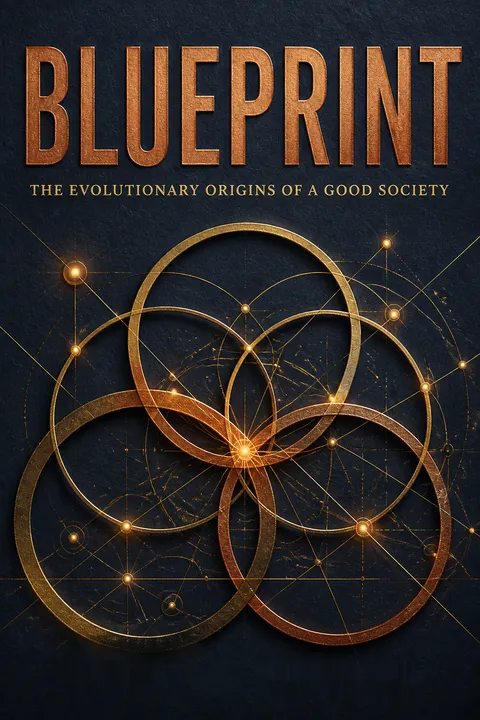
Society starts within us. Christakis argues that evolution has shaped a shared set of social capacities, which he calls the social suite: recognizing individual identities, loving partners and children, making friends, forming networks, cooperating, favoring one’s group, accepting mild hierarchy, and teaching and learning. Together, these tendencies make social life possible. They are not a script for one culture or a claim that genes dictate every choice.
Animal parallels matter. Chimpanzees form friendships, elephants assist injured companions, and prairie voles show attachment to particular partners. These examples suggest that social bonds are not merely rules invented by modern societies. The opening story of a Greek crowd, and childhood games with Turkish boys despite a language barrier, show both the dangers of group identity and the ease with which people can build familiar social order.
The framework is most useful as a set of capacities, not a fixed blueprint for institutions. People may share tendencies toward attachment and cooperation while disagreeing sharply about who counts as family, how authority should work, or what fairness requires. That distinction allows the argument to take biology seriously without reducing culture to decoration. It also keeps the term “good” under scrutiny: a capacity that supports community can serve exclusion as well as care.
Failed utopias show why society cannot be redesigned from scratch
Isolation reveals recurring patterns. People stranded together or voluntarily forming new communities repeatedly recreated familiar social structures. In the BBC experiment Castaway 2000, thirty-six people on a remote Scottish island spent much of their early effort arguing over rules, work, and resources. Many intentional communes also dissolved or relaxed their founding ideals.
Pitcairn shows the cost of broken bonds. After mutineers settled the island, they excluded Tahitian men from land and imposed unequal access to women. Cooperation deteriorated amid resentment, alcohol, and weak governance, followed by years of lethal conflict. The point is not that every society must copy its parent culture. It is that attempts to suppress basic needs for attachment, fairness, and cooperation can leave a group without a workable replacement.
These cases make social design look less like drafting a constitution and more like building on load-bearing structures. A community can change rules, property systems, and customs, but it cannot assume that people will stop needing trusted relationships or a legitimate way to settle disputes. The historical cases are compelling, though not clean experiments: participants brought their prior cultures, and conditions differed greatly. They show recurring constraints more convincingly than they prove that every alternative arrangement must fail.
Pair capable leaders with egalitarian rules when groups face danger
Authority can protect cooperation. The five men stranded on Auckland Island with the Grafton worked together, shared resources, elected a leader, and taught one another skills. All survived nearly two years. The larger Invercauld group, stranded on the same island at roughly the same time, splintered; only three of nineteen survivors lived to be rescued. Different supplies and circumstances also mattered, but the contrast highlights the value of unity and leadership.
Shackleton made the balance visible. His Endurance crew spent 513 days stranded in Antarctica, sharing work and rations under clear authority. Shackleton did not abolish hierarchy. He used it to organize labor, then encouraged solidarity and fair treatment. Christakis calls this mild hierarchy: some members have greater responsibility or prestige, without unchecked domination.
The strongest leadership in these accounts is neither pure command nor leaderless consensus. It combines decisiveness under pressure with visible fairness, which helps people accept authority without surrendering their standing as members of the group. This resembles a broader organizational principle: legitimacy depends not only on who decides, but also on whether rules appear consistent and burdens are shared. The comparison should not be read as proof that one leadership style fits every setting. Crisis, duration, and available resources all shape what works.
Give people room to leave exploitative ties, but protect stable bonds
Connection needs a middle ground. In an online experiment, participants repeatedly chose whether to cooperate with neighbors in a money-sharing game. When they could not change their assigned connections, defection spread: people stopped helping those who exploited them. When participants could cut ties with defectors and seek cooperative partners, cooperation persisted and helpful people clustered together.
Too much mobility also hurts. Christakis calls the ability to change social ties social fluidity. A follow-up experiment found that cooperation was strongest at an intermediate level. Rigid ties trap people with exploiters; constant turnover makes it hard to invest in relationships. The contrast between the unstable membership at Twin Oaks and the more durable founding ties at Los Horcones illustrates the same point in communal life.
The result points to a practical design question: can people exit harmful relationships without making every commitment disposable? That tension appears in workplaces, online platforms, and neighborhoods. Exit can discipline bad behavior, but it can also remove the very continuity that makes trust worthwhile. The lesson is not simply to maximize choice. It is to give people meaningful alternatives while preserving enough stability for reputations, obligations, and shared projects to accumulate.
Build friendships that can carry help when repayment is impossible
Friendship is social insurance. The book defines friendship as a usually voluntary, lasting relationship between people, often unrelated, marked by affection and support. Unlike a narrow exchange, a friend is helped because of need, not because an exact repayment is due. This matters when someone is sick, injured, or temporarily unable to return a favor, the predicament evolutionary psychologists call the banker’s paradox: those who need help most may seem least able to repay it.
The pattern travels widely. A survey of sixty cultures found friendship everywhere, with mutual aid described in 93 percent. In a painful-posture experiment, participants endured discomfort for best friends almost as long as for close relatives. Friends also form networks that spread information and support beyond the family. The book’s central point is that social life relies on ties that cannot be reduced to kinship or accounting.
Friendship turns uncertain future help into a relationship people can rely on without negotiating every favor. That is a striking social technology: sentiment helps sustain cooperation when contracts and immediate repayment are inadequate. At the same time, friendship is not automatically fair. Unequal obligations can be hidden inside affection, and access to dependable friends varies. The concept is strongest when treated as a complement to public institutions, not a substitute for systems that guarantee care to people who lack a supportive network.
Expand belonging without teaching people to hate outsiders
Group loyalty begins easily. In a minimal-group experiment, children favored peers wearing the same randomly assigned shirt color, even though they knew the colors had no meaning. The Robbers Cave demonstration showed how quickly that preference can turn hostile: two groups of boys developed contempt after competing for prizes. When they had to solve shared problems, such as restoring their water supply, cooperation between them increased.
Bias is not destiny. In-group preference can encourage trust and mutual help, but it does not require hatred of outsiders. A common purpose can widen the circle of belonging, while cross-cutting identities can make people who differ in one respect allies in another. Leaders can also exploit group loyalty by directing blame at outsiders. The useful distinction is between valuing one’s group and denying other groups’ humanity.
The distinction between attachment to insiders and hostility toward outsiders matters in politics as much as in small groups. Belonging can motivate people to contribute, but it becomes dangerous when leaders define the group through moral superiority or threat. Shared projects offer one route to broader solidarity, though cooperation around a common enemy can be temporary and may simply redirect hostility. Durable inclusion requires more than a crisis that briefly makes everyone feel on the same side.
Read marriage customs as cultural overlays on a pair-bonding drive
Love is not the same as monogamy. Marriage systems vary widely: some societies permit several wives, a few practice polyandry, and the Na of the Himalayas organize many relationships around visits rather than conventional marriage. Yet Christakis argues that humans broadly form attachments to particular sexual partners, a tendency called pair-bonding. It describes attachment, not necessarily exclusivity or living together.
Ecology shapes the arrangement. The Hadza, mobile foragers, mostly practice monogamy, and women can leave a husband who takes another wife. Among Turkana pastoralists, livestock wealth and demanding herding labor support polygyny, though women still exercise choice and express affection. The author also recounts how monogamy became a legal norm in parts of Europe and later spread more widely. Cultural systems vary; attachment remains a persistent human feature.
Separating pair-bonding from a specific marriage law prevents a common mistake: treating one familiar institution as the only natural form of love. The evidence supports a broad human capacity for attachment more securely than any claim that people are inherently monogamous in every sense. The chapter’s evolutionary explanations are plausible but complex, especially where historical institutions and personal choice interact. Biological tendencies can shape the terrain without deciding which arrangements are just, consensual, or best for a given community.
Make cooperation visible, fair, and enforceable in groups
Good intentions need rules. Cooperation creates shared benefits, but each person can be tempted to free-ride. In public-goods games, participants often contribute even when they could keep the money. In ultimatum games, people reject unfair offers despite losing their own possible reward. These choices suggest that fairness and the willingness to punish exploitation help sustain cooperation.
Culture changes the level. In studies across fifteen small-scale societies, generosity and punishment varied. People in groups where cooperation with non-kin mattered more to daily life tended to make more generous offers. Third-party punishment, where an observer pays a cost to penalize unfairness, can also sustain cooperation. Social networks matter too: cooperation is easier to maintain when people know whom they are helping and can avoid persistent exploiters.
This account links moral judgment to institutional design. People are not simply saints or self-interested calculators; their conduct responds to what others can see, whether rules are enforced, and whether cooperation is reciprocated. Punishment can protect fairness, but it can also be captured by powerful insiders or applied selectively. Good systems therefore need both accountability and safeguards against arbitrary enforcement. The point is not to punish every deviation, but to make contribution credible and exploitation costly.
Treat culture as a second inheritance that can reshape genes
Knowledge accumulates across generations. Culture is information passed between people through teaching, imitation, and other forms of social learning. A farmer inherits more than genes: tools, techniques, and knowledge created by earlier generations. The book calls this gene-culture coevolution, the reciprocal process in which evolved capacities enable culture, and cultural practices alter the environments that shape genetic evolution.
The effects can be measurable. Once people domesticated milk-producing animals, adult lactose digestion became advantageous, and lactase-persistence mutations spread independently in several populations. Among the Bajau sea nomads, generations of diving and marine living are associated with adaptations that support diving. Cultural knowledge also builds on social ties: larger populations can preserve complex skills because more people can learn, teach, and improve them.
This framework replaces the familiar nature-versus-nurture contest with a feedback loop. Culture is not outside biology, and biology does not dictate a single culture. The distinction matters because people can inherit both genetic tendencies and accumulated knowledge, while changing practices can alter which traits are advantageous. Still, evidence linking a specific cultural practice to genetic change varies in strength. The model is most persuasive when it specifies a mechanism, a historical practice, and a plausible selection pressure, rather than treating every cultural difference as genetic adaptation.
Engineer institutions around human nature, while resisting biological fatalism
Genes can shape the world beyond the body. Christakis calls a genetically guided effect on an organism’s surroundings an exophenotype. A bowerbird’s inherited tendencies help shape the display it builds; in humans, genetic differences may influence how people form friendships and arrange social networks. Those networks then become part of other people’s environments, so social behavior can affect the conditions under which traits succeed.
Design carries responsibility. The book closes by asking how artificial intelligence and gene editing might change social life. Simple bots have improved coordination in human groups, while a robot’s willingness to admit mistakes changed how people worked together. Such effects make social design consequential. Evolutionary influence is not a command to preserve every instinct. It is a reason to understand what an intervention may disrupt before attempting to rebuild society.
The practical implication is neither “biology is destiny” nor “people can be redesigned at will.” Social systems emerge from interaction among individuals, relationships, institutions, and inherited tendencies. That makes small design choices consequential: a platform that rewards outrage can amplify division, while rules that support trust may help cooperation. The author’s optimism is valuable, but it should not soften the distinction between what is common and what is morally good. Evolution explains capacities and pressures; ethical judgment still has to decide how those capacities should be governed.
Analysis
Blueprint’s central achievement is to redirect attention from cultural difference toward the social capacities that make cultural difference possible. The argument moves across an unusually broad evidentiary range: children’s play, shipwreck survivors, communes, online experiments, animal societies, genetics, and historical institutions. Its recurring comparison is not that societies look identical, but that apparently diverse arrangements repeatedly depend on attachment, identity, cooperation, networks, learning, and some form of coordination. The stories make the proposition memorable, while experiments with adjustable networks offer a causal mechanism: social conduct changes when the structure of interaction changes.
The most valuable conceptual move is to treat biology as a source of bounded flexibility. Humans are not blank slates, yet the social suite does not prescribe one family system, political order, or moral code. Culture can create radically different practices and can feed back into evolution. This helps dissolve the simplistic nature-versus-nurture debate, but it also places a heavy burden on the distinction between a universal capacity and a universal behavior. Evidence that humans can pair-bond, for example, does not establish that one marriage norm is best. Nor does the persistence of cooperation prove that cooperation is always benevolent or equally distributed.
The argument is strongest when it identifies a mechanism and compares cases, such as the role of flexible ties in experimental cooperation or leadership in isolated groups. It is less conclusive when a small set of historical episodes is used to infer species-wide limits. Shipwreck survivors were culturally formed, traumatized, and unevenly resourced; communes had distinct economic and political constraints. These cases illuminate recurring difficulties, but they cannot isolate evolution as the sole cause.
The normative claim that the blueprint is “good” also needs careful handling. Love, friendship, and cooperation are powerful foundations for well-being, but natural tendencies can support favoritism, coercion, and exclusion. The book recognizes this tension, especially in its discussion of tribalism. Its most defensible conclusion is therefore not that nature guarantees virtue, but that good institutions work with human needs while limiting the harms those same needs can produce.
Review Summary
Blueprint explores how human societies are shaped by evolutionary biology, arguing that our genes encode a "social suite" of universal traits found across cultures. These include individual identity, love, friendship, cooperation, and social learning. While acknowledging cultural differences, Christakis contends that all societies share fundamental similarities rooted in our evolutionary history. The book draws on diverse examples from shipwrecks to communes to support its thesis. Reviewers praised the book's insights and readability, though some felt it was overlong and didn't fully prove its central argument.
People Also Read








Glossary
social suite
core social capacitiesChristakis’s name for eight interconnected human capacities that support group life: recognizing individual identity, loving partners and offspring, forming friendships and networks, cooperating, favoring one’s own group, accepting mild hierarchy, and teaching and learning. The suite is presented as an evolved foundation for society, not a fixed plan for one culture or political system.
social fluidity
freedom to change tiesThe degree to which people can form, alter, or leave social connections. In the book’s online cooperation experiments, very rigid ties trapped people with exploitative partners, while extremely frequent changes weakened incentives to invest in others. Cooperation was strongest when people had some, but not unlimited, ability to rewire relationships.
pair-bonding
attachment to a partnerA lasting social and emotional attachment to a particular sexual partner. Pair-bonding is distinct from social monogamy: a bonded pair may not live together or remain sexually exclusive, and bonds can occur within polygamous arrangements. Christakis treats pair-bonding as a widely shared human tendency beneath the varied cultural systems of marriage.
gene-culture coevolution
genes and culture shape each otherA process in which genetic inheritance and cultural inheritance interact over time. Human capacities make social learning and culture possible; cultural practices then change the environments in which people live and reproduce, affecting which genetic variants are favored. Lactase persistence in populations that practiced animal husbandry is one example discussed in the book.
exophenotype
genetic effects beyond the bodyA nonincidental, genetically guided change an organism makes to its surroundings that affects survival or reproduction. Bowerbird displays are an example. Christakis extends the idea to human social environments, suggesting that inherited tendencies can influence networks and relationships, which then shape the conditions other people encounter.
social epistasis
genes interact across peopleThe idea that the effects of one person’s genes can depend on the genes or behavior of other people. A neighbor’s inherited tendency to peck can affect a chicken’s feather condition; similarly, human traits may succeed or fail depending on the social environment created by others. It extends gene interaction beyond a single body.
inclusive fitness
fitness through relativesAn evolutionary measure that includes both an individual’s own survival and reproduction and the survival and reproduction of genetic relatives. It helps explain why an organism might pay a cost to help relatives who share some of its genes. The concept does not explain every form of human cooperation, especially help between unrelated friends.
prestige
status through valued knowledgeA form of social standing based on benefits someone can offer, such as useful knowledge, skill, or connections. Unlike dominance, which relies on the ability to impose costs or harm, prestige attracts others who want to learn from or associate with the person. The book links prestige to social learning and teaching.
sociodicy
case for society’s basic virtueChristakis’s term for defending confidence in society despite its recurring failures and cruelties. The concept rests on the claim that human communities are not only products of violence or self-interest: evolved capacities for love, friendship, cooperation, and learning also help societies function. It is an argument for qualified optimism, not a denial of social harm.
About the Author
Other books by Nicholas A. Christakis

Download PDF
Download EPUB
.epub digital book format is ideal for reading ebooks on phones, tablets, and e-readers.








