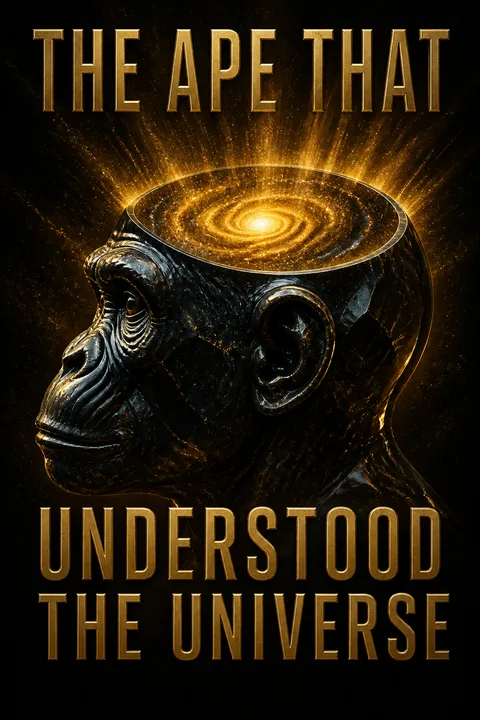


Key Takeaways
Use an alien's perspective to make ordinary human habits newly puzzling
Make the familiar strange. The book begins with a fictional alien anthropologist trying to explain humans without taking human life for granted. It might wonder why people fall in love, fear snakes more than cars, raise children, worship invisible beings, or spend hours making music. Even our cities and technologies could look like the work of mysterious forces, rather than animals reshaping their surroundings. The alien's confusion reveals how much of human behavior needs explaining, including habits that feel self-evident from the inside.
Two evolutionary lenses. The author uses evolutionary psychology to examine how natural selection shaped minds and behavior, and cultural evolutionary theory to explain how ideas and practices change through social transmission. Together, they portray humans as biological animals whose culture has become a powerful, partly independent force.
What's useful about the alien is not simply comic distance. It functions like a scientific control: by temporarily removing familiarity, it makes assumptions visible. The same method is used in anthropology when researchers compare customs across societies, and in cognitive science when ordinary abilities are treated as problems to explain. The device also has a limit. A clever story can make a proposed explanation feel inevitable before evidence is examined. The alien should therefore prompt questions, not settle them. Its best contribution is to remind readers that familiar does not mean self-explanatory.
Natural selection favors replicators, not species welfare or conscious intentions
Track what gets copied. Natural selection does not plan for the good of a species. Traits become common when the inherited variants contributing to them leave more copies than competing variants. A peacock's elaborate tail can reduce survival while attracting mates, showing that reproduction, not mere longevity, matters. The gene's-eye view treats genes as the replicators and organisms as the temporary systems through which they are copied. This is a metaphor for evolutionary outcomes, not a claim that genes think or that people consciously seek to reproduce.
Relatives matter too. A gene can spread by helping an organism's relatives, who are more likely than strangers to carry copies of it. This is kin selection. The broader measure, inclusive fitness, combines an individual's own reproductive success with effects on relatives, adjusted for relatedness. None of this says what people ought to do. Evolution explains why tendencies may exist, not whether they are morally good.
The gene-centered perspective clarifies why an organism can behave generously while the genetic process producing that behavior remains self-propagating. It also prevents a common mistake: treating evolutionary explanations as claims about conscious motives. In philosophy of science, this is a distinction between levels of explanation, not a denial of human agency. The account works best when genes are treated as one level in a system that also includes development, environment, and chance. A gene-centered model can organize evidence without implying that genes alone determine a person's life.
Read emotions as evolved tools, but test adaptation claims against alternatives
Ask what a feeling does. Evolutionary psychology applies functional analysis to the mind: it asks what recurring psychological mechanisms helped organisms do. Hunger motivates eating, fear helps avoid danger, disgust discourages contact with toxins and disease, and parental affection supports care of young. These are ultimate explanations, about evolutionary function, not descriptions of what a person consciously intends. People may have sex for pleasure, for example, even if sexual desire became common because it often led to reproduction in ancestral conditions.
Not everything is an adaptation. A trait can be a by-product of an adaptation rather than a feature natural selection specifically shaped. Mammalian infants suck for milk, and thumb-sucking may simply borrow the pleasure of that basic reflex. The author also presents art, religion, and music as possible by-products, while noting that some scholars propose adaptive functions for them. Explanations about the mind should be tested against competing accounts, not accepted because they sound plausible.
The distinction between immediate mechanism and evolutionary function resembles the difference between asking how a machine works and why its design was retained. Both questions matter, and confusion between them creates false disagreements. This approach is strongest when it generates testable predictions, such as whether disgust tracks common disease threats. It is weakest when an appealing story is mistaken for evidence that a trait is an adaptation. By-products provide an essential brake on that tendency. A good evolutionary account should be willing to conclude that a behavior has no specialized evolutionary purpose.
Parental investment predicts sex differences, while human pair-bonds soften them
Investment changes competition. Parental investment theory links mating patterns to the time and resources each sex spends producing and raising offspring. In many species, females invest more, so they tend to be choosier, while males compete more intensely for mates. When males invest heavily, the pattern can reverse: male jacanas, for instance, incubate eggs and care for chicks, while females compete for access to them.
Humans are not peacocks. Women bear pregnancy's direct costs and, on average, do more childcare, but many men also help raise children. That investment makes long-term partners valuable to both sexes. Human males and females therefore both choose mates and compete to attract them, and their average psychological differences are generally less pronounced than in many mammals. These are group averages, not scripts for every person. Cultural roles can influence how biological tendencies develop and are expressed.
The framework's strength is comparative: it explains why sex roles vary across species instead of treating one arrangement as nature's universal template. It also makes human behavior less binary. The same species can contain tendencies toward competition, selectivity, pair-bonding, and care in both sexes. A crucial caveat is that an evolutionary explanation for an average difference does not establish its size in every setting or justify unequal treatment. Social institutions shape opportunities and rewards, so observed differences cannot be read as biology's unfiltered output.
Treat human mating as a repertoire, not one perfect arrangement
Love binds a parenting team. Romantic love brings intense attraction and attention to a partner; it can fade into a steadier companionate bond, or end altogether. The author argues that love helped hold partners together long enough to conceive and care for highly dependent children. Jealousy can motivate mate guarding, though it can also cause distress and harm. Evidence from traditional stories suggests romantic love is widespread, not merely a Western invention.
Several arrangements recur. Humans pair-bond, sometimes form polygynous relationships, and sometimes seek casual sex. Pair-bonding is common, but the book does not claim humans are naturally committed to lifelong sexual exclusivity. Different arrangements satisfy different desires and create different conflicts. Socially monogamous marriage, for example, is not the same as perfect sexual fidelity. The point is not that every arrangement works equally well for everyone, but that no single one eliminates conflicting interests.
This account usefully replaces the search for one supposedly natural relationship model with a question about trade-offs. Evolutionary pressures can produce competing desires within the same person, while institutions determine which desires are permitted or rewarded. That makes relationship norms both psychologically meaningful and politically consequential. The evidence for universal love is suggestive, but tales and customs are imperfect measures of private experience. Cross-cultural patterns support a shared human capacity, not identical emotional lives or one timeless definition of a good partnership.
Explain generosity through kinship and exchange without calling people fake
Help can spread through kin. In Queensland, thirteen-year-old Jordan Rice urged a rescuer to save his younger brother first during a flash flood. Kin selection helps explain why people often take exceptional risks for close relatives: siblings have a substantial chance of sharing particular genes through common ancestry. Hamilton's rule describes when helping can be favored: the recipient's benefit, weighted by relatedness, must exceed the helper's cost.
Strangers can become partners. Reciprocal altruism describes help exchanged over time. In computer tournaments, the simple Tit-for-Tat strategy began by cooperating, then mirrored the other player's previous move. It performed well because it could build cooperation while responding to exploitation. Human help also reaches non-relatives, sometimes without obvious repayment. An evolutionary account of how altruistic motives arose does not mean the people acting on them are secretly selfish; biological function and conscious motive are different questions.
The distinction between biological altruism and ordinary moral altruism is important: one concerns costs and reproductive outcomes, the other concerns motives and values. Confusing them makes a scientific explanation sound like a verdict on character. Reciprocity also connects evolutionary theory to economics, where repeated exchange can sustain cooperation despite short-term incentives to cheat. Neither mechanism explains every generous act, however. Institutions, culture, and individual judgment shape who receives help and what counts as a debt. The explanatory framework is a map of pressures, not a complete theory of moral life.
Culture lets ordinary brains inherit knowledge no individual could invent
Knowledge accumulates socially. Chimpanzees learn group traditions such as using sticks to extract termites, but human culture changes on a far larger scale. The cultural ratchet is the process by which people preserve useful innovations, pass them on, and build further improvements. A modern child can learn that Earth orbits the Sun without independently reproducing the work of ancient astronomers. Each generation starts from a store of knowledge created by many others.
Tools include ideas. Language, arithmetic, and scientific methods are cognitive tools as well as cultural achievements. The Roman numeral system, for example, made record-keeping possible but made calculation cumbersome; the Indian-Arabic numeral system made calculation easier. No solitary genius creates civilization from scratch. Individual intelligence matters, but cumulative culture lets communities assemble capabilities beyond any one person's knowledge.
The cultural ratchet shifts the unit of explanation from the gifted individual to the network of transmission that makes individual achievement possible. This fits research on distributed cognition: teams, notations, archives, and tools can perform intellectual work no single member can manage alone. It also complicates familiar stories of invention. Celebrating a genius may identify a genuine contributor while hiding the accumulated work that made the contribution possible. Still, cumulative culture is not automatically progress. Traditions can preserve errors as efficiently as discoveries unless institutions create ways to test and revise them.
Expect ancient instincts to misfire in modern settings built around novelty
Evolution leaves lag. Evolutionary mismatch occurs when a trait shaped in earlier conditions operates in a changed environment. The book's hedgehog example makes the idea vivid: rolling into a defensive ball may help against predators, but it is a poor response to a car. Human appetites face a similar problem. Preferences for sugar, starch, and salt made sense when these foods were scarce; modern food environments make them easy to overconsume. People may also fear snakes more readily than contemporary hazards such as traffic.
The past is not one place. Much of human history involved foraging, but there was no single ancestral environment that shaped every trait. Some adaptations arose in particular regions or after farming. Mismatch can help explain modern problems, but it is not a diagnosis by itself. Modern medicine, learning, and culture can also change risks and responses.
Mismatch is a powerful bridge between evolutionary theory and public health: it directs attention from individual weakness toward the environment that repeatedly triggers a response. That perspective can inform food design, education, and safety policy. Yet claims about ancestral conditions need careful handling. Human populations have evolved since agriculture, and environments differed even before cities. The mismatch concept should generate specific hypotheses about mechanisms and evidence, not become a universal label for whatever seems unhealthy or frustrating in modern life.
Ideas compete for minds, sometimes thriving by harming their human hosts
Culture has its own selection pressures. A meme is an idea, practice, or other cultural element transmitted socially. Chain letters illustrate the basic mechanism: versions that frighten or tempt recipients to forward them are copied more often, even though they offer no real benefit. The same principle can apply more broadly. Catchy songs, familiar beliefs, and persuasive institutions may persist because they are easy to remember and spread, not because they are true or good for their holders.
Not every idea is a parasite. Some cultural elements improve lives or help groups cooperate; others are neutral, and some impose costs. Cultural group selection is one proposed explanation for practices that spread because they help groups compete, though the process is debated. The meme perspective adds a further possibility: a cultural element can also succeed through its own capacity to recruit attention and transmission.
The meme lens is memorable because it asks who benefits when an idea spreads: the person, the group, or the idea's continued circulation. That question is useful in studying advertising, political messaging, and viral content, where reach and truth are plainly different measures. But a metaphor of ideas as replicators can outrun the evidence. Cultural transmission depends on interpretation, institutions, and unequal power, not merely on an idea's catchy features. The author's account is most persuasive as a complementary lens, not a complete science of culture.
Culture reshapes genes, while genes reshape the cultures humans pass on
Innovation changes selection. Gene-culture coevolution describes the two-way influence between inherited biology and socially transmitted practices. Dairy farming created a new advantage for adults who could digest milk; lactose tolerance then spread independently in several populations. Diets rich in starches are associated with more copies of a gene involved in starch digestion. The practice changes which inherited variants succeed, and those variants make the practice easier to sustain.
Culture altered the body and mind. Cooking softened food and increased the energy available from it, contributing to changes in teeth, guts, and the conditions supporting larger brains. Tools and technologies also created new selection pressures. This history makes culture more than decoration on biology: it changes the environment in which biological evolution continues. The book ends by placing humans in a new position, with growing power to alter their own futures and the wider living world.
This feedback model dissolves the old nature-versus-nurture contest. Culture is not outside biology; it can alter the selective environment, while inherited abilities shape which cultural practices are learned and retained. The result is path dependence: a new practice can create consequences that persist long after its original circumstances change. That makes human agency consequential but not unlimited. People can deliberately reshape institutions and technologies, yet outcomes emerge from interactions among many actors, inherited tendencies, and cultural systems that no individual fully controls.
Analysis
The book's central achievement is to replace a false choice between biological nature and cultural freedom with an account of their interaction. Natural selection helps explain why humans have recurring motives and social tendencies; cultural transmission explains how knowledge and institutions can outrun individual intelligence, and then feed back into biological evolution. The alien narrator gives this argument a durable narrative spine, turning mating, morality, religion, and science into linked puzzles rather than disconnected topics.
Its strongest reasoning is comparative. The book repeatedly asks whether a proposed human trait has parallels in other species, whether it fits known selection pressures, and whether cultural explanations alone account for its distribution. This approach is especially illuminating for parental investment, kin-directed help, and mismatch. It also insists on a crucial ethical boundary: an evolutionary explanation is not a moral endorsement.
The evidence is not equally strong across the book. Mechanisms such as kin selection and the effects of parental investment are grounded in well-developed theory and observable patterns. Some interpretations of mate preferences and sex differences are more contested, and the author occasionally treats cross-cultural regularity as stronger evidence of innateness than it can be by itself. The memetic account is intellectually fertile but remains more speculative: describing an idea as if it wants to spread can clarify selection effects, yet it risks obscuring the institutions and human choices that transmit it.
The most useful reading is therefore layered rather than literal. Genes shape tendencies, development and culture modify them, and cultural systems acquire dynamics of their own. No single layer explains a human life. The book's title points to the result: an animal whose biological and cultural inheritances have combined to produce knowledge and power far beyond what any individual ape could generate alone.
Review Summary
The Ape That Understood the Universe by Steve Stewart-Williams receives mostly positive reviews, with readers praising its accessible exploration of evolutionary psychology and cultural evolutionary theory. Many find the book engaging, well-researched, and thought-provoking, particularly in its examination of human behavior through an evolutionary lens. Some reviewers note repetition and occasional controversial points, especially regarding gender differences. The book's unique framing device of an alien observing humans is generally well-received. Overall, readers appreciate the book's insights into human nature, evolution, and cultural development.
People Also Read


Glossary
Gene's-eye view
Evolution from the gene's perspectiveAn account of evolution that treats genes as the entities copied across generations and organisms as the temporary systems through which they are copied. A gene can spread by helping its bearer reproduce, or by promoting help to relatives likely to carry copies. The phrase is metaphorical: genes have no thoughts, plans, or conscious interests.
Kin selection
Selection through helping relativesA form of natural selection that can favor behavior benefiting genetic relatives, even when the behavior imposes a cost on the individual performing it. Relatives are more likely than unrelated individuals to carry copies of the same inherited variants. Kin selection helps explain parental care, assistance among siblings, and some apparently self-sacrificial behavior.
Hamilton's rule
A condition favoring altruismA formula describing when a gene promoting altruistic behavior can spread through kin selection. The benefit to the recipient, multiplied by the recipient's relatedness to the helper, must exceed the cost to the helper. Benefits and costs are measured in reproductive outcomes. The rule describes an evolutionary condition, not a conscious calculation made by animals.
Parental investment theory
Investment predicts mating strategiesA theory explaining how differences in the time, energy, and risk each sex invests in offspring can shape mating behavior. The sex that invests more in each offspring often has greater reason to be selective, while the lower-investing sex may face stronger competition for mates. These patterns can change when parental roles or investment levels differ.
Evolutionary mismatch
A trait poorly suited to current conditionsA condition in which an inherited trait or psychological tendency operates in an environment different from the conditions under which it evolved. A defense that once helped an animal can fail in a new setting, as when a hedgehog's response to danger is ineffective against traffic. Mismatch is a hypothesis about causes, not a diagnosis.
Westermarck effect
Early co-rearing reduces sexual attractionThe tendency for people raised closely together during early childhood to become less likely to feel sexual attraction toward one another. The proposed function is to reduce mating between close relatives, which can increase the risk of inherited disorders in offspring. Studies of communal child-rearing and arranged marriages have been used to investigate the effect.
Reciprocal altruism
Help exchanged across repeated interactionsA pattern in which one individual helps another at a cost, with the expectation that the roles may be reversed in future interactions. Repeated exchange can benefit both parties compared with acting alone, provided that cheating can be limited. The theory helps explain cooperation and friendships among non-relatives.
Cultural ratchet
Knowledge accumulated across generationsThe process by which people preserve and transmit innovations, allowing later generations to build on them instead of starting from scratch. Small improvements can accumulate into complex technologies and bodies of knowledge that no single individual could invent alone. Language, teaching, imitation, and shared records help sustain the process.
Meme
A socially transmitted cultural elementA unit or element of culture that can pass between people through social learning. Examples can include an idea, belief, practice, tune, phrase, or technique. In the memetic view, cultural elements vary in how readily they attract attention and are transmitted. Their spread does not guarantee that they are true or beneficial.
Memeplex
A mutually reinforcing cluster of memesA group of cultural elements that support or reinforce one another, somewhat like related genes functioning within an organism. A religious or political system can be a memeplex when its beliefs, practices, and social rules help keep one another in circulation. The term describes a cultural cluster, not a literal organism.
Gene-culture coevolution
Biology and culture reshape each otherA process in which cultural practices alter the selection pressures acting on genes, while inherited traits influence which practices people can adopt and transmit. Dairy farming, for example, created conditions favoring adult lactose tolerance in some populations. The interaction can change bodies, minds, and cultural life over many generations.
FAQ
What's The Ape that Understood the Universe about?
- Exploration of Human Nature: The book examines human characteristics from an evolutionary perspective, comparing us to other animals and emphasizing our evolution through natural selection.
- Alien Perspective: A hypothetical alien anthropologist is used to highlight peculiar human behaviors, such as moral codes and social structures, making familiar traits seem strange and in need of explanation.
- Cultural Evolution: It argues that while humans evolved biologically, our capacity for culture has allowed us to reshape our environment and behaviors distinctively.
Why should I read The Ape that Understood the Universe?
- Insightful Analysis: The book provides a comprehensive look at human psychology through evolutionary theory, making complex ideas accessible and engaging.
- Challenging Assumptions: It challenges the notion that human behavior is solely a product of culture, emphasizing the importance of biological factors.
- Engaging Narrative: Steve Stewart-Williams presents arguments in a witty and engaging manner, making the book both informative and enjoyable.
What are the key takeaways of The Ape that Understood the Universe?
- Humans as Gene Machines: The book posits that humans are "gene machines" designed to propagate genetic material, emphasizing natural selection's role in shaping behaviors.
- Cultural Evolution Matters: It highlights that culture has evolved alongside biology, influencing behaviors and societal structures, essential for understanding modern life.
- Sex Differences: Discusses significant sex differences in behavior rooted in evolutionary pressures, providing insights into interpersonal dynamics and societal roles.
What are the best quotes from The Ape that Understood the Universe and what do they mean?
- “We won’t really be the ape that understood the universe until we understand ourselves.”: Emphasizes self-awareness as a prerequisite for comprehending the broader universe.
- “Natural selection creates an illusion of intelligent design.”: Highlights that adaptations appear purposeful but arise from a mindless evolutionary process.
- “Humans are gene–meme hybrids.”: Suggests that behaviors are influenced by both genetic and cultural factors, indicating a complex interplay between biology and culture.
How does Steve Stewart-Williams explain the evolution of human behavior in The Ape that Understood the Universe?
- Evolutionary Psychology Framework: Uses evolutionary psychology to explain human behavior, arguing that our minds are shaped by natural selection processes.
- Cultural Evolution Theory: Incorporates cultural evolutionary theory, positing that culture evolves independently of biology, influencing behavior significantly.
- Examples from Other Species: Compares human behavior to other animals to illustrate how evolutionary pressures shape traits and behaviors.
What role does sexual selection play in human evolution according to The Ape that Understood the Universe?
- Sexual Selection Explained: Discusses sexual selection as a key mechanism driving the evolution of traits, particularly in males, enhancing attractiveness or competitiveness.
- Parental Investment Theory: Introduces parental investment theory, explaining that the sex investing more in offspring becomes choosier about mates.
- Impact on Human Relationships: Sexual selection influences mate preferences and aggression levels, shedding light on contemporary relationship patterns.
How does The Ape that Understood the Universe address the concept of cultural evolution?
- Cumulative Culture: Argues that humans possess a unique capacity for cumulative culture, leading to rapid advancements in technology and society.
- Memes vs. Genes: Discusses memes—ideas and cultural practices that spread through social interaction—as a parallel to genetic evolution.
- Cultural Mismatch: Explores how modern cultural practices can clash with evolved instincts, leading to non-adaptive behaviors in contemporary society.
How does The Ape that Understood the Universe explain altruism?
- Altruism as a Puzzle: Presents altruism as a challenge for evolutionary theory, exploring how altruistic behaviors can evolve despite apparent risks.
- Kin Selection Theory: Discusses kin selection, positing that individuals are more likely to help relatives, increasing gene survival chances.
- Reciprocal Altruism: Examines reciprocal altruism, where individuals help others expecting future help, fostering cooperation and social ties.
What is kin selection, as defined in The Ape that Understood the Universe?
- Definition of Kin Selection: A form of natural selection favoring behaviors benefiting relatives, increasing shared genes' likelihood of being passed on.
- Coefficient of Relatedness: Introduces the concept quantifying genetic relatedness, explaining why people prioritize family over non-relatives.
- Implications for Altruism: Helps explain why people are more altruistic toward family, enhancing shared genes' survival.
How does The Ape that Understood the Universe address the evolution of morality?
- Morality as a Cultural Product: Posits that morality is a cultural product evolved to enhance group cohesion and cooperation.
- Cultural Group Selection: Discusses how moral systems can be selected for group benefits, even if not aligning with individual interests.
- Conflict with Human Nature: Notes that moral systems often conflict with innate tendencies, suggesting cultural evolution can favor rules against biological instincts.
What is the adaptive-culture hypothesis in The Ape that Understood the Universe?
- Cultural Products as Adaptations: Suggests that cultural products like morality and religion are adaptive because human minds favor adaptive memes.
- Cultural Evolution and Fitness: Posits that cultural evolution is guided by principles enhancing group survival and reproductive success.
- Cultural Innovations: Argues that cultural innovations, such as vaccines, have evolved to improve survival and reproductive success.
How does The Ape that Understood the Universe relate cultural evolution to biological evolution?
- Interconnected Processes: Argues that cultural and biological evolution are interconnected, influencing each other through gene-culture coevolution.
- Cultural Innovations Driving Change: Suggests cultural practices create new selection pressures, leading to biological adaptations.
- Mutual Influence: Emphasizes that culture can shape biology, and biological factors can influence cultural practices, creating a dynamic interplay.
Download PDF
Download EPUB
.epub digital book format is ideal for reading ebooks on phones, tablets, and e-readers.








