


Key Takeaways
Stay grounded in inherited order while venturing into what it cannot solve
Order needs renewal. Peterson calls familiar, reliable structures order, and the unexpected possibilities that disrupt them chaos. Neither is sufficient alone: too much chaos overwhelms, while order pursued as total control becomes rigid and dangerous. Social institutions preserve hard-won ways of cooperating, but they need careful revision as circumstances change.
People steady one another. An isolated client gradually rebuilt his social life through music gatherings, photography, and poetry. Peterson saw conversation, friendship, and shared rules as supports for clear thinking, not merely pleasant extras. His larger counsel is to respect the structures that help people live together, while making room for responsible creativity that can improve them.
What's compelling here is the rejection of a simple choice between tradition and change. Institutions can hold accumulated knowledge that no single person could reconstruct, yet their longevity does not prove that every rule still serves its purpose. The practical test is whether a structure helps people cooperate and meet real needs. That test also complicates the advice: a person excluded or harmed by an institution may have good reason to criticize it. Respect should invite scrutiny, not silence it.
Choose a worthy direction before endless options scatter your effort
Potential needs a target. Peterson uses the alchemical term materia prima for the raw potential from which a person and a life can take shape. In an old symbolic image, a strange sphere and a dragon represent possibility that is both promising and dangerous. The point is not to chase every novelty, but to notice what genuinely matters and engage it with courage.
Commitment develops capacity. A graduate student’s demanding research work, Peterson observed, often brought greater discipline, purpose, and skill. A chosen goal narrows the field of options, making sustained effort possible. Stories of heroes facing monsters give this development a memorable pattern: meet a difficult unknown, learn from the encounter, and become more capable of choosing well.
A direction can reduce the mental burden of keeping every possible life open. This is not the same as pretending that a first choice must be permanent. A useful commitment creates information: sustained work reveals both a person’s abilities and the real character of the goal. The heroic imagery is vivid, but ordinary obstacles are not all dragons, and not every person has equal freedom to choose. A good aim should guide adaptation, not turn hardship into proof that one must endure anything.
Bring chronic irritation into conversation before it hardens into a private war
Small problems accumulate. Peterson tells of his father-in-law objecting, after years of silent lunches, to being served on small plates. The plates may have been minor; the habit of concealing annoyance was not. Repeated irritations can become a stockpile of resentment when nobody names them or looks for a workable change.
State what is known. A client disliked the furnishings her husband kept choosing, but could not clearly describe what she wanted instead. Over decades, her silence left her feeling like a stranger in her own home. Peterson’s advice is to identify the feeling, need, and uncertainty behind it, then speak without pretending to know the other person’s motives. A difficult conversation can reveal that the apparent cause is not the real one.
The plates and the art collection show how routine objects can carry relational meaning: whose preferences count, who gets heard, and whether disagreement is safe. Naming a concern early can keep an ordinary dispute from becoming a referendum on an entire relationship. Still, candor is not automatically constructive. Timing, power differences, and the other person’s willingness to listen matter. The useful goal is not maximum confrontation, but honest information exchanged in conditions where both people can respond.
Take responsibility for neglected work, but negotiate its cost
Unclaimed work can open doors. A restaurant server told Peterson that he stopped dismissing his job, worked more diligently, and earned three promotions in six months. The author’s broader point is that useful tasks left undone can offer a chance to build skill and become trusted. He distinguishes meaning from momentary happiness: a worthwhile pursuit can sustain effort even when it is difficult.
Responsibility needs limits. Taking on a real problem is not the same as becoming an unpaid martyr. Peterson recommends building competence, then discussing appropriate pay, autonomy, or support. He also warns against remaining indefinitely in a fantasy of limitless options. Like Peter Pan, someone who refuses every adult commitment may preserve possibility while missing the life that action could build.
Responsibility can turn frustration into agency: instead of waiting for an organization to improve, someone may solve a concrete problem and earn influence. That is a powerful route to meaning because it connects effort to visible usefulness. It can also be exploited. An employer may reward initiative, or simply add work without recognition. The distinction matters: responsibility should increase competence and contribution, while negotiation ensures that the burden is shared fairly rather than quietly transferred.
Trade ideological certainty for precise problems you can actually test
Complexity resists one-cause answers. Peterson argues that ideologies often explain varied problems through a single master cause, such as class or power, then sort people into innocent victims and guilty villains. Yet poverty, for example, can involve education, health, family circumstances, corruption, geography, and changing work. Different causes require different responses.
Resentment can disguise itself as justice. Peterson uses ressentiment for hostile resentment that blames a system, and especially its successful members, for personal failure or low status. His warning draws on Nietzsche’s fear that declining shared beliefs could lead either to nihilism or rigid political certainty. The alternative is to examine specific cases, acknowledge uncertainty, and accept responsibility for the parts one can affect.
The strongest version of this argument is methodological: a broad diagnosis may point toward a real pattern, but it does not establish that one cause explains every case or that one remedy will work everywhere. This is a useful check on moral certainty. At the same time, careful attention to individual choices should not erase structural conditions that constrain them. Precision requires looking at both levels, and testing whether a proposed intervention improves the problem rather than merely identifying a satisfying villain.
Do not lend your effort to work that violates conscience
Disagreement is not always disloyalty. One client was disturbed when her corporation spent meetings debating whether “flip chart” was offensive, then promoted a contest to find other objectionable terms. Rather than stage an impulsive showdown, she prepared talks challenging unsupported workplace claims, including the popular idea that lessons should be tailored to fixed “learning styles.” She also returned to journalism, where she could argue publicly for her concerns.
Build room to act. Peterson distinguishes morally troubling demands from ordinary unpleasant work, such as starting at the bottom or doing necessary chores. If a job repeatedly requires dishonesty or unjust treatment, he advises thinking carefully, preparing alternatives, and making it possible to refuse. Conscience matters, but so do evidence, strategy, and the consequences for others.
The client’s choice to build credibility and options before challenging her workplace is a practical lesson in moral courage. Refusal is easier to sustain when it is informed and supported by a realistic plan. But conscience can be mistaken, and a strong feeling of violation is not by itself proof that an institution is corrupt. Scrutinizing the facts, hearing competing accounts, and distinguishing personal distaste from actual harm make principled dissent more trustworthy.
Use beauty to recover the details efficiency teaches you to ignore
Attention shapes experience. Peterson recalls how, as a child, he knew the distinctive houses and paths of his neighborhood, while adult efficiency made his later surroundings blur into generic categories. Art, he argues, can reopen attention to particularity and help people perceive what routine has flattened.
Make beauty tangible. He describes filling his home with paintings and trying to improve a bleak university office. An administrator rejected his ambitious renovation plan, so he settled for a smaller redesign with color, textiles, and art. The room became a place that visitors noticed and appreciated. His rule is modest in scale: make one room beautiful, then see what that changed way of seeing makes possible.
Beauty is treated here as a form of attention, not merely decoration. A carefully chosen image or room can interrupt the habit of seeing only what is useful and familiar. The office story also shows that small aesthetic changes can challenge institutional inertia without requiring a grand campaign. Yet beauty is personal, and access to time, money, and space is unequal. The principle remains practical when scaled down: notice one detail, care for it, and let perception become less automatic.
Write painful memories into a usable map, not a permanent fog
Memory needs interpretation. Peterson argues that upsetting recollections can persist when a person has not understood what happened, what made it dangerous, or how to respond if a similar situation returns. Writing can help turn diffuse distress into a clearer account. The Self-Authoring Suite, a set of structured writing exercises, asks people to organize their past into periods, identify important events, and consider causes and consequences.
Clarity is not simple catharsis. A bullied vocational student used the exercise to reconstruct his life and examine how a classmate’s harassment escalated. As he became more able to describe events and consider possible responses, his functioning improved. The book also recounts a client whose childhood memory changed with adult perspective. Such work can be difficult; it is not a guarantee of recovery or a substitute for appropriate professional care.
The useful distinction is between revisiting a memory and learning from it. A coherent account can identify warning signs, choices, and context that were invisible during the original experience. That can restore a sense of agency without claiming that the past was harmless. Memory is reconstructive, however, and a more relieving interpretation is not automatically a more accurate one. Careful writing should make room for uncertainty and, when trauma is severe, for skilled clinical support.
Treat love as a practice of negotiation, not a gift that sustains itself
Romance requires rehearsal. Peterson describes couples who rejected a date after one miserable attempt. He asks them to treat dating as a skill: years of shared life offer many chances to learn what makes time together work. His advice begins with explicit discussion of needs, household responsibilities, and regular time for personal communication, rather than waiting for spontaneous romance to return.
Peace is negotiated. When partners avoid practical disagreements, one may end up controlling the other, or one may quietly submit. Neither arrangement produces lasting mutual regard. The book urges couples to work through recurring routines, speak honestly, and make deliberate room for affection and intimacy. It also recognizes an important limit: a relationship involving serious abuse or danger calls for protection and escape, not a demand to negotiate indefinitely.
The section’s memorable insight is that affection depends partly on unglamorous coordination: chores, schedules, attention, and repair after conflict. Planned effort does not eliminate spontaneity; it can create the conditions in which play becomes possible again. The argument is strongest when it treats intimacy as mutual, not owed on a fixed timetable. Negotiation must include consent and safety, and commitment is valuable only when both people can participate without coercion.
Choose gratitude as courageous action, not denial of suffering
Pain is not proof of purpose. The book opens against the backdrop of Peterson’s wife facing a rare, dangerous cancer and his own severe medication withdrawal, which led to hospitalization and intensive treatment. He explicitly resists the claim that their suffering was somehow justified by a greater good. Family, friends, medical care, and meaningful work helped them endure it.
Gratitude directs conduct. Peterson presents resentment, deceit, and arrogance as temptations that can deepen suffering by distorting how people see themselves and others. Gratitude, in contrast, means recognizing what remains valuable and acting to protect it: caring for family, supporting friends, or showing steadiness after a death. It is not a mood demanded of the wounded, but a deliberate commitment to help make life better where possible.
The ending is persuasive because it does not require tragedy to be secretly beneficial. Gratitude here is an ethical orientation: attention to what is still worth caring for, followed by action on its behalf. That avoids the cruelty of telling people to feel thankful before their loss has been acknowledged. The idea also needs that distinction to remain humane. Suffering can produce growth, but it can also leave damage; neither outcome cancels the reality of what happened.
Analysis
Beyond Order is best read as an argument for adaptive balance: inherited structures make life navigable, but curiosity and creative judgment keep those structures from becoming prisons. Its rules move from social belonging and personal direction to honesty, responsibility, art, memory, intimacy, and gratitude. The recurring narrative is not that suffering is secretly good. It is that people can respond to suffering in ways that either narrow their future or preserve the possibility of meaningful action.
The book’s storytelling is a strength and a methodological vulnerability. Myth, clinical anecdotes, and everyday examples make abstract claims memorable, but a compelling individual case cannot establish how reliably a strategy works across people. That matters especially when the advice concerns trauma, employment, marriage, or psychological diagnosis. The practical principles are strongest when treated as questions to investigate: What am I avoiding? What can I responsibly change? What evidence would alter my interpretation?
Its critique of ideology rightly warns against explanations that flatten complex causes into a single villain. But the same discipline must be applied to the book’s own broad cultural claims. Structural injustice can be real even when individual situations vary; institutions can solve shared problems while distributing their costs unfairly. Likewise, responsibility can empower someone, yet unequal resources shape which choices are available. The book’s best safeguard against dogmatism is therefore also its central discipline: remain open to correction.
The result is less a universal checklist than a demanding orientation. Preserve what genuinely works, test what has become harmful, speak before silence hardens, and commit effort where it can serve both present and future life. Its closing gratitude is most credible because it follows an account of illness and uncertainty, not because it promises escape from them.
Review Summary
Beyond Order: 12 More Rules for Life received mixed reviews. Many praised Peterson's insights on personal responsibility, relationships, and facing life's challenges. Critics found the book repetitive and overly metaphorical. Some appreciated Peterson's balanced approach to conservative and liberal thinking, while others accused him of promoting right-wing ideology. Fans found the book inspiring and helpful for self-improvement, while detractors criticized Peterson's writing style and perceived hypocrisy. Overall, readers' opinions were strongly divided, reflecting Peterson's polarizing public image.
People Also Read









Glossary
materia prima
Raw potential for changeA Latin term meaning “primal element,” used in the book to describe the potential from which a person’s future and understanding can develop. Peterson draws on an alchemical image in which this potential is represented as a contained but still undifferentiated source. It is a metaphor for what has not yet been made clear or actual.
ressentiment
Resentment framed as justicePeterson uses this term for hostile resentment that interprets personal failure or low status as proof that the surrounding system is unjust, then treats successful people within it as corrupt beneficiaries. This interpretation can make hostility feel morally justified, even when it obscures individual differences, mixed causes, or the resentful person’s own possible contribution.
Self-Authoring Suite
Structured life-writing exercisesA set of guided writing programs described in the book. The past-focused exercise asks a person to divide their life into meaningful periods, identify important experiences, and examine their causes, consequences, and lessons. Other parts address present personality and future aims. The method is intended to make personal experience more coherent and useful for future decisions.
Rebis
Integrated dual-sided personalityAn alchemical figure depicted with one body and two heads, one male and one female. Peterson interprets it as a symbol of a more integrated personality, able to bring together qualities often separated or underdeveloped, such as reason and emotion, exploration and care. In the book, it represents an ideal of psychological development, not a literal description of identity.
order and chaos
Stability and the unknownPeterson’s recurring contrast between familiar structures that make action predictable and the unknown possibilities that can disrupt those structures. Order offers security and orientation; chaos brings novelty, risk, and potential change. Neither is inherently good or bad. A life or institution becomes brittle when it tries to eliminate uncertainty, and unstable when it lacks enough structure to meet it.
FAQ
What's Beyond Order: 12 More Rules for Life about?
- Exploration of Order and Chaos: The book examines the balance between order and chaos, arguing that both are essential for stability and growth.
- Twelve New Rules: It presents twelve additional rules that build on the ideas from Peterson's previous book, offering guidance for navigating life's complexities.
- Personal Responsibility: A central theme is the importance of personal responsibility in achieving meaning and fulfillment.
Why should I read Beyond Order: 12 More Rules for Life?
- Practical Guidance: The book provides practical advice for dealing with life's challenges, grounded in psychology and philosophy.
- Deep Psychological Insights: Readers gain a deeper understanding of human behavior and the forces that shape our lives.
- Cultural Relevance: The themes are highly relevant today, addressing issues of meaning, identity, and the human condition.
What are the key takeaways of Beyond Order: 12 More Rules for Life?
- Embrace Responsibility: Taking responsibility is crucial for finding meaning and fulfillment in life.
- Confront Chaos: The book emphasizes the necessity of confronting chaos and uncertainty for personal growth.
- Value of Beauty: Creating beauty in our surroundings can lead to a more fulfilling existence.
What are the best quotes from Beyond Order: 12 More Rules for Life and what do they mean?
- "Do not carelessly denigrate social institutions or creative achievement.": Highlights the importance of valuing societal structures and creativity.
- "Imagine who you could be, and then aim single-mindedly at that.": Encourages envisioning potential and pursuing it with determination.
- "Do not hide unwanted things in the fog.": Advises confronting difficult emotions and truths for personal growth.
What are the twelve rules in Beyond Order: 12 More Rules for Life?
- Rule I: Respect social institutions and creative achievements.
- Rule II: Envision and strive for your potential.
- Rule III: Confront and address difficult truths.
- Rule IV: Seek opportunities where responsibility is lacking.
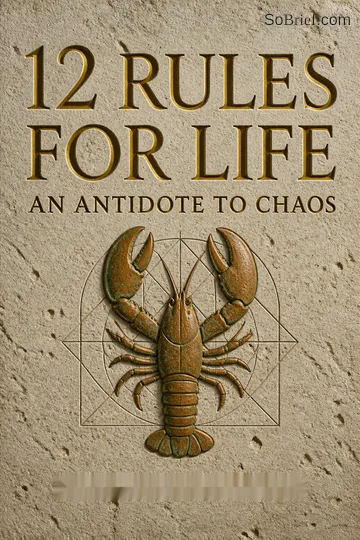
How does Beyond Order: 12 More Rules for Life relate to 12 Rules for Life?
- Continuation of Themes: Builds on themes of order, chaos, and personal responsibility from the first book.
- New Rules for Life: Offers twelve additional rules to help navigate modern life's complexities.
- Deeper Exploration: Provides more nuanced insights into meaning, suffering, and the human experience.
What is the significance of beauty in Beyond Order: 12 More Rules for Life?
- Connection to the Divine: Beauty is seen as a vital aspect that connects us to the divine.
- Enhancing Well-Being: Creating beauty in our surroundings can improve mental health and fulfillment.
- Symbol of Order: Beauty represents order and harmony, counterbalancing chaos.
How does Beyond Order: 12 More Rules for Life address the concept of chaos?
- Chaos as Opportunity: Chaos is seen as a source of opportunity, not just a threat.
- Confronting the Unknown: Emphasizes the importance of facing chaos for personal development.
- Balance Between Order and Chaos: Advocates for a balance, as both are necessary for a fulfilling life.
What role does personal responsibility play in Beyond Order: 12 More Rules for Life?
- Foundation of Meaning: Personal responsibility is portrayed as the cornerstone of a meaningful life.
- Empowerment: Taking responsibility empowers individuals to shape their destinies.
- Moral Obligation: Individuals have a moral duty to take responsibility for their actions.
How can I apply the rules from Beyond Order: 12 More Rules for Life in my life?
- Start Small: Implement one rule at a time to improve daily life.
- Reflect on Responsibility: Identify areas where you can take more responsibility.
- Engage with Challenges: Embrace challenges as opportunities for growth.
What is the significance of art in Beyond Order: 12 More Rules for Life?
- Art as a Civilizing Force: Art mediates between chaos and order, providing meaning.
- Role of the Artist: Artists explore the unknown and contribute to cultural evolution.
- Art and Personal Growth: Engaging with art can lead to personal insights and healing.
How does Beyond Order: 12 More Rules for Life suggest we maintain romance in relationships?
- Plan and Work Diligently: Actively plan and dedicate time to nurture romance.
- Communication is Key: Open communication about desires and needs is essential.
- Embrace the Mundane: Transform routine interactions into meaningful experiences.
Rules for Life Series

About the Author



Download PDF
Download EPUB
.epub digital book format is ideal for reading ebooks on phones, tablets, and e-readers.








