

Key Takeaways
The liberal icon began as McCarthy’s aide and Castro’s covert-war planner.
The early record matters. In 1953, Bobby Kennedy joined Senator Joseph McCarthy’s anti-Communist investigations, despite already knowing McCarthy socially and despite criticism from his brother Jack. Kennedy’s own work on a shipping inquiry was carefully documented, but he did not leave because he had rejected McCarthyism. He remained personally loyal to McCarthy, even after the Senate condemned him and his methods became notorious.
Change was uneven. As attorney general, Kennedy later helped direct covert operations against Fidel Castro, including sabotage. Yet by 1968 he was campaigning as a critic of the Vietnam War and a voice for racial reconciliation. The central story is neither a born liberal’s steady rise nor a clean conversion. Experience changed his politics, while family loyalty, anti-Communism, and a taste for hardball remained part of him.
What’s striking is that the biography treats political development as accumulation, not erasure. Kennedy could absorb new evidence without fully relinquishing old loyalties, a pattern familiar in research on identity and belief change: people often revise conclusions more readily than the allegiances that first shaped them. That makes his transformation credible, but it also limits any redemptive reading. Later compassion does not cancel earlier choices. The value of the arc lies in seeing how a person can genuinely change while remaining answerable for the conduct that came before.
Family loyalty made Bobby a brilliant campaigner and a dangerous political fixer.
Politics began at home. Joe Kennedy wanted his sons to reach high office and taught them that family came first. Bobby, an overlooked and insecure child among accomplished siblings, learned to prove himself through relentless effort. In 1952, he built a parallel campaign organization for Jack, recruited volunteers across Massachusetts, and helped defeat incumbent Henry Cabot Lodge even as Eisenhower swept the state.
Winning shaped the method. For Jack’s 1960 presidential run, Bobby managed strategy, staff, and political crises. The brothers’ calls after Martin Luther King Jr.’s arrest helped win Black support, but the intervention also involved private negotiations with a Georgia judge and carefully distributed campaign leaflets. Bobby could join a morally useful act to a hard calculation. His loyalty made him an unusually effective operator, and made it difficult for him to separate service from manipulation.
The family operates like a political institution: it supplies money, trusted labor, a shared story, and a ready-made succession plan. That can make collective action remarkably efficient, much as tightly coordinated organizations often outperform loosely connected ones. But loyalty also narrows the circle of accountability. When family interests and public duties overlap, a leader may call concealment protection and pressure pragmatism. The King episode shows why outcomes alone cannot settle an ethical question. A beneficial result does not automatically make the means, or the precedent they set, harmless.
His crusade against corruption delivered results, but blurred due process and personal vendetta.
The investigations had force. As chief counsel to the Senate Rackets Committee, Kennedy helped expose misuse of union funds and criminal ties. The inquiry held 207 days of hearings and questioned 1,525 witnesses. Jimmy Hoffa, its chief target, survived criminal trials and won the Teamsters presidency, but the hearings helped spur federal labor reforms and later investigations that sent more than twenty targets to prison.
The methods carried costs. Kennedy regarded many witnesses who invoked the Fifth Amendment as morally suspect and sometimes summoned them chiefly to shame them in public. As attorney general, he expanded the Justice Department’s campaign against organized crime, but his pursuit of Hoffa became so consuming that critics saw a vendetta. He also approved FBI wiretaps on King’s associates and King himself. The record combines serious enforcement with troubling assumptions about how much power the state should wield.
This is a durable problem in law enforcement: aggressive investigation can expose real corruption while weakening the protections that distinguish investigation from punishment. Kennedy’s results matter, especially when institutions had ignored organized crime, but so does the process used to obtain them. Public shaming can look like accountability while functioning as a shortcut around proof. The more political power a prosecutor holds, the more essential independent checks become. A compelling cause is not a substitute for safeguards, because safeguards are most valuable when officials feel certain they are right.
Let experience move you from racial caution toward moral action.
Criticism forced a reckoning. In 1963, Kennedy invited Black artists and activists to discuss rising anger in Northern cities. He expected to explain the administration’s achievements; activist Jerome Smith instead challenged him to understand why nonviolent protest might give way to despair. Kennedy initially reacted defensively, but the argument stayed with him. Earlier, the Freedom Rides and the violent struggle to enroll James Meredith at the University of Mississippi had already exposed the limits of his cautious approach.
Policy followed contact. Kennedy pushed for federal action during civil rights crises, helped advance the 1964 Civil Rights Act, and increasingly described racial injustice as a moral emergency. His learning was neither immediate nor complete: he had often preferred gradual change and political compromise. But sustained contact with people facing discrimination altered what he considered acceptable and what he was willing to risk.
The episode illustrates experiential learning: abstract principles become harder to evade when a person hears directly from those who bear their costs. That kind of encounter can correct a policymaker’s mental model, especially when official statistics hide daily humiliation or danger. Yet the burden should not fall on marginalized people to educate those with power, often at considerable personal risk. Listening matters most when it changes institutional behavior, not merely an individual’s self-image. Kennedy’s growth is significant precisely because the account preserves both the delay and the change.
Cold-war zeal can create the threat it claims to prevent.
Cuba was not a sudden crisis. After the failed Bay of Pigs invasion, Kennedy helped direct Operation Mongoose, a covert campaign of sabotage and pressure intended to undermine Castro’s government. Soviet leader Nikita Khrushchev could reasonably see the threat to Cuba as real and send missiles to protect it. During the 1962 missile crisis, Bobby initially argued for military action, then supported a blockade and helped negotiate a secret U.S. promise to remove missiles from Turkey.
His account softened the record. In his memoir, Kennedy presented himself as a leading dove and did not disclose the full bargain. After Cuba, he organized the release of 1,113 Bay of Pigs prisoners through a large shipment of food and medicine. His views on Vietnam also shifted: by 1967, he was urging negotiations and a halt to bombing. His foreign policy moved from covert force toward compromise, but not in a straight line.
The Cuban episode resembles a security dilemma: one government’s effort to protect itself can appear offensive to another, prompting the very escalation it was meant to deter. That lens does not excuse Soviet missile deployment or erase Cuban agency. It does clarify why covert pressure can be strategically self-defeating. The memoir’s omissions also show that leaders shape public memory, not just policy. When a crisis is remembered as a one-sided victory, future decision-makers may mistake compromise for weakness and repeat the escalation that made compromise necessary.
Grief freed Bobby from his brother’s shadow, but not his family’s legacy.
Dallas broke his borrowed identity. After Jack’s assassination, Bobby managed funeral arrangements and cared for the family, then fell into a prolonged depression. He withdrew from work, struggled to sleep and concentrate, and often spoke of his brother only indirectly. For years, his public career had been built around protecting Jack and carrying out the Kennedy family’s ambitions.
A new role required a choice. In 1964, Bobby ran for the U.S. Senate in New York, despite criticism that he was a wealthy outsider using the state as a political launchpad. He won by 719,693 votes. The campaign drew him back into public life and forced him to define what he believed in his own name. He remained bound to his family’s history, but his Senate work increasingly reflected his own priorities rather than simply completing Jack’s agenda.
Grief can unsettle identity because it removes not only a loved person but also the future imagined with that person. Kennedy’s return to public life suggests that action can restore direction, though it should not be mistaken for a cure or a universal prescription. His account also complicates the familiar idea of succession: inheriting influence does not guarantee inheriting purpose. The Senate campaign gave him a new platform, but the decisive change was that he began using it to pursue causes whose urgency came from his own encounters and judgments.
Treat poverty as lived reality, then give communities power and jobs.
A visit made hunger concrete. In 1967, Kennedy traveled to Mississippi’s Delta after hearing testimony about children going without adequate food. In one shack, a toddler ate scraps from the dirt floor while his mother described the family’s hardship. Kennedy then pressed the Agriculture Department to change food-stamp rules and helped draw medical attention to children suffering from malnutrition.
Bed-Stuy tested a broader response. In Brooklyn’s Bedford-Stuyvesant neighborhood, he paired federal support and business investment with local leadership. The initiative repaired homes, created work, and placed about 20,000 people in jobs; roughly 2,200 housing units were built or renovated. An IBM plant brought 500 jobs, though it did not trigger a wave of corporate investment. The project’s lasting contribution was its argument that residents needed authority, work, and investment, not studies alone.
The Delta visit shows how proximity can reveal failures that aggregate measures conceal. The policy response then moves beyond sympathy toward access to food, medical assessment, employment, and local control. That combination anticipates a modern insight from development practice: programs tend to fit better when intended beneficiaries have meaningful influence over implementation. Still, a compelling demonstration project cannot by itself overcome weak labor markets or entrenched discrimination. Bedford-Stuyvesant’s mixed record is instructive. Local leadership matters, but it cannot replace sustained resources or changes to the larger economy.
Build bridges by telling each audience the truth, not flattering its side.
Kennedy sought audiences others avoided. In Gary, Indiana, during his 1968 campaign, he rode beside Black mayor Richard Hatcher and Polish American boxer Tony Zale. He addressed both Black residents and white workers with the same basic message: jobs offered a better answer than welfare or riots. In South Africa, he spoke against apartheid while acknowledging America’s own racial failures, then met students and Black leaders the government wanted kept out of sight.
Connection depended on attention. He visited poor neighborhoods, migrant-worker camps, and communities abroad, often asking what people needed rather than announcing a ready-made solution. His style could be awkward and his politics remained inconsistent, but he was unusually willing to cross racial, class, and ideological lines. The aim was not to make every group agree. It was to make a coalition possible without pretending its members had identical interests.
Coalition building is a translation problem as much as a persuasion problem. People need to recognize their own concerns in a shared proposal without being told that their differences are imaginary. Kennedy’s cross-audience approach was powerful because he could speak about jobs and dignity in the same breath. Its risk is that tailored language can be mistaken for opportunism, especially when the speaker’s record is mixed. Trust depends not only on finding common ground but also on stating where interests conflict and what compromises will actually cost.
California made Bobby a contender; the nomination was still undecided.
The late entry was costly. Kennedy delayed announcing his 1968 presidential campaign, then entered after Eugene McCarthy’s strong showing against President Johnson in New Hampshire. Critics called him opportunistic, and the late start left little time to build a national organization. He lost Oregon to McCarthy, admitted defeat plainly, and changed course rather than pretending the result was a victory.
California revived the campaign. Kennedy won 46.3 percent of the California primary vote on June 4, with another victory in South Dakota. Hours later, after his victory speech at the Ambassador Hotel in Los Angeles, he was shot. He died the next day, at forty-two, before the Democratic convention. The campaign had shown that he could attract Black voters, working-class whites, students, and reformers, but it had not settled whether that coalition could win the nomination or govern.
The ending invites counterfactuals, but a primary victory is not an election forecast. Kennedy still faced a convention controlled by party leaders, a rival in Hubert Humphrey, and a country divided over war, race, and public order. The coalition was real as an electoral possibility, not yet proven as a governing majority. That distinction makes the loss more than a missed succession story. It leaves a sharper question: could a candidate who connected groups across lines also have negotiated the durable compromises that governing requires?
Analysis
The biography’s most important argument is that Robert Kennedy became a liberal icon through an unstable process of learning, not through an innate commitment to liberalism. His earliest public identity was built from inherited ambition, anti-Communism, and political loyalty. Experience repeatedly interrupted that identity: Soviet villages complicated his assumptions, civil rights activists challenged his moderation, and poverty became harder to treat as an abstraction after he entered a Mississippi shack. The transformation is compelling because it does not erase the earlier record. The same man who pursued covert operations and approved surveillance later defended poor people and condemned a war he had once supported.
That tension also defines his political effectiveness. Kennedy understood power as something that could move policy, but he often treated winning as proof that the means were justified. His investigations exposed corruption and helped prompt reform, yet his treatment of Fifth Amendment witnesses and his fixation on Hoffa reveal how easily a crusade can become personal. His public compassion and private political calculation were not opposites. They were intertwined, sometimes productively and sometimes dangerously.
The book’s narrative structure reinforces this point by setting famous images against less flattering episodes. The celebrated racial healer had once moved cautiously on civil rights. The supposed dove at the missile crisis had argued for an attack and later concealed the Turkey missile bargain. The grieving brother became a candidate with his own agenda, but never escaped the expectations attached to his name. That repeated collision between memory and record is more illuminating than either a valentine or a prosecution.
Kennedy’s assassination freezes the story before it can answer the question that his supporters ask most: what kind of president would he have been? The evidence supports admiration for his capacity to change, his attention to people outside elite politics, and his ability to speak across divisions. It does not establish that he could have translated those qualities into durable national policy. The unrealized presidency is therefore both the book’s emotional climax and its analytical limit. What survives is a portrait of political growth that remains unfinished, consequential, and ethically complicated.
Review Summary
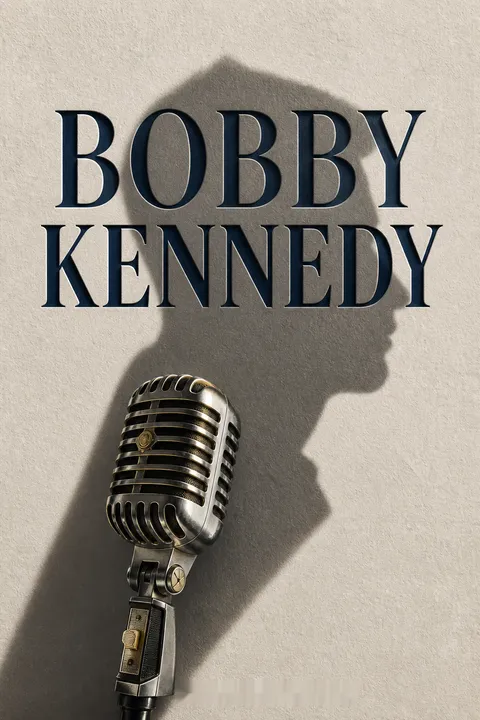
Bobby Kennedy: The Making of a Liberal Icon is praised as a balanced and insightful biography, highlighting Kennedy's transformation from conservative to liberal icon. Readers appreciate Tye's nuanced portrayal, revealing Kennedy's complexity, flaws, and growth. The book explores key moments in Kennedy's career, from working with McCarthy to his presidential campaign. Many reviewers found it moving and thought-provoking, reflecting on Kennedy's potential impact had he lived. Overall, it's considered a well-researched, engaging read that offers fresh perspectives on a significant historical figure.
People Also Read

Glossary
Operation Mongoose
Covert campaign against CastroA U.S. government campaign, directed in practice by Robert Kennedy, to weaken Fidel Castro’s Cuban government after the failed Bay of Pigs invasion. It used intelligence operations, sabotage, and efforts to provoke political unrest. The campaign reflected Kennedy’s determination to remove Castro, but its covert pressure also helped convince Cuba and the Soviet Union that the island faced further American attack.
counterinsurgency
Reform paired with securityKennedy’s approach to fighting revolutionary movements by addressing social conditions such as poverty, poor schooling, and weak public services while also using military and police force. He regarded reform as necessary to win popular support, but not sufficient without security measures. His approach shaped his thinking about Cuba and Vietnam, even as his own covert actions sometimes undermined the political trust such reforms required.
Trollope ploy
Accepting one offer, concealing anotherA negotiating tactic associated with the Cuban missile crisis. The United States publicly accepted the Soviet offer to withdraw missiles from Cuba in exchange for a pledge not to invade the island, while secretly agreeing to remove American missiles from Turkey later. Presenting the outcome as if only the first offer mattered concealed the reciprocal bargain and protected both governments from political backlash.
Operation Habeas Corpus
Prisoner release through aidThe effort organized by Robert Kennedy to secure the release of more than 1,100 Cuban prisoners captured after the Bay of Pigs invasion. American businesses supplied food and medicine, while other supporters helped cover costs. The operation culminated in the prisoners’ return to Miami on Christmas Eve 1962. It showed Kennedy using political influence and private cooperation for humanitarian purposes amid continuing hostility toward Cuba.
Bedford-Stuyvesant experiment
Locally led neighborhood renewalA redevelopment initiative in Brooklyn’s Bedford-Stuyvesant neighborhood that combined federal support, private investment, local leadership, job creation, and housing repair. Kennedy backed separate community and business organizations to encourage cooperation despite deep distrust. The project produced jobs and renovated housing, but did not attract a broad wave of corporate investment. Its larger model emphasized community influence and employment as central parts of neighborhood renewal.
Ripple of Hope Speech
Appeal against apartheidThe 1966 address Kennedy delivered at the University of Cape Town during a visit to apartheid-era South Africa. It urged listeners to oppose injustice through individual acts and collective effort, while acknowledging that the United States had its own record of racial inequality. The speech became a defining statement of his public identity as a speaker for racial justice and a source of encouragement for South African students opposing apartheid.
About the Author
Other books by Larry Tye
Download PDF
Download EPUB
.epub digital book format is ideal for reading ebooks on phones, tablets, and e-readers.








