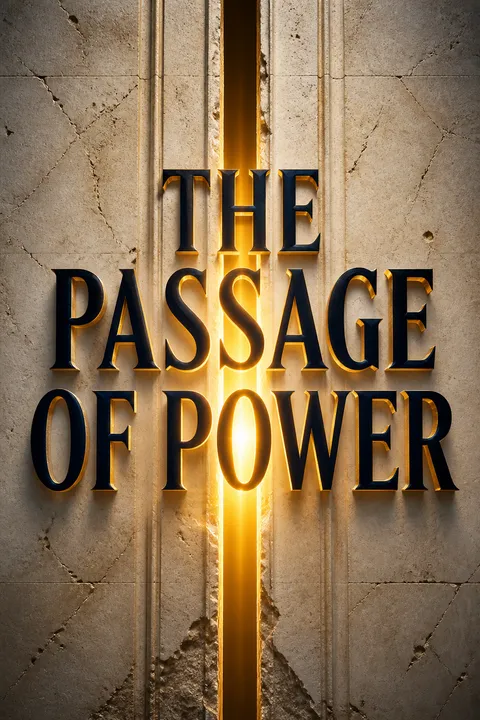


Key Takeaways
Turn a sudden succession into legitimacy by acting before uncertainty hardens.
Power arrived instantly. In a Parkland Hospital cubicle, aide Ken O’Donnell told Lyndon Johnson that John Kennedy was dead. Johnson was legally President at that moment, but the country did not yet know where he was or who was in command. Within hours, he had arranged the oath aboard Air Force One, with Jacqueline Kennedy beside him, and gave orders to protect the new administration and preserve continuity.
The transition had a deadline. Johnson had just 47 days before his January 8 State of the Union address to make the presidency his own. The assassination, live television, fears of conspiracy, and the approaching election made every early decision unusually consequential. His first task was not simply to inherit authority, but to make the government look stable enough for citizens and foreign leaders to trust it.
A constitutional rule can transfer office in a sentence; public confidence takes visible evidence. Johnson’s oath, his choice to wait for Kennedy’s widow and coffin, and his rapid assumption of official duties worked as political signals as well as formal acts. Crisis leadership often depends on reducing ambiguity before it spreads, a principle shared by emergency management and organizational change. Yet symbolism is not a substitute for accountability. A leader can project continuity while concealing important disagreements, so observers must distinguish reassuring performance from transparent governance.
Fear of public defeat kept Johnson from campaigning until Kennedy owned the West.
Ambition met fear. Johnson had wanted the presidency since boyhood, but the collapse of his father’s ranch had taught him to associate public failure with lasting shame. In 1948, he hesitated over a Senate race until allies threatened to put forward another candidate. In 1958, with a plausible route to the Democratic nomination, he again delayed, declined invitations, and refused to enter primaries.
Delay became defeat. Johnson believed senators and southern delegates would give him a strong base, then expected a deadlocked convention to turn to him. He privately organized a campaign while publicly denying he was a candidate. That contradiction made allies reluctant to commit and gave competitors time to build support. By the time he finally campaigned across the West, Kennedy had already secured many of the delegates Johnson had assumed would be available.
Johnson’s fear is not presented as simple cowardice. It is a strategy for avoiding the humiliation he dreaded: if he never truly tried, he could tell himself he had never truly lost. That logic resembles loss aversion, the tendency to feel a possible loss more sharply than an equivalent gain. It can protect people from short-term pain while quietly destroying their options. The account also shows the limits of personality-based explanation: fear mattered, but so did a flawed campaign theory and a changing political landscape.
Follow delegates to their states; Senate titles cannot deliver convention votes.
Kennedy went to the voters. While Johnson stayed in Washington, John Kennedy used television, magazine exposure, and relentless travel to become a national figure. His appearance as narrator of a 1956 convention film made an impression on millions, and his campaign team built local organizations and cultivated the people who controlled delegates. Robert Kennedy’s personal bargaining helped turn contacts into commitments.
The West decided the contest. Johnson counted on senators to deliver western delegations, but state and local leaders controlled many of those votes. The ten western states together held 172 delegates. Kennedy’s team worked them early; Johnson’s began too late. Wyoming, where Johnson could once have been competitive, supplied the final votes for Kennedy’s first-ballot victory: 763 votes to Johnson’s 409.
Johnson’s Senate mastery gave him an accurate map of power inside the Capitol and a misleading map of power outside it. Political organizations are networks, not simply collections of officeholders: the person with a title may not control the people who cast the decisive vote. Kennedy understood that distinction and also understood television as a way to create recognition before formal campaigning began. The contrast is useful beyond elections: influence must be traced to the actual decision-makers, not inferred from prestige or proximity.
The vice presidency offered a path upward, but almost no power of its own.
Johnson chose the risky route. After losing the nomination, he accepted Kennedy’s offer of the vice presidency partly because a Vice President might succeed a President who died in office. He also hoped that national office would loosen his ties to Texas and the South, which had hurt his presidential prospects. The Constitution, however, gave the Vice President almost no independent authority.
The office resisted his redesign. Johnson tried to retain control of the Senate Democrats, keep the Majority Leader’s office, place a large staff inside the White House, and claim broad oversight of national security. Senate elders rejected his caucus plan, and Kennedy replaced his proposed executive order with a largely powerless request. Johnson had treated office as something he could make powerful; this time, institutions and another President limited what he could do.
The episode separates positional power from personal skill. Johnson had excelled in the Senate because he controlled schedules, favors, committee access, and relationships. The vice presidency offered none of those levers by right. In institutional terms, the President could delegate tasks but could not simply manufacture an independent executive authority for his deputy. Johnson’s miscalculation was not that influence never travels with a person; it was that it would travel intact across a constitutional boundary and an unfriendly White House.
Use restraint to survive powerlessness, but know what it costs.
Humiliation changed his behavior. In Kennedy’s White House, Johnson was excluded from informal decisions, kept away from congressional negotiations, and mocked by staffers who called him “Cornpone.” He spent little time alone with the President and sometimes waited outside the Oval Office for an audience. The man who had once commanded the Senate was now treated as an ornamental Vice President.
He answered with self-control. Johnson publicly praised Kennedy, avoided criticizing him, and tried to be useful without appearing disloyal. He even wrote that he would follow the President’s lead. This discipline helped preserve his access to power, but it came at a visible personal cost: he grew withdrawn, lost confidence, and privately described the vice presidency as a role that stripped him of standing.
Johnson’s restraint was neither a personality makeover nor uncomplicated loyalty. It was a survival tactic shaped by his dependence on a President who could make his future easier or harder. That makes the episode a useful study in emotional regulation under unequal power: suppressing a reaction can preserve a relationship, but prolonged suppression can corrode identity and health. The account also cautions against treating dignity as merely a feeling. In political institutions, status is made tangible through access, invitations, information, and the right to speak.
In the missile crisis, Johnson favored force while Kennedy kept searching for exits.
The crisis exposed a real divide. During the Cuban Missile Crisis, Johnson joined the group urging a strong response to Soviet missiles in Cuba. He favored an unannounced air strike rather than a naval quarantine and gradual escalation. Kennedy, after days of debate, chose the blockade and kept looking for a way to avoid war.
A final decision excluded Johnson. When a U-2 was shot down, Johnson argued that the United States was appearing weak and should attack a missile site. Kennedy then met privately with a smaller group, without Johnson, to approve a secret assurance that the United States would later remove missiles from Turkey. Johnson had also told Senator Richard Russell about the missiles before Kennedy made the crisis public, despite a request for secrecy; Russell kept the information confidential.
The episode shows why disagreement inside a crisis team matters, but also why access and trust matter. Johnson’s hawkishness was not unique; several senior officials favored military action. The sharper issue is that he shared secret information outside the deliberative group and was excluded from the final diplomatic discussion. Crisis management benefits from dissent, yet dissent is most useful when it stays within channels that protect both candor and national security.
Pair moral urgency with legislative timing to move civil rights forward.
Civil rights tested his record. For most of his first twenty years in Congress, Johnson voted against civil rights bills and helped southern senators keep them from the floor. He later secured weak laws in 1957 and 1960, insisting that voting rights could provide a starting point. In 1963, he pressed for small acts of integration in St. Augustine and delivered a forceful speech at Gettysburg linking racial justice to the unfinished promise of the Civil War.
He saw both conscience and procedure. In November, he urged Congress to pass the civil rights bill as an immediate tribute to Kennedy. He also understood the Senate’s delaying tactics: committee chairmen could stall a bill while using other legislation as leverage. During the transition, he helped break the bill out of the logjam, combining the President’s moral authority with the procedural knowledge he had built as Majority Leader.
Johnson’s record makes the transformation difficult to reduce to either pure conviction or pure opportunism. His earlier votes were real, as were his later efforts to advance civil rights. The more precise question is how motives and consequences interact: political ambition can create an opening for principled action, but it does not erase prior harm. His procedural insight is especially important. Moral appeals become law only when someone understands where a bill can be delayed, traded away, or allowed to die.
Make the first congressional vote a test of presidential authority.
A minor bill carried a larger message. Conservatives had attached an amendment to foreign aid legislation that would prevent the President from using the Export-Import Bank to finance wheat sales to the Soviet Union. Johnson saw that the issue was not only wheat. It was Congress testing whether it could continue to overrule the White House as it had under Kennedy.
He forced a clear result. Johnson treated the measure as a test of strength, called senators one by one, and pressed for a margin large enough to discourage further challenges. After the Senate defeated it, conservatives tried again to revive the restriction. Johnson prepared another procedural move, despite warnings that it was risky, and the bill was defeated again. The confrontation helped shift expectations about who would set the government’s agenda.
This is a classic example of agenda-setting power: the significance of a vote can exceed the subject named in the bill. By defining the measure as a test of presidential authority, Johnson changed the incentives for senators deciding how to vote. That tactic can restore executive initiative, but it carries a cost. Turning every dispute into a loyalty test can make Congress more responsive in the short term while making future compromise harder.
Turn inherited grief into a new agenda for America’s poorest citizens.
Johnson made the presidency his own. In his January 8 State of the Union address, he announced a War on Poverty, expanding a proposal that Kennedy had supported only tentatively. In 1964, about one-fifth of the nation’s 150 million people, roughly 30 million Americans, lived in poverty. Johnson said the effort should do more than ease hardship; it should address its causes and prevent it from recurring.
The proposed tools were practical. The speech named better schools, health care, housing, training, and job opportunities, with particular attention to young people. Johnson tied the program to a larger claim: government could use the nation’s resources to correct entrenched injustice. The announcement came only 47 days after Kennedy’s assassination, and marked the moment when the transition ended and Johnson’s own policy agenda began.
The shift from tribute to agenda is politically sophisticated: Johnson used the public’s desire for continuity to secure room for change. The poverty program also reflects a broader policy insight: income support alone may relieve hardship without addressing its sources, while education, health, housing, and employment affect one another. The ambition is compelling, though the speech’s breadth raises a practical question: a sweeping goal needs clear measures and institutional capacity, not just a memorable declaration.
The transition’s reform promise arrived beside secrecy and unresolved financial questions.
Vietnam was kept quiet. Johnson wanted to prevent the war from becoming a political issue before the 1964 election. He affirmed Kennedy’s troop-withdrawal plan publicly while approving covert operations against North Vietnam, including plans for raids and sabotage. The key decision-makers kept those plans secret from Congress and the public.
The money story was also gathering force. While Johnson was in Scandinavia, reports emerged about Bobby Baker’s business dealings. Don Reynolds later told Senate investigators that Baker had arranged for Johnson to receive an insurance policy, advertising purchases, and a stereo set; he also alleged that a stadium contract generated cash for a Johnson campaign. Some claims were supported by documents, but the full investigation was unfinished when Kennedy was killed. Life magazine had just begun a deeper inquiry into Johnson’s wealth.
The juxtaposition matters. Johnson’s early presidency shows government acting boldly on domestic injustice while also withholding information about war and personal finances. Those are not unrelated stories: secrecy can protect short-term political room, but it weakens the trust required for durable public action. The Baker allegations should be treated as allegations rather than as a fully adjudicated account; the assassination interrupted the investigation. The Vietnam decisions, by contrast, already show a deliberate preference for concealment.
Analysis
The book’s architecture is a deliberate hinge: years of ambition undone by fear, followed by seven weeks in which the same ambition finds a stage. Its central argument is not merely that Johnson was effective, but that power revealed capacities concealed by office and circumstance. The Senate leader who mastered legislative timing becomes a humiliated Vice President; assassination converts him into the one actor with authority to move a stalled government. Caro makes the transition a political stress test, showing that succession is legally automatic but socially and institutionally fragile.
The narrative is strongest when concrete detail clarifies mechanisms: a committee chair can immobilize a tax bill without openly opposing it; a funeral procession can communicate continuity; a vote on wheat can reset expectations about presidential power. Johnson’s personal history gives emotional force to these mechanisms, especially his dread of public failure. Yet the portrait’s richness also risks making psychology seem more certain than the evidence permits. Witnesses disagree about key conversations, including the 1960 vice-presidential offer and the calls after Kennedy’s death. That uncertainty is not a flaw to erase. It shows how political power operates through contested memory as well as formal authority.
The enduring tension is that Johnson uses power for both humane and self-protective ends. He turns grief into an opening for civil rights and anti-poverty legislation, but also seeks control, suppresses damaging information, and keeps Vietnam deliberately quiet. The result resists a simple verdict. Leadership here is not charisma alone; it is the capacity to read veto points, build coalitions, and recognize when a symbol can change what actors believe possible. But competence cannot absolve secrecy or policy costs. The transition’s triumph and the presidency’s tragedy are linked, not separable. Crisis creates opportunity, not wisdom; Johnson’s achievement depended on timing and institutional knowledge, while its limits arose from the same appetite for control that made him effective.
Review Summary
Reviewers overwhelmingly praise The Passage of Power as a masterful addition to Caro's LBJ series, highlighting its vivid portrayal of Johnson's humiliating vice presidency, the harrowing Kennedy assassination sequence, and LBJ's remarkable legislative achievements in his first weeks as president. Many consider it slightly weaker than previous volumes due to its narrower scope and occasional repetitiveness, yet still rate it five stars. Readers particularly admire Caro's nuanced treatment of the LBJ-RFK feud and Johnson's triumphant passage of the Civil Rights Act.
People Also Read



Glossary
Southern Caucus
Southern Senate blocThe informal alliance of Southern senators who coordinated to defend regional interests, especially racial segregation, and to block civil rights legislation. Its influence rested not only on votes but on committee chairmanships, control of Senate procedure, and its ability to delay unrelated legislation until opponents accepted compromise.
cloture
Vote to end debateA Senate procedure for ending a filibuster and bringing debate toward a vote. In the period covered here, cloture required a two-thirds majority, making it difficult to overcome a determined minority. Southern senators used the threat of extended debate to delay civil rights bills and other measures.
discharge petition
House committee bypassA House procedure that can remove a bill from a committee that is refusing to release it. A petition must obtain signatures from a majority of House members before the bill can be brought forward. Johnson and civil rights supporters used the threat of this procedure to pressure Rules Committee chairman Howard Smith to schedule hearings.
LBJ Special
Johnson’s campaign trainThe campaign train Johnson used for a five-day whistle-stop tour through eight Southern states during the 1960 presidential campaign. Its rear platform hosted short speeches, while a parlor car served as a moving reception room where local officials and political leaders met Johnson between stops.
Warren Commission
Federal assassination inquiryThe seven-member commission President Johnson created in November 1963 to investigate John F. Kennedy’s assassination and report its findings. Chaired by Supreme Court Chief Justice Earl Warren, it included officials from both parties and replaced competing investigations with a single national inquiry intended to establish public confidence in the results.
War on Poverty
Federal anti-poverty campaignJohnson’s 1964 initiative to address poverty through measures involving education, health, housing, training, and employment. The State of the Union address framed the effort as a campaign to address causes of poverty, not only its visible hardships. It became part of the broader social legislation Johnson associated with the Great Society.
continuing resolution
Temporary spending authorityA temporary congressional measure allowing federal agencies to keep operating when their regular appropriations bills have not passed. In 1963, delays in Congress left several departments relying on continuing resolutions, which generally limited them to existing activities and prior funding levels.
The Years of Lyndon Johnson Series
About the Author

Download PDF
Download EPUB
.epub digital book format is ideal for reading ebooks on phones, tablets, and e-readers.








