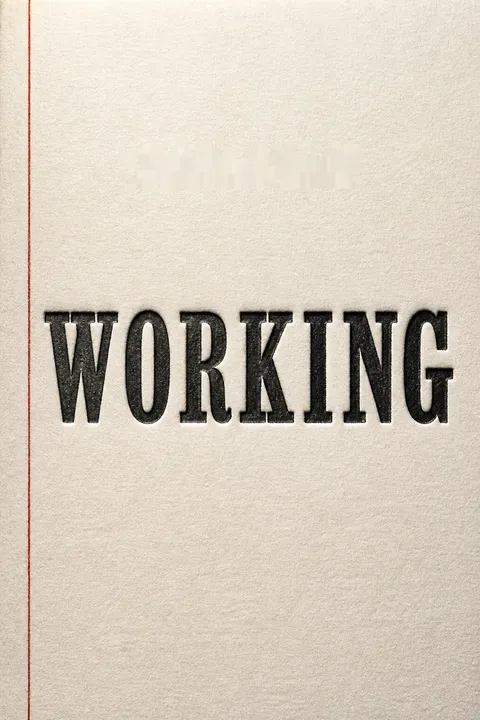


Key Takeaways
Study the wielder of power to explain the system around them
Follow power beyond biography. Caro chooses Robert Moses and Lyndon Johnson not simply because they were consequential men, but because each reveals a kind of political power that ordinary accounts overlook. Moses was never elected, yet for decades he shaped New York through public authorities, appointments, and control of public works. Johnson's Senate leadership shows how influence could be built through relationships, money, and vote-counting.
Connect the person to daily life. A bridge entrance placed to benefit a politically connected landlord, federal education funding, Medicare, and a disastrous war all show political decisions reaching far beyond government offices. Biography becomes a way to explain how those decisions are made and whose lives they change.
What's striking is the shift from asking what a powerful person was like to asking what arrangements made that person's power possible. This resembles institutional analysis in political science, which studies not just leaders but the rules, incentives, and informal networks shaping their choices. The biographical lens makes those mechanisms concrete: a decision about a road or a Senate vote acquires a human scale. The approach has a limit, however. A compelling individual can dominate the story so thoroughly that institutions seem to depend on one exceptional person. Caro's strongest examples counter that risk by tracing power through offices, money, allies, and the people who bear its consequences.
Treat apparently irrelevant files as leads, not clutter
Follow the paper trail. At the Lyndon Johnson Library, Caro faced tens of millions of pages and knew he could not inspect them all. He and Ina searched broadly, including files whose labels gave little reason to expect useful evidence. In an ordinary-looking folder, a telegram from contractor George Brown pointed to campaign contributions that helped explain Johnson's sudden rise in Congress in 1940. Another unpromising folder held a yearbook's missing pages, which revealed how Johnson's college peers viewed him.
Search with discipline. Caro's practice was to distrust tidy labels and keep looking for records that could confirm or overturn a promising account. The work took years, but the overlooked page could be the one that changed the story.
This method treats archives as systems shaped by the people who created, classified, and sometimes concealed records. It also resembles exploratory science: researchers cannot inspect every possible observation, so they develop hypotheses, follow anomalies, and revise their search. The method is powerful because an unexpected document can expose a hidden connection. It is not a guarantee of completeness. Archives preserve some voices more thoroughly than others, and a researcher can mistake what survives for what mattered. Caro's insistence on cross-checking and following loose ends helps, but the absence of a record should still be treated as a question, not proof that an event never occurred.
Make the powerless visible, or your account of power stays abstract
Show who pays. While researching Moses's highways, Caro found broad references to their human cost but little explanation of what that cost meant. He focused on East Tremont, a Bronx community where the Cross-Bronx Expressway displaced residents and cut through neighborhood life. Fifty-four apartment houses were demolished on the chosen route, although a nearby alternative would have required removing six. Former residents described losing affordable homes, familiar shops, and close ties with neighbors.
Follow the consequences. The damage continued after the first evictions. Remaining buildings deteriorated, residents moved away, and the community fractured. Interviews with people who had lived there before and after the expressway made the consequences of a planning decision legible as lived experience, rather than a phrase in a report.
The choice to describe displaced residents is not merely a matter of adding emotional color. It changes the unit of analysis: a highway is no longer only a transportation project, but also an intervention in housing, social networks, and access to opportunity. This resembles distributional analysis, which asks who receives a policy's benefits and who absorbs its costs. Personal accounts can make those costs perceptible, but they cannot by themselves settle every question about a project's overall value. Strong public history pairs testimony with evidence about alternatives, outcomes, and beneficiaries. Caro's neighborhood study makes that comparison central rather than treating hardship as a footnote.
Pair documentary proof with witnesses who make consequences felt
Make claims verifiable. Caro did not rely on Robert Moses's account of his own decisions. Letters and telegrams showed that Moses had accepted money connected to changing a parkway route, despite later presenting it as an engineering necessity. In another case, archival records about Lyndon Johnson's 1948 Senate race gained decisive force when Luis Salas, a former election judge, produced a written confession describing how he altered votes.
Make evidence human. Documents established what happened; witnesses supplied detail about how it unfolded and affected people. Caro also tracked down East Tremont residents and farmers whose lives were altered by decisions recorded in official files. The strongest account came from bringing records and testimony together, not asking either to carry the whole burden alone.
The combination is a form of triangulation: separate sources, each with weaknesses, are compared to see where they converge or conflict. Documents can be incomplete or strategically worded; memories can fade, shift, or serve a witness's interests. Agreement across independent sources increases confidence without making certainty automatic. Salas's manuscript is especially revealing because it is both a firsthand account and a self-interested act of confession, so its details still need contextual support. Caro's method offers a useful standard for nonfiction: preserve the distinction between what a source says, what the record corroborates, and what the writer infers.
Live inside an unfamiliar place before claiming to understand its people
Earn local understanding. Caro first visited the Texas Hill Country for interviews, but residents held back. They had seen short-term reporters arrive, gather a few anecdotes, and leave. Locals called such visitors portable journalists. Caro and Ina moved to the region and stayed for most of three years. The change in their presence helped conversations deepen, and Ina's homemade fig preserves helped her build friendships with women who were wary of strangers.
Let place change the questions. Caro learned about isolation, poverty, and the exhausting labor that preceded rural electrification. One woman showed him the bucket and rope she had used to draw water. Such encounters revealed that understanding Johnson's political origins also required understanding the daily lives and landscape that shaped his community.
The story highlights a core principle of ethnographic work: trust and context are not decorative extras, but conditions that shape what people are willing to share. Time in a place can expose assumptions that a visitor would otherwise mistake for universal experience. Yet presence alone does not grant full access or eliminate the outsider's perspective. A researcher may still hear some voices more readily than others, and a charming gesture cannot substitute for careful listening. Caro's experience is most useful as a reminder that familiarity should be earned and tested, not declared after a handful of interviews.
Rebuild scenes until readers can see why a fact mattered
Give facts a setting. Caro argues that nonfiction should help readers picture where events occurred, because setting can clarify a person's options, fears, and ambitions. To understand Johnson's childhood in the isolated Hill Country, Caro spent two days alone on a neighboring ranch, learning how empty and quiet the landscape felt. That experience helped him interpret how loneliness shaped the family around Johnson.
Use the scene to explain. Caro also retraced Johnson's early morning walk past the Capitol. At sunrise, the building's marble facade blazed into view, making the contrast between Johnson's poor beginnings and his political ambition visible without an abstract lecture. The scene works because observation is tied to evidence from people who knew Johnson and to the conditions of his life.
A well-built scene can function as an argument. The reader sees the setting, then understands why it might matter to the people within it. This is one reason physical detail can make historical explanation memorable: it gives abstract forces a perceptible form. The method also carries a risk. A vivid reconstruction can feel more certain than the evidence allows, especially when the subject is deceased and the writer is inferring inner states. Caro's emphasis on documentation is therefore essential. Atmosphere should illuminate supported claims, not quietly replace them.
Use silence, repetition, and proximity to unlock guarded memories
Ask for the scene. Caro repeatedly asked witnesses what they saw, heard, and did, rather than settling for a general summary. When Johnson's assistant Horace Busby first recalled a silent limousine ride, Caro pressed for visual details until Busby remembered Johnson's hands turning pages and the protest song outside the White House. For silence during an interview, Caro wrote a reminder to himself to stop talking and let the witness fill the pause.
Change the setting. To help Johnson's brother Sam Houston recall family arguments, Caro brought him into the recreated boyhood home and seated him where he had sat as a child. In that setting, Sam Houston admitted that some stories he had previously told about Lyndon had never happened, then offered more detailed memories.
Specific prompts can turn a vague recollection into a more testable account: who was present, where they stood, what happened next? This overlaps with cognitive interviewing, a practice that encourages witnesses to reconstruct context rather than simply supply conclusions. Repetition can also help, but it may steer a witness toward the interviewer’s preferred story. The interviewer must distinguish recovered detail from suggestion. Caro's patience is most persuasive when he uses follow-up to clarify and then checks accounts against other witnesses or documents, rather than treating vividness as proof.
Trace how influence travels through money, offices, and ordinary decisions
Map the mechanism. Caro shows that political power often resides in the control of resources, not only in formal titles. Moses used public authorities and public works to distribute contracts, insurance income, and other benefits to people whose cooperation mattered. His apparent technical decisions could therefore also shape political alliances.
Follow the money. In 1940, Johnson gathered contributions from Texas business figures and directed funds to congressional candidates across the country. He chose who received support and made sure recipients knew he had arranged it. That access created gratitude and self-interest, turning a junior congressman into someone colleagues had reason to consult. In both cases, tracing the practical route from resource to relationship revealed how power was accumulated and maintained.
Power becomes easier to analyze when it is broken into observable exchanges: who controls a resource, who receives it, and what obligations or loyalties follow. This is a useful corrective to explanations that treat influence as charisma or mysterious personal force. It also guards against simplistic accounts of corruption, since a political exchange can be legal and still concentrate influence in ways that deserve scrutiny. Caro's examples show why the mechanism matters: the same bridge or campaign contribution can be both a practical resource and a tool for building political dependence.
Keep achievement and damage in the same frame
Refuse the simple verdict. Moses created parks, beaches, bridges, and roads that transformed the New York region, while his projects also displaced hundreds of thousands of people and helped deepen segregation. Johnson helped secure landmark civil rights laws and major social programs, yet his political career included years of opposition to civil rights, and his presidency escalated the Vietnam War.
Hold the contradiction. Caro's account insists that political power can produce public benefit and profound harm, sometimes through the same leader. The point is not to average good deeds against bad ones or to declare a person wholly admirable or villainous. It is to describe what the person did, how power made it possible, and who experienced the results.
This refusal of a single moral label is a strength of serious biography. It lets readers examine policy outcomes without confusing effectiveness with virtue, or good intentions with good consequences. Political ethics often distinguishes the quality of an outcome from the means used to achieve it; Caro's subjects make that tension impossible to ignore. Still, complexity should not become a way of blurring responsibility. A balanced account must give harms and benefits their actual scale, not assume that mentioning both makes them equivalent. The evidence, rather than a formula of praise and blame, has to determine the weight.
Analysis
Working is a collection of recollections about craft, but its deeper subject is how a nonfiction writer learns what counts as evidence. Caro begins with a reporter's discovery that political power operates beyond elections and public speeches. His investigations then become a sequence of corrections: official accounts omit mechanisms, documents contradict powerful witnesses, and broad claims about human cost conceal individual lives. Each correction expands the scale of the story, from a powerful person to institutions, communities, and the people those institutions displace or serve.
The book's distinctive achievement is to make research itself feel like narrative. A hidden carbon copy, a telegram in an unpromising file, or an old yearbook page becomes a turning point because it changes what the researcher can responsibly say. This dramatizes a method that is usually invisible to readers: claims gain strength through repeated checking, while uncertainty is managed by comparing sources rather than pretending it disappears. Caro's scenes also show that factual rigor and literary form are not opposites. Carefully reconstructed places and actions help readers grasp the significance of evidence, provided the scene remains tethered to records and testimony.
There is a productive tension in Caro's ideal of continuing until every relevant question is answered. His own account acknowledges the cost in years, money, and family life. More broadly, no archive is complete, and no amount of effort grants access to every perspective. Research can become endless unless the writer has a clear argument that helps decide what belongs. Caro's practice of reducing a book to a few paragraphs offers that discipline: the inquiry may widen, but each discovery must serve the central explanation.
The civic claim is equally important. Readers understand public power more fully when they can see both what government makes possible and what it does to people with little leverage. Caro neither treats government as inherently benevolent nor reduces it to abuse. His account asks readers to follow decisions into daily life, then judge the machinery and its consequences with evidence in hand.
Review Summary
Working is praised for offering insight into Caro's meticulous research and writing process. Readers appreciate his dedication to uncovering truth through exhaustive interviews and document analysis. Many reviewers note the book's value for aspiring writers and historians. Some find it repetitive of previously published material, but most consider it a fascinating glimpse into Caro's methods. The book is seen as both an introduction to Caro's work and a complement to his larger biographies, inspiring readers to explore his other writings.
People Also Read






Glossary
sense of place
Setting that deepens understandingCaro's term for describing a nonfiction setting with enough physical detail that readers can picture being present. A strong sense of place makes events more vivid and can clarify how a location shaped a subject's feelings, choices, and motivations. For Caro, setting is not decoration. It helps readers understand the significance of documented actions.
portable journalists
Short-term visiting reportersA Hill Country label for journalists who arrived briefly, gathered material, and then left to explain the region to outsiders. Residents' use of the term helps explain why they initially gave Caro guarded, abbreviated answers. Moving to the area and staying for years helped distinguish his work from the brief visits that locals had come to distrust.
Thinking with your fingers
Writing before thinking throughA phrase Caro's Princeton instructor used to describe producing prose before fully working through the underlying ideas. Caro recognized the tendency in himself, especially after years of fast newspaper writing. To slow his thinking, he began drafting in longhand and organizing his argument before composing polished prose.
Turn every page
Search records without assumptionsCaro's guiding research instruction, originally given by Newsday editor Alan Hathway. It means not dismissing files, documents, or witnesses because their labels seem unpromising, and not assuming an account is complete before checking the available evidence. Caro applied the principle while acknowledging that enormous collections, such as presidential archives, make literal completeness impossible.
FAQ
What's "Working: Researching, Interviewing, Writing" by Robert A. Caro about?
- Overview of the book: "Working" is a collection of essays and reflections by Robert A. Caro, sharing his experiences and insights from his career as a biographer and journalist. It provides a behind-the-scenes look at his research and writing process.
- Focus on methodology: The book delves into Caro's meticulous research methods, including his approach to interviewing and document analysis, which have been crucial in his acclaimed biographies of Robert Moses and Lyndon Johnson.
- Personal anecdotes: Caro includes personal stories and encounters that shaped his understanding of political power and his subjects, offering readers a glimpse into the challenges and triumphs of his work.
- Not a full memoir: While it shares experiences from his career, Caro clarifies that "Working" is not a comprehensive memoir but rather a series of reflections and insights into his craft.
Why should I read "Working: Researching, Interviewing, Writing" by Robert A. Caro?
- Insight into a master biographer: Caro is renowned for his detailed and influential biographies, and this book offers a rare look into his process and philosophy.
- Learning from experience: Readers can gain valuable lessons on research, interviewing, and writing from Caro's decades of experience and dedication to uncovering the truth.
- Understanding political power: The book provides a deeper understanding of how political power operates, a central theme in Caro's work, through his detailed research and storytelling.
- Inspiration for writers and researchers: Aspiring writers and researchers can find inspiration and practical advice on how to approach their own projects with rigor and passion.
What are the key takeaways of "Working: Researching, Interviewing, Writing" by Robert A. Caro?
- Thorough research is crucial: Caro emphasizes the importance of turning every page and never assuming anything, highlighting the depth of research required to uncover the truth.
- The power of interviews: He discusses the art of interviewing, including the use of silence and persistence to elicit valuable information from subjects.
- Writing with purpose: Caro stresses the significance of writing with clarity and purpose, ensuring that the narrative serves to illuminate the subject's life and impact.
- Understanding power dynamics: The book explores how political power shapes lives and history, a recurring theme in Caro's biographies.
How does Robert A. Caro approach research in "Working: Researching, Interviewing, Writing"?
- Turn every page: Caro's mantra is to turn every page and never assume anything, ensuring no detail is overlooked in his research.
- Document analysis: He meticulously examines documents, often spending years in archives to gather comprehensive information about his subjects.
- Interviews as a tool: Caro uses interviews to gather firsthand accounts and insights, often revisiting subjects multiple times to uncover deeper truths.
- Persistence and patience: His approach requires patience and persistence, as he often spends years on a single project to ensure accuracy and depth.
What interviewing techniques does Robert A. Caro share in "Working: Researching, Interviewing, Writing"?
- Silence as a tool: Caro uses silence strategically during interviews, allowing subjects to fill the void with valuable information.
- Detailed questioning: He asks specific, detailed questions to elicit comprehensive responses and uncover hidden details.
- Building rapport: Caro emphasizes the importance of building trust and rapport with interviewees to encourage openness and honesty.
- Revisiting subjects: He often revisits subjects multiple times, allowing for deeper exploration and understanding of their experiences and perspectives.
What writing advice does Robert A. Caro offer in "Working: Researching, Interviewing, Writing"?
- Clarity and purpose: Caro stresses the importance of writing with clarity and purpose, ensuring that every word serves the narrative and illuminates the subject.
- Rhythm and mood: He discusses the use of rhythm and mood in writing to enhance the reader's experience and understanding of the story.
- Rewriting and editing: Caro emphasizes the necessity of rewriting and editing, often revisiting his work multiple times to refine and perfect it.
- Sense of place: He highlights the importance of creating a vivid sense of place, helping readers visualize the settings and understand their significance in the narrative.
What are the best quotes from "Working: Researching, Interviewing, Writing" by Robert A. Caro and what do they mean?
- "Turn every page. Never assume anything." This quote encapsulates Caro's meticulous approach to research, emphasizing the importance of thoroughness and attention to detail.
- "Silence is the weapon." Caro uses silence strategically in interviews, allowing subjects to reveal more than they might initially intend.
- "Writing matters in history." This reflects Caro's belief in the power of well-crafted prose to convey historical truths and engage readers.
- "A sense of place is crucial." Caro underscores the importance of vividly depicting settings to enhance the reader's understanding and emotional connection to the story.
How does Robert A. Caro explore political power in "Working: Researching, Interviewing, Writing"?
- Through his subjects: Caro examines political power through the lives of Robert Moses and Lyndon Johnson, exploring how they acquired and wielded influence.
- Impact on society: He highlights how political power shapes lives and history, affecting everything from infrastructure to civil rights.
- Uncovering hidden dynamics: Caro's research often reveals the hidden mechanisms and dynamics of power, challenging conventional narratives.
- Personal reflections: He shares his own reflections on power, informed by decades of research and writing about influential figures.
What challenges did Robert A. Caro face while writing his biographies, as discussed in "Working: Researching, Interviewing, Writing"?
- Access to information: Caro often faced challenges in accessing documents and interviews, requiring persistence and creativity to overcome.
- Financial difficulties: He experienced financial struggles, particularly during the early years of his career, which impacted his ability to focus on his work.
- Balancing detail and narrative: Caro had to balance the inclusion of detailed research with maintaining a compelling narrative, often requiring extensive rewriting.
- Time constraints: The extensive time required for his research and writing often led to missed deadlines and prolonged projects.
How does Robert A. Caro's personal journey influence "Working: Researching, Interviewing, Writing"?
- Early career experiences: Caro's experiences as a journalist and his early struggles with financial stability shaped his approach to research and writing.
- Dedication to truth: His commitment to uncovering the truth, regardless of the time and effort required, is a central theme in the book.
- Influence of mentors: Caro reflects on the influence of mentors and colleagues who shaped his understanding of political power and storytelling.
- Personal anecdotes: He shares personal stories and encounters that provide insight into his motivations and the challenges he faced throughout his career.
What is Robert A. Caro's writing process as described in "Working: Researching, Interviewing, Writing"?
- Outlining and planning: Caro begins with a detailed outline, distilling the book's themes into a few paragraphs to guide his writing.
- Daily writing routine: He maintains a disciplined writing routine, often setting daily word count goals to ensure steady progress.
- Rewriting and refining: Caro emphasizes the importance of rewriting and refining, often revisiting his work multiple times to achieve clarity and precision.
- Attention to detail: His process involves meticulous attention to detail, ensuring that every word and sentence serves the narrative and enhances the reader's understanding.
How does "Working: Researching, Interviewing, Writing" by Robert A. Caro inspire writers and researchers?
- Commitment to truth: Caro's dedication to uncovering the truth, regardless of the challenges, serves as an inspiration for writers and researchers.
- Practical advice: The book offers practical advice on research, interviewing, and writing, providing valuable insights for those pursuing similar projects.
- Passion for storytelling: Caro's passion for storytelling and his belief in the power of well-crafted prose to convey historical truths inspire readers to approach their work with the same dedication.
- Legacy of excellence: His legacy of excellence in biography and journalism encourages aspiring writers to strive for the highest standards in their own work.
About the Author
Other books by Robert A. Caro


Download PDF
Download EPUB
.epub digital book format is ideal for reading ebooks on phones, tablets, and e-readers.








