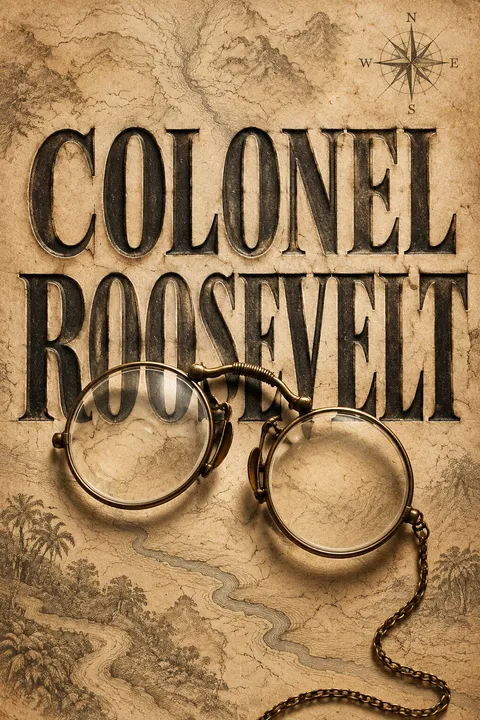


Key Takeaways
Leaving office did not teach Roosevelt how to stop acting

The safari became another stage. In 1909, Roosevelt left the presidency and sailed for Africa, hoping to get beyond politics. Instead, his Smithsonian-sponsored expedition produced a bestselling account, attracted international attention, and kept him in the public eye. Even his request to be called Colonel rather than President preserved a military identity tied to action.
Retirement kept collapsing. Back in the United States, he promised to withdraw from public life, but Governor Charles Evans Hughes soon asked for help against New York’s political machine. Roosevelt returned to campaigning, then entered the 1912 presidential race after Republican leaders denied his supporters a fair hearing at their convention. He repeatedly called himself reluctant. His behavior showed how difficult it was to separate service from the need to act.
What's striking is that the book treats restlessness as both a public virtue and a private trap. Roosevelt's energy let him move between scientific work, politics, and exploration with unusual range. Yet the same drive made withdrawal feel like abandonment of duty. In role-identity research, people who fuse selfhood with a vocation often experience retirement as a loss of identity, not simply a change of schedule. That lens clarifies his behavior without reducing it to vanity. The harder question is whether a public figure can learn to serve without remaining at the center.
Make exploration serve science, while owning the violence it requires

The hunt had a research purpose. Roosevelt's African expedition collected animals for the Smithsonian and other museums, while documenting habitats, behavior, and species. The expedition shipped roughly 4,000 mammals, 3,379 birds, 1,500 reptiles and amphibians, and hundreds of fish, alongside plants and other specimens. Roosevelt himself listed 296 animals and birds killed during the safari, while Kermit recorded 216.
The contradiction stayed visible. Roosevelt described himself as a naturalist and conservationist, yet collecting often meant shooting animals, sometimes in numbers well beyond what was needed for food. He argued that hunters could help preserve the species and wilderness they valued. His meticulous descriptions of wounds and mistakes make the expedition's scientific achievement difficult to separate from its cost.
The book captures a durable problem in field science: observation can depend on intervention, and intervention can damage what research hopes to understand. Roosevelt's specimens helped museums document wildlife, but his methods also raise a conservation question that remains relevant wherever collection, tagging, or habitat access disrupts ecosystems. The tension is more instructive than a simple verdict of hero or hypocrite. Scientific purpose does not erase harm. A responsible account must state both what knowledge the work produced and which living systems paid for it.
A million-person welcome did not guarantee Roosevelt a political mandate

Celebrity created access, not votes. When Roosevelt returned from Africa in 1910, New York staged an enormous naval welcome and parade, with crowds estimated at about one million. He was moved by the reception and spoke of helping solve national problems, then said he wanted to retreat into private life.
The ballot was less flattering. Hughes drew him back into politics to support a direct-primary bill against machine control. The effort failed, and the Republican candidates Roosevelt backed were defeated in the 1910 elections. His popularity could fill streets and dominate headlines, but it could not reliably control party organizations or persuade voters in a local contest. Public affection was real, but it was not the same thing as a durable political coalition.
The episode separates attention from power. A crowd can signal admiration, curiosity, or the pleasure of spectacle without endorsing a policy agenda. Political science makes a similar distinction between personal approval and organizational capacity: parties, local networks, and ballot rules determine whether enthusiasm becomes authority. Roosevelt understood mass politics better than most, but his homecoming may have encouraged him to overestimate how much of the crowd belonged to his reform program. Celebrity is a microphone, not a mandate.
Regulate corporate power without making a crowd the final judge
New Nationalism put public welfare first. At Osawatomie in 1910, Roosevelt called for federal supervision of large corporations, transparent campaign spending, stronger labor protections, conservation, and taxes on large fortunes. He argued that economic power should answer to the public rather than dictate public policy.
His remedy raised a constitutional problem. In 1912, he proposed allowing voters to overturn certain state-court decisions that blocked social legislation. He was not calling for the wholesale removal of judges, and he excluded the federal Supreme Court from the proposal. Still, the plan alarmed lawyers and reformers who feared majorities could weaken legal protections. Roosevelt's effort to make courts responsive to changing conditions collided with the risk of making justice depend too directly on popular pressure.
This is the book's sharpest institutional dilemma. Courts can protect rights against entrenched wealth, but they can also protect unpopular minorities against majority rule. Roosevelt correctly saw that legal doctrine can preserve economic arrangements under the language of neutral principle. His proposed popular override, however, risked replacing one unaccountable authority with a volatile one. Constitutional design works best when neither judges nor crowds hold unchecked power. The question is not whether courts should change, but how to make them answerable without making rights temporary.
A third party can broadcast reform and hand victory to its rival
The convention became a test of legitimacy. Roosevelt won about 1.2 million votes in Republican primaries, compared with roughly 866,000 for Taft and 327,000 for La Follette. At the Chicago convention, however, the party seated Taft's delegates and rejected most of Roosevelt's contested claims. Roosevelt's supporters left and formed the Progressive Party.
The election exposed the cost. In November, Wilson won 435 electoral votes, Roosevelt 88, and Taft 8. Roosevelt received more popular votes than Taft, but the Republican split helped Wilson win. The Progressive campaign gave reform a distinct national platform, but it also removed Roosevelt from the party machinery that might have carried those ideas into government. A morally compelling break can still have strategic consequences.
The result illustrates a classic problem in winner-take-all elections: when a coalition fractures, the rival can win without commanding a majority of all voters. Political scientists often describe this pressure through Duverger's law, the tendency of single-member electoral systems to favor two large parties. That does not make party loyalty an absolute virtue. Roosevelt believed the convention had betrayed voters, and his bolt made that conflict visible. The tradeoff is stark: preserve influence through compromise, or preserve principle and accept reduced leverage.
Build peace around credible enforcement, not reassurance alone
Roosevelt distrusted peace without power. In his 1910 Nobel address, he proposed a League of Peace that could use force to stop aggression, not merely arbitrate disputes. He believed treaties mattered only if nations had the means and will to enforce them.
The war complicated his position. In 1914, he initially supported American neutrality and acknowledged that the belligerents had competing grievances. Belgium, invaded despite its neutrality, was his clearest exception. After the Lusitania sinking and repeated submarine attacks, he argued that Wilson's warnings lacked credibility and called for military preparedness. He wanted peace, but believed that weak states and civilians were endangered when powerful countries faced no effective restraint.
The tension between deterrence and escalation is central here. A credible threat can make aggression more costly, but arms buildups can also intensify the insecurity that leads rivals to mobilize. Roosevelt emphasizes the first mechanism more than the second, partly because he sees power through a strategic lens shaped by war and imperial competition. His case is strongest where a smaller country faces an aggressor and no neutral institution can protect it. It is less settled when enforcement itself risks widening the conflict.
The River of Doubt exposed the distance between boldness and control
The expedition depended on more than its famous leader. In 1914, Roosevelt and Brazilian Colonel Cândido Rondon set out to map the Rio da Dúvida, an unknown river flowing toward the Amazon. The team crossed Mato Grosso with 159 people and hundreds of loads, then descended in dugout canoes through rapids and jungle.
The river made costs unavoidable. A canoe accident killed the paddler Simplício; the sergeant Paixão was later murdered by a fellow expedition member; and the party lost boats, supplies, and strength. Roosevelt developed malaria, dysentery, and serious infections, yet urged the expedition onward. Rondon's surveying and the camaradas' labor made the mapping possible. The river was eventually named Rio Roosevelt, but the achievement belonged to a team whose work the celebrity narrative could easily overshadow.
This episode works as a study in the planning fallacy: leaders routinely underestimate time, supplies, and the cumulative effects of small setbacks. Roosevelt's resolve helped sustain the party, but his authority could not make the river safer or replace missing provisions. The expedition's success depended on Rondon's expertise, the naturalists' skill, and the labor of Brazilian guides and porters. Heroic stories often concentrate credit in one person. The fuller account shows that survival and discovery were collective achievements.
Honor courage without turning young lives into proof of your creed
Roosevelt wanted to serve beside his sons. He asked the War Department to let him raise a volunteer division for Europe, but Secretary Newton Baker refused, saying the army needed professional commanders and a unified training system. All four Roosevelt sons nevertheless entered service. Ted and Archie fought in France, Kermit served with the British in Mesopotamia, and Quentin became a pilot.
Quentin's death made the rhetoric personal. At twenty, he was killed in an air battle in July 1918. Roosevelt had urged his sons to accept danger as a duty and took pride in their service, but grief overwhelmed the public language of honor. He turned Quentin's death into a tribute to the fallen, while the family struggled with a loss no political principle could make abstract.
The book holds two truths together: courage can be taught, and war can exact a cost that no ideal redeems for those left behind. Roosevelt's example shaped his sons, but they were not simply extensions of his public creed. Each had distinct abilities, fears, and choices. Ethical leadership requires more than honoring sacrifice after the fact. It also requires asking whether leaders' language makes risk seem cleaner, more purposeful, or more inevitable than it is to the people who bear it.
His final fight concerned peace terms after officials denied his volunteer division
The war he could not join became a fight over its ending. After Quentin's death and the 1918 Armistice, Roosevelt attacked Wilson's peace proposals as too vague and too lenient toward Germany. He wanted the Allies to secure reparations and prevent renewed aggression, while rejecting Wilson's claim to speak for the nation without congressional support.
His body was failing as his public voice returned. Roosevelt continued writing and speaking, but severe illness sent him to Roosevelt Hospital in November. He came home for Christmas, dictated a final set of articles, and died on January 6, 1919, before the Paris Peace Conference began. His last political struggle was therefore not over command in battle, but over who would define the peace and what security would require.
Roosevelt's last position exposes the difference between winning a war and designing a durable peace. He feared that a settlement without enforceable guarantees would invite another conflict, while Wilson hoped an international league could restrain future aggression. Both arguments carried risks: punitive terms could preserve grievance, while vague commitments could invite violations. Roosevelt's inability to serve at the Front sharpened his insistence on influence over the settlement. The biography leaves a powerful question: can a leader demand hard guarantees without making reconciliation impossible?
Analysis
Morris structures this life as a contest between motion and restraint. Roosevelt moves from an African safari, to a political comeback, to a near-fatal Amazon expedition, and finally to a war he wants to join but cannot. These episodes are not merely adventures. Each tests the belief that courage, effort, and decisive leadership can master uncertainty. The book's most revealing scenes occur when that belief meets limits: the river's rapids, the Republican convention's machinery, his sons' exposure to combat, and his own failing body.
The central paradox is political as well as personal. Roosevelt argues for a vigorous democracy that can regulate corporate power and protect the vulnerable, yet his impatience with courts and compromise risks concentrating authority in the hands of leaders who claim to represent the people. His internationalism has the same tension. He sees that neutral language cannot protect Belgium or passengers at sea, but his admiration for force can make war seem more morally clarifying than it is. The book does not resolve these contradictions, and its value lies partly in refusing to flatten them into a simple verdict.
The narrative's richness comes from its physical detail and documentary depth, but that same vividness can lend heroic momentum to Roosevelt's self-understanding. His account of the Brazilian expedition, for example, properly recognizes Rondon and the camaradas, yet the journey still gravitates toward Roosevelt's endurance. Indigenous people and ordinary laborers often appear through the assumptions of their time rather than as equal interpreters of events. That imbalance matters. The biography is most persuasive when it shows how power operates, including the power of the biographer's camera angle. Roosevelt emerges neither as a flawless reformer nor a mere imperial bully, but as a gifted, contradictory man whose appetite for action both enlarged his influence and narrowed his judgment.
Review Summary
Colonel Roosevelt receives largely positive reviews as the concluding volume of Morris's Roosevelt trilogy, averaging 4.12 stars. Readers praise its vivid storytelling, covering TR's post-presidential African safari, Amazon expedition, 1912 Bull Moose campaign, and WWI involvement. Many consider it an emotional, fitting finale, particularly appreciating the focus on Roosevelt's family and sons' wartime service. Critics note occasional hagiography, excessive length, insufficient critical analysis of Roosevelt, and unfair portrayals of political rivals like Taft and Wilson. Most agree Morris's prose and exhaustive research make it compelling despite its flaws.
People Also Read


Glossary
New Nationalism
Federal reform programRoosevelt's 1910 program for using national power to regulate large corporations and protect public welfare. It called for oversight of corporate behavior, transparent campaign financing, conservation, labor protections, and taxes on large fortunes. Its premise was that property and business should serve the public, rather than govern it.
Progressive Party
Roosevelt's 1912 third partyThe political party formed by Roosevelt's supporters after he and his delegates rejected the Republican convention's nomination of William Howard Taft. Its platform joined direct primaries and other democratic reforms with corporate regulation, labor protections, conservation, and women's suffrage. Roosevelt's candidacy helped split the Republican vote in the 1912 election.
League of Peace
Enforced international peaceRoosevelt's proposal for an association of powerful nations that would preserve peace through collective enforcement, including force if necessary. He distinguished it from arbitration schemes that relied only on courts or goodwill. In his view, a peace organization without the ability to restrain aggression would be ineffective.
Rio da Dúvida
The unmapped Brazilian riverPortuguese for River of Doubt, the name Colonel Cândido Rondon gave to an unexplored river in Mato Grosso. Roosevelt joined Rondon's 1914 expedition to chart it as it flowed toward the Amazon. After the journey established its course, the river was renamed Rio Roosevelt, though the mapping depended on the Brazilian surveyors and the expedition's entire team.
About the Author
Other books by Edmund Morris

Download PDF
Download EPUB
.epub digital book format is ideal for reading ebooks on phones, tablets, and e-readers.








