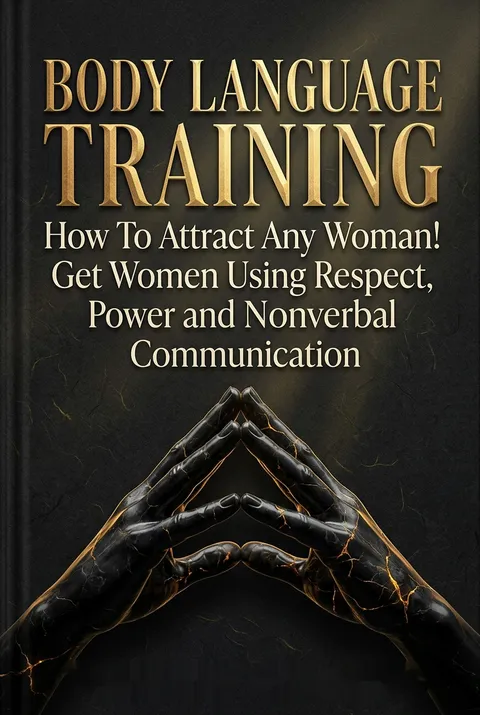


Key Takeaways
Build confidence at the roots; posture alone cannot sustain it
Outer signals need roots. The book compares confidence to a lemon tree: its branches may be cut back, but living roots keep producing lemons. In the same way, confident-looking gestures are hard to sustain when a person lacks an inner basis for them. The author rejects confidence as a costume that can be worn indefinitely. Acting more assured can help someone begin, but the lasting foundation, in this account, is a growing sense of competence and self-belief.
The practical implication is to develop the person behind the posture. Body language can reinforce confidence, but it cannot replace the work of building skills, keeping commitments, and learning to handle setbacks. The book's central promise is strongest when read as practice in self-possession, not a shortcut to controlling how other people respond.
The roots metaphor offers a useful distinction between a signal and the capacity it is meant to express. In social psychology, first impressions can form quickly from posture and movement, but a favorable impression is not proof of competence, trustworthiness, or enduring confidence. Those qualities become legible through behavior across time. The book is therefore most persuasive when it treats body language as feedback and practice, rather than as a reliable way to manufacture status. A composed stance may help someone feel more settled; it cannot guarantee attraction, respect, or success.
Treat confidence as self-respect, not permission to dominate
Confidence has boundaries. The book separates healthy confidence from arrogance, audacity, and insensitivity. It makes the distinction concrete: speaking honestly when asked can be confident, while insulting someone who disagrees is disrespectful. Interrupting to protect someone from a degrading remark may be justified; interrupting a friend to redirect attention to oneself is not. Likewise, representing an employer with legitimate authority is different from invoking a famous name to cut a queue.
These examples point to a practical test: does the behavior express self-respect while recognizing other people's dignity, or does it demand attention at their expense? The author argues that confidence need not mean being rude, self-centered, or oblivious. That qualification matters because several of the book's later attraction tactics lean toward dominance, and readers should judge them against this more respectful standard.
This distinction aligns with assertiveness research, which separates direct expression of needs from aggression that disregards others' needs. The difference is not simply how forceful a person appears; context, power, and the other person's ability to respond matter. A confident boundary can protect someone, while the same interruption used to seize the floor can silence them. The book's examples help readers examine intention and impact, though intention alone is not enough. A useful check is whether the other person retains room to disagree, decline, or finish speaking.
Aim for excellence, and let mistakes become evidence of growth
Perfection is a brittle target. The book argues that requiring flawless performance makes confidence vulnerable: every error becomes proof of failure. It proposes excellence instead, meaning substantial skill without the impossible demand to be faultless. Its examples include Michael Jordan, whose career field-goal percentage is given as 49.7 percent, and Muhammad Ali, who lost five of his 61 professional fights. Their achievements coexisted with missed shots and defeats.
The same logic appears in the author's account of Steve Jobs, who was removed from the company he helped found before returning. These stories are used to show that setbacks need not define a person's capacity. The useful shift is from asking, “Did I perform perfectly?” to asking whether a mistake revealed something that can be learned, practiced, or repaired.
The case against perfectionism is compelling because it distinguishes high standards from all-or-nothing self-evaluation. Learning science supports the value of treating errors as information: practice improves when feedback identifies what to change, rather than turning a poor result into a verdict on identity. Yet celebrated figures are selective examples, not proof that effort always overcomes circumstance. Skills, opportunity, health, and support all shape outcomes. The most durable lesson is not that failure inevitably leads to success, but that one imperfect performance cannot by itself establish a person's limits.
Use small social wins to turn tentative action into earned confidence
Success can start small. The book describes a Confidence-Achievement-Confidence Spiral: a person takes an action, gains a modest success, and uses that experience to feel more capable of taking a larger step. The author recalls trying a technique for starting a conversation and getting a woman's phone number. He presents that result as a meaningful first win, not as proof that a technique will always work.
The point is that confidence need not wait until someone has an impressive record. A small action can provide an initial foothold, while repeated accomplishments create a sturdier basis for self-belief. In practice, choose a manageable behavior, try it, and evaluate what actually happened. The relevant achievement might be initiating a conversation respectfully, expressing an opinion, or recovering calmly from an awkward moment, not securing a particular person's approval.
This spiral resembles self-efficacy, the belief that one can carry out a specific action, which psychologist Albert Bandura linked to experiences of mastery. Small, credible successes can be more persuasive than broad affirmations because they give the person evidence tied to a real behavior. The book's dating example makes the mechanism vivid, but it also risks defining success by another person's response. A more robust measure separates controllable actions, such as being warm and direct, from uncontrollable outcomes, such as whether someone reciprocates interest.
Question inherited beliefs, then rehearse more useful alternatives
Mindsets can be revised. The author describes old assumptions as mental “codes,” including beliefs such as “I have always been shy” or “my background determines my future.” He recommends examining where these ideas came from, whether they are fully true, and whether keeping them helps. The book also encourages spending time with people whose confidence and competence offer examples of different ways to act.
It proposes positive self-talk as another rehearsal method: write down limiting beliefs, identify more constructive alternatives, and revisit the new statements regularly. Its larger model is that conscious practice can become more automatic with repetition. This should not be mistaken for a literal ability to program an unconscious mind like a torpedo. The practical value is simpler: attention, social examples, and repeated behavior can make new responses more familiar.
The blend of questioning, modeling, and rehearsal resembles cognitive behavioral approaches, which examine the evidence for an unhelpful belief and test alternative interpretations through action. Social learning also helps explain why peers can influence what feels possible: people observe not only what others do, but what their environment rewards. Affirmations are less reliable when they feel implausible or conflict sharply with experience. Pairing a believable statement with a small behavioral experiment is more grounded than repeating a slogan and expecting it to change circumstances on its own.
Use relaxed, open posture to signal ease, not territorial ownership
Posture communicates, but context matters. The book recommends standing and sitting with less physical tension, taking up a comfortable amount of space, moving deliberately, and limiting restless gestures. It also favors leaning back, resting against a wall, using expressive hand movements, and keeping an upright, open stance. The author groups these behaviors under “high status body language,” the idea that visible ease conveys self-assurance.
Some of the advice goes much further, including drawing attention to the crotch, using crossed arms to create tension, and treating others' attention as something to command. Those suggestions are not necessary to the useful core. An approachable posture should respect shared space, the setting, and other people's comfort. The book also claims power poses affect hormones, but that physiological claim should not be treated as established fact.
Nonverbal behavior can shape how people interpret confidence, but signals are culturally and situationally variable. Open posture may read as relaxed in one setting and intrusive in another, while stillness can suggest composure or disengagement depending on the conversation. Research popularized claims that brief expansive poses reliably change hormones and risk tolerance; subsequent debate has made strong biological conclusions uncertain. The practical case for adjusting posture does not depend on those claims. Comfortable alignment can reduce visible strain and support attention, while the goal should be mutual ease rather than occupying the most space.
Let attention be reciprocal, rather than turning eye contact into a contest
Presence is more than staring. The book urges readers to stay calm, avoid fidgeting, and give a conversation focused attention. It names a “90/60 Rule” for using stronger eye contact while speaking and less while listening, presenting this imbalance as a way to make the other person work for approval. It also advises tolerating silence and tension instead of reacting immediately to every sound or distraction.
The useful distinction is between deliberate responsiveness and nervous reactivity. Listening without constantly scanning the room can communicate genuine interest, while pausing before answering can help someone choose their words. But eye contact is not a universal status meter, and reduced attention while another person speaks may come across as dismissive. The aim is engaged, flexible attention, not a contest over who controls the exchange.
Eye contact is a high-variance social signal: its meaning shifts with culture, relationship, neurodiversity, and context. Mutual gaze can support connection, but sustained staring may feel threatening, and some people listen well without looking directly at a speaker. The book's useful insight is that attention has a bodily dimension and that pausing can prevent impulsive reactions. Its status tactic is less convincing when it turns listening into a way to make someone seek approval. Reciprocity generally offers a more reliable basis for trust than engineered uncertainty.
Practice one visible behavior at a time, then review what lands
Train deliberately, not theatrically. The book advises noticing posture throughout daily life, correcting a habit when it appears, and focusing on one behavior at a time instead of attempting every technique at once. It suggests observing a person whose movement seems natural, practicing the behavior, and using a mirror or video to see what others might see. For the walk, it proposes a short daily routine: study a model, practice for a few minutes, and repeat for a week.
The author also cites the familiar 10,000-hour idea, then jokes that mastering a walk did not take that long. The better lesson is that useful practice varies by skill and person. Rehearsal should build comfort and adaptability, not turn ordinary interactions into a checklist of poses.
Focused practice is a sound learning principle: narrowing attention to one behavior makes feedback easier to interpret and reduces the cognitive load of trying to change everything at once. Video can reveal habits that feel different from how they look, although self-observation may also encourage excessive self-monitoring. The strongest practice loop combines a specific target with feedback from real interactions. A model can supply ideas, but copying a celebrity's gait or posture without regard to one's body, culture, or setting can look less confident than simply moving naturally.
Walk with direction and steadiness, but adapt to the situation
Movement sets an impression. The book's “high status walk” is a composed way of moving that frames how others interpret a person's presence. It highlights five qualities: an upright, open posture; a clear direction; a smooth pace; a relaxed, confident bearing; and looking ahead rather than constantly checking for others' reactions. The author says a purposeful walk can make even simple words seem more assured because people read delivery alongside content.
The book recommends modeling someone whose walk seems effective, practicing, and then adding personal style. That is more useful than trying to imitate a famous actor exactly. A hurried pace may be appropriate when someone is late or responding to an urgent need, and looking around is not inherently insecure. The practical aim is to move with intention rather than perform indifference.
Gait can contribute to quick judgments about energy, mood, and confidence, but those judgments are interpretations, not dependable readings of character. A direct stride may fit an entrance or presentation; it may seem aloof or unsafe in another environment. The book's emphasis on intentional movement is strongest when it encourages awareness rather than a rigid “alpha” performance. Direction and steadiness can coexist with warmth: acknowledging people, adjusting pace, and responding to the environment often signal greater social competence than pretending nothing nearby deserves attention.
Analysis
This book is best understood as a confidence manual wrapped in a dating-sales pitch. Its central arc moves from inner beliefs, through practice and physical presentation, toward a trained walk. The most coherent idea is that outward behavior is more sustainable when supported by actual competence and small experiences of success. The lemon-tree metaphor and the emphasis on gradual practice give the advice a stronger psychological foundation than the book's more theatrical promises about attraction.
Its body-language guidance mixes broadly useful observations with rigid status rules. Slowing down, reducing anxious fidgeting, and becoming aware of posture may help a person seem more composed. Yet the book repeatedly treats social encounters as contests over who leads, who seeks approval, and who controls attention. That frame narrows confidence into dominance and underestimates the role of warmth, curiosity, and mutual choice. It also makes sweeping claims about women's preferences that the text does not substantiate. No posture reliably makes another person attracted, compliant, or sexually interested.
The book's claims about expansive poses and hormones deserve particular caution. The advice may still help someone feel more physically settled, but the physiological effects are not as firmly established as the text suggests. Its description of the subconscious as a target-seeking mechanism is also a metaphor, not a precise account of how the mind works. The metaphor is useful for explaining habit formation, but it can overstate how directly affirmations or visualization change behavior.
Readers can retain the most valuable material by treating posture as a practice in self-awareness, not a covert influence system. Build skills, take manageable social risks, learn from setbacks, and use body language that fits the setting and respects other people. The book's strongest message is that confidence is more than a pose. Its weakest implication is that looking dominant guarantees control over how others respond. Confidence becomes more durable, and more ethical, when it includes the ability to accept another person's response without trying to engineer it.
Review Summary
Glossary
Confidence-Achievement-Confidence Spiral
Confidence through small winsThe book's model for building confidence through action and results. A person begins with a manageable attempt, gains an achievement, and uses that experience to feel capable of taking a larger step. The term emphasizes that confidence can begin before someone has a long record of success, while lasting self-belief grows from repeated, meaningful accomplishments.
High Status Body Language
Signals of visible self-assuranceThe book's label for posture, movement, gaze, and gestures it associates with confidence and social status. Examples include standing upright, moving calmly, appearing physically at ease, and avoiding restless fidgeting. The author presents these behaviors as ways to influence first impressions, though the meanings of such signals depend on context and are not universal.
90/60 Rule
Unequal speaking-listening gazeThe book's named eye-contact tactic: maintain stronger eye contact while speaking and less while the other person speaks. It is presented as a way to communicate confidence and make a woman seek the speaker's attention. The text does not explain the numbers as precise measurements, and the tactic should not be mistaken for a universal rule of effective listening.
High Status Walk
Purposeful, composed movementThe book's term for a walk intended to communicate confidence through upright posture, a clear direction, smooth pacing, relaxed movement, and a forward gaze. It recommends observing a model, practicing the movements, and then developing a personal style. The concept is best treated as a cue for deliberate movement, not a guarantee of social or romantic success.
About the Author
Other books by Robert Moore

Download PDF
Download EPUB
.epub digital book format is ideal for reading ebooks on phones, tablets, and e-readers.








