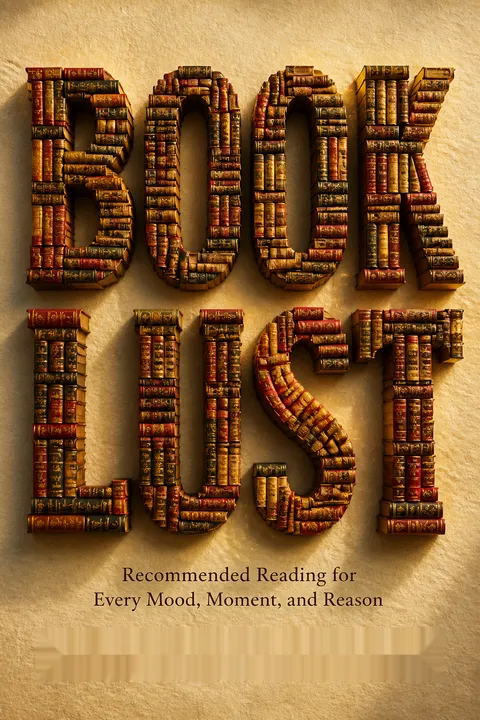


Key Takeaways
Reading can shelter you from pain while widening your sense of other people.
Books as refuge. Nancy Pearl grew up in a difficult household in Detroit and spent much of her childhood at the Parkman Branch Library. Books offered her worlds beyond the one she inhabited, and she remembers the feeling of being transported even when she can no longer recall every plot. That early refuge helped shape a career spent finding books for others. For Pearl, reading offers pleasure, beauty, escape, self-understanding, and encounters with lives unlike one’s own.
Her recommendations reflect that range. A child might find imaginative adventure in Eleanor Cameron or Tolkien; an adult might meet unfamiliar histories and communities through novels and memoirs. Reading is not only information gathering. It is a way of entering someone else’s experience.
What's powerful here is the combination of private refuge and outward attention. A book can offer temporary distance from distress, while its characters give that distance a human shape. This makes reading more than escape: it can rehearse curiosity about people beyond a reader’s immediate circle. The effect is not automatic, however. A story can confirm existing assumptions as easily as unsettle them. Pearl’s emphasis on encountering many kinds of lives suggests a useful test: does a book merely feel familiar, or does it also make another person more intelligible?
Give a book a fair trial, but never let its reputation sentence you.
A practical exit rule. Pearl’s named technique, the rule of fifty, helps readers decide when to continue or stop. At age fifty or younger, read about fifty pages before deciding. After fifty, subtract your age from 100 to set the page limit. A seventy-year-old reader, for instance, would try thirty pages. The point is not to turn pleasure into arithmetic. It is to remember that time is limited and the supply of worthwhile books is vast.
Pearl also stresses that mood matters. She has put books aside and returned to them months or years later with a different response. A recommendation from a trusted reader can justify another try, but popularity and critical praise do not create a duty to finish.
The rule works as a permission structure: it replaces vague guilt with a small, reversible experiment. That resembles a useful decision principle in everyday life: gather enough evidence to make a choice, then stop paying for a poor fit. Its age-based formula is deliberately playful, not a scientific measure of attention or remaining time. Readers also differ in how quickly a book reveals its strengths. The deeper lesson is to distinguish patience from obligation, and to leave the door open for a future mood or moment.
Choose your next book from today’s curiosity, not from a fixed canon.
A browsable map. Book Lust is organized as a wide-ranging guide to reading by subject, genre, place, author, and occasion, rather than as a ranked list of essential classics. Its categories include academic mysteries, aging, Alaska, babies, birds, bomb makers, and books about books. A reader can start with a question or appetite, then browse a short, annotated selection rather than face an intimidating master list.
The structure makes room for different purposes. Someone seeking an accessible introduction to science might begin with popular astronomy; another reader might want historical fiction, a comic mystery, or a book about family life. The guide’s 100 Good Reads, Decade by Decade offers one chronological route, but it sits beside many other ways in.
This is recommendation as information design. A well-chosen category lowers the effort required to begin searching, while the annotations offer enough context to distinguish one title from another. The guide’s playful headings also imply that literary discovery need not begin with prestige or a school syllabus. But every classification makes some connections easier to see and others harder. Categories such as geography or genre can become boxes if treated as final descriptions. Their best use is as doors into a collection, not as borders around what a reader may enjoy.
Follow a book’s trail into related books, subjects, and unfamiliar worlds.
Reading in chains. Pearl calls linked selections companion reads: books chosen to deepen one another through a shared subject, place, or question. A reader drawn into India by Salman Rushdie’s Midnight’s Children might continue into histories of independence and partition. One of Pearl’s Africa groupings places Joseph Conrad’s Heart of Darkness, Chinua Achebe’s Things Fall Apart, Barbara Kingsolver’s The Poisonwood Bible, and Adam Hochschild’s King Leopold’s Ghost together, creating several routes into colonial history and its consequences.
The links are not simply lists of similar books. They invite a reader to notice how form and perspective change what can be seen. A novel, a memoir, and a work of history may share a setting yet offer different kinds of knowledge. The next book can revise the questions raised by the first.
A reading sequence turns a solitary title into a conversation across authors, genres, and points of view. That is a form of comparative thinking: similarities become clearer, but so do disagreements and silences. The strongest companion reading does not flatten its books into interchangeable evidence. Conrad’s perspective, for example, cannot stand in for Achebe’s, and a novel should not be treated as a factual record. The sequence is most valuable when it encourages readers to ask who is speaking, what each form can show, and what remains outside its frame.
Pair historical fiction with history to separate lived possibility from documented fact.
Two kinds of insight. Pearl presents historical fiction as both an engaging story and a possible starting point for further study. A novelist can place readers inside a character’s fears, loyalties, and daily choices, while nonfiction can establish chronology, evidence, and political context. Her Civil War recommendations illustrate the range: Michael Shaara’s The Killer Angels dramatizes the Battle of Gettysburg, while James McPherson’s Battle Cry of Freedom offers a broad historical account of the conflict.
This pairing is useful because neither mode does everything. Fiction can make a distant event emotionally legible, but its scenes and characters may be invented or shaped for narrative effect. Historical nonfiction can test the story against evidence, explain forces beyond an individual life, and complicate a reader’s first impression.
The pairing is a compact lesson in source literacy. Narrative invites imaginative identification; historical scholarship asks how claims are supported and which records survive. Reading both makes it easier to value emotional understanding without mistaking it for verification. There is a further caution: nonfiction is not free of interpretation, and its author still selects evidence and builds an argument. Readers gain most by asking what each book is designed to reveal, rather than demanding that either fiction or history replace the other.
Let genre labels start the search, not decide what counts as serious reading.
No single reading ladder. Pearl recommends mysteries, romance, science fiction, fantasy, horror, graphic novels, and literary fiction without treating popular forms as lesser by definition. She describes science fiction as working with what might be possible, fantasy as entering worlds beyond ordinary natural laws, and horror as dwelling among unnatural terrors. Her guide also makes room for romance’s different subgenres and for graphic novels, where words and images carry the story together.
Art Spiegelman’s Maus, for example, tells a Holocaust story through a visual system in which characters appear as animals. Pearl’s point is not that every book in every genre succeeds equally. It is that a label can help readers find the experience they want, rather than serve as a verdict on a book’s value.
Genre is a useful contract between writer and reader: it sets expectations about pacing, tone, and the kinds of pleasure a story may offer. It also creates communities of readers who know where to look next. Problems arise when the contract becomes a hierarchy, with some forms presumed trivial before they are read. Pearl’s breadth pushes against that reflex. Still, openness need not erase distinctions in craft or purpose. A reader can value a mystery’s puzzle, a romance’s emotional resolution, or a graphic novel’s visual argument while judging each work on its own terms.
Read American history from the margins, not only from the presidential podium.
Whose past gets told? Pearl recommends Howard Zinn’s A People’s History of the United States for its attention to people often sidelined in conventional accounts, including women, Black Americans, Native Americans, and working people. She also points readers toward Vincent Harding’s account of the struggle against slavery and racism, and Marc Reisner’s history of water politics in the American West. These choices broaden history beyond elections, military leaders, and official institutions.
The point is not to discard political history. It is to ask how national decisions land in ordinary lives, and whose labor, losses, or resistance have been left out of the familiar version. Pearl’s fiction recommendations often pursue the same question through families and individuals living with the consequences of public events.
Changing the unit of attention changes the historical picture. When workers, Indigenous communities, or enslaved people become central, the past no longer looks like a sequence of decisions made only by powerful officials. This corrective is especially useful where inherited narratives have treated some groups as background. Yet any single corrective account also selects and emphasizes. Reading competing historians and checking the evidence can preserve the enlarged perspective without replacing one simplified story with another.
Let landscapes and local voices shape the story, not merely decorate it.
Place has consequences. Pearl repeatedly recommends books in which geography affects what characters can do and how communities understand themselves. Her Alaska selections bring together wilderness conservation, disappearances in remote country, homesteading hardship, and mysteries whose central presence is the state itself. In her discussion of Australian fiction, journeys across a vast continent become ways to explore escape, history, and the difficulty of belonging.
Travel writing offers another route into place. Paul Theroux’s rail journey across Asia, Jonathan Raban’s voyage from Seattle toward Juneau, and Ma Jian’s long walk through China make the reader follow movement through actual regions and encounters. The setting is not just a backdrop. It can shape the plot, the risks, and the limits of what a traveler or resident can know.
Place-based reading resists the idea that human experience is interchangeable from one setting to another. Climate, distance, infrastructure, and local history can determine which choices are available, giving social questions a material landscape. Travel writing can make that specificity vivid, though the traveler’s perspective is never the same as a resident’s. Pearl’s mix of fiction, memoir, and reporting helps expose that difference. Readers can ask not only what a place looks like, but who has the authority to describe it.
Trade recommendations, ask librarians, and search beyond the current bestseller shelf.
Reading is shared work. Pearl’s guide grew from decades as a librarian and reviewer, along with conversations with readers about what they loved. She is candid that no recommendation list can include every worthy book, and she welcomes readers’ additions and objections. That openness makes the guide less like a final canon and more like an ongoing exchange among people who read differently.
Some of her choices are out of print. She encourages readers to ask a local library to borrow a title from another collection, or to search online for used copies. Libraries are not merely places to find the books already on display. They can help readers locate books that are difficult to find, and librarians can turn a vague interest into a useful path through the shelves.
Recommendation is a social form of knowledge: a person’s enthusiasm supplies context that a catalog entry cannot. Librarians add another strength, namely the ability to connect a reader’s interest with resources beyond one store’s inventory. The exchange also keeps a list provisional. A recommendation can open a door, but readers should feel free to disagree, offer alternatives, and bring neglected books back into circulation. Access matters too: a title’s disappearance from retail shelves does not mean it has vanished from public collections.
Analysis
Book Lust is not a conventional argument-driven book. It is an annotated, highly personal map of reading possibilities, built from Nancy Pearl’s professional experience as a librarian and reviewer and from a lifetime of reading across genres, countries, and subjects. Its organizing insight is that people do not approach books with one stable need. They arrive with a mood, a question, an interest, or a desire for escape, and a useful recommendation meets them there.
That structure makes the book difficult to compress: its value lies less in a few doctrines than in the many routes it opens. The strongest threads are reader agency, curiosity-led browsing, connected reading, and a refusal to equate genre popularity with low literary worth. Pearl’s own childhood story gives those ideas emotional weight. Reading is presented as both protection and encounter, a private pleasure that can also enlarge attention to other lives.
The guide’s topical organization is practical, but it is also interpretive. Grouping books about Africa, family, science, or war creates connections that a purely chronological canon might miss. Companion reading is its most generative method because it encourages readers to compare perspective and form, not merely consume titles one after another. Its advice about abandoning books is equally important: a reader’s time and attention are finite, and reading is not a moral test. The book is also a product of its moment. Its recommendations reflect a 2003 publishing landscape, and some titles have since become less visible or harder to obtain. That age can be a limitation, but it also reinforces the guide’s practical invitation to use libraries, readers, and further searches. Its lists are not final judgments. They are starting points for an active, social reading life, one in which pleasure and intellectual seriousness can occupy the same chair.
Review Summary
Book Lust receives mixed reviews, with ratings ranging from 1 to 5 stars. Many readers appreciate Pearl's eclectic book recommendations and unique categorization, finding it helpful for discovering new titles. However, some criticize the lack of depth in reviews and repetitive listings. Readers value Pearl's passion for books but find the content outdated and occasionally lacking in substance. While some consider it a useful reference for book lovers, others feel it doesn't offer much beyond basic lists. The book's usefulness seems to depend on the reader's existing literary knowledge and expectations.
People Also Read


Glossary
the rule of fifty
A personal reading cutoffNancy Pearl’s rule of fifty is a way to decide whether to continue a book that is not yet engaging. Readers aged fifty or younger give it about fifty pages. Older readers subtract their age from 100 to set the page limit. The rule acknowledges that mood affects reading and that a book put aside can be tried again later.
companion reads
Books read in relationCompanion reads are books linked by a shared subject, setting, historical period, or question. Reading them in sequence can reveal how different genres and perspectives interpret the same material. Pearl uses groupings that combine novels, memoirs, and nonfiction, inviting readers to make connections while noticing that each book offers a distinct kind of evidence and experience.
ecofiction
Fiction about human nature tiesPearl uses ecofiction for novels concerned with the connections between people and the natural world, and with dangers that arise when those connections are damaged by environmental destruction or the depletion of natural resources. Her examples range from environmental conflict in a small town to comic fiction about development and political greed.
roman-fleuve
A multivolume social narrativeA roman-fleuve is a long narrative, often spanning several volumes, that follows generations, a community, or recurring characters across an extended period. The books form a larger whole, so the experience depends partly on continuity between installments. Pearl distinguishes this structure from a series in which each book contains a largely self-contained plot.
kitchen-sink poetry
A conversational poetry groupingPearl’s informal label for a group of five poets whose work resists standard literary categories. She describes their poems as conversational, surprising, rich in specific details, and often humorous without being merely light verse. The grouping is her own way to guide readers who feel uncertain about contemporary poetry, not a formal school or movement.
FAQ
What's Book Lust about?
- Reading Recommendations: Book Lust by Nancy Pearl is a guide offering reading recommendations across various genres and themes, helping readers find books that match their interests and moods.
- Diverse Categories: The book is organized into numerous categories, such as "Action Heroines," "African American Fiction," and "Historical Fiction," each with curated lists and brief descriptions.
- Personal Insights: Pearl shares her personal experiences and reflections on reading, highlighting the joy and transformative power of literature.
Why should I read Book Lust?
- Expert Recommendations: Nancy Pearl is a renowned librarian and book critic, providing trustworthy recommendations based on her extensive experience.
- Inspiration for Readers: The book inspires both avid readers and those looking to rekindle their love for reading, encouraging exploration beyond popular bestsellers.
- Engaging Writing Style: Pearl's conversational writing style makes the book enjoyable, creating a warm connection with readers.
What are the key takeaways of Book Lust?
- Variety of Genres: The book emphasizes the vast array of genres available, encouraging readers to explore beyond their comfort zones.
- Personal Connection to Books: Pearl advocates for reading as a deeply personal experience, shaped by individual preferences and life experiences.
- The Rule of Fifty: Pearl suggests giving a book fifty pages to capture interest before deciding to continue or abandon it.
What are the best quotes from Book Lust and what do they mean?
- "Reading has always brought me pure joy.": This quote highlights Pearl's lifelong love for reading and its ability to provide happiness and escape.
- "No one should ever finish a book that they’re not enjoying.": Pearl emphasizes the importance of enjoying the reading experience and prioritizing personal preferences.
- "Whenever I begin reading a new book, I am embarking on a new, uncharted journey.": This quote reflects the excitement and unpredictability of starting a new book.
How does Nancy Pearl categorize books in Book Lust?
- Thematic Organization: Pearl organizes the book into thematic categories, making it easy for readers to navigate based on their interests.
- Personal Touch: Each category includes personal anecdotes and reflections, adding depth and relatability to her selections.
- Diverse Selections: The categories encompass a wide range of genres, ensuring something for every reader.
What is the "rule of fifty" in Book Lust?
- Reading Strategy: The "rule of fifty" suggests giving a book fifty pages to engage interest before deciding to continue or move on.
- Avoiding Unpleasant Reads: This rule helps readers avoid frustration by allowing them to prioritize their preferences.
- Flexibility in Reading: Pearl encourages revisiting books initially disliked, as perspectives may change over time.
How does Book Lust address the importance of libraries?
- Libraries as Resources: Pearl emphasizes libraries' role in connecting readers with books and encourages utilizing local libraries.
- Access to Out-of-Print Books: Libraries provide access to out-of-print and hard-to-find books, expanding readers' options.
- Community Engagement: Libraries foster a sense of community among readers, essential for sharing knowledge and love for literature.
What genres does Book Lust cover?
- Fiction and Nonfiction: The book includes a wide range of genres, from literary fiction to memoirs and historical fiction.
- Specialized Categories: Pearl delves into specific themes like "Magical Realism" and "Southern Fiction," catering to particular interests.
- Diverse Authors: Recommendations feature both classic and contemporary authors, highlighting literature's richness across time and culture.
What is the significance of magical realism in Book Lust?
- Exploration of Reality: Magical realism blends fantastical elements with realistic settings, challenging perceptions of reality.
- Cultural Representation: Authors, particularly from Latin America, use this style to reflect cultural heritage and social issues.
- Emotional Resonance: The genre evokes strong emotions by juxtaposing the ordinary with the extraordinary, connecting readers with characters.
How can Book Lust help me choose my next read?
- Tailored Recommendations: Thematic organization and personal insights make it easy to find books that resonate with current interests.
- Encouragement to Explore: The book encourages stepping outside usual genres, leading to unexpected discoveries.
- Contextual Understanding: Background information and personal anecdotes help understand the significance of recommendations.
What is Nancy Pearl's background and expertise?
- Librarian and Critic: Pearl has extensive experience as a librarian and book critic, lending credibility to her recommendations.
- Book Advocate: Known for promoting reading and literature, Pearl has initiated programs encouraging community engagement with books.
- Author and Speaker: Pearl has authored other books and frequently speaks about literature, making her a trusted voice in the field.
How does Book Lust enhance the reading experience?
- Broad Reading Horizons: Encourages exploring different genres and authors to broaden literary horizons.
- Books for Every Occasion: Emphasizes finding the right book for every mood or situation.
- Personal Connection: Highlights the personal connections readers can form with books, essential for a fulfilling reading life.
Download PDF
Download EPUB
.epub digital book format is ideal for reading ebooks on phones, tablets, and e-readers.








