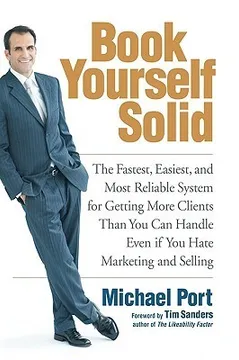


Key Takeaways
Choose clients who bring out your best work, not merely your next invoice.
Make fit a business filter. Port calls his screening principle the Red Velvet Rope Policy: define the qualities of clients with whom you do your best work, then use those qualities to guide whom you accept. The point is not to judge a person’s worth or choose only wealthy clients. It is to find people whose behavior and values make strong work possible. Port once dismissed 10 clients in a week. Within three months, he had replaced them and gained six more, while feeling calmer and enjoying his work more.
Exit with care. A poor fit may be ideal for another provider. When ending a relationship, be direct and respectful, and refer the client elsewhere when appropriate. Review your roster regularly: relationships change, and middle-of-the-road clients may thrive when your energy improves.
What's striking is that client selection is presented as an operating decision, not a luxury reserved for established firms. In organizational psychology, person-environment fit is associated with satisfaction and performance: the conditions of the relationship shape the quality of the work. The principle also protects clients, because a drained provider is less likely to serve them well. The caution is practical: abruptly dropping clients can create financial and reputational risk, especially for a new business. A screening policy works best alongside clear expectations, adequate financial runway, and thoughtful referrals, rather than as permission to treat difficult people carelessly.
Name one market, one urgent problem, and the life-changing result you deliver.
Narrow to become findable. A target market is the group of people or organizations you serve. A niche is the particular service you specialize in offering them. Port argues that a defined market helps you find where potential clients gather, speak to their specific concerns, and become easier to recommend. He began by serving fitness professionals, then used that experience to broaden his reach. Specialization need not be permanent; it gives a business a clear starting point.
Sell the result. Identify what clients need urgently, what they hope to achieve, and the single most important outcome your service produces. Then explain its benefits through FEPS: financial, emotional, physical, and spiritual. Port suggests aiming for a return worth at least ten times the client’s investment, a useful ambition rather than a guaranteed calculation.
A narrow market improves more than marketing efficiency. It makes learning cumulative: repeated work with a recognizable group helps a provider notice patterns, refine methods, and explain results with greater precision. The distinction between audience and specialty also prevents a common strategic muddle, where a business describes its service but never says whom it is for. Still, a niche is a hypothesis, not a vow. Demand, access, and the provider’s own interests all matter. The FEPS lens usefully reminds service businesses that value is not always monetary, but emotional or spiritual returns should be described honestly, not converted into inflated promises.
Make your difference legible through a clear promise and unmistakably human voice.
Brand the whole person. Port’s personal brand has three parts: a plain account of whom you help and what you help them do, a statement of why the work matters to you, and a short tagline that expresses that larger purpose. The message should be clear and authentic, not engineered to please everyone. Port discovered that his early website sounded like the cautious version of himself he imagined his father would approve of. That conflict left his business message bland.
Use dialogue, not a pitch. Instead of reciting a professional title or delivering a rehearsed elevator speech, explain the people you help, the problems they face, how you help, and the result and benefits. Treat this as a conversational guide, not a script. Ask questions, listen, and follow the other person’s interest.
This approach treats branding as a coordination problem: the public promise, the provider’s motives, and the actual client experience should reinforce one another. That coherence is more persuasive than decorative design because it helps a prospective client predict what working together will feel like. Conversation also lowers the social cost of self-promotion by making the exchange reciprocal. Yet authenticity alone is not a strategy. A distinctive message still needs evidence, relevance, and language the audience understands. The strongest version pairs personal conviction with a concrete outcome, so that being memorable does not come at the expense of being clear.
Earn trust in proportion to the size of the offer you make.
Let the relationship mature. Port’s Book Yourself Solid Sales Cycle is a sequence for building familiarity and trust before asking for a substantial commitment. It can begin when someone encounters your work, continue through a useful free resource or invitation, and progress to lower-risk paid offerings and more involved services. Not every prospect follows the same path or moves at the same speed. Someone may need your help only when circumstances change, so ongoing contact matters.
Ask before advising. In a sales conversation, first learn what the person is trying to accomplish, then explore what success would look and feel like. Ask whether help is wanted and whether working together seems appropriate. Port cautions against solving the whole problem for free during the conversation: premature advice can obscure the value of sustained work. If timing is wrong, keep the relationship open instead of forcing a decision.
The cycle resembles trust-building in professional services, where buyers cannot fully inspect an intangible service before purchase. A modest first experience can reduce uncertainty and let both parties assess fit. The framework also replaces the false binary of closing or losing a prospect with a longer view of readiness. Its ethical strength depends on the quality of the invitations: free material should help on its own, not function as a disguised trap. Nor is every service suited to a long sequence. Urgent, low-cost needs may be best served by a direct offer, provided the client has enough information to choose.
Price the change you create, not the minutes you spend creating it.
Measure the client’s gain. Port argues that fees should reflect the outcome and benefits of the work, not simply the time it took to deliver. A website, for example, may take only a few hours to build yet remain useful to a client for years. Consider financial gains, pain relieved, time saved, confidence, and other benefits, while also accounting for the effort and value of the service.
Choose a model deliberately. Common options include hourly billing, fixed project fees, retainers, bundles, and premium pricing. Each allocates risk differently: open-ended hourly work can make costs unpredictable, while fixed fees can expose the provider to expanding scope. Port encourages providers who are consistently overbooked to consider raising prices. He also treats discounts as tools to use carefully, and advises checking applicable pricing rules.
Value-based pricing addresses a real weakness of billing by time: speed and expertise can make excellent work take less time, not less valuable. It also shifts attention toward outcomes, which helps clarify the service itself. But perceived value is not automatically measurable, and not every result is under a provider’s control. A credible price therefore needs a transparent scope, a defensible account of likely benefits, and safeguards against uncertainty. Port’s advice to raise prices when demand is high is strategically plausible, but the right response may also involve improving capacity or changing the service model. Price is a decision, not a self-esteem test.
Keep earning attention with useful content people explicitly asked to receive.
Follow up with permission. Port distinguishes a personal follow-up from adding someone to a broadcast list. Exchanging contact details does not mean a person has agreed to receive newsletters or promotions. Ask permission, explain what subscribers will receive, and send material that is anticipated, relevant, and useful. His suggested balance is roughly 80 percent helpful content and 20 percent offers.
Make expertise easier to sample. Information products such as guides, short courses, books, and recordings let clients experience a provider’s thinking at lower cost and risk. They can build credibility, support a sales cycle, and reach more people than one-to-one service alone. Port’s development sequence is practical: choose the role and format, give the product a clear title, organize its contents, and draft before polishing. One article can also be adapted into several formats.
Permission-based follow-up respects attention as a scarce resource and improves the odds that a message is welcome. The content strategy also has an important learning effect: explaining an idea in public can sharpen the provider’s methods and reveal what the audience finds useful. The 80/20 split is a rule of thumb, not a universal ratio. Some audiences prefer infrequent updates, while others welcome regular instruction. The central test is whether the communication continues to earn its place in the recipient’s inbox. A list is not a relationship unless its members recognize value in hearing from the sender.
Turn networking into generous, prepared relationships, then ask for introductions.
Give before requesting. Port’s networking rule divides attention between potential clients and other professionals who can share knowledge, open doors, or refer work. His method is to share useful connections, relevant knowledge, and genuine compassion, without treating every interaction as an immediate transaction. Direct outreach follows the same ethic: learn about the person, personalize the message, make a small and relevant first contact, and avoid unsolicited pitches or repeated demands.
Make referrals easy. Help clients understand who benefits from your work, what to say about it, and how to introduce someone. Ask when a client is pleased with progress, then follow up promptly with both the referred person and the referrer. Port recommends keeping a list of 20 people to build professional relationships with, and reaching out consistently while respecting silence as a possible answer.
The emphasis on generosity is not merely etiquette. Social exchange often develops through repeated, observable acts of reliability, and introductions transfer some of the referrer’s credibility to the provider. Preparing before outreach also signals respect for the recipient’s time. The useful tension is that generosity can become covert scorekeeping if every favor is expected to produce a sale. The book’s own advice is strongest when value is offered without a hidden invoice. Referrals still require consent and judgment: a trusted introduction can help a new client, but careless recommendations can damage the very relationships that make referrals valuable.
Choose promotion channels that fit your strengths, then show up consistently.
Select, do not scatter. Port groups promotion into networking, direct outreach, referrals, speaking, writing, and web activity. He treats the first three as core practices and the others as choices to add according to a provider’s strengths and interests. Speaking can demonstrate expertise to a group; articles can teach and build visibility; a website can explain the offer and invite visitors to take a next step. A polished website is not enough: each page should make clear who it serves, what the visitor should do, and why.
Make digital contact useful. Offer a relevant resource in exchange for permission to follow up, then help subscribers use what they received. Social media can support relationships, but the book warns against spreading attention across every platform. Choose a place where the target market is active, and make direct outreach personal rather than noisy.
This is a portfolio approach to marketing rather than a demand that every business master every platform. That is strategically sensible: a channel works only when the provider can sustain it and the intended audience uses it. The website advice is especially useful because it turns design into a question of user behavior instead of taste. Still, online reach can be difficult to attribute, and a visible audience is not necessarily a paying market. A small, engaged network may outperform large follower counts. The practical discipline is to test channels against meaningful actions, such as qualified inquiries, rather than treating activity or attention as success by itself.
Treat client acquisition as a repeatable system, not a lucky streak.
Build the sequence before the campaign. Port’s central system connects a clear business foundation to credibility, trust, pricing, sales conversations, and promotion. Marketing creates awareness; it does not by itself secure the client. Once someone notices the business, the offer, reputation, follow-up, and conversation determine whether the relationship proceeds. A CRM or organized contact system helps track leads, commitments, and follow-up, but the tool matters only if it is used.
Turn plans into regular behavior. The book repeatedly distinguishes knowing what to do from doing it. Select a manageable set of activities, such as contacting potential partners, asking satisfied clients for introductions, publishing useful material, or following up with prospects. Review what produces good-fit clients, refine the message, and keep the process active. Port presents the result as cumulative: reliable actions create more chances for trust and timely buying decisions.
The system’s strongest insight is causal ordering. Promotion is often blamed when the real bottleneck is an unclear offer, weak credibility, poor follow-up, or a mismatched sales request. This resembles process improvement: diagnose where prospects disengage instead of increasing activity indiscriminately. A CRM can make promises and handoffs visible, but it cannot manufacture care or good judgment. Nor should a business pursue a full calendar at any cost; the book’s own ideal-client principle implies that capacity and fit matter as much as volume. A durable system measures both revenue and the quality of the work it enables.
Analysis
Book Yourself Solid is a service-business manual organized around a sequence: decide whom to serve, make the value clear, earn trust, offer work at a fitting price, and build consistent ways for the right clients to find you. Its opening story gives the system a credible human problem. Port left corporate work expecting clients to appear, then found himself panicked and busy with tasks that generated no revenue. He studied marketing and sales, built a repeatable approach, and reports becoming overbooked within ten months. The narrative’s point is not that promotion is effortless, but that it becomes less alien when connected to service.
The book’s most useful correction is to the common belief that marketing itself closes a sale. Awareness is only an entry point. A service buyer must also understand the offer, believe the provider can deliver, feel safe enough to proceed, and reach a moment when the need is real. That sequence explains why the book insists on foundation before promotion, and why it favors continuing relationships over one-shot pitches. It also connects client quality, pricing, communication, and reputation into one operating system rather than isolated tactics.
Its limits are worth keeping in view. The language of ideal clients and being meant to serve can inspire focus, but market fit is empirical: a business must test whether a defined group has a problem, can pay, and will choose the proposed solution. Likewise, likability and generosity help relationships but cannot replace competence, reliable delivery, or fair boundaries. Claims about large returns or rapid growth are best treated as aspirations and examples, not expected outcomes for every reader.
The most transferable approach is therefore both relational and analytical. Be generous without covertly demanding reciprocity, make offers proportionate to trust, and track which activities produce well-matched work. Preserve the book’s service ethic while testing its business assumptions against actual client behavior. The system succeeds not because every tactic is universally effective, but because it asks the provider to connect the promise, the audience, and the daily actions that make the promise credible.
People Also Read









Glossary
Red Velvet Rope Policy
Ideal-client screeningA deliberate set of qualities and behaviors used to decide which clients are a good fit for a provider’s best work. The policy is intended to protect energy, service quality, and client outcomes. It can be adjusted as a business grows, and it concerns compatibility rather than a client’s wealth or personal worth.
FEPS
Four kinds of client benefitAn acronym for financial, emotional, physical, and spiritual benefits. Port uses it to help service professionals describe what clients gain beyond the technical service itself. A financial planner, for example, may provide financial improvements as well as greater peace of mind. The categories help make an offer’s value more concrete.
Book Yourself Solid Dialogue
Conversational service explanationA flexible way to discuss a service through conversation rather than a memorized elevator pitch. It draws on the intended audience, the problems they face, how the provider helps, the result, and the deeper benefits. The structure is meant to support listening and adaptation, not to be recited as a fixed speech.
Book Yourself Solid Sales Cycle
Trust-building path to purchaseA sequence of interactions that lets a prospective client become familiar with a provider and evaluate the value of an offer over time. It may begin with awareness and a low-risk invitation, then progress through useful content and smaller purchases toward higher-commitment services. Prospects can enter at different points and move at different speeds.
Book Yourself Solid Four-Part Sales Formula
Four-stage sales conversationA conversational framework for understanding a prospective client before offering a service. The provider explores the person’s goal, what success would mean, whether assistance is wanted, and whether the provider is a suitable choice. It emphasizes curiosity and client-defined outcomes over canned closing techniques or unsolicited problem-solving.
Book Yourself Solid 50/50 Networking Rule
Balance two relationship groupsA networking guideline that divides attention between potential clients and other professionals. The second group can provide knowledge, introductions, collaborations, and referrals. The rule reframes networking as building useful relationships rather than collecting contacts or treating every interaction as an immediate sales opportunity.
Book Yourself Solid List of 20
Relationship-building contact listA working list of up to 20 people in a provider’s field with whom they would like to build professional relationships. The provider researches and contacts people individually, follows up respectfully, and refreshes the list as connections develop. The list is intended to keep outreach focused and consistent, not to justify repeated unwanted messages.
Six Core Self-Promotion Strategies
Six channels for creating awarenessPort’s named set of ways for service professionals to make potential clients aware of their work. It spans relationship-based networking, personalized direct outreach, referrals, speaking, writing, and web activity. The book treats networking, direct outreach, and referrals as core practices, while presenting speaking, writing, and expanded web marketing as choices suited to different strengths.
always-have-something-to-invite-people-to offer
Ongoing low-risk invitationA recurring event, resource, or experience that a provider can invite potential clients to without demanding an immediate purchase. Examples in the book include a free learning call and a group event that teaches participants a useful skill. It gives people a way to experience the provider’s approach while building familiarity and trust.
Download PDF
Download EPUB
.epub digital book format is ideal for reading ebooks on phones, tablets, and e-readers.








