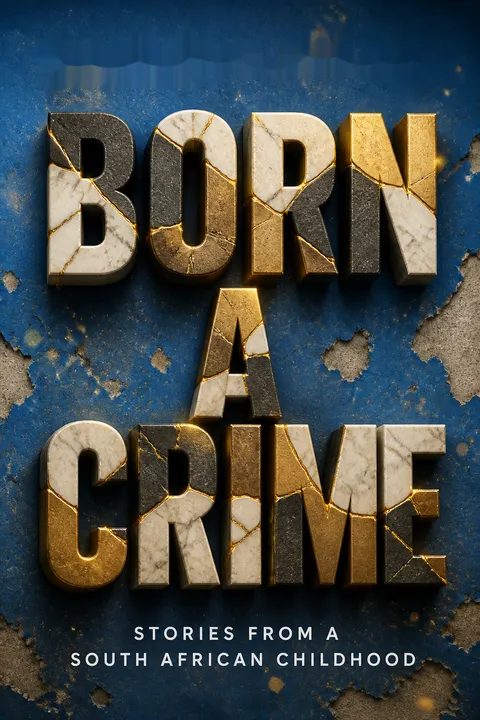


Key Takeaways
Apartheid divided South Africa's majority, then made those divisions serve white rule.
A designed hierarchy. Apartheid was more than segregation. It classified people by race, restricted where they could live and work, and assigned different rights to different groups. Black South Africans outnumbered whites by nearly five to one, but the state exploited existing differences, including tribal identities, to prevent a united challenge to its power.
Conflict had a history. Noah describes how political competition between the mainly Zulu Inkatha Freedom Party and the broad, largely Xhosa-led ANC turned violent as apartheid collapsed. Those divisions did not begin with apartheid, but the regime sharpened and used them. The system's durability came partly from persuading people denied power to blame one another for exclusion.
The memoir makes racial classification visible as a governing tool, not a neutral description. This connects to a broader political pattern: institutions can turn social differences into administrative categories, then distribute advantages that make those categories feel consequential. The account is strongest when it shows how the state amplified existing rivalries rather than inventing them from nothing. That distinction matters. A history of divide and rule should not erase the conflicts that preceded it, or suggest that political unity is simple once an external oppressor disappears.
Your existence can expose a system's logic as fiction.
A forbidden family. Noah was born in 1984 to a black South African mother and a white Swiss-German father. The Immorality Act criminalized interracial sex, making his conception a legal offense. Apartheid also required the state to assign every person a race, yet Noah did not fit its categories neatly. His mother gave officials a false account of his origins and found ways to present him as colored when necessary.
A mother's workaround. A light-skinned child could not safely walk openly with his black mother in many places. She sometimes arranged for a colored neighbor to appear to be his parent, while she walked nearby as if she were the maid. These acts did not dismantle apartheid, but they let a family live in the narrow cracks its laws left behind.
The child's body becomes a contradiction the law has to manage. This is a powerful way to show that racial categories are political constructions, even when governments enforce them with very real penalties. The mother's ingenuity also demonstrates that people subject to oppressive systems are not merely passive victims. Still, individual workarounds carry risk and cannot substitute for institutional change. Celebrating resilience without noticing the danger imposed on the family would turn survival into an excuse for the system that made it necessary.
Give children a wider map before asking them to choose a destination.
A larger horizon. Noah's mother, Patricia, grew up unwanted and impoverished in the Transkei, where she worked on a farm and sometimes lacked enough food. A mission school taught her English, and later a typing course helped her find secretarial work, despite laws that restricted black women's options. She refused to let her son's world be defined by the limits of hers.
Possibility takes practice. She named him Trevor, a name chosen without a prescribed family meaning, and filled their home with donated books, Bible study, and trips to places black families were discouraged from entering. They visited parks, ice rinks, drive-in movies, and wealthy neighborhoods. Her lesson was practical: people cannot aim for futures they have never been allowed to imagine. She also worried that family obligations would trap him in the poverty she had struggled against.
This is an account of aspiration built through exposure, not motivational slogans. In developmental psychology, a sense of possible futures is shaped partly by the people, settings, and roles a child encounters. Patricia expands those inputs even when she cannot provide comfort or money. The approach has limits: seeing a wider world does not guarantee access to it, and structural barriers can make aspiration painful. Her achievement lies in refusing to let restricted opportunity become a restricted imagination.
Learn the language of the room, but don't confuse access with belonging.
Language changes the encounter. Patricia made English her son's first language because it opened doors in a country where English was associated with education and work. At home, Noah also learned Xhosa and picked up Zulu, Afrikaans, Sotho, and other languages. When a shopkeeper spoke disparagingly about black customers in Afrikaans, Patricia answered him in fluent Afrikaans, making clear that she understood every word.
A social bridge. Noah learned to respond to people in their own languages and accents. On one occasion, men discussing a plan to rob him changed course when he answered them in Zulu. His appearance had marked him as an outsider, but shared speech suggested a common identity. Language helped him move between groups, though it did not make him fully accepted by any one of them.
Language is both a communication channel and a signal of social membership. Sociolinguistics describes how accent and word choice influence judgments of familiarity, competence, and trust. Noah's experiences make that abstract process concrete: speech can interrupt a stereotype before it hardens into action. Yet adaptation has a cost. The person who must continually translate, mirror, and prove familiarity carries extra social labor. Speaking someone's language can open a door; it cannot, by itself, remove the hierarchy that stands behind it.
Privilege is clearest when the same act earns different assumptions.
Unequal treatment at home. Noah's grandmother hesitated to discipline him because his skin changed color when he was struck. His black cousins received punishments he often escaped, even when he had caused the trouble. As a child, he accepted the advantage rather than challenging it. He understood the unfairness only later, when he recognized how easily beneficiaries can mistake privilege for personal merit.
A biased identification. Years later, security footage showed Noah and his friend Teddy stealing chocolates. The police questioned Noah, but the grainy black-and-white image made his skin appear light. Investigators assumed the unknown accomplice was a white boy and asked Noah to identify him. They did not recognize him as the person on screen. The image exposed how strongly their expectations shaped what they thought they saw.
These scenes show bias operating without a speech about prejudice. It appears in who is excused, who is suspected, and which details observers treat as decisive. Research on perception finds that expectations can influence how ambiguous evidence is interpreted, a dynamic the surveillance footage dramatizes. The memoir also makes an uncomfortable point about complicity: unfair advantage can feel ordinary to the person receiving it. Naming that advantage is a start, though the burden should not fall only on those already disadvantaged.
When no group claims you, build a role that lets you move among them.
An outsider's niche. At Sandringham High, Noah was the only mixed student in a school spanning different races and classes. He felt no obvious claim to any clique. He began running to the tuck shop before the lunch queue grew, then offered to buy food for classmates who paid him a fee. Speed became a small business, and the deliveries gave him a reason to move from group to group.
Connection through humor. He played sports, joked with different crowds, and learned enough about each group to join a conversation without demanding permanent membership. This made him widely known but often alone. The role was useful, even protective, yet it could not guarantee the intimacy of being someone's close friend. His story distinguishes access to a social circle from being securely included in it.
The tuck-shop business is more than a funny entrepreneurial episode. It shows how a person can create social capital by providing a service, then use that position to cross boundaries. In network terms, Noah becomes a bridge between groups that do not otherwise mix. But bridge roles can be fragile: people may welcome the service more than the person. The strategy creates agency under exclusion, while revealing that inclusion based on usefulness is not the same as belonging without conditions.
Hustle can generate motion without creating a route out.
A daily exchange. After school, Noah's business grew from selling copied music to DJ work and informal lending with friends in Alexandra, a crowded township with few jobs. They used cash and social connections to buy and resell goods, make loans, and keep money circulating. At its height, the group managed about 10,000 rand in working capital. Yet the work consumed their days without building a dependable path to education or stable employment.
A face behind the goods. The operation included stolen property, often rationalized as harmless because wealthy owners had insurance. That excuse weakened when a camera arrived filled with a family's holiday photographs. Noah imagined losing his own family pictures and could no longer treat the object as anonymous merchandise. Access to a computer and a CD writer had first shown him what opportunity could do; the camera showed what distance can hide.
The distinction between activity and advancement is central here. Informal work can supply income, competence, and belonging while still leaving people exposed to unstable markets and legal danger. Noah's story also avoids a simple tale of individual grit: an opportunity emerged when someone with resources shared equipment and knowledge. The account does not make theft harmless, nor does it romanticize hustling as a substitute for jobs, schooling, or public support. Its moral turning point comes when an abstract loss acquires a human face.
Speak before fear turns possibility into permanent regret.
A plan that never starts. In high school, Noah developed a crush on Zaheera, a friend who was beautiful, funny, and easy for him to talk to. He decided to stay close and wait years before asking her to the senior dance, imagining that patience would eventually make him the obvious choice. He never told her how he felt.
The missed opening. During a school holiday, Zaheera's family moved to the United States. Only afterward did a friend tell Noah that Zaheera had liked him too and had been waiting for him to ask. He could not know whether a confession would have changed anything. What he did know was that silence had removed the possibility of finding out. His lesson is not that every risk pays off, but that avoidance can leave a question no later success can answer.
The story captures the asymmetry between rejection and inaction. Rejection supplies information, while an unmade choice can remain an open counterfactual. That does not mean every hesitation is cowardice: social, cultural, and personal risks are real, and caution can be wise. The useful question is whether fear is protecting someone from genuine harm or merely postponing vulnerability. Noah's regret comes from treating an imagined future as guaranteed, rather than testing it through an honest conversation.
Love isn't ownership, and distance doesn't always mean indifference.
Fufi had her own life. Noah loved his dog Fufi and believed she belonged to him alone. When he discovered her visiting another household, he felt betrayed. He later learned she was deaf and had been roaming freely, not rejecting him. The experience helped him see that care does not give one person ownership over another's choices.
A father's quiet presence. Noah also lost contact with his father, Robert, after apartheid and family circumstances separated them. At twenty-four, he tracked him down and found that Robert had saved clippings of Noah's career. Their reunion revealed sustained attention beneath years of silence. When Noah tried to interview him, Robert suggested that relationships are learned by spending time together, not extracting answers. The two stories differ, but both caution against assuming that love must look like control or constant speech.
The pairing brings together two useful corrections to possessive thinking. A loved being has an independent life, and a quiet person may express care in ways that are easy to miss. Attachment research likewise distinguishes security from constant proximity, though it does not make every absence benign. The key is to remain curious without claiming certainty. Fufi's independence is not betrayal, while Robert's scrapbook offers concrete evidence of care. Relationship needs are best understood through attention and time, not assumptions alone.
In abuse, leaving is a problem of safety, not simply willpower.
The danger escalated. Noah's stepfather, Abel, could be charming and helpful, but he drank heavily and became violent. When Patricia first sought help from police after he hit her, officers treated it as a private family dispute and discouraged a charge. Later, Abel's violence worsened. He controlled transport and money, and Patricia feared that leaving could provoke him to kill the family.
A system that failed her. Abel eventually shot Patricia in the head and elsewhere, then faced an attempted-murder case. She survived, but the earlier failures to record abuse left him without a history of charges. He pleaded guilty and received probation rather than prison. Noah admits that he once asked why she did not simply leave. The memoir shows why that question misses the danger, isolation, and institutional failures shaping her choices.
The account resists a familiar but misleading model of abuse as a private decision between two equally free people. Coercive control, financial dependence, threats, and weak institutional protection can narrow a victim's options even when outsiders see a clear exit. Patricia's experience also shows how official inaction can become part of the danger by reducing accountability. Recognizing these constraints does not erase agency; it locates agency within real conditions. Advice to leave is meaningful only when safety and support accompany it.
Use humor to carry pain, not to pretend pain is harmless.
Running was learned early. When Noah was nine, a minibus driver threatened his mother after an argument. She opened the door at an intersection and pushed Noah out before jumping with his baby brother. They hit the road hard, then ran until they reached help. The story is terrifying, but Noah recalls the argument afterward about whether the ordeal had been God's plan, and how laughter finally returned between mother and son.
A survival language. Years later, after Abel shot Patricia, she woke in the hospital and joked that the injury had improved her looks. The humor did not undo the violence or the fear. It let mother and son meet each other in a moment that might otherwise have been only horror. Throughout the memoir, comedy makes painful events speakable without making them small.
Humor here works as a form of emotional coordination. A joke can give people a shared rhythm when events have overwhelmed ordinary conversation, and the mother's humor helps restore connection without denying what happened. This is not a universal prescription: survivors should not be expected to make pain entertaining or reassuring for others. The memoir's laughter matters because it belongs to this relationship, where teasing and warmth were already familiar. Its power comes from coexistence with grief, not from replacing it.
Analysis
Born a Crime works by making political systems tangible at the scale of a child's ordinary problems: whom he can walk beside, which language will make him safe, and why his cousins are punished while he is spared. Its structure is episodic, but the episodes accumulate into a coherent argument. Apartheid did not only control land, work, and movement. It entered family life, social perception, and the stories people told about themselves. Noah's shifting racial treatment makes identity appear both imposed and negotiated, while Patricia's repeated acts of defiance show that agency can survive without making oppression less real.
The memoir's comic voice is not a decorative contrast to its violence. It is a method of analysis. A joke exposes the absurd machinery of race classification, then the narrative reveals the injury beneath the absurdity. The reader is allowed to laugh, but not to mistake laughter for safety. This tonal instability mirrors a childhood in which danger could arrive during church travel, family life, or a school prank.
Patricia is the book's moral center, though not an uncomplicated saint. Her courage expands Noah's options, and her stubbornness sometimes leads the family into danger. That tension makes her more persuasive than a model of flawless resilience. Noah also complicates individual-success narratives: intelligence and hustle matter, but access to books, language, technology, and supportive relationships changes what talent can accomplish. The memoir's account of crime is especially valuable because it traces how informal economies meet unmet needs, while still showing the personal cost of treating stolen goods as anonymous.
The book remains a situated memoir, not a complete history of South Africa or a universal account of mixed identity. Its broadest claims are most convincing when tethered to specific encounters, and they require care when generalized across communities. Its lasting achievement is to show how a person can be formed by imposed categories without being reducible to them, and how intimate love can create room to imagine a life beyond the categories a state assigns.
Review Summary
Born a Crime is a memoir by Trevor Noah about his childhood in South Africa during and after apartheid. Reviewers praised Noah's candid and humorous storytelling, his insights into race and identity, and the moving portrayal of his relationship with his mother. Many found the book both entertaining and educational, offering a unique perspective on South African history and culture. While some critics noted issues with chronology or writing style, most agreed it was a powerful, funny, and thought-provoking read that successfully blends comedy with serious topics.
People Also Read







Glossary
Apartheid
South African racial ruleSouth Africa's system of legally enforced racial separation and white political control. It assigned people racial classifications, restricted where they could live and work, and denied most black people political and economic rights. In Noah's account, apartheid also manipulated divisions among nonwhite groups to preserve white power.
colored
Apartheid's mixed-race categoryA South African racial classification applied to people who did not fit the state's black, white, or Indian categories, often including people of mixed ancestry. Apartheid gave colored people some rights denied to black people while withholding white privilege. The memoir emphasizes that the category was politically imposed and did not reliably describe a person's culture or identity.
black tax
Family costs inherited from inequalityNoah's mother's term for the financial burden placed on people whose families have been impoverished by generations of discrimination. Rather than using new earnings solely to build their own lives, they may have to support relatives and repair the damage earlier generations were forced to endure. The term describes a social pattern, not a formal government tax.
Bantu schools
Schools designed to limit black educationSchools created under apartheid for black South African children, with curricula designed to prepare students for restricted forms of labor rather than equal participation in public life. Noah contrasts them with mission schools that had taught subjects such as history, science, and law. The system institutionalized unequal educational opportunity across generations.
spaza shops
Informal neighborhood grocery storesSmall, often home-based shops common in South African townships. They sold everyday goods in affordable amounts, such as a few eggs, a portion of bread, or a cup of sugar. Their importance reflected both local enterprise and the need to buy necessities in small quantities when households had little cash.
shebeens
Informal, often unlawful barsUnlicensed drinking places run from homes, especially in townships. Customers gathered to drink and socialize, often in yards or makeshift spaces. In the memoir, shebeens form part of a wider informal economy that grew where official services, businesses, and public facilities were limited.
cheese boys
Township youths seen as relatively privilegedA teasing label for young men whose families could afford small comforts, such as cheese, and who were therefore judged less authentically poor or streetwise than other township residents. Noah's friends in Alexandra disputed the label because they identified with the hood, while others viewed their better housing and schooling as signs of relative advantage.
amabhujua
Poor youth performing affluenceA South African slang term Noah uses for people who have little money but try to present themselves as fashionable or wealthy. He describes young people who might make long payment arrangements for a single stylish item while living in severe poverty. The term captures the visible performance of status under material constraint.
FAQ
What's Born a Crime about?
- Trevor Noah's Childhood: The memoir recounts Trevor Noah's experiences growing up in South Africa during apartheid, focusing on his mixed-race identity as the son of a black mother and a white father.
- Struggles with Identity: Noah explores the complexities of race and identity, detailing how he navigated life as a "colored" child in a society that strictly categorized people by race.
- Humor and Resilience: The narrative is infused with humor, showcasing how Noah and his mother used laughter and resilience to cope with the challenges they faced in a divided society.
Why should I read Born a Crime?
- Unique Perspective: The book offers a rare insight into life under apartheid from the perspective of a mixed-race child, making it both educational and engaging.
- Relatable Themes: Themes of family, identity, and belonging resonate universally, allowing readers to connect with Noah's story on a personal level.
- Humor in Adversity: Noah's ability to find humor in difficult situations provides a refreshing take on serious topics, making the book an enjoyable read.
What are the key takeaways of Born a Crime?
- Understanding Apartheid: The book provides a clear understanding of apartheid's impact on South African society, illustrating how it divided people and created systemic racism.
- Power of Family: Noah emphasizes the importance of family, particularly his relationship with his mother, who instilled in him values of resilience and independence.
- Embracing Identity: The narrative encourages readers to embrace their identities, regardless of societal labels, and to find strength in their unique backgrounds.
What are the best quotes from Born a Crime and what do they mean?
- "The genius of apartheid was convincing people who were the overwhelming majority to turn on each other.": This quote highlights how apartheid manipulated racial divisions to maintain control, emphasizing the destructive power of systemic racism.
- "I was born a crime.": This statement encapsulates Noah's existence as a mixed-race child in a society that criminalized his very being, illustrating the absurdity of racial laws.
- "If you don’t have a father, you have to find a father.": This reflects Noah's journey to understand his identity and the importance of seeking connections, even when they are complicated.
How does Trevor Noah describe his relationship with his mother in Born a Crime?
- Strong Bond: Noah portrays a deep, loving relationship with his mother, who was both a strict disciplinarian and a source of unconditional love and support.
- Shared Adventures: Their adventures, such as navigating public transport to attend multiple church services, highlight their resilience and determination to find joy in life despite hardships.
- Life Lessons: His mother taught him valuable lessons about faith, identity, and the importance of standing up for oneself, shaping Noah into the person he is today.
How does Born a Crime address the concept of race in South Africa?
- Complex Racial Dynamics: The book explores the complexities of race in South Africa, particularly the distinctions between black, white, and colored identities.
- Personal Experiences: Noah shares personal anecdotes that illustrate the absurdity of racial classifications and the impact they had on his life and relationships.
- Critique of Apartheid: Through his experiences, Noah critiques the arbitrary nature of apartheid laws and the lasting effects of systemic racism on individuals and communities.
What challenges did Trevor Noah face growing up in South Africa?
- Racial Discrimination: As a mixed-race child, Noah faced discrimination from both black and colored communities, struggling to find his place in a divided society.
- Economic Hardship: Growing up in poverty, Noah and his mother often faced financial struggles, which impacted their daily lives and opportunities.
- Family Dynamics: The absence of his father and the complexities of his family relationships added to the challenges Noah faced in understanding his identity.
How does Born a Crime depict the impact of apartheid on families?
- Forced Separation: The book illustrates how apartheid laws forcibly separated families and communities, creating emotional and physical barriers that affected relationships.
- Resilience in Adversity: Despite the challenges, Noah's family demonstrated resilience, finding ways to support and love one another in a hostile environment.
- Cultural Identity: The narrative highlights the struggle to maintain cultural identity and family ties in the face of systemic oppression and societal expectations.
What lessons does Trevor Noah learn throughout Born a Crime?
- Embracing Differences: Noah learns to embrace his mixed-race identity and the unique perspective it provides, ultimately finding strength in his differences.
- Value of Education: He recognizes the importance of education and knowledge as tools for empowerment and change, both personally and socially.
- Power of Love and Forgiveness: Throughout his journey, Noah learns the significance of love, forgiveness, and understanding in overcoming adversity and building meaningful relationships.
How does Born a Crime reflect on the concept of belonging?
- Struggle for Acceptance: Noah's experiences highlight the struggle for acceptance in various communities, illustrating the challenges of belonging in a racially divided society.
- Finding Community: Despite feeling like an outsider, Noah finds belonging through his relationships with family and friends, emphasizing the importance of connection.
- Redefining Identity: The book encourages readers to redefine their sense of belonging, suggesting that it can be found in shared experiences and mutual understanding rather than strict racial or cultural categories.
What role does humor play in Born a Crime?
- Coping Mechanism: Humor serves as a vital coping mechanism for Noah and his mother, allowing them to navigate the harsh realities of life under apartheid.
- Storytelling Style: Noah's comedic storytelling style makes serious topics more accessible, engaging readers while addressing complex issues of race and identity.
- Connection with Others: Laughter helps Noah connect with others, breaking down barriers and fostering relationships in a divided society.
What cultural insights does Born a Crime provide about South Africa?
- Language Diversity: Noah highlights South Africa's eleven official languages and the challenges of communication in a multicultural society, showing how language shapes identity and relationships.
- Cultural Practices: The memoir delves into various cultural practices and traditions, showcasing the richness of South Africa's heritage and providing a deeper understanding of its complexities.
- Social Issues: Noah addresses social issues such as poverty, crime, and inequality, offering a candid look at life in South Africa and encouraging readers to reflect on their own societies.
Download PDF
Download EPUB
.epub digital book format is ideal for reading ebooks on phones, tablets, and e-readers.








