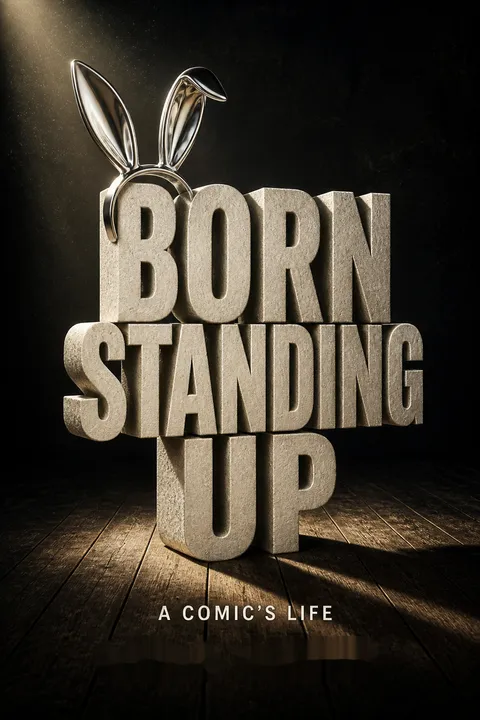


Key Takeaways
Build a comic identity from whatever you can actually do.
Start with the available tools. In 1965, Martin took a jumble of banjo playing, magic, juggling, and odd bits to a tiny San Francisco club. His show stumbled through a song, then found an unexpected laugh in a simple napkin trick. The club hired him for a week, partly because he belonged to a performers’ union it needed to satisfy. What began as a patchwork of skills gradually became a parody of a not-quite-successful entertainer: Martin performed a comic version of a performer still figuring himself out.
Let the mixture develop. He was not a natural singer, dancer, or actor, so he combined the things he could do and leaned into their awkwardness. The early act did not arrive as a complete vision. It acquired its identity through experiments, accidents, and the willingness to make a weakness part of the show.
The memoir makes artistic identity look less like a hidden essence waiting to be discovered and more like a pattern assembled from constraints. That is a useful corrective to stories that begin with a fully formed talent. Martin’s combination worked because he did not merely conceal what he lacked; he made the unevenness visible and comic. The caution is that not every limitation becomes a style. The transformation depended on sustained attention to audience response, and on the freedom to keep changing the act.
Originality begins when you stop borrowing other people's laughs.
Pay the price of newness. As a teenager, Martin collected jokes from books and borrowed routines from other performers. At college, he decided that even familiar-sounding material had to go if his act was to feel genuinely his. Losing those dependable laughs left him with a thinner, more uncertain set, but it forced him to write.
Turn your attention inward. One method was to take something that made him laugh in ordinary life and recast it as happening to him, rather than making someone else the fool. Another source was Lewis Carroll’s logic puzzles, whose absurd conclusions followed from apparently sound premises. Martin used that kind of contradiction to build material that felt strange without being random. Originality, in this account, is less a flash of inspiration than a rule that keeps rejecting the easy, familiar solution.
A strict originality rule can be productive because it shifts the question from “Does this get a laugh?” to “Does this sound like it could only come from this performer?” That change gives an artist a more durable standard than applause alone. It also risks becoming paralyzing: influences are unavoidable, and novelty for its own sake can be empty. Martin’s examples suggest a more workable test. Borrowing can teach form, but the finished material needs a distinct point of view and an internal logic of its own.
Treat performance as a craft you can study, not a gift you lack.
Learn by watching closely. At Disneyland, Martin repeatedly saw comedian Wally Boag perform and studied the timing, gestures, and small transitions that kept a show alive. At the magic shop, he watched Jim Barlow turn trick demonstrations into comic exchanges and learned card handling from Leo Behnke, whose movements were so controlled they seemed effortless.
Build skill through repetition. Martin spent eight to twelve hours a day demonstrating tricks, then performed regularly at Knott’s Berry Farm’s Bird Cage Theatre. The short variety routines there gave him four or five performances on some days, often to nearly empty seats. The material was still rough, but repetition reduced his stage nerves and improved his poise. He learned not only to perform a trick or gag, but to notice how movement, timing, and attention shaped what an audience saw.
Martin’s apprenticeship highlights a frequently overlooked ingredient in creative development: access to repeated practice and close observation. He had mentors, a workplace that put him in front of people, and the chance to study professionals at close range. That makes his progress more than a triumph of personal grit. Practice sharpened his abilities, but it could not by itself guarantee a distinctive act. The important combination was repetition plus discernment: he watched specific choices, tried them, and gradually learned which ones fit his own temperament.
Let the audience discover the joke instead of signaling its arrival.
Remove the usual cues. Martin questioned the standard joke structure, in which a comedian builds tension and releases it with an obvious punchline. He tried the opposite: announcing an elaborate routine, doing something nearly empty, and moving on before the audience knew where the laugh belonged. In one early experiment, he placed his nose against a microphone, bowed as though he had completed a major performance, and continued with the show. The laugh arrived after the moment had passed.
Commit without explanation. He decided not to pause to show that he expected a laugh, and not to signal that a quiet response meant the bit had failed. His manner had to suggest that the act was proceeding on its own terms. His eventual approach, which his friend Rick Moranis called “anti-comedy,” denied audiences familiar punchlines and invited them to find their own reasons to laugh.
This approach gives the audience a role beyond recognizing a prepared joke. Its pleasure comes partly from uncertainty: spectators must decide whether a moment is deliberate, awkward, or both. That makes comic timing a relationship rather than a simple delivery of information. The method is demanding, however, because the same ambiguity can read as confidence or incompetence. Martin’s unwavering presentation supplied the context that helped audiences interpret the strangeness as intentional rather than unfinished.
Test new material in fragments before betting the whole act.
Make small experiments. On the road, Martin began adding new material in tiny pieces, sometimes just a gesture or a few words. If a fragment worked, he expanded it the next night. If it failed, he could leave it behind without being trapped in a long, dead routine. He also recorded performances, which helped him notice habits he could not detect in the moment, including slurred speech when he used wine as a prop.
Let the room change the show. A practical problem at Vanderbilt University turned into an unexpected performance: the audience followed Martin offstage, through the hallway, and outside. He kept talking, led them to a drained swimming pool, and turned their presence into part of the act. The experience showed him that a venue’s limits could generate new material. It also taught him to adapt rather than force every show into the same shape.
This is close to an iterative design process: make a small change, observe what happens, and revise before committing. The value is not that audience reactions provide perfect measurements. A joke can fail because of the room, the crowd, or timing, and a laugh can reward novelty rather than quality. Martin’s method therefore works best when feedback is treated as evidence, not a verdict. Recording, testing small pieces, and noticing how context changes a response make that evidence more useful.
Eighteen years onstage turned a slow apprenticeship into a brief fame surge.
Fame followed a long build. Martin describes eighteen years in stand-up: ten spent learning, four refining, and four in exceptional success. During the early years, he worked at Disneyland, acted at Knott’s Berry Farm, wrote for television, and played small clubs, sometimes to silence. He kept developing his act even when reviews were poor and opportunities seemed uncertain.
Then the pieces converged. A strong review of a performance in Miami helped him continue when he was close to abandoning stand-up. By 1975, he could headline San Francisco’s Boarding House with hours of material. Word of mouth, touring, television appearances, a Rolling Stone profile, and Saturday Night Live expanded his audience. His first album sold 1.5 million copies; the next reached number one. The leap looked sudden from the outside, but it rested on years of work and several forces arriving together.
The timeline challenges the convenient image of instant discovery. Success here emerges from accumulated skill, access to stages, relationships, media exposure, and timing. No single element explains the breakthrough, and that is precisely why the story feels more realistic than a formula. Still, the memoir is a case history of an unusually successful performer, not proof that persistence reliably produces fame. Its more transferable lesson is narrower: sustained practice can prepare someone to benefit when an opportunity finally appears.
Do not confuse a full house with a sustainable life.
Success narrowed his world. At his peak, Martin toured at a punishing pace, sometimes visiting sixty cities in sixty-three days. He performed to thousands, then returned to a hotel room alone. Fame made ordinary errands and private conversations difficult, while audiences expected the stage persona whenever they saw him in public. The act that had once thrived on experimentation was becoming a familiar sequence of reliable bits.
Applause did not erase exhaustion. Martin describes feeling isolated, creatively depleted, and unable to leave a lucrative schedule already booked far ahead. In one overheated college gym, anxiety and a racing heart sent him to the hospital. Even there, a nurse asked him to autograph the heart-test printout. The story captures how celebrity can turn a person’s distress into another public interaction, just when privacy matters most.
The distinction between external success and internal sustainability is especially sharp here. A growing audience can increase income and recognition while reducing autonomy, privacy, and room to experiment. Those measures of success do not move together. Martin’s account also suggests why recovery cannot be treated as a luxury: constant performance leaves little space for relationships or reflection. The nuance is that fame itself is not inherently destructive; the strain comes from a schedule and public role that make ordinary human boundaries difficult to maintain.
Leave when the work becomes a machine, even if it still sells.
Notice when the act has changed. By the late 1970s, Martin’s routines worked reliably, but their choreography had become automatic. Large arenas made it difficult to test new ideas, and the applause began to feel like a wave arriving on schedule rather than a response to a fresh experiment. He was still successful, but no longer felt like the funniest version of himself.
Stop before success decides for you. In 1981, Martin noticed empty seats in the back of a venue for the first time in years. On another night, a stage effect failed, provoking a burst of anger that was really about his larger creative exhaustion. He put away his stand-up props and did not return to the form. The ending was not a public collapse. It was a private recognition that the work had stopped giving him what it once had.
Martin’s departure separates a career’s market value from its creative value. A successful routine can continue earning while the performer’s relationship to it has ended. That is a useful signal, but not a universal rule to quit whenever work feels repetitive; mastery often includes stretches of repetition. The telling details are the combined loss of experimentation, the sense of performing on autopilot, and the accumulating exhaustion. Together, they suggest a considered ending rather than a reaction to one bad night.
Repair family silences while there is still time to speak.
Estrangement can become habit. Martin describes years of distance from his father, whose unpredictable anger and frequent criticism left him wary of accepting help or expressing honest opinions. The two rarely repaired the relationship while Martin was young, and his silence spread into distance from the rest of his family. A friend’s warning about unresolved family matters prompted him to begin visiting his parents regularly and asking about their shared past.
The conversation came late, but not too late. As his father’s health failed, the two finally spoke about the affection they had struggled to show. They acknowledged the years lost to fear and silence, and Martin’s relationship with his sister deepened as they compared memories of their childhood. His mother also spoke of regret and tenderness before her death. These moments did not undo the past, but they made a different ending possible.
The memoir avoids treating reconciliation as a neat cure. The years of distance remain consequential, and the family’s late conversations cannot restore the time they missed. Yet they change what the ending means. Martin’s story gives weight to a practical truth: silence can masquerade as self-sufficiency until there is little time left to test that belief. Reconnection need not require agreement about every memory. Here, the first opening is simply the willingness to ask, listen, and acknowledge what each person experienced.
Revisit old work for understanding, not for a second life.
Memory changes with distance. Martin avoided thinking about his stand-up career for roughly twenty-five years. Researching the memoir brought back photographs, old notes, and stories from people who had shared those years with him. The past began to feel less like a career he needed to resume and more like a life he could finally view with warmth.
Let the work be finished. After his mother’s final days, Martin returned to the Bird Cage Theatre, where he had performed as a young man. The empty room brought back the freedom and silliness of his early years, before comedy had become a profession with large audiences and obligations. He also recalls a distinction made by painter Eric Fischl: making art can reveal something, but once the work exists, it can be released. Remembering the act helped Martin understand it without needing to return to it.
The return to the Bird Cage is not a sentimental attempt to restore youth. It is closer to an encounter with evidence: the old stage allows Martin to feel what his later success had obscured, including the pleasure that preceded professional pressure. This is one of the memoir’s strongest uses of memory, because recollection produces understanding without demanding reenactment. At the same time, memory is selective and shaped by the present. The value lies not in recovering a perfectly preserved past, but in making a more generous account of it.
Analysis
Born Standing Up is a craft memoir whose central subject is not fame but the changing relationship between a performer and his work. Its narrative moves from a teenager piecing together magic, banjo, and awkward comic bits to an arena headliner whose act has become almost too dependable. The surprising arc is that success does not resolve the central problem. It intensifies it: the audience grows, the schedule hardens, and the conditions that once encouraged experimentation disappear.
Martin’s comedy develops through a tension between control and apparent disorder. The routines may look loose, absurd, or unfinished, but their effect depends on precise timing, physical choices, and a performer’s refusal to explain the joke. His account therefore makes comedy seem less like a stock of clever lines than a system for directing attention. The audience is not merely receiving a punchline. It is deciding what a gesture means, when a moment becomes funny, and whether the performer’s confidence can be trusted.
The memoir also resists a simple trauma-to-talent story. Martin connects his childhood distance from his father to later isolation, but does not claim that pain automatically made him funny. The book gives equal weight to mentors, working conditions, repetition, chance, and a changing cultural moment. His account of the breakthrough is accordingly more convincing than a lone-genius myth: the work was built over years, then met a cluster of opportunities that amplified it.
Its deepest contrast is between comedy as play and comedy as labor. The early performances at small venues allowed risks; mass popularity made each show more consequential and less experimental. Martin’s decision to stop is not presented as a universal career strategy, but as a recognition that external demand can outlast internal purpose. The retrospective frame completes that argument. Returning to the past gives him affection for the person he was, without making that person a role he must perform again.
Review Summary
Born Standing Up offers an intimate look at Steve Martin's early career as a stand-up comedian. Readers appreciate Martin's honesty, detailing his difficult relationship with his father and the years of hard work that led to his success. The memoir focuses on his journey from Disneyland magician to comedy superstar, exploring the development of his unique comedic style. While some found the book's tone detached, many praised its insights into the craft of comedy and the fleeting nature of fame. Overall, it's considered a valuable read for fans and aspiring performers alike.
People Also Read





Glossary
anti-comedy
Comedy without expected punchlinesA comic approach Martin developed by withholding familiar punchlines and signals that tell audiences exactly when to laugh. He used anticlimax, unusual pauses, and unwavering confidence so spectators had to decide for themselves what was funny. His friend Rick Moranis used the term for the mature form of Martin’s act.
olio
Short variety-show segmentA brief entertainment portion, often made up of specialty acts, traditionally presented alongside or after a larger theatrical performance. At Knott’s Berry Farm’s Bird Cage Theatre, the melodrama was followed by an olio, where performers offered short routines such as songs, comedy, or magic.
Faro shuffle
Exact interlacing card shuffleA card-handling technique in which a deck is divided and the two halves are interlaced so that their cards alternate precisely. Martin learned it from magician Leo Behnke and practiced the controlled, nearly imperceptible movements. The lesson extended beyond the trick itself: stillness and subtle motion could shape what an audience noticed.
FAQ
What's Born Standing Up: A Comic's Life by Steve Martin about?
- Memoir of a Comedian: The book is a memoir by Steve Martin, detailing his journey from a young aspiring comedian to a successful entertainer.
- Behind the Scenes: It provides an inside look at the challenges and triumphs Martin faced in the world of stand-up comedy.
- Personal Growth: The narrative explores themes of personal growth, perseverance, and the evolution of Martin's comedic style.
Why should I read Born Standing Up: A Comic's Life by Steve Martin?
- Insightful Journey: Readers gain insight into the life of one of comedy's most influential figures, learning about his creative process and career milestones.
- Inspirational Story: The book offers inspiration through Martin's determination and resilience in the face of setbacks and failures.
- Humor and Wit: Martin's signature humor and wit are evident throughout, making it an entertaining and engaging read.
What are the key takeaways of Born Standing Up: A Comic's Life by Steve Martin?
- Persistence Pays Off: Martin's story highlights the importance of persistence and hard work in achieving success.
- Creative Evolution: The book illustrates how Martin's comedic style evolved over time, emphasizing the value of adaptability and innovation.
- Personal Reflection: It encourages readers to reflect on their own journeys and the role of passion in pursuing one's dreams.
What are the best quotes from Born Standing Up: A Comic's Life by Steve Martin and what do they mean?
- “It takes a long time to become an overnight success.”: This quote underscores the years of effort and dedication behind seemingly sudden achievements.
- “Be so good they can’t ignore you.”: Martin emphasizes the importance of excellence and standing out in one's field.
- “Comedy is the art of making people laugh without making them puke.”: This humorous quote reflects Martin's approach to comedy, balancing humor with taste.
How does Steve Martin describe his early career in Born Standing Up: A Comic's Life?
- Humble Beginnings: Martin started his career performing at small venues, often facing tough crowds and limited success.
- Learning and Growth: He used these early experiences to hone his craft, learning from each performance and gradually improving his act.
- Building a Reputation: Over time, Martin's persistence and unique style helped him build a reputation, leading to larger audiences and greater opportunities.
What challenges did Steve Martin face in his comedy career according to Born Standing Up: A Comic's Life?
- Audience Reactions: Martin often faced indifferent or hostile audiences, requiring resilience and adaptability.
- Creative Struggles: He grappled with finding his comedic voice and balancing originality with audience expectations.
- Personal Sacrifices: The demands of his career led to personal sacrifices, including time away from family and friends.
How did Steve Martin's comedic style evolve in Born Standing Up: A Comic's Life?
- Experimentation: Martin experimented with different comedic styles, incorporating elements of absurdity and surrealism.
- Influences: He drew inspiration from various sources, blending traditional stand-up with innovative techniques.
- Signature Style: Over time, Martin developed a distinctive style characterized by wit, physical comedy, and a unique stage presence.
What role did personal reflection play in Steve Martin's journey as described in Born Standing Up: A Comic's Life?
- Self-Assessment: Martin frequently reflected on his performances, identifying areas for improvement and growth.
- Learning from Mistakes: He viewed failures as learning opportunities, using them to refine his act and approach.
- Continuous Improvement: Personal reflection was key to Martin's continuous improvement and eventual success in comedy.
How does Steve Martin address the concept of success in Born Standing Up: A Comic's Life?
- Redefining Success: Martin emphasizes that success is not just about fame or wealth but also personal fulfillment and creative satisfaction.
- Long-Term Perspective: He highlights the importance of viewing success as a long-term journey rather than a single achievement.
- Balancing Act: Martin discusses the challenge of balancing professional success with personal happiness and well-being.
What insights does Born Standing Up: A Comic's Life by Steve Martin offer about the entertainment industry?
- Behind the Curtain: The book provides a candid look at the realities of the entertainment industry, including its challenges and rewards.
- Networking and Relationships: Martin underscores the importance of building relationships and networking within the industry.
- Adapting to Change: He discusses the need to adapt to changing trends and audience preferences to remain relevant.
How does Steve Martin's personal life influence his career in Born Standing Up: A Comic's Life?
- Family Background: Martin's family background and upbringing played a significant role in shaping his comedic sensibilities.
- Personal Experiences: His personal experiences, both positive and negative, influenced his material and performance style.
- Balancing Personal and Professional: The book explores the challenges of balancing personal life with the demands of a career in comedy.
What lessons can aspiring comedians learn from Born Standing Up: A Comic's Life by Steve Martin?
- Embrace Failure: Martin's journey teaches aspiring comedians to embrace failure as a stepping stone to success.
- Be Authentic: He emphasizes the importance of authenticity and staying true to one's comedic voice.
- Commitment to Craft: Aspiring comedians can learn the value of dedication and continuous improvement in mastering their craft.
Download PDF
Download EPUB
.epub digital book format is ideal for reading ebooks on phones, tablets, and e-readers.








