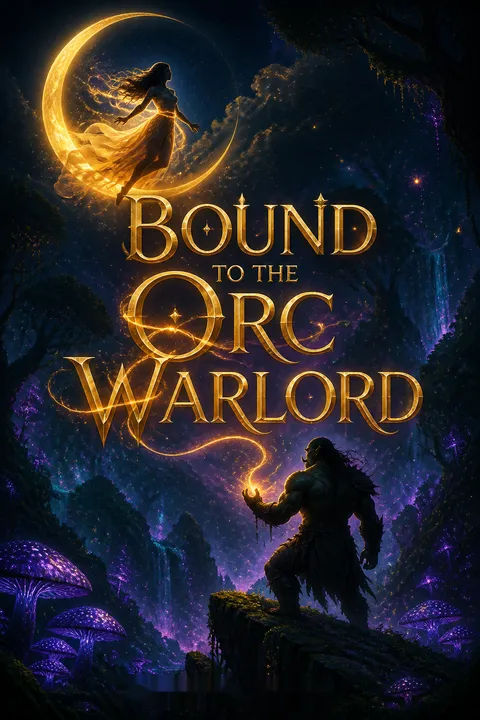


Plot Summary
The Charity's Locked Closet
Ashley Jenkins works for a New York charity she believes helps orphaned children, until she uncovers its director, Nick Caprio, embezzling donations. She photographs evidence from his offline laptop and sends it to a reporter, but Caprio catches her, smashes her phone, and orders an employee named Bruno to lock her in a closet.
Her colleagues hear her calling for help and leave without opening the door. Alone, Ashley grips the quartz necklace inherited from her dead mother and wishes to escape. The stone heats, a radiant sphere fills the closet, and Ashley is lifted through it just as Caprio lunges. The wish saves her from the men who trapped her, but strands her somewhere she cannot recognize.
Ashley’s first act of agency is moral rather than magical: she risks her livelihood to expose theft from the children she once hoped to help. The charity’s betrayal repeats an older wound, her orphanhood, by showing that apparent care can conceal exploitation. Her wish does not arrive as a calculated escape plan but through an heirloom connected to her mother, making inherited love the first force capable of interrupting her isolation. The portal therefore changes more than the setting. It makes Ashley’s private history materially consequential and begins a story in which survival depends on trusting capacities she has been taught to doubt.
The Warlord's Moonlit Summons
In Alarria, orc warlord Dravarr settles a long-running rivalry with Krivoth through a formal, unarmed fight. He wins, offers Krivoth his hand, and hopes the victory has restored trust, though restlessness remains. That night, the Moon Goddess sends a sphere of light into his room. Her summons tells him that a new human sky gift will arrive and that he must travel to receive her.
Dravarr has spent years putting duty and political advantage ahead of personal attachment; he expects a useful warrior or a powerful magic user. He leaves his village on his unicorn companion, Midnight, confident the goddess has chosen a bride for him, but unaware that her gifts will not match his expectations.
Dravarr’s opening conflict establishes the rule by which he judges both himself and others: competence is measured in strength, leadership, and usefulness. His fight with Krivoth is meant to repair a political relationship, but its ritual resolution cannot quiet his deeper sense that duty has narrowed his life. The summons interrupts that managed existence with a relationship he cannot select or assess in advance. His confidence that a bride should strengthen the clan foreshadows his central blind spot: he initially treats intimacy as another appointment to fill, rather than as a chance to revise what he considers strength.
Pink Underwear in Faerie
Ashley awakens atop an ancient standing stone in a forest unlike Earth. Her wish gives her the power to fly, but she cannot control it; after crashing into a tree, she is attacked by black birds with blood-red beaks. A young green dragon drives them back as Dravarr arrives on Midnight. He climbs the tree to reach Ashley, and she clings to him while he carries her down.
The birds merge into a shifting, cloaked creature called a sluagh, which attacks again. Dravarr, Midnight, and the dragon defend Ashley until it retreats. Dravarr introduces himself, then lifts her onto Midnight, discovering that Ashley floats away whenever she is not holding something. Their journey begins with attraction, danger, and a problem neither can yet solve.
The comic embarrassment of Ashley’s exposed underwear sits beside a genuine reversal of power: she possesses flight, yet its lack of control leaves her more vulnerable than free. Dravarr’s physical competence offers immediate safety, but the scene also shows that protection can become a form of dependence when Ashley cannot communicate or choose where her body goes. The sluagh’s shifting form makes danger difficult to grasp, while the three rescuers act together without waiting to understand Ashley. Her first experience of Faerie thus contrasts the abandonment of her former coworkers with an unfamiliar community that responds to her need.
A Witch Without a Landing
To keep Ashley from drifting off, Dravarr ties her ankle to a leather tether and tends the wounds left by the tree and the sluagh. He cannot speak her language, but the dragon, Drakonisrevener, brings a crystal carrying the speaking stone’s translation magic.
The crystal lets Ashley learn that her family has a history of witches and that her flight is a form of magic. She asks Drake to teach her, despite Dravarr’s insistence that travel and the sluagh threat must come first. He grudgingly allows short lessons on the road.
When ogres ambush them, Ashley cannot control her power; Dravarr fights them while Midnight protects their flank, and he takes a serious shoulder wound. Ashley’s magic remains uncertain, but her care for the injured warlord begins to change their closeness.
The speaking crystal does more than translate vocabulary. It gives Ashley access to the decisions being made around her, turning a dependent passenger into someone able to state what she wants to learn. Dravarr’s refusal to pause reflects a protective logic that is sincere but paternalistic: he mistakes limiting her choices for keeping her safe. The ogre attack then makes the cost of Ashley’s inexperience concrete, while Dravarr’s injury complicates the protector role. Ashley must care for the person who has been carrying her, and their relationship begins to shift from rescue toward mutual responsibility.
The Broomstick Breakthrough
After recovering enough to continue, Ashley keeps pushing for flight practice. Dravarr fears she will be lost above the trees, but Drake helps her find a way to steer: Ashley carves a branch into a broomstick and channels her intention through it.
She takes off and flies farther than she planned. Dravarr and Midnight chase her through the forest, and when she returns safely, she can control her direction and speed. At a secluded pond, Dravarr acknowledges that he doubted her unfairly, then courts her with a careful first kiss.
Ashley welcomes his desire, and their attraction becomes a consensual sexual relationship. His attentiveness makes her feel wanted for herself, although she does not know he is still hiding the goddess’s marriage bond.
Their first sexual intimacy functions as emotional evidence for Ashley, who has previously mistaken manipulative attention for affection. Dravarr’s patience gives her an experience of being desired without being demeaned, but his silence about the goddess’s match means the relationship is not yet built on equal knowledge. His wish to woo her perfectly is psychologically revealing: perfection becomes a defense against admitting his earlier judgment and risking rejection. The scene’s sweetness therefore carries an unresolved ethical tension. Care can be real and still be compromised when one person controls information that would change the other’s understanding of the relationship.
The Sluagh's First Weakness
While traveling toward Moon Blade Village, Dravarr and Ashley are attacked by sluagh using deathsleep, a potion that can leave victims unconscious for a century. Ashley and Dravarr fight separate flocks as rain and wind batter the plains. When she catches one attacking bird in her hand instead of killing it, the rest of its flock falls silent and stops draining her strength.
Dravarr copies her, and they each trap a bird alive, discovering a way to subdue a sluagh without destroying its individual forms. They shelter from the storm in a cave, where Ashley and Dravarr grow closer, though he still does not explain their bond. The discovery gives them a possible defense, but they have no safe, lasting place to keep the captured birds.
Ashley solves the immediate danger by instinctively grasping rather than striking. That distinction matters: the sluagh’s dispersed body makes ordinary violence ineffective, while restraint interrupts its power. Her response is neither conventional combat nor passive compassion; it is a practical insight produced by attention to how the enemy behaves. The discovery also creates a moral and logistical problem. Capturing the birds can protect victims, but keeping them alive indefinitely may be impossible. The scene expands Ashley’s contribution beyond personal survival and exposes the limits of a solution that works tactically before it can work politically.
Across the Unicorn Plains
A unicorn herd confronts the travelers because they have brought sluagh onto its grazing lands. Ashley agrees to share her discovery, and the herd permits them to cross under guard. Its leader, Noon, is Midnight’s mother.
On the journey, Ashley plays with the unicorn foals and gives them their first experience of flying, easing the herd’s suspicion and bringing joy to its adults. Dravarr watches her make allies through warmth rather than force and recognizes how much he loves her.
The group reaches Moon Blade Village with the captured birds still contained but no final plan for them. There Ashley meets Olivia, another human witch, and Dravarr’s family. The safe arrival fulfills his immediate duty, while placing Ashley inside the community whose marriage customs he has concealed.
The plains sequence revises the book’s definition of power through a specific social consequence. Ashley does not win the herd by defeating its warriors; she wins trust by offering a solution and sharing delight with its young. Her ability to make people feel welcome becomes politically consequential. The scene also places chosen intimacy beside inherited family ties: Midnight’s reunion with Noon lets Ashley witness the bond she missed with her own mother. Dravarr’s love emerges through observation of this relational skill, confirming that his old warrior-centered standard could not measure the quality most transformative to his clan.
Home With a Hidden Marriage
At Moon Blade Village, Ashley meets Dravarr’s mother Leyna, his brother Rovann, and Rovann’s wife, Olivia, who conjures food and welcomes her as another human witch. Ashley receives clothes made for her, explores the tree-built homes, and begins finding a place among the villagers.
She helps design a net that can trap sluagh birds, improving on the improvised bags used during the journey. Krivoth confronts Dravarr privately, admitting that he resents being overshadowed and would have welcomed Ashley himself.
Dravarr understands that he has failed to tell her about the goddess’s marriage, but keeps waiting for a perfect moment. Ashley sees him as a man choosing her. The longer he delays, the more damaging that difference in understanding becomes.
The village offers Ashley concrete forms of belonging: clothing that fits, a home, shared meals, and a peer in Olivia. These ordinary accommodations matter because her deepest injury is not merely being alone but believing no one chooses her. Dravarr’s family and clan begin to make room for her even as he withholds the fact that would most alter her interpretation of their welcome. Krivoth’s jealousy is not simple antagonism; he voices the fear of being perpetually measured against Dravarr. His confrontation exposes the warlord’s interpersonal failure, but Dravarr’s perfectionism still delays repair until the delay itself becomes a betrayal.
The Secret at the Well
As Ashley rests beside the village well, she overhears two orcs explain that the Moon Goddess matched and married her to Dravarr before they ever met. Their words make sense of the rules everyone has been observing, including Dravarr’s warnings that no one discuss the bond. She realizes his tenderness has unfolded inside a marriage she never consented to knowingly.
When he reaches her, Ashley refuses his attempt to explain and tells him that she needed to believe someone had freely chosen her. The revelation reopens the loneliness she carried from the orphanage and her mother’s death. Ashley wishes to escape, and her magic lifts her into the sky. Dravarr is left holding her broomstick, unable to bring her back.
The betrayal lies not in the existence of a supernatural bond alone, but in Dravarr’s decision to control when Ashley learns about it. For someone whose history includes abandonment and deceptive attention, the distinction between being selected and being chosen is emotionally decisive. Ashley’s anger is restrained by grief; she does not accuse him of being incapable of care, but she cannot trust care that was never fully informed. Her flight converts that rupture into physical action. The power that once saved her from confinement now gives her a way to refuse a relationship whose terms were hidden from her.
War Over Moon Blade
As Ashley flies beyond the village without her broomstick, ogres attack the guards holding the captured sluagh and free the flocks. A larger ogre force rides into Moon Blade with kelpies, while the released soul eaters descend on the villagers.
Dravarr distributes Ashley’s new nets and organizes paired teams to trap one living bird from each flock. Ashley encounters the attack in the air and uses her shirt as an improvised sack to subdue another flock. Drake arrives with his mother, the immense dragon Sheevora, who burns one attacking flock from the sky.
Ashley returns to the village and joins Dravarr, the orcs, unicorns, pixies, and dragons. Their cooperation turns the battle, but the original sluagh that targeted Ashley remains loose and confronts them.
The attack makes Ashley’s departure consequential without reducing her to the cause of the danger: the ogres deliberately free the captives and bring war to the village. Dravarr’s response depends on Ashley’s earlier invention, so his leadership now incorporates her practical intelligence rather than treating it as secondary to combat. Ashley, in turn, returns because the village and its people matter to her, despite the hurt Dravarr caused. The allies’ different methods, nets, claws, fire, and blades, become complementary rather than competitive. Their collective defense changes the scale of the story from a couple fleeing threats to a community learning how to survive them together.
A Bride Chosen Freely
The last sluagh approaches Ashley and begins draining her life, but Dravarr knocks it away and pins its shape inside a net. He repeatedly drives his sword into the creature, destroying its stolen forms until it crumbles to dust and its victims are freed. With the danger ended, Dravarr turns to Ashley and asks forgiveness.
He admits that he misjudged her because he recognized only the warrior’s strengths he valued in himself, then tells her he loves her. Ashley answers that she loves him too. Their reunion rests not on the goddess’s decree but on her own decision, made after the truth is finally spoken. The battle’s resolution restores safety to the village; their confession begins repairing the trust Dravarr’s silence damaged.
The final fight gives literal form to the sluagh’s predation: it survives by taking life from others and gathering those stolen lives into a false body. Dravarr’s repeated blows do more than avenge Ashley. They dismantle the creature’s accumulated power and free the people it has consumed. His confession then addresses a different injury, one no sword can settle. Ashley’s return does not erase the deception; her forgiveness follows an explicit recognition of how he failed to see her. The novel distinguishes destiny from consent by making the goddess’s match insufficient on its own. Love becomes meaningful only when Ashley can know the truth and still choose him.
Marks Beneath the Moon
After the battle, Dravarr and Ashley reconcile in private, and their bond becomes physically marked by matching crescent moons when they mate. The king and Sheevora agree that captured sluagh will be studied by dragon magic users before being destroyed, freeing their trapped victims; Sheevora also offers enchanted speaking crystals for future human arrivals.
Drake chooses to remain with Ashley and the others during his wander years. Moon Blade celebrates its survival, and Ashley settles into her life with Dravarr. The next morning, she senses a new presence in her body and realizes she is pregnant. She and Dravarr welcome the child with joy, imagining a daughter raised with magic, a loving father, and a whole village around her.
The ending joins intimate commitment to institutional change. The mate marks confirm a bond, but they arrive after Ashley has confronted Dravarr and chosen to continue with him, preserving the distinction between magical sanction and personal consent. The agreement with Sheevora addresses the threat at a communal scale, while the speaking crystals anticipate the needs of humans who may arrive without a language or support network. Ashley’s pregnancy extends the novel’s movement from orphaned isolation toward chosen family. The child is not presented as a cure for past hurt; rather, the ending imagines a future in which inherited magic and care can pass forward without the abandonment that shaped Ashley’s childhood.
Analysis
The novel begins with two characters who misunderstand what strength is for. Ashley has learned to earn safety by being agreeable and useful; Dravarr has learned to secure it through discipline, force, and control. Their romance works when those habits are challenged by concrete dependence in both directions. Dravarr carries Ashley, but she treats his wounds, invents a way to capture the sluagh, and eventually helps defend his home. Her value is not a substitute for combat ability. It exposes how narrow his definition of ability has been.
The book’s central conflict over the Moon Goddess’s match is therefore not simply fate versus love. The bond is real, but Dravarr’s secrecy makes fate resemble another form of coercion. Ashley’s history gives that concealment particular force: she has repeatedly been made to mistake attention for genuine choice. The story repairs the relationship only after the truth is spoken and Ashley can decide what she wants. Magical certainty cannot do the emotional work of consent.
Ashley’s flight makes this problem bodily. At first, rising means escape without control; she cannot land, steer, or reliably remain near anyone. The broomstick converts an instinctive power into a skill, while her later ability to ground herself depends on wanting to stay rather than wanting to flee. That progression does not imply she should stop seeking independence. It shows that agency includes choosing connection without being trapped by it.
The sluagh plot extends the same argument into collective life. Their many-part body defeats straightforward violence, but Ashley’s act of capturing rather than killing one bird reveals a weakness that isolated warriors missed. The discovery requires nets, shared labor, and negotiations across clan boundaries. By the end, safety is not Dravarr’s burden alone. Ashley’s magic, the orcs’ organization, the unicorns’ strength, the pixies’ daring, and the dragons’ power become a working coalition. The imagined future of a child and an extended community gives Ashley what the opening denied her: belonging that is chosen, reciprocal, and capable of being passed on.
Review Summary
Bound to the Orc Warlord receives mostly positive reviews, with readers enjoying its lighthearted tone, spicy romance, and charming characters. Many appreciate the grumpy-sunshine dynamic between Ashley and Dravarr, as well as the fun fantasy elements. Some readers found it a perfect palate cleanser between heavier books. However, a few critics felt the writing was simplistic or the plot too basic. Overall, most reviewers found it an enjoyable, low-angst romance with likable characters and a cozy atmosphere.
People Also Read
Characters
Ashley Jenkins
The sky-born witchAshley is a warm, determined young woman who grew up in an orphanage and learned to make herself useful in the hope of being welcomed. Her work in philanthropy reflects a sincere investment in children facing the obstacles she knew herself. She is quick to joke, quick to care for others, and less sure of her own worth than her bright manner suggests. Her emerging magic places her in a world where she can belong, but it also forces her to learn control, ask for instruction, and act without waiting for rescue. Ashley’s central need is not simply to be loved, but to trust that affection does not depend on deception or obligation.
Dravarr
The duty-bound warlordDravarr is the disciplined warlord of the Moon Blade Clan, a formidable fighter who measures responsibility by his ability to protect and provide. He is loyal to his people and takes leadership seriously, but his reliance on competence makes him slow to recognize forms of strength that do not resemble his own. His stern manner hides a capacity for tenderness that he has rarely practiced, and his need to do everything correctly can become a way of avoiding emotional risk. With Ashley, he must confront the difference between protecting someone and deciding for them. His relationships with his brother, mother, and longtime companion reveal a man respected by others but not always comfortable with vulnerability.
Drakonisrevener, called Drake
The ambitious young dragonDrake is a young dragon in his wander years, proud of his kind and eager to prove that he is already formidable. His boasting masks some adolescent uncertainty, especially when the older fae dismiss him as a small, inexperienced creature. Ashley treats him as a friend rather than a nuisance, and he responds with loyalty, practical help, and a willingness to teach her about flight. His curiosity and confidence make him an energetic companion, while his developing fire and control show that his abilities are still growing.
Midnight
The pookacorn companionMidnight is Dravarr’s black unicorn companion, born of unicorn and pooka heritage. She is a capable mount and fighter, but her sharp wit, appetite for mischief, and affection for her friends keep her from being merely a helper in the warlord’s plans. Midnight often sees the emotional truth Dravarr avoids and needles him when he mistakes stubbornness for judgment. Her bond with Dravarr is built on years of mutual trust, while her connection to the unicorn herd gives her a place beyond his service.
Olivia
The human witch next doorOlivia is another human woman brought to Alarria by the Moon Goddess and the wife of Dravarr’s brother, Rovann. Her magic lets her conjure food and drink, which makes her a welcome presence in a village where supplies are often practical and plain. She offers Ashley immediate companionship because she understands the disorientation of arriving in Faerie without knowing its customs. Olivia is sociable and generous, but she is also thoughtful about the danger around her and does not treat violence as entertainment.
Rovann
The easygoing rangerRovann is Dravarr’s younger brother, a clan ranger whose ease with people contrasts with his brother’s reserve. He reads tension well and tries to steer Dravarr toward choices that will keep the clan united. His marriage to Olivia gives him a direct connection to the human newcomers and a perspective on how they experience orc customs. Rovann is confident without needing to dominate a room, and his teasing affection lets him challenge Dravarr without turning their sibling bond into a contest.
Leyna
The warrior motherLeyna is Dravarr and Rovann’s mother and a seasoned warrior who once held the clan’s warlord role. She values strength, but her own life has taught her that command and care can coexist. She welcomes Ashley into the village and recognizes her sons’ emotional habits with an ease that comes from long familiarity. Leyna’s confidence is grounded rather than ceremonial; she can offer affection, give direct advice, and return to battle without needing to change who she is.
Krivoth
The rival with old woundsKrivoth is a strong orc warrior who once hoped to become warlord and still feels the sting of being measured against Dravarr. Their formal fight settles an immediate quarrel but cannot erase his deeper sense of being overlooked. Krivoth’s resentment is mixed with respect and a desire for recognition, which makes him more complicated than a simple rival. He speaks bluntly and carries old hurts close to the surface, especially when another person’s success reminds him of what he believes he was denied.
Noon
The unicorn herd's leaderNoon leads the unicorn herd and is Midnight’s mother. She is a powerful fighter and a careful guardian of the foals and grazing lands under her protection. Her suspicion of outsiders comes from responsibility, not reflexive cruelty; she must judge whether a threat brought across her territory can be contained. Noon speaks with authority and expects others to honor agreements. Her relationship with Midnight combines the discipline of a leader with the affection of a parent who understands her daughter’s unusual heritage.
Sheevora
The ancient dragon matriarchSheevora is Drake’s mother, a vast and long-lived dragon with formidable magic and an imposing presence. She has witnessed more of Faerie’s history than the younger characters and treats knowledge as a resource that should be handled with care. Her status makes other leaders wary, but she can be practical when offered a fair basis for cooperation. Sheevora’s interest in the sluagh and the speaking stone connects individual survival to the wider politics of Alarria.
Nick Caprio
The corrupt charity bossNick Caprio runs the sham charity where Ashley works. He uses his polished appearance and flirtatious attention to make her trust him, while exploiting her inexperience and her commitment to the cause. When she exposes his theft, he responds with intimidation rather than remorse. He represents the kind of social power Ashley has learned to question.
Bruno
Caprio's enforcerBruno is one of Caprio’s employees and the man ordered to guard Ashley after she is caught. His compliance helps turn the office’s apparent workplace community into a trap. He serves the boss’s demands without showing concern for the woman confined in the closet.
Gerna
The clan healerGerna is the Moon Blade Clan’s healer, a practical professional responsible for treating injuries and preparing remedies. She assists the village during the crisis and provides a link between local healing knowledge and Olivia’s conjured ingredients.
King Aldronn
The orc kingAldronn is the king whose approval legitimized Dravarr’s rise to warlord. He is a warrior as well as a ruler, but approaches negotiations with care. His decisions affect whether the clans can coordinate against shared threats.
Hurtle
The grumpy unicornHurtle is a unicorn ally who joins the defense of Moon Blade. He is famously sour-tempered and is often the counterweight to Midnight’s mischief, though his grumbling does not prevent him from fighting for his companions.
Reta
The weaver's young helperReta is a young member of the Moon Blade community whose family works in weaving. She helps provide materials during the village emergency, showing how even younger clan members contribute to collective safety.
Yana Jenkins
Ashley's absent motherYana is Ashley’s late mother and the source of the quartz heirloom that connects Ashley to her family history. Her love survives in Ashley’s memories and in the magical significance of the necklace. She remains an emotional presence even though Ashley has few clear childhood memories of her.
The sluagh
The soul-stealing faeThe sluagh is a dangerous fae whose apparent body is made from a flock of black birds with blood-red beaks. It drains life from victims a little at a time and can shift between bird cloud and cloaked figure. Its fragmented form makes ordinary attacks ineffective, and its appetite for magical humans gives it a direct interest in Ashley. It is patient enough to use potions and alliances rather than rely on open combat.
The pixie leader
The pizza-loving commanderThe pixie leader speaks for a flock of bright-blue, sharp-toothed fae who are intensely devoted to pizza. She is demanding, decisive, and willing to organize her flock for battle. Ashley’s ability to fly earns her the leader’s respect and friendship.
The ogres
The orcs' old enemiesThe ogres are massive, gray-skinned enemies who attack with heavy axes and maces. Their size and thick hides make them dangerous opponents, while their interest in magical humans gives them a reason to pursue the Moon Goddess’s sky gifts. Their willingness to use deathsleep and cooperate with the sluagh makes them a threat beyond battlefield strength.
Plot Devices
The quartz heirloom
A wish-bound family linkAshley’s quartz necklace is the only surviving keepsake from her mother and the focus of her first wish. It helps awaken her witchcraft and remains a tangible connection to the family history she never knew. Ashley channels her desire through the crystal to begin or quiet her flight, so the necklace turns emotion into action. Its importance is both practical and personal: the same object that gives her access to power reminds her that she was loved before she could remember it.
The standing stones
Portals, powers, and translationThe ancient stones scattered through Alarria carry different kinds of magic. One transports Ashley from Earth and awakens flight; another gives Olivia the ability to conjure food. A dragon-enchanted crystal from a speaking stone allows Ashley and Dravarr to understand one another. These objects make magic part of the world’s infrastructure, but their powers are unevenly distributed and not always obvious to those who encounter them. The speaking crystal in particular changes Ashley’s status from a confused outsider to a participant in decisions about her safety.
The moon-bound match
Destiny tested by consentThe Moon Goddess selects humans as sky gifts and matches them with fae brides or grooms through a bond that precedes their meeting. The custom gives the story its arranged-marriage premise and shapes Dravarr’s duties, but it cannot substitute for Ashley’s understanding or agreement. Because Dravarr conceals the match, the bond intensifies rather than resolves their conflict. The relationship becomes emotionally secure only when Ashley learns the truth and freely chooses to continue. The device therefore creates both the romantic structure and the ethical question at its center.
The sluagh's divided body
Capture one, silence the flockA sluagh appears as many black birds that can merge into a cloaked figure. Killing an individual bird does not defeat the creature, and its attacks drain a victim’s life force. Ashley discovers that catching one bird alive quiets the rest of its flock, giving the characters a way to subdue a threat previously considered nearly impossible to stop. That discovery inspires the nets used in the village battle. Keeping captured birds alive remains dangerous, however, so the solution creates a need for a larger alliance and a lasting plan.
The flying broomstick
A witch's tool for controlAshley initially rises and moves through the air without knowing how to steer or stop. After Drake explains how dragons use wings to guide their magic, Ashley carves a branch into a broomstick and uses it to direct her flight. The broom is not the source of her power; it is a practical instrument for shaping it. As she gains confidence, she learns to fly without it, making the stick a marker of her transition from accidental flight to deliberate control.
About the Author
Download PDF
Download EPUB
.epub digital book format is ideal for reading ebooks on phones, tablets, and e-readers.








