

Key Takeaways
Depression can hide beneath a convincing performance of being fine
The outside misleads. As a child, Breel was the loud, funny, generous kid who seemed confident. Privately, he believed he was defective and concealed his self-hatred. His home looked like an ordinary suburban house, but his parents lived on separate floors, his father drank heavily, and Breel often returned from school to an empty home. The gap between visible normality and private pain becomes the memoir's first warning: joking, functioning, or living in a decent neighborhood does not prove that someone feels safe or well.
Pain accumulates quietly. Bullying and isolation added to the strain, but Breel does not name one event as the cause of his depression. He had learned to hide distress from the people who might have helped.
What's striking is how the book exposes the limits of judging wellbeing by outward performance. Humor and social energy can coexist with shame, just as material stability can coexist with loneliness. That distinction is useful in families, schools, and workplaces, where visible competence is often mistaken for emotional health. The memoir does not claim that family conflict inevitably produces depression. Its more careful lesson is that distress develops in a life, not in a vacuum, and can remain unseen when everyone assumes the surface tells the whole story.
Repeated rejection can become identity unless you question its verdict
Cruelty becomes a mirror. At elementary school, older students mocked Breel's appearance and habits, tripped him, and repeatedly knocked him over in a group prank. The school displayed anti-bullying messages, but the posters did little to stop what happened. Breel kept the bullying from his family because he feared they might agree that he was a loser. When his scooter was stolen, he finally asked to change schools.
A new setting is not a reset. Transferring gave him distance from the children who targeted him, but it did not automatically undo his belief that their rejection proved something about his worth. The deeper work was learning to treat their behavior as evidence of their cruelty, not as a reliable measure of his value.
The account separates two problems that are often collapsed: stopping abuse and repairing its effects. A student's self-acceptance cannot substitute for adults intervening when bullying occurs. At the same time, changing schools or ending contact may not erase an internalized verdict. That is not a failure of resilience. It is a reminder that social harm can outlast the immediate setting, and that effective support must address both the environment and the story a young person has absorbed about themselves.
Let grief name the loss instead of demanding quick recovery
A friend made home. Breel's closest friend, Jordan, and Jordan's welcoming family gave him a sense of belonging he rarely felt in his own house. Jordan was funny, accepting, and part of Breel's everyday life. Then, shortly after turning thirteen, Jordan died in a car accident. Breel entered high school without the friend he had expected to share it with, and ordinary reminders of Jordan kept bringing the loss back.
Grief changed his relationships. Breel measured new friendships against the one he had lost, felt misunderstood, and pushed people away. His story shows that grief is not simply sadness that passes on schedule. It can affect trust, belonging, and the ability to imagine a future, especially when a young person has few other places to feel understood.
The memoir's treatment of grief is powerful because it shows loss reshaping the survivor's social world, not just producing moments of sadness. Bereavement can involve an ongoing bond with the person who died, rather than a clean separation from memory. That perspective makes room for remembrance without treating it as a failure to move on. The account also avoids making Jordan's early death seem valuable because it taught a lesson. The loss remains brutal, even as the friendship continues to matter.
A persistent adult can lend hope when a grieving teenager cannot
Care kept reaching him. At his new high school, counselor Allen York identified students who had been close to Jordan and invited Breel to talk. Breel initially found the sessions reassuring, then began skipping school and avoiding the counselor as his despair deepened. York did not mistake avoidance for proof that Breel no longer needed support. When Breel ignored a session, York called to ask whether he was okay and made clear he would keep trying to reach him.
Concern became a bridge. Breel eventually called back and returned to counseling. York's care did not instantly resolve the grief, and Breel remained difficult to reach. But the counselor's persistence gave him a relationship in which he felt noticed at a time when he felt invisible.
What's important here is that support is demonstrated through repeated, concrete attention, not a single encouraging speech. York notices absence, follows up, and communicates that the young person matters even when the young person is angry or withdrawn. This resembles the protective role of a stable relationship in development: another person can help maintain hope when self-assessment has become unreliable. Persistence still requires judgment and boundaries, but withdrawal should not automatically be read as a settled refusal of care.
Depression is a distorted lens, not proof that life is hopeless
The fog narrows perception. Breel describes depression as more than a passing emotion. It alters how the world appears: good memories lose their emotional force, ordinary tasks become difficult, and thoughts repeatedly return to failure and despair. For him, the condition crept in gradually. He became exhausted, isolated, stopped caring for his room, and began to assume that the bleakness was simply normal life.
Shame deepens the trap. He also questioned whether he had a right to feel depressed because others faced worse circumstances. Comparing pain did not make him feel grateful or better; it made him feel guilty and defective. His experience suggests that depression can distort not only a person's outlook, but also their judgment about whether they deserve help.
The lens metaphor helps explain why reassurance alone may not persuade someone in depression: the person is not merely having a bad day, but interpreting many parts of life through a narrowed, negative frame. Cognitive approaches to mental health similarly distinguish an experience from the conclusions drawn through it. Still, the metaphor needs care. Not every bleak observation is distorted, and genuine hardship should not be waved away as illness. The useful question is whether despair has become the only available interpretation.
When suicide thoughts promise relief, break secrecy and tell someone
Relief can mislead. Breel describes first thinking of suicide during a period of intense depression. The thought briefly brought calm because it seemed to offer an escape from pain. As it returned more often, that short-lived relief made the idea feel increasingly familiar. He eventually wrote a suicide note while alone, but writing out his reasons helped him see them as a story, not an unquestionable truth.
Do not carry it alone. Breel did not treat that moment as a substitute for help. He later told his mother and began counseling. The book's direct advice is to tell another person and ask for support, rather than letting secrecy and shame tighten around the crisis. Anyone experiencing suicidal thoughts should involve a trusted person and seek urgent professional help.
The account captures a danger that can be missed when suicidal thinking is described only as a wish to die: for Breel, the thought also functioned as temporary relief from feeling trapped. That relief does not make the thought safe or signal a settled decision. It makes breaking isolation especially important. Writing can help make private thoughts visible, but it is not a replacement for human support or professional care, particularly when someone may be at immediate risk.
Put the private story into words, then let a skilled listener respond
Expression made pain visible. Counselor Allen encouraged Breel to write about what he felt. At first, Breel produced only a few crossed-out pages and a rough drawing. With encouragement from his sister, who gave him a journal, he kept going and eventually wrote a poem about loneliness, self-doubt, and wanting to be seen. Sharing it helped adults recognize how serious his distress had become.
Therapy offered perspective. Later, Breel began seeing Dr. John Betts. Talking through his history brought painful emotions into the open and helped him understand how experiences had accumulated. Breel says sessions were demanding, not always welcome, but never something he regretted attending. Writing gave the pain a form; a caring listener helped him make sense of it.
The value of writing here is not that a poem solves depression. It gives private experience a shape that another person can notice and respond to. In therapeutic settings, putting thoughts into language can create distance from them, while a skilled listener can help distinguish reflection from self-attack. The memoir also illustrates why access and relationship matter: an exercise is more useful when someone takes its contents seriously and helps the writer interpret what has surfaced.
Love requires being known, not performing your way into approval
Approval is not intimacy. As a teenager, Breel hoped that romance would prove he was lovable. He hid his insecurities, worried about how girls judged him, and mistook pursuit and attention for the deeper connection he wanted. A painful experience with a girl he idealized left him feeling discarded rather than known.
Vulnerability makes connection possible. Breel gradually recognized that being loved requires letting another person encounter the imperfect self, not merely presenting a version designed to win acceptance. That does not mean confessing everything to everyone. It means taking the risk of honest connection with people who show care in return. Friendship, family, and counseling all gave him examples of closeness built through attention and trust, rather than performance.
The distinction between approval and intimacy is a useful corrective to treating romance as a verdict on personal worth. Relationships become more mutual when people can be known as they are, rather than rewarded for a carefully managed image. Yet vulnerability is not an obligation to disclose indiscriminately. Trust, reciprocity, and safety matter. The memoir's strongest examples of openness are relationships where another person listens without ridicule or withdrawal, not situations where one person must expose themselves to earn basic respect.
Your pain belongs in your story, but it cannot define your whole identity
Identity is still being made. When Breel felt shattered and unsure who he was, his mother told him that identity is not a hidden object waiting to be found. It takes shape through the journey of living. His therapist added a practical challenge: good ideas about life matter less than the choices that put them into practice.
Responsibility can restore agency. Breel had treated his flaws and pain as proof that he was permanently broken. He came to see that pain was part of his experience, not the whole of his character. This shift did not mean blaming himself for depression or pretending he could control every circumstance. It meant taking responsibility for how he acted now, setting limits, and trying to live according to the values he said mattered.
The distinction between a person and a painful experience echoes work on narrative identity: people make sense of themselves through stories that can be revised as circumstances and choices change. That can restore agency without requiring a denial of the past. The necessary nuance is that responsibility must not slide into blame. Depression is not evidence of weak character, and agency does not mean control over every condition. The insight is strongest when it invites action while preserving compassion for limits.
Build meaning in the present instead of waiting for permanent happiness
Happiness is not a cure-all. Breel questions a culture that sells happiness through products and polished images. During one Christmas, he saw how wealth and hardship existed close together, then tried to fix the world's inequality through sudden personal changes. The effort soon felt inadequate. He came to see that feeling happy is temporary, while meaning grows through engagement with life and other people. Personal gestures can matter, but they cannot by themselves repair structural injustice.
Life happens in the doing. Breel compares living to reaching a beach by changing direction when lost, and to surfers who must paddle out rather than wait on shore. Near the book's end, a fire alarm makes him realize how deeply he now wants to keep living. His story closes not with perfect happiness, but with a renewed willingness to participate.
The book's distinction between happiness and meaning resists the idea that every difficult feeling must be eliminated before life can begin. Meaning often involves commitment to people and activities that matter, even when pleasure fluctuates. Breel's frustration with inequality also keeps this insight from becoming pure individualism: personal purpose does not erase social injustice. Present-focused action can help someone re-enter life, but it should not be mistaken for a cure or a reason to dismiss professional treatment.
Analysis
Boy Meets Depression is a memoir shaped like a slow unveiling. Breel begins with the mismatch between his outward humor and private self-hatred, then traces the relationships and losses that made concealment feel safer than asking for help. The narrative's structure matters: the reader encounters the gradual accumulation of strain before the narrator can name depression. That form communicates an important feature of lived distress, namely that recognition can lag behind suffering. The account is not a clinical model, and Breel does not reduce his depression to one cause. Family dysfunction, bullying, Jordan's death, loneliness, moral distress, and self-criticism overlap without forming a simple equation.
The most consequential shifts occur through relationships and acts of disclosure. Allen York's follow-up interrupts withdrawal; a poem makes hidden distress legible; Dr. Betts helps Breel interpret painful experience; his mother remains a source of care. The book therefore resists the lone-hero version of recovery. Its turning points involve agency, but agency is supported by people who stay engaged when Breel cannot generate hope by himself. Writing the suicide note becomes a striking narrative reversal: the document intended to explain an ending helps him see that his account of himself is not immutable. The text does not present writing as sufficient treatment. Its meaning comes partly from the support and later care that follow.
The book's most useful conceptual distinction is between pain and identity. Breel's movement from being defined by depression to acting beyond it offers a vivid account of regained agency. Yet the memoir's occasional language of selfishness and responsibility could be misread as saying depressed people cause their suffering through self-absorption. A more careful reading distinguishes inwardly trapped attention, which can accompany depression, from moral fault. Likewise, present-focused action and meaning can support a life, but they do not replace treatment or solve structural hardship. The ending earns its optimism by showing love of life as a changed relationship to living, not as a promise that pain never returns.
Review Summary
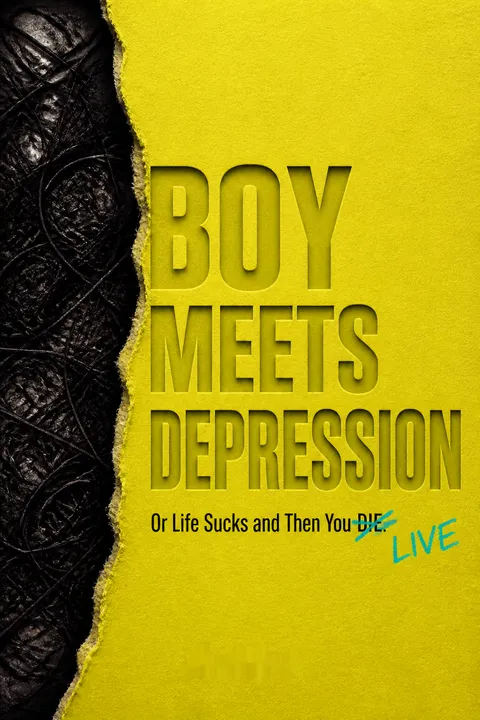
Boy Meets Depression receives mixed reviews, with an average rating of 3.81/5. Many readers appreciate Breel's raw honesty and relatable depiction of depression, finding it helpful for those struggling with mental health. The book is praised for its flowing narrative and powerful descriptions of depression. However, some critics find it repetitive, dull, or lacking in humor. Several reviewers note that the book may be particularly valuable for teenagers and young adults. The unique design of the book, with pages transitioning from light to dark, is also commended.
People Also Read



Glossary
the fog
Depression's distorted outlookBreel's recurring metaphor for living with depression. The fog makes ordinary life difficult to see clearly, narrows attention to immediate pain, and can make despair feel like the permanent truth. It also conveys how depression may gradually become familiar, causing a person to forget that life once looked different. The metaphor describes his experience, not every person's depression.
bottom
A crisis that forces recognitionA term Breel describes as common in writing about addiction and recovery. It refers to a personal crisis in which accumulated consequences become impossible to ignore. In his story, the term applies to the night he wrote a suicide note and recognized that he needed a different way forward. It is an individual turning point, not a universal stage or requirement for recovery.
subplot
A life within a larger storyBreel's metaphor for understanding an individual life as meaningful but not the whole of human existence. Seeing oneself as a subplot challenges the belief that everything revolves around one's own pain, while preserving the importance of personal choices. A person's actions affect other lives, but the metaphor does not imply that their suffering is insignificant.
Download PDF
Download EPUB
.epub digital book format is ideal for reading ebooks on phones, tablets, and e-readers.








