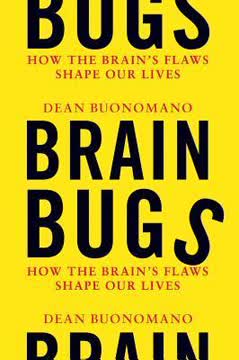
Key Takeaways
1. The Brain: A Masterpiece of Flaws
The brain was not designed to understand itself anymore than a calculator was designed to surf the Web.
Imperfect design. The human brain, despite its astonishing complexity, is an imperfect device, and its flaws profoundly shape who we are as individuals and as a society. Evolution, acting as a "hacker" rather than an optimal designer, has created a neural operating system that is inherently well-suited for some tasks but ill-suited for others. This leads to unreliable memory, susceptibility to advertising, irrational decisions, and misplaced fears.
Archaic operating system. Our brains operate on an archaic neural operating system, largely unchanged for 100,000 years, in a world it was never programmed to inhabit. This mismatch means our innate tendencies often lead us astray in modern contexts. For example:
- We struggle with numerical calculations, a modern necessity.
- Our fears are often disproportionate to actual dangers.
- We succumb to instant gratification over long-term well-being.
Unaware of flaws. Crucially, the brain's weaknesses include recognizing its own limitations, leaving us blissfully unaware of the extent to which our lives are governed by these "bugs." Understanding these flaws is the first step toward recognizing and remedying them, fostering self-knowledge and better decision-making.
2. Memory's Associative Web: A Double-Edged Sword
Our propensity to confuse concepts that are closely associated with each other is not limited to sweets, but holds for names as well.
Associative architecture. Human memory stores factual knowledge in a relational manner, forming a vast "semantic network" where related concepts are linked. This architecture, built from neurons and synapses, allows for efficient pattern recognition and understanding of context. When one concept is activated, activity "spreads" to related concepts, making them more likely to be recalled—a phenomenon known as priming.
Efficient but flawed. This associative nature, while a computational strength, also creates "memory bugs." We often confuse closely related concepts, like remembering someone is a "baker" more easily than their name "Baker," because the profession has more associations. This is due to Hebb's rule: "neurons that fire together, wire together," strengthening connections between co-activated concepts.
Implicit influence. Priming extends beyond simple recall, unconsciously influencing our thoughts, cognition, and behavior. Implicit association tests reveal how ingrained biases, shaped by culture and experience, can affect reaction times and even reveal opinions before conscious awareness. This demonstrates how the brain's wiring subtly guides our mental processes.
3. Memory is Constantly Rewritten, Not Just Recalled
In the brain, on the other hand, the read and write operations are not independent; the act of retrieving a memory can alter its content.
Dynamic and reconstructive. Unlike digital storage, human memory is not a static record but a dynamic, reconstructive process. Each act of recalling a memory can subtly alter its content, merging new information with old. This "updating" mechanism, while adaptive in a changing world, makes memories vulnerable to corruption and even outright fabrication.
Vulnerability to misinformation. This fluidity explains why eyewitness testimonies can be unreliable. Misleading questions or external suggestions can overwrite original memories, as seen in cases where innocent people are wrongly identified. The brain's "reconsolidation" process, where reactivated memories become temporarily labile, further highlights this susceptibility to change.
Fabricated memories. Beyond corruption, the brain can construct entirely new, false memories, sometimes with tragic consequences. Studies show children are particularly susceptible to believing fictitious events. The absence of a "delete" command means that once associations are formed, even if incorrect, they are difficult to erase, leading to persistent misconceptions.
4. Our Body and Time: Illusions of Perception
While our body is of course real, the fact that we feel it as residing outside the confines of our cranium is an illusion.
Body as illusion. Phantom limb syndrome reveals that our perception of our own body is a powerful illusion, a projection by the brain. Sensations are localized to body parts, but the feeling itself originates in the brain. This illusion can go awry, leading to the perception of a limb that no longer exists or, conversely, the denial of a functional limb (somatoparaphrenia).
Cortical plasticity. These phenomena are rooted in the brain's remarkable "cortical plasticity," its ability to reorganize its sensory maps based on experience. When a limb is lost, the cortical area representing it, deprived of input, can be "captured" by neighboring areas, leading to phantom sensations. This adaptive feature, while crucial for learning (e.g., musicians' enhanced finger representation), can become maladaptive after trauma, as seen in tinnitus.
Temporal distortions. Our perception of time is equally subjective and prone to "bugs." The brain uses different "clocks" for different timescales, leading to distortions like the "stopped clock illusion" or the feeling that "time flies when you're having fun." The brain also edits our perceptual timeline, adjusting the perceived order of events to create a coherent reality, even if it means delaying visual input to match sound.
5. Fear's Ancient Wiring: Misplaced in the Modern World
Since our environment is very different from the one in which early humans lived, our genetic preparation to learn about ancestral dangers can get us into trouble, as when it causes us to develop fears of things that are not particularly dangerous in our world.
Archaic fear module. Our fear circuits are largely inherited from mammalian ancestors, designed for a world of predators and immediate physical threats. This "archaic neural operating system" predisposes us to fear certain things (snakes, angry faces, strangers) more than modern dangers like heart disease or car accidents, even when the latter pose a far greater statistical risk.
Hardwired and learned. Fear is both innate and learned. Animals exhibit innate fears (geese fearing hawks), but also learn through "fear conditioning" (rats fearing a tone paired with a shock). Humans are "prepared" to learn certain fears more easily, like snakes or angry faces, even through observation. The amygdala plays a central role in acquiring and expressing these fears, strengthening synapses when threats are perceived.
Susceptibility to fearmongering. This outdated and easily manipulated fear system makes us vulnerable to "amygdala politics" and fearmongering. Fear can override reason, leading to irrational decisions and policies, such as disproportionate spending on terrorism compared to public health. Modern media amplifies this bug by allowing vicarious, often fictitious, experiences to trigger deeply ingrained fear responses.
6. Reason's Achilles' Heel: Cognitive Biases
Intuition can sometimes get things wrong. And intuition is what people use in life to make decisions.
Unconscious influences. Our decisions, often perceived as rational, are heavily influenced by unconscious cognitive biases, blind spots, and emotional factors. These "illusions" arise from the brain's inherent computational properties and its reliance on context, much like visual illusions trick our perception.
Key biases:
- Framing: How a question is worded significantly alters our choices (e.g., "200 saved" vs. "400 will die").
- Anchoring: Irrelevant numbers can unduly influence our numerical estimates (e.g., Brad Pitt's age affecting Joe Biden's age estimate).
- Loss Aversion: The pain of a loss is felt more intensely than the pleasure of an equivalent gain, leading to irrational financial decisions.
- Probability Blindness: Our intuition struggles with probability, leading to fallacies like the gambler's fallacy or conjunction errors.
Automatic vs. reflective systems. The brain employs two interacting systems for decision-making: a rapid, unconscious "automatic system" (intuition, emotion-driven) and a slow, effortful "reflective system" (conscious thought, logic). Many cognitive biases stem from the automatic system's quick, context-dependent judgments, which, while efficient in natural settings, can lead to errors in complex modern scenarios.
7. The Advertising Bug: Exploiting Our Neural Wiring
The modern propagandist therefore sets to work to create circumstances which will modify that custom.
Shaping desires. Advertising and propaganda are powerful tools that exploit our brain's inherent "bugs" to mold our habits, desires, and opinions. Campaigns like "A diamond is forever" demonstrate how marketers can create deep-seated associations between products and desirable concepts, influencing culture over decades.
Imitation and social learning. A core vulnerability is our innate propensity for imitation and social learning. We are hardwired to observe and copy others, especially those perceived as successful or dominant. Marketers leverage this by populating ads with attractive, happy individuals, encouraging us to associate their products with desirable lifestyles, even if the connection is irrational.
Fabricating associations. Marketing relies heavily on the brain's ability to form associations, often through repetitive exposure. Neutral stimuli (logos, jingles) are paired with positive emotions or concepts, creating "second-order associations" that unconsciously influence our preferences. This means packaging, price, and even brand names can alter our sensory perception and perceived quality of a product, even if the product itself is identical.
8. The Supernatural Bug: Faith Overrides Reason
The same high mental faculties which first led man to believe in unseen spiritual agencies, then in fetishism, polytheism, and ultimately in monotheism, would infallibly lead him, as long as his reasoning powers remained poorly developed, to various strange superstitions and customs.
Innate dualism. Supernatural beliefs, from spirits to gods, come naturally to humans, often overriding reason. This "supernatural bug" may stem from an innate human tendency towards "dualism"—the belief in a soul that outlives the body—and a hyperactive "agency detection system" that attributes minds and intentions to inanimate objects or unseen forces.
Evolutionary advantage. While seemingly irrational, supernatural beliefs may have provided evolutionary advantages. The "by-product hypothesis" suggests they emerged from other cognitive abilities, like storytelling or blind faith in elders. Alternatively, the "group selection hypothesis" posits that religiosity was directly selected for because it fostered within-group cooperation, trust, and unity, enhancing group survival and competition.
Overriding reason. Regardless of origin, religious beliefs often gain a privileged, hardwired status in the brain, allowing them to powerfully influence behavior and worldview, sometimes to the detriment of rational decision-making and scientific progress. This can lead to tragic consequences, such as religiously motivated medical neglect, by prioritizing divine will over empirical evidence.
9. Debugging Our Brains: Awareness and Adaptation
As this inner journey progresses we will continue to unveil the causes of our many failings.
Acknowledging flaws. The human brain, a source of both genius and irrationality, exhibits flaws that converge in critical areas like politics, justice, and personal well-being. Our outdated neural operating system and associative architecture contribute to persistent biases, making us susceptible to misinformation, short-sighted decisions, and manipulation.
Two main causes:
- Archaic Neural Operating System: Genetically encoded biases (e.g., fear circuits, temporal discounting) designed for a prehistoric world.
- Associative Architecture: The brain's interconnected nature, where every thought, emotion, and action can influence others, leading to context-dependency and "crosstalk" that can bias decisions.
Strategies for debugging. While we cannot fundamentally reprogram our brains, we can develop strategies to recognize and compensate for these bugs. This involves:
- Workarounds: Using external tools (calendars, reminders) to augment memory.
- Therapy: Addressing maladaptive fear circuits.
- Choice Architecture: Designing environments and policies that "nudge" us toward better decisions (e.g., automatic retirement enrollment, framing information to encourage prosocial behavior).
- Education and Deliberation: Consciously engaging our reflective system to override automatic biases, understanding the science behind our flaws, and teaching these insights to future generations.
Open-ended adaptation. The brain's ultimate strength lies in its ability to change itself through experience, culture, and education. By understanding our "brain bugs," we can consciously adapt, improve our decision-making, and navigate an increasingly complex world more effectively.
Last updated:
Review Summary
Brain Bugs explores how evolutionary design and the brain's associative architecture lead to cognitive flaws in memory, temporal perception, fear responses, reasoning, and susceptibility to advertising. Readers appreciate Buonomano's accessible explanations of neuroscience and memorable examples, though some found material repetitive or already familiar from other popular science books. The book's treatment of religion as a "brain bug" polarized readers—some found it fascinating while others felt condescended to. Several reviewers noted the writing could be dry and that the author's philosophical assertions about materialism overstepped scientific boundaries, particularly in later chapters.
Similar Books