

Key Takeaways
Treat cosmology as a chain of testable revisions, not a finished map
Models change with evidence. Aristotle argued that Earth was spherical from the curved shadow it cast on the Moon and the changing height of the Pole Star. Centuries later, Copernicus moved the planets around the Sun, Galileo’s observations of Jupiter’s moons weakened the idea that everything circled Earth, and Kepler’s elliptical orbits fit observations better than perfect circles. Newton then explained those orbits with universal gravity, but his theory made a static universe difficult to defend: gravity should pull matter together.
Even familiar skies posed puzzles. In an infinite, unchanging universe, every line of sight should eventually meet a star, making the night sky bright. Its darkness suggested that the universe might have a history rather than being eternally unchanged. Each new model earned credibility by explaining observations and surviving tests, not by seeming intuitively comfortable.
What's striking is that progress comes not from replacing one grand story with another on taste alone, but from finding where a model's implications collide with observation. Galileo's moons mattered because they made Earth-centered explanations more cumbersome, while Kepler's ellipses mattered because they improved prediction. This is a durable lesson in scientific reasoning: simplicity can guide inquiry, but evidence decides. The book also shows that a successful model can remain incomplete, as Newtonian gravity explains planetary motion without settling the universe's overall fate.
Read galactic redshift as a record of cosmic expansion
Distance gives the clue. Edwin Hubble estimated the distances to other galaxies using stars whose intrinsic brightness could be compared with their apparent brightness. Their spectra showed familiar colors shifted toward red, like the lowered pitch of a receding car. In 1929, Hubble found that more distant galaxies had larger redshifts, indicating that they were receding faster. The pattern points to expanding space, not an explosion from one special central location. Hawking compares it to spots on an inflating balloon: every spot sees the others move away.
The past was denser. Reversing the expansion suggests that galaxies were once much closer together, leading to the Big Bang picture. The microwave background, discovered by Penzias and Wilson as an almost directionless detector hiss, supplied evidence for a hotter, denser early universe and undermined the steady-state model.
The strength of this case is its convergence: galaxy spectra reveal motion, distance measurements reveal a pattern, and the microwave background carries a remnant of an earlier hot phase. No single observation tells the entire story, but together they constrain what a plausible history must explain. The balloon image is useful because it removes the tempting idea of a privileged center. It is still an analogy, not a literal description of the universe, and the book notes that measuring distant galaxies' distances is less certain than measuring their redshifts.
A black hole is an escape boundary, not simply a dark star
Collapse can outrun pressure. A star shines while heat from nuclear reactions resists gravity. When its fuel runs out, the balance can fail. The Chandrasekhar limit, about one and a half times the Sun’s mass, marks the point beyond which electron pressure cannot support a cold remnant as a white dwarf. Some stars may shed mass or explode, but sufficiently massive remnants can keep collapsing.
Light marks the limit. In general relativity, a black hole forms when gravity becomes so strong that even light cannot escape. The boundary beyond which escape is impossible is the event horizon. Astronomers can infer an unseen black hole from its gravitational pull and from X-rays emitted by gas heating as it falls toward it. Hawking also describes how a settled black hole loses most identifying detail: its measurable properties are drastically restricted, chiefly by its mass and rotation.
The shift from a black hole as an object to an event horizon as a boundary is conceptually powerful. It makes the definition depend on what signals can reach distant observers, rather than on a visible surface. The observational logic is similarly indirect: unseen mass becomes credible through its effects on companions and infalling matter. Such inference is common across science, but it demands care. A massive invisible companion is not automatically a black hole; the case rests on whether competing explanations fit the evidence less naturally.
Quantum physics makes black holes radiate, shrink, and eventually vanish
A dark object can glow. The area of a black hole’s event horizon cannot decrease in classical general relativity, which resembles the behavior of entropy, a measure of how many microscopic arrangements correspond to a system’s state. Jacob Bekenstein proposed that horizon area represents black-hole entropy. That idea implied a temperature, and therefore radiation, though black holes were supposed to emit nothing.
Quantum theory resolves the tension. Hawking’s calculations showed that black holes emit radiation like hot bodies. In his explanation, quantum fluctuations near the horizon allow one member of a particle pair to fall in while the other escapes. The outgoing energy comes at the black hole’s expense, so it loses mass. Smaller holes are hotter and radiate faster. A black hole with a few solar masses would be extraordinarily cold and take far longer than the universe’s present age to evaporate; the final stage remains uncertain.
This result is memorable because it links two theories that appear to pull in opposite directions. The black hole’s horizon offers a way to keep thermodynamic accounting intact, while quantum effects make the supposedly final boundary leaky. The broader lesson is that a contradiction between strong theories can expose a missing connection rather than require abandoning one immediately. The particle-pair picture is an explanatory aid, not a complete account of the mathematics. Hawking’s argument also leaves a clear boundary between a robust theoretical prediction and uncertainty about the black hole’s final moments.
The universe's early order gives time its familiar direction
Three arrows point forward. Hawking distinguishes the thermodynamic arrow, the direction in which entropy tends to increase; the psychological arrow, the direction in which people remember events; and the cosmological arrow, the direction in which the universe expands. The basic equations may work in either time direction, yet everyday events do not: a shattered cup does not spontaneously reassemble. There are vastly more disordered arrangements than ordered ones, so disorder is statistically more likely to grow.
Memory has a physical cost. A computer must use energy to store information, releasing heat and increasing disorder elsewhere. Hawking uses this to connect the direction of memory with the thermodynamic arrow. He argues that the universe began in an unusually smooth, ordered state, giving entropy room to rise. Without that special beginning, the familiar alignment between expansion, increasing disorder, and memory would be difficult to explain.
The account turns time’s direction from a property of the equations into a question about the universe’s starting condition. That distinction helps explain why reversible microscopic laws can coexist with irreversible experience. The statistical argument is persuasive at large scales, where the number of possible disordered arrangements overwhelms the ordered ones. It also sets a limit on what the second law means: it describes overwhelmingly likely behavior, not an absolute prohibition against every local reversal. The crucial explanatory burden therefore falls on why the early universe was so ordered.
Inflation explains cosmic smoothness, but not why the laws permit it
A brief expansion smooths the picture. The hot Big Bang model describes a universe that expanded and cooled, but by itself leaves puzzles: why distant regions have similar temperatures, why expansion began so close to the critical rate, and how small irregularities grew into galaxies. Alan Guth proposed inflation, a very brief period of extraordinarily rapid expansion. It could smooth out initial unevenness and drive the expansion rate toward the critical value.
The seeds remain essential. Tiny density differences must survive for gravity to build stars and galaxies. Early versions of inflation had problems, including bubbles that would not merge into a uniform universe. Andrei Linde’s later chaotic inflation model avoided reliance on that particular phase transition. Inflation broadens the range of starting conditions that could lead to a universe like ours, but it does not explain why the initial conditions or laws were suitable. The anthropic principle adds that observers can only find themselves where life is possible.
Inflation is valuable here as an explanatory mechanism: it connects large-scale uniformity with the small fluctuations needed for structure. It does not simply declare the universe fine-tuned away; it offers a physical route from less uniform beginnings to a smoother cosmos. But expanding the set of viable beginnings is not the same as explaining why those beginnings exist. The anthropic principle clarifies an observational selection effect, since observers cannot arise in every conceivable environment. Used alone, however, selection explains where observers find themselves, not the deeper origin of the conditions they observe.
Use quantum gravity to question whether the Big Bang was a true edge
Classical equations reach a limit. General relativity predicts a Big Bang singularity, a state of infinite density and curvature where its ordinary rules stop working. Hawking argues that this failure signals the need for a quantum theory of gravity, combining gravity with quantum mechanics. His proposed no-boundary condition treats the universe’s possible histories using imaginary time, where time and space are mathematically more alike.
Finite need not mean edged. On this proposal, space-time could be finite but have no boundary, like Earth’s surface: finite in area, yet without an edge to fall over. The proposal aims to avoid a singular starting boundary at which new laws or an external cause must be specified. It is a mathematical proposal, not an established result. Hawking notes that the theory needed for reliable calculations is incomplete and that extracting testable predictions is difficult.
This proposal changes the question from what happened before the beginning to whether the mathematical description requires a boundary at all. That is a genuine conceptual advance, because an edge can demand an additional explanation that the model itself cannot supply. The Earth analogy makes the geometry imaginable, but it cannot establish that the universe behaves this way. The book is appropriately cautious: the proposal’s appeal depends on whether it leads to predictions that match observation, and its technical foundations make that test unusually difficult.
Treat a theory of everything as a goal, not a finished answer
Physics has partial maps. General relativity describes gravity, while quantum theories describe the other fundamental interactions. Combining them is difficult because gravity’s classical framework does not incorporate quantum uncertainty in the same way. Hawking presents string theory as one attempted bridge: its basic objects are extended strings rather than pointlike particles, and its mathematical consistency appears to require additional dimensions, curled up too small to notice.
Unification is not yet understanding everything. In the book’s account, string theory still faces unresolved questions about its infinities and how its proposed objects correspond to observed particles. Even a complete set of physical laws might describe how the universe behaves without answering why anything exists at all. Hawking treats the search as scientifically meaningful while distinguishing a mathematical theory, the observations that test it, and the philosophical question of existence.
The title’s ambition is best understood as a research program, not a claim that physics has already reached closure. The book’s own history supplies a caution: earlier generations repeatedly mistook a powerful partial theory for the final one. Its account of string theory is explicitly provisional, and its proposed extra dimensions illustrate how mathematical consistency can outrun direct observation. A unified theory could still be a major achievement without settling every question. Explaining regularities in nature and explaining why there is a universe are related, but they are not identical tasks.
Analysis
The book’s central achievement is to make cosmology a history of changing explanations. It begins with the apparently obvious idea that Earth occupies the center, then shows how observation and mathematics displaced that picture. Its narrative does not treat scientific progress as a straight march toward certainty. Ptolemy’s model predicted planetary positions, Newton’s framework explained them more deeply, and Hubble’s observations made a static universe untenable. Each theory gains reach, but each also exposes questions it cannot answer.
The argument moves through three levels of confidence. First are observations, such as galactic redshifts and the microwave background. Next are well-supported theoretical inferences, including an expanding universe and the formation of black holes. Finally come proposals about quantum gravity, the no-boundary condition, and a unified theory. The most valuable reading habit the book teaches is to keep those levels distinct. An elegant mathematical possibility is not equivalent to an observation, and an unresolved question does not erase the evidence already gathered.
The recurring intellectual hinge is the failure of classical descriptions under extreme conditions. A black hole makes gravity and quantum mechanics confront each other; the Big Bang makes the limits of general relativity unavoidable. Hawking’s answer is not that physics has already solved these problems, but that a more complete framework may transform the questions. This makes the book’s speculative sections most persuasive when read as research proposals rather than settled cosmology.
Its philosophical reach is similarly measured. A universe without an external boundary would change how one frames creation, but a physical account of cosmic evolution cannot by itself settle why existence is present at all. The book’s lasting value lies in holding these ideas together without confusing them: mathematics can discipline speculation, observation can reject models, and some questions remain open until a theory yields testable consequences. The result is less a final map of everything than a guide to how a map earns trust.
Review Summary
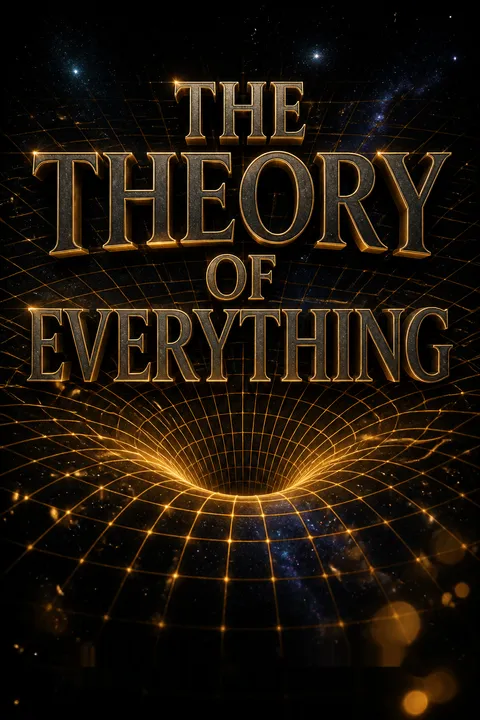
The Theory of Everything is praised for its accessible explanation of complex cosmological concepts, though some readers found it challenging without prior physics knowledge. Hawking's wit and humility are appreciated. The book covers the universe's origins, black holes, and the search for a unified theory. Many reviewers recommend it for those interested in astronomy and physics, noting its concise yet comprehensive nature. Some suggest multiple readings may be needed to fully grasp the content.
People Also Read



Glossary
Friedmann models
Expanding-universe solutionsCosmological solutions to Einstein’s equations based on a universe that looks approximately the same in every direction and from every location on large scales. The models describe different possible fates: expansion followed by recollapse, expansion that continues indefinitely, or expansion that slows toward a limiting rate.
The big bang
Hot, dense cosmic beginningThe early state inferred by tracing the universe’s expansion backward. In classical general relativity, the extrapolation reaches a singularity of infinite density and curvature, where the theory ceases to predict events. Hawking emphasizes that quantum gravity may change how this apparent beginning should be described.
Event horizon
Boundary of no escapeThe boundary around a black hole separating events that can send signals to distant observers from those that cannot. Light rays at the boundary just fail to escape. The horizon is not a solid surface, but it defines the region from which no outward signal can reach the wider universe.
Chandrasekhar limit
Maximum white dwarf massThe approximate upper mass, about one and a half times the Sun’s mass, below which a cold stellar remnant can be supported as a white dwarf by electron degeneracy pressure. Above this limit, that pressure cannot balance gravity, although a star may lose mass or undergo other changes before further collapse.
No-hair theorem
Black-hole properties simplifyThe result that a settled, stationary black hole is described by a small set of measurable properties rather than by the detailed structure of the body that formed it. In Hawking’s presentation, the relevant properties are chiefly mass and rotation. The result implies that much information about the original matter is no longer externally accessible.
Black hole radiation
Quantum emission from holesRadiation predicted to emerge from a black hole when quantum effects are considered near its event horizon. The black hole behaves like a hot body, with temperature inversely related to its mass. Emitting radiation reduces its mass; smaller black holes are hotter and lose mass more rapidly.
Arrows of time
Ways time has directionHawking distinguishes three directions that mark past from future: the thermodynamic arrow, in which entropy increases; the psychological arrow, in which memories point toward the past; and the cosmological arrow, in which the universe expands. He argues that the first two align because recording memories increases disorder in the wider physical system.
Anthropic principle
Observer-based selection effectThe consideration that observers can only find themselves in regions of the universe whose conditions permit intelligent life. It can explain why observations come from a life-supporting region even if other regions differ. In Hawking’s discussion, this selection effect does not by itself explain why the universe has its underlying properties.
Inflationary model
Early rapid expansionA cosmological model in which the very early universe undergoes a brief period of extremely rapid expansion. Inflation can help explain why the observable universe is broadly uniform and why its expansion is near the critical rate. Small density variations can remain and later grow into galaxies and other structures.
The no boundary condition
Finite space-time without edgesA proposal in quantum cosmology that the universe’s history is finite but has no boundary or singular edge requiring an externally specified beginning. Hawking describes it using Euclidean space-time and imaginary time. It is a theoretical proposal whose observational predictions are difficult to calculate and assess.
Imaginary time
Mathematical time coordinateA mathematical version of the time coordinate used in certain quantum calculations. In Euclidean space-time, imaginary time places time on a more equal footing with spatial directions and can help avoid technical problems in summing over possible histories. Hawking considers whether this framework is more than a computational device, while stressing that its interpretation is uncertain.
FAQ
What's "The Theory of Everything: The Origin and Fate of the Universe" about?
- Overview: The book, authored by Stephen Hawking, explores the history and future of the universe, from the big bang to black holes.
- Content Structure: It is structured as a series of lectures that cover various cosmological concepts and theories.
- Main Themes: The book delves into the nature of the universe, the laws of physics, and the quest for a unified theory that explains everything.
- Purpose: It aims to make complex scientific ideas accessible to a general audience, providing insights into the workings of the universe.
Why should I read "The Theory of Everything: The Origin and Fate of the Universe"?
- Understanding the Universe: It offers a comprehensive overview of the universe's history and future, making it essential for anyone interested in cosmology.
- Accessible Science: Hawking presents complex scientific concepts in an understandable manner, making it suitable for readers without a scientific background.
- Intellectual Curiosity: The book stimulates curiosity about the fundamental questions of existence and the universe.
- Influential Work: As a work by Stephen Hawking, it provides insights from one of the most renowned physicists of our time.
What are the key takeaways of "The Theory of Everything: The Origin and Fate of the Universe"?
- Big Bang and Black Holes: The book explains the origins of the universe with the big bang and the nature of black holes.
- Unified Theory: It discusses the quest for a unified theory that combines quantum mechanics and general relativity.
- Time and Space: Hawking explores the concepts of time, space, and the possibility of a universe without boundaries.
- Scientific Inquiry: The book emphasizes the importance of scientific inquiry and the ongoing search for understanding the universe.
What are the best quotes from "The Theory of Everything: The Origin and Fate of the Universe" and what do they mean?
- "The universe would be neither created nor destroyed. It would simply be." This quote reflects the idea of a self-contained universe without a beginning or end.
- "The boundary condition of the universe is that it has no boundary." It suggests a universe that is finite yet unbounded, challenging traditional notions of time and space.
- "If we find the answer to that, it would be the ultimate triumph of human reason." This highlights the pursuit of a complete understanding of the universe as a pinnacle of human achievement.
- "The past is a foreign country. They do things differently there." This quote, borrowed from L.P. Hartley, underscores the book's exploration of time's direction and nature.
How does Stephen Hawking explain the Big Bang in "The Theory of Everything"?
- Initial Singularity: Hawking describes the big bang as a singularity where the universe's density and temperature were infinite.
- Expansion: He explains that the universe has been expanding since the big bang, leading to the formation of galaxies and stars.
- Time's Beginning: The big bang marks the beginning of time, as events before it have no observational consequences.
- Scientific Evidence: Hawking supports the big bang theory with evidence such as cosmic microwave background radiation.
What is the significance of black holes in "The Theory of Everything"?
- Gravitational Collapse: Black holes are formed when massive stars collapse under their own gravity, creating regions from which nothing can escape.
- Event Horizon: The boundary of a black hole, known as the event horizon, marks the point beyond which escape is impossible.
- Hawking Radiation: Hawking introduces the concept of black holes emitting radiation, challenging the notion that they are completely black.
- Cosmic Mysteries: Black holes are central to understanding the universe's structure and the laws of physics.
What is the "no boundary" proposal in "The Theory of Everything"?
- Finite but Unbounded: The proposal suggests that the universe is finite in extent but has no boundaries, similar to the surface of the Earth.
- Imaginary Time: It involves the concept of imaginary time, where time and space are indistinguishable, eliminating singularities.
- Self-Contained Universe: The universe is self-contained, without the need for external creation or destruction.
- Implications for Creation: This challenges traditional views of creation, suggesting a universe that simply exists.
How does "The Theory of Everything" address the concept of time?
- Time's Direction: Hawking explores why time seems to have a direction, known as the arrow of time, linked to the universe's expansion.
- Thermodynamic Arrow: The increase of disorder or entropy over time gives time its direction.
- Psychological Arrow: Our perception of time aligns with the thermodynamic arrow, as we remember the past but not the future.
- Cosmological Arrow: The universe's expansion provides a cosmological arrow of time, influencing the other arrows.
What role does quantum mechanics play in "The Theory of Everything"?
- Uncertainty Principle: Quantum mechanics introduces the uncertainty principle, affecting the predictability of events.
- Quantum Gravity: Hawking discusses the need for a quantum theory of gravity to understand the universe's early stages.
- Virtual Particles: The concept of virtual particles and their role in black hole radiation is explored.
- Unified Theory: Quantum mechanics is essential in the quest for a unified theory that combines all fundamental forces.
How does Stephen Hawking approach the search for a unified theory in "The Theory of Everything"?
- Grand Unified Theories: The book discusses theories that combine the weak, strong, and electromagnetic forces but not gravity.
- Challenges: The main challenge is integrating gravity, described by general relativity, with quantum mechanics.
- String Theory: Hawking explores string theory as a potential framework for a unified theory.
- Ultimate Goal: The search for a unified theory aims to provide a complete understanding of the universe's laws.
What is the anthropic principle as discussed in "The Theory of Everything"?
- Human-Centric View: The anthropic principle suggests that the universe's properties are as they are because they allow for the existence of intelligent life.
- Selection Principle: It implies that we observe the universe in a way that supports life because we are here to observe it.
- Cosmological Implications: The principle is used to explain why the universe appears fine-tuned for life.
- Philosophical Considerations: It raises questions about the role of observers in defining the universe's characteristics.
How does "The Theory of Everything" explore the relationship between science and philosophy?
- Scientific Inquiry: Hawking emphasizes the importance of scientific inquiry in understanding the universe.
- Philosophical Questions: The book addresses philosophical questions about existence, creation, and the nature of reality.
- Limits of Science: It acknowledges the limits of scientific models in answering "why" questions about the universe.
- Interdisciplinary Dialogue: Hawking encourages dialogue between science and philosophy to explore fundamental questions.
About the Author




Download PDF
Download EPUB
.epub digital book format is ideal for reading ebooks on phones, tablets, and e-readers.








