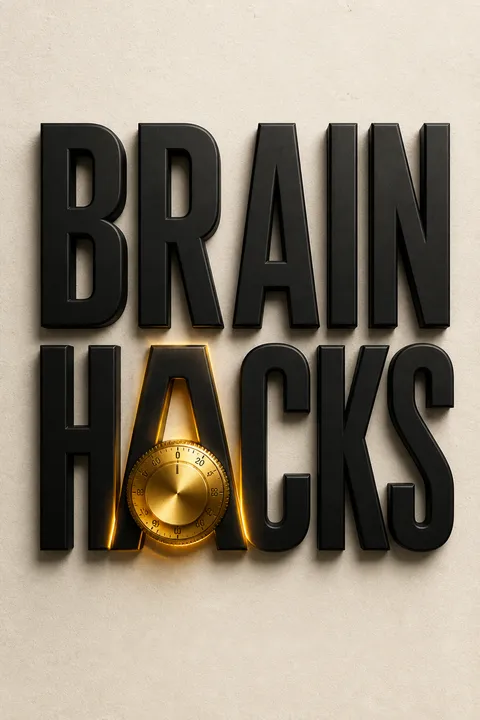


Key Takeaways
Build brain health from daily habits, not a hunt for one miracle hack
A whole-life approach. Brain Hacks offers 244 small suggestions for supporting attention, memory, mood, and long-term brain health. Its central idea is that the brain depends on the condition of the whole body: circulation, nutrition, sleep, emotional state, and physical safety all matter. No single food or activity does all the work, and a useful change is one that can be repeated rather than admired from a distance.
The menu ranges from walking and eating more vegetables to learning a language, socializing, and protecting the head from injury. The book encourages readers to choose improvements that fit their lives, rather than treating every recommendation as a strict prescription. That matters because its advice varies considerably in how strongly it is supported.
The book’s strongest organizing idea is not that the brain needs clever tricks, but that it is embedded in a body and a social world. That framing helps connect seemingly separate choices, such as movement, sleep, diet, and stress. It also encourages practical prioritization: a sustainable walk or regular bedtime is often more useful than an elaborate regimen that lasts a week. The main limitation is the collection format. A long list can make a basic foundation look equivalent to an exotic supplement. Readers benefit from treating the suggestions as a menu, not as 244 equally proven interventions.
Feed the brain a varied pattern, not a parade of supplements
Patterns beat superfoods. The book favors meals built around vegetables, fruit, beans, nuts, whole grains, and healthy oils, with fish and lean poultry as options. It advises limiting trans fats, excess saturated fat, heavily processed foods, and added sugar. Omega-3 fats, found in fatty fish, walnuts, flaxseed, and some oils, are presented as useful nutrients for brain function. A varied plate matters because different foods contribute different vitamins, minerals, fats, and fiber.
The advice is not that a particular berry, spice, or vitamin guarantees better memory. Rather, a dietary pattern that supports circulation and steady energy is the recurring theme. The book also notes that cooking can make some nutrients, including certain carotenoids in tomatoes, easier for the body to access.
The emphasis on dietary patterns is more persuasive than the book’s many individual food spotlights. It shifts attention from asking whether one ingredient is a brain tonic to asking what a person regularly eats instead of it. That is a useful decision rule for readers facing a crowded marketplace of superfood claims. The book sometimes presents nutrient mechanisms and early findings with more confidence than the evidence warrants, and food studies can be difficult to separate from broader lifestyle differences. A varied, balanced diet is a sensible foundation, but no single ingredient should be treated as a substitute for medical care or an overall pattern.
Move most days, then add strength and a thinking challenge
Movement serves the brain. Aerobic activity helps deliver oxygen and glucose through the bloodstream, while the book links regular exercise with better mood and cognitive health. It cites public-health guidance of 150 minutes of moderate aerobic activity per week and discusses walking, swimming, dancing, and resistance training. One study described in the book found cognitive improvement among older adults who did weight training, while stretching alone did not produce the same result.
Physical activity can also pair well with a mental task. The book describes research in which learning vocabulary while walking or cycling helped people retain it. This is different from trying to perform two demanding mental tasks at once. The aim is to combine bodily movement with a manageable cognitive challenge, not to turn every workout into an attention test.
Exercise is a particularly practical recommendation because it can be scaled to ability and woven into ordinary routines. The combination of movement and learning also illustrates a useful design principle: one activity can support several capacities without requiring a complicated program. Still, the book’s animal studies and small human studies should not be read as proof that a specific exercise directly grows new neurons in every person. Safety, access, disability, and existing health conditions shape what is appropriate. The durable message is regular, tolerable movement, with variety when possible, rather than punishing intensity.
Treat sleep and stress as brain maintenance, not optional luxuries
Recovery is active work. The book describes sleep as a period when the brain organizes new information, supports memory, and helps regulate mood. It recommends roughly seven to nine hours for most adults and stresses keeping sleep and wake times regular. Persistent snoring can indicate obstructive sleep apnea, a breathing problem during sleep that can impair memory and clear thinking. The book advises discussing suspected apnea with a healthcare professional.
Stress is another recurring concern. Chronic stress is associated in the book with elevated cortisol, a hormone linked to changes in the hippocampus, a brain region important for memory. Breathing exercises, mindfulness, relaxation, exercise, and enjoyable activities are offered as ways to lower strain. Herbert Benson’s term relaxation response describes the calmer physiological state that can follow quiet focus and deliberate relaxation.
Sleep and stress belong together because both affect the conditions in which attention, learning, and emotional regulation operate. The book usefully treats rest as a biological need rather than a reward for finishing everything. Its strongest practical advice is also its least glamorous: regular sleep, opportunities to unwind, and medical evaluation when a problem such as apnea is suspected. Stress reduction should not be framed as a personal failure to stay calm. Workload, caregiving, illness, and financial strain can be structural pressures, so individual techniques help most when paired with changes to the pressures themselves.
Make learning effortful and unfamiliar to keep cognition engaged
Novelty demands attention. Repeating familiar tasks may feel efficient, but the book argues that the brain benefits when it has to learn something challenging. It recommends studying a language, taking a class, playing an instrument, navigating an unfamiliar route, or making art. The key is active engagement: a new skill asks the learner to notice, remember, correct mistakes, and connect ideas.
The book contrasts this with relying only on routine puzzles. It describes a University of Texas at Dallas study in which older adults spent about fifteen hours a week learning demanding activities such as digital photography and image editing. Their memory test results improved, and the gains remained a year after the study ended. London taxi drivers, who learned complex street routes, are also discussed as an example of intensive spatial learning associated with brain differences.
The useful distinction here is between activity and challenge. A pastime may be enjoyable without asking much of a person, while a new skill repeatedly forces attention and adaptation. That makes the advice more actionable than simply urging people to keep their minds busy. The examples also suggest that learning can be social, creative, and practical, not restricted to formal education. However, the taxi-driver comparison is observational, and brain differences do not establish that one activity alone caused them. A reader should choose something absorbing and progressively demanding, not assume that any particular hobby prevents dementia.
Protect attention by doing one demanding thing at a time
Switching has a cost. The book explains that what people call multitasking is usually rapid switching between tasks. Each switch interrupts the current line of thought, making mistakes and forgotten details more likely. It recommends completing tasks sequentially when possible and taking short, deliberate breaks during long stretches of work. In a study described in the book, brief breaks helped people sustain performance on a prolonged task better than uninterrupted effort.
External memory aids can also free attention for the work itself. A to-do list helps break a large goal into manageable steps, while writing by hand, reading information aloud, or repeating a name can give new material additional routes into memory. The book’s “eight second rule” is a simple instruction to pause and focus on new information rather than assuming a passing glance will make it memorable.
This section makes a valuable distinction between planned breaks and constant interruption. A brief walk away from a task can restore attention; checking messages every few minutes fragments it. Lists and verbal rehearsal similarly reduce the burden of holding every intention in working memory. These techniques are not signs of weak concentration. They are ways to design around its limits. The specific eight-second threshold should be understood as a mnemonic suggestion, not a universal law of memory formation. Repetition, meaningful organization, and retrieval practice are more useful principles than treating a precise number as magic.
Use social connection as both cognitive exercise and stress buffer
Relationships engage the mind. Conversation asks people to listen, interpret, recall, and respond. The book connects social contact with mood and resilience, and warns that isolation is associated with poorer outcomes for mental health and cognition. Shared meals can combine several benefits: people who plan and cook together may eat more fruits and vegetables, while the meal itself creates time for connection.
Volunteering, teaching, joining a book club, or discussing a challenging idea all bring social interaction together with purpose or problem-solving. The book highlights research in which volunteering was associated with maintaining or increasing the size of memory-related brain areas, as well as lower blood pressure. It also argues that varied relationships can challenge habitual assumptions and expose people to unfamiliar viewpoints.
Connection is more than pleasant company in this account. It gives people reasons to remember, explain, coordinate, and respond to others, while also providing emotional support. That makes social activity a plausible bridge between cognitive stimulation and stress regulation. The strongest suggestions are not necessarily large commitments: a recurring meal, a group activity, or helping with a shared task can provide structure and belonging. Still, associations between volunteering or social contact and health do not prove that socializing alone causes the benefit. Healthier people may also find it easier to participate, and meaningful connection matters more than simply being around a crowd.
Guard brain function by protecting blood flow and preventing injury
The brain needs a safe supply line. The book repeatedly links brain health to the heart and blood vessels. High blood pressure, diabetes, high cholesterol, smoking, and stroke risk can affect the brain by damaging circulation or increasing the chance of interrupted blood flow. It therefore recommends checking health numbers, exercising, eating well, and working with a clinician when treatment is needed.
Prevention also means avoiding direct injury and environmental hazards. The book identifies falls and vehicle crashes as common causes of traumatic brain injury, and recommends seat belts, handrails, and helmets for activities with a risk of impact. It also advises protecting hearing and reducing exposure to lead, mercury, and pesticides. These measures may seem less like brain training than crossword puzzles, but they protect the physical systems that cognition depends on.
This is one of the book’s most consequential reframings: cognitive health is not only about sharpening the mind, but also about preserving the structures that keep it supplied and intact. Blood pressure checks, smoking cessation, and helmets can be less glamorous than memory games, yet they address preventable sources of serious harm. The advice is strongest when it points toward established risk management and professional care. Environmental claims require more specificity than a general warning to avoid toxins, because exposure depends on dose and context. Readers should seek targeted assessment rather than attempting broad, unverified detox routines.
Treat supplement claims as hypotheses, not instructions
Natural does not mean risk-free. The book surveys vitamins, minerals, herbs, amino acids, and other products, including ginkgo, ginseng, turmeric, and melatonin. Some entries describe promising findings; others explicitly call the evidence preliminary or mixed. The book also notes that deficiencies can affect cognition, but that extra intake does not automatically provide extra benefit. High doses may cause harm, and supplements can interact with medicines or medical conditions.
A varied diet is presented as the preferred way to obtain nutrients, with supplements reserved for people who need additional support. The book repeatedly advises discussing products with a healthcare professional, especially when treating mood or memory problems, taking medication, pregnant, or managing a chronic condition. That caution should outweigh any confident-sounding claim based on a single study.
The supplement chapters are best read as a map of questions, not a shopping list. Nutrient deficiencies can matter, but correcting a deficiency is different from enhancing an already adequate system. Herbal products also vary in formulation and can interact with prescription drugs, so “plant-based” is not a safety guarantee. Readers can ask a clinician what problem a product is meant to address, what evidence supports it, and how benefit will be assessed. This approach preserves curiosity without allowing a long catalogue of possibilities to become self-prescribing medical advice.
Analysis
Brain Hacks is a reference-style compilation rather than a single sustained argument. Its 244 short entries make the subject approachable and preserve a useful range of behaviors, from walking and sleep regularity to social activity, learning, and injury prevention. That breadth is also the central difficulty in summarizing it: repetition reinforces the whole-person thesis, but the format can make a well-supported public-health recommendation look interchangeable with a tentative supplement finding.
The most coherent synthesis is a hierarchy. First protect the conditions required for cognition: sleep, circulation, physical safety, and treatment of significant health problems. Then support those conditions with varied food, regular movement, stress management, and social connection. Finally, add engaging challenges that require attention and learning. The book’s examples are most compelling when they illustrate these broad categories, rather than promise a measurable cognitive boost from a single ingredient or pastime.
Its evidence should be read with calibration. The text invokes human studies, animal findings, observational associations, proposed biological mechanisms, and traditional uses, sometimes in close succession. Those forms of evidence do not carry the same weight. A correlation between an activity and better health does not establish that the activity caused the difference, and preliminary findings about herbs do not establish a reliable treatment. The book itself occasionally acknowledges uncertainty, but its brisk, upbeat format can obscure how much confidence varies from entry to entry.
The lasting value is therefore not a checklist to complete or a prescription to buy. It is a practical orientation: make ordinary routines more supportive of the brain, and choose activities that remain sustainable. The strongest reader response is selective action paired with evidence awareness. A regular walk, a protected sleep schedule, a more varied diet, a conversation, or a helmet is more defensible as a general habit than chasing an isolated claim about a so-called brain booster.
Review Summary
Brain Hacks receives mixed reviews, with an average rating of 3.09 out of 5. Some readers find it a helpful collection of tips for brain health, covering diet, exercise, and lifestyle habits. Others criticize its lack of organization, repetitive content, and contradictory advice. Many readers note that the information is basic and can be summarized in a few main points. While some appreciate the quick-read format, others find it lacks depth and scientific rigor. Overall, opinions vary on whether the book provides valuable insights or merely rehashes common knowledge.
People Also Read




Glossary
Flow
absorbed, well-matched concentrationA state of deep involvement in an activity, associated with focused attention and reduced awareness of distractions. The book explains that flow is most likely when a task is meaningful and challenging enough to use a person’s skills, but not so difficult that it produces frustration. It draws on the work of psychologist Mihaly Csikszentmihalyi.
relaxation response
physiological calm through focused restHerbert Benson’s term for a calm state that can counter aspects of the body’s fight-or-flight response. The book describes practices such as quietly focusing on a word, thought, or image for several minutes. In this state, breathing, heart rate, muscle tension, and oxygen use may decrease.
neurogastroenterology
study of gut-brain interactionsThe field concerned with relationships between the digestive system and the nervous system. The book uses the term to describe research into how signals from the gut can relate to mood and other aspects of brain function. It notes that the mechanisms are still being investigated and emphasizes treating digestive problems with appropriate care.
Eight Second Rule
pause to encode new informationA memory suggestion in the book: give new information deliberate attention for several seconds, repeat it, and test recall rather than assuming it will be remembered after a brief exposure. The named technique encourages active encoding, but its specific eight-second duration should not be treated as a universal scientific threshold.
FAQ
1. What is "Brain Hacks: 200+ Ways to Boost Your Brain Power" by Adams Media about?
- Comprehensive Brain Health Guide: The book offers over 200 practical, research-backed tips (“hacks”) to improve brain health, memory, focus, and overall cognitive function.
- Holistic Approach: It covers a wide range of topics, including nutrition, exercise, stress management, social interaction, supplements, and lifestyle changes.
- Accessible and Actionable: Each hack is designed to be easy to implement, with clear explanations and actionable steps for readers of all ages.
- Science-Based Advice: The book draws on current scientific research to support its recommendations, making it a reliable resource for brain optimization.
2. Why should I read "Brain Hacks: 200+ Ways to Boost Your Brain Power" by Adams Media?
- Practical Everyday Tips: The book provides simple, effective strategies that can be incorporated into daily routines to enhance mental performance.
- Wide Applicability: Whether you’re a student, professional, or senior, the hacks are relevant for anyone looking to maintain or improve brain health.
- Evidence-Based Recommendations: The advice is grounded in scientific studies, ensuring readers are following methods proven to work.
- Comprehensive Coverage: It addresses not just memory and focus, but also mood, stress, creativity, and long-term brain protection.
3. What are the key takeaways from "Brain Hacks: 200+ Ways to Boost Your Brain Power"?
- Diet Matters: Eating plant-based foods, healthy fats, and specific nutrients (like omega-3s, antioxidants, and vitamins) is crucial for brain health.
- Lifestyle Choices Impact Cognition: Regular exercise, quality sleep, stress reduction, and social engagement all play significant roles in maintaining cognitive function.
- Mental Stimulation is Essential: Learning new skills, solving real-world problems, and engaging in creative activities help keep the brain sharp.
- Moderation and Balance: The book emphasizes the importance of moderation in diet, alcohol, and even brain-boosting activities for optimal results.
4. How does "Brain Hacks" by Adams Media define and approach the concept of a "brain hack"?
- Simple, Actionable Steps: A brain hack is a practical tip or strategy that can be easily implemented to improve brain function.
- Science-Driven: Each hack is supported by research or expert opinion, ensuring it’s not just a fad or myth.
- Holistic and Diverse: Hacks range from dietary changes and supplements to lifestyle adjustments, mental exercises, and social habits.
- Immediate and Long-Term Benefits: Some hacks offer quick boosts (like drinking coffee for alertness), while others contribute to long-term brain health (like regular exercise or lifelong learning).
5. What are the most important dietary recommendations in "Brain Hacks" by Adams Media for boosting brain power?
- Favor Plant-Based Foods: Emphasize beans, leafy greens, nuts, whole grains, and healthy oils like olive oil; limit animal products and saturated fats.
- Increase Omega-3 Intake: Eat fatty fish, flaxseed, walnuts, and consider fish oil supplements to support memory and cognitive function.
- Antioxidant-Rich Foods: Consume foods high in vitamins E, C, and carotenoids (like tomatoes and sweet potatoes) to fight free radicals and inflammation.
- Moderate Alcohol and Sugar: Limit alcohol to recommended amounts and reduce added sugars to prevent cognitive decline.
6. How does "Brain Hacks" by Adams Media recommend managing stress and its effects on the brain?
- Recognize and Address Stress: Acknowledge stress and take steps to resolve what you can, letting go of what you can’t control.
- Reduce Cortisol: Engage in regular exercise, eat brain-healthy foods, and consider supplements like fish oil and ashwagandha to lower cortisol levels.
- Practice Mindfulness: Techniques like counting breaths, journaling, and mindfulness meditation help calm the mind and improve cognitive skills.
- Social Support: Spending time with family, friends, or volunteering can reduce stress and boost emotional resilience.
7. What role do exercise and physical activity play in "Brain Hacks" by Adams Media for brain health?
- Aerobic Exercise Benefits: Activities like walking, swimming, and dancing increase blood flow to the brain, supporting memory and cognitive function.
- Strength Training Matters: Weight training has been shown to improve cognitive function, especially in older adults.
- Balance and Moderation: Overexercising can be harmful; the book recommends 150 minutes of moderate-intensity activity per week.
- Combine Physical and Mental Activity: Activities that engage both body and mind (like walking while learning) provide extra brain benefits.
8. What are some of the most effective mental and social activities recommended in "Brain Hacks" by Adams Media?
- Lifelong Learning: Take classes, learn new languages, or study challenging subjects to keep the brain engaged.
- Creative Pursuits: Engage in art, music, writing, or crafts like knitting to stimulate different brain regions and reduce stress.
- Social Interaction: Regularly connect with friends, join clubs, volunteer, and diversify your social circle to protect against cognitive decline.
- Games and Puzzles: Play chess, trivia, or video games to improve memory, problem-solving, and hand-eye coordination.
9. How does "Brain Hacks" by Adams Media address supplements, herbs, and alternative therapies for brain health?
- Evidence-Based Supplements: The book discusses the benefits of omega-3s, B vitamins, vitamin E, magnesium, and trace minerals for cognitive support.
- Herbal Remedies: Herbs like ginkgo biloba, gotu kola, ginseng, and ashwagandha are highlighted for their potential to improve memory, mood, and stress resilience.
- Caution and Moderation: Readers are advised to consult healthcare professionals before starting supplements, especially if taking medications or having health conditions.
- Alternative Therapies: Practices like acupuncture, aromatherapy, and massage are included for their stress-reducing and mood-boosting effects.
10. What are some unique or surprising "brain hacks" from Adams Media’s book that readers might not expect?
- Switch Hands: Using your non-dominant hand for daily tasks stimulates new brain pathways.
- Chew Gum: Chewing gum can increase alertness and improve memory during tasks.
- Take Nature Breaks: Spending time outdoors or even opening a window can reduce stress and enhance creativity.
- Practice Gratitude and Positivity: Writing gratitude lists and focusing on positive thoughts can physically change brain structure and improve mood.
11. What are the main pitfalls or habits to avoid according to "Brain Hacks" by Adams Media?
- Multitasking: Trying to do multiple tasks at once reduces efficiency and impairs memory.
- Overconsumption: Avoid excessive alcohol, sugar, unhealthy fats, and processed foods, as they can harm brain health.
- Sedentary Lifestyle: Prolonged sitting, especially during long commutes or at work, is linked to cognitive decline.
- Neglecting Sleep and Social Life: Skipping sleep or social interaction can accelerate cognitive aging and increase risk of dementia.
12. What are the best quotes from "Brain Hacks: 200+ Ways to Boost Your Brain Power" by Adams Media and what do they mean?
- “The more brain-supporting things you do, the better.” – Emphasizes the cumulative effect of multiple healthy habits for optimal brain health.
- “Success is how you learn.” – Highlights that positive reinforcement and celebrating small wins are more effective for habit formation than focusing on failure.
- “Your brain, like your boss, prefers success to failure.” – Suggests that tracking and celebrating progress motivates continued healthy behavior.
- “Creativity is what happens when you relax and allow your brain to birth new thoughts.” – Encourages readers to make space for creativity as a vital part of brain health.
- “You can’t think of [the brain] as existing in isolation. It’s bound up with the rest of you.” – Reminds readers that holistic health, not just mental exercises, is key to cognitive well-being.
Download PDF
Download EPUB
.epub digital book format is ideal for reading ebooks on phones, tablets, and e-readers.








