

Key Takeaways
Treat sudden personality changes as medical clues, not moral failures
A strange beginning. Susannah Cahalan’s first warnings looked ordinary in isolation: imagined bedbugs, trouble preparing for work, numbness on one side, sleeplessness, and unusual outbursts. Coworkers and doctors initially had plausible explanations, including stress, a virus, bipolar disorder, and alcohol withdrawal. But the changes gathered speed and began to alter how she perceived the world. A frightening seizure finally made it impossible to treat the situation as simply a bad stretch of behavior.
Character is not a diagnosis. Cahalan’s memoir shows how illness can change conduct before a patient can explain what is happening. Her apparent rudeness, paranoia, and confusion were symptoms of a brain under attack, not evidence of who she was at her core.
What's important here is the distinction between judging behavior and investigating change. Families and colleagues often see a person’s conduct before clinicians see the pattern, so noticing a sharp departure from someone’s baseline can be valuable information. At the same time, unusual behavior has many possible causes, including psychiatric illness, medication effects, sleep loss, and neurological disease. The lesson is not to presume a rare disorder, but to take abrupt, escalating changes seriously and describe them concretely: what changed, when, and how quickly.
An immune attack can make brain disease look like madness
A psychiatric disguise. Cahalan was ultimately diagnosed with anti-NMDA-receptor autoimmune encephalitis, a condition in which the immune system produces antibodies that interfere with NMDA receptors in the brain. These receptors help neurons communicate and support memory, learning, and behavior. When the antibodies disrupt them, symptoms can include paranoia, hallucinations, seizures, memory loss, abnormal movements, and catatonia, a state marked by severely reduced movement or speech.
A changing illness. In the medical account presented in the book, about 70 percent of cases begin with flu-like symptoms. Psychiatric changes often follow, and seizures occur in roughly 75 percent of patients. Because early symptoms can look like a primary mental illness, the underlying inflammation may be missed while the condition progresses.
The case unsettles the tidy boundary between neurology and psychiatry. A person’s thoughts and behavior are not separate from the physical systems that produce them, yet clinical specialties and diagnostic categories can make those connections easy to overlook. The memoir makes a strong case for keeping medical explanations in view when psychiatric symptoms arrive abruptly alongside neurological signs. It does not show that psychiatric diagnoses are usually wrong; it shows that appearance alone cannot establish cause, especially when symptoms evolve rapidly.
Trust a worsening pattern over one reassuring test result
Normal tests misled. Cahalan’s early MRI, basic neurological exams, and first EEG did not reveal a clear cause. Her symptoms nevertheless intensified. A spinal tap later showed rising white blood cells in her cerebrospinal fluid, evidence of inflammation. The turning point came when neurologist Souhel Najjar asked her to draw a clock. She crowded its numbers onto one side, a clue that her brain was not processing space normally and that the right hemisphere was impaired.
A bedside clue. The clock drawing was not a diagnosis by itself. It helped connect the left-sided numbness, confusion, and other symptoms to a neurological problem. A brain biopsy then confirmed inflammation. In Cahalan’s case, the pattern across time mattered more than any single normal scan.
This is a lesson in evidence accumulation. Diagnostic tests answer particular questions, under particular conditions; a normal result narrows possibilities but rarely proves that nothing is wrong. The clock drawing is memorable because it translated a complex brain function into an observable task, much as a well-designed stress test can reveal a weakness that routine measurements miss. Still, bedside tests depend on interpretation and context. Their value lies in prompting better questions, not replacing specialized testing or clinical judgment.
Keep advocating when the explanation cannot account for the decline
The family kept pressing. Cahalan’s doctors considered several explanations, including bipolar disorder, alcohol withdrawal, and postictal psychosis, which is psychosis occurring after seizures. Her parents saw that she was deteriorating and insisted on hospitalization even when her neurologist believed the problem was stress and drinking. They tracked symptoms, shared observations, and continued asking questions as tests came back negative.
A specialist connected the clues. Najjar gathered the history into one timeline, noticed the neurological signs, and pursued an autoimmune explanation. He ordered treatment and testing that led to the diagnosis. The memoir does not portray advocacy as a substitute for expertise. It shows how family members, who witnessed changes over days and weeks, supplied essential evidence when Cahalan herself could not give a reliable history.
Family advocacy can correct for a structural weakness in episodic care: a clinician may see a brief appointment, while relatives see a sustained change in everyday functioning. A concise symptom timeline, medication list, and clear account of what is worsening can make that longer view easier to use. There is also a necessary limit. Persistence should help clinicians reassess evidence, not turn disagreement into proof that a particular diagnosis is correct. The most productive advocacy stays specific, collaborative, and open to revision.
Treat the immune cause, not only the frightening symptoms
Treatment targeted inflammation. Once testing supported autoimmune encephalitis, Cahalan received high-dose steroids to suppress inflammation, IVIG, which supplies pooled antibodies from blood donors, and plasmapheresis, which removes plasma containing harmful antibodies and replaces it. Doctors also looked for an ovarian teratoma, a tumor associated with about half of cases described in the book. Cahalan had none.
A guarded prognosis. The treatment plan gave her a path home, but not certainty. The book reports that roughly 75 percent of patients recover fully or have only mild lasting effects, while more than 20 percent remain significantly disabled and about 4 percent die. The figures are approximate, and recovery can take a long time. Naming the illness made targeted care possible, but the diagnosis did not instantly restore her former abilities.
The therapeutic logic is a useful example of treating mechanism rather than surface appearance: if immune activity is disrupting brain function, suppressing inflammation and removing or neutralizing antibodies may address the cause. The story also exposes the stakes of access. These treatments and specialist testing can be expensive, and timely diagnosis depends on more than scientific knowledge alone. The outcome statistics should be read as population estimates, not promises to an individual. Hope is warranted, but precision requires keeping uncertainty visible.
Expect recovery to be uneven, and measure it beyond returning to work
Home was not healed. After twenty-eight days in hospital and further treatment, Cahalan returned home with major difficulties in speech, memory, concentration, and movement. Familiar activities could exhaust her. Testing showed severe weakness in visual working memory and attention alongside strong verbal reasoning, a striking mismatch between what she could think and what she could readily do.
Progress had no single finish line. Cahalan eventually returned to journalism, but her confidence, social ease, and sense of self took longer to recover. She declined recommended cognitive rehabilitation because the tests made her feel exposed, and later regretted not pursuing it. Her doctors described recovery from the illness as potentially taking two to three years or longer. A byline or an outwardly normal day could not capture the whole process.
Recovery is better understood as a profile than a verdict. Someone may regain employment while still struggling with memory, fatigue, or social interaction, and a single global rating can conceal those uneven abilities. This resembles rehabilitation after stroke, where functional improvement depends on the task and the environment, not merely the return of a former identity. Cahalan’s regret about declining therapy is informative, though it should not become a universal prescription: the book cannot establish how much rehabilitation would have changed her individual outcome.
Treat memory as evidence to investigate, not a flawless recording
A memoir built from traces. Cahalan remembered little of the month at the center of her illness. She reconstructed it through medical records, interviews, her father’s journals, hospital notes, and video footage. These sources let her describe events she could not recall, but she openly acknowledges that reconstruction cannot make her a perfect witness to her own past.
Memory can change. She vividly remembered seeing an orange hospital band labeled as a flight-risk warning, but staff and video evidence suggested that this detail was mistaken. Research discussed in the book explains that recalling a memory can alter it, particularly when later information or other people’s recollections enter the picture. Emotional intensity can make a memory feel certain without making every detail accurate.
The book’s method is also an argument about nonfiction: personal testimony can be powerful while remaining fallible. Triangulating recollections against records and recordings resembles historical source criticism, where evidence gains strength through independent corroboration. Yet documents have limits too. A camera captures visible behavior, not private experience, and a medical chart reflects what someone chose to record. The most trustworthy account does not pretend to eliminate uncertainty; it makes the gaps and competing evidence part of the story.
Protect the person whose illness has temporarily obscured their usual self
Care continued through uncertainty. During the hospitalization, Cahalan’s parents, boyfriend Stephen, and friends kept showing up, even when she could not recognize them, speak clearly, or respond warmly. Her father stayed nearby, her mother tracked questions and test results, and Stephen’s visits often calmed her. Their support did not cure the disease, but it gave the medical team a history and helped her endure a frightening, confusing period.
Care changed relationships. After discharge, loved ones had to adjust as Cahalan recovered unevenly. Her mother managed a complicated medication schedule; Stephen became protective; and Cahalan sometimes resented the dependence that care required. The memoir shows that returning to health also means renegotiating roles, privacy, and independence, not simply resuming life as it was.
The story distinguishes recognition from presence: a person may be unable to show familiar personality or gratitude while still deserving dignity and company. This resonates with dementia care, where relational continuity can matter even when explicit memory is impaired. But devotion has costs. Caregivers can become exhausted, overprotective, or isolated, and patients can experience necessary help as a loss of agency. Good care therefore needs both commitment and adaptation, with room for the patient’s independence to return as capacity changes.
Make rare diagnoses visible, because recognition can redirect another family’s search
One case reached another. When Cahalan published an account of her illness, a father whose daughter Emily had been repeatedly treated for psychiatric symptoms brought the article to her doctors. Emily was eventually diagnosed with anti-NMDA-receptor encephalitis and treated. Her father believed that the article helped prompt the decisive test. The story does not prove that every similar case has the same cause, but it shows how clear public explanation can give families language for asking informed questions.
Discovery changes the map. Cahalan was among the earliest 217 people diagnosed worldwide after the illness was identified. She argues that some cases may still be missed when neurological and psychiatric care remain disconnected. Screening everyone would be impractical, but clinicians need to recognize warning signs and remain willing to reconsider a diagnosis when the course does not fit.
The episode illustrates how case reports and patient narratives can function as informal knowledge infrastructure. A story can travel faster than a new clinical protocol and help a family raise a possibility that a busy system has not considered. That reach is valuable, but it carries a risk of overgeneralization: resemblance is a reason to investigate, not evidence of a shared diagnosis. The strongest public-health lesson is twofold: improve professional recognition of rare treatable conditions, and communicate that only qualified evaluation can determine whether one is present.
Analysis
Brain on Fire works as memoir, medical investigation, and a case study in how diagnostic knowledge is produced. Its central dramatic device is a split between experience and evidence: Cahalan cannot remember the illness, so the account is assembled from family testimony, clinical notes, video, and later interviews. This makes the narrative unusually self-questioning. The reader sees both the terrifying certainty of delusion and the retrospective uncertainty of a narrator who knows that some vivid memories are false.
The book’s most consequential insight is institutional rather than merely biological. Anti-NMDA-receptor encephalitis can imitate psychiatric illness, while early scans and routine examinations may fail to settle the question. Recognition depends on noticing a changing pattern, sharing information across specialties, and revisiting assumptions when a patient worsens. The clock drawing matters not because it is a magical diagnostic trick, but because a simple observation gave a specialist a reason to connect clues that had been treated separately.
The story also resists a clean recovery narrative. Cahalan returns to work and regains much of her former self, yet memory, confidence, relationships, and bodily identity remain altered. Survival is not a neat restoration, and the people who care for her are changed too. Her account makes that invisible labor part of the medical story.
Its limitations are also instructive. One extraordinary case cannot show how often psychiatric symptoms stem from autoimmune disease, or what screening strategy is practical across a health system. The memoir’s power lies elsewhere: it demonstrates why diagnostic humility matters when symptoms are abrupt, mixed, and evolving. Its strongest invitation is not to self-diagnose, but to take unexplained decline seriously, compare interpretations, and keep asking whether the current explanation fits the whole person.
Review Summary
Brain on Fire: My Month of Madness recounts Cahalan's harrowing experience with a rare autoimmune disorder affecting her brain. Readers praise the book's gripping narrative, medical mystery, and exploration of the fragility of the human mind. Many found it eye-opening and thought-provoking, appreciating Cahalan's honesty in sharing her story. Some critics felt the writing could be improved or found certain aspects repetitive. Overall, most reviewers were deeply moved by the author's journey and the book's potential to raise awareness about misdiagnosed brain conditions.
People Also Read










Glossary
Anti-NMDA-receptor autoimmune encephalitis
Immune-mediated brain inflammationA neurological disorder in which the immune system produces antibodies that interfere with NMDA receptors in the brain. The resulting inflammation can cause psychiatric symptoms, seizures, memory and language problems, abnormal movements, and catatonia. Some cases are associated with an ovarian teratoma, but many have no identified tumor.
Capgras syndrome
Loved ones seem replacedA delusion in which someone believes that a familiar person, often a family member, has been replaced by an impostor. The book describes it as a possible mismatch between recognizing a person visually and experiencing the emotional familiarity normally attached to that person.
Postictal psychosis
Psychosis after seizuresA period of psychotic symptoms that follows a cluster of seizures. Symptoms can include delusions, hallucinations, and disorganized behavior. In the book, doctors consider this explanation for Cahalan’s condition, but her worsening symptoms without continuing seizures make it less convincing as a complete account.
Catatonia
Severe disruption of movementA syndrome involving marked changes in movement, speech, and responsiveness. It can include immobility, rigid or unusual postures, mutism, agitation, refusal to eat or drink, and repetition of another person’s words. In Cahalan’s case, it emerged as her brain inflammation progressed.
IVIG
Pooled donor antibodiesIntravenous immunoglobulin is a treatment made from antibodies collected from many blood donors. It has established uses in several conditions and can also be used to modulate harmful immune activity. In the book, doctors use it as part of treatment for suspected autoimmune inflammation in the brain.
Plasmapheresis
Plasma removal and replacementA procedure that separates plasma, the liquid portion of blood, from blood cells. The plasma is removed and replaced with another fluid, while the blood cells are returned to the body. In Cahalan’s treatment, the procedure was intended to remove plasma containing harmful antibodies.
Neuroplasticity
The brain’s capacity to rewireThe brain’s ability to change the strength of connections among neurons and form new pathways. The book uses this concept to explain how functions can improve during recovery after brain illness or injury. This capacity does not guarantee full recovery, and the pace and extent of change vary.
Anterograde amnesia
Inability to form new memoriesA condition in which a person has difficulty forming lasting memories of new events after the onset of brain damage or illness. Cahalan explains it through the hippocampus, which helps establish new declarative memories. She compares her disrupted memory with the extensively studied case of patient H.M.
FAQ
What's Brain on Fire: My Month of Madness about?
- Personal Journey of Illness: The memoir by Susannah Cahalan recounts her experience with a rare autoimmune disease that led to severe neurological symptoms, including seizures and psychosis.
- Exploration of Identity: Cahalan investigates her illness using her journalistic skills, blending personal narrative with medical research to explore themes of memory and identity.
- Medical Mystery: The story unfolds like a medical mystery, detailing the challenges Cahalan and her doctors faced in diagnosing her condition amidst confusion and fear.
Why should I read Brain on Fire: My Month of Madness?
- Engaging Storytelling: Cahalan's writing is gripping and accessible, making complex medical concepts understandable and relatable.
- Insight into Mental Health: The book offers a unique perspective on mental health and neurological disorders, highlighting their often-misunderstood nature.
- Inspiring Resilience: Readers will find inspiration in Cahalan's determination to reclaim her identity and life after a devastating illness.
What are the key takeaways of Brain on Fire: My Month of Madness?
- Importance of Advocacy: The memoir emphasizes the need for patients to advocate for themselves, especially when faced with unexplained medical symptoms.
- Complexity of the Brain: Cahalan illustrates how the brain's functions can be disrupted by illness, leading to profound changes in behavior and perception.
- Value of Support Systems: The role of family, friends, and medical professionals is crucial in navigating health crises and recovery.
What are the best quotes from Brain on Fire: My Month of Madness and what do they mean?
- “The existence of forgetting has never been proved.”: This quote reflects the theme of memory and identity, emphasizing the fragility and elusiveness of our understanding of self.
- “I’m dying in here.”: Captures the profound helplessness and despair Cahalan felt, emphasizing the struggle of being trapped in her own body and mind.
- “What’s the slope of the line? Positive.”: Symbolizes hope and belief in gradual recovery, serving as a mantra throughout her journey.
What autoimmune disease did Susannah Cahalan have?
- Anti-NMDA Receptor Encephalitis: Cahalan was diagnosed with this rare autoimmune disease, where the immune system attacks NMDA receptors in the brain.
- Symptoms and Effects: The disease caused seizures, hallucinations, and severe cognitive dysfunction, leading to her hospitalization.
- Treatment and Recovery: Treatment involved immunotherapy, including IVIG and steroids, which helped reduce inflammation and restore her health.
How did Susannah Cahalan's background as a journalist influence her story?
- Research Skills: Her journalistic experience allowed her to conduct thorough research into her condition, interviewing doctors and reviewing medical literature.
- Narrative Style: Cahalan's storytelling blends personal anecdotes with factual information, making the narrative both informative and engaging.
- Critical Perspective: Her background enabled her to critically analyze the medical system and her experiences, providing insights into the challenges faced by patients.
How did Cahalan's illness affect her relationships?
- Strain on Family Dynamics: Her illness created significant strain on family relationships, particularly between her parents, who struggled with the stress.
- Support from Friends: Friends, including Stephen, played a crucial role in her recovery, providing emotional support and helping her navigate challenges.
- Rebuilding Connections: As she recovered, Cahalan worked to rebuild relationships, learning to communicate and reconnect with those she had pushed away.
What role did medical professionals play in Cahalan's journey?
- Misdiagnosis and Discovery: Initially faced with misdiagnoses, it wasn't until Dr. Najjar and Dr. Dalmau's involvement that her condition was accurately identified.
- Compassionate Care: The medical staff at NYU Langone Medical Center provided vital compassionate care, helping her regain her sense of self.
- Advocacy for Patients: Cahalan's experience underscores the importance of advocacy in healthcare, emphasizing the need for patients to be heard and understood.
How does Brain on Fire: My Month of Madness address the stigma surrounding mental illness?
- Challenging Misconceptions: The book challenges stigma by illustrating how autoimmune diseases can manifest as psychiatric symptoms, often leading to misdiagnosis.
- Personal Experience: Cahalan shares her experiences with stigma, detailing how her behavior was misunderstood by those around her, including medical professionals.
- Raising Awareness: By sharing her story, Cahalan aims to raise awareness about the complexities of mental health and the need for nuanced understanding.
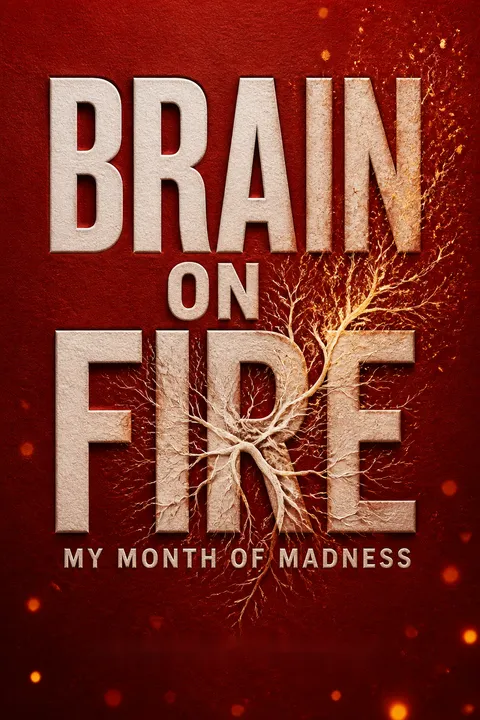
What is the significance of the title Brain on Fire?
- Metaphor for Illness: The title symbolizes the intense inflammation and dysfunction in Cahalan's brain due to her autoimmune disease.
- Sense of Urgency: It conveys the urgency and chaos of her experience, reflecting the rapid deterioration of her mental and physical health.
- Awareness and Education: The title serves to raise awareness about autoimmune diseases and their potential to wreak havoc on the brain.
What lessons can readers learn from Brain on Fire: My Month of Madness?
- Resilience in Adversity: Readers learn about the power of resilience and the human spirit in overcoming adversity, as Cahalan's journey is one of hope and recovery.
- Importance of Support Systems: The book underscores the significance of having a strong support system in navigating difficult times.
- Awareness and Education: It encourages readers to educate themselves about autoimmune diseases and mental health, fostering greater understanding.
Download PDF
Download EPUB
.epub digital book format is ideal for reading ebooks on phones, tablets, and e-readers.








