

Key Takeaways
Stop fighting for preference by creating a category rivals cannot credibly enter.
Change the playing field. Brand preference means persuading buyers to choose your brand over alternatives in an established category. Brand relevance means first shaping which category they want, then ensuring your brand is considered for it. The distinction explains why decades of advertising and product launches did little to dislodge Kirin's dominance of Japanese beer, while Asahi Super Dry helped create a dry-beer subcategory and rose from under 10 percent market share in 1986 to 37 percent in 2001.
New arenas reshape fortunes. The same pattern runs through computing: mainframes gave way to minicomputers, personal computers, laptops, and tablets, each changing which companies mattered. Creating a category does not guarantee success, but it can make familiar competitors less credible and reduce the need to win a head-to-head comparison.
What's striking is the shift from asking, “How can this brand win?” to asking, “What choice is the customer making?” That resembles a change in the unit of analysis: competition can be among brands, but it can also be among ways of solving a problem. The approach is especially useful when products feel interchangeable. It also has a limit: customers may move between categories, and incumbents can become relevant again by adapting. A new category is therefore not a permanent escape from competition. It is a chance to redefine the contest, provided the new framing corresponds to a durable customer benefit.
Customers screen brands out before comparing their strengths.
Eligibility comes first. Buyers often decide what kind of product they want, then screen for brands that seem to belong in that category. Only the survivors get compared. A cereal excluded from a shopper's high-fiber category cannot recover through better taste scores. The book calls this early exclusion a noncompensatory screen: weakness on a defining criterion cannot be offset by strengths elsewhere.
Frames shape the screen. A frame is the perspective or association that makes certain features matter. DiGiorno reframed frozen pizza as an alternative to delivered pizza, making its product seem both more comparable in quality and less expensive. Research described in the book also shows that identical food can be judged differently depending on how it is labeled. Clear category cues can help a brand qualify, while ambiguous definitions leave more room for rivals.
This model connects naturally to bounded rationality: people simplify crowded choices rather than evaluate every option from scratch. For marketers, the implication is that being excellent is not enough if buyers do not recognize the brand as a fit. For customers, however, screening can mean missing a genuinely good alternative because its cues or label seem wrong. Category framing is thus both a practical marketing tool and a source of consumer blind spots. A sound strategy should make the category easier to understand without implying that the chosen frame is the only reasonable way to view the product.
Judge innovation by the market it changes, not the technology it uses.
Three levels of change. The book's innovation continuum distinguishes incremental improvements, substantial innovations that make a meaningful new subcategory, and transformational innovations that change the offering or business model so existing alternatives may no longer fit. The dividing line is market impact, not technical sophistication. A new technology can be incremental if buyers barely notice it; a process change can be transformational if it changes who is served and how.
Customers decide the scale. Dreyer's Slow Churned ice cream used a production process that delivered less fat without giving up the taste and texture people expected, helping revive the light-ice-cream market. Enterprise Rent-A-Car built a different rental business around people whose cars were being repaired, even though its underlying innovation was largely operational. In both cases, the market-facing difference mattered more than the engineering label.
This distinction guards against a common organizational error: treating technical novelty as evidence of commercial importance. Innovation research often separates invention, which creates something new, from adoption, which shows whether people find it useful enough to change behavior. The book's market-impact test makes that separation operational. A further caution is that early customer response can understate the potential of unfamiliar ideas, while internal champions can exaggerate it. Assessment therefore needs both customer evidence and room for the offering to improve. The hard judgment is not whether the idea is impressive, but whether its difference changes the buyer's decision.
Search for unmet needs where timing and your capabilities intersect.
Look beyond stated requests. An unmet need is a problem or desire that existing offerings fail to serve adequately. Some needs are obvious but technically difficult to solve, such as delivering low-fat food without sacrificing taste. Others are hidden in routines customers have accepted. Zappos began with a frustrating search for shoes in the right size and color. Shimano studied people who did not ride bicycles and found that many viewed cycling as too complicated, then helped shape a simpler “coasting” bike.
Use several lenses. Talk with customers, observe them in context, study noncustomers, examine unintended product uses, track market trends, and borrow ideas from other industries. The book recommends curiosity and diverse perspectives because concepts often emerge by combining existing technologies or assets in a new way. A promising need still requires the right timing: the market, enabling technology, and organization's ability to deliver must converge.
The emphasis on observation is a useful corrective to the assumption that customers can always describe what they need. In practice, people are often better at showing friction than inventing a solution. Ethnographic methods, which study behavior in context, can reveal workarounds that interviews miss. But observed annoyance is not automatically a viable market. A problem can be real yet infrequent, low priority, or costly to solve. The strongest concepts connect three tests: customers care, the firm can deliver, and conditions make adoption plausible. That combination turns empathy into strategy rather than a collection of interesting anecdotes.
Test demand without mistaking publicity or champions' enthusiasm for proof.
Ask three hard questions. Evaluation should establish whether a real market exists, whether the firm can compete and win, and whether an advantage can endure. The Segway received extraordinary publicity and worked as designed, yet sales in its first seven years remained below 30,000 units. The need among workers proved smaller than expected, while price, weight, limited range, training, and restrictions on where it could be ridden slowed adoption.
Separate evidence from excitement. The book warns of rosy-picture bias, when project champions overestimate customer enthusiasm, and gloomy-picture bias, when unfamiliar ideas are rejected too quickly. Test concepts with potential customers, but interpret results carefully: a blind taste test favored New Coke until people knew the brand. Rather than making every decision a final yes or no, maintain a portfolio. Fund the next test, monitor ideas that are early, and stop projects whose prospects fade.
The Segway illustrates why attention is a weak proxy for adoption. Publicity measures notice, not willingness to pay, fit with daily routines, or access to the product. A useful evaluation therefore asks what behavior must change and what friction stands between interest and use. At the same time, strict forecasts can punish genuinely novel products because customers lack a familiar reference point. Staged investment helps manage both errors: each phase buys information while limiting exposure. The discipline is not to eliminate uncertainty, which is impossible, but to identify which uncertain assumption matters most and design a test around it.
Define the category clearly, then make your brand its trusted exemplar.
Give the new arena a shape. A company creating a category must define more than its own product. It should select a small set of associations that distinguish the category, matter to customers, and clarify which offers qualify. Positioning then emphasizes the most compelling associations for a particular audience. For a hybrid car, that might mean fuel economy for one group and environmental self-expression for another.
Become the reference point. An exemplar is the brand buyers use as a mental model for a category. Asahi Super Dry helped establish what dry beer meant; Salesforce.com promoted software delivered over the Internet as a different model from installed enterprise software. The brand should build the category as well as itself, keep improving the offer, and earn early market leadership. If buyers learn the category through the brand, competitors must prove they belong on the brand's terms.
Category design is a form of market coordination. A clear label and definition help customers, distributors, partners, and developers understand what a new offering is for. This is particularly valuable when a product requires new habits or complementary services. Yet the exemplar's influence can narrow the category around its own strengths, making other useful approaches seem illegitimate. Good category leadership therefore balances ownership with openness: establish a recognizable standard, but avoid defining the market so narrowly that customers or partners cannot see its broader value. The category earns staying power when people find it useful beyond the founder's own product.
Convert an early lead into barriers competitors cannot cheaply reproduce.
A head start is only a window. Competitors can copy a visible feature, so early success needs protection. The book identifies barriers such as proprietary technology, difficult-to-copy execution, scale economies, brand equity, networks, and loyal customer relationships. Yamaha's Disklavier combined a piano with digital recording and playback. Its advantage rested not only on the concept, but also on Yamaha's piano reputation, dealer network, electronics expertise, continuing product improvements, and scale.
Make the whole system hard to match. Best Buy's Geek Squad made technical support part of the shopping offer, backed by a distinctive service brand and a large trained workforce. A rival could imitate the idea of in-home help, but not instantly reproduce the people, culture, recognition, and operating routines behind it. The strongest barriers reinforce one another: a trusted brand attracts customers, volume improves operations, and customer relationships make switching less appealing.
This is a move from product advantage to system advantage. In strategy research, resources matter most when they are valuable and difficult to imitate; a feature alone is rarely enough if competitors can buy or copy it. The Disklavier case shows how capabilities, distribution, and reputation can combine into a more durable position. But barriers can also become complacency traps. A firm that protects an existing model too aggressively may resist the next change in customer needs. The most defensible position is not simply a wall around today's offer. It is a capability to keep renewing the reasons customers choose it.
Protect relevance by watching both the category and your brand's energy.
Two routes to irrelevance. A brand can lose category relevance when customers want a different kind of offering, even if they still admire the old one. It can also lose energy relevance when it becomes stale, invisible, or absent from the consideration set. Kirin's lager heritage did not make it a credible choice for buyers shifting toward dry beer. The book's suggested responses to a category shift include improving the core, repositioning, matching a rival's key benefit, leapfrogging its innovation, or exiting when the business no longer merits investment.
Rebuild credibility with action. Walmart faced criticism over its labor practices, sourcing, and effects on communities. Its environmental initiative set specific goals for stores, trucks, and products, while engaging suppliers. The effort generated operating savings and helped change how the company was perceived. Hyundai likewise rebuilt relevance through better quality, a long warranty, stronger design, and programs that addressed customer concerns. Visibility matters, but substantive changes give the message credibility.
Relevance is a more demanding measure than awareness or affection. A familiar brand can be respected and still fail to enter the choices customers make today. That distinction helps explain why image tracking alone can miss strategic decline. The Walmart and Hyundai cases also show that reputation repair works best when communication is attached to operational evidence. Still, relevance cannot be reduced to a single metric: different customer groups may value different categories, and a brand can be energetic in one segment while fading in another. Regular measurement should ask not only who recognizes the brand, but for which purchase and why it qualifies.
Fund innovation with a system that can explore, commit, and reallocate.
Organize for productive tension. The book argues that innovative firms need three capabilities: selective opportunism to spot and pursue promising openings, dynamic strategic commitment to resource and execute the best bets, and organization-wide resource allocation to compare new ideas with existing businesses. Without selection, the company drifts. Without commitment, promising concepts are underfunded. Without broad allocation, established units can absorb resources that a new opportunity needs.
GE made the process visible. Its Imagination Breakthrough program asked business units to propose initiatives with potential to generate $100 million within three to five years. A senior council reviewed proposals, and internal funding could support selected projects. GE also encouraged cross-business collaboration, including transferring expertise between wind energy and aviation. The organizational challenge is real: a successful core can resist ideas that threaten it. A workable system must protect new initiatives while still reviewing their progress and reallocating resources when evidence changes.
The three capabilities resemble a portfolio approach to uncertainty: exploration creates options, commitment develops the most promising ones, and reallocation prevents sunk costs from becoming policy. The tensions are important. Central review can compare investments across divisions, but it can also distance decision-makers from local customers and specialized knowledge. Decentralization preserves that knowledge, yet powerful business units may favor familiar incremental projects. Effective governance therefore needs both local experimentation and a credible mechanism for moving resources. The aim is not to make every unit entrepreneurial in the same way, but to keep the organization capable of noticing change and responding without abandoning strategic discipline.
Analysis
The book's most useful contribution is a change in where strategy begins. Rather than starting with the brand and asking how to make it preferred, it starts with the customer's category choice and asks how that choice is changing. This reframing connects innovation, brand management, and organizational design: a new product is not strategically important merely because it is novel; it matters when it changes the buyer's frame, changes who is considered a credible competitor, and can be supported long enough to establish a position.
The case studies make the argument vivid, but they also create a risk of survivorship bias. Asahi, Apple, and Chrysler are memorable partly because their innovations worked. The book recognizes failures such as Segway and Olestra, yet outcomes can still make successful bets appear more predictable than they were. Its strongest corrective is the insistence on disciplined evaluation, staged learning, and honest assessment of market size, execution, and competitors. Those checks are essential because many promising ideas will not become durable categories.
The framework is also more nuanced than a simple call to disrupt. Incremental innovation remains necessary to maintain an offer, while substantial and transformational innovation can create new arenas. The difficult managerial task is balancing the two without letting the current business consume every resource or allowing opportunism to scatter investment. The proposed organizational combination of selective exploration, real commitment, and enterprise-wide allocation captures that tension well, though it cannot eliminate political conflict or forecasting error.
One further implication is that category creation carries responsibility. Framing affects what customers notice and which alternatives they dismiss. A firm can make a valuable new need visible, but it can also define a market in ways that obscure tradeoffs or make a self-serving claim seem like a consumer standard. Durable relevance therefore depends on more than controlling the narrative. It requires delivering a benefit that survives comparison, imitation, and changing conditions. The lasting advantage is not merely being first to name a category, but continuing to deserve a central place in it.
Review Summary
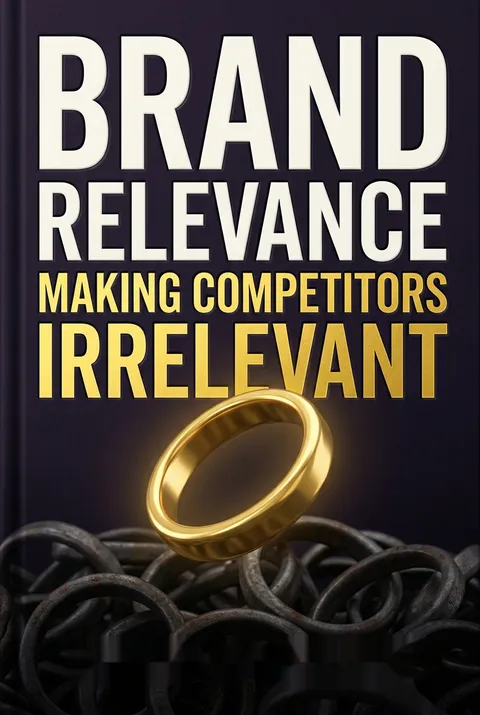
Brand Relevance receives mixed reviews, with an average rating of 3.96 out of 5. Readers appreciate Aaker's expertise in branding and the book's comprehensive case studies. Many find the concept of brand relevance versus brand preference insightful. However, some criticize the academic writing style, repetitiveness, and lack of relevance for smaller businesses. The book is praised for its in-depth analysis of creating new categories and subcategories to outpace competitors, but some readers feel the content could have been condensed. Overall, it's considered a valuable resource for those in marketing and brand management.
People Also Read



Glossary
Brand relevance
Category choice plus considerationA brand is relevant when a customer selects the category or subcategory the brand serves and includes that brand among the options worth considering. Relevance precedes preference: a brand must first qualify for the customer's choice set before its advantages over other considered brands can influence the final decision.
Innovation continuum
Market impact of innovationA way to distinguish incremental, substantial, and transformational innovation by their effect on customer choice and market structure. Incremental change tends to improve preference within an existing arena. Substantial change can define a new subcategory, while transformational change can make existing offers or business models irrelevant for a target use or group.
Exemplar
Category's defining brandA brand that serves as a representative example of a category or subcategory in customers' minds. Buyers use it as a reference point when judging whether other offerings belong. An exemplar can help make a category visible and credible, while giving the brand an advantage because competitors are assessed against its established meaning.
Noncompensatory decision making
A threshold-based screening processA choice process in which an option is eliminated for failing a required criterion, regardless of its strengths on other attributes. For example, if a shopper is seeking cereal below a specified sugar threshold, superior taste cannot compensate for exceeding it. This screening can occur before buyers compare the remaining brands in more detail.
Rosy picture bias
Overestimating customer enthusiasmThe tendency of an offering's champions to assume that customers will be as impressed by an idea as the team that developed it. Prolonged focus on a concept can make its benefits feel obvious and its limitations seem minor. This bias can inflate demand forecasts and understate the effort required to change customer behavior.
Branded differentiator
Owned, named advantageA feature, ingredient, technology, service, or program that provides a meaningful and sustained point of difference and is given a brand name that the company actively manages. Branding can make the benefit easier to communicate, help customers remember it, and signal that the company considers the difference important enough to support.
Branded energizer
Energy linked to a brandA branded product, promotion, sponsorship, symbol, program, or other entity that adds interest and vitality to a target brand through a sustained association. It may come from inside or outside the company, but the connection must be clear and appropriate. A popular activity alone is not an effective energizer if customers do not link it to the brand.
Selective opportunism
Disciplined pursuit of openingsAn organizational capability to detect market, customer, or technology opportunities and act on the most promising ones. Selectivity distinguishes it from indiscriminate expansion: opportunities are assessed for potential and fit with the firm's evolving assets and strategy. The capability depends on external awareness, timely decisions, and the willingness to redirect effort.
Dynamic strategic commitment
Resourced, revisable commitmentA sustained willingness to fund and execute a promising strategy, paired with the ability to reassess it as evidence changes. Commitment gives an initiative enough time and resources to overcome obstacles, but it is not a permanent guarantee of support. If assumptions fail or prospects weaken, the firm can reduce investment or withdraw.
Organization-wide resource allocation
Cross-business funding decisionsA process for comparing proposed initiatives with one another and with existing businesses across the whole organization. Its purpose is to direct limited resources toward the strongest opportunities, including projects that do not belong to a powerful business unit. The process requires common evaluation standards, credible decision-makers, and authority to increase or reduce funding.
FAQ
What is Brand Relevance: Making Competitors Irrelevant by David A. Aaker about?
- Core focus on brand relevance: The book explains how companies can make competitors irrelevant by creating and managing new product categories or subcategories, emphasizing the importance of brand relevance over brand preference.
- Strategic innovation and category creation: Aaker presents a comprehensive framework for innovating, defining, and managing categories to achieve sustainable competitive advantage.
- Market dynamics and proactive strategy: The book highlights how brands can shape markets and customer choices, rather than simply reacting to competitors or trends.
Why should I read Brand Relevance: Making Competitors Irrelevant by David A. Aaker?
- Insight into innovation and competition: The book offers deep analysis of how innovation can be used to create uncontested market spaces and why many innovations fail.
- Practical frameworks and tools: Readers gain actionable methods for idea generation, concept evaluation, category management, and building competitive barriers.
- Organizational and leadership guidance: Aaker addresses the cultural and structural challenges of sustaining innovation and relevance within organizations.
What are the key takeaways from Brand Relevance: Making Competitors Irrelevant by David A. Aaker?
- Brand relevance drives success: Creating and managing new categories or subcategories leads to superior market positions and financial performance.
- Innovation is essential: Substantial and transformational innovations are critical for forming new categories that offer sustainable differentiation.
- Active category management: Firms must manage both their brands and the perceptions of the new categories, linking the brand closely to the category.
- First-mover advantages and risks: Early leaders can gain loyalty and scale, but creating new categories is risky and requires organizational commitment.
What is the difference between the brand preference model and the brand relevance model in Brand Relevance by David A. Aaker?
- Brand preference model: Focuses on winning customers within existing categories by being preferred over competitors, usually through incremental improvements.
- Brand relevance model: Centers on changing what customers buy by creating new categories or subcategories, making competitors irrelevant in the new space.
- Strategic implications: Brand preference battles are often static with diminishing returns, while brand relevance strategies enable dramatic market shifts and reduced competition.
How does David A. Aaker define "brand relevance" in Brand Relevance: Making Competitors Irrelevant?
- Two conditions for relevance: Brand relevance exists when customers select a category or subcategory and include the brand in their consideration set.
- Phases of brand choice: Relevance is about being considered in the initial category selection, while preference is about being chosen among considered brands.
- Visibility and credibility: Brands must be credible and visible within the new category to be relevant and included in customer decisions.
What are the main methods for generating new product concepts in Brand Relevance by David A. Aaker?
- Diverse idea sources: Use unmet customer needs, ethnographic research, customer partnering, and observation of unintended uses to spark innovation.
- Role models and competitor analysis: Look outside the industry for inspiration and analyze competitors’ successes and failures to leapfrog them.
- Technology and asset leveraging: Leverage new technologies and existing firm assets across business units, focusing on high-impact areas for innovation.
How does David A. Aaker recommend evaluating new product concepts in Brand Relevance?
- Three critical questions: Assess if there is a market, if the company can compete and win, and if the leadership position will endure.
- Avoiding evaluation biases: Be wary of over-optimism and premature rejection of ideas; use objective, disciplined evaluation processes.
- Testing and portfolio management: Expose concepts to customers, use various testing methods, and manage a portfolio of ideas at different development stages.
What does Brand Relevance: Making Competitors Irrelevant advise about defining and managing new categories or subcategories?
- Multi-dimensional definitions: Define categories by a set of aspirational associations, combining functional and relational benefits for stronger barriers.
- Functional and relational dimensions: Categories can be based on features, design, customer involvement, price points, or shared interests and passions.
- Active management: Build category culture, become the exemplar brand, stimulate buzz, and continuously innovate to maintain leadership.
How can companies create barriers to competition according to Brand Relevance by David A. Aaker?
- Four types of barriers: Investment barriers (technology, scale), owning compelling benefits (authenticity, credibility), customer relationships (involvement, passion), and strong category links (exemplar status).
- Brand equity and networks: Strong brand equity, loyalty, and networks make it difficult for competitors to catch up.
- Continuous innovation: Ongoing innovation and branded differentiators help keep competitors at bay and sustain leadership.
What are the main reasons brands lose relevance, and how can they avoid it, according to Brand Relevance by David A. Aaker?
- Loss of category relevance: Brands become irrelevant if their category fades or changes, regardless of product quality or loyalty.
- Loss of energy relevance: Brands may become invisible or outdated, losing consideration even if still trusted.
- Response strategies: Firms can reposition, innovate, energize the business, or create branded energizers like sponsorships to maintain relevance.
How does Brand Relevance: Making Competitors Irrelevant address the role of organizational culture and structure in innovation?
- Selective opportunism: Organizations must be externally oriented, entrepreneurial, and agile to spot and pursue promising opportunities.
- Dynamic strategic commitment: Firms need to allocate resources dynamically, balancing focus and flexibility, with strong leadership and execution.
- Cross-unit collaboration: Breaking down silos and using centralized resource allocation helps fund high-potential innovations and overcome internal biases.
What are some of the best quotes from Brand Relevance: Making Competitors Irrelevant by David A. Aaker and what do they mean?
- “A great company is more likely to die of indigestion from too much opportunity than starvation from too little.” —David Packard: Warns against pursuing too many initiatives without focus.
- “The best way to predict the future is to invent it.” —Alan Kay: Encourages proactive innovation and category creation.
- “If you are on the right track, you’ll get run over if you just sit there.” —Will Rogers: Stresses the need for continuous innovation and energy.
- “We have met the enemy and he is us.” —Pogo: Highlights internal organizational challenges and biases that hinder innovation.
- “Always pursue a strategy that your competitors can’t copy.” —Jim McNerney: Emphasizes the importance of unique, sustainable competitive barriers.

Download PDF
Download EPUB
.epub digital book format is ideal for reading ebooks on phones, tablets, and e-readers.








