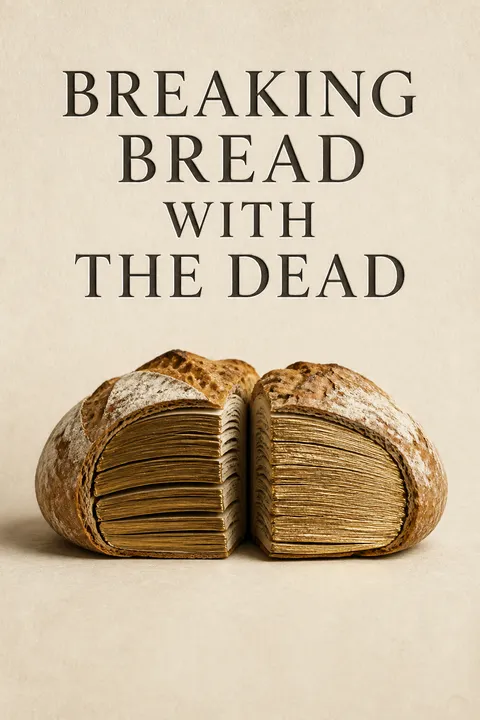


Key Takeaways
Read across centuries to build a steadier self in a frantic present.
Widen your sense of now. The book begins with Horace, a Roman poet who had retreated from dangerous political life to a country farm, yet still felt drawn to the restless energy of Rome. His question was how to quiet a mind caught between fear, ambition, and distraction. Jacobs connects that ancient restlessness to our own habit of reaching for a phone whenever attention goes unoccupied. He calls temporal bandwidth the breadth of time a person inhabits, including both past and future. Drawing on a character in Thomas Pynchon, he argues that greater temporal bandwidth can build personal density, a more substantial sense of self that is less easily blown about by immediate pressures.
Read beyond the moment. Horace turns to old writers not for quick answers, but to shift attention from everyday anxieties toward enduring questions about virtue and a good life. This is not a claim that books cure depression or solve modern problems. It is a case for using the past as a refuge from the present's demand for constant reaction.
What's striking is the argument's reversal of the usual self-help formula. The remedy for feeling overwhelmed is not necessarily more control over the present, but a larger frame in which the present is only one part. This resembles psychological distancing, the capacity to view a stressful moment as one episode rather than the whole story. That distance can improve judgment, though it is no substitute for treatment when anxiety or depression is severe. Reading also requires protected time and access, conditions not equally available to everyone. Its value lies less in escape than in recovering room to choose what deserves attention.
Let the dead unsettle you without pretending they are just like you.
Make room at the table. Jacobs uses table fellowship to describe meeting people from the past through their writing, as if sharing a meal with them. The encounter should preserve difference: the dead are not modern companions in costume, and their ideas may offend or confuse. Yet an old book can be closed whenever the encounter becomes too much, making it a relatively safe place to practice attention to otherness.
Distance can clarify. In Anita Desai's novel Clear Light of Day, Bim, a woman hurt by years of family conflict, reads the deathbed reflections of Aurangzeb, a Mughal emperor whose intolerance helped fuel rebellion. His remorse still reaches her across differences of religion, power, and time. The centuries between them soften immediate political passions enough for her to recognize a shared human vulnerability, without making their worlds identical.
This approach offers a useful middle ground between sentimental identification and detached study. Social psychology often distinguishes perspective-taking from simply imagining that another person feels exactly as oneself does. The former requires curiosity about unfamiliar circumstances; the latter can quietly erase them. Reading gives that curiosity a low-stakes rehearsal space, since no living interlocutor must bear the reader's first reaction. The limit is important: sympathy with a historical figure does not settle questions of justice or erase the harms they caused. It makes understanding more precise, not judgment unnecessary.
Judge ancestors fully, not by one stain or a polished reputation.
Resist the reject pile. Negative selection means screening people or ideas for disqualifying defects; positive selection means also asking what is valuable in them. Under information overload, quick rejection feels efficient. But applying it to every writer from the past can leave only a narrow set of voices that already agree with current standards.
Hold achievement and failure together. John Milton argued forcefully for freedom to publish, yet excluded Catholics from the liberty he defended. The American founders proclaimed human equality while permitting slavery. Frederick Douglass condemned that betrayal, but also recognized the force of the principles the founders had put into public language. This does not excuse hypocrisy. It makes moral judgment more complete by examining both what a person did and what their ideas made possible.
The distinction between selection and rejection is especially useful because moral evaluation is not a single verdict. A person can be wrong about one matter and illuminating about another, and an idea can outlive the limits of its originator. This resembles the practice of separating a claim's validity from a speaker's character, without pretending the speaker's interests are irrelevant. There is a danger, however, that praise for a flawed figure will crowd out those harmed by that figure's failures. A fair account must keep the costs visible, not merely preserve the inspiring parts.
Approach old books as arguments, not containers of ready-made answers.
Keep historical distance visible. Heinrich Schliemann, the nineteenth-century archaeologist who loved ancient Greece, named his children after figures from the Iliad and believed a discovered mask belonged to Agamemnon. Jacobs sees this as a mistake of closeness: Schliemann treated the ancient world as if it were his own. A careful reader must notice both resemblance and difference.
Let the book resist you. Italo Calvino describes a classic as a work that can help readers define themselves, including through disagreement. A genuine encounter does not simply translate an old text into today's language or make it endorse current opinions. The reader brings present concerns, but also tries to understand what the text could mean in its own setting. That tension can reveal assumptions that a modern paraphrase would hide.
Historical distance works like a control against projection. When readers treat ancient characters as people from their own social world, they can miss the institutions and assumptions that shaped their choices. Conversely, excessive distance can turn literature into an exotic artifact with nothing to say. Calvino's model holds both risks in view: a work matters partly because it touches present experience, and partly because it refuses to be reduced to it. The practical test is whether the text can still surprise its reader after its relevance has been explained.
Find the human truth inside flawed works without excusing their flaws.
Read in two directions. Patrocinio Schweickart proposes that readers can notice a text's ideology while also responding to what moves them. She calls a moment of shared human possibility within a compromised work an authentic kernel. The phrase does not mean that the work is secretly innocent; it names something worth engaging alongside its limitations.
Respond rather than sanitize. In Ursula Le Guin's Lavinia, a woman barely given a voice in Virgil's Aeneid tells her own story. Jean Rhys's Wide Sargasso Sea similarly gives narrative space to the Caribbean woman who appears as Rochester's confined wife in Jane Eyre. Both works arise from admiration as well as frustration. Their revisions neither erase the originals nor simply reproduce them; they make a conversation across books and generations.
These examples show critique becoming generative rather than merely punitive. The response to an inherited work can preserve its artistic force while making visible what it leaves unheard. That resembles restorative approaches to cultural memory: the goal is not to declare the past harmless, but to expand who can speak within its legacy. The approach also has limits. A reader should not be required to find beauty in every harmful work, and a claimed kernel can become an excuse to avoid confronting the whole. Generosity is an option for inquiry, not an obligation imposed on the injured.
Let distant voices name your experience and widen it beyond yourself.
Recognize more than resemblance. As a boy in apartheid South Africa, Peter Abrahams found language for racial oppression in W. E. B. Du Bois's writing. Yet the English poets he had loved since childhood also called to him, though their lives were far removed from his. He described being pulled by both sets of books: one gave direct recognition, the other opened an unexpected world.
Difference can speak clearly. Frederick Douglass, enslaved in Virginia, found a powerful argument against slavery in The Columbian Orator. He was also moved by a parliamentary speech defending Irish Catholics, a struggle distant from his own. The book's central claim is that reading needs both likeness and unlikeness. Shared experience can give a reader words; unfamiliar experience can enlarge what the reader thinks human life contains.
Representation matters, but it is not the only route to recognition. Abrahams's response suggests that beauty and craft can cross boundaries that identity-based accounts of reading sometimes overlook. Douglass's response shows how an argument made for one oppressed group can sharpen thought about another, without making their histories interchangeable. This is a powerful model of analogy with guardrails. Similarity invites comparison; difference keeps comparison honest. A literary education that offers only familiar mirrors risks narrowing its readers, while one that offers only alien worlds can deny them the recognition that first makes reading possible.
Notice when today's moral instincts hide yesterday's assumptions in plain sight.
Look beneath explicit debates. Historian and philosopher Alfred North Whitehead advises readers to notice what a culture assumes without discussing it, because those assumptions may seem too obvious to name. Historical reading can make such defaults visible by showing that ordinary arrangements were once different.
Let contradiction teach you. Dorothy Osborne's seventeenth-century letters describe her determination to choose the man she loved despite family pressure. Her wit and independence can feel strikingly modern. Yet she also mocked women who tried to write books. The combination resists a simple verdict: she could challenge one constraint while accepting another. The point is not to grade her by a single modern checklist, but to notice how present-day expectations shape what seems admirable, absurd, or invisible.
Contradiction is a useful diagnostic because it exposes the limits of moral categories that feel self-evident. Historical distance can reveal that people have acted with agency inside systems they did not fully question, a pattern that remains plausible in any era. The reader's discomfort is informative, but not automatically proof that the past is wrong or that the present is right. One complication is that the evidence often comes from surviving texts, which overrepresent literate and powerful people. The exercise is therefore best treated as a challenge to present assumptions, not as a complete map of past experience.
Read ancient philosophies on their own terms, not as modern self-help.
Don't dress old ideas in new clothes. The Stoic Epictetus taught that people should distinguish what lies within their control from what does not. In Tom Wolfe's novel A Man in Full, this teaching helps a character withstand humiliation without surrendering his principles. Later online communities also invoke Stoicism, but sometimes use it to argue that people should accept injustice rather than seek remedies.
Recover the philosophy's setting. Jacobs notes that ancient Stoicism depended on beliefs about Zeus and a divinely ordered universe, not merely on techniques for composure. Modern readers may still learn from Stoic practices, but they should recognize when they are adapting rather than inheriting the whole system. Otherwise, an ancient authority becomes a label for conclusions its original thinkers might not have shared.
The case illustrates a broader problem in popular philosophy: practical advice is easily detached from the metaphysics and social world that gave it meaning. Adaptation is not inherently dishonest; traditions survive partly by changing. But clarity about the change matters, especially when a doctrine of endurance is used to counsel people with less power to tolerate conditions that others could alter. A useful reading practice is to ask both what an idea meant to its first audience and what work it performs now. That question separates genuine learning from the search for prestigious confirmation.
Use a richer past to make promises that bind you to the future.
Stand somewhere before projecting. Seamus Heaney's poem about holding a red stone on an Irish beach moves between a medieval murder and the political violence of the Troubles. Heaney is not presented as a partisan solution to that conflict, but as a reader whose historical imagination makes the costs of vengeance harder to ignore.
Promise, don't just predict. Jacobs contrasts futurist projections, which can remain abstract and self-serving, with promises that commit a person to someone else's future. Learning how past choices shaped the present can help people imagine consequences beyond their own immediate interests. A wider temporal frame does not guarantee wise action, but it can give responsibility a human scale: decisions are made by people who inherit a world and leave one behind.
This closing argument connects historical reading to intergenerational ethics. Environmental responsibility, for instance, requires imagining people who cannot participate in present decisions, while memory supplies concrete evidence of how earlier choices endure. The book's emphasis on promises is stronger than optimism because it ties future concern to accountable action in the present. Still, historical analogies cannot predict unfamiliar crises, and reverence alone cannot determine policy. The value of memory is to widen the circle of consequence and humility, not to substitute for evidence, institutions, or practical planning.
Analysis
Jacobs's book is a defense of reading old books, but its deeper subject is attention: who or what gets to shape a person's sense of reality. Its central chain runs from an overstimulated present to hurried judgment, from hurried judgment to a thin sense of self, and from historical encounter to a wider, steadier perspective. Reading is not presented as an archive of correct answers. It is a practice of sustaining attention long enough for another world to become legible, and for the reader's own assumptions to become strange.
The most valuable tension is between moral judgment and hospitality. Jacobs does not ask readers to suspend their convictions or excuse racism, sexism, slavery, or tyranny. He asks them to resist the shortcut by which a flaw becomes the whole person, and to recognize that a historical figure can articulate a powerful ideal while failing to honor it. This is not easy neutrality. It is a demand for proportion, context, and intellectual patience, qualities that are also necessary in arguments about the present.
The book's strongest stories make this method tangible: Bim's encounter with Aurangzeb, Frederick Douglass reading arguments across different struggles, and Dorothy Osborne's combination of independence and conventional limits. Their value lies in resisting tidy moral sorting. Yet the method has a boundary. Books are not representative of everyone who lived in the past, and literary attention alone cannot repair material injustice or replace historical scholarship. Nor does every reader owe a harmful text continued attention. Jacobs's proposal works best as an invitation, not a universal duty: choose encounters capable of expanding judgment, remain alert to whom the archive excludes, and carry what is learned into accountable action. The measure of a richer temporal imagination is not nostalgia or erudition. It is greater capacity to understand conflicts, to judge fairly, and to make commitments whose consequences extend beyond the present self.
Review Summary
Breaking Bread with the Dead advocates for reading older books to develop "personal density" and expand "temporal bandwidth," countering modern information overload. Jacobs argues for engaging with past authors, even those with problematic views, to gain perspective and tranquility. Many readers found the book insightful and relevant, praising Jacobs' nuanced approach to controversial topics. Some criticized certain arguments or writing style. Overall, reviewers appreciated the book's invitation to thoughtfully engage with literature from different eras, seeing it as an antidote to presentism and cancel culture.
People Also Read








Glossary
Temporal bandwidth
Breadth of lived timeThe span of time a person actively includes in their understanding of the present, especially awareness of both past and future. Jacobs argues that attention to earlier lives and long-term consequences widens this span, making the immediate moment less consuming and helping people interpret current pressures with greater perspective.
Personal density
A steadier sense of selfA sense of self with enough depth and continuity to resist being swept along by rapid social change, shifting demands, and immediate anxieties. Jacobs borrows the phrase from Thomas Pynchon and links it to temporal bandwidth: a person who inhabits a broader stretch of time may become less governed by the moment.
Presentism
The present as the only horizonA narrowed orientation in which the current moment dominates attention and the past is treated as irrelevant, obsolete, or threatening. In Jacobs's account, information overload, rapid social change, and systems that continually promote new material can intensify presentism, making historical difference harder to encounter and judge carefully.
Informational triage
Rapid attention sortingThe hurried sorting of competing demands for attention when information exceeds a person's capacity to assess it all. Jacobs compares this to medical triage, where limited resources must be allocated quickly. In everyday life, it can encourage blunt decisions about what deserves attention, including quick rejection of unfamiliar or troubling historical voices.
Positive selection
Choosing for valuable qualitiesA way of evaluating people, works, or ideas by asking what they contribute, rather than focusing only on defects that justify rejection. Jacobs contrasts it with negative selection, which screens out candidates for their shortcomings. Applied to historical reading, positive selection allows a reader to recognize insight without denying serious moral failures.
Authentic kernel
Human possibility within a flawed workA moment in a text that expresses something deeply human or worth preserving, even when the work also reflects harmful assumptions. Jacobs draws on Patrocinio Schweickart's approach to feminist reading: readers can remain alert to a text's ideology while also acknowledging what moves them, rather than either rejecting the work outright or accepting its worldview.
Theater of concurrence
Art that confirms its audienceA work or performance that assumes its audience already agrees with its conclusions and offers little genuine challenge to those views. Jacobs uses the term to describe how cultural works can reassure people that their existing judgments are sufficient, reducing the chance that they will reconsider emotionally charged questions.
Table fellowship
Conversation across historical differenceJacobs's metaphor for reading as an encounter with people from the past, comparable to sharing a meal with them. The reader gives an old voice attention without pretending it is identical to a modern one. Such fellowship may be uncomfortable, but books allow readers to pause or leave when the encounter becomes too difficult.
About the Author


Download PDF
Download EPUB
.epub digital book format is ideal for reading ebooks on phones, tablets, and e-readers.








