

Key Takeaways
When panic steals your words, let each breath carry Scripture toward God.
A prayer without many words. The book begins with the author's daughter in a hospital, dangerously ill. Alone beside her bed in the early hours, Tucker feels her chest tighten and her thoughts fill with fear. She cannot manage a conventional prayer. Instead, she pairs a short biblical idea with her breathing: one part on the inhale, another on the exhale. Repeating the words helps her breathing slow and brings her attention back to her faith.
A small practice for hard moments. A breath prayer is a brief prayer, usually drawn from Scripture, spoken in two parts with the rhythm of inhaling and exhaling. It is not meant to erase thought. It gives attention a steady place to rest when anxiety makes clear thinking difficult. The practice joins a physical action with a spiritual reminder.
The hospital scene makes the practice credible because it begins with a limit, not a triumph: fear has made complex language unavailable. In moments of acute stress, a short, familiar phrase can reduce the demand to invent words while giving attention a simple anchor. The spiritual meaning is distinct from the physiological effect, though both may matter to a believer. The prayer does not need to produce certainty or make the situation feel resolved. Its immediate purpose is more modest: to help a frightened person breathe and reconnect with a source of meaning.
Slow, diaphragmatic breathing can settle alarm, but it is not a cure.
The body joins the worry. Tucker distinguishes worry, which often centers on thoughts about a problem, from anxiety, which can also show up physically. A stress response can speed breathing and heart rate, preparing the body to act. When the perceived threat is not immediate, that activation can feel overwhelming and make reflective thinking harder.
Breathe low and slowly. Diaphragmatic breathing means drawing air in so the abdomen expands, then letting it out slowly and fully. Tucker recommends breathing through the nose on the inhale and through the mouth on the exhale. She describes several timed options, including breathing at six cycles per minute for five minutes, and the 4-7-8 pattern. Slow breathing may support the body's calming response. It is a tool, not a promise of relief.
This body-first approach is useful because it does not ask a panicked person to reason their way out of a state that may already be impairing concentration. The broader principle is that physical regulation can create room for reflection, rather than competing with it. Still, breath techniques are not equally comfortable for everyone. Breath-holding or counting can intensify discomfort for some people, and slow breathing cannot remove an external danger. The practical aim is flexibility: use a gentle, tolerable rhythm, and stop if the exercise makes distress worse.
Treat anxiety as a cue to pause, check danger, and turn toward God.
Notice before reacting. Tucker suggests treating anxiety as information rather than an enemy. A racing heart, tense shoulders, shaking hands, or shallow breathing can prompt a person to stop and ask what is happening. Is there a real threat to address? Is worry about an uncertain future driving the body's alarm? The answer matters: a genuine danger calls for practical action, not simply a calming exercise.
Choose a next response. When there is no immediate threat, the reader can slow down, observe the feeling, breathe, and pray. The book presents this as a way to interrupt an automatic spiral and redirect attention toward God. Anxiety becomes a possible reminder to seek help, name the concern, and respond with intention instead of letting fear dictate the next move.
The cue-based framing resembles a useful principle in behavior change: a familiar signal can prompt a deliberate response instead of a habitual reaction. It also avoids treating every anxious feeling as evidence of personal failure. The important qualification is the safety check. A body alarm can be disproportionate, but it can also register a real problem, including a health concern or an unsafe situation. Prayer and breathing are most helpful when they support discernment, not when they are used to dismiss evidence or avoid necessary action.
Repeat Scripture in prayer to focus the mind, not empty it.
Attention has a direction. Tucker differentiates breath prayer from practices aimed at clearing the mind. In her Christian account, prayer turns attention toward God and fills the mind with Scripture. A short passage is repeated with active reflection, not until its words become meaningless. The point is to consider what the words say about God's character, care, or guidance.
A portable focus. During anxiety, attention can become fixed on bodily discomfort or frightening possibilities. A concise biblical phrase offers another object of attention. Tucker's examples draw on themes such as God as shepherd, refuge, or source of help. The reader can use a prayer from the book or choose a short passage that speaks to the concern at hand, dividing it naturally between the inhale and exhale.
The distinction between emptying attention and directing it toward a chosen meaning is central to the book's Christian identity. Psychologically, a repeated phrase can function as an attentional anchor; the theological claim that it connects the person to God belongs to the faith practice itself, not to a breathing study. That distinction strengthens rather than weakens the method. It lets readers understand what may be happening at two levels without presenting one spiritual tradition as a clinical finding or assuming the same prayer will resonate with everyone.
Practice in ordinary moments so a short prayer is reachable under pressure.
Build familiarity before crisis. Tucker recommends practicing breath prayers even on days when anxiety is mild or absent. Start with a minute and work toward five; repeat the same short prayer until its words and rhythm are familiar. The goal is not to perform perfectly, but to make pausing, breathing, and turning to Scripture a more available response when stress rises.
Keep truth close. The book also encourages memorizing Scripture. Tucker calls forgetting God's past care and promises a kind of spiritual forgetfulness: fear can dominate attention and make trusted beliefs harder to recall. Repeated prayer and memorization give the mind language to draw on in difficult moments. The author connects this practice with neuroplasticity, the brain's capacity to change as it learns and repeats patterns.
Practice during calm periods reduces the amount of effort required when a person is distressed. This is a form of rehearsal: the sequence becomes familiar before it is needed, much as people train for demanding tasks before facing them. Repetition can shape habits of attention, but the claim should stay proportionate. A repeated prayer may become easier to recall; it does not guarantee that anxiety will fade or that a particular neural pathway will form in a measurable way. The value lies in making a chosen response more accessible, not in promising automatic transformation.
Give God your needs without treating prayer as a way to control outcomes.
Prayer is not a transaction. Tucker rejects the idea that prayer is a formula for getting a desired result or that enough good behavior earns God's help. In the book's theology, prayer is a way to speak honestly about needs, release burdens, and realign trust with God's character and will. God already knows what a person needs, but saying it aloud can help bring the concern into focus.
Make surrender concrete. Tucker suggests identifying worries and, in one exercise, writing them down and placing the paper on the floor as a physical sign of entrusting them to God. This does not solve the underlying problem. It marks a change in how the person carries it: less as an attempt to manage every outcome, more as an honest appeal for care and guidance.
This understanding of prayer offers a meaningful alternative to magical thinking: prayer is not a lever that forces events to comply. Naming a concern can also clarify what is within a person's control and what is not, a distinction central to many approaches to coping with uncertainty. The practice should not be mistaken for passivity. Entrusting a problem to God can coexist with making a plan, asking for help, or taking protective action. Surrender is most constructive when it loosens compulsive control without erasing practical responsibility.
Seek God's presence in suffering without assuming faith guarantees relief.
Hope need not mean cure. The book repeatedly acknowledges that illness, grief, anxiety, and other hardships may persist despite prayer. Tucker's account of her daughter's health crisis gives this point emotional weight: prayer does not promise that circumstances will quickly improve. In her Christian framing, God's presence and care remain meaningful even when the desired healing does not arrive.
Look for support in several forms. Tucker says help may come through people, therapy, medication, or an inner sense of peace. She invites readers to ask for healing while resisting the conclusion that continuing suffering proves weak faith or unanswered prayer. The practice aims to support trust amid uncertainty, not to explain away pain or offer a timetable for when it will end.
This is one of the book's most important safeguards against treating spirituality as a bargain: belief does not guarantee control over illness or circumstance. Its emphasis on presence can sustain people when solutions are unavailable, while its openness to medical and interpersonal support keeps faith from becoming isolation. A further caution is that calling suffering meaningful can land poorly when offered too quickly to someone in pain. Companionship, listening, and practical assistance may matter more than an explanation. The book is strongest when it lets hardship remain hard.
Use breath prayer alongside professional care, never instead of it.
Know the difference. Tucker describes everyday anxiety as a common response to stress or worry. She distinguishes it from anxiety disorders, which can involve persistent, intense symptoms that are out of proportion to circumstances or occur without a clear trigger. The book cites an estimate that anxiety disorders affect about 20 percent of the population and warns that they can interfere substantially with daily life.
Get help when needed. Breath prayer is offered as one tool for ordinary anxiety, not as a way to diagnose or treat a mental health condition. Tucker encourages readers whose symptoms are severe or disruptive to seek qualified professional care, and she explicitly rejects the idea that a mental health condition signals weak faith. Prayer can accompany treatment; it should not delay or replace it.
This boundary is essential because a spiritual practice can be supportive without being clinical treatment. A person may value prayer and still need assessment, therapy, medication, or urgent help. The book's distinction also resists moralizing symptoms: distress is not proof of insufficient devotion. Readers can use breath prayer as one component of care, while letting qualified clinicians guide treatment decisions. That framing protects both the spiritual value of the practice and the legitimacy of mental health care.
Analysis
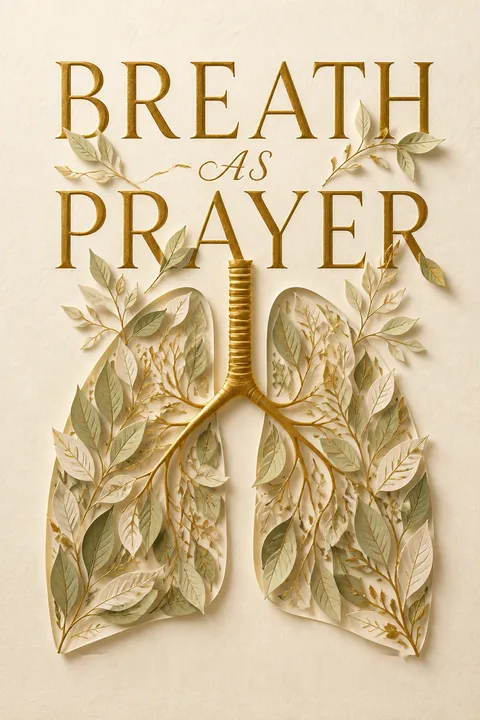
Breath as Prayer is a Christian devotional and practical guide organized around a simple practice, not a linear argument. Its narrative doorway is a mother's fear in a hospital room, and its repeated structure pairs a short biblical theme with a breathing rhythm. The book's central contribution is integration: it treats anxiety as bodily as well as mental, and prayer as both spiritual communication and a means of directing attention. Neither dimension is asked to do all the work. Slow breathing may help reduce physical activation; Scripture offers a framework for interpreting fear and suffering; prayer locates that framework in relationship with God.
The method is most useful when understood modestly. A breath prayer can create a pause, focus attention, and make a familiar belief available during distress. It cannot guarantee calm, resolve the cause of anxiety, or secure a particular answer to prayer. The book's own cautions matter: severe or persistent symptoms deserve professional care, and faith does not promise exemption from illness or hardship. Those limits are not peripheral disclaimers. They preserve the method from becoming an alternative to treatment or a test of spiritual worth.
The book's theology is specific rather than universal. It presents Christian meditation as attention directed toward God through Scripture, not as a neutral technique for every reader. Within that commitment, its invitation is compassionate: people need not produce polished words before they can pray. A breath, a brief passage, and repeated attention can be enough to begin. Its broadest practical insight is that care for the body and spiritual practice need not compete. For Christian readers, breathing can become a physical rhythm for remembering what they believe, while remaining one support among many in a difficult season.
Review Summary
Breath as Prayer receives overwhelmingly positive reviews, with readers praising its calming approach to anxiety through Scripture-based breath prayers. Many find it helpful for managing stress and connecting with God. Reviewers appreciate the beautiful design, devotional format, and accessible explanations of the practice. Some highlight its effectiveness during difficult times and its potential as a thoughtful gift. A few critics wished for more depth or found it repetitive, but most readers consider it a valuable resource for spiritual growth and mental well-being.
People Also Read








Glossary
Breath Prayer
Scripture paired with breathingA short Christian prayer, usually based on Scripture, divided into two parts and matched to inhaling and exhaling. The person repeats it slowly while reflecting on its meaning. In the book, the practice is intended to support physical calming while directing attention toward God. It is not presented as a cure for anxiety or as a substitute for professional care.
Diaphragmatic breathing
Breathing that expands the abdomenA way of breathing that emphasizes filling the lower lungs so the abdomen expands, rather than relying mainly on movement in the upper chest. Tucker recommends inhaling slowly through the nose and exhaling slowly through the mouth. She presents it as a breathing skill that may help calm the body's stress response when practiced gently and regularly.
365
Timed slow-breathing practiceA breathing routine named for its schedule: practice three times per day, breathe at a rate of six breaths per minute, and continue for five minutes per session. The book describes each cycle as a slow five-second inhale followed by a slow five-second exhale. It is one option among several, not a required part of every breath prayer.
4-7-8 (The Relaxing Breath)
Four-count breathing sequenceA timed breathing exercise in which the practitioner inhales through the nose for a count of four, holds the breath for seven, and exhales through the mouth for eight. Tucker recommends repeating the cycle four times. The technique is offered as an option for relaxation; readers should not force breath-holding if it causes discomfort.
Square breathing
Four-part counted breathingAlso called box breathing in the book, this technique gives equal length to four stages: inhale, hold, exhale, and hold again. Each stage is counted to four. The even pattern can provide a simple structure for attending to the breath. Tucker presents it as one breathing exercise, separate from the words of a breath prayer.
Autonomic nervous system
Automatic body regulation systemThe system that regulates many bodily functions without requiring deliberate control, including aspects of the body's response to stress. The book explains its sympathetic branch as mobilizing the body during perceived danger and its parasympathetic branch as supporting calming and recovery. Intentional breathing is presented as one way people can influence this system.
Neuroplasticity
The brain's capacity to changeThe brain's ability to adapt as a person learns, practices, and encounters new experiences. Tucker connects repeated prayer and attention to the possibility of strengthening new patterns of thought. In this account, the term helps explain why repeated practice may make a chosen response more familiar. It does not guarantee that a specific prayer will eliminate anxiety.
Amygdala hijacking
Rapid emotional threat responseA term Tucker uses for the experience of intense fear or stress taking priority over reflective thought. In the book's explanation, the brain's threat response prepares the body to fight, flee, or freeze, while making perspective and deliberate reasoning harder. Slow breathing and prayer are offered as ways to support a return to a calmer, more reflective state.
Download PDF
Download EPUB
.epub digital book format is ideal for reading ebooks on phones, tablets, and e-readers.








