

Plot Summary
Prologue
At seven, Weston Turner watches his father leave the family home with two suitcases and no explanation. His mother is left with three children, unpaid bills, and a house the bank will take. In a nearly empty drawer, Weston finds one of his father's socks.
He burns it, imagining that if his father ever returned, he would be the one to send him away. Years later, the memory still shapes how Weston runs, fights, and guards what he feels: being left behind has taught him to expect that love can vanish without warning.
The abandoned sock gives Weston's childhood a physical emblem: what remains after someone has taken what they want and left. His wish to burn it reverses his helplessness into a child's fantasy of control, but the act cannot undo the departure. That contradiction follows him into adulthood. He can outrun competitors and reject help, yet neither protects him from the original wound. The prologue also complicates his toughness. His anger is not a lack of feeling; it is feeling organized into vigilance, self-reliance, and a fear of being left exposed again.
The Sock in the Drawer
At twelve, Weston enters Sinclair Prep on a scholarship won with an essay about his father's abandonment. When rich classmate Jason Kingsley mocks the story at lunch and dumps spaghetti over Weston's uniform, Weston nearly sacrifices his place by fighting back.
Connor Drake, a popular classmate, steps in and helps Weston get a clean shirt. Connor's easy acceptance becomes a friendship that survives prep school and follows them to Amherst. Weston earns a track scholarship; Connor joins him, while the Drake family provides housing and helps Weston's struggling family.
Weston repays their generosity by writing Connor's school papers, even as he hides his own talent for poetry and chooses economics as the safer path toward supporting his mother and sisters.
Weston treats achievement as both escape and repayment. His scholarship proves he can rise beyond his circumstances, while the Drakes' generosity complicates that independence by making success feel like a debt. Connor's friendship offers something Weston cannot earn through grades or speed: uncomplicated welcome. Yet their arrangement already contains an imbalance. Weston converts his gift for language into service for Connor, while keeping his own writing private. The choice looks practical, but it repeats his deeper habit of making himself useful rather than asking what he wants.
Autumn Starts Over
Autumn Caldwell returns to Amherst after finding her boyfriend, Mark, cheating, determined to keep her classes, bakery shifts, and ambitions from collapsing with the relationship. At the Panache Blanc, baker Edmond de Guiche comforts her with food and affection; on campus, her roommate Ruby points out Connor Drake, whose warmth catches Autumn's eye.
In the library, Autumn instead meets Connor's roommate Weston, a sharp-tongued economics student who challenges her beliefs and admits he does not know what he wants from his major. Connor arrives and invites Autumn to join their friends at Yancy's. She leaves intrigued by both men, though she believes Connor is the one she noticed first and Weston is only an interesting, difficult stranger.
Autumn's discipline is a response to betrayal, not simply a personality quirk. Lists, polished clothes, work, and study give her a sense of agency after Mark made her question her judgment. But her insistence on controlling the terms of romance is already unstable: she longs for emotional intensity while trying to protect herself from it. The first encounters split attraction into two forms. Connor offers visible ease and welcome; Weston offers friction, attention, and a conversation that refuses to stay superficial. Autumn's new beginning therefore starts with a choice she does not yet understand.
Pool Tables and Signals
At Yancy's, Autumn plays pool with Connor, drinks more than intended, and finds herself drawn into his affectionate, confident attention. Weston watches from the edges, then talks with her about poetry, his Boston childhood, and her Nebraska farm. The next day, Autumn and Ruby attend Weston's track meet.
He wins his races, while Connor makes the afternoon feel like a date and secures Autumn's number. Weston sees how strongly she responds to Connor and decides not to pursue his own interest. He even explains that Autumn wants romance and cautions Connor to take her seriously. When Connor struggles to ask her out, he turns to Weston for help, and Weston agrees despite the private cost.
This section makes the triangle a moral problem before it becomes a romantic one. Weston recognizes Autumn's preferences with unusual precision, but uses that understanding to improve Connor's chances rather than his own. His loyalty is genuine, yet it also lets him avoid the vulnerability of asking for something and risking refusal. Connor's social fluency helps him connect, but his reliance on Weston hints at a gap between charm and emotional articulation. Autumn, meanwhile, experiences their attention as distinct: Connor makes her feel welcomed, while Weston sees more of what she actually wants.
Words for a Second Chance
Connor takes Autumn to the elegant Maison Rostand, but the evening falters when conversation stalls and his expensive car draws more of his attention than she does. At her door, Autumn explains that Mark's cheating has made her wary; Connor changes the subject and leaves her unsure whether she wants to see him again.
Back at the apartment, Connor admits he mishandled the conversation. Weston uses Connor's phone to send Autumn a thoughtful apology and invite her for coffee.
At Claire's Café, Connor follows through more sincerely, acknowledges her hurt, and tells her he wants to treat her carefully. Autumn accepts his apology, and they share their first kiss. Weston watches from across the street, knowing his words helped bring them together.
The borrowed message is the story's first consequential deception, even though it grows from care rather than malice. Weston can express the consideration Connor feels but cannot yet voice; Autumn responds to that emotional fluency as if it belongs wholly to Connor. This exposes a distinction the novel keeps testing: sincerity of feeling does not guarantee honesty of authorship. Connor does care about Autumn, but Weston is already shaping the relationship from behind the scenes. The kiss gives Autumn hope and gives Weston a private wound, while leaving all three with different understandings of what has just begun.
The Wrong Name on Poetry
As Autumn and Connor begin dating, Connor tries to balance her desire for depth with his easygoing habits, while Weston keeps advising him and suppressing his own attraction. One evening, Autumn finds a poem among Connor's papers, written about her in language that reaches past his usual charm. The poem is Weston's work, but Connor lets Autumn believe he wrote it.
Feeling seen and trusting the apparent confession, Autumn tells Connor she wants something real, and they sleep together. The next morning, she accidentally wears Weston's T-shirt and sees his pain when he claims it. She senses that her connection with Weston is changing, but she cannot explain why. Connor begins auditing Weston's poetry class to learn how to express himself.
The poem turns private writing into borrowed intimacy. Autumn is not merely attracted to beautiful language; she reads it as evidence that Connor can meet her emotionally. Her trust is therefore built on a truth spoken by the wrong person. Weston permits the misunderstanding because he wants Autumn happy and Connor secure, but his self-erasure now has consequences for her consent and expectations. The T-shirt incident makes the concealed authorship bodily: Autumn wears an object that belongs to the person whose words moved her, and Weston's reaction registers the intimacy neither of them can name.
A Flight Home
When Autumn learns that her father, Henry, has suffered a heart attack, she panics over the cost of reaching Nebraska. Weston finds a last-minute flight, calls Connor to pay for it, and drives Autumn to meet him. Connor gets her to the airport; Weston stays awake until she reports that Henry survived surgery.
From Connor's phone, Weston answers Autumn as if he were Connor, offering the careful reassurance she needs. The next morning, exhausted, Weston runs poorly before NCAA observers and falls badly over a hurdle, damaging his chance to impress a scholarship representative. Autumn reaches her father and later speaks with Connor by phone, still unaware that Weston has supplied some of the words that comforted her.
Care is repeatedly measured here by practical action: a booked ticket, a ride to Logan, a vigil through the night. Weston understands the fear of financial scarcity because he has lived inside it, so he acts without making Autumn beg. Yet he also crosses another boundary by speaking through Connor's phone. His compassion and deception become difficult to separate. The track failure shows the cost of his service in concrete terms: while attending to Autumn's crisis, he loses sleep and may jeopardize the scholarship that sustains his own future.
A House and an Enlistment
Back at Amherst, Autumn worries that her family's farm is sinking into debt, while Weston considers the Army Reserve as a way to pay for his final year. At Thanksgiving in Boston, Autumn stands her ground when Connor's brother Jefferson dismisses her humanitarian ambitions. The Drakes then reveal that they have bought Weston's mother, Miranda, a house, deepening Weston's gratitude and humiliation at once.
Connor confronts his parents over their pressure to join the family business and their control of his inheritance. He leaves, then returns the next morning having enlisted in the Army Reserve to prove he can take responsibility for his own future. Because Weston first raised enlistment as his own solution, he promises to join Connor.
The Thanksgiving gathering exposes how money can function as care and control at the same time. The Drakes' house frees Miranda from financial strain, but Weston experiences the gift as another debt attached to his name. Connor's enlistment is similarly double-edged: he seeks independence from parental judgment by accepting a new institution's discipline and danger. The choice gives him a visible form of responsibility, while Weston joins out of loyalty and necessity. Their bond protects them from isolation, but it also makes each man's decisions inseparable from the other's.
Letters from Boot Camp
After the United States declares war on Syria, Weston and Connor enter basic training, expecting Reserve service but graduating into Active Duty and a likely deployment. During Boot Camp, Weston writes letters to Autumn under Connor's name, turning Connor's request for occasional updates into intimate declarations.
Autumn reads each letter as proof of Connor's hidden emotional depth and falls further in love with the man she believes is writing. At graduation, both families celebrate the soldiers, and Connor's father embraces him for the first time. The celebration is shadowed by orders to continue training before deployment. Weston, unable to reveal the letters without hurting Autumn and Connor, carries the secret into the leave period.
The letters offer a genuine emotional lifeline and a profound ethical breach. Boot Camp strips the young men of privacy and control, and writing gives Weston a way to preserve his inner life; at the same time, he uses that outlet to occupy Connor's identity in Autumn's most intimate correspondence. Autumn falls for qualities that are real in Weston but are attached to Connor's name. The military's escalation mirrors the emotional stakes: both men are being sent into danger while the relationship they leave behind rests on a false account of who has spoken.
The Soul Behind the Letters
During their leave, Connor and Autumn reunite and sleep together. Autumn tells him she is falling in love, especially with the soul she has encountered in his poems, the Nebraska phone call, and the letters from training. Connor cannot share her certainty. He realizes that Weston wrote the poems and letters and spoke to her during the phone call, and that Autumn's love is responding to Weston's voice.
Connor confronts Weston, who insists the words were meant to make Autumn happy and argues that exposing the truth would hurt her and destabilize Connor before deployment. Connor is wounded by the deception and by his own dependence on Weston, but agrees not to tell Autumn yet.
Autumn's declaration forces the story's central confusion into the open for the men, though not for her. Connor discovers that the emotional self Autumn loves has been mediated through his best friend, while Weston has given his deepest feelings away under another man's name. Neither can claim innocence: Connor benefited from the deception, and Weston chose it repeatedly. Their silence is framed as protection, but it also denies Autumn the knowledge she needs to understand her own relationship. Love here cannot be separated from authorship, consent, and the right to know who is speaking.
The Poet Names His Love
Weston tells his poetry professor that he loves Autumn, and the professor urges him to claim his own life and finish the poem he has been writing. At the Panache Blanc, Weston comforts Autumn as she struggles with her father's recovery and the farm's debts, but he does not confess the letters.
Before deployment, the Drakes host a party where Connor gives Autumn a thirty-five-thousand-dollar check for her family, arranged after Weston told him how much they needed.
When Autumn asks whether Connor's letters and sentiments are truly his, Connor assures her they are. Weston opens her water bottle and lets the lie stand. Autumn accepts the money because her family needs it, but her questions about the mismatch between Connor's words and his presence remain.
This turning point places material generosity beside emotional concealment. Connor and Weston respond to the farm's crisis with substantial help, but the check cannot settle what their false correspondence has made unstable. Weston seeks permission to own his love from a professor, yet continues to withhold the truth from the person whose response matters most. Autumn's suspicion shows that emotional knowledge is not simply delivered by eloquent language; she notices the gap between Connor's letters and his face-to-face behavior. Her financial need makes accepting help an act of care for her family, not proof that the relationship is secure.
One Last Night at Roxie's
On the eve of deployment, Connor insists that the group drive to Roxie's, a rough roadhouse, for one last night out. He drinks until he passes out after they return to the Drake home.
Alone with Weston, Autumn admits she feels closer to Connor through his letters than in person and is frightened by the distance between them. Weston tells her that Connor should have spent their last night together with her. Their charged argument turns into a fierce kiss, and they begin undressing before Weston stops, calling the encounter wrong and refusing to let it continue.
Autumn recognizes that she has betrayed Connor, but the kiss feels like the completion of a connection she has sensed for months. At dawn, she says goodbye to both men as they leave for deployment.
The kiss makes bodily what the letters have already made emotionally: Autumn's intimacy has been divided between Connor's presence and Weston's voice. Her betrayal is not excused by that confusion, but neither is it detached from the deception that shaped her expectations. Weston stops before sex, accepting responsibility rather than using the moment to claim what he wants. Yet his insistence that the kiss must never happen again repeats his lifelong strategy of withdrawing before love can expose him. The departure turns their unresolved triangle into a real separation, with no promise that anyone will return unchanged.
The Race Through Gunfire
Deployed in Syria, Weston leads a squad defending a route used by refugees. An attack kills Sam Bradbury, and Connor is shaken by the death of the soldier's wife and infant daughter. During a later assault, Connor runs toward a child stranded beside his dead mother. Weston sees an insurgent throw a grenade toward them and sprints after Connor, knocking him clear as it explodes.
The blast throws them down, and gunfire hits Weston through and around his body armor. He is unable to move his legs and believes he may be dying. Before the attack, he had signed the poem he wrote for Autumn with his own name. The book ends with him wounded beside Connor, the confession still in his pocket.
The final race transforms Weston's defining wound into an action with a different outcome. As a child he ran after a father who would not stop; in Syria he runs toward Connor and a stranded child, reaching them in time to save Connor. The rescue does not erase his abandonment, and the cost is severe: Weston is shot and his survival is left uncertain. His signed poem marks a new refusal to hide behind Connor's name, but he cannot yet deliver it himself. The cliffhanger binds love, authorship, and survival to a single unanswered question.
Analysis
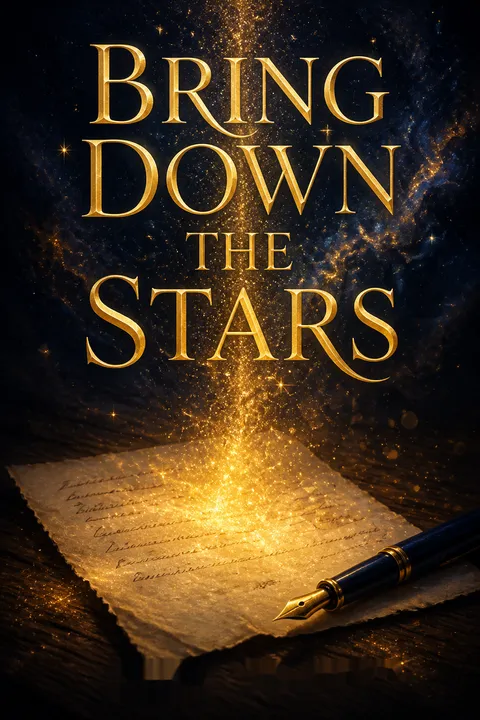
Bring Down the Stars builds its love triangle around a problem more difficult than choosing between two men: Autumn's feelings are shaped by a voice whose authorship has been concealed. Connor supplies welcome, humor, and practical generosity. Weston supplies the language through which Autumn recognizes the emotional depth she wants. Both men care for her, but care does not neutralize deception. The novel insists that emotional truth and ethical truth are related but not interchangeable. Weston's words can be honest in content and still mislead Autumn about who is offering himself to her.
The novel's recurring economies sharpen this conflict. Weston treats affection as a debt to repay, first to the Drakes and then to Connor; his labor, writing, and sacrifice become substitutes for openly asking for what he wants. Connor, surrounded by wealth, experiences another form of constraint: his parents' money is tied to a future they have chosen for him. Autumn's family faces literal debt, so her ideals must coexist with bills, work, and the possibility that the farm cannot survive. Across these different conditions, help is never emotionally neutral. It can protect, obligate, or limit the person receiving it.
The sock and the race give Weston's inner life a physical structure. As a boy, he cannot catch the car carrying his father away. As a young man, he turns running into control over distance and outcome. In Syria, he runs toward Connor instead of after a departing parent, and that reversal matters even though it leaves him gravely wounded. It does not cure his abandonment or resolve the romantic deception, but it shows a new use for the same impulse: attachment can move him toward another person rather than merely make him chase what is gone.
The ending refuses easy closure. Weston has finally signed his own name to the words he has given away, but he is injured before he can deliver them. Autumn's understanding, Connor's response, and Weston's survival remain unsettled. The cliffhanger is therefore not only a question of physical fate. It leaves open whether love can become honest after it has been built through borrowed speech, and whether loyalty can survive the moment when sacrifice stops being enough.
Review Summary
Bring Down the Stars is a highly emotional love triangle romance that captivated readers with its beautiful writing and complex characters. Many praised the deep friendship between Weston and Connor, and the poetic, angsty storyline. Readers connected strongly with Weston's character and his sacrifices. While some found the plot frustrating or cliché at times, most were deeply moved by the book's exploration of love, loyalty, and unrequited feelings. The cliffhanger ending left many readers eagerly anticipating the sequel to see how the relationships would resolve.
People Also Read






Characters
Weston Turner
The guarded poetWeston is a gifted runner and writer from a working-class Boston family. Abandoned by his father as a child, he turns anger into discipline and treats self-reliance as protection. He attends Amherst on an athletic scholarship and studies economics because he feels responsible for his mother and sisters, though poetry is where he can express what he cannot say aloud. His friendship with Connor is a source of loyalty and belonging, but it also tempts him to make himself useful at the expense of his own desires. Weston's sharp humor and intimidating reputation conceal a sensitive observer who notices what other people need, often before he admits what he needs himself.
Autumn Caldwell
The hopeful humanistAutumn is a Nebraska farm girl studying social anthropology and political science at Amherst while working early shifts at the Panache Blanc. She wants to create a path into humanitarian work and measures herself by how much good she can do. Her romantic idealism makes her generous with affection, but Mark's betrayal leaves her wary of trusting her own judgment. Autumn's curiosity and directness draw people out, even when she is trying to keep her feelings contained. Her closeness with her family and concern for the struggling farm ground her ambitions in practical stakes. She seeks not only attraction but honest conversation, emotional reciprocity, and a partner who respects her drive to help others.
Connor Drake
The golden-hearted heirConnor is a popular baseball player from an immensely wealthy, politically prominent family. His warmth is effortless: he makes people feel included, uses humor to smooth awkwardness, and is quick to help his friends. Beneath that ease, he feels diminished by parents who expect him to pursue a prestigious career rather than build the sports bar he dreams of running. His friendship with Weston is intimate and longstanding, built on mutual loyalty, though Connor often leans on Weston's academic and verbal gifts. Connor wants to be valued for more than his charm, money, or family name, but has to learn how to express that wish without relying on someone else to speak for him.
Ruby Hammond
Autumn's candid anchorRuby is Autumn's roommate and closest friend, an Italian major with a playful, sexually confident manner and a sharp instinct for when Autumn is hiding behind work. She encourages Autumn to take chances after Mark's betrayal, but her teasing is rooted in affection rather than pressure. Ruby is comfortable with casual relationships and helps Autumn see that her own desire for commitment is not a flaw. Her lively independence offers a counterpoint to Autumn's anxious planning.
Edmond de Guiche
The bakery's romantic heartEdmond is the expressive French baker at the Panache Blanc, where Autumn works. He greets customers with opera, poetry, food, and exuberant affection, and treats emotional pain as something that deserves immediate care. His support gives Autumn a dependable place of warmth outside her studies and family worries. Edmond's sentimental confidence contrasts with Weston's guardedness and Autumn's habit of hiding distress behind competence.
Miranda Turner
Weston's resilient motherMiranda is Weston's outspoken mother, a hairdresser who raised her children after her husband left. Money remains a constant strain, but she meets hardship with blunt humor, affection, and fierce pride in her son. Her relationships with men have left her distrustful, and her worries help explain why Weston feels responsible for protecting the family. Miranda's warmth is often loud and embarrassing to Weston, but it gives him a model of love that persists through imperfect circumstances.
Victoria Drake
The senator and motherVictoria is Connor's mother, a state senator whose composure and social authority shape the Drake household. She loves her sons and welcomes Weston, but tends to express care through high expectations and practical solutions. Her confidence can make her intimidating, especially to people outside her world. Victoria believes she is preparing Connor for success, while struggling to recognize that her preferred future may not be his.
Alan Drake
The demanding patriarchAlan is Connor's father, a powerful businessman who regards stability, achievement, and family reputation as proof of responsible living. He respects Weston for his work ethic and sees Connor's potential, but often measures that potential against conventional success. Alan's financial generosity is real, yet it can carry an expectation of influence. He struggles to distinguish protecting his son from directing his life.
Paul Winfield
Miranda's steady partnerPaul is Miranda's boyfriend, a regional sales manager who treats her with patience and respect. Weston initially scrutinizes him because Miranda's past partners have often taken advantage of her, but Paul's calm demeanor and genuine concern set him apart. He does not compete with Weston for authority over the family; instead, he offers a measured, dependable presence.
Lynette Caldwell
Autumn's steadfast motherLynette is Autumn's practical, watchful mother, whose composure holds the Caldwell family together through financial worry and her husband's health crisis. She values hard work and family responsibility, but does not ask Autumn to abandon her education to solve every problem at home. Her steadiness reflects the farm's daily demands and gives Autumn both a model of endurance and a reason to worry.
Henry Caldwell
The devoted farmerHenry is Autumn's father, a Nebraska farmer who taught his daughter to look for possibility in each new day. His bond with Autumn is affectionate and sustaining, and his commitment to the farm shapes her sense of duty to home. He is hardworking enough to risk his health rather than lose income, revealing how economic pressure can make even necessary care feel unaffordable.
Travis Caldwell
The rooted younger brotherTravis is Autumn's younger brother, a high-school senior who is content with the life and land he knows. He resembles their father in appearance and temperament, and prefers farming to Autumn's larger ambitions. His affection for his family makes him a reliable source of information when Autumn is away, though he sometimes needs prompting to speak plainly about the farm's finances.
Jefferson Drake
Connor's accomplished brotherJefferson is Connor's older brother, a Harvard student whose conventional accomplishments make him the standard against which their parents measure Connor. He is polished and confident in elite social settings, and can dismiss ideas that do not fit his assumptions. His presence intensifies Connor's feeling that the family values achievement more readily than individuality.
Cassandra Malloy
Jefferson's polished fiancéeCassandra is Jefferson's fiancée, poised and socially polished. She joins the Drakes at Thanksgiving and participates in the family's formal conversation, where her manner reinforces the high-status world Connor feels expected to enter.
Professor Michael Ondiwuje
The poet who sees WesProfessor Ondiwuje teaches poetry and lyrical writing at Amherst. He recognizes the emotional force in Weston's work and challenges him to stop hiding behind an economics major and a silent classroom presence. His direct attention gives Weston a rare example of an adult treating his artistic talent as a possible life rather than a private indulgence.
Mark Watts
Autumn's unfaithful exMark is Autumn's former boyfriend of two years. His cheating leaves her grieving not only the relationship but the future she believed they shared. The betrayal makes her question her judgment and complicates her willingness to trust new affection.
Matt Decker
Weston's trackside friendMatt is one of Weston's few friends at Amherst. He shares Weston's dry humor and notices the tension between Weston and Connor, offering brief companionship in a world where Weston usually keeps others at a distance.
Sam Bradbury
A fellow soldierSam serves with Weston and Connor after their military training. Quiet and direct, he becomes part of the close-knit group that forms under the pressure of deployment and combat.
Drill Sergeant Denroy
The relentless trainerDenroy is the drill sergeant who trains Weston's company at Boot Camp. His harsh discipline exposes Weston's reflexive defiance and forces the recruits to function as a unit under exhaustion and pressure.
Plot Devices
The abandoned sock
A keepsake of rejectionWeston remembers his father leaving one sock behind when he abandoned the family. The object condenses a complicated childhood wound into something a child can understand: his father took what he wanted and left the rest. Weston burns it to imagine reclaiming control, but the memory remains. The sock later explains why he fears emotional exposure, runs as if chasing someone, and tries to earn belonging by becoming useful. It also gives his story a concrete counterpoint: he once could not make his father return, but in the final battle he chooses to run toward the people he loves.
Poems and borrowed letters
Love written under another nameWeston's private writing carries the honesty he cannot manage in ordinary conversation. When he writes messages, poems, and Boot Camp letters for Connor, Autumn receives real feelings under a false identity. The device makes the triangle more than a contest for affection: it raises the question of whether a sincere message remains sincere when the recipient is deceived about its author. The poems also connect Weston's hidden vocation to Autumn's desire for emotional depth. His final signed poem marks his attempt to stop giving his words away as someone else's.
Running and racing
A body chasing the pastRunning is Weston's discipline, scholarship, refuge, and private reenactment of the day his father drove away. On the track, he can convert anger into speed and make outcomes measurable. Yet victory never resolves the abandonment beneath that effort. The recurring race imagery changes meaning as the story progresses: Weston first runs to outrun pain, then runs to reach Connor during the attack. In the final crisis, his speed becomes a choice to protect rather than a way to escape, turning an old pattern toward a different kind of agency.
Money and obligation
Help that creates a debtScholarships, the Drakes' support, tuition, and the Caldwell farm's debt give the characters' choices material consequences. Weston refuses some assistance because he fears dependence, while Connor's family uses wealth both to provide comfort and to steer his future. Autumn's financial crisis makes accepting help necessary even when it wounds her pride. These pressures keep romance from floating free of circumstance: work schedules, school access, travel, and military enlistment all turn on money. The characters must learn that accepting care does not automatically erase agency, though generosity can become controlling when it comes with expectations.
Military service
Love under real dangerWeston and Connor enlist partly in response to financial pressure, family expectations, and a desire to prove their responsibility. The outbreak of war transforms a decision that initially seems like a way to fund college into a direct threat to their lives. Basic Training separates them from Autumn and creates the conditions for Weston's letters, while deployment tests the loyalty that has defined his friendship with Connor. Military service therefore joins the domestic and romantic plots to the battlefield, where the characters' choices have consequences no amount of charm or poetry can soften.
Beautiful Hearts Series

About the Author





Download PDF
Download EPUB
.epub digital book format is ideal for reading ebooks on phones, tablets, and e-readers.








