


Plot Summary
Prologue
Paris, 1786: Ambri, a young aristocrat rejected by his lover Armand and exiled by his family, staggers through a riot after the Affair of the Queen’s Necklace. A mob mistakes him for one of the royal court and locks him inside a burning distillery.
Ashtaroth, a demon, offers him immortality and power in exchange for surrender. Ambri accepts, and only after the flames consume his human body does he understand the price: he has become a demon, bound to the being who promised to end his pain.
Ambri’s transformation begins with a chain of betrayals that makes surrender feel less like a free choice than the only exit left open. His family’s abandonment and Armand’s rejection echo the mob’s violence, collapsing distinct injuries into one conviction: that human attachment leads inevitably to humiliation. Ashtaroth exploits that conclusion, offering power not as a temptation toward evil but as relief from wanting. The fire therefore marks both a literal death and a psychological bargain. Ambri survives by converting vulnerability into domination, but the promise that he will never need love again becomes the wound around which his immortal identity forms.
Cole Loses His Foothold
After finishing at London’s Royal Academy, Cole Matheson scrapes by as a pub bartender while hoping his successful former classmate, Vaughn Ritter, can connect him with a gallery. His grandmother’s death has stripped away his last family anchor, and his former partner’s preference for nonexclusive relationships has left Cole wary of intimacy.
When his flatmates accept money to leave their shared home, the small payout cannot cover another deposit. His best friend, Lucy Dennings, hears the strain in his voice, but Cole hides how badly he is sleeping and how little hope he has left. Alone in his cramped room, he spirals into panic and self-condemnation, unsure whether his art or his life can still become anything.
Cole’s crisis is not simply financial. Each loss attacks a different support that once helped him imagine a future: his grandmother gave him belonging, art gave him direction, and friendship with Lucy offers connection across distance. The eviction turns these private pressures into immediate material danger. His reluctance to disclose the depth of his distress also shows how depression can narrow a person’s sense of available help, even when someone trustworthy is asking. The story begins by making Cole’s suffering concrete rather than abstract: he has no secure home, no steady work, and no confidence in the one vocation that has sustained him.
A Beetle at Midnight
On the Other Side, Asmodai, the wrathful demon lord, suspects Ambri of helping Casziel escape demonic service and orders him to drive a human to suicide as proof of loyalty. Ambri spots Cole during a call between Cole and Lucy, then travels to London and enters the artist’s troubled dreams.
Cole sees a beautiful, winged figure with black eyes and a body that breaks into beetles; on waking, he finds a bruise where a book struck him in the dream. He sketches the stranger obsessively, and the image earns unexpected admiration from customers in Hyde Park. Ambri intends to exploit Cole’s despair, but Cole’s vivid response to him awakens more than the demon’s appetite for desire.
The supernatural plot gives Cole’s self-critical thoughts an external form without denying that his circumstances are real. Ambri is assigned to intensify despair, but the Twins’ unseen influence has already been working on Cole, making the demon’s task seem efficient. The bruise unsettles the boundary between dream and waking life, while the sketches show that contact with Ambri also reactivates Cole’s artistic attention. This double effect is crucial: the same encounter that could become a route toward death gives Cole an image worth making. Ambri’s first crack in his own certainty appears when the human he has chosen as prey becomes a person whose perception matters to him.
The Blackfriars Bridge
After losing his pub job, Cole sells several demon sketches and earns enough to feel briefly encouraged. Three men then corner him, steal his takings and sketchbook, smash his glasses, and beat him badly. With no money and nowhere he wants to return to, he wanders to Blackfriars Bridge and stares into the water, caught between wanting to escape and fearing what that means.
Ambri finds him there after driving the despairing Twins away. Cole admits how close he feels to giving up, and Ambri, who recognizes the shape of that pain from his own past, holds him until he can step back from the railing. He then takes Cole to his Chelsea home to tend his injuries and explain his proposal.
The assault is a sharp material blow, not a symbolic substitute for Cole’s depression: it removes the money and tools he needs to keep working. At the bridge, that loss meets the private exhaustion established earlier, narrowing his attention to disappearance as an apparent solution. Ambri’s intervention matters because it interrupts isolation before it becomes irreversible. His awkward embrace is also the first time he acts against his demonic assignment without disguising the choice as strategy. The rescue does not cure Cole or solve his precarity, but it creates enough distance from the immediate crisis for another possibility to become visible.
A Portrait for Ambri
In Ambri’s elegant flat, Cole learns that his visitor is the demon Ambri, not a hallucination. Ambri offers to fund a grand portrait of his eighteenth-century human self and let Cole sell paintings of his demonic form. Cole initially refuses, then returns because the chance to paint has revived a desire he thought depression had extinguished.
Ambri explains that demons and angels inhabit the Other Side, while humans pass through repeated lives with their memories erased. He also admits that a portrait could restore a place in his family history from which he was excluded. Cole accepts the commission, but insists on boundaries: their arrangement is work, not sex, and Ambri must tell him enough truth for him to paint honestly.
The commission turns the relationship into an exchange that is unequal but not emotionally empty. Ambri has money and supernatural power; Cole has the artistic attention Ambri cannot purchase from anyone else. Cole’s decision is not a simple bargain for fame, since his first motive is the renewed urgency he feels to make something. His boundaries protect him from repeating the emotional compromise he experienced with Scott, while his questions resist Ambri’s preference for controlling what others know. The portrait also carries a specific psychological charge: it answers Ambri’s lifelong fear of being erased, but only by placing his self-image in another person’s hands.
The Muse Takes Shape
Cole begins drawing and painting Ambri in his black-eyed, winged form, and the work comes with a fluency he has not felt since graduation. Their attraction breaks through Cole’s rules when Ambri brings him to climax without touching him, then again when Cole kneels to pleasure him.
Ambri panics at the intimacy and orders Cole away, but the paintings continue. At the London Art Faire, Cole sells his entire small collection, including Stormlight, and curator David Coffman arranges a meeting with Jane Oxley, Vaughn’s powerful agent.
Jane offers to represent Cole and plans a major show. For the first time, Cole’s talent receives professional recognition, yet Ambri’s retreat leaves success tangled with longing and the fear that their closeness was only another transaction.
The paintings turn desire into labor without reducing either to the other. Cole’s renewed artistic focus is real, and the market response confirms that his abilities existed before Ambri’s patronage. Yet the public sees only a striking demonic subject, while Cole experiences the work as an encounter with a person he wants to understand. Ambri’s retreat follows his established defense: when intimacy begins to resemble attachment, he tries to restore control by making the relationship impersonal. The resulting tension complicates Cole’s success. Recognition offers material hope, but it cannot answer whether the person who inspired the work will remain present.
Floodwater and Fever
A violent flood destroys Cole’s Whitechapel room, and Ambri’s driver brings him to Chelsea. Cole discovers that Ambri has been badly burned, apparently as a deliberate reminder of his past, and refuses to continue painting until Ambri heals himself. Ambri crosses to the Other Side and returns restored, but Cole soon becomes ill from the cold and damp.
Ambri stays beside him for days, fetching medicine and listening as Cole mourns the grandmother who raised him. When Cole’s fever breaks, grief finally overtakes him in sleep, and Ambri holds him through it. Their roles reverse: the demon who once fed on human need begins to find meaning in caring for one particular person.
Shared vulnerability changes the terms of the partnership more deeply than attraction alone. Cole’s refusal to work while Ambri suffers establishes care as a condition of collaboration, not a reward exchanged for artistic labor. Ambri’s turn to self-injury reveals that he is still trying to manage emotion through punishment, while Cole’s illness exposes the fragility he had hidden behind competence and restraint. Their bedside exchange brings grief into a relationship that had been organized around lust, fear, and bargaining. Ambri does not solve Cole’s loss; he stays present while Cole feels it. That presence gives both men a new experience of intimacy that cannot be controlled by performance.
Christmas Before Leaving
As Cole paints Ambri’s official portrait, the two settle into a teasing companionship, and Ambri explains that demonic whisperers can intensify fears but cannot remove human choice. At Christmas, Cole speaks of his grandmother’s grief as love that remains meaningful, a feeling Ambri’s demonic existence has taught him to dismiss.
Ambri then announces that he will leave Britain after Cole’s show. Their attempted intimacy collapses when Cole refuses sex without a kiss, and Ambri cannot cross that boundary.
Before the separation can harden, Lucy arrives with her partner, Casziel. She reveals that Casziel was once a demon and is now human, proof that a creature’s past does not necessarily make love impossible. Casziel urges Ambri to trust what he feels, but Ambri still fears punishment.
Cole’s account of grief directly challenges Ambri’s strategy of treating attachment as a liability. To Cole, pain is not evidence that love was a mistake; it is the continuing cost of having been loved. Ambri cannot yet accept that interpretation because his own history taught him that intimacy invites exploitation and abandonment. The kiss becomes a precise boundary rather than a minor romantic gesture: Cole needs reciprocal tenderness, while Ambri has kept kissing as the last part of himself no one can claim. Casziel’s presence offers a living counterexample to Ambri’s fatalism, but evidence of another person’s freedom cannot instantly undo the beliefs built by centuries of fear.
The Gallery Kiss
Lucy and Casziel explain that Ambri helped free Casziel from demonic service, though Cole had known nothing of their shared history. At Cole’s successful London exhibition, Ambri finally attends and sees his own demonic image rendered with humanity rather than mere menace. Afterward, Cole shows him the finished portrait, which restores dignity to the image of the young man Ambri once was.
Ambri kisses Cole for the first time, and the two become lovers. They begin the European exhibition tour together, moving from London to Amsterdam as Cole’s paintings attract growing acclaim. Their happiness gives Ambri a glimpse of a future he had never believed he could have, even as he knows Asmodai may still call him to account.
The gallery turns a private artistic relationship into a public act of recognition. Ambri sees that Cole has not painted him as an unambiguous monster; the image holds danger and humanity together, refusing the simplification on which Ambri’s self-hatred depends. The finished portrait similarly gives him a place in history without pretending that history was kind to him. His first kiss is therefore more than romantic consummation. It means he allows another person to approach the part of himself he had kept beyond reach. The European tour expands Cole’s success, but the narrative makes clear that external acclaim does not dissolve Ambri’s fear of the hierarchy controlling his freedom.
Paris Brings the Vices
The tour opens successfully in Amsterdam, but Paris brings Ambri face to face with Eisheth and the demons who once shared his criminal life as humans: Armand, Jeanne, and Cardinal Rohan. Eisheth reveals that Asmodai has sent them to complete Ambri’s original assignment by steering Cole toward drugs, alcohol, exhaustion, and despair.
Ambri had meant to raise Cole high before destroying him, but he now loves the man he was ordered to ruin. Unable to expose the plan without risking his own punishment, he begins pulling away from Cole as the tour continues through Madrid and Rome. Cole interprets the distance as rejection. The more celebrated his work becomes, the more alone he feels beside the person who first made him want to paint.
The Vices convert Cole’s success into a set of vulnerabilities: access, pressure, sleeplessness, and the expectation that artistic worth must keep rising. Their plan is not to create insecurity from nothing but to magnify the strain already attached to sudden recognition. Ambri’s silence is meant to protect Cole, yet it repeats the very abandonment that shaped his own life. By withholding the truth, he gives the enemy a more effective weapon: Cole must interpret his lover’s behavior without context. The section exposes the ethical danger in protection that denies another person information and agency. Ambri’s fear makes sense, but his secrecy leaves Cole isolated at the moment he most needs trust.
The Lie in Rome
In Rome, Cole tries to restore their closeness, but Ambri continues to act distant and leaves a dinner with Cardinal Rohan. Cole confronts him, reveals that he loves him, and gives him a completed portrait and archival proof of his birth. Ambri cannot answer honestly under the Vices’ surveillance, so Armand forges a cruel letter that makes it appear Ambri never loved Cole.
At a club, Ambri finds Cole among the demons and manages to warn him away before shadow-servitors drag him to Asmodai’s realm. Cole, drunk and exhausted, misses the warning and returns alone to the hotel. The letter appears to confirm his worst fears, while Ambri is taken into torture for betraying the demonic cause.
The forged letter weaponizes the exact fear the relationship had begun to undo: that Cole is wanted only when useful and discarded when he asks for more. Ambri’s silence is coerced, but from Cole’s perspective it resembles the earlier betrayal by Scott, and Armand’s forgery exploits that history with precision. The birthday records and portrait make the rejection especially painful because Cole has offered Ambri not just affection but a way to reclaim a name and past. The club scene creates tragic dramatic irony: Ambri finally tries to protect Cole with the truth, but intoxication and accumulated mistrust prevent Cole from recognizing the warning. Their separation is engineered through both supernatural force and ordinary human vulnerability.
Morning Light Against Them
Back in London, Cole drinks, stops answering Lucy, and paints through sleepless nights while the Vices offer pills and insist Ambri has abandoned him. Lucy helps him recognize their manipulation and urges him to leave their influence. Cole learns that Vaughn has died by overdose in this doomed version of events, but refuses another bottle of pills and completes a new collection about Ambri’s human and demonic selves.
He keeps Morning Light for himself. Meanwhile, Asmodai’s golem repeatedly tears Ambri’s wings away, yet Cole’s love gives him the strength to cross back to This Side. He reaches Cole’s flat during the second exhibition, gravely injured and unable to explain everything before the Vices arrive to demand Cole’s surrender.
Cole’s recovery begins not with a sudden return to confidence but with a change in what he does when fear speaks. He calls Lucy, names the influence around him, and rejects the pills, interrupting the sequence by which the Vices hoped to turn distress into dependence. Painting remains painful, but Morning Light preserves an image of Ambri that is not reducible to his demonic form. In parallel, Ambri’s torture makes love an active source of endurance rather than a sentimental reward. Cole’s art and Ambri’s survival are linked by recognition: each holds onto the other’s fuller identity when hostile forces insist that despair is the only truth.
Fire Opens a Door
The Vices offer Cole immortality and a place beside Ambri if he joins their hierarchy, claiming this would spare Ambri further torture. Ambri confesses that he originally chose Cole as a victim, but could never carry out the order because he fell in love. He asks Cole to remain human and live, and Cole refuses to trade his soul for a false promise.
A guardian angel eases Cole into sleep as Ambri returns to the moment of his death and burns again, this time no longer surrendering to Ashtaroth. Cole wakes months earlier, runs to the condemned Chelsea building, and finds Ambri being carried from its flames. Paramedics revive him. Ambri has become human, while the timeline that produced Cole’s fame and their ordeal has been erased.
The climax resolves the central moral conflict through refusal rather than conquest. Cole does not accept the Vices’ offer, even when they present self-destruction as the price of saving someone he loves. Ambri’s confession replaces the false history of calculated seduction with the truth of his changing motives, and his renewed passage through fire revisits the event that created his demonic identity. The altered timeline makes that return more than symbolic: he emerges into human vulnerability, without the supernatural escape that had insulated him from ordinary attachment. Cole’s rescue of him then enacts the reciprocal care Ambri once offered at the bridge. Love does not erase harm, but it changes what each man chooses next.
A Diamond in the Ashes
At the hospital, doctors find Ambri astonishingly healthy despite the fire, and he tells Cole that he is no longer a demon. Cole has returned to the earlier London timeline with no gallery career or fortune, but he is relieved to have Ambri alive. They return to Cole’s modest room and begin again together. At the burned Chelsea building, they find a diamond from the Affair of the Necklace and a note signed with the initials M-A.
They recognize the message as a gift from their guardian angel, who has been speaking to them in the voice of hope and is connected to Cole’s grandmother, Margaret-Anne. The diamond gives them a practical start, while the lost paintings leave Cole free to make new work without measuring himself against fame.
The reset strips away the rewards that once appeared to guarantee security: the fortune, the exhibitions, the prestigious representation, and the collected paintings. What remains is the relationship, but also the harder work of building a life in ordinary circumstances. The diamond is not simply a jackpot; its connection to Ambri’s old crime turns it into an unexpected act of forgiveness, while the initials tie supernatural care to Cole’s personal history of love. The erased career also changes the meaning of artistic success. Cole can return to painting because he wants to, not because acclaim has become the price of believing his life matters.
Epilogue
Two years later, Cole teaches art at the Winthrop School while building a new collection, and Ambri handles the networking Cole dislikes. The two have sought therapy and made a modest home together. When Casziel sends them to Hever Castle, they find Cole’s portrait of Ambri displayed among the family portraits, his name restored to the place that had erased him.
In the castle grounds, Ambri proposes with a simple ring engraved for their promise to love each other always. Cole says yes and reveals he has brought a matching ring for Ambri. Their paired proposals turn the recovered portrait into more than a historical correction: Ambri has a home, a future, and a life in which he is chosen.
The epilogue tests whether the lovers’ transformation can endure outside crisis. Cole’s work now includes teaching, friendship, and a sustainable practice, while Ambri supports rather than controls his artistic life. Their therapy acknowledges that love does not magically undo abuse or depression; it gives them a context in which to keep addressing both. At Hever, the portrait’s placement repairs the public erasure Ambri carried from childhood, but the proposal matters more than the museum recognition. They choose a shared future with clear knowledge of each other’s wounds. The double rings make reciprocity tangible: neither man is only the rescuer or the rescued.
Analysis
The novel’s central conflict is not simply whether a demon can become good. It asks how a person shaped by abuse and abandonment can recognize that the defenses that once protected him now keep him trapped. Ambri turns the lesson of his childhood into a rule: desire can be used, but love must be refused before it can be withdrawn. His command to destroy Cole repeats that rule on a grand scale. Yet Cole does not redeem him through innocence or magical purity. He notices Ambri’s contradictions, sets boundaries, offers care, and continues to see the person beneath the performance. Ambri’s transformation begins when he must confront the consequences of his own choices rather than merely suffer what others have done to him.
Cole’s depression is also handled through a distinction between pain and identity. The demons exploit his self-criticism, but the novel does not present his grief, poverty, or anxiety as imaginary. His grandmother is dead, his housing is unstable, and his art career is uncertain. What changes is not the reality of those conditions but Cole’s ability to face them without accepting every condemning thought as truth. Lucy’s insistence that he speak, and Cole’s later commitment to therapy, make connection a practical form of resistance. Art works similarly: painting gives distress shape, but the people around Cole help him survive it.
The portraits bind these arcs together. Ambri wants proof that he existed; Cole wants to understand the human being hidden inside the demon he paints. Their exchange begins as paid work, but its deepest product is mutual recognition. The timeline reset then strips away fame and fortune, testing whether their relationship depended on the spectacular life they built. It does not. The final portrait at Hever restores Ambri’s place in the family record, while the modest life they construct shows that being remembered is not the same as being loved. The novel’s hope is therefore neither effortless nor abstract. It is the repeated choice to tell the truth, seek help, and stay present after the fire.
Review Summary
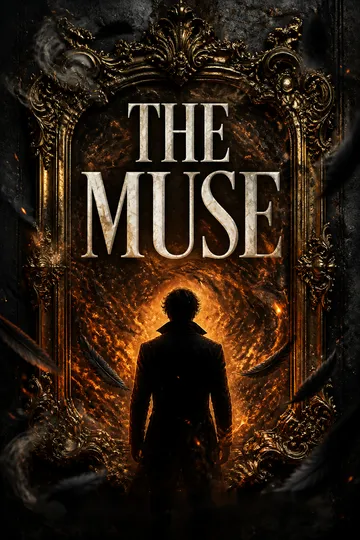
The Muse is a highly praised paranormal M/M romance by Emma Scott. Readers loved the emotional depth, beautiful writing, and complex characters of Ambri and Cole. The story explores themes of redemption, hope, and the power of love to overcome darkness. Many found it deeply moving and appreciated the author's handling of difficult topics. While a few readers struggled to connect with the characters or found parts of the plot confusing, the majority considered it a captivating and unforgettable read.
People Also Read


Characters
Cole Matheson
The searching portraitistCole is an American artist living in London, trained at the Royal Academy and gifted at capturing the emotional life in a face. After his grandmother’s death, professional disappointment and financial insecurity intensify his depression and self-doubt. He is observant, compassionate, and more comfortable attending to another person than asking for care himself. His portrait work is both a craft and a way of understanding people without claiming to know them completely. Cole’s caution around intimacy comes from wanting honest, mutual commitment, not from a lack of desire. He is drawn to Ambri’s contradictions and tries to meet the person beneath the beautiful, dangerous performance.
Ambri
The abandoned immortal museAmbri, born Ambrosius Edward Meade-Finch, is an eighteenth-century aristocrat transformed into a demon after betrayal, abuse, and abandonment. He is vain, witty, sensual, and adept at using charm to keep others at a distance. His power over desire has taught him to mistake being wanted for being valued, while his refusal to kiss anyone reflects a private boundary he has guarded for centuries. He wants a portrait because his family history has excluded him, but he initially treats Cole as a means to that end. Beneath his polished confidence lies a persistent fear that tenderness will lead to rejection and that his past has made him incapable of being loved.
Lucy Dennings
Cole’s steadfast confidanteLucy is Cole’s closest friend from their university years and one of the few people who recognizes how thoroughly he conceals his distress. She checks on him from New York, celebrates his artistic opportunity, and presses him to tell the truth when his mood darkens. Her relationship with Casziel has given her an unusual understanding of the supernatural world, but her loyalty to Cole remains grounded in years of ordinary friendship. Lucy is warm without being passive; she confronts Cole when he withdraws and offers practical emotional support rather than pretending affection alone can solve his problems.
Casziel
The former demon in loveCasziel is Lucy’s mysterious partner, a being with an ancient history who has experienced demonic power and human attachment. His past gives him a perspective Cole cannot easily obtain from Ambri, and he recognizes how fear can disguise itself as certainty. Casziel approaches Ambri with affection and bluntness, challenging him to consider whether love might offer a way out of a life defined by punishment. He also treats Cole with respect, recognizing the importance of their bond. His role is that of a living counterexample to the belief that a supernatural past must dictate every future choice.
Asmodai
The lord who demands proofAsmodai is a powerful archduke of demons who rules through threat and punishment. He treats loyalty as something to be demonstrated through harm, ordering Ambri to drive a human into ultimate despair. His judgment of Ambri is shaped by suspicion after other demons escape his control. Asmodai represents a system in which fear is used to enforce obedience and vulnerability is treated as weakness. He does not need to tempt Ambri with affection; he relies on the promise of prolonged torture to make disobedience seem impossible.
Eisheth
The hierarchy’s elegant enforcerEisheth is a succubus and Asmodai’s second-in-command, a striking, dangerous presence who once shared intimacy and companionship with Ambri. She understands his vanity and his defenses, which makes her warnings feel personal even when they serve the demonic hierarchy. Eisheth presses him for progress and helps coordinate the effort to exploit Cole’s success. Her polished manner conceals a hard allegiance to power, and she views human attachment as a weakness that can be turned into leverage.
Ashtaroth
The tempter at the fireAshtaroth is the demon who first offers Ambri a new existence when the young aristocrat is trapped in a burning building. He presents power and freedom from longing as solutions to a life shaped by neglect and violation. His persuasive strength lies in recognizing real pain and then narrowing the choices Ambri can imagine. Ashtaroth is less a rescuer than a masterful interpreter of despair, turning Ambri’s wish to stop hurting into a bargain that binds him to the demonic world.
Vaughn Ritter
Cole’s successful former classmateVaughn is a British painter who attended the Royal Academy with Cole and achieved early success through an influential agent. He cares for Cole and once offers to help him make gallery connections, but his busy career and growing insecurity complicate their friendship. Vaughn’s confident public image masks anxiety about whether success can last and whether another artist’s rise will diminish his own. He serves as both a genuine friend and a reminder that recognition does not automatically quiet self-doubt.
Jane Oxley
The agent who sees promiseJane is a formidable art agent who recognizes the unusual combination of artistic skill and broad appeal in Cole’s demon portraits. She is decisive, commercially ambitious, and willing to move quickly when she believes an artist has potential. Jane helps turn Cole’s small art-fair success into exhibitions and a European tour, while also reminding him that the art world is built on judgment, negotiation, and exposure. Her belief in Cole’s work gives his career a practical structure, though it cannot substitute for his own confidence or emotional support.
Armand de Villette
Ambri’s first great betrayalArmand is Ambri’s former lover and a gifted forger involved in the Affair of the Queen’s Necklace. He is charming when it serves him and adept at reshaping facts to protect his interests. His relationship with Ambri leaves a deep mark because he accepts the younger man’s devotion while refusing to return it. In the story’s supernatural conflict, Armand’s history with Ambri gives him intimate knowledge of where to wound him. He embodies the danger of confusing desire and attention with dependable love.
Deber
The whisper of worthlessnessDeber is one of two demon sisters who intensify human self-loathing. She feeds on existing insecurities rather than creating them from nothing, pushing people to treat painful thoughts as unquestionable truths. Her work helps explain why Cole’s private doubts feel so relentless.
Keeb
The whisper of failureKeeb is Deber’s sister and specializes in fear of failure. She discourages people from attempting change by making every possible effort seem doomed in advance. Together, the sisters turn ordinary doubt into a narrowing force that can isolate their target.
Jeanne de la Motte
The necklace scheme’s architectJeanne is a resourceful social climber and the central planner behind the Affair of the Queen’s Necklace. She draws Armand and Ambri into a scheme built on forged correspondence, impersonation, and stolen diamonds. Her ambition and ability to manipulate appearances make her dangerous long after the original crime.
Cardinal Rohan
The duped royal intermediaryRohan is a wealthy cardinal who longs to regain the Queen’s favor. Jeanne’s forged letters convince him to act as an intermediary in the necklace scheme, leaving him exposed when the deception is revealed. His vanity and hunger for political approval make him an easy target for a carefully staged fiction.
Margaret-Anne
Cole’s loving grandmotherMargaret-Anne raises Cole when his mother cannot care for him and becomes the steady source of love and encouragement that shapes his understanding of family. A warm, unconventional woman with a lively spirit, she believes in his artistic ability before he can fully believe in it himself. Her death leaves Cole grieving and unmoored, but the memory of her care remains a foundation he can return to.
Jerome
The watchful conciergeJerome is the elderly concierge at Ambri’s Chelsea building. He is formal, discreet, and observant, quietly smoothing Cole’s access to Ambri without prying into their arrangement. His steady presence gives the strange, grand residence a human point of contact.
Plot Devices
The Other Side
A cycle beyond deathThe Other Side is the realm where souls exist between human lifetimes, with angels and demons occupying different forms of influence. Humans return there after death and lose their memories when they begin another life, while powerful demons can cross into the human world. The system explains Ambri’s immortality, Asmodai’s authority, and Casziel’s unusual history. It also makes death more complicated than a single ending: a soul may continue, become a demon or angel, or face Oblivion. The story uses these rules to place psychological and moral choices inside a supernatural structure without making human free will irrelevant.
Ambri’s Beetle Form
A body that breaks apartAmbri can dissolve into a swarm of large black beetles and reform elsewhere, making the insects both his animal form and a visual sign of his divided existence. Cole first encounters the beetles in an apparently impossible visit, then incorporates their image into his art. The transformation lets Ambri move between spaces and the Other Side, but it also gives the story a recurring image of fragmentation followed by recomposition. The beetle swarm’s meaning changes as Cole learns that the beautiful human appearance and the demonic body belong to the same person.
The Demonic Whisperers
Externalized self-doubtDeber and Keeb amplify existing fears, self-criticism, and dread of failure. Their influence does not erase choice or invent every painful thought; it makes negative beliefs feel more persuasive and harder to interrupt. Later, other demons exploit Cole’s exhaustion and success anxiety with alcohol, pills, and apparent friendship. The device gives the novel a concrete supernatural vocabulary for the way distress can become isolating, while Lucy’s intervention helps Cole distinguish his own feelings from the manipulation surrounding them. The story’s answer is not invulnerability but connection, discernment, and seeking help.
The Portraits
Art as mutual recognitionCole’s portraits serve both as the practical basis of his commission and as the central language through which the lovers see one another. His demon paintings make money and attract galleries, but their emotional force comes from depicting danger alongside human feeling. Ambri’s official portrait answers his exclusion from his family history, while Cole’s private image of Ambri at the window preserves a moment of care. The paintings therefore move between public reputation and intimate knowledge. They also provide Cole with a way to keep working through grief, betrayal, and fear without reducing his experience to any one of them.
The Repeated Lifetimes
A second chance in timeHuman souls return to life after the Other Side, where memories of previous lives are usually forgotten. The finale bends that structure when Cole wakes months before the events that brought him to Ambri and finds a path back to the burning building where Ambri is revived. Their wealth and public success vanish with the altered timeline, but their love and memory remain. A diamond and message from their guardian angel connect the new beginning to both Ambri’s past and Cole’s grandmother. This device makes renewal costly: the characters keep their emotional knowledge while losing the external rewards built in the erased version of events.
Angels and Demons Series Series
About the Author







Download PDF
Download EPUB
.epub digital book format is ideal for reading ebooks on phones, tablets, and e-readers.








