

Key Takeaways
Start early because compounding rewards time and inflation punishes idle cash
Time is the advantage. Lowry’s investing education began when her father explained that after the 2008 crash, he and her mother held their investments and continued buying. The lesson was not that markets never fall, but that long-term investing gives money time to recover and grow. Compound interest means earning returns on earlier returns, so time can matter more than a dramatic starting sum. In the book’s example, investing $100 monthly for 20 years at an average 7% return grows to about $49,195, compared with roughly $24,000 saved without meaningful interest.
Cash loses ground, too. Prices rise over time, reducing what savings can buy. The book notes that $100 in 1989 had purchasing power equivalent to about $204 in 2019. For distant goals, leaving every dollar in a low-yield savings account can quietly undermine the goal.
The strongest argument here is comparative: investing carries volatility, while cash carries a slower, less visible risk of erosion. That reframes the choice from safe versus dangerous to different risks suited to different timelines. Compounding is powerful, but an assumed average return is not a promise, and actual returns arrive unevenly. The example works as motivation, not a forecast. The wider lesson is to match the tool to the job: accessible cash protects near-term spending, while diversified investments may help long-term money preserve purchasing power.
Build your emergency foundation before investing beyond an employer match
Stability comes first. Lowry recalls earning about $23,000 in her first year in New York while juggling three jobs. A cash buffer helped her manage that precarious period without selling investments or taking on debt. Her readiness checklist asks readers to set specific goals, understand cash flow, save three to six months of essential expenses, clear high-interest consumer debt, and bring student loans current.
Take the match. Employer contributions are the exception to the pause: contributing enough to receive an available 401(k) match can be worthwhile even while debt remains, because the employer is adding money to the account. Keep emergency savings liquid and principal-protected. Investing money needed soon can force a sale during a downturn, turning a temporary market decline into a real loss.
This sequencing recognizes that financial resilience is not simply about maximizing expected returns. Emergency savings function like insurance against having to sell assets at a bad moment, while paying down costly debt offers a relatively certain benefit. The framework is especially useful because it makes readiness concrete rather than treating investing as a test of courage. Its limits matter: three to six months is a rule of thumb, not a universal prescription. Income volatility, caregiving, health needs, and access to other support can justify a different cash cushion.
Give every investment a goal, deadline, and tolerable level of risk
Name the destination. Before choosing an investment, identify what the money is for, how much is needed, and when it must be available. Financial planner Douglas Boneparth’s approach is to identify, quantify, and prioritize goals. Retirement money decades away can usually withstand more market fluctuation than a house deposit due in a few years.
Protect hard deadlines. The book advises keeping money for near-term, inflexible goals in cash or cash equivalents. For medium-term goals, investing may be reasonable when the deadline can move and the investor can tolerate losses, with the portfolio becoming more conservative as the date approaches. A couple saving for a home chose not to risk their down payment in the market because a downturn could have delayed a necessary purchase. A higher possible return is not useful if it jeopardizes the goal.
Goal-based thinking is a practical antidote to treating every dollar as interchangeable. It connects investment risk to the consequences of being wrong, a more useful question than asking whether someone is generally bold or cautious. This resembles liability-driven planning, where assets are chosen partly around future obligations. The approach also discourages false precision: a questionnaire can help structure decisions, but it cannot erase uncertainty about future costs or life changes. Goals should be revisited when circumstances change, rather than treated as permanent labels.
Own broad markets cheaply instead of betting your future on one company
Spread the exposure. Asset allocation means deciding how much of a portfolio belongs in different types of investments, such as stocks, bonds, and cash. Diversification means spreading investments across and within those categories, including among companies and industries. The point is not to eliminate risk, but to avoid letting one company or sector determine the fate of the whole portfolio.
Watch the drag. Index funds aim to track a market index rather than pay a manager to select investments, and often have lower expenses than actively managed funds. Fees reduce the money left to compound. The book illustrates this with a fund charging 0.62%: that costs $6.20 annually for every $1,000 invested, before considering how those fees compound over time. Compare expense ratios and other charges, not just a platform’s advertised trading fee.
Diversification is powerful because it addresses company-specific uncertainty without requiring an investor to predict which business will dominate. Low costs reinforce the same logic: a fee is a dependable subtraction from returns, while active outperformance is uncertain. Still, broad ownership does not make a portfolio immune to market-wide declines, and a fund’s label alone does not reveal its holdings or risk. The useful distinction is between reducing avoidable concentration and pretending risk can be removed. Simplicity is valuable when it makes a sound plan easier to maintain.
Capture retirement matches early, then choose tax treatment deliberately
Claim the contribution. A workplace 401(k) or 403(b) is often the simplest first investment. If an employer matches contributions up to a stated percentage, contributing enough to receive the full match captures compensation that would otherwise be left behind. Check the plan’s vesting rules, since employer contributions may not all belong to an employee who leaves quickly. The book’s example of starting earlier shows why small contributions made over many years can outgrow larger contributions begun later.
Choose the account type. Traditional accounts generally use pre-tax contributions and tax withdrawals in retirement. Roth accounts use after-tax contributions and generally allow qualified retirement withdrawals tax-free. A target-date fund, which adjusts its mix toward more conservative investments as a chosen retirement year nears, can simplify an intimidating menu. Compare its fees and risk profile with the plan’s other options.
Workplace plans combine several behavioral advantages: contributions can be automatic, money is invested before it becomes spendable, and a match rewards participation. The tax distinction between traditional and Roth accounts is best understood as a choice about when taxation occurs, not a contest with one winner for everyone. Future tax rates and personal circumstances are uncertain. Target-date funds can reduce decision paralysis, though their convenience should not substitute for checking costs, holdings, and whether the default risk level fits the investor.
Compare student-loan interest with uncertain returns, not with wishful averages
Separate debt types. Credit-card balances carrying rates of 15% to 30% are difficult to outrun with investment returns, so the book prioritizes paying them off before investing beyond a retirement match. Student loans require a more individualized comparison. The author and her husband paid off one loan at 7.75%, while keeping other investments because their rates were lower and the couple valued both goals.
Balance the trade-off. Experts interviewed in the book often treat rates around 5% as a rough decision point, not a universal law. A potential market return is uncertain; avoided loan interest is more predictable. Still, skipping an employer match can sacrifice substantial value, and delaying all retirement contributions loses time for compounding. Debt aversion matters too. A mathematically efficient plan that causes constant distress may be difficult to sustain.
The comparison is a form of opportunity-cost reasoning: each extra dollar used for repayment cannot simultaneously be invested. The key asymmetry is certainty. Loan interest is contractual, while market performance varies, so comparing a loan rate with a rosy average can understate risk. At the same time, the emotional benefit of becoming debt-free is real, even when it is not easily captured in a spreadsheet. The book’s most balanced position is not either-or: secure a match when possible, then weigh interest rates, goals, liquidity, and personal comfort.
Make a crash plan before red numbers tempt you to sell
Expect volatility. Lowry’s account of the 2008 crisis highlights the difference between an investment falling in value and an investor selling at that lower value. The S&P 500 lost about half its value during the downturn, then later surpassed its previous high. That recovery rewarded investors who could remain invested, but it did not make the decline painless or guarantee that every individual company would recover.
Build guardrails. Choose an allocation that is emotionally and financially survivable, automate contributions, and avoid checking balances every day. Lowry suggests reviewing a portfolio periodically, often every six to twelve months, to see whether it needs rebalancing. During a market scare, pause before acting, seek context rather than sensational headlines, and return to the original plan. Selling may be appropriate for a changed goal or a failing investment, but panic is not itself a strategy.
This section treats investor behavior as part of portfolio design. A theoretically optimal allocation is useless if every decline triggers an impulsive sale, so a tolerable plan can outperform a more aggressive one in practice. That is a behavioral-finance insight: losses often feel more urgent than equivalent gains feel rewarding. Historical recoveries can provide perspective, but they must not be mistaken for a guarantee. Broad-market history does not promise that a concentrated bet, a single company, or a market entered at any particular moment will rebound on schedule.
Pick an investing service for its actual value, not its slick interface
Choose the support you need. A brokerage account gives DIY investors a place to buy and hold investments. A robo-advisor can automate portfolio construction, rebalancing, and sometimes tax-loss harvesting. A human advisor may be more useful when finances become complex or when a durable personal relationship matters. Compare fees, minimums, available investments, customer service, and whether advice follows a fiduciary standard, which requires acting in the client’s best interest.
Treat apps as entry points. Micro-investing apps can make it possible to start with small sums and automate deposits. But even a $1 monthly fee can outweigh the returns on a very small balance. Fund expense ratios may still apply. Round-ups and gamified features can build a habit, but spare change alone is unlikely to meet major goals. Use automation to invest consistently, and increase contributions as finances allow.
The useful question is not whether technology or human advice is inherently superior, but whether the service solves a real problem at a fair cost. Automation can reduce friction and emotional interference; human guidance can add context when decisions interact across taxes, family, and work. Yet digital convenience can obscure fees or encourage frequent engagement that is not useful to long-term investors. A platform should be evaluated by the behavior it enables and the net value it provides, not by how effortless its onboarding feels.
Keep stock bets small enough to lose without wrecking your plan
Know what you own. Buying a familiar company is not the same as understanding whether its shares are worth their price. Individual stock selection requires research into the business, its finances, its industry, and its management. A small experiment can be educational, but the book warns against making concentrated bets the foundation of a financial future. Its example of a lithium-related stock rose from about $5,000 to over $14,000, then fell to about $7,000, illustrating how quickly gains can reverse.
Size the risk. The author suggests using only money an investor can afford to lose and keeping a diversified core. A playful British contest in which a cat’s randomly selected stocks beat professional traders is a reminder that expertise does not guarantee outperformance, not proof that random selection is a reliable strategy. Even buying an employer’s stock can concentrate risk because income and investments depend on the same company.
A small speculative allocation can serve as a learning budget, provided it is genuinely separated from essential goals. This approach acknowledges curiosity without letting it dictate the entire portfolio. The cat contest is memorable but methodologically weak: one short contest cannot establish that random selection consistently beats professional analysis. Likewise, brand familiarity can create confidence without revealing valuation or business risk. The more consequential principle is position sizing. Risk is not just a property of an investment; it also depends on how much of a person’s total financial life is exposed.
Align investments with your values while preserving broad diversification
Look past the label. A broad index fund can include companies whose labor, environmental, or product practices conflict with an investor’s beliefs. Socially responsible investing and ESG approaches use screens or ratings, but standards vary. Lowry distinguishes these from impact investing, which seeks companies whose revenue aligns with social or environmental aims such as the United Nations Sustainable Development Goals. Some religious approaches, including halal investing, also exclude businesses that violate specific beliefs.
Inspect the holdings. A fund described as ethical may still own companies an investor rejects, so review its holdings and prospectus. Narrow screening can reduce the range of companies available, weaken diversification, and raise costs. The book notes that a social index had performed competitively with the S&P 500 in the period discussed, but neither past performance nor a values label guarantees future returns or real-world impact.
Values-based investing recognizes that a portfolio is not only a financial instrument; it can also express priorities. That can give an investor a reason to stay engaged with the choices being made. But screening and impact are not identical. Excluding a company from a portfolio does not by itself demonstrate that the company changed its behavior, while investing in a mission-aligned firm does not ensure measurable social benefit. The practical task is to define the standard clearly, verify holdings, and weigh ethical preference against cost and concentration rather than assuming the label settles the question.
Understand the product, the incentives, and the exit tax before acting
Question the pitch. Lowry describes her then-boyfriend buying an expensive whole-life policy after a sales representative presented it as both insurance and investment. He needed basic coverage for cosigned student debt, and a less costly term policy fit that need better. The story shows how a product can be legitimate yet still be unsuitable, especially when commissions shape recommendations. Be cautious of quick-money claims, pressure, or investments that cannot be explained plainly. Check an advisor’s registration, disciplinary record, fees, and fiduciary obligations.
Plan the sale. Investments may be sold to meet a goal, rebalance a portfolio, or respond to a genuine change in the investment. In a taxable account, selling for a gain can create a tax bill, with different treatment depending on how long the asset was held. Check trading fees, keep money aside for taxes, and consider whether a sale leaves the remaining portfolio poorly diversified.
The insurance example usefully separates fraud from conflicted selling. Consumer harm can arise even when a product is legal and the salesperson is not inventing facts, if incentives steer someone toward a poor fit. Independent verification and clear explanations reduce that vulnerability. Selling also deserves more attention than a simple buy-and-hold slogan allows: taxes, fees, and goal changes are legitimate reasons to act. The discipline is to make a sale serve a plan, rather than letting a commission-driven pitch or a frightening headline make the decision.
Build wealth through repeatable saving and growing earning power, not shortcuts
Wealth is accumulated behavior. Lowry’s father set a goal to become a millionaire by 42, invested early, saved aggressively, lived below his means, and developed valuable skills, including learning Japanese before a work opportunity in Japan. His family reportedly saved about 80% of his income while living overseas. Later, when he lost his corporate job, he built a consulting business and earned more than before.
Copy principles, not circumstances. Financial professionals in the book describe wealthy investors as patient, diversified, cost-conscious, and consistent, rather than as constant traders. They also point to career choices in growing industries and attention to taxes. Lowry acknowledges that her family had advantages, including a financial safety net. The practical lesson is not that every reader can reproduce the same outcome, but that steady saving, useful skills, and long-term decisions matter more than chasing a fast windfall.
The family story gives the book a human-scale answer to the question of what wealth-building looks like: repeated choices, not a secret portfolio trick. It also reveals that financial behavior is shaped by opportunity. A safety net can make entrepreneurship and career risk more feasible, while many households face constraints the story’s saver did not. The 80% savings rate is illustrative, not a sensible benchmark for most readers. Its broader value lies in showing how modest consumption, skills, and investment consistency can reinforce one another over time.
Analysis
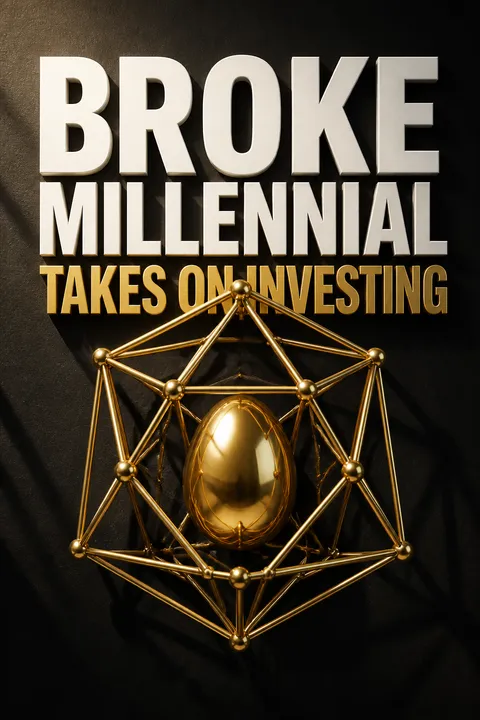
Broke Millennial Takes On Investing is a beginner’s financial guide built around a useful tension: investing is essential for many long-term goals, yet starting prematurely or emotionally can make a person more fragile. Lowry moves from her father’s account of staying invested through the 2008 crash to practical decisions about cash reserves, retirement plans, debt, brokerage accounts, advisors, ethical screens, and market downturns. The personal stories make technical material legible without pretending that investing is risk-free.
The book’s central strength is its decision architecture. Rather than treating investing as a contest to find the best stock, it asks readers to establish a foundation, define goals, match risk to time horizon, diversify, examine costs, and automate contributions. This sequence is more useful to a beginner than a list of supposedly winning investments because it helps prevent predictable errors: investing emergency money, paying high fees, abandoning a plan during a fall, or mistaking a product pitch for impartial advice. It also treats emotional tolerance as a real constraint, not a character flaw.
The author’s family story illustrates persistence and financial habits, while candidly acknowledging that privilege and a safety net helped make risk-taking possible. That acknowledgment matters. Saving early and choosing growing industries can improve one person’s prospects, but cannot erase differences in income, health, caregiving demands, discrimination, or access to employer benefits. The book’s advice should therefore be read as a toolkit, not a moral judgment about who has accumulated wealth.
Several figures and product descriptions reflect the book’s 2018 research context. App pricing, tax rules, account limits, and advisory services change, so readers should verify current terms before acting. The return examples also simplify reality: average returns do not arrive smoothly, and historical market recovery does not guarantee future outcomes. With those cautions, the book’s most durable message remains clear: build resilience, invest according to the purpose of the money, keep costs visible, and value consistency over prediction.
Review Summary
Broke Millennial Takes On Investing receives mixed reviews, with an average rating of 3.93/5. Readers appreciate its beginner-friendly approach to investing, conversational tone, and helpful resources. Some find it informative and confidence-boosting, while others criticize its simplicity or feel disconnected from the author's privileged background. The book is praised for filling a gap in personal finance literature for young adults, covering topics from basic concepts to more advanced investing strategies. However, some readers note its American-centric focus and occasional lack of depth.
People Also Read







Glossary
Financial oxygen mask
Financial readiness foundationLowry’s metaphor for establishing basic financial stability before taking investment risk. It includes understanding income and spending, setting concrete goals, maintaining liquid emergency savings, and paying off high-interest consumer debt. The metaphor also highlights an exception: an employer retirement match can make contributing worthwhile even while other financial priorities remain.
Asset allocation
Mix of investment typesThe process of deciding how much of a portfolio to place in different asset classes, such as stocks, bonds, and cash. The appropriate mix depends on the investor’s goals, time horizon, and tolerance for losses. Allocation helps shape both the potential growth and the level of fluctuation a portfolio may experience.
Diversification
Spread investments across risksA strategy of holding investments across multiple asset classes and across different companies or sectors within an asset class. Diversification reduces dependence on any single investment or industry. It cannot prevent all losses, especially during a broad market decline, but it can limit the damage caused by a particular company or sector performing poorly.
Dollar-cost averaging
Investing on a regular scheduleA method of investing a consistent amount at regular intervals, rather than investing all available money at one chosen price. Because purchases occur at different market prices, the strategy avoids relying on a successful prediction of market timing. Regular contributions can also make investing more automatic, though they do not guarantee a profit or prevent losses.
Target-date fund
Retirement fund that adjusts riskA retirement investment fund selected for an approximate future retirement year. It typically holds a mix of stocks and bonds, then gradually shifts toward a more conservative allocation as the target date approaches. The fund generally handles rebalancing for the investor. Fees, holdings, and the chosen risk level still deserve review.
Fiduciary standard
Duty to put clients firstA standard requiring a financial professional or organization to act in the client’s best interest. Lowry contrasts it with the suitability standard, which requires recommendations to be suitable but may leave room for conflicts, such as a commission encouraging the sale of a particular product. Investors should ask how an advisor is paid and what duties apply.
Impact investing
Investing in mission-aligned businessesAn approach that seeks investments in companies whose revenue is aligned with specified social or environmental objectives. The book distinguishes it from broader ESG or socially responsible investing screens, and describes alignment with the United Nations Sustainable Development Goals as one possible standard. The term does not guarantee a particular financial return or measurable social outcome.
4 Percent Rule
Retirement withdrawal rule of thumbA retirement-planning guideline discussed in the book, based on research commonly associated with the Trinity study. It suggests that withdrawing about 4% of a retirement portfolio in the first year, then adjusting withdrawals for inflation, may allow a portfolio with an appropriate stock and bond mix to last roughly 30 years. It is a planning estimate, not a guarantee.
Multiply by 25 Rule
Estimate a retirement savings targetA calculation that multiplies expected annual retirement spending by 25 to estimate a portfolio target. It corresponds to withdrawing 4% of that portfolio in the first year. For instance, estimated annual spending of $50,000 produces a target of $1.25 million. The estimate depends on assumptions about withdrawal rates, returns, inflation, taxes, and retirement length.
Socially responsible investing
Investing with social screensAn approach that uses environmental, social, or governance criteria, or other ethical screens, to shape investment choices. The book presents it as a broad category whose standards can vary substantially among funds. A fund carrying an ESG or socially responsible label may still hold companies that conflict with a particular investor’s beliefs, so examining its holdings is important.
Broke Millennial Series



About the Author
Download PDF
Download EPUB
.epub digital book format is ideal for reading ebooks on phones, tablets, and e-readers.








