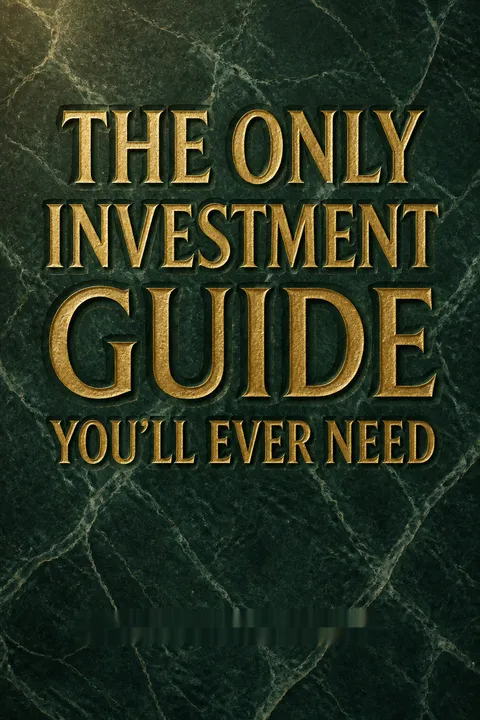


Key Takeaways
Reject any investment pitch that hides its downside behind a thrilling return.
Follow the risk, not the rate. Tobias opens with Americans lured by Mexican bank accounts paying 12% while U.S. accounts paid 5.5%. The extra interest looked irresistible until the peso lost value in successive devaluations. A high nominal return can be wiped out by currency risk, fees, illiquidity, or fraud. The story is a warning against buying what cannot be evaluated simply because an expert has packaged it persuasively.
Amateurs face stacked odds. Tobias also dismisses commodity speculation and collectibles as poor default choices. Speculators compete with industry insiders; collectors may find that selling costs, insurance, and storage consume the apparent appreciation. The practical question is not how to play every market, but whether the game deserves a place in a household plan at all.
The central lesson is about base rates: a rare success story is less informative than the proportion of participants who lose. This is a useful antidote to survivorship bias, the tendency to notice the visible winner while overlooking the many failed bets. The Mexico example also shows why a quoted yield is not a complete return: investors care about what their money can ultimately buy, not merely the number printed on an account statement. Caution should not become blanket rejection of unfamiliar assets, however. It should prompt a demand for understandable risks, transparent costs, and a plausible role in the overall portfolio.
A dollar you do not spend can outperform a dollar you earn.
Compare the after-tax alternatives. Tobias emphasizes the marginal tax rate, the tax on the next dollar earned, rather than the average tax rate on all income. If half of an additional paycheck disappears to taxes, avoiding a $40 expense may require earning $80 before tax. Paying down a credit-card balance charging 20% is similarly valuable: it avoids interest without market risk or tax on the saving.
Turn shopping into a return. Buying familiar, nonperishable goods in bulk can secure a discount and protect against later price increases. Tobias’s wine example estimates a 53% annual return on the extra money tied up by buying a discounted case rather than one bottle at a time. The point is not to hoard indiscriminately, but to reduce costs on things already certain to be used.
This reframing makes household finance legible as an investment problem. A guaranteed reduction in interest expense can be more valuable than chasing a risky gain, especially when a high-interest balance is compounding against the borrower. The bulk-buying example also resembles inventory management: the household trades storage space and upfront cash for lower unit costs. Its limits matter. Perishability, waste, storage constraints, and the temptation to consume more can erase the discount. A saving is real only when the buyer would have purchased the item anyway and uses it before it spoils.
Give every paycheck a job before lifestyle creep assigns one.
Start with a map. Tobias’s planning exercise asks readers to list assets and debts, choose concrete financial goals, estimate take-home income, and categorize annual expenses. The figures need not be exact. Estimating income conservatively and expenses generously makes a plan less likely to collapse under ordinary surprises. If the numbers do not work, adjust spending, income, or the goal until they do.
Make saving automatic. Tobias describes a worker who had accumulated nearly $70,000 in credit-card debt. The turning point was stopping new borrowing, paying down balances, and beginning with a small monthly investment. As debt payments declined, investments grew. A simpler system is to divert a chosen share of each paycheck into savings before it reaches the spending account. The plan is a tool for directing choices, not a scorecard for judging every purchase.
The strongest feature of this approach is that it converts a vague intention into a visible feedback loop. Behavioral economics describes a related effect as mental accounting: people make different decisions when money is assigned to distinct purposes. Automatic transfers use that tendency constructively by making future goals harder to spend accidentally. The method also resists perfectionism. A budget that tolerates estimates and occasional overspending is more usable than an exacting ledger abandoned after one missed entry. Its limitation is structural: no spreadsheet can compensate for income that fails to cover basic needs. In that case, the plan can clarify the gap, but not remove it.
Keep emergency money boring, and reserve risk for distant goals.
Separate money by purpose. Tobias distinguishes debt investments, such as bank deposits and bonds, from equity, ownership in businesses whose value can rise or fall. Cash needed for emergencies, near-term bills, or a down payment should remain accessible and dependable. He advises paying off high-interest consumer debt and building a meaningful safe reserve before taking substantial investment risk.
Risk depends on the deadline. Money intended for retirement decades away can withstand volatility better than money needed next year. Tobias argues that avoiding all risk is not safe if it leaves a saver unable to keep pace with inflation or build enough for retirement. The danger is not only losing money in a downturn. It is also failing to accumulate enough. The appropriate balance depends on what the money must do and when it must do it.
This is a form of liability matching: the timing and certainty of future expenses should shape the assets held to meet them. A stable reserve can also serve a psychological function, reducing the chance that an investor sells long-term holdings during a panic to cover an immediate need. That emotional buffer is often treated as a drag on returns, but it can protect the broader strategy from self-sabotage. The reserve should not become an excuse to keep every dollar in cash indefinitely. Inflation steadily changes what a fixed sum can buy, so safety must be judged against the goal, not by the absence of price fluctuations alone.
Own a broad slice of business rather than auditioning as a stock picker.
Stocks reward patience, not certainty. Tobias compares long-run returns from 1926 to 2015: $1,000 in Treasury bills would have grown to about $20,530, while large-company stocks would have grown to about $2.59 million, before taxes. That striking comparison comes with severe declines along the way, including an 83% market fall from 1929 to 1932. Historical averages describe long periods, not a promise about any individual decade.
Buy the market cheaply. Tobias’s default recommendation is a low-cost, no-load index fund, which owns a broad collection of stocks rather than paying a manager to select a few supposed winners. The strategy accepts average market performance in exchange for diversification, low expenses, and less dependence on predicting which companies will thrive. Owning stocks still carries substantial risk, particularly over short periods, but a diversified fund reduces the danger of one company ruining the plan.
The index-fund case is an application of humility under competition. In a market crowded with informed professionals, a household investor must overcome both their expertise and the costs of trading against them. Broad ownership avoids the need to identify a winner in advance and ensures participation in companies that become unexpectedly important. Yet the historical comparison can seduce readers into treating a century-long result as a forecast. The path matters: investors with short horizons, unstable income, or low tolerance for losses may not be able to endure the drawdowns needed to capture long-run growth. A sound strategy must be both financially plausible and behaviorally survivable.
Invest on schedule so fear does not decide your market timing.
Markets turn before moods do. Tobias recounts periods when pessimism was intense just before stocks recovered, and optimism was widespread before sharp declines. The examples illustrate how investors often buy after prices have risen and sell after they have fallen. Even skilled observers struggle to identify turning points in real time.
Spread purchases across time. Dollar-cost averaging means investing a fixed amount at regular intervals. When prices fall, the same contribution buys more shares; when prices rise, it buys fewer. This does not guarantee a profit, and it cannot rescue a poor individual company. It can, however, reduce the pressure to commit all savings at a moment chosen by fear or excitement. Tobias favors steady investing in diversified funds and patience with long-term holdings, while acknowledging that deep declines can test anyone’s resolve.
A schedule changes the decision from repeated market prediction to a rule established in advance. That is a behavioral advantage, not a mathematical guarantee. Regular investing can reduce regret about choosing one unlucky entry date, but it does not eliminate the possibility of losses or make an unsuitable stock safe. The distinction between a broad fund and a single company is crucial: an index spreads company-specific risk, while buying more of a falling individual stock can compound a mistake. The deeper discipline is to decide how much volatility a plan can tolerate before a crisis arrives, when attention and emotions are least reliable.
Cut the costs you control: fees, turnover, taxes, and borrowing.
Small charges compound against you. Tobias argues that investors cannot control market returns, but they can control many costs. A high-fee fund begins each year behind a low-cost competitor. Frequent trading adds commissions and bid-ask spreads, while selling profitable holdings can trigger taxes that a buy-and-hold investor postpones. He recommends discount brokers and low-expense funds, and warns that a friendly full-service broker may still generate unnecessary activity.
Make friction visible. Tobias was surprised to discover that brokerage commissions had become one of his largest expenses. His practical test is to add up the charges rather than judging each trade in isolation. The same principle applies to credit-card interest, loan terms, and insurance premiums. A product that advertises a low rate may cost more through fees or a higher purchase price. Compare the total cost, not the most attractive number in the promotion.
Costs are unusually powerful because they are comparatively predictable while investment returns are not. A recurring fee does not need to be dramatic to matter: it reduces the capital available to compound every year. This is why cost awareness can be more useful than elaborate forecasting. Tax deferral also has value because money not yet paid out can remain invested, though tax rules and future rates complicate any simple comparison. The broader lesson is not that every fee is wasteful. Advice, insurance, and convenience can be worth paying for. The test is whether the service solves a real problem at a price proportionate to its value.
Use experts for facts, but keep the final financial judgment yours.
Good intentions do not erase incentives. Tobias recounts celebrity-endorsed insurance with benefits far smaller than the advertisements implied, a stock-picking club whose returns were miscalculated, and a bank that repeated an oil investment’s promotional claims as if they were independent analysis. He also describes losses caused by people who meant well but misunderstood complex strategies.
Ask what the seller earns. A broker, adviser, insurer, or fund manager may have useful expertise while also benefiting from a particular sale. Tobias does not say to reject every professional. He says to understand the product, diversify rather than concentrate everything with one manager, and distinguish competent analysis from commissioned enthusiasm. If an investment cannot be explained clearly, or its performance depends on an opaque method, the burden of proof belongs to the person asking for the money.
This is an argument for calibrated trust rather than cynicism. Expertise is valuable, but it does not automatically align a professional’s incentives with a client’s interests. Asking how an adviser is paid, what could make the recommendation fail, and what simpler alternative exists helps expose conflicts without assuming bad faith. Modern fiduciary standards and disclosure rules can reduce some risks, but disclosure alone does not make a complicated product suitable. The reader still needs enough understanding to notice when an explanation is evasive. Financial literacy here is not the ability to perform every calculation; it is the ability to ask the questions that reveal who bears the risk.
Use retirement tax advantages without buying costly complexity.
Take the benefits already offered. Tobias puts employer retirement-plan matching contributions first because they add money to the worker’s savings. He also favors tax-advantaged accounts, especially Roth IRAs for many savers, because qualified withdrawals can be tax-free and the account can compound without annual tax on its growth. Starting early matters: time allows contributions and their earnings to build on one another.
Do not confuse a tax wrapper with a good investment. Tobias criticizes variable annuities and investment-linked insurance sold as flexible tax shelters, citing sales charges, administrative costs, and restrictive withdrawal rules. He distinguishes those products from a genuine lifetime annuity, which can provide income for someone worried about outliving savings. The book’s contribution limits, rates, and legal details reflect its 2016 edition and should not be treated as current rules.
Tax-advantaged accounts are containers, not investments. Their value depends on what they hold, what they cost, and whether their restrictions fit the saver’s time horizon. This distinction helps explain why a tax benefit can be overwhelmed by fees or poor liquidity. The book is also right to treat an employer match as unusually valuable, since it adds an immediate contribution before investment performance enters the picture. Roth-versus-traditional choices are less universal than a simple rule suggests: present and future tax rates, withdrawal flexibility, and household circumstances all matter. The robust principle is to capture clear benefits while refusing to pay heavily for complexity marketed as tax magic.
Make family money legible before illness, inheritance, or death forces the issue.
Plan for handoffs. Tobias urges families to teach saving early, review account beneficiaries, and prepare documents that clarify who can make medical and financial decisions. He explains that probate, the court process for settling an estate, can delay transfers and add expense. Depending on local law and individual circumstances, beneficiary designations, transfer-on-death arrangements, or a living trust can help assets pass more directly.
Make care a family conversation. Unmarried partners may need wills and health-care proxies because marriage does not automatically provide every legal protection. Adult children helping aging parents should identify available care and services, discuss documents while parents can still decide, and agree on how caregiving costs and labor will be recognized. These preparations are practical acts of care, not predictions that something bad is imminent.
Financial planning is often framed as an individual project, but the hardest decisions are frequently relational: who has authority, who pays, and who does unpaid care work. Clear documents reduce ambiguity at moments when families have little time or emotional capacity to resolve it. The same principle appears in organizational succession planning: making responsibilities explicit protects the group when a key person becomes unavailable. Legal tools are jurisdiction-specific, however, and forms that appear simple can produce unwanted consequences when ownership, taxes, or family structures are complicated. Preparation works best when paired with candid discussion and qualified local advice.
Let wealth buy security and options, not an endlessly upgraded life.
A windfall needs a pause. Tobias recounts writer Gail Sheehy’s unease after sudden success and warns that people can raise their spending until a fortune feels insufficient. His proposed response is deliberately undramatic: keep about a year of ordinary expenses liquid, place some money in staggered Treasury securities, invest much of the remainder in broad domestic and international stock funds, and review the plan periodically. The goal is security and freedom, not a new job managing money.
Define enough before more arrives. The book closes by challenging the assumption that affluence requires endless production and consumption. Saving is not meant to turn life into a financial contest. It creates room to handle emergencies, support family, and enjoy choices without borrowing at punishing rates. A rising net worth can provide satisfaction, but only if a person’s idea of a good life does not expand faster than the resources meant to support it.
The windfall advice treats simplicity as a form of wealth: fewer urgent decisions, lower exposure to sales pressure, and less dependence on predicting markets. The deeper question is behavioral. If spending rises automatically with income, additional wealth may improve comfort without reducing anxiety. Research on adaptation suggests that people often become accustomed to improved circumstances, although income still matters greatly when basic needs are unmet. The book’s restrained approach is therefore strongest as a defense against status-driven escalation, not as an argument that material resources are irrelevant. Security matters, but so does deciding in advance what security is for.
Analysis
Tobias’s central achievement is to shrink a noisy financial universe into a manageable household system: spend less than income, protect near-term needs, save automatically, own diversified productive assets for long horizons, and keep intermediaries from quietly extracting the gains. The book’s humor is not decoration. It punctures the authority of sales pitches and makes caution memorable without making money feel forbiddingly technical. Its strongest recurring distinction is between a decision that is genuinely important and one that merely feels sophisticated. A household can waste hours optimizing a tiny account fee while ignoring expensive debt, savings behavior, or portfolio risk.
The argument also contains a productive tension. Tobias distrusts market prediction and praises passive ownership, yet discusses value investing, alternative index weighting, individual securities, and speculative positions. These exceptions may be intellectually interesting, but they risk distracting readers from the book’s most repeatable advice. Its own examples of exceptional investors make the point: unusual skill is possible, but identifying it in advance is hard. For most readers, a low-cost diversified portfolio is less a claim that markets are perfectly rational than a practical response to limited time, uneven information, and human emotion.
The historical return comparisons need equally careful interpretation. Long-run averages can make equity risk look easy to endure, while real households face job loss, medical costs, concentrated housing wealth, and the possibility of needing funds during a downturn. A plan must account for liquidity and behavior, not just expected return. Regular investing helps discipline, but it does not eliminate losses or make every horizon long enough.
Finally, this edition dates from 2016, and many tax limits, financial products, prices, and legal procedures in its examples have changed or may vary by jurisdiction. The durable contribution is not a frozen catalog of products. It is a method of asking: what is the actual risk, what does this cost, whose incentives are served, and does this choice advance a concrete life goal? That method remains more valuable than any single hot tip.
Review Summary
The Only Investment Guide You'll Ever Need receives mixed reviews. Many praise its practical advice on saving, investing, and financial planning, appreciating the author's humor and straightforward approach. Readers find it helpful for beginners and those seeking a comprehensive overview of personal finance. However, some criticize its dated information, U.S.-centric focus, and occasional oversimplification of complex topics. Despite its bold title, most agree it's a valuable resource but not necessarily the only guide needed for financial literacy.
People Also Read





Glossary
Dollar-cost averaging
Fixed-interval investingA method of investing a set amount at regular intervals rather than committing the entire sum at once. The investor buys more shares when prices are low and fewer when prices are high. Tobias presents it as a way to reduce the pressure of timing the market, not as a guarantee against losses.
Random walk theory
Prices resist predictionThe theory that publicly available information is reflected quickly in security prices, making reliable short-term prediction difficult. Tobias uses it to explain why professional stock pickers often fail to outperform market averages after costs. He treats the theory as broadly persuasive for ordinary investors, while allowing that market mispricing and exceptional skill can exist.
Index fund
Fund tracking a marketA mutual fund or exchange-traded fund designed to follow a specified market index rather than select securities through active research. It typically holds many of the index’s investments and trades less than an actively managed fund. Tobias favors broad, low-expense index funds as a simple way to diversify and reduce fees.
No-load fund
Fund without sales chargeA mutual fund that does not impose an initial or deferred sales commission on the investor’s purchase or sale. No-load does not mean cost-free: management, administration, and other ongoing expenses may still apply. Tobias recommends checking total annual expenses rather than relying on a fund’s no-load label alone.
TIPS
Inflation-protected Treasury bondsTreasury Inflation-Protected Securities are U.S. government bonds whose principal value adjusts with an official measure of inflation. They pay interest based on that adjusted principal and are designed to protect purchasing power over time. Tobias notes that their market prices can still fall before maturity and that inflation adjustments have tax consequences in taxable accounts.
Roth IRA
Tax-free retirement accountAn individual retirement account funded with after-tax contributions. Under the rules described in the book, qualified withdrawals, including investment growth, are tax-free. The account’s treatment can make it useful for long-term saving, but eligibility, contribution limits, and withdrawal rules are set by tax law and can change.
529 plan
Tax-advantaged education savingsA qualified tuition program that lets savings grow tax-advantaged when used for eligible education expenses. The account is generally controlled by the contributor, and the beneficiary may be changed under applicable rules. Tobias emphasizes that funds can often be used at colleges outside the state sponsoring the plan, while noting that plans and tax benefits differ.
Return on equity
Profit relative to equityA measure comparing a company’s profits with the equity capital invested by its shareholders. Tobias uses it to consider how effectively a company reinvests profits that are not paid out as dividends. A high figure alone does not establish that a stock is attractive, because the purchase price and the durability of future profits also matter.
VSP
Identified share purchase lotShort for versus purchase, VSP is an instruction identifying the specific purchase date of shares being sold. When an investor has acquired the same stock at different times, specifying the lot can determine which shares are treated as sold for tax purposes. Accurate records and broker confirmation are essential to support the identification.
FAQ
What's The Only Investment Guide You'll Ever Need about?
- Investment Basics: The book offers a comprehensive overview of personal finance and investment strategies, focusing on understanding one's financial situation.
- Long-term Perspective: It emphasizes the importance of long-term investing, particularly in stocks, which tend to outperform other investment types over time.
- Practical Advice: Andrew Tobias provides practical tips on saving, budgeting, and investing, making the content accessible for readers at all financial literacy levels.
Why should I read The Only Investment Guide You'll Ever Need?
- Comprehensive Resource: The book serves as a one-stop resource for improving financial literacy and investment knowledge.
- Real-World Examples: Tobias uses relatable anecdotes to illustrate complex financial concepts, making them easier to understand.
- Timeless Principles: The advice is grounded in financial principles that remain relevant despite changing market conditions.
What are the key takeaways of The Only Investment Guide You'll Ever Need?
- Live Within Your Means: Emphasizes the importance of living within your means and saving money as a foundation for financial success.
- Invest in Stocks: Advocates for investing in stocks to build wealth over the long term, highlighting their potential to outpace inflation.
- Trust No One: Encourages individuals to take responsibility for their financial decisions and be cautious of financial advisors and schemes.
What are the best quotes from The Only Investment Guide You'll Ever Need and what do they mean?
- “A penny saved is two pennies earned.”: Highlights the importance of saving money, suggesting that saving is often more beneficial than earning more due to tax implications.
- “Trust everybody, but cut the cards.”: Encourages caution in financial dealings, advising readers to verify information and not take everything at face value.
- “The more you learn, the more you earn.”: Emphasizes the value of financial education and knowledge in making better investment decisions.
What investment strategies does Andrew Tobias recommend in The Only Investment Guide You'll Ever Need?
- Minimal Risk Approach: Advocates for a cautious investment strategy, focusing on low-risk options like savings accounts and Treasury bills before venturing into stocks.
- Diversification: Stresses the importance of diversifying investments to mitigate risk, particularly when investing in stocks or real estate.
- Long-Term Focus: Encourages a long-term perspective on investments, suggesting that patience and time can lead to significant financial growth.
How does The Only Investment Guide You'll Ever Need address the stock market?
- Understanding Market Dynamics: Explains how the stock market operates, including the relationship between supply and demand and the impact of interest rates on stock prices.
- Investment in Index Funds: Recommends investing in no-load index funds for broad market exposure with lower fees and risks compared to actively managed funds.
- Historical Performance: Provides historical data showing that stocks have outperformed other asset classes over the long term, reinforcing the case for stock investment.
What are the tax strategies discussed in The Only Investment Guide You'll Ever Need?
- Tax-Deferred Accounts: Discusses the benefits of using tax-deferred accounts like IRAs and 401(k)s to save for retirement, allowing investments to grow without immediate tax implications.
- Education Savings Accounts: Highlights the advantages of Coverdell Education Savings Accounts and 529 plans for saving for children's education, offering tax-free growth.
- Charitable Contributions: Advises on the tax benefits of donating appreciated securities to charity, allowing donors to avoid capital gains taxes while receiving a tax deduction.
How can I apply the advice from The Only Investment Guide You'll Ever Need to my personal finances?
- Create a Budget: Start by tracking your income and expenses to create a realistic budget that allows for savings and investments.
- Set Financial Goals: Define clear short-term and long-term financial goals, such as saving for retirement or a child's education, to guide your investment decisions.
- Educate Yourself: Continuously seek knowledge about personal finance and investing to make informed decisions and adapt to changing market conditions.
What are the risks associated with investing in stocks according to The Only Investment Guide You'll Ever Need?
- Market Volatility: Warns that stock prices can fluctuate significantly in the short term, leading to potential losses if investors panic and sell during downturns.
- Company-Specific Risks: Investing in individual stocks carries the risk of poor company performance, which can lead to significant losses.
- Long-Term Commitment: Emphasizes that investing in stocks requires a long-term commitment and the ability to withstand market fluctuations without making impulsive decisions.
What does Andrew Tobias say about mutual funds in The Only Investment Guide You'll Ever Need?
- No-Load Funds Recommended: Advocates for investing in no-load mutual funds, which do not charge sales fees, allowing investors to keep more of their returns.
- Index Funds as a Strategy: Suggests that index funds, which track market indices, are often the best choice for most investors due to their low fees and broad market exposure.
- Performance Comparison: Highlights that many actively managed funds fail to outperform their benchmarks after accounting for fees, making passive investing a more effective strategy.
How can I teach my children about saving and investing as suggested in The Only Investment Guide You'll Ever Need?
- Simple Concepts: Recommends starting with basic principles like saving a portion of their allowance and understanding the concept of compound interest.
- Engaging Activities: Suggests using fun activities, such as a "cookie jar" game, to illustrate how saving and investing can grow their money over time.
- Real-Life Examples: Sharing personal experiences and discussing financial decisions can help children understand the value of money and the importance of financial literacy.
What is the significance of compound interest in The Only Investment Guide You'll Ever Need?
- Wealth Building Tool: Compound interest allows investments to grow exponentially over time, making it a powerful tool for building wealth.
- Long-Term Focus: Emphasizes the importance of starting to save and invest early to take full advantage of compound interest, as even small amounts can grow significantly over time.
- Practical Illustration: Uses relatable examples to demonstrate how compound interest works, helping readers grasp its impact on their financial future.
Download PDF
Download EPUB
.epub digital book format is ideal for reading ebooks on phones, tablets, and e-readers.








