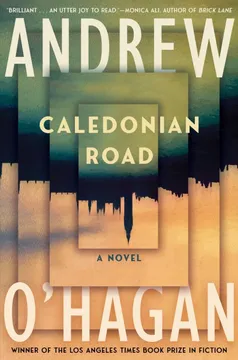


Plot Summary
The Bestseller Without a Name
In May 2021, Campbell Flynn is a celebrated art historian, a popular broadcaster, and a man increasingly frightened by his finances. He has borrowed from his old Cambridge friend William Byre, stopped paying taxes, and concealed the extent of the debt from his wife, Elizabeth.
Rather than admit his need for money, Campbell presents a quick book about men’s unhappiness as a literary experiment. When he meets actor Jake Hart-Davies with Russian heir Yuri Bykov, Campbell sees the perfect public face for it.
He proposes that Jake perform as the author while Campbell remains hidden. The plan promises a large advance, lets Campbell disguise commercial need as artistic play, and gives him a secret identity at the very moment he is beginning to distrust his own.
Campbell’s first deception is not simply a publishing trick. It repeats the division already built into his marriage and public persona: respectable thought on the surface, concealed need underneath. He can identify hypocrisy in institutions while treating his own financial panic as an exception. Hiring Jake turns authorship into performance and gives Campbell a way to profit without being seen, but the disguise also foreshadows his vulnerability to people who can perform a self more convincingly than they can inhabit one.
A Student Challenges Vermeer
At University College London, Campbell meets Milo Mangasha, a computer science student whose interest in art comes with sharp questions about class, race, and who gets to enter cultural institutions.
At the National Gallery, Milo challenges Campbell’s claim that Vermeer’s paintings express the power of ordinary people, pointing out that free admission does not erase the barriers that keep people from the gallery. Campbell is unsettled, then intrigued. He invites Milo for a drink at Claridge’s, where the student describes his interest in digital identity and inequality.
Campbell reveals the secret book and his plan to let Jake front it. Milo approves of the anonymity, which helps Campbell mistake their political connection for trust. The professor gives Milo his number, beginning an unusually intimate mentorship.
The gallery argument makes the novel’s central asymmetry personal: Campbell has the language to describe access, while Milo knows how access fails in practice. Their attraction is intellectual, but unequal. Campbell wants the student’s perspective to renew him; Milo sees a privileged man whose ideas can be tested against his conduct. Their shared interest in art and digital life creates genuine closeness, yet Campbell’s need for renewal makes him unusually receptive to influence.
The Network Beneath the City
Milo’s girlfriend, Gosia Krupa, discovers that Campbell’s friend William Byre is under scrutiny for financial misconduct and may be connected to Russian money. Her own brother, Bozydar, runs a car wash and haulage business, and she suspects he is exploiting workers.
Milo hacks company and government systems, finding records tied to Angelique clothing, illegal migrant labour, missing pension money, and a police investigation called Poldark. He begins passing evidence toward reporter Tara Hastings through an anonymous account.
At the British Library, he also finds an essay written by his late mother, Zemi, about migration, racism, and schools that mistake charity for equality. Her words sharpen his mission: expose people who benefit from injustice while congratulating themselves for good intentions.
Milo’s investigation grows from a personal question about Gosia’s brother into an attack on an interconnected system. Zemi’s essay supplies a moral inheritance, but it also complicates Milo’s methods: he wants structural change and uses illegal access to pursue it. His capacity to expose wrongdoing becomes a form of agency after his mother’s death, while the scale of his project risks turning other people’s lives into evidence.
Jakub's English Welcome
Jakub Padanowski leaves Białystok hoping to build a life in England with his boyfriend, Robert. Bozydar draws him into the work hidden behind his car wash and transport business, first sending him to a Leicester garment factory producing clothes for Angelique. Jakub works long shifts beside Bangladeshi women who are underpaid, denied breaks, and left with unsafe machinery.
He repairs lamps, helps the workers, and earns their trust, but he is also trapped by debt, withheld documents, and Bozydar’s promises of better work. After Jakub helps put out a factory fire, Bozydar moves him to Kent to supervise cannabis farms staffed by Vietnamese migrants. Jakub sees the new job is criminal, yet remains because he hopes to bring Robert over.
Jakub’s story reveals how coercion can wear the clothes of opportunity. He is not simply deceived once; each promise of advancement is attached to another debt, another job, and another surrender of choice. His care for the factory workers distinguishes him from the people using him, but it does not free him. The dream of building a home with Robert keeps him moving through conditions that steadily narrow his options.
William Starts to Fall
As reporters pursue William Byre over his pension fund and business dealings, Campbell visits him at the Club and tries to preserve their old friendship. William insists that the press is exaggerating, then later arrives at the Flynns’ Suffolk home visibly unravelled.
On a walk with Campbell, he admits that illegal workers fill his factories and that the business has run beyond his control. The admission changes Campbell’s understanding of the friend whose money he borrowed, though he cannot yet sever the bond.
Soon after, Campbell tells the BBC he will end his celebrated podcast. He has begun to hear the self-satisfaction in his own public voice. His choice is a first retreat from the identity that has brought him acclaim and income, but he still keeps his financial secrets.
William’s confession turns abstraction into complicity: Campbell’s debts are connected to a business that treats workers as disposable inputs. Yet friendship delays moral clarity. Campbell has long used William as a contrast that makes his own liberal identity feel safer, so the collapse of that contrast threatens his self-image. Leaving the podcast signals real discomfort, but it does not yet amount to accountability.
A Birthday in Iceland
Milo takes Campbell’s passport, partly to test what the professor will do and whom he will call. When Campbell discovers it missing on his birthday, William uses Lord Scullion’s influence to secure a replacement quickly, exposing the same political network Campbell claims to oppose.
In Reykjavík, Campbell’s children’s elaborate celebration becomes a public humiliation. Angus’s DJ party and fashionable guests leave Campbell feeling that the event serves his son’s image more than his father.
Campbell erupts at the restaurant and walks out, while Elizabeth and his sister Moira try to steady him. He later admits the young researcher has become essential to his thinking. Elizabeth warns him that the connection has a grip on him, but Campbell interprets the danger as an education he chose.
The passport is both a practical test and a moral trap. Campbell’s privileged access lets him bypass ordinary procedure, confirming Milo’s suspicion that his ideals coexist with the systems he criticizes. Iceland then converts private estrangement into spectacle: Campbell feels displaced by the family he helped create. His attachment to Milo offers a route away from that discomfort, but he mistakes dependence for transformation.
The Countess's Last Inheritance
Elizabeth’s mother, Emily, tells her family that she has terminal cancer and will leave her Chester Street home to her granddaughter Kenzie. She has placed her fortune in a trust for animal charities, including the elephants Campbell quietly hoped might benefit him.
She gives Campbell a modest painting instead, a gesture of affection that cannot rescue his finances. He tries to conceal his disappointment, then vomits at home and discovers a box of rotting fish fingers beneath the hall floor, explaining the foul smell that has haunted the house.
The spoiled food has been hidden there by his tenant, Mrs Voyles, whose complaints Campbell has treated as personal assaults. Emily’s decision and the hidden rot together puncture his fantasy that inherited wealth or polished taste will solve what he refuses to confront.
Emily’s generosity is also a refusal to serve as Campbell’s financial safety net. He has mistaken intimacy with her for access to her wealth, converting affection into an unspoken inheritance plan. The decaying food under the floor gives his domestic conflict a physical form: neglect is not merely an accusation Mrs Voyles makes, but something literally concealed beneath the household’s cultivated surface.
Jake Becomes the Author
Once Why Men Weep in Their Cars is released under Jake Hart-Davies’s name, Jake begins treating its account of male distress as a platform for defending men against accusations of abuse.
His interviews grow increasingly combative, and the book is read as an argument against the MeToo movement rather than the complicated work Campbell intended. Jake is fired from the Thomas Hardy film after his comments provoke outrage. Campbell watches the actor’s public collapse while trying to deny his own responsibility for having written the book and handed it over.
Mirna, his editor, urges him to return to the Rembrandt project. Campbell hears the warning but remains entangled in the scandal, ashamed that a book he called an experiment has become a vehicle for someone else’s grievance.
The pseudonym does not protect Campbell from authorship; it reveals its limits. Jake’s performance changes the book’s meaning in public, but Campbell cannot claim innocence simply because he stayed off the cover. The episode links celebrity to moral outsourcing: an audience wants a recognizable face to embody difficult ideas, and the face can bend those ideas toward self-protection.
The Cally's Deadly Boundary
After the young gang member known as 0044 is badly burned in an acid attack, tensions rise between the Cally boys and the Deptford crew. Travis Babb wants to calm the feud, but he joins friends travelling to Deptford while carrying a knife. A confrontation near Garvey House spirals into the killing of rapper Sluggz.
Travis insists he stood back, yet police later use CCTV, phone locations, and his presence with the group to arrest him for suspected murder. Before the case reaches court, Big Pharma is shot dead on a King’s Cross street. Milo is left watching two childhood friends become evidence in a cycle of violence he has long condemned but could not stop.
Travis’s intention to prevent violence cannot cancel the choices that put him beside it. His knife makes him legible to police as a threat and later becomes the clue that binds him to the killing. The tragedy is not that he secretly wants violence, but that the gang’s codes and his fear of losing standing make peaceful intervention indistinguishable from participation.
Vicky's Name in the Files
Reporter Tara Hastings follows the Byre investigation from pension fraud and migrant labour to allegations of sexual abuse. William’s son, Zak, gives her access to Vicky Gowans, the young woman who had been his father’s girlfriend. Vicky tells Tara that William hit her, coerced her into sex, and used gifts and a flat to keep her close.
Tara records the account, aware that publishing it may expose Vicky to further harm. The story runs, William is arrested, and Vicky later dies alone in her King’s Cross flat from a drug overdose. When Tara finds her body, the reporting has become more than a scoop: the source whose testimony changed the case has paid a terrible personal cost.
Tara’s work produces public evidence, but evidence is not the same as rescue. Her attention helps make Vicky’s experience visible, while the reporter’s professional focus also turns the woman’s pain into a story to be shaped and published. The scene resists easy celebration of journalism: exposing a powerful man can matter profoundly and still fail to protect the person whose account made exposure possible.
The Museum Turns Accuser
For his British Museum lecture, Campbell works with Milo on a talk about portraiture, digital identity, and the stories institutions tell about ownership. Before a room of patrons and officials, he calls the museum’s celebrated collections products of plunder and compares its displays to the constructed identities of the Internet.
He argues that the institution’s authority depends on hiding how objects arrived there. The audience reacts with anger, but Campbell leaves believing he has finally put his own reputation at risk for a cause.
Elizabeth sees something less triumphant: the speech borrows Milo’s ideas and lets Campbell perform radicalism without yet confronting his private debts or the way he treats Mrs Voyles. His public rupture deepens the gap between the man he wants to be and the life he lives.
The lecture makes Campbell’s critique powerful because it targets the museum that elevated him, but its moral force is unstable. He condemns appropriation while drawing on a younger collaborator’s perspective, and he performs risk in a room where he remains socially protected. The speech is neither false nor sufficient. Its central question is whether insight changes conduct or merely offers a more impressive language for avoiding it.
A Duke on Camera
Moira Flynn, who has recused herself from a parliamentary inquiry into Russian influence, gives Tara Hastings confidential material linking the Duke of Kendal to money from Aleksandr Bykov. Tara also obtains footage of the Duke at a gathering where he praises Hitler and associates with anti-Muslim extremists.
The video appears while he is attending a polo event with the Queen, turning a private political embarrassment into a public crisis. The Duke denies the footage is genuine and his lawyers describe it as a deepfake, while also recasting the Russian payments as legitimate investments. His wife Candy is left to manage the scandal as the Duke begins a careful campaign to restore his standing.
The Duke’s crisis exposes how reputation can be managed as a political asset. The footage and financial records make his associations visible, but his response shifts the argument from what he did to whether the evidence can be trusted. Moira and Tara take risks to make private influence legible; the Duke counters with lawyers, public relations, and the language of national duty.
Two Funerals, One Reckoning
William dies after an attack in Belmarsh, leaving Campbell grieving a friend whose cruelty he had long excused and whose life he no longer understands. Around the same period, Emily dies, and Campbell delivers her eulogy while the family gathers at her funeral.
Antonia Byre, once a fierce critic of victims and social campaigns, now presents herself publicly as a survivor of male abuse and a champion of women. Her son Zak grows more visible as a climate activist, though Antonia’s newfound sympathy cannot erase their history.
Campbell confronts Jake at the wake and refuses to accept the actor’s polished account of recovery. The deaths and performances leave Campbell with fewer illusions about the people he loved, but no clear way to repair what their choices have damaged.
The funerals make social reinvention look both necessary and suspect. Antonia’s new public language may reflect pain, opportunism, or both; the novel refuses to let a new identity erase old conduct. Campbell’s grief for William is similarly divided. He mourns the witty friend he knew while recognizing that loyalty helped shelter the man William became.
Forty-One in the Container
Bozydar’s transport network moves Vietnamese and European migrants through sealed freight containers, while drivers are told to treat them as hidden cargo. Jakub, still hoping to return to England with Robert and build a life, is sent back across the Channel with forty others. At Purfleet, Irish driver Gerry O’Dade opens the container and finds all forty-one migrants dead from lack of air.
Jakub is among them, his body beside another young man. Gerry calls Bozydar and Stefan, then contacts the police when the organizers try to make him disappear into their cover story. The deaths expose the human cost behind the network’s coded talk of workers, shipments, and business growth.
The container strips the trafficking operation of its euphemisms. People who were called workers or ambassadors become bodies in a space designed to conceal them. Gerry’s decision to report the deaths interrupts the network’s effort to erase responsibility, but it cannot restore the lives lost. Jakub’s earlier care for exploited workers makes his own fate especially devastating: he understood the machinery and was still caught inside it.
The Network Burns and Flees
After the Essex deaths, Peter Fong, the hidden organizer known as Feng, destroys his records and burns the abandoned shop he used as a base. Police pursue Bozydar, Stefan, Yuri, and Fong, while Yuri disappears after his father’s circle turns against him. Bozydar’s mother, Cecylia, learns that Jakub died and that her son helped place him in danger.
She leaves London for Białystok, carrying Jakub’s railway club card and withdrawing from Gosia, who has told her that Jakub and Robert were lovers, not brothers. The Duke meanwhile uses lawyers and public relations to deny wrongdoing and preserve his institutions. The network fractures, but its most powerful participants still have routes to evade consequence.
The aftermath distinguishes flight from accountability. Fong destroys the physical traces; Yuri vanishes into a larger geopolitical network; the Duke survives by converting scandal into a dispute over evidence and procedure. Cecylia’s return to Poland is different: it is grief, not escape. Her refusal to accept Jakub’s love for Robert shows how inherited belief can comfort a person while also denying the dead their true lives.
The Jordans Convict Travis
At the Old Bailey, prosecutors build the case against Travis from phone locations, CCTV, drill lyrics, and the testimony of a taxi driver who saw a knife at the murder scene. The decisive link is a rare pair of Air Jordan Max Aura 3 trainers.
Milo had given Travis the shoes as a birthday present, and the same distinctive pair appears at the murder site, outside Travis’s mother’s home, and in police footage after his arrest. Travis is convicted under joint enterprise and receives a fifteen-year sentence. Milo watches from the public gallery, understanding that a gift meant to restore their friendship has become the evidence that seals Travis’s fate.
The trainers are an intimate object converted into forensic proof. Their rarity makes the legal argument unusually persuasive, but their meaning also belongs to friendship: Milo chose them to remind Travis of childhood joy, not to mark a crime scene. The trial demonstrates how a personal gesture can be absorbed into a system that classifies, links, and condemns people through fragments of their ordinary lives.
A Tenant's Bloodied Ear
Campbell’s hidden finances collapse alongside his mental health. He has spent his book advance, tax money, and insurance funds on Bitcoin, drugs, and other Dark Net purchases, then loses the recovery words for his wallet after burning the copy of The Life of Vermeer that held them.
In a blackout, he appears to have used digital currency to arrange an attack on Mrs Voyles, whose repeated demands for repairs and a buyout have become an obsession. She survives with severe head injuries and a badly damaged ear. Elizabeth finds Campbell disoriented at home, and he admits that he wanted to stop the woman and may have caused the assault. Police arrest him on suspicion of conspiracy to inflict bodily harm.
Campbell’s collapse is not a sudden reversal of character but the convergence of habits he has protected: secrecy about money, reliance on performance, and the belief that his own distress excuses exceptional treatment. The Dark Net gives private resentment a mechanism, while intoxication weakens his ability to distinguish fantasy from action. His admission matters, but it does not settle every factual question; it establishes that he recognizes his own desire in the harm.
Twelve Words Toward Home
Milo and Gosia prepare to leave London with Ray for Eilean Ròin, an island community project funded through money diverted from wealthy accounts. Milo also redirects funds from the offshore accounts of the Duke, Lord Scullion, and William Byre toward charities.
He erases his contact with Campbell, believing their relationship has ended, then leaves the city with his family. Campbell remains in Pentonville awaiting the next stages of his case. Elizabeth continues to support him while selling their house and arranging compensation for Mrs Voyles.
A letter from Milo reaches Campbell in prison with the twelve-word recovery phrase for his Bitcoin wallet. The message does not erase the damage, but it gives Campbell a path back to the money he thought was irretrievable.
The ending offers no clean moral victory. Milo’s island plan creates a possible home beyond inherited property and postcode, but its funding comes through covert appropriation rather than transparent reform. Campbell receives a practical chance to recover his assets, not absolution. The final letter restores a connection between teacher and student while preserving their separation: Milo offers a key, then continues toward a life Campbell cannot direct.
Analysis
Caledonian Road is built around overlapping systems of concealment. Campbell hides debt behind taste and argument. William hides exploitation behind employment and friendship. The Duke hides political influence behind charity and tradition. The trafficking network hides people inside freight, while the Dark Net hides both evidence and transactions. These are not equivalent forms of secrecy: some protect the vulnerable, while others protect wealth and power. The novel asks the reader to distinguish privacy from impunity.
Campbell’s crisis is the book’s most intimate version of this problem. He can describe inequality with fluency, but his refusal to discuss money leaves Elizabeth outside the facts of their marriage. He welcomes Milo’s criticism because it makes him feel newly alive, then treats the student’s attention as a substitute for changing his habits. His eventual harm to Mrs Voyles grows from the same self-absorption he condemns in public figures. The point is not that his politics are false; it is that insight without self-scrutiny can become another instrument of self-protection.
Milo offers a contrasting, but not uncomplicated, model of agency. His technical skill lets him make hidden connections visible and imagine a collective home beyond the structures that failed his mother and friends. Yet he also takes risks with other people’s data and treats disruption as a kind of justice. His escape to the island is hopeful without being a solution to the wider world. He is trying to build a place where people can live differently, not prove that he has escaped implication altogether.
The novel’s harshest judgment falls on the gap between public language and material consequence. Charity does not undo dangerous labour. A museum’s openness does not settle how its objects were acquired. A scandal does not guarantee accountability when the accused can hire lawyers and rewrite the story. Against these evasions, the novel places small, specific acts: Jakub repairing a machine, Tara listening to Vicky, Elizabeth arranging compensation, and Milo preserving a route home. They matter because they acknowledge a person before turning that person into an argument.
Review Summary
Reviews of Caledonian Road are sharply divided. Admirers praise it as a sweeping, Dickensian state-of-the-nation novel capturing modern London's class divides, corruption, and inequality with wit and ambition. Critics, however, find it overlong at 600+ pages, overpopulated with caricatured characters, and superficial in its social analysis. Common complaints include weak female characters, excessive name-dropping, and predictable plotting. The central relationship between celebrity academic Campbell Flynn and student Milo Mangasha draws both praise and criticism, with some finding it compelling and others finding both characters insufferable.
People Also Read





Characters
Campbell Flynn
The celebrated self-doubterA fifty-two-year-old art historian, broadcaster, and professor, Campbell is witty, stylish, and skilled at making moral complexity sound like a public virtue. His working-class Glasgow childhood left him fearful of poverty and hungry for recognition, though he masks that hunger with irony and taste. He is devoted to his wife Elizabeth and children Kenzie and Angus, but treats money as too embarrassing to discuss. His attraction to new ideas is genuine, yet he often uses ideas to postpone decisions about his own conduct. The novel follows a man who can interpret other people with brilliance while struggling to recognize the self he has constructed.
Milo Mangasha
The radical systems readerA computer science student from King’s Cross, Milo combines technical skill with a restless interest in art, politics, and the mechanics of inequality. His Ethiopian mother, Zemi, and Irish father, Ray, taught him to question official accounts and to notice who benefits from supposedly generous reforms. Milo is loyal to childhood friends such as Travis, and close to his girlfriend Gosia, but he increasingly treats hacking as a route to justice and personal freedom. His confidence can be magnetic, though his certainty sometimes risks reducing people to evidence in a larger project. He challenges Campbell because he wants ideas to answer to lived conditions.
Elizabeth Flynn
The clear-eyed partnerCampbell’s wife is a psychotherapist, a patient observer, and the emotional center of the Flynn family. Her calm does not mean passivity: she notices when Campbell hides behind performance and can challenge him without reducing him to his worst impulses. Elizabeth values privacy, independent thought, and the daily work of sustaining a marriage. Her upbringing among wealth has not made her careless about responsibility; she understands that privilege can be both inherited and denied. She loves Campbell while resisting the urge to manage him, a balance that becomes increasingly difficult as his private troubles begin to affect their home.
Gosia Krupa
The investigator with divided loyaltiesA hairdresser and English literature graduate, Gosia is observant, warm, and more politically committed than her mother or brother understands. She loves Milo and shares his desire to expose exploitation, but her own family ties complicate every discovery. Her brother Bozydar’s business troubles her, while her mother Cecylia’s nostalgia and religious certainty make honest conversations difficult. Gosia’s strength lies in practical attention: she researches, listens, and recognizes when an abstract cause touches someone she loves. She wants a life shaped by hope, but is alert to the cost of pursuing it.
William Byre
The empire-building friendA retail tycoon and Campbell’s oldest friend, William is charismatic, funny, and accustomed to treating risk as a form of vitality. His success grew through shops, factories, borrowing, and an instinct for finding people who could help him expand. He values loyalty, but often understands it as protection from judgment rather than mutual accountability. His marriage to Antonia and difficult relationship with their son Zak reveal a man who can provide lavishly while remaining emotionally ungenerous. William’s friendship matters to Campbell because it joins affection to the wealth and power Campbell claims to distrust.
Antonia Byre
The columnist without remorseWilliam’s wife is a forceful opinion writer who turns irritation into a public persona. She distrusts vulnerability, dislikes being corrected, and treats certainty as a form of power. Her sharpness can be entertaining, but it also damages her relationships, especially with her son Zak. Antonia is skilled at reading what an audience wants to hear, even when she refuses to examine what her own words do. Her role in the story raises questions about the gap between public conviction and private responsibility, particularly when a person’s principles change under pressure.
Yuri Bykov
The reckless Russian heirThe son of oligarch Aleksandr Bykov, Yuri is educated, wealthy, and fascinated by worlds his father considers disreputable. He pursues art, actors, nightlife, and people outside his social class with the same appetite for novelty. His rebellion against his father is real, but it is entangled with privilege: Yuri can treat danger as an aesthetic choice because other people absorb much of its cost. His relationships with Jake Hart-Davies and the London political and business scene expose his hunger to build an identity separate from his family while remaining dependent on its resources.
Bozydar Krupa
The family business operatorGosia’s older brother runs a car wash and haulage operation and is proud of his ability to turn opportunity into money. Bozydar sees himself as practical where Gosia is idealistic, and treats risk as necessary work rather than a moral choice. He is affectionate with his young son, Ben, and attentive to his mother, yet he can be contemptuous toward Gosia and the people whose labour supports his ambitions. His greatest weakness is not ignorance of consequences but the belief that control and profit can keep those consequences at a distance.
Jakub Padanowski
The hopeful migrant workerA gardener from Białystok, Jakub leaves Poland hoping to establish a secure life with his boyfriend, Robert. He is hardworking, reserved, and careful about how much of himself he reveals. In Leicester, he notices the conditions around him and quietly improves what he can, earning trust from workers and his landlord, Babar Hazari. Jakub’s ambition is modest but profound: regular work, a home, and a future in which he and Robert can live openly. His determination to make migration worthwhile can keep him enduring hardship long after he understands that the promised opportunity is compromised.
Travis Babb
The rapper seeking another lifeKnown as Ghost 24, Travis is Milo’s childhood friend and a rising drill rapper from the Caledonian Road estate. He is funny, loyal, and protective of the boys around him, often taking the role of emotional leader. Beneath his swagger are fears of abandonment, failure, and being treated as disposable. Music offers him a possible future beyond street conflict, but his ideas of loyalty and reputation keep pulling him back toward the same dangers. Travis understands that violence is not the life he wants, yet he struggles to separate himself from the group identity that has kept him from feeling alone.
Moira Flynn
The principled parliamentarianCampbell’s younger sister is a Labour MP and barrister who has built her life around housing cases and accountability in public life. Moira is direct where Campbell is evasive, and their shared Glasgow childhood gives her unusual access to his private fears. She is not immune to personal loyalties, but she tries to prevent them from deciding what counts as truth. Her political work is rooted in the belief that institutions can still be made answerable, even when the people inside them are compromised.
Tara Hastings
The relentless investigative reporterA reporter at the Commentator, Tara is ambitious, methodical, and unusually comfortable keeping emotion out of her work. She pursues stories about power with patience, using sources, documents, and public records to build a case. Her friendship with Zak and her contact with Vicky complicate the clean distance she tries to maintain. Tara wants journalism to expose systems, not merely produce outrage, but she is aware that the people who supply her evidence may be left more vulnerable after publication.
Emily, Countess of Paxford
The worldly family matriarchElizabeth’s mother is an elderly aristocrat with a sharp memory, an appetite for books, and a comic impatience with social performance. Her history of boarding school, marriage, travel, and family life has made her wary of easy sentiment. She enjoys Campbell’s company because he can meet her in conversation without requiring her to simplify herself. Emily’s affection is expressed through attention and carefully chosen gestures, while her independence reflects a refusal to let inheritance dictate how she should live.
Mrs Voyles
The protected tenantA former dancer who has lived for decades in the basement flat beneath the Flynns, Mrs Voyles is angry, resourceful, and fiercely aware of her legal rights. She complains about unsafe conditions and resists the landlords’ attempts to arrange repairs, while Campbell interprets her refusal as a personal provocation. Elizabeth sees a lonely woman with a history and a right to be heard. Mrs Voyles challenges the Flynns’ self-image as good people by forcing their responsibilities into the same space as their comfort.
Anthony, Duke of Kendal
The entitled aristocratElizabeth’s brother-in-law is a former soldier and a peer who treats inherited status as both a duty and a shield. He is capable of charm, but his jokes often reveal contempt for people outside his class and political circle. Anthony wants to preserve family estates and the institutions attached to them, believing tradition gives his preferences public legitimacy. His marriage to Candy is marked by long-standing distance, and his social confidence conceals a deep concern with reputation.
Zachary Byre
The privileged climate rebelWilliam and Antonia’s son is a wealthy environmental activist who uses civil disobedience to challenge the world that raised him. His politics are sincere, though his immense privilege gives his rebellion contradictions he cannot simply talk away. Zak is intelligent, anxious, and often more perceptive about his parents than they are about him. His willingness to cooperate with Tara reflects a growing commitment to public truth over family protection, even as he struggles to turn inherited resources into something useful.
Kenzie Flynn
The quiet, independent daughterCampbell and Elizabeth’s daughter is a former model who is moving toward a private life shaped by gardening, weaving, and her grandmother’s house. She is affectionate with Campbell and shares a distinctive sense of humour with him, but her gentleness should not be mistaken for passivity. Kenzie has experienced depression and values relationships that leave room for solitude. She is more settled than her restless brother Angus, and her way of living offers Campbell a model of contentment he admires but struggles to imitate.
Jake Hart-Davies
The actor behind the bookA young, handsome actor, Jake is accustomed to inhabiting roles and attracting attention. Campbell sees him as the ideal public face for a book whose author wants to remain hidden. Jake is ambitious and genuinely interested in ideas, but his desire to be seen as profound can outrun his understanding of what he is representing. He wants each new project to become evidence of his depth, a habit that makes him vulnerable to confusing public attention with moral seriousness.
Cecylia Krupa
The mother clinging to homelandGosia and Bozydar’s Polish mother is devoted to family, Catholic tradition, and memories of Białystok. Migration has left her nostalgic for a home she has not fully recovered, and she uses faith and family stories to make suffering bearable. Cecylia can be generous and perceptive, especially toward Jakub, but she also protects herself by refusing truths that threaten her image of her son or her beliefs. Her love is sincere, though often entangled with denial.
Vicky Gowans
The vulnerable young womanA young woman from Ayrshire, Vicky arrives in London with little support and a powerful wish to find safety and belonging. Her relationship with William Byre places her in a world of money and status she has never known how to navigate. Vicky is not simply a victim or a symbol: she has humour, memories of her mother, and a sense of independence that has been weakened by addiction and unstable relationships. Her account gives Tara a human story behind a much larger investigation.
Gerry O'Dade
The haulage driverAn Irish truck driver who works for Bozydar, Gerry is chatty, restless, and accustomed to treating dangerous transport jobs as another part of the road. He wants to save money and eventually return home, but he has grown used to following instructions without asking what his cargo contains. His humour and easy manner make him seem harmless, even to himself, until the work he has accepted becomes impossible to ignore.
Stefan Popa
The silent security fixerA Romanian security chief and intermediary, Stefan coordinates transport and business for Yuri Bykov’s circle. He is disciplined, difficult to read, and careful to keep names and responsibilities separated. His professional calm makes him useful to people who want complex operations to appear ordinary. Stefan’s life is divided between criminal networks and a private domestic world, a separation that allows him to tell himself he remains a decent man.
Feng
The hidden logistics brokerKnown to associates only as Feng, he is an unseen broker who links money, transport, and people across borders. He works through intermediaries and leaves little direct evidence, becoming more a rumour than a visible presence. Feng’s anonymity is operational, not mystical: it depends on other people performing the risky tasks that keep him distant from consequences.
Paul Scullion
The political fixerA Labour peer and former government minister, Scullion has spent decades converting political access into business advantage. He presents himself as a pragmatist who understands how power works, and sees ethical boundaries as flexible conditions rather than absolutes. His relationships with Russian investors, British businesses, and politicians make him a bridge between worlds that publicly condemn one another. Scullion’s composure is part of his usefulness: he can make compromise sound like governance.
Ray Kennedy
Milo's steady fatherMilo’s Irish-born father is a taxi driver whose quietness conceals a durable strength. He and Zemi built a family life around conversation, political curiosity, and the effort to give Milo room to think. After Zemi’s illness, Ray carries grief privately while continuing to support his son’s choices. He understands the pull of money and hardship without mistaking either for a complete account of a person.
Plot Devices
The Anonymous Author
Separates name from responsibilityCampbell writes Why Men Weep in Their Cars but hires Jake Hart-Davies to appear as its author. The arrangement begins as a commercial shortcut and a playful experiment in authorship, allowing Campbell to collect an advance without risking his established reputation. Once Jake presents the book as a defence of men against accusations of abuse, Campbell cannot control what his words mean in public. The device connects the novel’s questions about identity to a concrete act of concealment: a person can hide a name, but not necessarily the consequences of a decision.
Bitcoin and the Dark Net
Turns secrecy into leverageMilo introduces Campbell to cryptocurrency, encrypted communication, and the Dark Net as alternative systems beyond banks and official oversight. The same tools help Milo gather evidence, route money, and imagine a life outside existing institutions. Campbell uses them to buy drugs and contraband, and the digital anonymity that first feels liberating later gives his resentment a dangerous path into the world. The Bitcoin wallet’s twelve-word recovery phrase becomes a practical measure of trust: when Campbell loses it, he loses access to money he urgently needs; Milo’s final letter offers the key back.
Portraits and Museums
Makes identity visible and contestedCampbell’s work on Vermeer and Rembrandt gives the novel a vocabulary for the self as something composed, observed, and partly concealed. Milo challenges Campbell’s faith that paintings can express universal human dignity when access to art remains unequal. Campbell later turns that dispute into a public lecture against the British Museum’s claims of stewardship over objects acquired through plunder. Portraits and collections therefore do more than decorate the story: they test who gets to represent another person, who owns cultural memory, and whether seeing a subject clearly obliges the viewer to act.
The Paper Trail
Connects private lives to powerHacked emails, police files, phone records, leaked parliamentary documents, and journalists’ sources connect William Byre’s businesses to migrant exploitation and Russian money. The same records bring the Duke of Kendal’s finances and political associations into view. Each piece of evidence is incomplete by itself, so Tara and Moira must corroborate claims while Milo searches for links others have hidden. The device shows how modern accountability depends on records that powerful people assume will remain buried, while also demonstrating that exposing wrongdoing does not automatically protect the people whose lives supply the evidence.
The Freight Network
Conceals people as cargoBozydar’s trucks, employment contacts, safe houses, and grow-houses form a supply chain for moving migrants and distributing drugs. Coded terms make the operation sound routine, while passports, bank cards, wages, and debts keep migrants under control. Jakub’s movement from car wash to factory to Kent exposes different layers of the same network. The freight system reaches its most terrible consequence when a sealed shipment arrives with its passengers dead. Its ordinary paperwork and delivery schedules reveal how mass harm can be organized without any single participant believing he is responsible for the whole.
Download PDF
Download EPUB
.epub digital book format is ideal for reading ebooks on phones, tablets, and e-readers.








