

Key Takeaways
Treat a child's sensitivity as information about the environment, not a flaw
A signal worth hearing. Kayla first hears that her daughter Hannah is being targeted at school, but her deeper change comes when she encounters the canary metaphor: a sensitive person may notice danger in an environment others have learned to ignore. Research discussed in the book estimates that about one in five people has a highly sensitive nervous system. Such children may process details deeply, show strong empathy, and react intensely to noise, conflict, or pressure. Sensitivity can be a strength, but it can also make harsh settings overwhelming.
Fit changes outcomes. Hannah had warned her mother about an unkind preschool teacher and later described a babysitter in disturbing terms. Adults initially discounted her, then discovered reasons to take her seriously. The lesson is not that every instinct proves correct, but that a child's report deserves curious attention and careful checking.
What's striking is the shift from asking whether a child is too sensitive to asking what the child is detecting and what the setting demands. That resembles person-environment fit in occupational psychology: performance and well-being depend partly on whether surroundings match a person's needs. The metaphor also cautions against treating distress as mere fragility. Still, sensitivity is not a lie detector. A child's perceptions should be heard without automatically treating them as conclusive, then explored through observation, corroboration, and a response that protects the child while facts are clarified.
A school's values show up in what adults do after harm is reported
Actions reveal priorities. Hannah's teacher acknowledges that the school has failed to protect her after classmates form an exclusionary club and repeatedly taunt her. The head of school responds differently. He frames the situation as ordinary childhood friction, tells the parents not to contact the other families, and presents two goldfish swimming together as evidence that Hannah and one aggressor have reconciled. The image feels reassuring to him, but it does not address the reported behavior or Hannah's safety.
Promises need follow-through. The parents had chosen the school for its stated commitment to kindness. Yet conversations, assurances, and private meetings produce little visible change. The book's central institutional test is practical: when a child reports harm, do adults investigate, communicate, and protect students, or mainly preserve the appearance of a harmonious community?
The gap between stated values and routine decisions is a familiar problem in organizational life. Mission statements are cheap; the costly test is whether leaders accept inconvenience, document concerns, and make changes when a reputation is at stake. The goldfish story captures how a comforting symbol can substitute for evidence of safety. At the same time, institutions need procedures that distinguish serious patterns from misunderstandings. Taking a report seriously does not require deciding every disputed fact in advance. It does require a credible process and clear interim safeguards.
Name repeated, power-imbalanced cruelty as bullying, then intervene
Patterns matter. The book defines bullying as repeated, intentional physical or emotional harm directed at someone with less power. A single disagreement does not necessarily meet that standard. Hannah's experience was not one isolated playground clash: classmates excluded her, pushed and spat at her, insulted her body, and exploited her fears. The imbalance was reinforced by two girls acting together and by weak adult supervision.
Do not reduce it to conflict. Treating repeated targeted behavior as ordinary friction can leave the harmed child responsible for managing the situation alone. The book argues for clear rules, consistent consequences, safe ways to report incidents, and adults who teach bystanders how to help. Peer intervention can change what seems socially acceptable, but children need reason to believe adults will protect them if they speak up.
The distinction between conflict and bullying is useful because it directs attention to recurrence, power, and impact rather than treating every unpleasant exchange alike. Intent can be difficult to establish, especially with young children, so a sound response should investigate the pattern without pretending to read minds. The book also makes the bystander environment visible: silence may reflect fear of becoming a target, not approval. That means schools should avoid placing the burden on children alone and should make adult monitoring and reporting channels dependable.
Hear a child's account before trying to solve or soften it
Validation opens conversation. Kayla's crisis-counseling training changes how she responds when someone shares pain. Instead of rushing to reassure, prescribe, or compare the experience with her own, she learns to acknowledge the feeling and ask what would help. With a worried child, that might mean asking what feels frightening before insisting everything will be fine. She also learns that a quick why question can sound accusatory even when the speaker intends curiosity.
Attention is not agreement. These lessons matter at home as much as in crisis support. When Hannah describes being hurt, dismissing her account to calm her down can make her feel more alone. The book presents listening as a way to understand the person's experience first, then work together on next steps. The listener does not need to adopt every conclusion to show that the distress matters.
This approach aligns with a basic principle of trauma-informed communication: restore a sense of control by listening, asking permission, and avoiding premature advice. It is especially useful when a distressed person is not yet ready to reason through solutions. Validation is sometimes misunderstood as endorsing every interpretation. A more precise distinction is between affirming that a person's feelings and experience deserve attention, and confirming an explanation before evidence is available. That distinction supports both compassion and sound judgment.
Fairness means giving each learner what lets them participate
Same treatment can exclude. Hannah's neuropsychological evaluation identifies strengths in verbal reasoning and conceptual mathematics, along with challenges involving memory, coordination, and anxiety. Her clinicians recommend practical classroom accommodations, including seating near the front and a wobbling stool that helps her regulate her body. Her teacher limits access to the stool because other children should get turns, describing it as a toy rather than a learning tool.
Access supports learning. The book challenges the assumption that fairness means giving every child identical resources. A stool, written instructions, extra time, or a calculator may help a particular student participate on more equal terms. Hannah's home-school contrast also matters: she works more effectively in a calm setting than on a hard floor in a distracting classroom. The environment, not only the child, affects performance.
This is an equity argument with a concrete test: does the adjustment enable access to the shared task? Uniform rules can look impartial while imposing unequal costs on students whose bodies or minds respond differently. The teacher's concern about inclusion is not inherently unreasonable, but turn-taking is a poor substitute for assessing whether a tool is necessary. Accommodations should be discussed with families and specialists, then reviewed against observable outcomes. That keeps individualized support from becoming either an arbitrary privilege or an unquestioned prescription.
Use diagnoses to open doors, never to shrink a child's identity
A label is not a whole child. Hannah's assessment describes both limitations and notable strengths. She may struggle to recall basic math facts quickly while grasping complex mathematical ideas. Later, her brother Jake is found to have dyslexia despite reading above grade level, partly because strong verbal reasoning helps him compensate. The book uses these uneven profiles to challenge reliance on a single score or a simple category of smart versus struggling.
Information should guide support. Diagnoses can help families explain needs and request accommodations, but they can also dominate how adults see a child. The author favors attending to specific behaviors, abilities, and environments rather than assuming a label explains everything. She also questions averaging test results, which can hide a striking strength alongside a genuine difficulty. Assessment is most useful when it helps adults teach the actual learner in front of them.
A profile is more informative than a single ranking because human abilities do not rise and fall in lockstep. The book's examples make that unevenness vivid and show why compensating well can conceal a learning difficulty. Labels can also be materially important: without them, some students cannot access formal support. The useful tension is therefore not diagnosis versus acceptance, but diagnosis as a tool versus diagnosis as identity. Families and schools should retain the detail of an assessment while remaining open to revision as the child develops.
An institution can deepen harm by denying and attacking the reporter
The response can become another injury. After Hannah's anxiety worsens, the parents provide written documentation and ask the school to act. An independent investigator is appointed, but the eventual report denies that bullying occurred and attributes Hannah's difficulties to her sensitivity and learning profile. The parents say the report disregards records and witnesses. Instead of addressing their concerns, the institution casts the child and her family as unreliable.
Name the pattern. The book draws on institutional betrayal, the harm that occurs when an organization people depend on fails to prevent or respond appropriately to wrongdoing. It also introduces DARVO: deny the reported harm, attack the reporter's credibility, and reverse the roles of victim and offender. The terms help explain why a formal response can intensify isolation rather than restore trust.
Institutional betrayal is a powerful lens because it accounts for the second injury: the person seeks protection from a system with authority, then encounters denial or retaliation. A process that claims independence is not necessarily trustworthy; expertise, transparency, and protection against conflicts of interest matter. Yet allegations still require fair investigation, including a meaningful chance for all parties to be heard. The key distinction is between due process and defensive process. One seeks an accurate account and safer conditions; the other may prioritize institutional reputation over the people the institution serves.
Repair harm by restoring dignity, safety, and the injured child's agency
Apology is more than wording. Hannah wants an adult to acknowledge that what happened was wrong and that she did not deserve it. At school, a short suspension is imposed, but Hannah is not told about it and sees the girls appearing to enjoy their time on the bench. The consequence therefore does little to reassure her that adults understand the harm or will keep her safe.
Repair needs action. Drawing on apology and restorative-justice writing, the book identifies needs that include recognizing the offense, affirming the injured person's dignity, restoring safety, and giving the person a voice in what happens next. A forced expression of regret is not enough. Meaningful repair requires ownership and follow-through, while also helping a young person who caused harm learn how to make amends.
This account usefully separates punishment from repair. A sanction may communicate that a rule was broken, but it cannot by itself restore a child's trust or standing among peers. Restorative practices can help when they are voluntary, carefully facilitated, and attentive to power differences. They should not pressure an injured child into reconciliation or replace immediate protection. The book's emphasis on agency is crucial: adults often design a remedy around administrative convenience, when the person harmed needs a meaningful role in deciding what safety and acknowledgment would look like.
Leaving an unsafe setting can be self-protection, not failure
Exit can be a sound choice. Kayla and Jim initially stay at the school because they value its mission, fear a larger school may overwhelm Hannah, and hope the adults will improve the situation. They repeatedly reconsider leaving. Hannah, meanwhile, wants to finish the year and worries classmates will mock her if she goes. Her parents seek advice before weighing her wishes against the risk to her well-being.
Options are unequal. The book treats withdrawal as a legitimate use of agency, not proof that the child failed to adapt. Hannah eventually chooses a new school, while her brothers attend different settings that better fit their needs. This solution requires time, money, research, and transport, resources many families lack. Individual escape can protect a child, but it cannot substitute for institutions making their environments safer.
The book avoids a simplistic resilience story in which a child must remain in a harmful setting to prove strength. Choosing distance can be a rational safety decision, especially when those responsible for change have repeatedly failed to act. At the same time, exit is not equally available to every family, and a system that relies on families leaving transfers the burden to those already under strain. Personal agency and collective accountability belong together: a family may leave while still naming the conditions that made leaving necessary.
Choose schools where children can belong without hiding who they are
Safety makes participation possible. At Hannah's new school, classmates greet her on the first morning, and staff discuss building a partnership with her family. The welcome is a sharp contrast with her previous classroom, where she had been excluded and sometimes targeted. After sustained anxiety, therapy, and medication, Hannah gradually begins to sleep, laugh, and seek playdates again. She later volunteers to chant at a school service, a public act that would once have felt out of reach.
Progress is not instant. The new setting does not erase what happened. Familiar places and former classmates can still trigger fear, and the family needs time to recover. But the contrast shows how a culture that notices a child's needs can create room for participation instead of demanding camouflage. The book closes with a practical hope: children should not have to erase their differences to be welcomed.
The change in Hannah's behavior illustrates how context can release capacities that distress had constrained. Her return to public participation is not evidence that one welcoming school cures every difficulty; it is evidence that belonging and appropriate support can matter profoundly. This distinction is important because institutions may otherwise take credit for a child's adaptation while ignoring the conditions that made adaptation necessary. A strong school culture is not measured by the absence of visible conflict, but by whether difference can be expressed without making a student unsafe.
Analysis
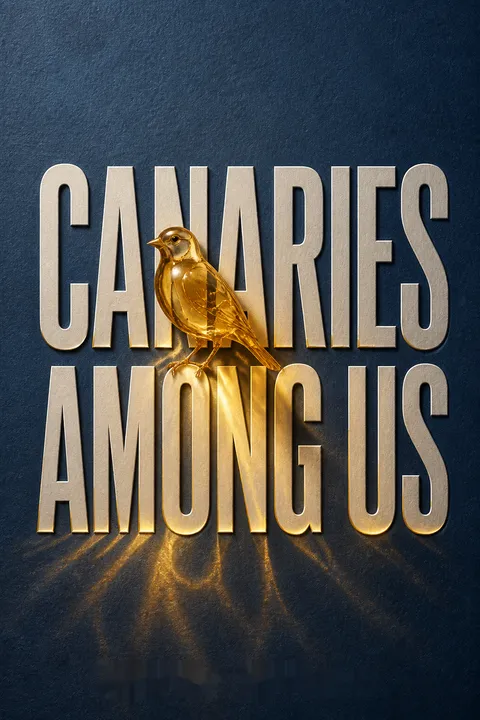
Canaries Among Us is a memoir that uses a family's school crisis to examine a larger question: what happens when institutions treat the people who notice harm as the problem? Its narrative moves from a parent's uncertainty about her sensitive daughter, through repeated efforts to seek help, to a painful recognition that adult inaction can compound peer cruelty. The central image of the canary makes sensitivity legible as possible perception rather than automatic defect, while the later school change gives that idea a concrete test: Hannah's participation increases when her environment becomes safer and more responsive.
The book's strongest contribution is its integration of distinct concerns. Bullying, learning differences, anxiety, disability language, school policy, and adult empathy are not presented as interchangeable, but as forces that can compound one another. A child's learning profile may make ordinary classroom demands harder; bullying can intensify anxiety; and an institution's denial can undermine both safety and self-trust. The memoir also refuses a tidy villain story. It shows how social conformity, reputational incentives, weak training, and parental fear can enable harm without requiring every participant to think of themselves as cruel.
Its research-rich approach offers readers useful vocabulary, particularly for institutional betrayal and DARVO, but a memoir is not a controlled study. Reported statistics and research claims here are best treated as prompts for inquiry, not proof that one explanation fits every child or school. The canary metaphor can also be misused if adults assume that sensitivity makes every perception accurate, or if accommodation is framed as the only necessary intervention. Careful listening, corroboration, individualized support, and fair procedures must work together.
The book's most durable practical lesson is relational: listen before correcting, investigate before dismissing, and judge values by what people do when a response is inconvenient. Its account of a failed institutional process is particularly sobering because the family wanted recognition and change, not revenge. The ending is hopeful without pretending that a new school erases injury. Safety creates conditions for recovery, but trust and confidence take time to rebuild.
Review Summary
Canaries Among Us is a highly-praised book about a mother's struggle to protect her bullied daughter in an unsupportive school environment. Readers found it eye-opening, emotional, and important for parents and educators. The book explores neurodiversity, the impact of bullying, and advocating for children who learn differently. Many reviewers appreciated the author's honesty, research, and practical advice. While some found parts difficult to read, most considered it an essential resource for understanding and supporting unique children.
People Also Read


Glossary
Canary
Sensitive environmental signalA metaphor for a person whose heightened sensitivity may help them notice danger, tension, or exclusion that others overlook. The book applies it to children whose strong reactions can be treated as inconvenient, even when those reactions point toward problems in their surroundings. The metaphor encourages adults to listen while still checking what has happened.
High sensitivity
Deep sensory processingA temperamental pattern in which a person processes sensory and social information deeply and may respond strongly to subtle details, conflict, or stimulation. The book presents research suggesting this disposition is common and can bring empathy, thoughtfulness, and conscientiousness, alongside vulnerability to overwhelm. It is not presented as a diagnosis or as evidence that every sensitive person's interpretation is correct.
Vantage Sensitivity
Greater benefit from supportA research concept describing the possibility that some children are more affected by their environments in both directions. They may struggle more than peers in adverse settings, while gaining especially strong benefits from supportive conditions. In the book, the idea helps explain why a sensitive child may falter in a rigid or hostile classroom yet flourish when adults respond constructively.
Neurodiversity
Natural variation among brainsThe view that differences in neurological structure and function are part of natural human variation, rather than automatically evidence of pathology. The book uses the term to question settings that treat one narrow learning or behavioral profile as normal and all others as deficient. It does not deny that individuals can need diagnosis, treatment, or specific accommodations.
Neuroplasticity
The brain's capacity to changeThe capacity of the brain to reorganize and alter connections in response to learning, experience, and environment. The book presents this as a reason not to treat children's abilities as fixed. It also notes that repeated anxiety can reinforce threat responses, making environmental safety and timely support important to a child's developing patterns.
Institutional betrayal
Harm by a trusted institutionA term for the added harm that occurs when an organization on which people depend fails to prevent, respond to, or fairly address wrongdoing. This can include harmful policies and actions, as well as inaction, denial, or retaliation after someone reports harm. The book applies the concept to a school that failed to protect a child and then dismissed the family's account.
DARVO
Deny, attack, reverse rolesAn acronym describing a response in which a person or institution denies a reported offense, attacks the credibility or character of the person raising it, and reverses the roles of victim and offender. The book uses the term to interpret responses that recast a bullied child or concerned parent as the source of the problem. The framework can identify a pattern, but each case still requires fair investigation.
Institutional Courage
Accountable institutional responseA framework for organizations to respond to wrongdoing through transparency, accountability, informed prevention, and humane support for people who report harm. In the book, it includes clear policies, safe reporting channels, qualified expertise, meaningful follow-through, and appropriate apologies. It contrasts with defensive responses that protect an institution's image at the expense of those it serves.
Worry meter
Scale for rating anxietyA tool Hannah learns in therapy to rate how intense her anxiety feels, using a numerical scale. Naming a level helps her and her parent recognize when fear is becoming overwhelming and consider which strategies may help. The book presents the scale as both a coping aid for the child and a reminder for adults to take her distress seriously.
FAQ
What’s Canaries Among Us by Kayla Taylor about?
- Personal memoir and advocacy: The book is a candid memoir by Kayla Taylor, chronicling her journey as a mother advocating for her highly sensitive, neurodiverse daughter, Hannah, who faces bullying and mental health challenges in a private school.
- Systemic and institutional critique: It exposes how schools and communities often fail to protect vulnerable children, highlighting issues like institutional betrayal, denial, and a lack of meaningful support.
- Broader social commentary: The narrative connects individual struggles to larger societal problems, such as mental health stigma, educational shortcomings, and the marginalization of neurodiverse children.
Why should I read Canaries Among Us by Kayla Taylor?
- Insight into complex issues: The book offers a rare, deeply personal, and research-informed perspective on bullying, neurodiversity, and mental health from a parent’s point of view.
- Empathy and advocacy lessons: Readers gain practical strategies for supporting children with unique needs and learn how to navigate resistant or unsupportive institutions.
- Societal relevance: The story is relevant for parents, educators, and policymakers, as it addresses inclusion, equity, and the importance of recognizing and valuing diversity.
What are the key takeaways from Canaries Among Us by Kayla Taylor?
- Bullying is systemic: Bullying often reflects institutional failures rather than isolated incidents, and without accountability, harmful behaviors persist.
- Institutional betrayal deepens trauma: When organizations deny or dismiss abuse, they compound victims’ pain and can cause long-term psychological harm.
- Healing and advocacy: Recovery is a process that involves finding supportive environments, building community, and advocating for systemic change.
- Empathy and acknowledgment matter: Genuine apologies and validation are crucial for healing, while hollow responses can worsen wounds.
What does the “canary” metaphor mean in Canaries Among Us by Kayla Taylor?
- Symbol of sensitivity: The “canary” represents highly sensitive, neurodiverse children who are acutely aware of environmental “toxins” like bullying and neglect.
- Warning signal: Just as canaries once warned miners of danger, these children signal when something is wrong in a community or institution.
- Call for protection: The metaphor urges society to recognize, value, and protect sensitive children rather than dismiss or marginalize them.
- Hope and resilience: Despite their vulnerability, canaries embody the potential to inspire change toward more compassionate, inclusive environments.
How does Kayla Taylor define and describe bullying in Canaries Among Us?
- Intentional, repeated harm: Bullying is defined as repeated, intentional harm inflicted on someone with less power, often through teasing, exclusion, or aggression.
- Severe impact on victims: Victims like Hannah experience anxiety, depression, social isolation, and even physical symptoms as a result of ongoing bullying.
- Community consequences: The book highlights how bystanders and the broader community are also affected when bullying is ignored or mishandled.
- Critique of school response: Taylor exposes how schools may deny, minimize, or mishandle bullying, exacerbating harm and leaving children vulnerable.
What is “institutional betrayal” in Canaries Among Us by Kayla Taylor?
- Definition and examples: Institutional betrayal occurs when organizations fail to support or actively harm those dependent on them, such as ignoring reports or prioritizing reputation over well-being.
- Impact on victims: This betrayal can be more damaging than the original abuse, leading to anxiety, depression, PTSD, and deep feelings of isolation.
- Common tactics: The book describes tactics like DARVO (deny, attack, reverse victim and offender) used by institutions to silence victims and shift blame.
- Need for change: Taylor calls for institutional courage—transparency, accountability, and policies that protect and empower victims.
How does Canaries Among Us by Kayla Taylor explore neurodiversity and learning differences?
- Broad spectrum of differences: The book discusses learning differences such as dyslexia, ADHD, sensory processing disorder, and situational anxiety, emphasizing that many children have unique neurological profiles.
- Strengths and challenges: Taylor highlights that neurodiverse children often possess exceptional abilities alongside their struggles, and that focusing only on deficits is harmful.
- Systemic shortcomings: The author critiques educational systems for pathologizing differences and failing to provide adequate teacher training or accommodations.
- Advocacy for inclusion: The narrative calls for strength-based, inclusive approaches that honor individuality and support all learners.
How does Canaries Among Us by Kayla Taylor address mental health and anxiety in children?
- Anxiety as a neurological condition: The book explains anxiety as a physiological response involving the amygdala and limbic system, which can override rational thought and cause symptoms like “fight, flight, or freeze.”
- Personal impact: Taylor shares her daughter’s struggles with situational anxiety and trichotillomania, illustrating how anxiety affects daily functioning at school and home.
- Therapeutic approaches: The narrative covers interventions like cognitive behavioral therapy (CBT), dialectical behavior therapy (DBT), and, when necessary, medication.
- Importance of understanding: The book emphasizes patience, empathy, and the need for supportive environments for anxious children.
What challenges did Kayla Taylor face with the school system in Canaries Among Us?
- Dismissal and gaslighting: School leaders often denied bullying, minimized Hannah’s needs, and discouraged communication with other families.
- Lack of accommodations: Despite professional recommendations, teachers resisted implementing necessary supports and failed to separate Hannah from her bullies.
- Cultural and systemic issues: The school prioritized appearances and conformity over genuine inclusion, with inadequate teacher training on neurodiversity and mental health.
- Social isolation: The family experienced marginalization and loss of community support as a result of their advocacy.
How does Canaries Among Us by Kayla Taylor discuss empathy and community support?
- Types of empathy: Taylor explains cognitive, affective, and empathic response, and how neurological and social factors can inhibit compassionate action.
- Barriers to support: The book discusses empathy overload, social conformity, and fear of judgment as reasons why adults and peers often fail to intervene.
- Call to action: Taylor advocates for teaching empathy from an early age and building authentic communities that listen to and believe children’s experiences.
- Becoming “empathy warriors”: The narrative encourages readers to validate and support those in distress, fostering a culture of inclusion.
What role do apologies and forgiveness play in Canaries Among Us by Kayla Taylor?
- Restoring dignity: Genuine apologies affirm the victim’s worth and acknowledge wrongdoing, which is crucial for healing.
- Difference between real and fauxpologies: The book distinguishes between true apologies that take responsibility and hollow ones that avoid it, noting the latter can deepen wounds.
- Forgiveness as a process: Forgiveness is not simply “stopping anger” but often requires sincere acknowledgment from the offender; premature forgiveness can undermine healing.
- Alternative approach: Taylor advocates for “releasing” pain and anger to move forward, even if forgiveness is not possible.
What practical advice and resources does Canaries Among Us by Kayla Taylor offer for parents and educators?
- Advocacy strategies: The book recommends documenting incidents, demanding accountability, and seeking allies both inside and outside institutions.
- Understanding neurodiversity: Taylor emphasizes appreciating children’s unique learning profiles and mental health needs rather than forcing conformity.
- Bullying prevention: The narrative highlights the importance of explicit policies, anonymous reporting, and restorative justice approaches that empower victims.
- Resource recommendations: The book provides extensive resources on anxiety, bullying prevention, apologies, compassion, neuroplasticity, trauma, and learning differences to support families and educators.
Download PDF
Download EPUB
.epub digital book format is ideal for reading ebooks on phones, tablets, and e-readers.








