



Plot Summary
The Inheritance Has Teeth
Three months after her father3 Garrett3 dies, Mollie Luck1 drives from Dallas to Hartsville expecting to collect the inheritance that could save Bellamy Brooks, her struggling cowboy boot company. At the will reading, she meets Cash Rivers,2 the ranch foreman who says Garrett3 promised him Lucky Ranch. The written will leaves the enormous cattle and oil operation, along with its trust, to Mollie1 instead.
But she cannot access the money until she lives on the ranch for a year and actively manages it. Mollie1 and Cash2 argue over who deserves the land: she plans to sell it, while he fears losing the livelihood his family has built there. Mollie1 leaves furious, grieving her father3 and facing a year she never chose.
The will turns inheritance into an imposed relationship with place. Mollie sees money as a practical tool for rescuing her company, but the condition makes the estate something she must inhabit, not merely receive. Cash's anger is not just about losing property: Lucky Ranch supports his brothers and represents the future he planned for Rivers Ranch. Their opposing claims expose different forms of dependence. Mollie has been left financial security without the closeness she wanted from her father; Cash has been given belonging without legal ownership. The conflict begins as a dispute over who gets the ranch, but its deeper question is what Garrett meant to leave each of them.
A Key Full of Pictures
Back in Dallas, Mollie1 learns Bellamy Brooks is running out of cash before its next boot collection can be manufactured. Her mother,4 Aubrey,4 promises lawyers will challenge the residency condition, but no solution arrives.
Mollie1 decides to return to Hartsville for the monthly stipend, even if she hopes to leave after a month. Meanwhile, Goody,14 Garrett's3 attorney, gives Cash2 a bank key to a lockbox Garrett called precious. Cash2 finds no money or ranch papers inside, only hundreds of photographs of Garrett, Aubrey, and Mollie together.
Many show little Mollie1 riding horses, smiling beside her parents.3 Cash2 realizes Garrett3 treasured the family he had lost, though he cannot understand why the photographs were left to him. He learns Mollie1 is coming to the ranch the next day.
The lockbox gives physical form to two incompatible stories about Garrett. Mollie remembers a father who sent money but rarely appeared; Cash has seen the regret behind that distance, yet he also resents Mollie for not visiting. The photographs complicate his certainty by showing that Garrett's emotional life was richer than the ranch's daily routines suggested. For Mollie, the stipend makes returning an economic calculation, but her financial pressure is bound to an unanswered question about why her father summoned her back. Both characters are interpreting Garrett through fragments, and neither yet recognizes how much their own grief shapes what they believe those fragments mean.
Pink Boots Meet the Rivers
When Mollie1 reaches Lucky Ranch, Goody14 introduces her to the people who kept Garrett's3 operation running: cook Patsy,9 veterinarian John B,10 his daughter Sally,11 and the Rivers brothers,2 including Cash.2
The warmth of their welcome unsettles Mollie1 because they seem to have known her father3 far better than she did. Cash2 makes no effort to hide his hostility. He doubts she can manage a working ranch and urges her to leave before she sells it. Mollie1 counters that the property is hers and reminds him that she is now his boss.
At lunch, Cash2 watches her avoid most of Patsy's9 rich food, mistaking her stomach trouble for snobbery. When Mollie1 asks to see the ranch, Cash2 insists she ride a horse, turning her first day into a test of whether she will stay.
The lunch makes the inheritance social before it becomes operational. Mollie is not entering an empty estate; she is stepping into a community with its own routines, loyalties, and memories of Garrett. Her authority is legally settled but emotionally unearned in Cash's eyes, while his expertise is indispensable but not his by right. Their first misreadings are especially sharp because each mistakes a private wound for a character flaw: Cash reads Mollie's restraint as entitlement, and Mollie reads his protectiveness as simple arrogance. The scene establishes the central imbalance between ownership and care. The person with the deed does not yet know the place, and the person who knows it cannot control its future.
Maria Runs for Home
Mollie1 mounts Maria,19 the horse her father3 once rode, and manages the long tour despite her nerves and Cash's2 barbed instructions. When she fails to hold the reins after dismounting, Maria19 bolts. Goody14 rides after her, leaving Mollie1 and Cash2 to return together on his horse. The forced closeness makes conversation harder to avoid.
Cash2 explains how Garrett3 gave him and his four brothers6 work and shelter after their parents died, and how he became a father figure to them. Mollie1 admits she resents Cash2 for knowing a version of her father3 she never got to see. Cash's2 account of Garrett's3 generosity deepens her grief instead of soothing it. She asks to go home, and Cash2 realizes he has pushed her past banter into real hurt.
The horse's escape creates a practical problem that strips away both characters' preferred defenses. Cash cannot simply direct Mollie as a new owner, and Mollie cannot retreat behind the confidence of her Dallas life. Sitting close on one horse, they are forced to encounter the same absence from different sides: Cash lost his parents and received Garrett's care; Mollie had a living father who did not know how to reach her. Her envy is not a denial of Cash's grief. It is a protest against the unequal distribution of her father's attention. Their first real intimacy is uncomfortable because it begins with an injury neither intended, and neither can dismiss.
A Softer Foreman
After three days avoiding Cash,2 Mollie1 finds him making breakfast before dawn. He apologizes for using Garrett's3 closeness with the Rivers brothers2 against her, then invites her to meet a newborn foal and Ella's8 preschool class.
Mollie1 helps with snacks, pours lemonade, and bonds with Cash's three-year-old niece8 while the children feed goats and watch Cash2 bottle-feed the foal, Happy.20 The ranch stops looking like a hostile workplace and starts feeling like a community with room for her.
Wyatt6 shows Mollie1 the equipment, staff, and scale of the operation, answering her questions without treating her as a joke. She finds the work tiring but unexpectedly absorbing. By the end of the day, she is no longer certain that she wants to escape Hartsville as soon as possible.
Care changes the meaning of competence in this section. Cash is not merely a foreman issuing commands; his gentleness with Happy and Ella reveals the same attentiveness he has withheld from adults. Mollie, in turn, becomes useful through small acts rather than a sudden mastery of ranching. Carrying refreshments and learning from Wyatt do not make her an expert, but they let her participate without pretending she already belongs. This is a meaningful shift for both: Cash sees her contribute, and Mollie experiences a form of everyday inclusion absent from her isolated work life in Dallas. The ranch's appeal arrives through people and shared tasks, not through scenic beauty alone.
The Empty Funeral
Mollie1 joins Cash2 and the Rivers brothers6 at The Rattler, where Patsy,9 Sally,11 and Goody's14 paralegal Zach17 perform with their band. Remembering childhood line-dancing lessons there, Mollie1 relaxes, and Cash2 teaches her the two-step. On the drive back, he tells her the Hartsville community was never invited to Garrett's3 funeral.
He had contacted Aubrey4 to ask about attending, but she told him the service was for family only. Mollie1 is devastated to learn her mother4 kept Garrett's3 closest friends from saying goodbye. She explains how her parents'3 divorce and Aubrey's4 resentment shaped her own distance from her father.3 Cash2 admits he had urged Garrett3 to try harder with Mollie.1 His account lets her see that both of them regretted the silence.
The funeral revelation changes the emotional map of Mollie's family. Until now, she has treated the absence of ranch people as evidence that her father lived apart from them; Cash's account shows that Aubrey's decision, not indifference, kept them away. This does not erase Mollie's mother's history or make Garrett's failures disappear. Instead, it gives Mollie the difficult work of separating her own experience from the story she inherited from Aubrey. Music and dancing first connect her to a happy childhood memory; the drive then replaces nostalgia with a more complicated account of adult choices. Cash's admission that he challenged Garrett matters because it prevents his affection from becoming a defense of every mistake.
Palmer Draws Blood
As Mollie1 grows more confident riding and working, she invites Palmer,16 her casual Dallas hookup, to Hartsville, hoping sex with him will quiet her attraction to Cash.2 At The Rattler, Palmer16 spends more attention flirting with two local women than dancing with Mollie.1 Cash,2 already jealous, confronts him; Palmer16 punches Cash2 first, and Cash2 hits back before his brothers6 pull them apart.
Mollie1 is furious that Cash2 used violence in her name, but she also recognizes that he noticed her disappointment when Palmer16 ignored her. She finds Cash2 in the bar bathroom, where he asks whether she wants Palmer16 and admits he misjudged her. Mollie1 tells Cash2 she wants him. They kiss, and his hands turn their argument into their first sexual encounter.
Cash's intervention is both protective and possessive, and the scene refuses to make those motives identical. He sees Mollie's hurt accurately, but he answers it with a fight she did not ask him to start. Mollie's anger preserves her agency even as attraction pulls her toward him. Palmer's behavior clarifies what she has tolerated in a low-stakes arrangement: attention that can be withdrawn without explanation. Cash offers an intensity she wants, but his capacity to notice her does not make every action acceptable. The bathroom confrontation is a turning point because Mollie names her desire rather than letting Cash decide what she needs. Their physical connection follows her choice, not the fight alone.
A Cabin Door Closes
Cash2 drives Mollie1 from The Rattler to his restored cabin, where they have sex and spend the night together. In the following days, their private routine deepens: they work side by side, share meals, and keep finding reasons to return to his bed.
Cash2 brings Mollie1 eucalyptus Epsom salts after seeing how sore she is from ranch work, while she cooks breakfast and encourages him to take time away from his responsibilities. Their intimacy becomes emotional as well as physical, though neither has yet defined what they are.
When Mollie1 realizes her period is late, she rushes to Cash,2 frightened that their unprotected sex has made her pregnant. He comforts her and drives her to a pharmacy. They wait together for the tests, neither pretending the possible consequence would be only hers to face.
The cabin becomes a space where care is reciprocal rather than another duty Cash performs for everyone else. He tends Mollie's aching body; she notices his exhaustion and challenges his belief that the ranch will collapse without him. Sex accelerates their attachment, but the more revealing change is how they make room for each other's vulnerability outside it. The pregnancy scare brings their choices into focus: their intimacy has been spontaneous, yet neither treats its consequences as disposable. Cash's calm support does not remove Mollie's fear, and her fear does not cancel the tenderness she feels. The scene's tension comes from the gap between a relationship already lived and a future not yet discussed.
Two Lines That Never Come
Both pregnancy tests are negative. Mollie1 cries with relief, exhaustion, and a surprising flicker of disappointment, then tells Cash2 she loves him. He returns the confession and makes clear he would have faced a pregnancy with her, but he will not pressure her into a life she has not chosen.
The moment is interrupted by the truth Mollie1 has been holding back: Aubrey's4 lawyers have succeeded in striking down the will's residency condition, so she can collect her trust without staying on the ranch.
Mollie1 wants to return to Dallas for her mother4 and Bellamy Brooks, yet the thought of leaving Cash2 and Hartsville hurts. Cash2 tells her he will not abandon his family or his dream of restoring Rivers Ranch to move to Dallas. They agree the problem is real, even as their love is.
The negative result removes an accidental solution to the couple's future. A baby could have made staying seem inevitable, but Mollie and Cash must instead choose one another without using a crisis to settle their competing lives. Their declarations are not a promise that logistics will disappear. Cash has obligations and a long-held ambition; Mollie has a company and relationships in Dallas. The newly unenforceable will clause sharpens this conflict because the external reason forcing Mollie to remain has vanished. Her freedom is now genuine, which makes her eventual choice more meaningful. Love appears here not as a demand for sacrifice, but as the difficult task of finding a form both people can inhabit.
The Studio Between Worlds
Cash2 accompanies Mollie1 to Dallas while she signs the papers that release her from the residency condition. He meets Wheeler,5 sees the Bellamy Brooks designs, and recognizes that Mollie's1 company needs creative space more than a conventional office.
At lunch, Aubrey4 initially challenges Cash2 and questions whether the ranch is drawing Mollie1 away from her future. Cash2 acknowledges that Dallas matters to her, then shares Garrett's photographs from the bank lockbox. One image shows Mollie1 as a child between her parents3 beside the river.
Aubrey4 remembers their happiness and admits that her own experience of ranch life should not dictate Mollie's.1 Cash2 presents sketches for a Bellamy Brooks studio near the river, allowing Mollie's1 work to grow while keeping her connected to Lucky Ranch. Aubrey4 accepts the possibility that both lives can matter.
The photographs function as evidence without offering a false acquittal. They show affection, not a complete or uncomplicated family history. Aubrey's response is important because she recognizes that her own unhappiness on the ranch has become a template she imposed on Mollie. Cash's studio proposal turns romantic reassurance into material planning: he has listened closely enough to imagine a workplace that fits Mollie's actual craft. The solution is not to choose city or country as opposing moral worlds. It is to design a life with multiple centers. This section also revises the meaning of inheritance. Garrett's legacy can be preserved not by repeating his choices, but by building a future that includes the people he failed to bring together.
Lucky Becomes Shared
Back at the ranch, Mollie1 brings Wheeler5 to meet the Rivers family and the friends who have become her community. After supper, she shows Cash2 a new horseshoe logo and proposes combining Lucky Ranch with Rivers Ranch as equal partners, creating the future he once thought Garrett's3 inheritance had taken from him. Cash2 accepts, then asks Mollie1 to marry him.
She says yes, and he suggests the new enterprise be called Lucky River Ranch, a name that joins rather than ranks their family legacies. The proposal resolves the original battle over ownership by replacing the question of who gets control with a shared plan. Mollie1 can keep building Bellamy Brooks, Cash2 can restore his family land, and neither has to erase the life the other loves.
The ending reworks the premise's zero-sum inheritance. At the start, Mollie's legal ownership threatens Cash's livelihood, while Cash's claim seems to challenge her right to choose her own future. Their partnership does not pretend those interests were never in conflict; it gives both people a stake in the solution. Mollie's proposal is especially significant because she is no longer treating the ranch as a temporary obstacle or a sentimental substitute for Dallas. Cash's marriage proposal follows her offer of equality, so commitment is tied to mutual agency rather than rescue. The joined name makes the resolution legible: neither Luck nor Rivers disappears. The shared enterprise turns family history into something they can actively build.
Epilogue
Later, Cash2 and Mollie1 travel together to Rivers Ranch, where repaired roads and plans for Bellamy Brooks signal that their shared venture is taking shape. They joke, flirt, and stop at an old hay barn, where their private celebration turns into another intimate encounter. On the drive back, they find a frightening scene at the corral: John B10 is aiming Wyatt's6 shotgun at Wyatt6 while Sally11 begs her father10 to stop.
John B10 accuses Wyatt6 of mistreating Sally,11 and Wyatt6 insists the situation is not what it appears. Cash2 hurries toward his brother6 as Mollie1 stays near the truck. The book ends before anyone explains what happened, leaving their happiness beside an unresolved family crisis.
The epilogue first shows the practical and emotional rewards of Cash and Mollie's compromise: they are building together, and Cash has learned to take time for pleasure without abandoning his family. The hay barn turns the ranch's working past into a place for intimacy, suggesting that their shared life can make room for both labor and play. Then the rifle abruptly changes the register. John B's accusation puts Sally and Wyatt's relationship under threat, but the text withholds whether Wyatt has actually wronged her. Ending on that uncertainty prevents the couple's resolution from closing the wider community's story. Their new household is secure enough to face trouble, but the trouble itself remains unresolved.
Analysis
Cash2 is a romance about the difference between being provided for and being emotionally met. Mollie1 has received money from Garrett,3 yet she experiences his absence as rejection. Cash2 has received Garrett's3 daily care, yet the promised inheritance he expected never appears in the will. Each begins by treating the other's grievance as evidence of selfishness. Their attraction becomes credible when that judgment gives way to attention: Cash2 learns why Mollie1 avoids certain foods and what she built with Wheeler;5 Mollie1 sees how his devotion to his brothers2 has left him little room for himself.
The ranch is not simply a rural alternative to Dallas. It is a social structure organized around shared work, meals, animals, and interdependence. Mollie's1 stomach pain eases as she leaves her isolated routine and becomes part of that structure, while her boot company remains a real ambition rather than a symbol of shallow city life. Cash's2 eventual support for a studio and a combined ranch recognizes that intimacy requires more than asking one person to move into the other's world. Their solution is collaborative and material, not merely a promise to love across distance.
Garrett's3 legacy remains morally mixed. The photographs show tenderness, but they cannot return the years he and Mollie1 lost. His will brings them together through coercion, yet the most meaningful repair happens when Mollie1 chooses to learn the ranch after the legal pressure disappears. The novel's resolution therefore does not excuse Garrett3 or make Aubrey's4 pain irrelevant. It asks whether inherited hurt can be examined without becoming a permanent script. Mollie1 and Cash2 build a future by sharing authority, allowing ambition to coexist with care, and refusing to treat family history as a verdict on what comes next.
Review Summary
People Also Read





Characters
Mollie Luck
Ambitious city bootmakerMollie is a Dallas entrepreneur, an only child, and the daughter of Garrett3 and Aubrey4. She has built Bellamy Brooks with her best friend Wheeler5, but her drive for success is tangled with a longstanding wish to earn her parents'3 attention. Her father's3 distance left her with anger she mistook for certainty about what he felt. She is stylish, quick-witted, and more physically resilient than she expects; she can make a joke while frightened and work through discomfort rather than admit she needs help. Her instinct to keep peace often masks how much she wants to be chosen. At the ranch, she has to distinguish her mother's4 experiences from her own and decide what kind of life she wants.
Cash Rivers
Overburdened ranch foremanCash is the eldest Rivers brother and the experienced foreman who runs Lucky Ranch's daily operations. After his parents died, he left college to care for his four younger brothers6 and keep their family ranch afloat. Garrett3 gave the Rivers family work, housing, and guidance, making him Cash's mentor and father figure. Cash is competent, protective, and deeply loyal, but he treats constant responsibility as proof that no one else can be trusted to carry the load. His dry humor and tenderness with children and animals sit beside a guarded, sometimes abrasive manner with adults. Beneath his discipline is a man who wants a family and a future of his own but struggles to believe he can pursue them without failing the people who depend on him.
Garrett Luck
Ranch patriarch and fatherGarrett is Mollie's1 father, Aubrey's4 former husband, and the longtime owner of Lucky Ranch. He loved the land and took pride in its cattle, oil operation, and conservation work. He also became a generous mentor to Cash2 and the Rivers brothers6. His affection for Mollie1 is evident in the photographs he preserved, but his devotion did not translate into the presence she needed. Stubbornness, regret, and fear of disrupting the lives his former family built all shaped his choices. His will and the memories he left behind continue to affect the living, forcing them to interpret his intentions without being able to ask him.
Aubrey Brown
Protective Dallas motherAubrey is Mollie's1 mother, a successful Dallas real-estate broker, and Garrett's3 former wife. Ranch life left her isolated, so she chose the city when the marriage ended and raised Mollie1 there. She is ambitious, socially skilled, and devoted to her daughter1, yet her unresolved anger toward Garrett3 shaped what Mollie1 learned about her father3. Aubrey's protectiveness can become certainty about what is best for Mollie1, especially when she fears her daughter1 will lose the opportunities she built in Dallas. Her history explains her resistance to the ranch without making it the only possible story of life there.
Wheeler Rankin
Mollie's business partnerWheeler is Mollie's1 best friend and co-founder of Bellamy Brooks. She is funny, direct, and invested in the company's success, but she also watches out for Mollie1 when grief and stress make her retreat. Wheeler keeps the business moving in Dallas while Mollie1 is away and encourages her to take emotional risks, even when she teases her about Cash2. Her friendship gives Mollie1 a home base beyond both her mother's4 expectations and the ranch's close-knit community.
Wyatt Rivers
Charming second brotherWyatt is Cash's2 younger brother, a charismatic cowboy who runs an illegal poker game and has a gift for making newcomers feel welcome. He shows Mollie1 the ranch's operation without the suspicion Cash2 initially brings to the job. His humor and confidence can conceal how much he relies on his brothers2, and he understands that Cash2 needs a life beyond duty. Wyatt is close to Sally11 and part of the Rivers family's wider social circle.
Sawyer Rivers
Cowboy and devoted fatherSawyer is one of Cash's2 younger brothers, a ranch hand, and the father of Ella8. His easy warmth helps Mollie1 meet the Rivers family without feeling tested. Sawyer's devotion to his daughter8 shows the family life the brothers2 have built together, while his responsibilities as a single parent make him one of the people Cash2 worries about. He is capable and caring, even when his brothers2 tease him.
Ella Rivers
Beloved ranch preschoolerElla is Sawyer's7 three-year-old daughter and the cherished center of the Rivers family's attention. She takes naturally to Mollie1 during the ranch's preschool visit, helping her feel welcome through small, unguarded gestures. Her affection for Cash2 reveals his gentle side, while her everyday presence reminds the brothers2 that family is not only a responsibility but also a source of joy.
Patsy Powell
Ranch cook and drummerPatsy is the ranch's warmhearted cook, wife of John B10, and drummer in the local band Frisky Whiskey. She feeds the ranch hands and makes Mollie1 feel welcome with practical generosity rather than questions about whether she belongs. Patsy has enough affection and authority to challenge Cash2 when his gruffness goes too far. She represents the informal family network that has sustained the Rivers brothers2.
John B
County veterinarianJohn Beauregard, known as John B, is a veterinarian, Patsy's9 husband, and Sally's11 father. He treats animals across the county and helps care for Lucky Ranch's herd. He is steady, affectionate, and invested in the Rivers family, whom he considers his own. His experience with Patsy9 gives him a grounded view of partnership, and he offers Cash2 advice about balancing love with ambition.
Sally
Veterinarian and musicianSally is John B10 and Patsy's9 daughter, a trained veterinarian who has returned to Hartsville after further study. She works with her father10 on animal care and performs with her mother9 in Frisky Whiskey. Confident, teasing, and skilled, she meets Mollie1 as a peer rather than as Garrett's3 estranged daughter. Her close history with the Rivers brothers2 makes her part of the family's social world.
Duke Rivers
One of Cash's twin brothersDuke is one of Cash's2 younger twin brothers and a cowboy on Lucky Ranch. He is playful and impulsive, sometimes turning ranch work into an opportunity for a stunt. His humor adds to the crowded, affectionate energy of the Rivers family.
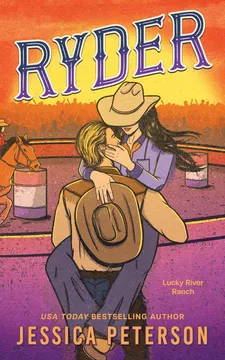
Ryder Rivers
One of Cash's twin brothersRyder is Duke's12 twin and another of Cash's2 younger brothers. He works on the ranch, joins the family's teasing, and helps keep tensions from boiling over. His easy loyalty reflects how closely the Rivers brothers2 depend on one another.
Goody Gershwin
Garrett's longtime attorneyGoody is Garrett's3 lawyer and a trusted member of Hartsville's community. She explains the terms of the will and helps Mollie1 learn what running Lucky Ranch entails. Married to Tallulah15, Goody is practical and diplomatic, though she does not pretend the inheritance condition is ordinary. Her history with Garrett3 gives her a view of his decisions that neither Mollie1 nor Cash2 possesses.
Tallulah Smith
Rattler owner and bartenderTallulah owns The Rattler, Hartsville's local bar, and tends its regulars with a wry, welcoming manner. She is Goody's14 wife and knows the Rivers brothers2 well, including their habit of keeping a tab. Her bar provides the town with a place to gather around music, dancing, and shared history.
Palmer Mason
Mollie's Dallas hookupPalmer is a commodities trader Mollie1 knows from college and sees casually in Dallas. He offers the uncomplicated sexual arrangement she believes she wants, but his self-absorption becomes harder to ignore when he visits Hartsville. He belongs to the polished urban life Mollie1 is trying to understand, not a villainous counterworld.
Zach
Paralegal and steel guitaristZach is Goody's14 paralegal and a musician who plays steel guitar with Frisky Whiskey. His roles connect the legal office with Hartsville's social life, though he remains a peripheral presence in Mollie1 and Cash's2 story.
Beck Wallace
Neighboring horse breederBeck runs the horse-breeding operation on his family's ranch and supplies Lucky Ranch with horses. He is personable and flirtatious, especially around Sally11, and his visits reveal the interdependence among Hartsville's ranching families.
Maria
Garrett's trusted mareMaria is the mare Garrett3 rode and the horse Mollie1 remembers from childhood. Her familiar presence helps reconnect Mollie1 to riding and to sensory fragments of her early life on the ranch. When she bolts during Mollie's1 first tour, she also creates the circumstances for Mollie1 and Cash2 to speak privately.
Happy
Bottle-fed newborn foalHappy is a newborn foal whose mother cannot nurse her, so Cash2 and the ranch community bottle-feed her. Caring for Happy reveals Cash's2 patience and gives Mollie1 a gentle way to take part in ranch life. The foal becomes a small but memorable focus for the children during their visit.
Plot Devices
The one-year will condition
Turns inheritance into residencyGarrett's3 will gives Mollie1 Lucky Ranch and its trust but requires her to live on the property for a full year and actively participate in its daily operation before she can access the funds. The condition forces a Dallas entrepreneur with an urgent business need to work alongside Cash2, whose own livelihood depends on the ranch. It begins as the source of their conflict and later becomes unnecessary when Aubrey's4 lawyers have it struck down. By then, Mollie's1 relationship with the ranch has changed, so her decision about whether to stay is no longer dictated by the will.
Garrett's photo lockbox
Reframes a father's silenceGarrett3 leaves Cash2 the key to a bank lockbox, telling Goody14 only that its contents are precious. Inside are hundreds of photographs of Garrett3, Aubrey4, and Mollie1, many from Mollie's1 childhood on the ranch. Cash2 initially cannot understand why Garrett3 trusted him with them. Sharing one with Mollie1 and Aubrey4 later gives them a concrete reminder of their family before its estrangement and helps them discuss what their memories leave out. The photographs do not undo Garrett's3 failures, but they show that affection and regret existed alongside his absence.
The pregnancy scare
Raises a possible futureAfter weeks of unprotected sex, Mollie1 notices that her period is late and fears she may be pregnant. She and Cash2 buy tests and wait for the results together. The tests are negative, but the scare makes them confront how seriously they would treat an unexpected child and how attached they have become. Cash2 tells Mollie1 he loves her and would face the consequences with her, while insisting that her choices remain hers. The moment brings their feelings into the open just as Mollie1 learns she is no longer legally required to remain on the ranch.
Ranch work and horsemanship
Restores embodied confidenceRiding Maria19, learning ranch routines, joining cattle work, and helping with animal care let Mollie1 discover a connection to the place that she cannot reach through inheritance paperwork alone. Each task gives her a concrete way to participate, even when she is inexperienced or tired. Cash's2 instruction is at first a test and later becomes support. For Mollie1, physical work also interrupts the isolation and stress that have marked her Dallas life. The ranch does not erase her city ambitions; it helps her recognize that her identity can include both.
The combined ranch plan
Joins two family legaciesCash2 imagines a Bellamy Brooks studio beside the Colorado River, offering Mollie's1 company a creative base near the ranch. Later, Mollie1 proposes joining Lucky Ranch with Rivers Ranch as equal partners, giving Cash2 a path to restore his family's land while protecting her work and independence. Their plans answer the practical conflict that love alone cannot solve: neither needs to abandon the people, ambitions, or place that matter to them. The name Lucky River Ranch expresses their shared ownership and the possibility of making a new family legacy from both histories.
Lucky River Ranch Series

About the Author
Other books by Jessica Peterson

Download PDF
Download EPUB
.epub digital book format is ideal for reading ebooks on phones, tablets, and e-readers.








