


Plot Summary
The Closet Door Snaps
Teddy Andersen arrives at the Devil’s Boot to help her best friend, Emmy Ryder, and Emmy’s fiancé, Luke Brooks, clear space for a renovation. Gus Ryder, Emmy’s older brother and Teddy’s longtime adversary, joins the work below stairs.
When Teddy carries old newspapers into the basement, her vintage jacket catches on a closet door and traps her inside with Gus. Neither has a phone, and their cramped arguments keep brushing against a more unsettling awareness of each other.
Brooks eventually opens the door, but the encounter leaves Teddy with a torn jacket and both rivals newly conscious of their physical closeness. The damage lands at a vulnerable moment: Teddy already fears that her life and her friendship with Emmy are changing without her.
The closet turns their familiar verbal sparring into involuntary proximity, exposing a distinction both have worked to avoid: dislike is not the same as indifference. Teddy’s jacket carries more than aesthetic value. It holds a memory of her and Emmy acting as a unit, so its damage registers as a small material version of a larger fear that their shared life is fraying. Gus responds to discomfort by blaming Teddy, while she uses wit to stay in control. Their banter is both genuine hostility and a defense against recognition.
Two Routines Come Apart
While Cam, the mother of Gus’s six-year-old daughter Riley, is away preparing to retake the bar exam, Gus forgets to collect Riley from soccer practice during a demanding ranch day. Emmy asks Teddy to get her, and Teddy brings Riley home, feeds her, and comforts her longing for her mother. Gus arrives exhausted and lashes out before Teddy’s remark about his mistake makes him admit how ashamed he feels.
Teddy apologizes and reassures him that one failure does not make him a bad father. The next day, Teddy learns that Cloma is closing the boutique where Teddy has worked for years. With Gus stretched thin and Teddy suddenly unemployed, Emmy proposes that Teddy care for Riley during the summer.
The two crises expose complementary forms of overfunctioning. Gus treats competence as a moral obligation, so forgetting one pickup becomes evidence, in his mind, that he has failed as a father. Teddy is skilled at rescuing others, yet hides the growing loneliness beneath her dependable, lively persona. Their first honest exchange comes only after she wounds him and then chooses to repair the harm. That moment quietly recasts their rivalry: Teddy can see Gus’s vulnerability, and Gus is forced to accept care instead of converting shame into anger.
Terms of the Summer
Emmy persuades Teddy to accept temporary work with Riley, even though both women know Gus will object. At their early-morning kitchen meeting, Teddy negotiates her weekly pay and agrees to stay at Gus’s house on the nights she works, making the arrangement practical for his early ranch starts. Gus leaves a schedule and breakfast, then watches Riley settle easily into Teddy’s care.
Teddy and Riley spend their first day making a comfortable routine: they eat together, explore the property, and sort out the laundry that Gus has let pile up. When Gus gets home, he finds Riley happy and his house in better order. His gratitude remains awkward, but the arrangement begins to help both households.
The arrangement is more than a convenient childcare solution. It places Teddy inside the daily rhythms of a family she fears she is losing access to, while giving Gus help without requiring him to admit how badly he needs it. Her bargaining over pay preserves her professional self-respect at a time when the boutique’s closure has shaken her sense of direction. Riley’s quick trust offers a bridge that neither adult could have built through argument alone. Domestic details, especially meals and laundry, become evidence of care that is tangible, repeatable, and harder for Gus to dismiss.
The Diner Gets Crowded
On her first weekend away from Gus’s house, Teddy meets her old friend Dusty Tucker for dinner. Seeing Gus at another table with Riley and Riley’s soccer coach, Nicole, makes Teddy feel as if everyone else has found a settled place while she remains unsure what comes next. Dusty listens as she wonders whether she has missed her chance at a larger life, then reminds her that leaving town and returning were choices, not mistakes.
Gus notices Teddy’s easy closeness with Dusty and bristles, but when Nicole dismisses Teddy as irresponsible, he defends her. Back at the ranch, Teddy’s outings with Riley turn into plant-hunting and craft projects. Gus begins to see that her spontaneity gives Riley room to create and explore.
The diner puts Teddy’s private anxiety into social view: she measures herself against marriage, parenthood, and apparent forward motion, although she has not actually wanted those milestones on someone else’s timetable. Dusty offers companionship without claiming to solve her uncertainty. Gus’s jealousy is less mature, but his defense of Teddy signals a shift in how he interprets her. He begins to distinguish her expressive, flirtatious manner from carelessness. Riley’s delight in Teddy’s creative activities then supplies the evidence his old assumptions lacked.
The Care He Offers
When severe menstrual cramps leave Teddy pale and doubled over, Gus gives her a heating pad, pain medicine, and water instead of letting her drive home. As he folds laundry, they speak openly about Riley’s birth, Gus’s friendship with Cam, and the kind of families they might want in the future. Their ease deepens when they watch a movie and Gus carries a sleeping Teddy to bed.
Later, Riley’s Twister game leaves Gus and Teddy pressed close on the mat, laughing until he nearly kisses her. Teddy stops him, explaining through her boundary that she cannot risk another kiss followed by his retreat. The moment forces their attraction to confront the history beneath their jokes.
Care changes the emotional terms between them. Gus does not treat Teddy’s pain as inconvenient or embarrassing; he responds with practical attention, the kind of help he has struggled to accept for himself. Their conversation about parenthood lets each see the other’s hopes without the usual teasing filter. Yet Teddy’s refusal to be kissed is not coyness. It is a protective limit shaped by a past injury, and the scene makes clear that attraction alone cannot undo it. Trust requires Gus to face what his earlier behavior cost her.
The Kiss He Denied
A flashback reveals why Teddy distrusts Gus’s sudden tenderness. Seven years earlier, Gus pulled Teddy away from a man harassing another woman at the Devil’s Boot, then kissed her outside the bar. When the crowd interrupted them, he panicked, told her to forget it, and went back inside. In the present, Gus approaches Teddy after their near-kiss and asks to try again.
She allows one brief kiss but makes clear that he cannot erase the earlier hurt by pretending it never happened. Gus acknowledges the harm and promises not to disappear this time. His words do not settle their future, but they let Teddy consider him as more than the man who once left her alone with a secret.
The flashback revises the apparent origin of their hostility. Their antagonism was not simply a clash of temperaments; it also protected Teddy from the humiliation of caring about someone who denied what had happened. Gus’s retreat came from fear and competing responsibilities, but the novel does not treat those motives as an excuse. In the present, Teddy names the condition for renewed intimacy, and Gus accepts that her memory matters. The repair begins not with a grand gesture but with accountability and a willingness to stay present after the kiss.
Jealousy Breaks the Truce
After kissing Teddy, Gus sees her chatting with Jake, the veterinarian, during horse examinations and wrongly reads her friendliness as romantic interest. He withdraws into grunts and avoids her, repeating the old pattern she feared. Teddy confronts him in his bedroom and tells him that his silence hurts more than his jealousy can justify.
Their argument makes the stakes plain: Gus does not want to watch her flirt with anyone else, while Teddy refuses to treat one kiss as an exclusive commitment. When he kisses her again, she chooses to meet him rather than flee. They have sex, then lie together as Gus admits he likes her and Teddy admits she cannot yet define what their new closeness means.
Gus’s jealousy exposes the gap between desire and relational responsibility. He wants the privileges of intimacy before he has offered Teddy clarity, and his silence repeats the exact injury she identified. Teddy’s confrontation is therefore a turning point in agency: she does not simply reward his attraction, she makes him hear its consequences. Their sexual encounter marks a mutual choice, but it does not solve their mismatch in communication. The uncertainty afterward is psychologically credible because their bodies have moved faster than the trust built by words.
A Heartbeat in the Hospital
Hours after their first night together, Gus wakes Teddy with news that her father, Hank, has suffered a heart attack. He drives her to the hospital, where Hank is stable, and stays nearby as Teddy keeps watch. When she later returns to Gus’s house, exhaustion and fear finally overwhelm her.
Gus carries her inside, helps her shower, washes her hair, and holds her while she cries about the possibility of losing the father who raised her. Hank recovers and returns home, where Riley brings him a glitter-covered get-well card. Gus visits with his daughter, repairs Hank and Teddy’s broken washing machine, and joins them in the garage as Hank and Teddy make music together.
The emergency strips away flirtation and tests whether Gus can offer care without turning it into possession or a demand for reassurance. He waits through Teddy’s fear and helps her surrender the caretaker role she has carried for years. Hank’s recovery matters, but the deeper change is Teddy allowing someone else to witness her distress. The return visit extends intimacy into a broader family network: Riley’s card, Gus’s repair work, and the music in Hank’s garage link care to ordinary acts of maintenance. Love here is not only a feeling; it is attention that shows up.
Emmy Sees the Hickey
While Teddy paints behind her garage, Emmy spots a mark on her neck and realizes Teddy is involved with Gus. Emmy reacts with alarm, worried that the relationship may be temporary and could damage her bond with both her brother and her best friend. Teddy hears something more painful: Emmy seems to assume that she cannot want a serious relationship.
She explains that losing the boutique and watching their friendship change have left her feeling unseen, even though she has tried to stay happy for Emmy’s engagement. Teddy also argues that Gus understands the burden of caring for everyone because he carries the same one. Emmy leaves after Teddy asks for space, and the friendship remains unresolved.
The conflict is not merely about a friend’s brother. Emmy’s caution reproduces the larger pattern Teddy has been resisting: others trust her to recover, so they underestimate what she wants and how deeply she feels. Teddy’s anger finally gives form to the loneliness she had concealed to protect Emmy from guilt. At the same time, Emmy is responding from a real fear of losing two central relationships at once. The scene refuses an easy villain. Both women are trying to protect love, but one has mistaken protection for deciding what Teddy can handle.
Sue Gets Her Rider
At the Devil’s Boot’s expanded reopening, Gus arrives hoping to see Teddy, while Riley stays with her grandfather. Brooks introduces the new mechanical bull, Sue, and brings Teddy into the spotlight for its first ride. She holds on through the full run and finishes standing triumphantly atop the bull.
Gus watches her command the room, then crosses to her and kisses her openly in front of the town. They leave together, and at his house Teddy tells him plainly that she wants him; Gus responds with the same hunger and care. Their intimacy becomes a deliberate choice rather than an accident of proximity, though neither has yet settled how their relationship will continue after the summer job ends.
The public ride gives Teddy a stage on which her appetite for attention is an asset rather than a flaw. Gus’s response matters because he does not ask her to dim that brightness or keep their connection hidden. His public kiss is a form of recognition, but the section preserves a useful tension: being chosen in a charged moment is not the same as building a durable future. Their affection has become mutual and visible; the still-unanswered question is whether Gus can translate desire into a shared plan.
A Summer Must End
As Cam returns from Jackson, Teddy’s temporary work with Riley ends. Teddy leaves Gus’s house to spend the evening with Hank, afraid that their connection may depend on the arrangement that brought them together. Gus lets her go without asking for a future, then admits to Cam that their relationship is more than a fling.
Cam urges him to stop treating love as another responsibility he must suppress. Meanwhile, Teddy decides to build her own clothing business from a workspace at home, and Hank assures her that caring for him need not keep her from pursuing a life of her own. Emmy apologizes for doubting her, and the two friends reconcile. Gus asks his father for a day away from ranch duties.
The separation is driven by an omission, not a betrayal: each wants the other, but both assume the summer’s structure may be the only reason they fit. Teddy’s fear of dependence pushes her toward self-definition, while Gus’s habit of letting actions stand in for explicit promises leaves her unsure. Cam and Hank each challenge a different version of that trap. Gus must learn to want a life beyond duty; Teddy must believe that pursuing her own work is compatible with being loved. The repaired friendship with Emmy also restores the support system Teddy feared she had lost.
The Missing Pink Flower
With his father’s guidance, Gus locates the rock jasmine that Teddy and Riley could not find during their summer plant hunt. He clears the trail and takes them both into the hills, where Riley spots the flower and completes their project. That evening, Gus returns Teddy’s repaired vintage jacket, which he had secretly arranged for Cloma to mend, and offers to help get her sewing machine fixed.
More importantly, he tells Teddy he wants a life with her and Riley, not merely a summer arrangement. Teddy accepts his love and admits she loves him too. Their future rests on two commitments at once: Gus will make room for what he wants, and Teddy will pursue her work without giving up the family she has found.
The flower quest converts a small shared activity into a model of partnership. Gus does not simply hand Teddy a romantic symbol; he learns what matters to her and Riley, makes time away from the ranch, and helps complete something they began together. The repaired jacket echoes this action: damage is acknowledged and carefully mended rather than denied. His declaration answers Teddy’s central fear that their bond will vanish when its practical excuse ends. Her acceptance does not require her to abandon independence. The resolution joins two lives by making space for each person’s work, care, and desire.
Epilogue
In August, Gus proposes to Teddy with a vintage emerald ring, and Riley welcomes Teddy as part of their family. Teddy turns her designs into a real business workspace and completes the embroidered plant project for Riley. By December, the three arrive together for Cam’s wedding.
Just before the ceremony, Gus learns that Cam’s fiancé, Graham, has called it off. The family’s celebration halts at the threshold of a new crisis, shifting attention from Gus and Teddy’s settled future to Cam’s suddenly altered one.
The epilogue gives the central couple a durable future through concrete choices: an engagement ring, a creative workspace, and Riley’s uncomplicated acceptance. Their family is not built by displacing existing bonds but by enlarging them. The wedding scene then refuses to make romantic closure feel like a universal cure. Gus and Teddy can be secure while Cam faces a rupture of her own, and the final revelation places the novel’s family network under new emotional pressure. The ending is both a reward and a handoff: one relationship reaches commitment as another loses its expected shape.
Analysis
The romance is organized around a problem more specific than enemies-to-lovers banter: both Teddy and Gus have made care into proof of worth. Gus manages the ranch, protects Riley, and supports his siblings by trying to become indispensable. Teddy helps Emmy, looks after Hank, and brings brightness to others, then feels unseen when people assume she will always be fine. Their attraction becomes credible when each recognizes the cost of the other’s competence. Gus learns that practical responsibility cannot substitute for saying what he wants; Teddy learns that accepting care need not erase her independence.
The novel’s domestic labor is its most persuasive romantic language. Gus cooks, folds laundry, repairs a washing machine, and stays through Hank’s crisis. Teddy gives Riley creative attention, patches clothes, and makes a place for herself in Gus’s home. These acts are not interchangeable with declarations, but they prepare the ground for them. The book’s central relational test arrives when the babysitting arrangement ends. If the connection depends only on convenience, it will disappear with the schedule. Gus must choose time and emotional risk, while Teddy must choose a future that includes both her own work and the people she loves.
The supporting relationships complicate rather than merely endorse the central pairing. Emmy’s fear for her brother and best friend causes real harm, because her affection initially becomes a judgment about what Teddy can handle. Their repair matters independently of Gus’s romance. Cam and Hank offer parallel counsel from experience: partnership, family, and caregiving cannot flourish if one person is expected to carry everything. Even the ranch becomes more than scenery. Its labor requires stewardship and delegation, making Gus’s personal growth inseparable from how he learns to lead.
The jacket and flower project give the book a material vocabulary for change. A torn object is repaired carefully; a missing bloom is found only when Gus stops treating work as an absolute claim on his time. The resolution does not ask Teddy to give up Meadowlark or Gus to give up the ranch. It asks both to make room, in lives already full of obligations, for a desire they once considered too risky to name.
Review Summary
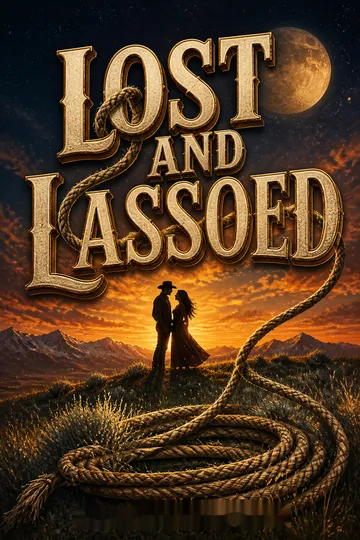
Lost and Lassoed receives overwhelmingly positive reviews, with readers praising the enemies-to-lovers romance between Teddy and Gus. Many find it the best book in the Rebel Blue Ranch series, appreciating the chemistry, banter, and character development. Readers connect with Teddy's relatable struggles and Gus's grumpy-but-caring demeanor. The single dad and forced proximity tropes are well-executed, and the found family aspect is highly praised. While some criticize overuse of pet names and pacing issues, most readers find the story heartwarming, funny, and emotionally satisfying.
People Also Read










Characters
Teddy Andersen
The creative town sparkTeddy is a bold, funny designer who has built a life in Meadowlark around clothes, craft, and loyalty to the people she loves. She is Emmy’s lifelong best friend and has helped care for her father, Hank, as his health has declined. Her habit of being lively and capable makes others assume she can absorb change without help, even when she feels left behind. Clothing is both her art and a way to shape how she enters the world. Teddy is drawn to Gus’s steadiness, but she needs to be treated as someone with serious hopes, not merely as a source of energy or assistance.
Gus Ryder
The guarded ranch caretakerGus is a devoted father to Riley and a central manager of Rebel Blue Ranch, where responsibility has become his default form of love. He is protective, disciplined, and more comfortable solving practical problems than admitting he needs help. His history with Teddy is shaped by years of teasing, assumptions, and an unresolved moment that neither has discussed plainly. Gus values family deeply, yet his urge to carry every burden can make him controlling and emotionally opaque. Beneath his gruffness is a patient, attentive man who cooks, repairs, and remembers details. His challenge is to recognize that accepting support does not diminish his reliability.
Riley Ryder
The curious young connectorRiley is Gus and Cam’s six-year-old daughter, a lively child who loves her family, riding, soccer, and asking questions. She misses her mother while Cam is away, and her close bond with Emmy gives her another trusted adult on the ranch. Riley responds warmly to Teddy’s games, plant hunts, and creative projects, helping the two adults see one another in new ways. Her affection is not a plot device she understands; it comes from her own curiosity and openness. Riley’s ordinary needs, from clean clothes to reassurance, reveal how much care a family can share.
Emmy Ryder
Teddy's lifelong best friendEmmy is Gus’s younger sister, Teddy’s closest friend since childhood, and Luke Brooks’s fiancée. She has recently returned to Meadowlark and is building a life with Brooks after years of wanting to leave town. Emmy loves Teddy fiercely, but she can be private about her own feelings and slow to notice when her friend is struggling. Her instinct to help Gus and Teddy brings them into closer contact, though her protectiveness sometimes becomes misplaced judgment. Emmy’s relationship with Teddy is a central bond in its own right, shaped by deep history and the difficult work of growing up without assuming that closeness will remain unchanged.
Hank Andersen
Teddy's steadfast fatherHank is Teddy’s devoted father, a former touring drummer who left that life to raise her in Meadowlark. He has health limitations and uses a cane, but his humor, music, and affection remain central to their home. Hank has spent much of Teddy’s life making her feel capable and loved, while she has gradually become his caregiver. His relationship with Aggie brings him companionship beyond his daughter, though Teddy sometimes struggles with what that change means. Hank’s quiet support encourages Teddy to imagine a life that is not organized entirely around looking after him.
Amos Ryder
The ranch's steady patriarchAmos is Gus, Emmy, and Wes’s father and the longtime steward of Rebel Blue Ranch. Calm and generous, he has a habit of making room for people and animals who need a place to land. His own experience as a single parent informs his concern when Gus tries to do too much alone. Amos expects responsibility from his children but understands that a ranch cannot depend on one person’s constant sacrifice. His guidance is practical rather than sentimental, and his respect for the land is inseparable from his belief in shared work.
Cam
Riley's ambitious motherCam is Riley’s mother and Gus’s close co-parent. She is studying and working toward a legal career, and the time she spends away from Meadowlark tests the routines she and Gus have built together. Cam is competitive, intelligent, and self-directed, but her earlier struggle with the bar exam made her withdraw from family support. She trusts Gus as Riley’s father and wants her daughter’s needs taken seriously. Her perspective helps Gus distinguish co-parenting from romance and recognize when another person may fit into the family they have carefully built.
Luke Brooks
The Devil's Boot ownerBrooks is Emmy’s fiancé, Gus’s oldest friend, and the owner of the Devil’s Boot, which he is renovating and expanding. Gus once reacted badly when Brooks and Emmy began dating, but the two men repaired their friendship. Brooks is playful and affectionate, though his history with a neglectful father leaves him uncertain about whether he could become a good parent. His bar is a communal center for Meadowlark and the setting where Teddy and Gus’s relationship becomes visible. Brooks’s loyalty makes him a bridge between Gus’s family and the wider town.
Wes Ryder
Gus's capable younger brotherWes is Gus and Emmy’s brother and works on the family ranch, including its guest-ranch operation. He is in a relationship with Ada and tends to be more relaxed about accepting help than Gus. Wes understands his older brother’s protective instincts but does not share his assumption that every problem must be personally managed. He is also a friend to Teddy, offering comfort when she is frightened about Hank. His presence demonstrates that the Ryder family can distribute responsibility rather than leaving it all on Gus.
Ada Hart
The ranch's design eyeAda is an interior designer, Wes’s partner, and Teddy’s friend from college. She creates the Devil’s Boot’s newspaper feature with Teddy and contributes to the ranch’s guest spaces. Observant and direct, Ada offers Teddy advice without pretending the situation is simple. She is also comfortable making a life in a small town on her own terms. Her practical creativity complements Teddy’s fashion and craft skills, while her experience of building a career and relationship helps widen Teddy’s sense of what a future in Meadowlark could look like.
Dusty Tucker
The returning cowboy friendDusty is Teddy’s longtime friend, a traveling cowboy who has returned to work at Rebel Blue. He is also Gus’s employee and the son of Aggie, with complicated feelings about Cam, whom he has loved since they were young. Dusty gives Teddy a steady, nonjudgmental audience when she worries that she is behind in life. His own history of leaving and returning makes him a useful counterpoint to her questions about home. He cares for Teddy without trying to turn that care into a claim on her.
Cloma
Teddy's former boutique bossCloma owns the Meadowlark boutique where Teddy works and gives her room to design and sell original clothing. When Cloma decides to close the store, she gives Teddy severance, a treasured vintage bag, and permission to choose items from the shop. Her decision is painful for Teddy but also forces her to reconsider whether she wants to build her own label rather than remain in someone else’s business.
Jake
The ranch veterinarianJake is the local veterinarian who examines Rebel Blue’s horses. Teddy has had a casual relationship with him, and Gus’s reaction to seeing them together exposes feelings he has not yet learned to manage. Jake’s role is brief, but his presence makes Gus confront the difference between attraction and a relationship he has actually defined.
Graham
Cam's well-connected fiancéGraham is Cam’s fiancé, an investment banker whose work brings him closer to clients in Jackson. He is part of the life Cam is trying to build beyond her co-parenting partnership with Gus. His priorities and relationship to Riley matter to Cam as she considers how much of her family life she is willing to share.
Aggie
A practical family friendAggie is Dusty’s mother, a talented carpenter, and a close friend to Hank and the Ryder family. She supports Hank with meals and company, and her relationship with him offers Teddy reassurance that her father is not alone when she is away. Aggie is warm but practical, often expressing affection through useful help. Her place in the overlapping families of Meadowlark makes care feel communal rather than confined to a single household.
Plot Devices
The Summer Care Arrangement
Forced proximity with purposeWhen Cam leaves Meadowlark for legal work and exam preparation, Gus struggles to balance Riley’s schedule with his responsibilities at Rebel Blue. Teddy has just lost her boutique job, so Emmy persuades her to care for Riley on Gus’s former custody days. The arrangement puts Teddy in Gus’s home and gives them repeated chances to observe one another in ordinary life. It also makes their eventual separation emotionally consequential, since the practical reason for living together has an end date. The device moves the romance forward through shared labor rather than contrived coincidence.
The Damaged Jacket
A tangible thread of repairTeddy’s vintage suede jacket is torn when its fringe catches in the Devil’s Boot closet door. She treasures it because she and Emmy found it together as teenagers, so the damage links a practical mishap to Teddy’s fear that old parts of her life are being left behind. Gus later arranges for Cloma to repair it, turning an early source of distress into a concrete gesture of attention. The jacket’s mending parallels the way the characters must acknowledge old hurt before they can build trust.
The Wildflower Project
A shared future in stitchesTeddy and Riley use an old Rocky Mountain plant guide to search the ranch for a list of flowers, recording their finds in an embroidered design. The project gives Riley a creative pursuit and lets Teddy contribute something she knows how to make. Rock jasmine remains missing until Gus takes a day away from ranch work to clear a trail and help them find it. The finished design becomes a keepsake for Riley, while the search gives Gus a practical way to show that he pays attention to what matters to Teddy and her daughter.
Rebel Blue Ranch
Work, family, and belongingThe ranch is Gus’s workplace, inheritance, family home, and principal source of his sense of duty. Its growth creates the practical pressure that contributes to his exhaustion, while its extended community offers help from Amos, Wes, Emmy, Brooks, and others. Teddy has always considered Meadowlark home, but she is beginning to question whether staying means stagnating. The ranch therefore represents both the security that binds the characters and the responsibilities they must learn to share. Its land also provides the setting for the plant hunt that connects Gus, Teddy, and Riley.
Rebel Blue Ranch Series


About the Author

Download PDF
Download EPUB
.epub digital book format is ideal for reading ebooks on phones, tablets, and e-readers.








