


Plot Summary
The Drive Back to Meadowlark
After a riding accident leaves her unable to mount without panic, Emmy Ryder abandons her Denver apartment, ends a short relationship with a note, and steps away from professional barrel racing. She drives to Meadowlark, Wyoming, carrying a life she has not yet decided whether to resume.
Her best friend, Teddy Andersen, takes her to the Devil’s Boot, where Emmy first admits to herself that home feels familiar rather than confining. She has not told her father or brothers she is back, and she is not ready to explain the accident or what comes next. For one night, Teddy gives her company, tequila, and a reason to stay among the people and places she has missed.
Emmy’s return begins as an impulsive exit, but the bar scene complicates the idea that she is simply retreating. She has lost confidence in the activity that organized her identity, and Denver has become a place where the consequences of that loss are impossible to ignore. Meadowlark offers no instant cure; it offers familiarity, a trusted friend, and room to stop performing competence. Her choice to enter the bar matters because it is the first small decision made for comfort rather than achievement. The story’s central question begins here: can Emmy belong somewhere without having to prove her worth through winning?
Clementine at the Devil’s Boot
Inside, Emmy runs into Kenny Wyatt, a former Homecoming date whose attention feels flattering until Luke Brooks interrupts their reunion. Luke is Gus Ryder’s oldest friend and now the owner of the Devil’s Boot, a fact Emmy doubts until he asserts authority over the bar. He has the band play the song associated with her name, turning the room’s affection into a public tease.
Emmy charges toward him and collides with his chest. Their familiar insults return at once, but Luke’s irritation at Kenny’s hand on her waist gives their rivalry a new edge. The next morning, Luke tells Gus that Emmy is home, accidentally exposing her return before she can choose how to tell her family.
The bar compresses Meadowlark’s intimacy into a single room: everyone knows Emmy’s history, Luke can command the band, and her old nickname becomes public entertainment. She resents being treated as a town mascot, especially when Luke joins in, yet his jealousy reveals that he sees her not merely as Gus’s protected sister. His possessiveness is not framed as proof of love; it is a flaw that Emmy immediately challenges. The accidental disclosure also shows how small-town connection can be both shelter and loss of control. Emmy has returned to a place where news travels faster than her own readiness.
Home Has Two Brothers
At Rebel Blue, Wes Ryder greets Emmy with a hug and gives her a choice of lodging after their father, Amos, has turned her bedroom into a yoga space. She chooses the secluded small cabin and arranges for her horse Maple to come from Colorado. Gus asks her to collect his daughter, Riley, from a riding lesson, where Emmy discovers Luke teaching children with patience she never associated with him.
Riley’s delight at seeing her aunt briefly eclipses Emmy’s own unease, though the child’s admiration of her riding skills sharpens the pain of her accident. Amos welcomes her with affection, and the family begins folding her into ranch routines before she has explained why she came.
The ranch welcomes Emmy through practical gestures rather than interrogation: Wes prepares a cabin, Riley runs to her, and Amos makes space for her return. That care is precisely what makes the homecoming emotionally difficult. Emmy’s family remembers the capable rider she was, while she is privately unsure whether she can ride at all. Riley’s uncomplicated admiration turns that gap into a visible wound. Luke’s work with the children also unsettles Emmy’s fixed image of him, giving the romance a foundation in changed perception rather than sudden attraction alone. Home offers belonging, but it also brings Emmy face to face with the identity she fears losing.
Boxes, Blood, and Almost
While helping Emmy move boxes into her cabin, Luke watches her fall and cut her arm on a box. He cleans the wound, steadies her when the sight of blood makes her faint, and comes close to kissing her before Wes arrives with her bedding. Days later, Luke finds Emmy shaking beside Maple in the stable.
She finally explains that a horse threw her into a fence in Denver, knocking her unconscious, and that mounting has triggered panic ever since. Rather than tell Gus, who she does not want to worry, Emmy accepts Luke’s offer to restart with the basics. Their agreement turns Luke from an aggravating family fixture into the first person she trusts with the truth.
The cut and the riding panic are distinct injuries, but together they expose how little control Emmy feels she has over her body. Luke’s response is concrete: he treats the wound, stays through the panic, and offers a gradual process instead of demanding bravery on command. This matters because the familiar slogan about returning to a horse would only intensify her shame. Emmy’s choice to keep the accident from her brothers is not simple secrecy; it is an attempt to preserve agency in a family that protects her fiercely. Luke earns intimacy by respecting that boundary and making help collaborative.
Moonshine’s First Laps
Luke’s lessons begin with grooming, tacking, and walking the horses, giving Emmy time to rebuild confidence without being pushed. When she is ready to mount, he chooses Moonshine, her older, steady horse, instead of the faster Maple. Emmy climbs into the saddle herself and completes several slow laps around the corral.
The success makes a larger family change feel possible: Wes is planning a guest ranch in the old Big House, and after returning from a ranching conference, Gus supports taking the proposal to a family vote. At breakfast, Amos explains that Luke’s apparent recklessness once hid a boy who had little reason to believe anyone would show up for him. Emmy begins to recognize the man beneath his reputation.
The first ride is deliberately modest. Emmy does not reclaim her former speed or prove that the accident has vanished; she performs a manageable task and discovers that fear can coexist with action. Moonshine’s familiarity supports this recovery, while Luke’s restraint keeps the lesson from becoming another test of achievement. The guest ranch discussion echoes that same scale of growth: Wes sees possibility in a neglected building, and his family considers making that vision real through shared responsibility. Amos’s account of Luke adds a parallel arc. Both characters are learning that the past explains their present habits without having to dictate their futures.
The Hidden Mountain Spring
After Luke takes Emmy to a secluded mountain spring he has never shared with anyone, she swims, laughs, and speaks openly about ADHD, burnout, and the loss of joy in racing. She admits that the fall came after months of overtraining and that returning home began as an impulsive attempt to regain control.
Luke tells her how Riley’s birth, his father’s death, and a jail stint forced him to stop working against himself. He does not demand that Emmy keep racing; instead, he supports her wish to make one final appearance in Meadowlark on her own terms. On the walk back, Emmy takes the lead and kisses him beside his truck. Luke kisses her back, but Gus’s call interrupts them before they can go further.
The spring is a private space Luke offers without turning it into a test or a transaction. Its quiet lets Emmy describe the complicated relationship between ADHD, hyperfocus, exhaustion, and the career that once gave her structure. Luke’s disclosure meets hers with equal vulnerability: he is not only the town’s reckless cowboy but someone who has deliberately tried to build a life unlike his father’s. Their kiss follows mutual recognition, not rescue. Emmy initiates it, a meaningful reversal for someone accustomed to evaluating herself through discipline and control. Her choice to race once more is also reframed as a farewell she can author, rather than a duty owed to the circuit.
A Door Left Open
At a family dinner, the Ryders approve Wes’s guest-ranch proposal, requiring him to submit a budget and carry the project forward. Luke attends as part of the family, and afterward he tells Emmy he wants more than a casual encounter. She admits she wants to spend time with him but needs time before telling her brothers. Luke accepts that pace.
When Emmy closes her cabin door, she realizes she does not want the night to end and opens it again; Luke has already turned back. They choose each other, and their first night together changes the teasing tension into a private relationship. By morning, Luke makes clear he does not want to remain a secret, while Emmy asks for time to understand what they are becoming.
The family vote gives Wes a concrete future at Rebel Blue just as Emmy and Luke begin imagining one together. Both developments depend on trust: Wes must prove his plan can work, and Emmy must risk letting Luke see her before she can define the relationship. Her request for time is not rejection; it is an effort to process a major change without letting fear make the decision for her. Luke’s concern about secrecy reflects his childhood experience of being treated as someone who did not belong, yet he does not force an immediate disclosure. The open door becomes an action of choice: Emmy can close off intimacy, or turn back toward it.
Teddy’s Red Dress
For Teddy’s birthday, Emmy wears a red dress her friend made and meets her at the Devil’s Boot. Luke brings the group lemon-drop shots, then watches Emmy fend off a persistent stranger. When the man keeps touching her after she turns away, Luke pulls him off, orders him out, and punches him when he insults Emmy.
He carries her to his office, where their argument gives way to another intimate encounter. Later, Emmy tells Luke she is in like with him and explains that she needs time before telling her family. Luke agrees to wait without withdrawing his feelings. The evening leaves Emmy both exhilarated and uneasy: she wants Luke, but his instinct to protect her can cross into deciding what she needs.
The birthday scene tests the difference between protection and control. Luke correctly recognizes that the stranger is ignoring Emmy’s refusals, but his physical escalation and decision to carry her away provoke her anger. Their attraction does not erase that conflict; it makes the conflict harder to dismiss. Emmy insists that she can handle herself, while Luke’s jealousy exposes how quickly his fear of losing her becomes possessive action. Her confession of affection gives the relationship emotional weight, but she still needs time and privacy. Teddy’s presence as a loyal friend provides a counterbalance, celebrating Emmy without treating her choices as something to manage.
A Future After Barrels
As fall approaches, Amos asks Emmy what she wants after the divisionals. She decides she will race in Meadowlark and then leave professional competition, but she still wants to work at Rebel Blue. Amos offers her riding-instructor work and horse training, giving her a possible life on the ranch that is not built around winning.
Before the race, Luke creates a regulation barrel course so she can prepare with Maple. Emmy practices cautiously, first at a walk and then at speed, while Luke stays beside her when fear resurfaces. His support helps her focus on the choice ahead: she is not returning because the circuit expects her to, but because she wants one last ride she can call her own.
Emmy’s career decision is not framed as defeat or a sudden cure. She can love riding and still refuse to make competition the measure of her whole life. Amos’s offer gives her a role in the ranch’s future, while Luke’s practice course makes the final race physically possible. Those forms of support differ: her father offers continuity, and Luke offers a specific path back through fear. Crucially, neither insists that she race. Emmy’s agency depends on having genuine alternatives, including the right to stop. Choosing the divisionals therefore becomes an act of ownership over her history, not a demand to restore the person she was before the accident.
The House Luke Escaped
Luke’s mother calls after her husband, John, disappears during a truck route, and Luke drives to her home with Emmy beside him. Lydia is frightened and defensive, blaming the Ryders for taking Luke in and resenting Emmy’s presence. Luke refuses to let her insult Emmy, but he stays to comfort his mother and clean the cluttered room.
While looking through old photographs, he discovers a picture he had mistaken for himself is actually his half-brother JJ. JJ arrives, insults Luke, and blocks their way out. Emmy pushes back by pointing to his illegal dealing, then leaves with Luke. In the truck, Luke admits how painful the visit was; Emmy reassures him that his childhood does not define his worth.
The visit makes Luke’s history tangible rather than leaving it as a story about a difficult childhood. Lydia’s accusation reveals her unresolved resentment, while the photograph exposes how little space Luke occupied in his own family’s memory. His response is not uncomplicated anger: he still comes when his mother needs him and cleans the home, even after years of distance. Emmy’s defense matters because it is neither abstract sympathy nor an attempt to fix his family. She names the mistreatment and leaves with him. Luke’s vulnerability here gives his desire for belonging a sharper shape, and Emmy’s loyalty becomes an active choice.
Fourteen Point Eight
On divisionals day, Emmy’s hands shake so badly that Teddy pins on her number and fetches Luke. He steadies her, reminding her that she can still choose whether to enter. Emmy rides Maple through the course in 14.8 seconds, breaking her own record and taking first place. She runs from the arena into Luke’s arms and kisses him in front of her family and the town, no longer willing to hide their relationship.
Gus sees the kiss, calls Luke a liar, and punches him before Wes and Amos can pull him back. Teddy confronts Gus and gets him to leave. Amos sends Emmy away with Teddy while he looks after Luke, turning Emmy’s public victory into a painful separation from the man who helped her reach it.
The race resolves Emmy’s fear through action, not through a speech about courage. Her 14.8-second run proves she can return to the arena, but the deeper victory is that she rides by choice and celebrates without hiding her attachment to Luke. The kiss makes their private relationship public at the exact moment Emmy feels strongest. Gus’s punch then exposes the cost of that visibility: his protection of his sister has become a refusal to recognize her adulthood. Luke’s instinct is still to shield Emmy, even while taking the blow. The chapter lets achievement and rupture occupy the same moment, preventing the race from becoming a tidy cure-all.
The Ride Back to Love
For several days, Emmy avoids Gus and misses Luke, while Luke gives his best friend room to calm down. Gus eventually visits Luke, apologizes for the punch and his accusations, and admits he is not yet comfortable with the relationship. He learns Luke had wanted to tell him but waited because Emmy needed time. Gus points him toward Emmy, who is checking fences on the ranch.
Luke rides there bareback, dismounts before reaching her, and tells her he loves her. Emmy returns the confession and admits she plans to stay in Meadowlark. The reconciliation does not erase Gus’s discomfort, but it restores the friendship enough for the couple to move forward. Emmy’s return now means a chosen home, not an escape hatch.
The repair is deliberately partial. Gus apologizes and opens a path forward, but he does not instantly become comfortable with Luke dating his sister. That restraint makes the resolution more credible: trust is restored through accountability and time rather than one dramatic embrace. Luke’s ride across the ranch mirrors Emmy’s earlier return, but he is not fleeing a life this time. He is going to speak plainly about what he wants. Emmy’s response links romance to the larger decision of belonging. She stays not because the ranch has solved every uncertainty, but because she can imagine work, family, friendship, and love coexisting there.
Epilogue
Months later, Emmy has taken over the ranch’s riding lessons, while Luke has more time to focus on the Devil’s Boot. Gus is still adjusting, but he no longer reacts as though every touch between his sister and his best friend is a crisis.
Luke gives Emmy a key to his home and has made space for her things. His mother has contacted him again after John returns from his truck route, leaving their relationship tentative but open. Emmy accepts the key, and the two begin building a shared life one ordinary morning at a time.
The epilogue measures resolution through daily arrangements rather than a grand declaration. Emmy’s new teaching work lets her remain close to horses without returning to the all-consuming demands of competition, while Luke’s attention shifts toward the bar he has worked to stabilize. The key is a practical invitation, but it also reverses Luke’s childhood sense of being peripheral: someone has made room for him, and now he makes room for Emmy. His renewed contact with his mother remains uncertain, which keeps reconciliation from being confused with instant repair. Their future feels secure not because every wound is healed, but because they can make plans together.
Analysis
Done and Dusted treats recovery as a problem of agency, not simply courage. Emmy’s accident matters because it interrupts the system through which she has understood herself: discipline, speed, and measurable success. Her return to riding is deliberately incremental, and the book distinguishes capability from obligation. She can reclaim the saddle without agreeing to make competition her whole life again. That distinction gives her final race its emotional force. It is a chosen farewell rather than a forced return to her former self.
The romance develops through acts of attention. Luke remembers how Emmy takes her coffee, recognizes her panic, and makes a course for her to practice on. Emmy, in turn, learns to see the care beneath Luke’s reputation and stands beside him when his family treats him as disposable. Their strongest moments are not only sexual or dramatic; they are practical gestures that allow each to feel known. Yet the story also refuses to make devotion automatically virtuous. Luke’s jealousy at the bar and his decision to remove Emmy from the crowd provoke her because protection can become another form of control. Their connection works best when he listens and she remains free to choose.
Meadowlark is not merely the place Emmy fled and then returned to. It is a community whose love can shelter her, embarrass her, and intrude on her privacy, sometimes all at once. The family ranch gives each sibling a different future to imagine: Gus manages its daily demands, Wes sees a guest ranch in a neglected house, and Emmy finds work teaching and training. The book’s resolution does not require perfect agreement or complete healing. Gus remains uneasy, Luke’s family history remains complicated, and Emmy’s career changes shape. What changes is that Emmy no longer has to treat uncertainty as proof that she has failed. She can build a life from relationships, work, and choices that remain open to revision.
Review Summary
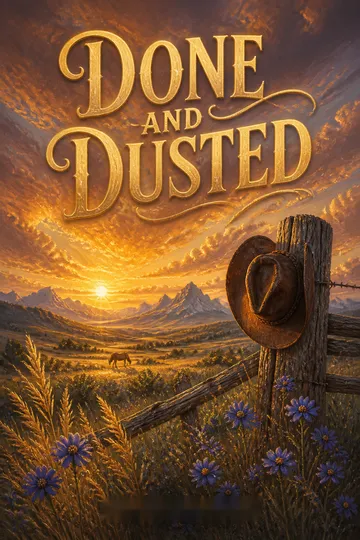
Done and Dusted received mixed reviews, with an average rating of 3.84 out of 5. Many readers enjoyed the small-town cowboy romance, praising the chemistry between Emmy and Luke, the ADHD representation, and the steamy scenes. Critics found the writing bland, characters underdeveloped, and plot unoriginal. Some appreciated the low angst and quick pacing, while others felt it lacked depth. The book's cover was frequently mentioned as attractive. Overall, opinions varied widely, with some calling it a cute, fun read and others finding it disappointing.
People Also Read




Characters
Emmy Ryder
The returning championEmmy, whose full name is Clementine, is the youngest Ryder sibling and a champion barrel racer returning to Meadowlark after years away. Her ADHD shapes how she manages attention, overwhelm, and the impulse to regain control when life feels uncertain. She is observant, funny, and often more comfortable sorting out her feelings privately than asking for help. That self-reliance has helped her achieve extraordinary things, but it can also make a setback feel like a private failure she must solve alone. Her bonds with Teddy and her family give her a secure base, even as she resists being treated as someone who needs managing. She is driven by competence and independence, and she is beginning to question whether ambition must remain the center of her identity.
Luke Brooks
The guarded cowboyLuke is Gus Ryder’s lifelong best friend, the owner of the Devil’s Boot, and a familiar presence at Rebel Blue Ranch. His reputation for carelessness conceals a steady capacity for work and care, especially when he feels responsible for someone he loves. Growing up in a home where he was not wanted left him wary of dependence and deeply grateful for the Ryders’ welcome. He tries to build a life unlike his father’s, balancing the bar with ranch work and teaching children to ride. Luke is direct in action but less practiced at naming vulnerable feelings. His attraction to Emmy unsettles his old assumptions about himself and forces him to distinguish protectiveness from control.
Teddy Andersen
Emmy’s fierce best friendTeddy has been Emmy’s closest friend since childhood, and her loyalty is practical as well as affectionate. A bold dresser, sharp-tongued conversationalist, and talented clothing designer, she brings movement to Emmy’s tendency to retreat into her own thoughts. Teddy notices what Emmy needs before Emmy is ready to ask, but she is not simply a caretaker: she expects honesty and challenges her friend when silence becomes isolation. Her antagonistic banter with Gus reflects a genuine dislike of his overprotective habits, though she can still step between him and a situation that threatens Emmy. Teddy’s appetite for fun helps make Meadowlark feel welcoming again, while her steadiness gives Emmy room to make her own decisions.
August Ryder
The protective eldest brotherGus, also called August, is Emmy’s oldest brother and Riley’s father. He runs much of Rebel Blue’s daily operation and takes responsibility seriously, sometimes so seriously that care becomes control. His protectiveness grew from love for his sister and daughter, but his first instinct is often to decide what danger looks like for everyone else. He is loyal to Luke, yet that friendship is tested by the possibility that Luke might hurt Emmy. Gus’s hard exterior sits beside a deeply involved father and brother who wants the people he loves to be safe, even when they need him to trust them instead.
Weston Ryder
The ranch’s hopeful caretakerWes is Emmy’s older brother, a warm and attentive presence who makes people feel welcome without demanding explanations. He is drawn to projects that let him care for others, particularly the plan to turn the old ranch house into a guest ranch. Unlike Gus, he sees possibility where others see risk or extra work. Wes is responsible and affectionate, though his appetite for adventure can pull him toward abandoned buildings and ambitious plans. He supports Emmy by offering practical help and emotional room, making him an important counterweight to the family’s more protective instincts.
Amos Ryder
Rebel Blue’s steady patriarchAmos is the Ryder family patriarch and the longtime heart of Rebel Blue Ranch. He values hard work and careful decisions, but his authority is softened by affection and a willingness to let his children pursue their own paths. He welcomes Luke as one of the family and recognizes that the younger man needs both structure and care. Amos often understands more than he says, and his quiet observations help Emmy see people, including herself, more clearly. He is devoted to the ranch without treating it as more important than the people who sustain it.
Riley Ryder
The pony-loving nieceRiley is Gus’s young daughter and Emmy’s devoted niece. She loves riding lessons and looks to Emmy as an example of what a skilled horsewoman can be. Her openness and uncomplicated affection reconnect Emmy to family life, even when that admiration stirs painful doubts. Riley also brings out Luke’s patient, nurturing side, which helps Emmy see him beyond his barroom reputation.
Hank Andersen
Teddy’s devoted fatherHank is Teddy’s father, a former touring drummer who left music behind to raise his daughter in Meadowlark. His health is fragile, but his humor and affection remain strong. Hank’s care for Teddy is evident in small, personal gestures, and he shares an old friendship with Amos. Like Teddy, he values sincerity and notices more than he lets on.
Lydia Hale
Luke’s distant motherLydia is Luke’s mother, a quiet and emotionally complicated presence in his history. Her life with her husband has left her isolated and defensive, and her relationship with Luke is strained by years of distance. She still reaches for him when she is frightened, suggesting that affection and failure can coexist without neatly resolving each other.
Jimmy Brooks
Luke’s absent fatherJimmy is Luke’s father and a former owner of the Devil’s Boot. He was unreliable and difficult to understand, leaving Luke with questions about why he mattered so little to him. Jimmy’s choices shape Luke’s fear of repeating the past, even as the bar connects father and son in ways Luke did not expect.
Camille
Riley’s practical motherCamille is Riley’s mother and Gus’s co-parent. She and Gus are not a couple, but they maintain a workable relationship centered on their daughter. Her life beyond the ranch helps establish that family bonds can remain strong without being romantic.
John Hale
Luke’s controlling stepfatherJohn is Lydia’s husband and Luke’s stepfather. His controlling behavior helped make Luke’s childhood home feel unsafe and contributed to Luke’s long separation from his mother.
JJ
Luke’s hostile half-brotherJJ is one of Luke’s half-brothers. He treats Luke with open hostility and represents the family rejection Luke has spent much of his life trying to outgrow.
Kenny Wyatt
Emmy’s former dateKenny is a former Homecoming date and a well-liked local who reconnects with Emmy when she returns. His interest is sincere, but he belongs to her past rather than the life she is trying to build.
Joe
The bar’s steady partnerJoe is a longtime bartender and Luke’s business partner at the Devil’s Boot. He provides practical support, knows the bar’s history, and offers Luke grounded advice when romance leaves him distracted.
Plot Devices
Emmy’s riding injury
Recovery through gradual practiceThe accident that throws Emmy into a fence disrupts her professional identity and makes mounting a horse trigger panic. Rather than resolve the fear through a single brave gesture, the story uses a series of concrete steps: grooming, tacking, walking, mounting Moonshine, and eventually practicing the barrel course with Maple. Each step offers new evidence that Emmy can act while afraid. The injury also makes her return to Meadowlark necessary, bringing her into closer contact with family, Luke, and the ranch. Her recovery is not presented as proof that she must resume competition; it gives her the freedom to choose what riding will mean next.
Rebel Blue Ranch
A home with room to changeRebel Blue is the family’s workplace, inheritance, and shared landscape. Its routines give Emmy structure while she is uncertain about her career, and its horses provide a gradual path back into riding. The ranch also carries a future beyond the established cattle operation: Wes’s plan to convert the old Big House into a guest ranch asks the family to imagine new work without discarding their history. Emmy’s eventual interest in teaching and training horses gives her a way to belong that is not dependent on professional victories. The ranch thus functions as both a source of expectation and a place where identities can be revised.
The Devil’s Boot
Luke’s inheritance becomes responsibilityThe old bar is Meadowlark’s gathering place and the site of Emmy and Luke’s first renewed encounter. Its neon, live country music, and familiar patrons make it a stage where private feelings can become public spectacle. For Luke, ownership is more than a business detail: the bar came through his difficult relationship with his father, and rebuilding it gives him a chance to care for something rather than let it collapse. Its proximity to Rebel Blue keeps his two lives connected. The bar also becomes a setting where Luke’s jealousy and protectiveness are tested, forcing Emmy to challenge the difference between being cared for and being controlled.
The Meadowlark divisionals
A farewell on her termsThe rodeo divisionals bring professional barrel racing to Emmy’s hometown for the first time in years. The event gives her a specific reason to rebuild her riding confidence, while also placing family, friends, and the local community in the stands. Luke’s practice course helps prepare her, but the decision to compete remains Emmy’s. The race tests both her physical recovery and her ability to separate personal desire from outside expectation. Its result also becomes the moment she and Luke stop hiding their relationship, connecting Emmy’s public return to the private choices she has been postponing.
FAQ
Synopsis & Basic Details
What is Done and Dusted about?
- Champion Racer Returns Home: Emmy Ryder, a successful barrel racer, unexpectedly returns to her small Wyoming hometown, Meadowlark, after a traumatic riding accident leaves her struggling with panic and unable to ride competitively.
- Facing the Past and a Cowboy: Seeking refuge with her best friend Teddy, Emmy confronts the life she left behind, including her protective family and Luke Brooks, her brother's best friend and the owner of the local bar, who has always gotten under her skin.
- Healing and Unexpected Connection: As Emmy grapples with her fear of riding and her uncertain future, she finds an unexpected source of support and connection in Luke, leading to a complex relationship that challenges their assumptions about each other and their place in Meadowlark.
Why should I read Done and Dusted?
- Deep Emotional Journey: The book offers a raw and honest portrayal of healing from trauma, exploring Emmy's struggles with anxiety, ADHD, and finding her identity beyond her career, making it relatable for readers facing personal challenges.
- Compelling Character Dynamics: The evolving relationship between Emmy and Luke, layered with years of shared history, family ties, and undeniable chemistry, provides a captivating romance arc grounded in mutual support and vulnerability.
- Rich Small-Town Atmosphere: Meadowlark and the Rebel Blue Ranch are vividly depicted, creating a strong sense of place that influences the characters and themes, offering a comforting yet challenging backdrop for the story's emotional depth.
What is the background of Done and Dusted?
- Contemporary Wyoming Setting: The story is set in modern-day Meadowlark, a fictional small town in Wyoming, deeply rooted in ranching culture and community traditions, providing an authentic backdrop for the characters' lives.
- Focus on Riding and Rodeo Culture: The narrative is steeped in the world of barrel racing and ranch life, highlighting the physical demands, mental pressures, and deep connection between riders and horses, which is central to Emmy's identity and trauma.
- Author's Personal Connection: The author's note reveals the main character, Emmy, has ADHD, a detail drawn from the author's own experience, adding a layer of personal insight and authenticity to Emmy's internal struggles and thought processes.
What are the most memorable quotes in Done and Dusted?
- "Your boots aren't in the stirrups anymore. You're on solid ground.": This internal thought of Emmy's (Chapter 1) encapsulates her initial feeling of relief upon returning home and stepping out of her truck, symbolizing her escape from the high-pressure world of racing and finding stability.
- "You know, if you don't like the road you're on, you can always pave a new one.": Quoted by Luke (Chapter 12) from Dolly Parton, this line serves as a powerful piece of advice for Emmy as she grapples with the end of her racing career, encouraging her to embrace the possibility of a new path rather than feeling stuck.
- "You're Clementine fuckin' Ryder.": Luke's declaration (Chapter 21) to Emmy before her final race cuts through her fear and self-doubt, reminding her of her inherent strength and skill beyond the recent trauma, highlighting his unwavering belief in her.
What writing style, narrative choices, and literary techniques does Lyla Sage use?
- Dual First-Person POV: The story alternates between Emmy's and Luke's first-person perspectives, offering intimate access to their thoughts, feelings, and internal conflicts, allowing readers to understand their individual journeys and the nuances of their developing relationship.
- Sensory and Emotional Detail: Sage employs rich descriptions focusing on sensory details (smells of the bar, feel of the dirt, taste of coffee) and delves deeply into the characters' emotional states, particularly Emmy's anxiety and Luke's vulnerability, creating an immersive and empathetic reading experience.
- Subtle Foreshadowing and Symbolism: The narrative weaves in subtle hints about future events (throwaway lines, recurring objects like Luke's muscle tees or Emmy's truck) and uses symbolism (the Devil's Boot, the springs, riding itself) to deepen thematic resonance and add layers of meaning beyond the surface plot.
Hidden Details & Subtle Connections
What are some minor details that add significant meaning?
- Emmy's Sensory Sensitivities: Subtle mentions of Emmy's discomfort with textures (scratchy bedding), sounds (loud music, breathing), and touching raw meat are linked to her ADHD diagnosis (Author's Note, Chapter 7), providing a deeper understanding of her psychological complexities and internal world beyond typical character quirks.
- Luke's Truck as a Symbol: Luke's preference for his old K-20 truck with manual transmission and roll-down windows (Chapter 14), and his retention of his even older, non-running C/K, symbolizes his connection to tradition, authenticity, and perhaps a resistance to fully embracing a "newer," more conventional life, contrasting with his business ownership.
- The Devil's Boot Signage: The bar's lack of a formal "Devil's Boot" sign, marked only by a spray-painted boot and trident (Chapter 1), hints at its informal, slightly lawless nature and deep local roots, suggesting it exists outside typical conventions, much like Luke himself who inherited it unexpectedly.
What are some subtle foreshadowing and callbacks?
- Emmy's "Solid Ground" Feeling: Emmy's initial feeling of being on "solid ground" upon returning to Meadowlark (Chapter 1) subtly foreshadows her eventual decision to stay and build a life there, contrasting with her previous desire to escape and her later struggle with feeling grounded after her accident.
- Teddy's Protective Promise: Teddy's casual promise to "shield you from the wreckage" (Chapter 18) if Emmy's situation with Luke blows up is a direct callback to her fierce loyalty and foreshadows her active role in defending Emmy during the confrontation with Gus (Chapter 24).
- Amos's Knowledge of Luke's Past: Amos's seemingly simple comment about knowing "nothing goes on at Rebel Blue that I don't know about" (Chapter 20) and his earlier insights into Luke's character (Chapter 9) subtly foreshadow his acceptance of Luke and Emmy's relationship, indicating he's been aware of Luke's true nature and perhaps their growing connection all along.
What are some unexpected character connections?
- Luke's Deep Bond with Amos: Beyond being Gus's best friend, Luke views Amos Ryder as the closest thing he's had to a father figure (Chapter 4), a connection rooted in Amos's consistent support and belief in him when his own family was absent or detrimental, highlighting the found family theme.
- Teddy's Father's History with Rebel Blue: Teddy's dad, Hank, worked as Amos's right-hand man at Rebel Blue for years (Chapter 18), establishing a long-standing connection between the Andersen and Ryder families that predates Emmy and Teddy's friendship and underscores the deep community ties.
- Emmy's Mom's Connection to The Bean: Emmy's dad reveals he first met Emmy's mom at the coffee shop, The Bean, when it was a diner (Chapter 20), adding a layer of historical significance to a seemingly ordinary town location and subtly linking Emmy's past and present in Meadowlark.
Who are the most significant supporting characters?
- Teddy Andersen: As Emmy's best friend, Teddy is crucial for emotional support, comic relief, and practical help (finding clothes, bringing supplies). Her fierce loyalty and willingness to confront others (Gus, Luke) make her an active force in the plot, particularly in navigating the family tensions surrounding Emmy and Luke's relationship.
- Amos Ryder: Emmy's father serves as the wise patriarch and moral compass. His unconditional love and acceptance provide a safe harbor for Emmy's return and healing. His belief in Luke and his eventual blessing of their relationship are pivotal moments, demonstrating his deep understanding of both characters.
- Gus Ryder: Emmy's oldest brother embodies the protective family dynamic. His initial anger and confrontation with Luke are major plot points, creating external conflict that forces Emmy and Luke to define their relationship and stand firm, highlighting the challenges of integrating their romance into existing family structures.
Psychological, Emotional, & Relational Analysis
What are some unspoken motivations of the characters?
- Emmy's Need for Control: Emmy's hyperfixation on riding and achieving goals, linked to her ADHD (Chapter 12), is subtly motivated by a deep-seated need for control in her life, especially given her impulsive tendencies. Her struggle post-accident is not just physical but the loss of this perceived control.
- Luke's Desire for Stability and Belonging: Luke's dedication to the Devil's Boot and his consistent presence at Rebel Blue are driven by an unspoken desire for stability and belonging, contrasting with his chaotic and unsupportive upbringing (Chapter 4, 9). His protectiveness of Emmy stems partly from his own experience of not being protected.
- Gus's Fear of Loss: Gus's intense protectiveness of Emmy and his strong reaction to her relationship with Luke are subtly motivated by a fear of losing her, perhaps amplified by the loss of their mother (Chapter 4). He sees Luke as a potential threat to Emmy's well-being and his established family dynamic.
What psychological complexities do the characters exhibit?
- Emmy's Trauma Response: Emmy exhibits complex trauma responses to her riding accident, including panic attacks triggered by riding or even thinking about it (Chapter 5, 8), sensory overload (Chapter 14), and a tendency to isolate herself (Chapter 17), showcasing the psychological impact of physical injury and loss of control.
- Luke's Vulnerability Beneath the "Bad Boy" Persona: Luke presents a tough, carefree exterior ("bad boy cowboy thing," Chapter 7), but the narrative reveals deep vulnerability stemming from childhood neglect and his father's legacy (Chapter 4, 9). His struggle to express deeper emotions and his fear of being a "dirty little secret" (Chapter 17) highlight this complexity.
- The Ryder Family's Grief and Protection: The Ryder brothers and their father exhibit complex reactions to grief over their mother's death (Chapter 4, 20), manifesting as fierce protectiveness over Emmy, the youngest and the one who lost their mother earliest, showing how past trauma shapes present relationships and behaviors.
What are the major emotional turning points?
- Emmy's First Panic Attack with Luke: The moment Emmy has a full panic attack in the stables and Luke stays with her, comforting her without judgment (Chapter 8), is a major turning point, breaking down her emotional walls and establishing a deep level of trust and vulnerability between them.
- Luke Bringing Emmy to the Springs: Luke taking Emmy to his private, cherished spot, the springs (Chapter 14), and revealing she is the first person he's brought there, signifies a major emotional step for him, showing his willingness to share his inner world and marking a shift from casual interest to deeper connection.
- Emmy's Decision to Race Divisionals: Emmy's internal decision to race in the Meadowlark divisionals (Chapter 20), admitting she wants a "chance to say goodbye" to her racing career, is a crucial emotional turning point, signifying her acceptance of her trauma and her determination to reclaim her narrative on her own terms.
How do relationship dynamics evolve?
- Emmy and Luke: From Annoyance to Intimacy: Their dynamic evolves from a childhood history of mutual annoyance and teasing (Chapter 3) to deep emotional intimacy and passionate romance (Chapter 16). This transformation is built on shared vulnerability, Luke's unwavering support during Emmy's healing, and Emmy seeing past Luke's reputation to his true character.
- Emmy and Her Brothers: Shifting Independence: Emmy's relationship with Gus and Wes shifts as she asserts her independence and makes her own choices (returning home, her relationship with Luke). While Gus struggles initially (Chapter 24), Wes and Amos are more accepting, reflecting her growth into adulthood and the need for the family dynamic to adapt.
- Luke and Gus: Friendship Under Strain: The lifelong best friendship between Luke and Gus is severely tested by Luke's relationship with Emmy (Chapter 24). Their dynamic moves from easy camaraderie to intense conflict, requiring honesty and vulnerability from both sides to begin the process of repair (Chapter 25).
Interpretation & Debate
Which parts of the story remain ambiguous or open-ended?
- The Long-Term Future of Rebel Blue Guest Ranch: While Wes gets the go-ahead to develop the guest ranch (Chapter 15), the actual success and impact of this large project on the ranch's operations and the family's dynamics remain open-ended at the story's conclusion.
- The Resolution of Luke's Family Issues: Luke's brief reconnection with his mother and confrontation with his brother (Chapter 22) offer some closure on his past, but the potential for future interaction or reconciliation with his birth family remains largely ambiguous.
- Emmy's Career Path Beyond Riding Instructor: While Emmy accepts the riding instructor position (Chapter 20) and finds purpose, her long-term career aspirations and whether she will pursue other ventures related to the ranch or her past experiences are left open-ended, suggesting her journey of self-discovery is ongoing.
What are some debatable, controversial scenes or moments in Done and Dusted?
- Luke Punching Double Denim: Luke's physical assault on the man who touched Emmy at the bar (Chapter 24) is debatable. While presented as protective, it's an act of violence and vigilantism that raises questions about his control and whether his actions were truly necessary or simply fueled by jealousy and a need to "claim" Emmy publicly.
- Gus's Confrontation and Punch: Gus's intense verbal attack and physical punch directed at Luke after discovering his relationship with Emmy (Chapter 24) is controversial. While rooted in protective instincts, the severity of his reaction and the hurtful things he says ("screw up," "liar") spark debate about the boundaries of sibling protection and the impact of his judgment on both Emmy and Luke.
- Emmy and Luke's Public Kiss: The decision for Emmy to kiss Luke publicly at the rodeo (Chapter 24), knowing her family was watching and the potential fallout, could be debated. Was it a triumphant declaration of love and independence, or an impulsive act that unnecessarily escalated tensions with her protective family?
Done and Dusted Ending Explained: How It Ends & What It Means
- Emmy's Triumphant Final Race: The story culminates with Emmy successfully competing in the Meadowlark divisionals, not only finishing the course but winning and setting a new record (Chapter 24). This signifies her overcoming the psychological trauma of her accident and reclaiming her identity as a capable rider on her own terms, providing closure to her competitive career.
- Public Declaration of Love: Immediately after her race, Emmy runs to Luke and kisses him publicly, declaring their relationship openly despite knowing her family is watching (Chapter 24). This bold act signifies Emmy's choice to prioritize her happiness and her love for Luke, refusing to hide their connection any longer and asserting her independence from her brothers' protective instincts.
- Finding Home and Future Together: The epilogue confirms Emmy has settled in Meadowlark, taking on a riding instructor role at Rebel Blue, and she and Luke are deeply in love and building a life together (Epilogue). The ending means Emmy has found her "solid ground" not just physically, but emotionally and relationally, discovering that home is where she finds love, purpose, and belonging, particularly with Luke by her side.
Rebel Blue Ranch Series
About the Author

Download PDF
Download EPUB
.epub digital book format is ideal for reading ebooks on phones, tablets, and e-readers.








