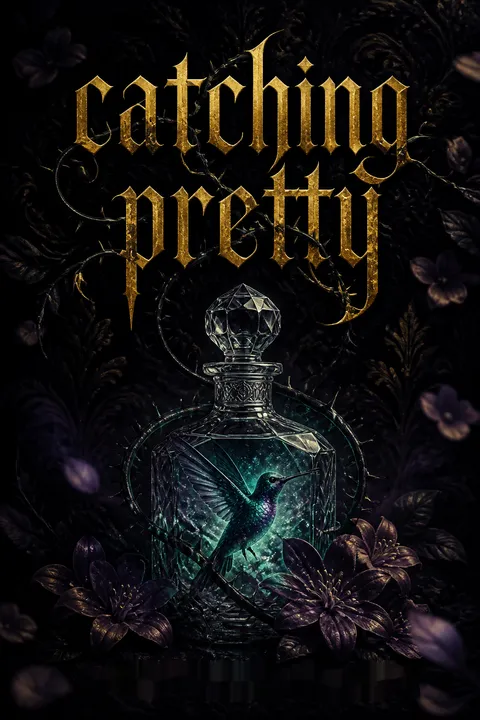


Plot Summary
Blackthorn Takes Her Back
Ava has just been seized by Cormac, who intends to deliver her to the High Lord of a secret society. In the opening, the masked High Lord kills Cormac and drives the drugged, bloodied Ava to Blackthorn Hall, the remote Irish mansion where she grew up.
He lays her in her old bedroom, lights a fire, and carefully washes the mud and blood from her skin while fighting his own desire to touch her. He insists to himself that his purpose is not revenge but a private kind of treatment. His tenderness does not make the locked house safer. It makes clear that he has planned this return for years, and that Ava has no idea who has taken her.
The opening makes care itself unsettling. The captor cleans Ava's wounds and remembers her favorite shampoo, but he does so while she is unconscious and unable to refuse him. Blackthorn is not simply a hideout: it is the setting of Ava's childhood and the buried history she cannot yet name. By joining domestic familiarity to captivity from the first pages, the story makes the house's comforts part of its threat. The captor's self-image as a rescuer also arrives early, establishing the gap between what he believes he is doing and what Ava experiences.
A Room Without Windows
Ava wakes blindfolded and tied to a chair, remembering that Cormac handed her to the High Lord after a masked man killed him. Her captor forces water and food into her mouth, then drugs her again. When she next wakes, her wrists are raw, she is wearing a silk nightdress, and jasmine shampoo tells her someone bathed her while she was unconscious.
She tests the steel-lined door, then discovers that the windows have been bricked shut. A full-length mirror proves to be one-way glass, and the wardrobe holds only expensive clothes chosen to fit her. As the room comes into focus, recognition deepens her fear: it is her childhood bedroom, remade as a monitored cell.
Ava responds to terror by investigating. She tests the restraints, searches for exits, and uses a childhood tip about mirrors to determine that she is being watched. Those actions keep her psychologically active even when she has little physical power. The room's beauty is functional, not comforting: custom clothes and familiar surroundings show how thoroughly the captor has studied her. Her discovery that the bedroom belongs to her childhood also changes the question from where she has been taken to why someone has chosen this particular place.
The Face Behind Scáth
Ava hides a brass lamp behind the bedroom door and prepares to strike when the locks turn. The masked man enters without his disguise, and she recognizes the face of Scáth, her stalker and protector. The familiar face only sharpens the betrayal: he has drugged and imprisoned her, yet speaks as if he has plans meant for her own good.
He refers to five years in maximum-security prison and promises to break her down before rebuilding her. Ava concludes that trauma has divided him into a kind protector and a cruel alter ego, and tries to call the gentler side back. The captor says he knows about Scáth, rejects the name, and produces the same paralytic she associates with her worst, half-buried memories.
Ava reaches for a psychological explanation because it preserves the possibility that the person she loves remains separate from the person hurting her. That hope is understandable, but the text also shows how quickly a diagnosis based on fragments can become a survival strategy rather than knowledge. The captor exploits the distinction, presenting his cruelty as a necessary form of love. His refusal of the name Scáth is a clue Ava cannot interpret yet. The scene's central conflict is not only between two versions of a man, as Ava believes, but between the story she needs and the evidence she can presently bear.
The Hallway Was a Trap
Ava waits until her captor brings her a meal, hides behind the bedroom door, and bolts into the corridor, locking him inside with a heavy outside bolt. The hallway offers no open doors and ends at barred windows overlooking isolated hills and a manicured garden.
As she searches for another route, childhood memories flood in: she once ran through these gardens and entered the forbidden greenhouse. She finds the professor's master bedroom and recognizes the red velvet couch from a nightmare, but her captor catches her before she can understand why it frightens her.
He carries her back to the locked bedroom. Her escape has uncovered a buried memory, but it also shows that the house has been arranged to turn every route into another encounter with her past.
Ava's escape is both an attempt at physical freedom and an involuntary movement into memory. The blocked corridor demonstrates the captor's planning, while the couch interrupts the logic of escape with a recognition her conscious mind has suppressed. The house turns spatial exploration into psychological exposure: every door may contain either a route out or a fragment of what happened there. Ava's resistance remains purposeful, but the setting keeps converting it into contact with the history she has tried to forget.
A Knife at Dinner
After the first escape, the captor uses gas and drugs to keep Ava unconscious, then denies her sexual release as leverage. He promises that therapy sessions will gradually open more of the mansion and that leaving Blackthorn depends on completing them.
For the first session, he dresses her in an elegant green gown and leads her blindfolded to a candlelit dinner. Ava steals the table knife while he pours grape juice, then lunges at him when his back is turned.
He catches her wrist, and the attempt ends with him overpowering her and drugging her again. Hungry, isolated, and desperate for a route through the house, Ava finally accepts the sessions, although she still hopes to use them to reach the gentler person she believes is trapped inside him.
The bargain is engineered under captivity, so Ava's agreement cannot be treated as free consent. The captor offers access to the house as a reward while controlling her food, movement, and medication. Ava nevertheless thinks tactically: the stolen knife is a concrete attempt to reverse their power relation, even though she fails. Her decision to try therapy reflects exhaustion and hope, not trust. The story's use of a formal dinner makes coercion look briefly like courtship, then reveals the arrangement's actual terms when Ava acts against her host.
The Red Couch Remembers
Before the first session, Ava recognizes the lace nightgown her foster father, the professor, once made her wear. She drinks a modified version of his paralytic, which leaves her conscious of the memories rather than suppressing them.
The captor carries her to the red couch in the professor's bedroom, where its texture brings back fragments of childhood abuse. The memories include drugging and sexual exploitation, and her body responds in ways that leave her confused and ashamed.
She also learns that the professor developed the drug and that it was used on Liath, another missing young woman. Afterward, Ava accuses the captor of inventing memories to control her. The confrontation triggers an older memory of being called diseased by a school bully.
The session makes memory both evidence and ordeal. The drug removes one barrier to recall, but it does not make the process safe or establish that the captor's method is therapeutic. Ava's involuntary bodily responses add another layer of shame, though they do not turn coercion into consent. The link between her foster father and Liath broadens the story beyond one abusive household. What Ava remembers belongs to a larger system, and her suspicion of the captor remains important: even when a memory is real, the person forcing its return may still be exploiting it.
Two Boys, One Face
The school memory restores the fact Ava had forgotten: the professor had twin foster sons, Ty and Ciaran. Ty was the gentle boy who protected her; Ciaran bullied her. Ava first assumes the captor must be Ciaran, but he reveals that he is actually Tynan, the Ty she believed had died. He escaped prison by faking his death and returned to Blackthorn for her.
The shadow she loved as Scáth is Ciaran, who concealed his identity by letting her believe he was Ty. Tynan says Ciaran does not know he is alive. The revelation overturns Ava's theory of a split personality: the opposing faces and behaviors belong to two brothers, and her protector's deception has shaped her love.
The identity reversal changes the novel's central problem from a divided personality to a divided history. Ava's memories were not simply wrong; they were organized around a face shared by two people who behaved very differently toward her. Ciaran's deception has allowed love to grow alongside an old wound, while Tynan's return turns an assumed death into a concealed rivalry. The twist also limits easy moral sorting. The gentle brother is now her captor, and the childhood bully became her protector, so present actions cannot be explained by old roles alone.
Ciaran Finds a Dead End
Believing Ava has been taken by the Society, Ciaran races to the abandoned building where he last expected to find her. He finds Cormac dead and Dr. Vale bound in his car. Vale identifies the captor as the High Lord but cannot name him, so Ciaran kills him before extracting useful information.
Ciaran traces the vehicle through traffic cameras and its GPS to an empty, decaying mansion; the Society has used a false destination and later burns Vale's house to erase evidence. Ciaran preserves Liath's insurance video and sends it to news outlets, exposing her abuse and disappearance. His search saves evidence and punishes perpetrators, but it does not tell him that Ava is alive at Blackthorn.
Ciaran's outside storyline runs on the same hunger for control that drives Tynan, but with a different immediate aim: finding Ava and making Liath's abuse public. Each technical lead fails because the Society anticipates investigation, turning modern surveillance into a tool that can be spoofed or erased. Ciaran's decision to distribute the video resists that erasure, though his violence repeatedly destroys possible sources of information. The parallel plot broadens the scale of danger while heightening the lovers' separation: Ciaran is acting urgently, but the secrecy around Blackthorn keeps him from reaching Ava.
The House Opens Slowly
Ava's sessions become a weekly routine, paired with demanding workouts that teach her to punch, balance, and endure pain without freezing. Tynan opens parts of Blackthorn as promised, including the library, sunroom, piano room, and eventually his mother's preserved bedroom. He tells Ava that Mona married the much older professor as a teenager and died by drinking oleander tea.
The room contains a bloodstained towel, a discarded vial, marks on the bedposts, and a hidden drawer in Mona's jewelry box. Ava finds letters tucked inside but keeps them secret, unsure whether their contents will deepen Tynan's grief. The predictable schedule gives Ava some structure, even as each newly accessible room adds another piece to the mansion's history.
Routine provides Ava with a limited form of orientation, but it is still imposed by her captor. Training gives her bodily skills she can later use, while the house's partial opening offers information without meaningful freedom. Mona's bedroom is the first place where Tynan's methods meet evidence of his own family's damage. Ava's decision to conceal the letters shows that captivity has made her responsible for managing her captor's emotions as well as her own safety. The hidden drawer also reframes the mansion as an archive whose objects preserve what its inhabitants could not say.
The Missing Pregnancy
During a later session, a memory begins with Ava becoming violently ill after drinking hot chocolate in the professor's bedroom. The professor asks when she last menstruated, then takes her to a medical room where she is restrained and paralyzed. A voice identified as the High Lord orders the professor to end the pregnancy and ensure Ava never remembers it.
Ava understands that the professor forced an abortion on her. Tynan does not strip or sexually exploit her after this session; he holds her while she grieves and strikes his chest in anger. When she asks to stop the therapy, he refuses. Ava then tells him that her heart belongs to Ciaran, and Tynan leaves, wounded by her confession.
This memory makes the stakes of recovery more complex than recovering a private trauma. The professor and the unidentified authority exercised control over Ava's body while also controlling what she could know about it afterward. Her grief is therefore tied to both a lost pregnancy and the theft of authorship over her own history. Tynan's comfort does not erase his coercion; his refusal to stop the sessions leaves the power imbalance intact. Ava's declaration of love for Ciaran is both an assertion of identity and a weapon sharpened by her anger.
Tynan Opens His Scars
After Ava asks about the music Tynan writes in his head, he tells her that prison guards and inmates abused him when he was seventeen. A cellmate named Eamon taught him to fight, hide fear, and survive, though Tynan will not yet explain what became of him. Ava traces the tattoos Tynan made for Eamon and for herself, then kisses the scar on Tynan's lip.
The gesture overwhelms him, and he invites her outside. His confession does not excuse his imprisonment of Ava, but it reveals the boy beneath his discipline and helps her understand why control has become his substitute for safety. She accepts the garden outing while still planning to escape.
Tynan's disclosure is an important shift because it gives Ava a view of his vulnerability without making her responsible for curing him. Eamon's role is especially revealing: discipline was taught as a response to repeated danger, not as an innate virtue. Tynan has converted survival skills into a system of control over Ava, a transfer that his tenderness cannot undo. The kiss and invitation expose how quickly intimacy can form inside coercive conditions. Ava's continued escape plan preserves the distinction between feeling compassion and consenting to captivity.
The Greenhouse Punishment
In the garden, Ava learns that Tynan has restored it to its childhood arrangement and that gardeners visit only monthly. Seeing the boundary fence, she shoves him and runs, reaching the greenhouse where the professor once warned her away from poisonous plants.
Tynan catches her, and she stabs his arm with a small gardening tool. He overpowers and sexually punishes her. Afterward, Ava recognizes that the greenhouse holds deadly plants, including oleander, and remembers Mona's letters. She gives them to Tynan.
They show that Mona tried to escape with help from Mrs. Buckley, feared her husband Adam's experiments, and never abandoned her sons. Tynan realizes his father murdered Mona and staged her death as suicide, then agrees the Society must eventually be confronted.
The greenhouse gathers the novel's symbols of beauty, danger, and secrecy into one physical place. Ava's knowledge of the plants turns the room into evidence rather than mere atmosphere, connecting Mona's death to the professor's experiments. Tynan's sexual punishment remains a violation, whatever tenderness follows it; the narrative's emphasis on Ava's bodily response does not undo the absence of consent. The letters transform Tynan's grief by replacing self-blame with evidence of murder. Yet he still tries to control the timetable for confronting the Society, showing that new knowledge has not immediately changed his habits.
The Dose in the Wine
Ava secretly keeps an empty paralytic vial and practices switching it for a full one during therapy. She pretends to drink the drug, survives the session fully conscious, and hides the dose beneath her pillow. A week later, she swaps vials again, then pours the paralytic into Tynan's wine during a game of Two Truths and a Lie.
Tynan realizes the betrayal only after he has swallowed some, and Ava runs through Blackthorn. The amount is too small for his larger body to immobilize him, so he pursues her. She finds a hidden passage from the professor's bedroom to a laboratory filled with chemical equipment and poisonous plants, escapes through the greenhouse, and climbs over the fence by way of the treehouse.
Ava's escape depends on patience rather than strength alone. She turns the captor's own routines, medicines, and training into tools, and the repeated rehearsal shows how carefully she has learned to survive under surveillance. Her dose is imperfect, so freedom remains precarious rather than triumphant. The hidden laboratory confirms that the mansion's secrets are part of a wider experimental history, but Ava cannot stop to collect proof. Her route over the fence is also an act of memory: the treehouse that once let her leave Blackthorn with Ciaran becomes the exit she can use alone.
The Farmhouse Goes Dark
Ava reaches the nearby farmhouse of Mr. Buckley, an old neighbor who recognizes her and gives her shelter. She calls Ebony, pretending she is stranded near Shannon Airport, and arranges a morning pickup without revealing Blackthorn. That night, a masked intruder breaks in. Mr. Buckley fights him with a rifle, and Ava strikes the attacker with a lamp before stabbing him when he turns on her.
A second masked man arrives; Ty appears behind him with a garrote and orders Ava to finish the struggle. She stabs the man, then returns to Mr. Buckley, who has been shot. He dies before help can arrive. Ty carries Ava away and sets the farmhouse alight, leaving her alive but grieving the person who sheltered her.
The farmhouse briefly offers what Blackthorn does not: unearned hospitality and a choice about whom to trust. Ava's lie to Ebony reflects how completely Tynan's fabricated travel story has distorted her public life. When the Society reaches the house, Ava must act on skills learned under captivity, but the cost is immediate and irreversible. Mr. Buckley's death makes escape feel less like a clean break than another danger transferred to someone who helped her. Tynan's arrival saves Ava from capture while again placing him in command of what happens next.
A Tracker Beneath Her Skin
Back at Blackthorn, Tynan takes Ava to his bedroom and cleans the cuts on her hands and knees. When she asks how he found the farmhouse, he admits he implanted a tracking device at the back of her neck, and she feels it beneath her skin. Ava attacks him, furious at this additional violation, but their argument gives way to an intimacy she initiates and cannot easily separate from anger, grief, and desire.
Afterward, Tynan reveals that he also implanted contraception without her permission. Ava condemns the decision, and he offers to leave Blackthorn and help her destroy the Society. She accepts the possibility of an alliance, but Tynan insists she must first recover one final memory, the event she still cannot remember doing.
The tracker makes explicit that Tynan's promise to find Ava was not merely emotional bravado; he had removed her ability to disappear. The contraception implant extends that control into her reproductive future, making the bedroom confrontation a dispute over bodily autonomy as much as attachment. Ava's desire complicates her feelings but does not erase those violations. Tynan's offer to join her against the Society is a genuine change in direction, yet he still conditions their departure on another session. The scene therefore ends on a fragile alliance, not a repaired relationship.
Ciaran's Knife at the Grave
Far from Blackthorn, Ciaran searches for Ava and questions Dr. Hickey, the father of another missing girl. Hickey confirms that the Sochai secretly drug and abuse adopted girls, then make their disappearances look like runaways. Ava was initially protected by orders from the High Lord, but her investigation made her a threat. Hickey cannot identify the High Lord or say what was planned for Ava.
Ciaran loses control and kills him, destroying his last lead. At Ty's grave, he confesses that he loved Ava and believes he has betrayed his dead brother by wanting her. Certain she may be gone, Ciaran draws a knife and considers ritual suicide. The book ends before he acts, while Ava remains alive at Blackthorn and Ciaran does not know it.
The ending creates dramatic irony rather than closure. Readers know Ava is alive and that Tynan has offered to fight the Society with her, while Ciaran interprets every failed lead as possible loss. His last confession exposes how grief and guilt have fused: he imagines surrendering Ava to Ty as a way to repair a promise, then treats his own death as payment for failure. The Society's structure remains largely hidden, and the romantic triangle is unresolved. The cliffhanger turns the gap between what the characters know into the book's final source of danger.
Analysis
Catching Pretty builds its suspense around a contradiction: the person claiming to rescue Ava is also the person who confines her. Tynan believes that forcing her to remember will heal her, but his methods reproduce the loss of control that defines her trauma. The distinction between his intention and her experience matters. His tenderness, prison history, and grief deepen his characterization, yet none makes his surveillance, drugging, or reproductive decisions consensual.
The novel also treats memory as an unstable form of evidence. Ava's mistaken belief that one man contains two personalities arises from a real confusion: Tynan and Ciaran share a face, and Ciaran has hidden behind his brother's identity. Her memory returns in fragments, through rooms, objects, and bodily reactions. The reveal corrects her explanation without making the past simple. Ciaran's childhood bullying and later protection coexist, as do Tynan's childhood kindness and present coercion. The brothers' identities are not moral guarantees.
Blackthorn gives these conflicts a physical shape. Its mirrored walls and sealed windows enact surveillance; its hidden routes preserve escape possibilities; its greenhouse contains the plants that connect Mona's death to the professor's experiments. Ava's gradual skill in fighting and escape is one of the book's clearest forms of development. She converts imposed training into tools for her own decisions, even when each attempt carries a cost. The Sochai plot enlarges the story from family abuse to organized exploitation. Ciaran's search, Liath's video, and the drug's repeated appearance suggest a network designed to erase victims and protect its members. The ending refuses resolution: Ava is alive but still bound to Blackthorn's secrets, while Ciaran believes she may be lost and considers suicide. That separation makes the final danger not simply whether Ava can escape, but whether the survivors can learn the truth without repeating the violence used to reach it.
Review Summary
Catching Pretty is the highly anticipated sequel in the Lovely Broken Doll series. Readers praise its intense psychological thrills, unexpected twists, and dark romance elements. The book continues Ava's story, introducing new characters and revelations that keep readers guessing. Many reviewers express shock at the plot developments and eagerly await the next installment. The spicy content and complex character dynamics are highlighted as strengths. However, readers are warned to check trigger warnings due to the book's dark themes. The cliffhanger ending leaves fans desperate for the third book.
People Also Read


Characters
Ava
The captive investigatorAva is a young woman whose curiosity and stubbornness persist even when her captor controls her room, food, movement, and access to memory. She thinks like a journalist: she observes details, tests explanations, and searches for evidence rather than accepting the first story offered to her. Her attachment to the man she calls Scáth complicates her judgment, while her efforts to recover buried memories force her to confront how little control she has had over her own history. Ava's strength is not fearlessness; she feels fear, shame, grief, and desire at once, yet continues to plan. Her central drive is to reclaim her agency and understand the network that has harmed her and other girls.
Tynan Donahue
The disciplined wardenTynan is Ava's foster brother, a highly controlled man shaped by grief, prison, and a conviction that preparation can prevent catastrophe. He studies her habits closely and builds elaborate systems around her, from the monitored bedroom to the treatments he calls therapy. His attention can be tender and observant, but he repeatedly treats his own certainty as permission to decide what Ava needs. Music, tattoos, and physical training offer glimpses of the feelings he struggles to express directly. Tynan longs to be a protector, yet his fear of losing Ava drives him to violate the very autonomy he claims to defend. He is most revealing when his control falters and the cost of his choices becomes visible.
Ciaran Donahue
The dangerous shadowCiaran is a sharp-edged, impulsive figure from Ava's childhood whose charisma and capacity for cruelty coexist uneasily. He uses humor, aggression, and risk to keep other people from seeing how deeply he feels, and his rivalry with Tynan reaches back to the brothers' shared losses. His connection to Ava is built through secrecy and protection, but concealment also makes trust difficult. When she disappears, Ciaran pursues leads with desperate focus, using technology and violence in equal measure. He is driven by fierce loyalty and a powerful sense of guilt, qualities that can become destructive when he mistakes self-punishment for responsibility.
Adam Donahue
The abusive professorAdam is the professor who fostered Ava and raised Tynan and Ciaran in Blackthorn Hall. His authority as a parent and academic masks a controlling household in which drug use and abuse are hidden behind rules, appearances, and silence. The boys respond to him differently, but both are shaped by the danger he creates. Adam's scientific knowledge gives his private crimes reach beyond the family, linking Blackthorn to the larger machinery of the Sochai.
Mona Donahue
The silenced motherMona is Tynan and Ciaran's mother, a young woman whose life inside Blackthorn is remembered through a preserved bedroom and letters hidden in a jewelry box. The fragments Ava discovers suggest a person trying to protect her sons while trapped in an increasingly dangerous marriage. Her absence has shaped the brothers in opposite ways: one turns to study and control, while the other rebels. Mona's letters give substance to a history the household has kept out of sight.
Eamon
The prison survival teacherEamon becomes Tynan's cellmate and teaches him the physical and emotional habits that help him survive prison. Tynan remembers Eamon as demanding and difficult, but also as a source of companionship in a place designed to strip people of dignity. Their bond is expressed through training, chess, and small gestures of solidarity. Eamon's influence helps explain Tynan's discipline, while also showing how lessons learned for survival can later be misused as instruments of control.
Dr. Vale
The frightened intermediaryDr. Vale is connected to Ava's earlier treatment and to the powerful group operating around Darkmoor. Ciaran captures him while searching for Ava, hoping to learn who took her and where she was taken. Vale's fear of the Society exceeds his fear of Ciaran, suggesting that the organization has ways to punish even its own associates. He knows enough to point toward the High Lord, but not enough to resolve the mystery.
Liath Byrne
The missing girlLiath is a young woman whose disappearance connects Ava's personal history to the wider pattern of girls targeted by the Sochai. Evidence from her life survives in a recording that Ciaran sends to news outlets. Her story forces the characters to recognize that the abuse is not an isolated family secret. Liath's case also gives Ciaran a public purpose beyond revenge: he wants the truth to reach people who can no longer be silenced privately.
Mr. Buckley
The neighbor who shelters AvaMr. Buckley is an elderly neighbor who remembers Ava from her childhood at Blackthorn. He offers her water, a bed, clothes, and practical help when she reaches his farmhouse. His warmth contrasts with the mansion's calculated comforts because he does not demand trust or obedience in return. He also carries knowledge of the estate's history, including the attempt to help Mona escape, though Ava has little time to ask him about it.
Ebony
Ava's distant home anchorEbony is an important person in Ava's life outside Blackthorn and someone she can reach by telephone during her escape. Tynan's fabricated travel updates have shaped what Ebony believes about Ava's whereabouts. When Ava calls, she hides the truth to avoid exposing her location, showing both how much she longs for home and how carefully she must manage the danger around her.
Cormac
The failed kidnapperCormac abducts Ava and intends to deliver her to the High Lord. His actions initiate the immediate crisis at the start of the book, but he is killed before he can explain the full network behind the kidnapping.
Byrne
The powerful abusive fatherByrne is a prominent politician and Liath's father, protected by status and connections. Ciaran targets him after finding evidence of Liath's abuse and disappearance. His position shows how political power can shelter private violence and complicate efforts to expose it.
Dr. Edward Hickey
The Society's frightened insiderDr. Hickey is the father of another missing girl and a source of information about the Sochai. Ciaran interrogates him for details about the Society's use of drugs, its adopted girls, and Ava's unusual status. Hickey's limited knowledge reveals an organization whose members know only parts of its operation.
Lisa
Ava's college friendLisa is one of Ava's friends from college. A practical memory of Lisa's advice about checking a mirror helps Ava recognize that her bedroom mirror is one-way glass. The detail shows how ordinary friendships and everyday knowledge can become useful tools in captivity.
Aisling
Ava's college friendAisling is part of Ava's social circle at college, associated with the life and friendships Ava is separated from during her captivity. Her presence helps define the ordinary world that Tynan's fabricated travel story is designed to conceal.
Plot Devices
The paralytic
Memory's locked doorThe professor's paralytic immobilizes its victim and is used to prevent resistance, suppress or manipulate memory, and control what Ava can recall. Tynan modifies the formula so that Ava remains aware of memories during his sessions, while still unable to move. The same drug appears in Liath's story and in the Society's operations, making it evidence of a shared system rather than a single abuser's invention. Ava later saves a dose and turns it against Tynan, transforming an instrument of captivity into a tool for escape. Its repeated use forces the story to distinguish memory recovery from consent: being made to remember does not mean choosing to remember.
Blackthorn Hall
A house built to watchBlackthorn is Ava's childhood home, Tynan's prison, and the physical archive of the Donahue family's secrets. Bricked windows, steel-lined doors, cameras, hidden passages, a concealed laboratory, and a greenhouse full of poisonous plants make the estate both a fortress and a maze. As Ava moves through it, rooms trigger memories that connect her abuse to the professor, Mona, and the Sochai. The house's beauty and old-world grandeur conceal systems of surveillance and control. Its secret routes eventually help Ava escape, so the architecture serves both the captor's power and the captive's ingenuity.
The red couch sessions
Trauma staged as treatmentTynan brings Ava to the professor's red velvet couch and uses the paralytic to make her confront memories she has buried. The couch's texture and location trigger recollections of childhood abuse, while Tynan's presence is designed to replace the professor in Ava's experience. He calls this process therapy and treats it as necessary, but he controls its timing, the drug, and Ava's body. The sessions reveal important facts, including the professor's crimes and Ava's forced abortion, yet their coercive form remains part of the harm. This device drives the emotional plot by entangling knowledge, violation, and dependence.
The fabricated summer
A disappearance made ordinaryTynan falsifies Ava's messages and social media updates to make her friends and family believe she is travelling in Europe with little internet access. The invented holiday explains her silence and prevents people from immediately searching for her. When Ava finally reaches a telephone, she uses the false itinerary to hide her true location and secure a pickup without drawing attention to Blackthorn. The device shows how the captor controls not only Ava's physical environment but also the account of her absence. It also turns communication, usually a route to help, into a risk that the Society can monitor.
Mona's letters and Liath's video
Evidence against erased historiesMona's hidden letters record her fear of Adam, his experiments, and her failed efforts to escape with help from Mrs. Buckley. They transform the brothers' understanding of their mother's absence and expose the family's private history. Separately, Liath's insurance video gives Ciaran evidence that can survive the Society's destruction of Dr. Vale's home. He sends it to news organizations so Liath's abuse and disappearance cannot be quietly dismissed as a runaway story. Together, the letters and video show two forms of testimony: one kept hidden inside a house, the other deliberately released into public view.
Download PDF
Download EPUB
.epub digital book format is ideal for reading ebooks on phones, tablets, and e-readers.








