

Key Takeaways
To catch deeper ideas, expand the consciousness you work from.
A practice that changed his days. Lynch says he began Transcendental Meditation in 1973 after hearing a change in his sister’s voice. In his first session, a mantra, a sound used without focusing on its meaning, seemed to carry him into a blissful state. He kept meditating twice a day for decades, and says the practice increased his joy, intuition, and creative energy.
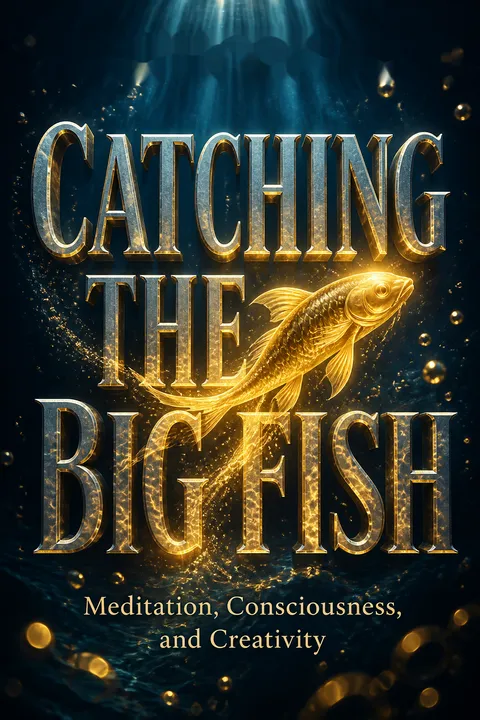
His central metaphor. Ideas are like fish: the deeper the water, the larger the possibilities. Lynch believes meditation expands the mind’s capacity to reach them. This is his account of a particular practice, not a guarantee that everyone will have the same experience.
What's striking is how the metaphor links inner attention to creative range: a wider mental field can make more associations available. This resembles the way artists describe incubation, when stepping back from a problem allows new combinations to surface. The boundary matters, though. Lynch treats his experience as evidence for a broad account of consciousness, but a vivid personal report cannot establish that account for everyone. Readers can still take the practical invitation seriously: observe whether regular quiet changes their attention, mood, or ability to make connections.
Clear the mind's grip; artists need clarity, not misery.
Distress is not a creative credential. Lynch recalls being anxious, depressed, and angry when he started meditating. After about two weeks, his wife asked what had happened to his anger; he had not noticed that it had eased. He calls this burden the Suffocating Rubber Clown Suit of Negativity, a personal name for feelings that restrict energy and attention.
Dark art does not require a dark life. Lynch distinguishes depicting suffering from living in it. Conflict may give a story force, but severe stress can make it harder to work at all. He argues that greater calm does not erase an artist’s edge; it can make difficult subjects easier to see and shape.
This distinction challenges the romantic idea that anguish is the price of serious art. Emotional distance can help a creator represent pain without being overwhelmed by it, much as a clinician needs empathy without losing judgment. Still, distress is not a switch that meditation simply turns off, and some people need support beyond a contemplative practice. The useful claim is narrower: suffering may supply material, but it is not the only source of insight, and prolonged distress can obstruct the labor needed to transform experience into art.
Feed an idea with desire, then let fragments gather around it.
A spark can organize a project. Lynch describes the first glimpse of an idea as a small fragment that hints at a larger whole. For Blue Velvet, he recalls beginning with a cluster of sensory impressions: lips, a lawn, a song, and later an ear in a field. The images did not arrive as a complete plot. He became attached to the first pieces and waited for others to connect.
Attention keeps the search alive. Lynch compares desire to bait: it draws further possibilities toward the initial idea. He says meditation usually refreshed him for the work rather than delivering solutions during the session. A notable exception was Mulholland Drive, whose new structure came to him while meditating.
The process combines commitment with uncertainty. In creative work, an early image can act as a constraint, giving the mind something specific to elaborate rather than an empty demand to invent. Research on incubation also suggests that stepping away can sometimes help problem solving, though it does not mean every promising fragment will mature. Lynch’s method is not passive waiting: desire sustains attention, and the artist still has to notice, test, and develop what appears.
Protect uninterrupted making time, and keep a working setup ready.
Making needs room to begin. Lynch’s friend Bushnell Keeler warned that an hour of good painting might require several hours of uninterrupted time around it. Preparation, materials, and the mind’s transition into work all take time. Lynch calls a ready studio or workshop a setup: a place equipped to turn an idea into action before its energy fades.
Persistence can be improvised. Eraserhead took five years to complete. Lynch was short of money, delivered newspapers, and saved enough to film one scene at a time. Actor Jack Nance kept the role alive across long gaps. The story is less a tale of effortless inspiration than of protecting the project through practical, sometimes awkward arrangements.
The setup idea recognizes that creativity has an infrastructure. A prepared workspace reduces the distance between intention and action, while uninterrupted time helps attention settle into complex work. This is not the same as requiring ideal conditions: Lynch’s newspaper route and piecemeal filming show how a modest arrangement can keep a project moving. There is also a useful caution. Protecting artistic time can strain obligations and relationships, so the question is not whether to make everything else secondary, but what sustainable boundary lets meaningful work continue.
Stay loyal to an idea while letting accidents improve its translation.
The idea is a reference point. Lynch treats each project as an experiment in translating a feeling into images, sound, objects, and action. He describes building the Red Room in Twin Peaks from remembered fragments: red curtains, a particular floor, and a distinctive atmosphere. Each choice was tested against the original impression until the room felt closer to it.
Chance can add a missing piece. In Blue Velvet, Dean Stockwell picked up a work lamp that happened to be on set and used it while performing a song. Lynch felt the unplanned choice belonged in the scene. Accidents are not automatically valuable, however. The artist’s task is to keep or discard them according to whether they strengthen the work’s underlying idea.
This is a model of disciplined openness. A guiding intention gives a team criteria for judging unexpected material, while flexibility prevents the plan from becoming a cage. In design, similar iteration treats a prototype as a question rather than a verdict: each version reveals what the concept needs. The harder judgment is deciding whether an accident genuinely deepens the work or merely delights its maker. Lynch’s test is subjective, but making that test explicit can help creators explain and refine their choices.
Let films communicate through feeling, not explanatory decoding.
Cinema has its own grammar. Lynch sees film as a language made from images, dialogue, music, sound, lighting, and time. Their combination can create a mood or idea that no single element carries alone. For him, a film should create a world an audience can enter, not merely deliver information that can be summarized in a sentence.
Viewers help complete the experience. Lynch argues that the same film can feel different depending on who watches it. He trusts audiences to make intuitive sense of images, much as listeners respond to music without translating every note into words. He therefore resists explaining a film’s meaning, believing commentary can alter the viewer’s experience of the work.
The emphasis on feeling takes seriously how people perceive art: viewers respond to rhythm, imagery, and sound before they can necessarily explain why. Ambiguity can invite participation, making interpretation an activity rather than a decoding key supplied by the director. Yet mystery alone is not proof of depth. Some viewers may encounter barriers rather than productive openness. The strongest version of Lynch’s position is not that explanation is useless, but that interpretation should remain grounded in the work and in the audience’s own experience.
Replace fear with shared focus to unlock a crew's best work.
A production is collective attention. Lynch rejects directing through intimidation, arguing that fear makes people dread the work and narrows what they can contribute. He describes rehearsal as an iterative conversation with actors and every department, including props, lighting, and set design. The goal is to help different specialists understand the mood and direction of the project.
Clarity can be built in stages. During a rushed stage production, Lynch realized that a full run-through was impossible. He instead gave performers their cues and actions one by one. The show came together. His larger principle is to concentrate the group on what needs to happen now, rather than scatter attention across every possible distraction.
Creative leadership is partly the design of a psychological environment. A crew that can ask questions and make adjustments is more likely to notice useful details than one busy protecting itself from blame. This is consistent with the broader idea of psychological safety, where people can take interpersonal risks without expecting punishment. Kindness alone does not produce strong work: teams still need clear standards, timing, and decisions. Lynch’s account pairs respect with direction, rather than treating a relaxed atmosphere as a substitute for leadership.
Use cheap, flexible tools to preserve a filmmaker's own voice.
Digital video changed the workflow. Lynch favored small digital cameras because they were light, allowed long takes, and let him review footage immediately. He contrasted this with film production, where equipment was heavier, takes were shorter, and results were not available until processing. Those differences gave him more freedom to move, experiment, and keep actors working through a scene.
Access should lead to authorship. Lynch urged young filmmakers to learn by making work and to use lower costs to pursue their own ideas, rather than creating projects solely to impress studios or investors. He also valued the softer, less detailed look of one camera he used. Technical polish, in his view, is not always the same as expressive power.
A tool changes more than the budget: it changes the pace, scale, and kinds of decisions a creator can make. Immediate playback supports rapid iteration, while longer takes can preserve performance continuity. Lower barriers to entry also shift some power toward individual makers. But access to equipment cannot guarantee attention, taste, or an audience. The enduring lesson is not that one format is superior; it is that creators should understand how a medium shapes the work and choose tools that serve the experience they intend.
Judge success by the work you control, not the world's response.
External results are unstable. Lynch describes Dune as a deep disappointment because he gave up final cut, the authority to make the final version, and the released film did not match his intention. A poor result after pursuing one’s vision can be painful; losing control and then seeing the work fail felt worse to him. The experience made creative authority a serious condition of accepting a project.
Focus on the next controllable step. Lynch also remembers fearing that the long production of Eraserhead would leave him behind. He kept working despite limited money and uncertain prospects. Meditation, in his account, did not guarantee success; it changed how he endured events he could not control. The practical emphasis is to do the work faithfully without pretending reception can be managed.
The distinction between process and reception is central to resilient creative work. A maker can choose how carefully to shape a project, but not how audiences, financiers, or critics will respond. Preserving authorship can protect coherence, yet film is collaborative and depends on resources supplied by others. Creative autonomy is therefore negotiated, not absolute. Lynch’s hard lesson is to recognize the cost of giving away control before agreeing to do so, while accepting that even a fully owned work can fail commercially.
Bring meditation into schools, while testing broad social claims.
Inner practice has a public ambition. Lynch describes consciousness-based education as ordinary schooling supplemented by meditation, intended to develop students’ attention and well-being alongside academic knowledge. He points to schools where students meditated for ten minutes in the morning and afternoon, and reports that principals saw happier students and better academic outcomes. His foundation supported bringing the practice to more schools.
He extends the claim to peace. Lynch argues that individual calm can affect a person’s surroundings and that groups of meditators might reduce conflict. He cites a proposed threshold of roughly 8,000 advanced meditators acting together. The book presents this as a theory and reports favorable findings, but does not provide enough detail here to assess the evidence or rule out other explanations.
The educational proposal is valuable because it treats student well-being as part of learning, not a distraction from it. A calm classroom may support concentration and social cooperation, outcomes schools can measure directly. The leap from individual experience to population-level peace requires a higher evidentiary bar. School comparisons need to account for selection, staffing, and other changes, while claims about group effects need transparent methods and replication. Respectful skepticism does not dismiss the proposal; it clarifies which outcomes are promising and which remain hypotheses.
Analysis
Catching the Big Fish is at once an artist’s memoir, a meditation testimony, and a working philosophy of making. Its structure is associative rather than systematic: personal memories, production anecdotes, spiritual claims, and advice gather around the recurring image of searching beneath the surface. That loose movement fits Lynch’s subject. Creative ideas rarely arrive as orderly propositions in his account; they emerge as images, sounds, moods, and accidents that acquire meaning through sustained attention.
The book’s most transferable insight is not that every artist should adopt Lynch’s spiritual explanation. It is that creative work requires conditions in which attention can deepen, fragments can accumulate, and a maker can test a felt intention against practical choices. His stories make this concrete: the years spent completing Eraserhead, the setup needed to act on an idea, the gradual construction of a film world, and the value of a crew able to work without fear. These observations apply even to readers who do not meditate.
The central limitation is a recurring shift from personal experience to universal explanation. Lynch reports that Transcendental Meditation improves his mood and creativity, then connects pure consciousness to the Unified Field in physics and proposes social effects from group meditation. Those claims are not equivalent. A practice can be meaningful and helpful to an individual without its metaphysical interpretation being established, and reported school improvements do not alone prove causation. The book is strongest when it shows what Lynch does and how he works, and less conclusive when it treats his interpretation as scientific confirmation.
Read as an invitation rather than a proof, the book offers a distinctive discipline: cultivate inner steadiness, protect the time and tools that let ideas develop, and stay responsive to what the work reveals. Its enduring value lies in this union of contemplation and craft. The dive matters because it makes returning to the world of materials, collaborators, and unfinished scenes more attentive.
Review Summary
Catching the Big Fish explores David Lynch's creative process and his practice of Transcendental Meditation. Reviews are mixed, with some praising Lynch's insights into creativity and meditation, while others find the book shallow or overly focused on TM. Many readers appreciate Lynch's unique perspective and writing style, though some are skeptical of his emphasis on meditation. The book offers glimpses into Lynch's filmmaking process and personal philosophy, appealing particularly to fans of his work. Some readers find the short chapters and unconventional format engaging, while others see it as disjointed or lacking substance.
People Also Read


Glossary
Transcendental Meditation
Mantra-based meditation techniqueA meditation technique Lynch learned from an instructor, using a mantra as a sound rather than as an object of intellectual analysis. He describes the practice as allowing the mind to settle into subtler levels of awareness and, in his account, into pure consciousness. Lynch says he practiced for about twenty minutes in the morning and again in the afternoon.
Unified Field
Source of all existenceLynch uses Unified Field for the deepest level from which he believes all things emerge. He identifies this with the ocean of pure consciousness described in Vedic teaching and presents the two as converging with modern physics. This is the book’s spiritual interpretation of the term, not a statement that physics generally defines the Unified Field as consciousness.
the fourth state of consciousness
Awareness beyond three statesLynch describes waking, dreaming, and sleeping as three states of consciousness, with transcending as a fourth. He uses the term for an experience of pure consciousness that can occur between ordinary states and, through Transcendental Meditation, be experienced while beginning from wakefulness. He associates it with deep rest and bliss.
consciousness-based education
Education that includes meditationAn educational approach that retains ordinary academic instruction while adding meditation practice intended to develop students’ inner awareness and full potential. Lynch describes schools where staff and students meditate, including routines with short sessions at the start and end of the school day. He presents reported well-being and academic improvements as support for the approach.
psychogenic fugue
Mental escape from distressA psychology term Lynch encountered while thinking about Lost Highway. He describes it as a condition in which the mind escapes a horrifying experience. The concept helped him frame the film’s psychological premise, including the possibility that a person can evade unbearable events mentally, even though what has been hidden cannot remain concealed forever.
the art life
Dedicated time for making artLynch’s term for arranging life around sustained artistic work, especially painting. It means giving the work enough protected time to prepare, become absorbed, and discover what comes next, rather than treating art as a brief task squeezed into gaps. He recognizes that this dedication can look selfish, but argues that time and freedom are necessary for serious exploration.
FAQ
What's "Catching the Big Fish" about?
- Overview: "Catching the Big Fish" by David Lynch explores the intersection of meditation, consciousness, and creativity.
- Themes: The book delves into how Lynch uses Transcendental Meditation to enhance his creative process and personal well-being.
- Structure: It is a collection of short essays and reflections, each focusing on different aspects of Lynch's life and work.
- Purpose: Lynch aims to share his experiences and insights to inspire others to explore their own creativity and consciousness.
Why should I read "Catching the Big Fish"?
- Unique Perspective: The book offers a rare glimpse into the mind of a renowned filmmaker and artist, providing insights into his creative process.
- Practical Advice: Lynch shares practical advice on how meditation can enhance creativity and personal growth.
- Inspirational: It serves as an inspiration for artists and non-artists alike to explore deeper levels of consciousness.
- Personal Growth: Readers interested in personal development and mindfulness will find valuable lessons in Lynch's experiences.
What are the key takeaways of "Catching the Big Fish"?
- Meditation's Role: Transcendental Meditation is central to Lynch's creative process, helping him access deeper levels of consciousness.
- Creativity and Consciousness: The book emphasizes the connection between expanded consciousness and enhanced creativity.
- Personal Experiences: Lynch shares personal anecdotes that illustrate how meditation has positively impacted his life and work.
- Unified Field: The concept of the Unified Field is introduced as a source of all ideas and creativity.
How does David Lynch describe the relationship between meditation and creativity?
- Deeper Ideas: Lynch believes that meditation allows him to access deeper, more profound ideas that he likens to "big fish."
- Clarity and Focus: Meditation provides clarity and focus, which are essential for capturing and developing creative ideas.
- Stress Reduction: By reducing stress and negativity, meditation creates a conducive environment for creativity to flourish.
- Consistent Practice: Lynch emphasizes the importance of regular meditation practice to maintain a steady flow of creativity.
What is Transcendental Meditation according to David Lynch?
- Simple Technique: Transcendental Meditation is described as a simple, effortless technique that allows one to dive within.
- Access to Consciousness: It helps practitioners access subtler levels of mind and intellect, leading to pure consciousness.
- Blissful Experience: Lynch describes the experience of meditation as blissful, providing a sense of happiness and fulfillment.
- Central to Life: For Lynch, meditation is central to his work and life, enhancing his creativity and personal well-being.
What are some of the best quotes from "Catching the Big Fish" and what do they mean?
- "Ideas are like fish": This metaphor suggests that deeper, more profound ideas require diving into deeper levels of consciousness.
- "Happiness lies within": Lynch emphasizes that true happiness is found internally, not through external circumstances.
- "The world is as you are": This quote reflects the idea that one's perception of the world is shaped by their inner state.
- "Turn on the light": Refers to using meditation to illuminate and dispel negativity, much like turning on a light in a dark room.
How does David Lynch use the concept of the Unified Field in his work?
- Source of Ideas: Lynch views the Unified Field as the source of all ideas and creativity, accessible through meditation.
- Scientific Basis: He connects this concept to modern physics, which identifies a field at the base of all matter.
- Creative Inspiration: By tapping into the Unified Field, Lynch believes he can access a limitless source of inspiration.
- Personal Growth: The Unified Field is also seen as a path to personal enlightenment and growth.
What is the "Suffocating Rubber Clown Suit" of negativity?
- Metaphor for Negativity: Lynch uses this metaphor to describe the stifling effect of negativity on creativity and well-being.
- Meditation's Role: He explains how meditation helps dissolve this "clown suit," freeing him from anger and depression.
- Impact on Creativity: Negativity is seen as a barrier to creativity, and removing it allows for a clearer flow of ideas.
- Personal Experience: Lynch shares how meditation helped him overcome personal struggles with negativity.
How does David Lynch approach filmmaking and storytelling?
- Cinema as Language: Lynch views cinema as a unique language capable of expressing complex, abstract ideas.
- Intuition and Ideas: He relies heavily on intuition and the original idea to guide the filmmaking process.
- Experimentation: Each film is an experiment in translating ideas into a visual and auditory experience.
- Audience Experience: Lynch believes films should stand on their own, allowing audiences to interpret them personally.
What advice does David Lynch give to aspiring filmmakers?
- Stay True to Yourself: Lynch advises filmmakers to remain true to their vision and not compromise for external pressures.
- Embrace Meditation: He suggests meditation as a tool to enhance creativity and personal well-being.
- Learn by Doing: Lynch encourages hands-on experience and experimentation as the best way to learn filmmaking.
- Use Digital Tools: He advocates for the use of digital video for its flexibility and accessibility.
How does David Lynch view the future of cinema?
- Digital Revolution: Lynch believes digital video is the future of filmmaking, offering more creative freedom and control.
- Changing Viewing Habits: He acknowledges the shift towards smaller screens and the importance of sound in this new era.
- Preserving the Experience: Despite changes, Lynch emphasizes the importance of maintaining the immersive experience of cinema.
- Adaptation: He encourages filmmakers to adapt to new technologies and viewing habits while staying true to their artistic vision.
What is the David Lynch Foundation and its purpose?
- Foundation's Mission: The David Lynch Foundation promotes consciousness-based education and world peace through meditation.
- Support for Schools: It provides funding for in-school Transcendental Meditation programs to help students manage stress.
- Positive Impact: Lynch highlights the foundation's success in improving student well-being and academic performance.
- Broader Vision: The foundation aims to create a wave of peace and coherence by expanding meditation practices globally.

Download PDF
Download EPUB
.epub digital book format is ideal for reading ebooks on phones, tablets, and e-readers.








