

Key Takeaways
Make viewers feel the dream, not merely follow the plot.
Feeling comes first. Lynch treats cinema as a way to communicate the emotional force of a dream, not simply to report events. A frightening dream can lose its power when retold because its fear depends on the dreamer’s private associations. Film can get closer to that feeling by combining images, sound, performance, pacing, and space. No single element has to explain the whole experience; their interaction creates it.
Craft gives intuition form. Lynch’s approach is not a rejection of technique. He rehearses performances, adjusts dialogue, and works carefully in the edit and sound mix. His point is that a story can be logically clear yet emotionally dead, while an image or sound that resists explanation can feel intensely true. The guiding question is whether all the parts belong to the same world.
What's striking is that this approach treats film less as a container for information than as an experience unfolding in time. Viewers do not only decode plot; they register rhythm, atmosphere, and bodily cues such as a sudden silence or an unnerving pause. That offers a useful test for any storyteller: does each choice deepen the intended feeling? The risk is that emotional coherence can be mistaken for sufficient communication. Lynch’s own confidence in intuition cannot guarantee that every audience will find a usable path through the work.
Look beneath the perfect lawn for the world already teeming below.
Beauty and decay coexist. Lynch remembers an apparently idyllic childhood of green lawns, cherry trees, and quiet streets. But a closer look at a tree revealed sap and swarming ants. That contrast became the opening logic of Blue Velvet: a cheerful suburban surface gives way to insects battling beneath the grass. The discovery is not that the beauty was false. It is that beauty and danger occupy the same place.
Stay close to particulars. Lynch says broad political or global subjects do not readily spark his imagination. He works from a fence, a ditch, a tree, or what might be happening inside one house. His father’s research on tree disease and insects also exposed him to the processes of growth and decay. The small, observed detail becomes a doorway into larger human fears.
The lawn works because it is both a real setting and a model of selective attention. People often experience a place through its reassuring surface until an overlooked detail changes what the whole scene means. This resembles ecological approaches to perception, which emphasize that surroundings shape what feels possible and threatening. Lynch’s childhood account also cautions against treating art as a transparent record of biography. Memory is selective and reworked, so the useful question is not whether the childhood was secretly unhappy, but how its remembered images became artistic material.
Let accidents enter the work, then decide which ones belong.
Failure redirected the work. Lynch’s first moving painting, Six Men Getting Sick, was made with a basic camera and a looped siren. A later film he made for a patron was ruined when a broken camera pulled the images into a blur. Instead of treating the mishap as the end, Lynch moved toward a new project, The Alphabet, inspired by a child reciting letters in a troubled dream. A broken tape recorder also gave the daughter’s recorded crying an unusual sound that he kept.
Chance needs attention. The American Film Institute funded The Grandmother after seeing The Alphabet. Lynch often describes useful turns as fate, but his stories show more than luck: he noticed unexpected results, judged whether they served the work, and kept going. Accidents offered possibilities; they did not make the decisions for him.
This is a strong account of creative adaptation, not a case for abandoning plans. An unexpected result matters only when someone recognizes its potential and can revise the project around it. That distinction is important because stories about artistic luck can conceal the labor, skill, and support that make an accident usable. Lynch’s resourcefulness is visible in both the technical improvisation and the willingness to change direction. The practical lesson is to leave room for surprise without granting every surprise automatic artistic value.
Compose sound, image, pace, and performance as one emotional instrument.
Sound shapes the scene. For The Grandmother, Lynch and sound designer Alan Splet spent sixty-three days recording effects rather than relying on a standard collection. They used an air-conditioning duct to make a whistle reverberate, and fashioned other sounds from unexpected sources. In Wild at Heart, Lynch said the music contributed most of a car-crash scene’s emotional force. Sound is not decoration added after the picture; it changes what the picture feels like.
Collaboration can tune a mood. Lynch met composer Angelo Badalamenti when Isabella Rossellini struggled with a song for Blue Velvet. Badalamenti worked with her, and Lynch heard the result and recognized the right musical world. Lynch also used existing songs when their lyrics or sound connected to the story. The test was not whether a track was beautiful alone, but whether it belonged with the scene.
The method anticipates a broader principle of multisensory design: people experience a scene as an integrated event, not as separate image and audio tracks. A low rumble can make an ordinary room feel unsafe; a familiar song can acquire menace through its placement. Lynch’s close involvement in sound also shows why delegation needs a shared vocabulary and trust. Yet maximal control is not the only route to coherence. A director can set the emotional target and still rely on collaborators whose independent judgment improves the result.
Make familiar places strange by revealing the trouble they conceal.
The uncanny starts at home. The editor describes Lynch’s central effect as the uncanny: a familiar setting becoming unsettling without turning into something wholly foreign. In Eraserhead, an apartment and its industrial neighborhood feel oppressive and uncertain. In Blue Velvet, a tidy American town contains violence just below its pleasant surface. Twin Peaks gives its logging town a distinctive landscape of forests, mills, diners, and homes, then lets those ordinary places open onto disturbing events.
Place is part of the story. Lynch draws on the textures, sounds, and histories of locations rather than treating them as interchangeable backdrops. He describes buildings as recording traces of their time, and finds expressive power in industrial spaces where human construction and natural decay meet. His characters often feel disoriented because their surroundings offer no stable boundary between safety and danger, inside and outside, or one identity and another.
What's distinctive is that setting here does not merely symbolize a character’s state of mind; it helps produce that state. A hallway, forest, or room can guide attention, constrain movement, and make ordinary life feel unfamiliar. This is close to environmental psychology’s interest in how spatial design affects emotion and behavior, though Lynch pushes that relationship into surreal territory. The approach works best when strangeness grows from concrete detail. Without that grounding, an uncanny atmosphere can become a collection of oddities rather than a coherent world.
Choose a scale that protects the decisions your vision depends on.
Scale changes authorship. Dune offered Lynch a vast science-fiction universe, eight major sound stages, and a production involving roughly a thousand people. But it also brought competing demands: the novel’s complexity, a family-friendly rating, commercial expectations, and a strict running-time limit. The finished film was compressed, and Lynch did not have final cut. He felt he had compromised his own vision without fully satisfying the other parties.
Freedom can come from limits. For Blue Velvet, Lynch accepted a smaller budget in exchange for final cut. The production was far less imposing, and the resulting freedom let him take risks and build a personal story. The contrast does not mean large productions are doomed or small ones automatically succeed. It shows why creative control, budget, and scale need to be considered together, before a project’s obligations become difficult to change.
The contrast is a useful correction to the idea that more resources always produce more creative possibility. Large budgets can expand what a film can show while multiplying the number of people who need certainty and control. Smaller projects can preserve a clear decision-making center, but may impose their own material limits. The deeper issue is not independence for its own sake. It is whether a production’s governance matches its artistic aims. Creative freedom is partly a contract, partly a working culture, and partly the ability to say no.
Leave room for interpretation, but give viewers clues to follow.
Mystery invites participation. Lynch resists explaining every image because viewers bring different histories and associations to a film. He wants clues and recurring details to let audiences form their own interpretations. But he distinguishes mystery from confusion: an unresolved question can create curiosity, while a viewer who cannot find any meaningful connection may simply feel shut out.
Resolution can shrink a story. Twin Peaks began with Laura Palmer’s murder as a background question while the town and its inhabitants took center stage. Audience and network pressure pushed the series to reveal the killer sooner than Lynch and Mark Frost intended. Lynch believed that keeping the answer open would have let the town’s mysteries continue to develop. The story’s popularity helped create pressure for an answer, but the answer also narrowed what the series could keep asking.
This tension sits at the heart of serial storytelling. A central question can keep viewers returning, yet a promised answer can turn the surrounding world into mere delay. Lynch’s account suggests a productive alternative: provide enough evidence for active interpretation while refusing to collapse every possibility into a single explanation. That strategy still carries a burden. Ambiguity is not automatically depth, and withholding information can feel like evasion. The distinction depends on whether images and events reward attention, even when they do not yield one definitive solution.
Let each story choose its own speed, light, and emotional register.
A different story, a different Lynch. After the fractured dread of Lost Highway, Lynch directed The Straight Story, about seventy-three-year-old Alvin Straight’s journey to visit his estranged brother. Too blind to drive, Alvin traveled roughly 300 miles on a lawnmower at about four miles per hour. The production followed the route in sequence, allowing the changing season and the slow journey to shape the film’s pace.
Tenderness is a craft choice. Lynch did not present the film as proof that he had outgrown darkness. He says the story caught his attention because of its emotion and simplicity. The journey becomes an effort to repair a family bond, and its restrained ending relies on two brothers sitting together rather than explaining everything they feel. Lynch’s career shows that a consistent artistic sensibility need not mean repeating one genre, mood, or level of strangeness.
The film challenges the habit of treating an artist’s recognizable style as a fixed set of surface features. Lynch’s signature is better understood as a way of attending to mood, timing, and detail, which can support a nightmare or a quiet act of reconciliation. The lawnmower’s pace makes the landscape and encounters matter in ways a faster journey would erase. Slowness can deepen attention, though it is not inherently profound. It must be earned by the story and sustained by the performances.
Protect quiet time where ideas can connect before explanation closes them.
Ideas need room. Lynch describes catching images while sitting quietly and letting his thoughts wander. He recalls a mentor’s estimate that a painter may need four uninterrupted hours to produce one good hour of work. The point is not that creativity follows a fixed schedule, but that constant interruption makes it harder to stay with a fragile idea long enough to see what it might become.
Practice supports attention. Lynch also credits Transcendental Meditation with helping him reduce stress and access a calmer state. He describes meditating for twenty minutes in the morning and evening, and uses the term “little sammati” for a brief experience of transcendence. These are his personal beliefs and account of practice, not a guarantee that meditation produces artistic ideas or the same experience for everyone.
The practical case for protected attention does not depend on accepting Lynch’s spiritual explanation. Quiet intervals can reduce task switching and give associations time to form, while meditation offers one structured way to practice attention. The distinction between a personal experience and a universal mechanism matters: Lynch’s claims about transcendence are meaningful as testimony, but they are not established merely by being vivid. A useful adaptation is modest and testable: reserve uninterrupted time, notice what changes, and keep the practice that supports concentration.
Analysis
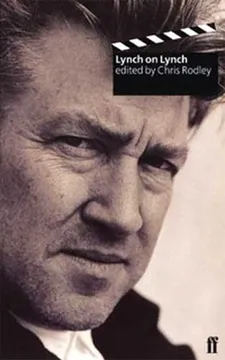
Lynch on Lynch is less a conventional autobiography than a portrait of an artistic method assembled through interviews, anecdotes, and the editor’s framing. Its central argument is that cinema’s deepest work happens through sensation and association. Images, sound, rhythm, performance, and setting combine to make an emotional world that cannot be reduced to plot summary. Lynch’s repeated refusal to assign a final meaning to his films is therefore not simply coyness. It protects the gap between an artwork and a viewer’s experience, a gap in which interpretation remains active.
The book’s most valuable corrective is that intuition is not presented as effortless inspiration. Lynch’s practice is intensely material: he builds sets, studies movement, records original effects, rehearses, edits, and returns to scenes until they feel right. His stories about broken equipment and unexpected discoveries can sound like destiny, but their creative importance depends on attention and judgment. He is willing to follow chance, not to surrender authorship to it.
The interviews also reveal a tension between personal freedom and collaborative production. The failure of Dune is explained partly through scale, commercial constraints, and divided authority, while Blue Velvet benefits from a smaller budget and final cut. Yet Lynch’s best work is never solitary in a literal sense. Cinematographers, actors, editors, producers, and musicians help ideas become legible in material form. His account sometimes gives fate and individual vision more emphasis than these relationships, but the anecdotes themselves show how much the work depends on tuned collaboration.
A further tension concerns ambiguity. Lynch’s films ask viewers to tolerate uncertainty, but uncertainty can invite discovery or produce frustration. The editor’s concept of the uncanny helps clarify the difference: the strange is powerful when it emerges from a familiar world, not when it is merely obscure. The Straight Story confirms that Lynch’s sensibility is not synonymous with darkness. Across genres, the throughline is a search for exact emotional balance, whether the desired feeling is dread, tenderness, or uneasy wonder.
Review Summary
Lynch on Lynch receives strong praise from readers, earning an average of 4.28/5. Fans of David Lynch's films appreciate the candid, extended interview format that explores his creative process across his filmography. Reviewers highlight Lynch's charming contradictions—his folksy, naive personality versus his dark, surrealist art. While some critics find interviewer Chris Rodley's questions lacking depth, most consider the book essential reading for Lynch enthusiasts. His refusal to explain his films' meanings, combined with hilarious anecdotes and genuine insights into his craft, makes it a compelling and entertaining read.
Glossary
Art Life
Life devoted to making artLynch’s term for organizing life around sustained artistic work. It suggests more than having a creative job: the artist wants long stretches of time to make, observe, and follow ideas, with fewer distractions. Lynch describes aspiring to this way of living even when money, family responsibilities, and practical circumstances made it difficult.
room tone
The sound beneath apparent silenceThe subtle ambient sound present in a room when no one is speaking. Lynch treats it as an expressive part of a film’s sound world, not as empty background. A quiet electrical hum, rumble, or other sustained presence can suggest a larger environment and alter the emotional character of a scene.
psychogenic fugue
A flight from reality with amnesiaA psychiatric term used in publicity to describe a form of amnesia involving flight from ordinary identity or circumstances. Lynch and screenwriter Barry Gifford did not use the diagnosis as the starting point for Lost Highway; they encountered it after writing the story and found it suggestive of the film’s shifts in identity and reality.
little sammati
A brief transcendental experienceLynch’s phrase for a temporary experience of transcendence during meditation, in contrast with what he calls a major sammati, or lasting enlightenment. In his account, these brief experiences recur through practice and gradually reduce stress. This describes Lynch’s personal spiritual understanding, rather than a universal or clinical definition.
Firewood
Music prepared for later placementLynch’s informal name for pieces of music composed without a fixed scene assignment. He and Angelo Badalamenti could later audition, cut, and place these passages during editing. The method treats music as flexible material that can be shaped alongside the film, rather than as a score that simply follows a finished picture.
About the Author
Other books by David Lynch

Download PDF
Download EPUB
.epub digital book format is ideal for reading ebooks on phones, tablets, and e-readers.








