

Key Takeaways
Build an indoor habitat that lets a hunter feel safely at home.
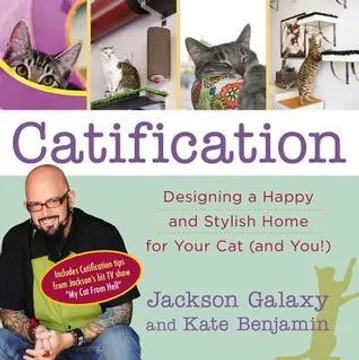
Catification is thoughtful home design. It means arranging a home around the needs of both cats and people, rather than expecting cats to suppress their instincts or hiding every sign they live there. The book argues that indoor life is safer than roaming outdoors, while also warning that safety without stimulation can leave a cat frustrated. It reports an average lifespan of 4.5 years for outdoor cats, compared with nearly 15 years for indoor cats receiving preventive care.
Comfort should include the cat. Climbing, watching, scratching, resting, and having a place to retreat are not decorative extras. A cat-friendly home can still suit human taste: shelves, furniture, beds, and scratching surfaces can be integrated into the room instead of banished to a basement.
The book’s strongest ethical move is to treat home design as a form of caregiving. Safety alone is incomplete if the protected animal has little control or stimulation. At the same time, the lifespan comparison is presented as a broad contrast, not proof that indoor living alone determines longevity. Health care, individual circumstances, and the quality of the indoor environment matter too. The practical standard is not a house filled with cat equipment. It is a home where a cat can act like a cat without making human comfort an afterthought.
Give the Raw Cat territory, meaningful work, and a complete daily rhythm.
The Raw Cat is the cat’s inherited wild side. Domestic cats remain hunters and are also vulnerable to larger threats, so they scan their surroundings for prey, resources, and escape options. The book calls a cat’s confident sense of ownership and purpose cat mojo. Its outline of a natural routine is hunt, catch, kill, eat, groom, and sleep. Indoor life should provide safe ways to enact that sequence, especially through play, food, and comfortable places to rest.
Notice the senses behind the behavior. Cats detect movement, sound, scent, and touch differently from people, and several stimuli together can overwhelm them. A sudden movement or an unexpected noise may matter more to a cat than it seems to a human. The point is to interpret behavior from the animal’s sensory world, not only from human expectations.
This model turns vague advice to enrich a pet’s life into a sequence that can be observed: pursuit, capture, food, grooming, and rest. It also makes clear why a toy that stays untouched may not satisfy a hunting impulse. The framework is most useful as a prompt for observation, not a rigid schedule every cat must follow. Cats differ in energy, age, and preference, and sensory stimulation can become stressful rather than enriching. Purposeful activity works best when the cat can choose to engage and withdraw.
Observe where your cat chooses confidence before changing the room.
Start with the individual cat. Cat mojo describes confidence in owning territory, but cats show that confidence in different ways. The book sketches a relaxed, welcoming Mojito Cat, a territorial and reactive Napoleon Cat, and a withdrawn Wallflower Cat. These are observation aids, not permanent labels. A cat may act differently around visitors, other animals, or at different times of day.
Look at posture and place together. A cat can feel confident low to the ground, on a perch, or in the middle of a room. The book calls these patterns bush dwelling, tree dwelling, and beach dwelling. Hiding out of fear is different from resting in a sheltered spot while still watching and engaging. A simple record of where the cat goes, what the body is doing, and what happens nearby helps reveal the difference.
The useful distinction here is between a cat’s location and the emotional state suggested by its behavior. A high perch is not automatically a sign of confidence, and a hidden position is not automatically a problem. The book encourages guardians to infer cautiously from posture, movement, and context rather than treating a single behavior as a diagnosis. Its observation worksheet makes that principle practical: notice patterns before installing a solution. This reduces the risk of designing for an imagined average cat instead of the animal actually sharing the home.
Map conflict routes before buying another cat tree.
Treat the home like a small city. The book’s urban-planning lens asks whether people and animals can move through rooms without repeatedly colliding or getting trapped. Mark places where fights or tense encounters happen. Pay particular attention to hallways, corners, litter areas, and routes with only one exit. A resource at the end of a narrow passage can become easy for one cat to guard.
Change the route, not just the furniture count. Olive repeatedly cornered Pepper in a twisting apartment hallway, leaving Pepper to freeze or fight. The solution included clearing a dead end and giving Pepper a way to move upward and out. A traffic circle can redirect movement around an obstacle; a revolving door uses a climbing structure to keep a cat moving through a former trap. Both approaches aim to reduce confrontations by changing the layout.
This is a notably concrete way to think about household conflict. Instead of asking only which cat is misbehaving, it asks what the architecture makes easy or difficult. That shift can reveal why conflict clusters around a doorway or litter area. The approach also has limits: mapping a route identifies a setting, not necessarily the whole cause of aggression. Cats’ health, social history, and relationships matter as well. Still, changing a predictable bottleneck can reduce the number of occasions on which tension escalates.
Build vertical paths with passing room, escape ramps, and destinations.
A cat superhighway connects usable heights. It is a route that lets cats travel around a room without always crossing the floor. It can use furniture, shelves, trees, and window perches, with ramps or steps to enter and leave. A route needs appealing destinations and small resting places, not just a line of shelves.
Design for more than one cat. Narrow shelves and single exits can recreate the same bottlenecks found at floor level. The book recommends lanes wide enough for comfortable movement, alternate routes where cats cannot pass, and access that a person can reach in an emergency. In a small Los Angeles guest house, Jackson’s team linked furniture and shelves at several heights so three cats could move around one another and stay clear of a dog.
Vertical space is valuable because it adds options without requiring a larger floor plan. The superhighway idea also improves on the common assumption that a single tall cat tree solves every climbing need. Routes work as systems: access, passage, resting spots, and safe exits all matter. Yet height is not equally useful to every animal. Older cats or cats with mobility limits may need lower steps or ramps, and any installed structure needs secure mounting. A route that looks elegant but cannot be used safely is not successful enrichment.
Give every cat enough places to scent, scratch, and take turns.
Territory can be marked safely. Cats leave scent through contact with beds and blankets, and leave visible and scented marks by scratching. The book calls soft or textured objects that absorb a cat’s scent scent soakers. Beds, blankets, scratchers, and cat trees can provide legitimate places to claim, rather than leaving a cat to choose household furniture or mark with urine.
Plan for shared resources. Cats may take turns using a favorite sunny window as the sun moves through a home. The book calls this Sundial Catification: place comfortable, scent-absorbing resting spots where sunlight predictably falls, so cats have more than one appealing place to settle. In multi-cat homes, several beds and perches can ease competition. Repeated urination, however, should not be assumed to be only a design problem.
The idea of scent turns an abstract territory into something a guardian can furnish for. It also explains why resource quantity and placement matter: a second bed in a useful location may do more than another object tucked out of the way. The sun-following example adds time to spatial planning, showing that a home’s resources change in value throughout the day. Environmental adjustments are sensible, but they should not replace assessment of possible medical or social causes when a cat urinates outside the litter box.
Replace every dangerous no with an attractive feline-approved yes.
Blocking a behavior is only half a solution. In a kitchen case, two energetic Savannah cats were jumping onto a range hood that could have fallen. The team blocked access with a translucent panel, then built a safe climbing route toward nearby cabinets and shelves. The cats still had access to the social heart of the home, but a safer place to climb and observe.
Redirect the job, not just the cat. Reese guarded the front door from a window and attacked visitors. Her guardians added climbing levels, scratching surfaces, plants, and moving toys to make the window a place for activity rather than patrol. A bird feeder outside supplied what the book calls cat TV, a window view that engages a cat’s attention. Watching is not a substitute for play, but it can add stimulation.
The yes-and-no pattern is a strong design principle because it respects the reason a cat is drawn to a forbidden place. A barrier may prevent an accident, but an appealing alternative gives the animal somewhere else to direct its energy. The Reese example also shows that changing a location’s function can matter as much as adding equipment. The approach depends on making the alternative genuinely attractive and safe. A substitute that is inaccessible, unstable, or ignored will not compete with the behavior it is meant to redirect.
Use accessible cocoons to help fearful cats rejoin household life.
A cocoon offers shelter without isolation. In the book’s vocabulary, a cave is a remote hiding place where a cat disappears, while a cocoon is an enclosed resting spot placed in a socially active area. A covered bed or tube can let a cat feel protected while remaining close to the household and able to emerge by choice.
Pair comfort with a manageable next step. Darla, a cat being stalked by another cat, relied on a washing machine as a safe but isolated perch. Her new route included enclosed tubes beside open shelves. She could choose cover or exposure as she became more comfortable. The authors call this gently extending a cat’s challenge line: creating a route from a familiar safe area toward a wider part of the home without forcing the cat into contact.
The cocoon is a thoughtful middle ground between forcing social exposure and accepting permanent retreat. Its value comes from proximity and choice: the cat can observe household activity, then decide whether to participate. That design principle is more respectful than interpreting a fearful animal’s withdrawal as stubbornness. It also calls for patience. A guardian cannot set the pace of confidence on a schedule, and a safe retreat should remain available even as the cat explores. Progress is better judged by relaxed, voluntary movement than by mere physical presence.
Design around ability, not assumptions about what every cat can climb.
The same room can demand different solutions. Pip had cerebellar hypoplasia, a condition affecting coordination that left him unable to climb. Instead of trying to make him use vertical equipment, the team tested floor textures. A rug with large loops held toys in place, letting Pip play without repeatedly losing them. Red, the cat frightened by Pip, received an elevated route with a gradual path toward the floor.
Age and confidence change what works. The book also describes senior cats who need easier access to food and resting areas. A structure designed for a young climber may become difficult later; ramps or gentler steps can preserve access. The relevant question is not whether an object is generally considered good cat furniture, but whether this cat can use it comfortably and safely.
This is the book’s clearest reminder that enrichment should be measured by the animal’s actual experience, not by the designer’s intentions. The play mat for Pip emerged from testing textures rather than applying a standard climbing plan. That kind of adaptation treats disability as a design constraint, not a failure of the animal. It also argues for reassessment as bodies change. The cases do not establish that environmental design resolves every behavioral or medical issue, but they show how a carefully tailored environment can create useful choices where a generic solution cannot.
Test small, adapt often, and reserve safe outdoor territory with a catio.
Catification is a process, not a finished installation. The book recommends building in stages, observing what cats actually use, and adjusting accordingly. Temporary ramps, called training wheels, can test a new route before a permanent build. Repurposing furniture or wrapping a table leg with sisal can make useful changes inexpensive and visually integrated. Designs should also be easy for people to clean and reach in an emergency.
A catio extends the home securely. A catio is an enclosed outdoor space that offers fresh air, sunlight, and views while preventing free roaming. One project transformed an existing atrium into a play area around a tree, with barriers to prevent escape. Whether the change is a small perch or a full enclosure, the principle is the same: try a safe design, watch the cat, and improve it.
Iteration lowers the cost of being wrong. A temporary ramp or staged project lets a guardian learn from a cat’s response before committing money and labor. The emphasis on appearance is not superficial: a design that fits a household is more likely to remain in use. Catios embody the book’s broader compromise between feline stimulation and human responsibility, although enclosure security is essential. A beautiful outdoor room with a gap is not a safe compromise. The best plan balances feline choice, practical maintenance, structural safety, and the household’s ability to sustain it.
Analysis
Catification’s central claim is that behavior is partly an architectural event. A cat that hides, stalks, guards a doorway, or avoids a litter area may be responding to how the room distributes access, refuge, and control. The book’s practical contribution is to translate feline instincts into design questions: Where can the cat observe? Is there an exit? Can two cats pass? Does a preferred activity have a safe destination? This resembles the idea of affordances in design: spaces invite some actions and obstruct others. The home is not merely a backdrop to behavior; it helps shape the options available to its inhabitants.
The strongest examples are interventions tailored to a particular animal and tested through observation. Darla’s sheltered route, Pip’s toy-holding floor mat, and the alternative climbing path for the Savannah cats show that enrichment is not synonymous with buying a standard cat tree. Choice, access, and control are the deeper goals. This approach also makes human aesthetics part of the solution rather than an obstacle, which increases the chance that environmental changes will remain in place.
The cases are persuasive illustrations, not controlled studies. Several changes often occur together, so the contribution of any single shelf, toy, or route cannot be isolated. Behavior also reflects health, prior experience, social relationships, and household routines. In particular, repeated inappropriate urination or sudden aggression deserves veterinary consideration as well as environmental review. Nor should a confident-looking design substitute for structural safety: elevated routes require secure mounting, manageable access, and human reach in an emergency.
The most durable lesson is therefore a method, not a blueprint. Observe the cat, map the room, change one or more meaningful constraints, and watch what the animal chooses. A well-designed home does not compel a cat to perform a preferred behavior. It makes safe, species-appropriate behaviors possible, while leaving the cat room to choose.
Review Summary
Catification receives praise for its creative, photo-rich ideas on designing cat-friendly living spaces that blend style with feline needs. Readers appreciate the variety of projects spanning different budgets and styles, along with helpful behavioral insights. Common criticisms include many projects being costly or requiring homeownership, some featured IKEA products no longer being available, and limited options for small spaces or angled walls. Most readers find it inspirational, frequently recommending it alongside Galaxy's more comprehensive guide, Total Cat Mojo.
Glossary
Catification
Cat-aware home designA way of arranging a home so cats can carry out natural activities safely while people can still enjoy the space. It combines observation of an individual cat with changes to routes, resting places, scratching surfaces, and other resources. The goal is a home that supports feline well-being without requiring people to abandon their own practical or aesthetic needs.
Raw Cat
The cat’s wild instinctsThe book’s name for the inherited instincts that domestic cats retain from their wild ancestors. The Raw Cat hunts, monitors territory, seeks resources, and remains alert to danger because cats are both predators and potential prey. The term encourages guardians to interpret indoor behavior in light of these instincts rather than assuming a housecat has stopped needing species-appropriate activity.
cat mojo
Confident territorial ownershipThe book’s term for a cat’s sense of confidence, purpose, and ownership within its territory. A cat with strong mojo is described as proactively using its environment to carry out familiar activities. Fearful withdrawal and reactive over-defending are presented as signs that the cat does not feel secure in its ownership of the space.
Cat Superhighway
Connected elevated travel routesA route that lets a cat move through a room or home using elevated surfaces instead of crossing the floor every time. It can connect furniture, shelves, perches, and climbing structures. A useful superhighway has multiple ways to enter and exit, places to rest, appealing destinations, enough room to move, and no dangerous dead ends.
Cat Geometry
Patterns of feline movementThe patterns a cat follows through a room as it evaluates angles, routes, potential ambushes, and exits. Mapping those movements helps guardians identify where a room’s layout may contribute to conflict or avoidance. The concept treats behavior as a spatial pattern that can be studied and, sometimes, changed through furniture placement or new routes.
Scent Soakers
Surfaces that retain cat scentSoft or textured objects that absorb a cat’s scent when the animal rests against them, rubs them, or scratches them. Beds, blankets, carpeted surfaces, cardboard, and sisal can serve this role. They give cats appropriate objects to mark as familiar territory and can help make resting places feel established and personally meaningful.
Cocoon
Accessible sheltered resting placeAn enclosed or partly covered place to rest that sits within a socially active area of the home. Unlike a remote hiding place, a cocoon lets a cat feel protected while remaining near household life and free to come out. It can support gradual exploration by offering a sheltered option beside more open routes or resting places.
Revolving Door
Route out of a trapA climbing structure or connected route that lets a cat keep moving through a space that would otherwise be a dead end or ambush zone. The design uses momentum to help the cat exit rather than freeze in place. Shelves, trees, or furniture can provide the alternate path, as long as it leads somewhere safe.
Cat TV
Focused window watchingThe book’s term for a cat’s attentive watching of activity outside a window, in an aquarium, or in another contained view. The authors frame this as passive engagement with the movements of potential prey, rather than empty staring. A comfortable perch and a view of birds or other activity can add stimulation, but watching does not replace active play.
Training Wheels
Temporary design testA removable or temporary feature used to test whether a cat will use a new route or piece of equipment. A ramp or temporary step can introduce a cat to a height before it is asked to jump independently. Because the feature can be moved or removed, guardians can learn from the cat’s response without committing to a permanent design.
Cat Chess
Strategic territorial movementA way of describing how a cat monitors routes, angles, potential prey, and escape options while moving through a territory. In a household conflict, one cat may block another’s routes and predict its movements, leaving the other cat with few choices. The term directs attention to spatial strategy, not merely to the visible moment of a fight.
Basecamp
A secure territorial home roomA room organized as a reliable center of safety and familiar resources for a cat. It can contain resting places, food, litter, scratching surfaces, and familiar human and feline scents. The book uses the idea to establish territorial security, especially when a cat is adjusting to a new home or other changes in its environment.
About the Author
Other books by Jackson Galaxy

Download PDF
Download EPUB
.epub digital book format is ideal for reading ebooks on phones, tablets, and e-readers.








