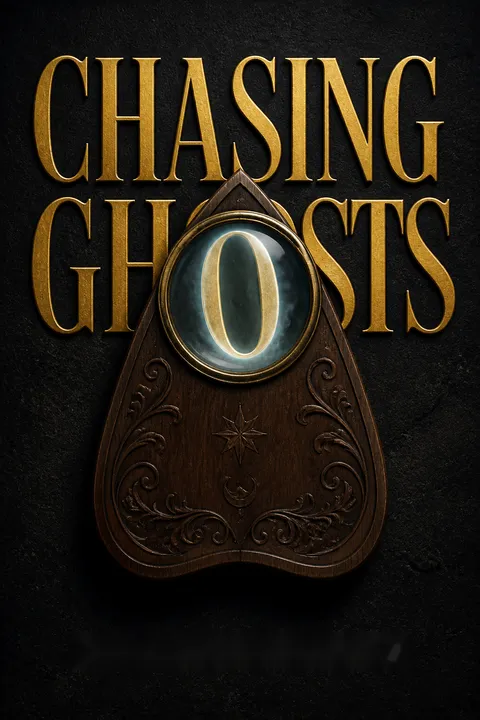


Key Takeaways
Treat ghost stories as maps of human fears, not settled proof
Start with uncertainty. The book opens with the author’s childhood question about death, then revisits his confidence that he had never seen a ghost. A friend’s young daughter described a nighttime visitor, while other ordinary people recounted voices, apparitions, and unexplained events. A 2019 YouGov survey found that 45 percent of Americans believed in ghosts. These reports establish the subject’s reach, not the truth of any one explanation.
Belief has a long life. Across history, people have understood apparitions as souls, demons, memories, or tricks. The author’s point is not that shared belief proves survival after death. It is that ghost stories persist because death remains unexplained, personal, and emotionally charged.
What's compelling is the distinction between a belief's importance and its factual status. Folklore can be studied as evidence of how people organize fear, grief, and moral responsibility, even when it cannot verify a spirit. That stance avoids two easy errors: dismissing witnesses as foolish, or treating sincerity as proof. A report may accurately describe what someone experienced while leaving its cause unresolved. The book's open-mindedness is strongest when it keeps those two claims separate.
Across cultures, the dead return when the living neglect obligations
Death has social rules. In Pliny the Younger’s Roman tale, a ghost leads a philosopher to the skeleton of a man denied burial. Greek stories likewise make proper funerals and burial coins essential for passage to the underworld. Egyptian scrolls equipped the dead for a dangerous journey, while Chinese communities offered food and entertainment to hungry ghosts believed to lack descendants.
Ritual reconnects the living. Día de los Muertos grew from Indigenous traditions and Catholic observances into a celebration that welcomes deceased relatives with cleaned graves, flowers, candles, and favorite foods. A psychopomp is a guide who helps the newly dead move from earthly life to the afterlife. In shamanic traditions, such guidance can also help survivors find closure.
These traditions make death a relationship rather than a private biological event. Food, burial, remembrance, and guidance give mourners concrete ways to act when they cannot reverse a loss. Anthropologists often study rituals as mechanisms for renewing social bonds, and these examples fit that pattern: the dead remain part of family and community life. The nuance is that similar customs do not prove a shared supernatural reality. They may instead show that many societies face the same human need to care for the absent.
The Fox sisters turned a childhood prank into a movement
A knock became a revelation. In 1848, sisters Maggie and Kate Fox, then children, claimed to communicate with a murdered peddler through knocks in their home. Their older sister Leah recognized the public appetite for the performance and helped turn it into a paid act. The sisters became the public face of modern Spiritualism, a movement centered on communication between the living and the dead.
Exposure did not end belief. Doctors suspected the girls were making the sounds with their joints. In 1888, Maggie demonstrated how she produced the knocks and described the childhood prank behind them. She later withdrew her confession, and Spiritualism continued to flourish. At the time, the movement reportedly had more than eight million adherents in America. For women excluded from many public professions, mediumship could also offer status, income, and a voice.
The Fox story is a compact lesson in how a movement can outgrow the incident that launched it. People invest in the meaning of an event, not just its mechanism, so debunking one performance may leave the surrounding community intact. The story also complicates a simple fraud narrative: mediumship could exploit grieving clients while giving women authority in a society that restricted their choices. That social function explains its appeal without making its supernatural claims more credible.
Demand controlled tests before confusing mystery with evidence
Spectacle invites error. The Davenport brothers staged musical séances while apparently escaping their bindings; investigator John Truesdell caught Henry Slade using prepared slates and sleight of hand. Such cases show how darkness, expectation, and a willing audience can make performance feel like proof. Harry Houdini demanded tighter controls when testing Margery, a Boston medium whose séances featured moving objects and alleged spirit voices.
Not every case resolved cleanly. Harvard psychologist William James studied Leonora Piper, who produced information about deceased people and strangers. Researchers tried to prevent advance research, yet critics proposed telepathy from living people as an alternative to spirits. Piper herself did not claim to know where the information came from. Competing explanations, rather than a dramatic demonstration, are what make a case worth investigating.
The key scientific question is not whether an event feels extraordinary, but which explanation survives attempts to rule out ordinary causes. That is the logic of controlled experimentation: isolate variables, prevent information leaks, and make predictions that could fail. The Piper case also illustrates an important limit. An unexplained result is not automatically evidence for the most dramatic theory; it may mean that the available explanations and methods are incomplete. Skepticism works best as disciplined curiosity, not reflexive dismissal.
Haunted places sell history by turning trauma into an experience
A location supplies a plot. Gettysburg’s battle deaths, the brutal history of Eastern State Penitentiary, and the abuses at the LaLaurie Mansion make ghost stories feel attached to real suffering. At the Winchester Mystery House, Sarah Winchester’s unusual construction was said to shelter victims of her family’s rifles. A historian offered more ordinary explanations for its odd staircases, including earthquake damage and Winchester’s arthritis.
Lore can become an attraction. Borley Rectory drew years of reports, investigations, and publicity, but later accounts challenged the reliability of witnesses and investigator Harry Price. The Amityville story brought crowds to a family home, disturbing neighbors who rejected the tale. Ghost tourism turns history into a safe, thrilling encounter, but sometimes the living bear the cost of the spectacle.
Haunted tourism links physical places to moral memory. A prison or battlefield makes past violence tangible, and a ghost story gives visitors a character through which to approach it. The attraction can encourage interest in forgotten history, but it can also simplify victims into entertainment or repeat stories that cannot be verified. Responsible interpretation should preserve both layers: what is documented about the harm, and what later generations have imagined about its ghosts.
Some poltergeist accounts locate the disturbance in the living
A ghost may not be dead. Recurrent spontaneous psychokinesis, or RSPK, is a parapsychological hypothesis that unconscious psychological stress in a living person produces physical disturbances. In one North Carolina case, an eleven-year-old boy was associated with malfunctioning phones, alarms, printers, and other electronics. A researcher taught him breathing and relaxation techniques; the activity subsided within a week.
The evidence remains disputed. Poltergeist cases often involve adolescents and periods of family or emotional strain. During the Enfield case, investigators documented many disturbances, while Janet Hodgson admitted to faking some events. One investigator believed much of the activity was genuine; a skeptic argued it was all trickery. RSPK offers a possible account, not a scientifically established ability.
This framework shifts attention from accusing a child of lying or blaming a dead spirit to asking what stress surrounds the family. That can be practically useful even if psychokinesis is never demonstrated: reducing fear and supporting a distressed child are sensible responses to a frightening household problem. The hypothesis itself needs caution, since correlation with stress does not establish that the mind moved objects. It is most responsible when treated as a prompt for care, not as a settled mechanism.
Check the room before deciding a ghost entered it
The environment can impersonate the supernatural. Engineer Vic Tandy traced an apparition he saw at work to infrasound, a frequency too low for people to hear. A fan created a standing wave near 19 hertz, and changing the fan’s mounting ended the vibration and the apparition. Other reported hauntings have had medical explanations: a family that saw figures, heard bells, and felt ill in a house was exposed to carbon monoxide from a faulty furnace.
No single cause explains everything. Research on electromagnetic fields has explored whether they can affect perception, while a sham version of a so-called God helmet still prompted some participants to report unusual sensations. Expectations may influence what people notice, but environmental factors are not a universal explanation for every report.
The practical value of these cases is differential diagnosis: consider ordinary causes before reaching for extraordinary ones. Sound, toxins, lighting, sleep disruption, and expectation can combine to make a place feel uncanny, and some of these causes pose real health risks. At the same time, explaining one haunting does not explain all hauntings. Good inquiry narrows a claim to the evidence at hand instead of turning one successful explanation into a universal debunking theory.
Every new communication device inherits old hopes and old tricks
Technology changes the séance, not the question. Victorian spirit photographers such as William Mumler claimed cameras revealed the dead; investigators later demonstrated that double exposures could produce ghostly figures. Thomas Edison proposed building a delicate instrument to register spirits, but never completed his spirit phone. Decades later, electronic voice phenomena, or EVP, referred to voices that listeners believed appeared on recordings. Some researchers instead heard radio interference or words shaped by expectation.
A machine is not a verdict. George Meek’s Spiricom allegedly captured conversations with the dead, including technical advice from a deceased physicist. Later analysis found that the voice could be imitated by a living speaker using an electronic voice device. Modern spirit boxes rapidly scan radio frequencies, producing noise that listeners interpret as messages. A recording preserves a signal; it does not establish who, or what, produced it.
Instruments can make hidden signals visible, but they also create new interpretive problems. A camera, tape recorder, or sensor does not arrive with a built-in explanation for its output. The history here resembles a broader lesson from measurement science: data quality depends on calibration, controls, and independent replication, not on how impressive a device looks. The technology is still valuable when used to test mundane explanations, but a mysterious reading is a starting point for inquiry, not its conclusion.
Read courtroom ghosts as claims about justice, not courtroom proof
The dead sometimes speak for the powerless. In West Virginia, Mary Heaster said her daughter Zona’s ghost revealed that her husband had broken her neck. An exhumation confirmed the injury, and the husband was convicted. In North Carolina, a son said his dead father directed him to a hidden will that divided the estate among the family. The will’s handwriting was recognized, and the court accepted it.
The supernatural story is not the legal evidence. In the first case, a historian later found that a newspaper had recently described another ghost helping solve a murder, raising the possibility that the story influenced Heaster. In the second, the hidden document and handwriting mattered in court. These tales endure because ghosts can express a demand for justice when the living feel that ordinary authorities have failed.
These courtroom stories expose how people use supernatural narratives to make moral claims persuasive. A ghost supplies an apparently authoritative witness, especially when someone has been ignored or deprived of power. Yet the distinction between narrative force and reliable evidence matters acutely in law, where unsupported certainty can harm the living. The cases are most revealing when read both ways: as reports about alleged hauntings, and as stories about who gets believed, whose property counts, and how communities pursue accountability.
Analysis
Chasing Ghosts is best understood as a cultural history of uncertainty, not a case for or against life after death. Its movement through ancient burial customs, Victorian séances, haunted sites, and modern recording devices shows how each era gives the dead the technologies and social roles it understands. The Egyptian dead need spells, Victorian spirits rap on furniture, and twentieth-century ghosts supposedly leave voices on tape. The underlying desire is remarkably stable: people want contact, reassurance, explanation, or justice.
The book’s strongest method is juxtaposition. The Fox sisters’ confessed trickery sits beside Leonora Piper’s difficult-to-explain performances. A haunted cellar is placed alongside infrasound, while a report of a spirit photograph meets the mechanics of double exposure. This structure teaches readers to compare claims without requiring a single verdict. It also reveals an asymmetry: an anecdote can establish that a story circulated, but it cannot independently establish that a spirit caused the experience. Historical documentation, witness sincerity, and proof of supernatural agency are different standards.
A further strength is attention to power. Mediumship offered women a public role when formal authority was largely closed to them, even as some mediums exploited bereaved clients. Ghost stories also allowed communities to revisit violence and unresolved injustice. These functions deserve analysis whether or not the paranormal claims hold.
The book’s openness should not be mistaken for equal evidential weight. A well-controlled fraud exposure, a plausible environmental cause, and an unexplained testimony are not interchangeable kinds of evidence. Nor does one ordinary explanation settle every report. The most defensible conclusion is narrower and more useful: people have experiences they interpret as encounters with the dead, and those interpretations shape culture, mourning, commerce, and memory. The afterlife remains unproven in this account, but the human need that keeps asking about it is plainly real.
Review Summary
Chasing Ghosts received mixed reviews, with an average rating of 3.55 out of 5. Many readers found it informative and well-researched, praising its comprehensive coverage of supernatural history and ghost-hunting. Some appreciated the balanced approach and engaging writing style. However, others felt it was dry and textbook-like, lacking new information for seasoned paranormal enthusiasts. The book's strengths included its historical context, interesting anecdotes, and accessible presentation. Criticisms focused on its broad scope and occasional repetitiveness. Overall, it was deemed a solid introduction for newcomers to the topic.
People Also Read




Glossary
psychopomp
guide for the newly deadA psychopomp is a figure or person who escorts the newly deceased from the world of the living to the afterlife. In the book, shamans perform this role by helping confused or earthbound spirits move on. The term also describes mythic guides such as Charon, who ferries souls across the river Styx.
Spiritualism
movement for spirit communicationA religious and cultural movement that grew in the United States after the Fox sisters’ reported spirit communications in 1848. Spiritualists believe the living can communicate with the dead, often through mediums, séances, or other signs. The movement offered religious claims about continued life after death and created public roles for many women.
recurrent spontaneous psychokinesis (RSPK)
stress-linked object movement hypothesisA parapsychological term for repeated physical disturbances believed to originate unconsciously in a living person, often during psychological stress. It is used to explain some poltergeist cases without attributing the events to a deceased spirit. The book presents RSPK as a proposed explanation, not an established scientific finding.
stone tape theory
haunting as recorded eventA theory that emotionally intense events leave an impression in a location or its materials, which can later be perceived as a ghostly replay. It is associated with ideas proposed by parapsychologist Thomas Charles Lethbridge and popularized by a 1972 television film. The theory does not explain how such impressions would be stored or reproduced.
apophenia
perceiving patterns in noiseThe tendency to perceive meaningful patterns in random or ambiguous information. In the context of ghost recordings, listeners may hear words in static or other unclear sounds, especially when expecting a message. The book compares this auditory interpretation to seeing recognizable shapes in clouds or images in toast.
electronic voice phenomena (EVP)
voices heard on recordingsThe label for apparent voices or speech-like sounds that investigators believe have been captured on audio recordings, often when no voice was heard during the recording itself. Spiritualists may interpret these sounds as messages from the dead. Alternative explanations include radio interference, ordinary background noise, and listeners imposing words on ambiguous sounds.
instrumental transcommunication (ITC)
electronic spirit communication claimsA broad term for claimed communication with spirits through electronic equipment, including recording devices and specially adapted radios. The book traces ITC from early experiments with recorded voices to devices such as the Spiricom and modern spirit boxes. The existence of a signal alone does not establish that its source is a spirit.
Estes Method
isolated spirit-box listeningA spirit-box experiment in which one participant listens through headphones, often while blindfolded, and reports sounds without knowing what questions another participant is asking. The separation is intended to reduce suggestion and group influence. Investigators may compare the listener’s reported words with the questions afterward, though the method does not by itself prove paranormal communication.
Download PDF
Download EPUB
.epub digital book format is ideal for reading ebooks on phones, tablets, and e-readers.








