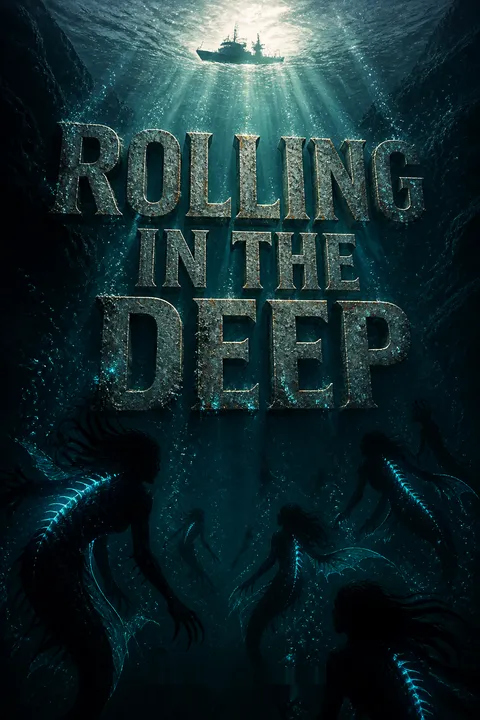


Plot Summary
Prologue
A later Imagine Network documentary looks back on the Atargatis, a ship that sailed to investigate mermaid legends and returned six weeks later without a living person aboard. The network had built a new audience by blending careful research with invented drama, leaving viewers unsure which parts of its programs were true.
The retrospective cannot determine how much of the Atargatis footage was fabricated, but it establishes the voyage’s terrible outcome and the central uncertainty: whether the vanished crew became the victims of a hoax or encountered something real.
The documentary frame makes uncertainty part of the horror before the voyage even begins. Imagine has trained its audience to distrust evidence by mixing genuine research with staged scenes, so its later recordings arrive already contaminated by the network’s habits. The retrospective also turns the ship into a public mystery rather than a private disaster: the people aboard disappear, while their images continue circulating. This framing asks the reader to watch not only what happens at sea, but how profit-driven media shapes what can be believed about it.
A Documentary Sets Sail
Captain Jovanie Seghers discovers that Imagine has already publicized her voyage, despite demanding secrecy from her crew. The network is sending scientists to search for mermaids, but it has also hired the Blue Seas troupe, professional performers in custom tails, to create apparently spontaneous sightings.
Television host Anne Stewart rehearses her promise of conclusive proof, while the researchers accept the expedition for access to data and a chance at recognition.
When the scientists object to the staged performers, producer Adrian Curran explains that the network expects them to keep the arrangement quiet. Jovanie warns everyone that her sailors answer to her, not to Imagine, then takes the Atargatis out of port. The passengers set off believing the deception will remain under their control.
The voyage begins with a bargain in which every group expects to use the others. Imagine wants compelling footage, the scientists want rare research access, and Jovanie needs the contract to keep her ship financially viable. The performers are treated as production equipment even though they have their own skills, ambitions, and contractual protections. Jovanie’s first act of resistance is practical rather than heroic: she establishes who commands the ship. That boundary matters because the network’s power depends on making people behave as though a staged story has priority over their real responsibilities.
Costumes Meet the Trench
After ten days, including a publicity stop in Honolulu, the Atargatis reaches an isolated branch of the Mariana Trench. The scientists divide into their separate projects, while Imagine keeps their work and the performers apart for the sake of its production plan.
When producer Curran questions whether Jovanie’s Deaf first mate, David Mendoza, can help pilot the vessel, Jovanie defends his experience and orders Curran out of her control room. Soon afterward, Anne and cameraman Kevin watch the Blue Seas performers enter the Pacific in their custom tails.
The swim is supposed to furnish usable footage without exposing the production’s trick. Instead, it shows how practiced the women are in the water, while Alexandra MacMillan begins lowering probes to sample the trench.
The staged spectacle sits beside genuine competence. The mermaids are performers, but their tails, training, and safety procedures are real; the scientists are skeptical of the production, yet their work also depends on untested instruments and uncertain outcomes. Jovanie’s defense of David exposes another kind of manufactured assumption: Curran mistakes disability for incapacity because he sees people as roles before he sees their expertise. Meanwhile, the cameras convert the performers’ skilled swimming into a potential deception. The scene establishes that the voyage’s central conflict will not divide neatly between truth and fiction. Both are already entangled in the same water.
Blood in the Sample
Alexandra’s first probe descends without a camera. In the darkness, a glowing creature investigates it, and one of the probe’s sampling tubes pierces the creature before Alexandra reels the instrument back aboard. The recovered material looks like blood.
Sonja Weinstein identifies it as fish blood, but ichthyologist Peter Harris finds unfamiliar features and warns that it may belong to an unrecorded species. While the scientists study the sample, a temporary crewman named Bobby hears a humming sound over the water and leans across the rail to investigate.
David fails to notice him leave, and Bobby vanishes without a splash anyone hears. The ship’s calm routine has now been broken twice, but the crew can explain neither the blood nor the missing sailor.
The first evidence arrives through injury, not discovery: the probe damages whatever it touches, and the blood is the consequence of human intrusion into an ecosystem no one aboard understands. The researchers respond with competing forms of caution, from Sonja’s classification to Peter’s refusal to overstate what the sample proves. Bobby’s disappearance introduces a more intimate danger. His arrogance and disregard for David’s warnings leave him isolated, but the humming lure suggests the ocean is actively drawing people toward it. Scientific uncertainty and personal vulnerability begin to share the same source.
Jessica Vanishes Below
During the performers’ morning practice, Jessica dives deeper than she has before and loses her sense of which way leads to the surface. A webbed hand reaches from the dark and drags her down. The Blue Seas troupe searches repeatedly, and Jovanie sends divers into the water, but they find neither Jessica nor her tail.
Captain Seghers tells troupe leader Sunnie that recovery is unlikely; Sunnie accepts that Jessica chose the risks of open-water swimming and asks to hold a memorial. At sunset, Teal persuades the women to remember Jessica in the sea rather than remain on deck. They form a quiet circle in the water. Then Teal spots a dark figure and swims after it, leaving the others behind.
Jessica’s disappearance turns the mermaids’ chosen identity into a physical risk. Their tails give them freedom and a sense of belonging, yet in deep water they also make orientation difficult and leave them dependent on one another’s judgment. Sunnie responds by holding responsibility for the group, while Teal treats swimming as the most honest form of remembrance. Neither reaction is foolish: both grow from a practice the women value. The tragedy is that grief leads Teal back into the very environment that has already taken Jessica, and the memorial quietly becomes a point of exposure.
The Camera Brings Proof
Peter’s camera records a hand rising from the trench to cover its lens. The webbed fingers, clawed thumb, luminous eye, and tentacle-like hair belong to no known animal the scientists can identify. As the camera is hauled upward, the creature clings to its housing and emerges onto the deck, where the witnesses finally see its eel-like body and ragged flukes.
Anne recognizes that the footage could change her career, while Peter studies the animal with scientific wonder. Anton dismisses it as a production trick and reaches toward it. The creature bites off his fingers, then kills him before anyone can intervene. The staged hunt has produced genuine evidence, and the first person to touch it pays immediately.
The camera performs two opposing functions: it makes the unknown visible, but it also brings the unknown into human space. Peter’s response reflects the scientist’s desire to observe without harming, while Anne sees the image through the professional opportunity it represents. Anton’s disbelief turns curiosity into a fatal test of control. His impulse to touch the creature assumes that naming or exposing something makes it manageable. The attack destroys that assumption. From this point forward, the footage is no longer merely material for a documentary. It is evidence of a threat that can cross the boundary between screen and deck.
The Memorial Turns Red
The Blue Seas women have not yet heard about Anton when they enter the water for Jessica’s memorial. Teal follows the dark figure she believes might be Jessica, and a creature seizes her beneath the surface. The others panic; one after another, they are pulled under or return wounded. Kevin reaches the deck in time to film the bloodied water, but the crew cannot safely enter it.
A creature climbs onto a floating body and repeats Teal’s name in a rough imitation of a human voice, calling for her as though it were one of the performers. Then it slips back under with the body. The troupe’s memorial has revealed the predators’ ability to hunt, imitate, and use familiar sounds.
The creatures exploit the performers’ strongest bonds. Teal follows a shape because she wants Jessica back, and the remaining women are left without a clear way to distinguish a companion from a lure. The attack converts the troupe’s shared discipline into a liability: their instinct to search for one another pulls them into danger. The imitation of human speech is especially disturbing because it does not create understanding; it borrows intimacy as bait. Kevin’s camera preserves the event, but recording cannot protect the people being filmed. The documentary’s promise of access has become a form of helpless witnessing.
The Anchors Become Ladders
Alexandra reaches Jovanie’s control room demanding that the ship turn back, and David independently confirms that creatures have killed the mermaids. Jovanie orders the engines restarted despite Curran’s threats over the contract.
Before the Atargatis can depart, the creatures climb the anchor chains and pour onto the decks. Peter stays to study one, while other scientists and crew members are killed in the corridors and on deck. David encounters three creatures exchanging hand signs and tries to introduce himself, hoping communication might stop the attack; one drags him over the rail.
The engines finally roar to life. Alexandra realizes that the predators are carrying bodies toward a much larger presence rising ahead, but the ship and everyone aboard are lost.
The anchor chains, installed to steady the ship, become the route by which the predators invade it. The crew’s ordinary tools and procedures cannot keep their original meanings once the environment changes. Jovanie’s decision to flee is a clear rejection of Imagine’s financial leverage, but the ship’s delayed departure leaves too little time. David’s attempt to communicate is brave and consistent with his experience navigating a world in which shared language must be actively built. Peter’s fascination and Alexandra’s deduction show two scientific impulses under pressure: to understand the individual specimen and to infer the larger system. Neither impulse can make the ship safe.
The Atargatis Comes Back
Six weeks after the voyage began, the USS Danvers finds the Atargatis drifting roughly two hundred miles from its last known position. The control-room window has been broken from outside, and the ship contains no survivors or recoverable bodies. The Navy crew searches the surrounding waters for three days, then reports strange lights and sounds before turning back toward shore.
The official record cannot explain what happened aboard the ship, and the documentary evidence remains open to competing interpretations. The only certainty is that Imagine’s expedition returned without the people who made it. Even the recovery ship refuses to remain in the waters where the Atargatis was lost.
The recovery offers a physical object but no dependable account. The Atargatis returns as an empty vessel, a kind of evidence that cannot testify to what happened inside it. The Navy crew repeats the original expedition’s mistake only briefly: they approach the unexplained sea, register signs of danger, and choose withdrawal over certainty. This ending does not resolve whether the network’s footage can be trusted, but it makes skepticism less comfortable. The lack of bodies also prevents the disaster from becoming a closed past. The ocean keeps the people, while the ship carries only the shape of their absence.
Epilogue
A brief note after the ship’s recovery identifies female anglerfish as vastly larger than males and says these fish inhabit oceans and coastal regions around the world. It closes by noting that the inquiry into the Atargatis remains unresolved.
The scientific fact casts a final shadow over Alexandra’s deductions: the creatures may not have been the largest presence in the trench, and the ship’s attackers may have been only one part of a wider ecology.
The closing note does not solve the mystery; it gives the reader one biological fact that makes the characters’ last inference harder to dismiss. The size difference between female and male anglerfish echoes Alexandra’s suspicion that the bodies being carried away served a larger creature. By placing this information beside the unresolved inquiry, the book makes scientific knowledge both illuminating and incomplete. The detail is not proof that the imagined predators exist, but it exposes the limits of treating the deep sea as a blank space simply because humans have not yet mapped it.
Analysis
Rolling in the Deep makes the usual distinction between fiction and fact materially dangerous. Imagine’s staged mermaid appearances are not harmless embellishments: they teach the crew to discount what they see, while its contracts and production schedules delay responses that could protect them. The real creatures arrive in a world already organized to misread them.
The expedition’s scientists are not mocked for seeking evidence. Instead, the book shows how research depends on humility about what instruments can reveal. Alexandra’s probe produces a trace without an image; Peter’s camera produces an image that still cannot explain the creature’s behavior or ecology. Their methods offer partial truths, and the pressure to turn those truths into a marketable conclusion can outrun careful judgment. Imagine wants proof that can be edited into a story, while the scientists need time to distinguish observation from inference.
The Blue Seas performers complicate the book’s treatment of spectacle. Their mermaiding is consciously constructed, but the labor behind it is real: custom equipment, training, accessibility, and safety procedures. Their work makes an imagined being visible without claiming that the fantasy is zoology. The actual predators, by contrast, exploit the human desire to believe in beautiful, familiar forms. Their resemblance to mermaids is not a gift or a romance. It is camouflage refined by survival.
The sea is therefore not simply a hostile setting. It is an environment whose inhabitants have evolved beyond human knowledge, while the ship brings noise, chemicals, machinery, and bodies into their habitat. The ending leaves the inquiry unresolved because evidence cannot restore the dead or guarantee mastery. What remains is a warning about turning the unknown into entertainment before understanding the consequences of looking.
Review Summary
Rolling in the Deep receives mostly positive reviews (3.94/5), praised for Mira Grant's plausible science, rich characters, and terrifying take on predatory mermaids. Readers appreciate the novella's punchy length, found-footage format, and build-up of suspense despite knowing everyone dies. The diverse cast and underwater horror elements resonate strongly. Critics note slow pacing, excessive character descriptions, and lack of tension compared to the sequel Into the Drowning Deep. Some find it predictable or disappointing. Most agree Grant transforms mermaids from fairy-tale creatures into genuinely frightening predators through scientific detail and atmospheric storytelling.
People Also Read









Characters
Jovanie Seghers
The ship’s commanding captainJovanie captains the Atargatis and treats responsibility for her crew and passengers as more important than pleasing the company that hired her. Experienced, decisive, and alert to practical danger, she keeps a firm boundary between Imagine’s production demands and the ship’s operation. Her authority is not bluster: she knows the vessel, understands the risks of open water, and trusts the people who have earned her confidence. She can be impatient with amateurs, but her sternness grows from accountability rather than a need to dominate. In a voyage organized around staged appearances, Jovanie represents the work that cannot be faked: keeping people alive at sea.
Alexandra MacMillan
A chemist chasing evidenceAlexandra is a marine chemist whose probe system samples water at depths few researchers can reach. She wants results strong enough to secure a future for independent research, rather than surrendering her work to commercial interests. Practical and collaborative, she shares samples with other scientists even when competition might reward her for guarding them. Her skepticism about mermaids coexists with a willingness to investigate any unexpected result, including one that could overturn her assumptions. Alexandra’s mind works through instruments, measurements, and causal patterns, but she also recognizes that research can damage the environment it seeks to understand. That tension makes her one of the expedition’s most careful observers.
Anne Stewart
Imagine’s polished on-camera hostAnne is a practiced television correspondent who knows how to make a scripted claim feel immediate and inviting. Her career depends on appearing both approachable and authoritative, and she studies her presentation with the same focus scientists give their equipment. Off camera, she is more candid and perceptive than her performance suggests, but she rarely forgets what a usable story could mean for her future. Anne understands that Imagine manipulates footage and is willing to participate because the work offers visibility and opportunity. Her professionalism is both a skill and a shield: by staying focused on the next segment, she can postpone the emotional cost of what she sees.
David Mendoza
The captain’s trusted first mateDavid is Jovanie’s first mate and a skilled sailor who knows the Atargatis intimately. He is Deaf and communicates through sign language, a fact some outsiders mistake for a limitation despite his long experience and competence. David and Jovanie share an easy trust built through years of working together; she signs with him naturally and defends his judgment when others question it. He is observant, dryly humorous, and unwilling to indulge a coworker who refuses to communicate respectfully. His knowledge of visual cues and nonverbal exchange gives him a distinctive way of reading people, while his professional identity remains rooted in seamanship rather than in how others perceive his hearing.
Peter Harris
The trench’s patient ichthyologistPeter is the expedition’s experienced ichthyologist, an older scholar who approaches deep-sea life with patience and an almost unnerving composure. He prefers books and careful observation to the cameras’ demand for quick conclusions. When the blood sample and camera footage produce unfamiliar evidence, he distinguishes what he can identify from what remains unknown rather than claiming certainty too soon. His reserve can make him seem theatrical or distant, but his attention is genuine: he is interested in what an organism is, how it lives, and what its features imply. Peter embodies science as disciplined wonder, a willingness to be astonished without confusing astonishment with proof.
Kevin
Anne’s watchful cameramanKevin films Anne and the expedition, often viewing events first through a lens and monitor. He is wry, technically capable, and less invested than Anne in turning every moment into career advancement. His camera work helps shape Imagine’s story, but he also notices the gap between the network’s constructed narrative and the people living through it. Kevin likes the Blue Seas performers and is willing to imagine making a documentary about their work on its own terms. His loyalty to the camera never entirely erases his concern for what lies in front of it.
Sonja Weinstein
A fiercely protective cetologistSonja studies whales and other cetaceans, and her commitment to protecting marine life shapes how she approaches the expedition. She is direct, politically engaged, and wary of the commercial appetite that can follow a new discovery. Her focus on large animals makes her less interested than some colleagues in small-scale chemical results, but she takes evidence seriously and contributes her expertise when a sample may belong to an unknown creature. Sonja’s guarded relationship with the cameras reflects strategic caution, not a lack of conviction. She knows that a strong belief can be edited into a caricature if she gives a production company control of the context.
Sunnie
Blue Seas’ practical troupe leaderSunnie, a veteran professional mermaid with purple hair, leads the Blue Seas troupe and takes responsibility for its members’ safety and working conditions. She is disciplined, legally savvy, and willing to confront Imagine when the company tries to restrict the performers beyond their contract. Her humor softens her authority, but she treats open-water practice as serious labor rather than play. Sunnie understands the emotional value of mermaid performance, especially for children and for people who feel conspicuous in ordinary settings. She balances that idealism with the practical demands of training, insurance, and keeping a group safe.
Teal
A daring Blue Seas swimmerTeal is a quick, enthusiastic mermaid performer whose confidence in the water is matched by her affection for the Blue Seas troupe. She uses a wheelchair on deck and moves with practiced skill when transferring into her custom tail. Her swimming style is fast and expressive, making her especially comfortable with the physical demands of the work. Teal is playful and sometimes impatient with limits, but her boldness grows from commitment to a life she has chosen, not from carelessness. She treats mermaiding as both a profession and a way to make an imagined world tangible.
Jessica
A skilled mermaid in a wheelchairJessica is a Blue Seas performer who uses a wheelchair and wears a specially weighted tail suited to her swimming. She joined mermaiding after a friend helped her find a way to attend a convention without being treated as an obstacle. In the water, she moves with a distinctive, shoulder-driven style and takes pride in the skills she has built. Jessica is warm with Teal and comfortable explaining the practical realities of a custom tail, but she does not reduce her identity to a lesson for others. Her work gives her a chosen form of visibility.
Adrian Curran
Imagine’s controlling producerAdrian Curran is Imagine’s on-board producer, presented to the passengers as their cruise director. He manages contracts, schedules, and the company’s effort to keep the staged mermaid appearances from being exposed. His calm manner often conceals how strongly he relies on financial leverage to secure compliance. Curran thinks in terms of production needs and liability, not the practical authority of the ship’s captain or the scientists’ independence. He is not simply a schemer; he believes the network’s plan can be controlled because its participants have signed agreements. That faith in paperwork reveals how little he understands the physical risks of the voyage.
Anton Matthews
A combative marine biologistAnton is a marine biomolecular biologist and the partner of phycologist Jonny Chen. The two argue constantly, often reversing positions just to keep one another engaged, but their antagonism is part of a durable intellectual and personal bond. Anton prefers work involving tiny particles and proteins, and he is uncomfortable when the cameras turn their attention toward him. His sharp skepticism can be useful when the group risks overinterpreting weak evidence, though it can also harden into dismissiveness. He is intelligent, competitive, and more vulnerable to performance pressure than his argumentative manner suggests.
Jonny Chen
A brilliant algae specialistJonny is a leading marine phycologist whose knowledge of algae and plankton makes him valuable to the expedition. He is quick-witted, outspoken, and prone to sparring with his partner Anton, with whom he shares both scientific work and a private life. Their arguments entertain the camera crews, sometimes drawing attention away from researchers who would rather remain unseen. Jonny’s energy comes from genuine intellectual appetite as well as a taste for provocation. He is comfortable claiming space in a room, but his confidence remains tied to the collaborative, often combative exchange that defines his relationship with Anton.
Jill Hale
The expedition’s deep-sea cartographerJill is a deep-sea cartographer who hopes the voyage’s sonar readings will demonstrate the value of her mapping techniques. Government funding could sustain her research, so the expedition offers both scientific opportunity and a possible professional turning point. She is focused and precise, often absorbed in the maps and measurements that others overlook. Jill is also alert to the gap between Imagine’s polished story and the realities of operating a ship. Her work gives the group a picture of the unseen terrain beneath them, even as the limits of that map remain consequential.
The Blue Seas troupe
Professional mermaid performersThe Blue Seas troupe consists of eleven professional mermaids hired to assist Imagine’s production. Their custom tails, lifeguard training, and diving certifications make the performance demanding physical work. Some members use wheelchairs, and the group treats accessibility as part of its professional requirements rather than an exception. They value the chance to make mermaids feel possible to audiences, especially children, while remaining alert to the network’s contracts and camera restrictions. Their solidarity comes from shared labor, practical safety habits, and a chosen identity they take seriously.
Plot Devices
The documentary frame
Truth through edited footageThe story opens and closes through excerpts from a later Imagine Network program about the missing Atargatis. This frame gives the reader the outcome early, then makes the voyage itself an investigation into what those archival claims can establish. Because Imagine has a history of mixing fact with staged material, every recording is both evidence and possible manipulation. The frame also shifts the disaster from a private event to a public argument, where viewers must judge footage assembled by the company that helped create the expedition’s false premise.
Imagine’s staged sightings
A hoax hides the realImagine hires the Blue Seas performers to enter the water in mermaid tails while concealing their role from the documentary’s audience. The staged sightings are meant to make a real scientific search more entertaining and preserve the network’s ability to claim that its crew was surprised. This arrangement initially gives every witness a reason to doubt what they see. When an actual unknown creature appears, the production’s deception does not merely become irrelevant; it damages the credibility of the evidence and the judgment of people who have been trained to expect a trick.
The sampling probes
Evidence from the deepAlexandra’s tethered probes collect tiny water samples as they descend through the Mariana Trench. The devices let her test conditions that ordinary equipment cannot reach, but they have no cameras and cannot steer themselves. One probe’s sampling tube pierces an unseen animal, bringing blood back to the ship. Later, Peter’s camera provides a visual record of another encounter. The progression from chemical trace to image makes the discovery feel earned, while the initial injury establishes that the scientists are not passive observers of an untouched environment.
The glowing lure
Familiar sounds draw preyThe creatures use light and sound to attract animals from above, and the ship’s crew first encounters this behavior as an unexplained hum over the water. Later, their ability to imitate human speech reveals a more disturbing form of mimicry. The lure connects the creatures’ deep-sea adaptations to the old stories of mermaids calling sailors away from ships. It also makes human recognition unreliable: a voice or light that seems familiar may be an instrument of predation rather than a sign of safety.
The anchor chains
Safety gear becomes accessThe Atargatis drops six chains to help limit its drift above the trench, although they do not reach the seafloor. When the creatures attack, the chains give them a direct route from the water to the ship’s decks. Their original purpose is to stabilize the vessel, but they become a ladder for the predators. The reversal makes the ship’s own equipment part of the danger and undercuts the passengers’ confidence that remaining aboard is safer than entering the sea.
Rolling in the Deep Series
About the Author
Other books by Mira Grant

Download PDF
Download EPUB
.epub digital book format is ideal for reading ebooks on phones, tablets, and e-readers.








