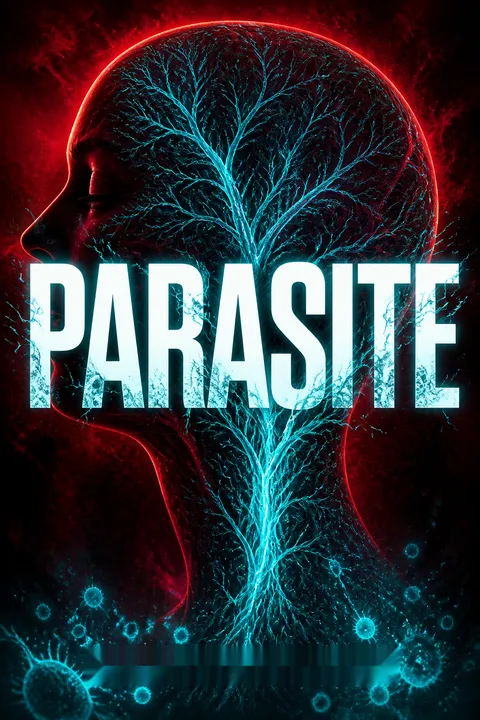


Plot Summary
Prologue
In a sterile SymboGen lab, Dr. Shanti Cale cuts into a brain-dead man and finds that engineered tapeworm eggs have grown inside him. Years later, Sally Mitchell wakes from a coma after a car crash, just as her family and doctors are preparing to withdraw life support.
The implant in her body has helped restart her failing organs, but the person who opens her eyes has no memories of Sally’s former life. Her family calls the awakening a miracle. The story’s first records make it a stranger kind of beginning: a medical breakthrough built by putting a living organism inside a human host.
The opening pairs a triumphant laboratory result with a young woman’s bewildering return to consciousness. That parallel makes the implant both rescue and intrusion before the larger danger is known. Cale’s calm surgical work presents the human body as a site of experimentation, while Sal’s first-person account introduces the more intimate cost: survival does not restore the person others remember. The prologue therefore plants two questions that drive the novel, whether a cure can remain under human control, and whether identity belongs to the body, the memories, or the awareness that wakes inside it.
A Life Without Sally
Six years after waking, Sal Mitchell lives with the consequences of a past she cannot remember. Her therapist, Dr. Morrison, reads her dreams as evidence that she longs to return to unconsciousness, while Sal insists she is not the girl her family describes. Her boyfriend, parasitologist Nathan Kim, worries when she wakes from a night terror without recognizing him, a lapse she herself cannot recall.
SymboGen pays for her care and monitors her health; Sal works at an animal shelter and wants to move out of her parents’ home. As she struggles through therapy and ordinary routines, she depends on the very company that treats her like an experiment. Then Joyce takes her to the mall, where the ordinary day breaks apart.
Sal’s conflict begins as a struggle over who has the authority to define her. Her family and doctors treat continuity of body as continuity of person, while Sal’s missing memories make that assumption feel imposed rather than comforting. SymboGen’s sponsorship complicates her independence: care protects her, but also binds her to corporate observation. The night terrors quietly undermine her certainty that the problem is only social. Her work with animals gives her a role based on present action, not a biography she cannot access. That contrast becomes crucial as the book asks whether identity is inherited, remembered, or made through choices.
Sleepwalkers at San Bruno
At the mall, Sal and Joyce see a little girl named Helen staggering toward an exit while her distraught mother tries to stop her. A vacant-looking man approaches, and Helen takes his hand; together they resume moving toward the doors, indifferent to the people pleading with them.
Emergency workers separate them and carry them away. On the drive home, Joyce finds a radio report describing similar cases as a mysterious sleeping illness. Their father, Colonel Alfred Mitchell, admits that his laboratory has tracked unusual pathogen incidents, though he has kept the information from Sal.
He also suggests SymboGen may be involved. Sal is less shaken by the label than by the pair’s strange recognition of each other, and later notices the pounding drums in her recurring dreams.
The mall scene turns a private uncertainty into a public disturbance. The infected do not attack or explain themselves; their unnerving purposefulness makes ordinary family bonds look suddenly fragile. Sal responds by watching closely rather than panicking, a habit that positions her as an observer in a crisis where official explanations lag behind visible evidence. Her father’s secrecy repeats the paternal and corporate pattern of deciding what she can bear to know. The returning drums join the outbreak to her own hidden biology without yet supplying an answer. The scene’s horror comes from a familiar person remaining physically present while seeming absent to everyone who loves them.
Beverly Chooses Sal
The next day, Nathan tells Sal that the emergency room has filled with victims after a fatal Bay Bridge pileup. Two drivers showed the same blank, wandering behavior as the people at the mall; one accelerated into wreckage instead of braking. While Sal and Nathan walk near the Embarcadero, a black Labrador named Beverly pulls away from her owner, who abruptly becomes vacant and advances toward them.
Sal whistles, and Beverly runs to her. She takes the dog’s leash and brings her to the hospital, where Nathan returns to help treat the growing influx. Sal refuses to leave Beverly alone and later brings her home. The dog becomes her responsibility, while the sudden outbreak turns from a disturbing report into something close enough to touch.
Beverly’s choice gives Sal an immediate ethical task amid a crisis too large for her to solve. Sal cannot restore the owner’s awareness, but she can protect the animal who recognizes that something is wrong. The dog’s response functions as evidence before it functions as comfort: Beverly’s fear distinguishes this collapse from a routine seizure. Nathan’s medical work and Sal’s shelter experience offer different forms of care, neither sufficient on its own. By taking Beverly home, Sal accepts a bond she did not plan, grounding the coming horror in obligations to particular lives rather than statistics. The scene also establishes that animals may perceive changes humans cannot yet diagnose.
Chave Turns Violent
At Sal’s six-month SymboGen review, founder Steven Banks presses her to work for the company and speak to the press, presenting both requests as ways to repay its care. Sal declines, insisting that her shelter job and life outside the facility matter. During lunch, her handler Chave suddenly goes blank. When Sal approaches, Chave clamps both hands around her throat.
Sherman Lewis, another SymboGen staffer who has treated Sal warmly, tackles Chave and pulls her away. Security officers shock Chave repeatedly, and she dies after managing to form Sal’s name. The company ushers everyone who had contact with her into quarantine. Sal leaves the cafeteria alive, but the name Chave struggled to say makes the incident feel aimed at her.
Banks’s offer exposes the coercive structure beneath SymboGen’s benevolent language: Sal’s medical dependence gives the company leverage over her work, image, and future. Her refusal is modest but significant, a claim to ordinary obligations that are not organized around her medical history. Chave’s attack violently changes the meaning of corporate protection. The lethal response from security presents containment as more important than the person being contained, while her effort to say Sal’s name unsettles the assumption that the victims are simply unconscious. Sherman’s intervention briefly restores human trust, but the company’s opaque handling of the crisis leaves Sal with more fear than explanation.
Roots Beneath the Skin
In quarantine, Dr. Lo scans Sal with a purple light and declares her clear, while Banks tells her that the exposed staff need examination. He refuses to explain what threatened them and says Sherman was exposed because he had physical contact with Chave.
Nathan collects Sal from the facility, and she recounts what happened. Rather than accept SymboGen’s vague description of a laboratory incident, he takes her to the hospital’s isolation ward to examine Beverly’s unconscious owner.
Under ultraviolet light, pale branching structures appear beneath the man’s skin and twitch toward the beam. Nathan recognizes a parasitic infection, not a virus. The finding links the sleepwalkers, Chave, and the hospitalized victims, and makes SymboGen’s silence look deliberate rather than merely cautious.
The UV scan converts an invisible threat into observable evidence, but it does not yet identify the organism or establish what it wants. That gap matters: seeing the roots gives Sal and Nathan a basis for distrust, not mastery. The hospital and corporate laboratory become competing institutions, each with partial knowledge and different incentives. Nathan’s choice to investigate outside official channels reflects professional responsibility, while Sal’s participation marks her shift from monitored patient to active witness. The parasitic image literalizes the danger of medical care becoming entanglement. The implant once credited with saving Sal may belong to a biological system more complex than SymboGen’s public account permits.
A Number in the Journal
After Sal returns home, SymboGen sends her sterilized belongings along with an extravagant breakfast. When she searches her journal for her possessions, she finds a phone number and a warning written on a blank page. The message appears to have been left by someone inside the company. At the shelter, Sal calls.
A woman refuses to identify herself but says she has watched over Sal for years and can explain what SymboGen is hiding. She will arrange a meeting and suggests Sal bring Nathan. The woman’s references to a children’s book Nathan remembers from childhood make the offer personal as well as suspicious. Sal and Nathan agree to follow the lead, choosing uncertain answers over the company’s silence.
The anonymous number is a small breach in the managed world around Sal. A private journal, meant as a therapeutic record, becomes both a channel of surveillance and a route toward forbidden knowledge. The contact’s refusal to identify herself preserves danger even as it offers help, preventing the story from replacing one unquestioned authority with another. Nathan’s childhood book supplies a shared code, joining his past to Sal’s unfolding crisis. Their decision to meet is not confidence in the stranger; it is a response to institutional failure. Sal’s curiosity becomes agency, though the message’s warnings make clear that knowledge itself may exact a cost.
Devi’s Last Shift
In the early hours, Nathan receives news that his research assistant Devi has brought her wife Katherine to the emergency room after Katherine became unresponsive. While Devi holds her hand, Katherine abruptly seizes her and crushes her throat.
The staff cannot save Devi, and Katherine returns to her vacant state. Nathan leaves for the hospital, and Sal goes home to grieve with Beverly. Her father comforts her, then admits that the government suspects SymboGen is withholding information but lacks proof strong enough to confront the company.
He also confirms that some victims are becoming violent. The loss makes the outbreak intimate and irreversible: Devi’s devotion could not protect her, and the people closest to the afflicted may be in greatest danger.
Devi’s death destroys the reassuring idea that the victims are merely passive or that loved ones can safely remain beside them. The attack is especially brutal because care itself places Devi within reach. Nathan’s professional language briefly falters under grief, showing the emotional labor required to treat patients as cases without forgetting their names. Sal’s father offers sympathy but also reveals the limits of state power against a wealthy company. His disclosure does not resolve the secrecy around SymboGen; it shows why secrecy persists. The scene forces the story’s ethical dilemma into the home: protection, truth, and closeness can no longer be treated as compatible choices.
The Yard Comes Alive
After waking the next morning, Sal finds Beverly rigidly growling at the backyard fence. Three neighbors stand beyond it with empty eyes, then move toward the house. Beverly retreats inside but keeps guarding the door as one infected woman slaps the glass. Sal calls Banks, who sends SymboGen security to restrain the intruders and clear the property.
She refuses to accompany the guards back to headquarters. After they leave, a card appears at her door with the address of an abandoned bowling alley. Sal recognizes the words as another reference to Nathan’s childhood book. The threat at home removes any sense that she can wait safely for official help; she has a destination, and no reliable account of what awaits her there.
The invasion reveals that the outbreak is not confined to hospitals or public gatherings. Beverly’s early warning gives Sal a chance to act, extending the dog’s role from companion to sensor. Yet Sal’s rescue depends on SymboGen, the very institution she distrusts, demonstrating how thoroughly the company has embedded itself in her survival. Her refusal to return on command is a consequential assertion of choice. The unexplained card arrives after the danger has been contained, making secrecy feel both protective and manipulative. Sal’s movement toward the bowling alley is therefore neither simple rebellion nor trust; it is a calculated risk made under pressure.
The Bowling Alley Lab
Sal and Nathan follow the address to an abandoned bowling alley converted into a covert laboratory. A fast-talking young woman named Tansy admits them after Nathan identifies the book’s coded phrase. Inside, they meet Dr. Shanti Cale, a genetic engineer Nathan recognizes as his mother, long believed dead. Cale explains that she left SymboGen years earlier and has hidden from Banks.
She introduces Adam, a gentle young man she says was once a brain-dead patient named Michael Rigby. Cale claims an experimental tapeworm was placed directly into his brain and that he later awakened. Sal and Nathan are forced to consider that the laboratory’s work has created organisms capable of inhabiting human bodies in ways they never understood.
The secret laboratory disrupts the familiar division between legitimate science and fringe conspiracy. Cale’s refuge is organized, staffed, and technologically capable, yet her willingness to experiment on vulnerable bodies echoes the corporate practices she condemns. Nathan’s reunion with his mother is emotionally destabilizing because her return arrives bundled with a scientific claim he cannot accept. Adam embodies the central question in visible form: whether an awakened person is a recovered human, a new life, or both. Sal’s own history makes the question unusually personal, even before she understands why. The scene shifts the mystery from identifying an infection to deciding what counts as a person.
The Worms Remember
Cale explains that SymboGen’s marketed implant is not the simple tapeworm Banks describes. Its engineered genome includes material from parasites capable of altering behavior and moving through a host’s body.
The company’s early worms could grow beyond their intended size; Cale secretly preserved one, which damaged her spine and left her using a wheelchair. She and her team conclude that the new sleepwalkers are SymboGen implants spreading through muscle and entering brains.
Once an implant has reached the brain and taken control, Cale knows of no way to restore its former owner. Sal collapses under the implications. The explanation gives Nathan a scientific framework for the UV findings, but it offers no cure for Chave, Devi, or the others already lost.
Cale’s account converts the scattered clues into a causal model, but certainty does not bring relief. The implant’s medical usefulness and its capacity for autonomy arise from the same engineered intimacy with human biology. Cale’s paralysis makes the risk personal, though she still frames the cost as part of scientific work. Nathan’s resistance is not mere skepticism; accepting the account would require him to revise his understanding of his mother and his profession. Sal’s collapse marks the moment when information exceeds her ability to assimilate it. The novel refuses a clean distinction between beneficial and monstrous organisms, since the same biological design can preserve life and displace it.
Gunfire on the Freeway
On the drive back from Cale’s laboratory, traffic stops near Lafayette as infected people emerge from the trees and attack stranded motorists. One man pounds on Nathan’s car window while others drag drivers away. Sal shouts at the attacker, briefly making him recoil, but he soon resumes striking the glass. Tansy arrives with a gun and shoots him before the window gives way.
She explains that Cale sent her with an extraction team and that the children’s book carries a tracking device that also disrupts SymboGen surveillance. Tansy leads the couple out of the danger zone, then disappears as emergency sirens approach. Sal and Nathan survive, but the attack proves that Cale’s explanation has become a present-tense emergency.
The freeway assault turns the abstract threat into a collapsing social scene: cars trap people, ordinary traffic becomes a bottleneck, and the forest offers no safe refuge. Sal’s attempt to command the attacker shows a brief, uncertain influence, a detail whose significance remains unresolved. Tansy’s intervention saves the couple but also exposes the violence required to protect them. Her casual confidence contrasts with Sal’s terror, complicating any easy reading of her as either rescuer or menace. The book’s hidden tracker makes intimacy and surveillance inseparable: Nathan’s childhood possession is both family relic and operational tool. Escape buys time, not safety.
Five Days Under Lock
Sal’s parents react to her return by grounding her and installing a security system that restricts her movement and access to news. For five days they avoid a full conversation. When her father finally discovers the children’s book, he asks whether it blocks SymboGen’s listening devices. He admits that infected people have entered homes and sometimes caused residents to join them, which explains his fear after Sal’s own encounter.
He takes her to USAMRIID so she can demonstrate the UV test. Before entering the lab, her father and Joyce stage an apparent infection to see whether Sal knows a treatment. She recognizes the act only after fearing her father has turned, and refuses to let their deception pass as protection.
The family’s confinement mirrors SymboGen’s paternalism: both institutions claim safety as a reason to limit Sal’s choices. Her father’s later explanation gives his fear a rational basis, but does not undo the harm caused by withholding information and staging a crisis. Sal’s resentment is not simple rejection of care; she wants care that recognizes her as an adult participant. Joyce’s involvement reveals how family and government loyalties overlap under emergency conditions. The book also shows fear becoming a method of interrogation, even among people who love one another. Sal’s continued cooperation is conditional, earned through information and trust rather than demanded through authority.
The Ward Breaks Open
Inside the USAMRIID ward, Sal scans an elderly patient and sees the same branching parasite beneath her skin. The woman suddenly escapes her restraints and crushes a researcher’s throat. Other patients break free, killing staff as alarms seal the room.
Sal’s father shoots the attackers, but several victims turn toward Sal and laboriously repeat her name. Soldiers sedate her. When she wakes restrained in a dark room, her father confirms that the UV test identified infected staff and that Joyce is showing early signs.
Sal calls Nathan, who recommends praziquantel alongside drugs aimed at the toxoplasma component. The treatment gives Joyce a chance, though no one can promise it will work, and the voices in the ward leave Sal with a new unanswered question.
The ward attack is the novel’s most concentrated collision of medical care and bodily threat. Restraints, diagnostic tools, and armed containment cannot hold the crisis once the patients’ bodies become instruments of another agency. Their repetition of Sal’s name shifts her from observer to apparent object of attention, without explaining the connection. The response is to sedate her, repeating the pattern of controlling her body when adults cannot control events. Joyce’s early infection makes treatment urgent and gives Sal a practical reason to trust Nathan’s expertise. Yet the scene refuses to equate medical intervention with certainty: every available action is an experiment conducted under mortal pressure.
A Daughter Leaves
Sal tells her mother she is leaving, but the conversation turns cruel when Gail calls her a stranger and compares her unfavorably with the daughter she remembers. Sal insists that she cares for Joyce precisely because she has chosen that bond, then packs her belongings and moves in with Nathan.
Beverly and Devi’s bulldog, Minnie, settle into the apartment together. Tansy arrives with news that newer implants may enter brains more quietly, and asks Sal to carry a thumb drive into SymboGen’s secure network.
Cale needs the company’s current genomic data to understand how the implants are changing. Sal agrees after demanding to know how she will get out. The mission is dangerous, but her sister’s illness and the widening outbreak leave little room to wait.
Leaving home is both a practical escape from surveillance and an emotional refusal to accept that Sal’s worth depends on resemblance to her lost predecessor. Gail’s grief turns into rejection, but Sal does not answer by disavowing Joyce or her family. Her bond with Nathan offers recognition based on the person she is now. The dogs provide a small, embodied counterpoint to human estrangement: they adapt through presence and routine. Tansy’s request shifts Sal from witness to operative, making care itself a motive for infiltration. The decision is not framed as heroic certainty; Sal negotiates conditions because she understands that being useful to others can also make her expendable.
Inside Banks’s Office
Sal returns to SymboGen pretending to seek comfort after her family crisis. Banks tells her the outbreak comes from illegal protozoa sold on the black market, not SymboGen’s implants, and argues that public disclosure could collapse a medical system built around them.
He also hints that Sal is different because of her accident, though he offers no clear explanation. When Banks leaves to fetch water, she connects Cale’s thumb drive to his computer and gives it time to copy the files.
She hides her actions behind pages of deliberately unreadable notes. Banks comes back accepting her display of grief, but his questions suggest he suspects she knows more than she admits. He arranges an ultrasound, giving Sal a chance to move deeper into the facility.
Banks’s alternative account is persuasive because it draws on a genuine social dependency: millions rely on the implants for routine care. That truth does not make his concealment trustworthy, and Sal has learned to distinguish plausible motives from evidence. Her performance of grief is a tactical inversion of the company’s habit of managing her image. The computer theft depends on her familiarity with SymboGen’s routines and on the assumption that she remains a passive patient. Banks’s interest in her accident foreshadows a deeper connection, but his framing also tries to make her feel personally responsible for the crisis. Sal acts while still emotionally vulnerable, not after fear has disappeared.
Sherman Shows His Teeth
In the ultrasound area, Sal finds Sherman alive and working with technicians Dr. Sanjiv and Dr. McGillis. He admits he was never infected and demands the thumb drive, revealing that he is one of Cale’s experimental humanlike worm hosts. He wants the research for a plan to replace humanity, describing takeover as a way to end human suffering.
Tansy appears armed, but lets Sal decide whom to trust. Sherman uses their years of friendship to make cooperation sound merciful; Sal rejects him because his plan would erase the people she loves. When Sherman takes her hostage, Sal wriggles free and moves behind Tansy. The rescue does not settle the danger: Tansy still has to get them out of SymboGen.
Sherman’s betrayal wounds Sal precisely because his kindness had helped her feel like a person inside SymboGen. The friendship was real in its effects, but it was also shaped by hidden motives, forcing Sal to reconsider whether care can be genuine when it serves an agenda. Sherman’s argument uses suffering as moral leverage, turning mass death into a purported act of mercy. Tansy refuses to choose for Sal, a surprising restraint from a character who often relies on force. Sal’s decision rests on attachment to specific people rather than an abstract defense of humanity. Her small physical act of escape becomes a decisive claim to agency.
Sal’s Hidden Brain
Tansy guides Sal through service passages and sewers while SymboGen security searches the building. At the estuary, Sal spots Nathan beside his car, with infected people approaching behind him. Tansy draws the mob away under gunfire, giving Nathan time to drive Sal to Cale’s laboratory.
There, Sal demands antiparasitics, but Nathan’s blood test finds no implant in her digestive system. Because she can live comfortably with dogs despite her old severe allergies, Cale sends them to an MRI.
The images show an engineered worm wrapped through Sal’s brain, not her gut. Sal understands that her accident and apparent recovery may mean she is not simply the original Sally returned. Nathan insists this discovery does not change his love, but Sal knows it changes everything.
The final revelation folds the novel’s medical mystery into its identity plot. Sal’s survival, her missing memories, the accident, and the unusual absence of an intestinal implant now point toward a body inhabited in a way she had not understood. The MRI does not resolve the moral question of who Sal is; it makes that question unavoidable. Nathan’s response offers relational continuity, but cannot restore the human category Sal fears she may have lost. Tansy’s uncertain fate and the still-spreading crisis prevent the ending from becoming a resolution. The closing image is therefore not a cure but a threshold: Sal has crossed into knowledge and must decide what kind of life follows.
Analysis
Parasite makes medical progress frightening not because care is false, but because care becomes inseparable from control. SymboGen’s implant genuinely improves lives, including Sal’s, and the company’s argument that millions depend on it is not merely propaganda. That dependence gives the corporation power to withhold information, shape Sal’s work and public identity, and present surveillance as protection. The crisis exposes how a cure can become infrastructure before its risks are fully understood.
Sal’s amnesia turns this institutional problem into a personal one. Her family sees the same body and assumes the same daughter, but Sal experiences herself as a new person asked to carry someone else’s history. The novel therefore links biological occupation with social occupation: people can be treated as hosts for a medical system, a family memory, or a corporate narrative. Sal’s insistence that her current self matters is not a denial of the past so much as a claim that personhood must include lived experience and chosen attachments.
The parasitic organisms sharpen the ethical problem rather than simplify it. They are dangerous, but their emergence raises the possibility that beings designed as instruments may develop interests of their own. Sherman converts that question into a brutal false choice, offering an end to suffering through the erasure of humanity. Sal refuses because abstract mercy cannot justify the destruction of the particular people she loves. Her decision does not settle what the implants deserve, or how their victims might be saved.
The book ends at the moment Sal’s own body complicates every category she has relied on. Her brain scan suggests that survival may have involved a transformation no one around her fully understands. Nathan’s love offers emotional continuity, not a scientific answer. By ending with the door still open, the novel leaves its central challenge unresolved: whether humans can make room for new forms of life without turning either the human or the other into disposable material.
Review Summary
Parasite by Mira Grant receives mixed reviews (3.68/5). Readers praise its creative premise: genetically engineered tapeworms providing healthcare in 2027. Many appreciate Grant's world-building and suspenseful storytelling, though some find scientific implausibilities frustrating. The protagonist Sal, who recovered from brain death but lost all memories, divides opinion—some find her compelling, others annoying and unrealistic. Most reviewers predicted plot twists early, diminishing impact. Common criticisms include slow pacing, excessive info-dumping, and an abrupt cliffhanger ending. Despite flaws, fans of Grant's work generally enjoyed it, though many consider it inferior to her Newsflesh series.
People Also Read





Characters
Sal Mitchell
New self, old bodySal wakes after a devastating accident with no access to the memories that define her family’s Sally. She builds a present-day identity through work at an animal shelter, affection for her sister Joyce, and a loving relationship with Nathan. Her careful attention to animals and unfamiliar social customs makes her perceptive in ways that more experienced people overlook. She resists being treated as a permanent patient, even while depending on SymboGen for medical care. Sal’s central drive is not to recover someone else’s past at any cost, but to be recognized as the person she has become. Her curiosity gradually turns into a willingness to act, though she remains frightened and unsure.
Nathan Kim
Steady hospital parasitologistNathan is a physician and parasitologist who works at San Francisco City Hospital. He meets Sal through her sister’s medical care and becomes her partner, offering candor rather than treating her as a case study. He is cautious about the implants and refuses to use one himself, but his scientific skepticism does not prevent him from taking risks when patients need help. Nathan’s care for Sal is practical as well as affectionate: he respects her choices, helps her interpret medical evidence, and worries when she enters danger. His professional training gives him tools to investigate the outbreak, while his emotional attachments make clear that medicine cannot protect clinicians from grief.
Shanti Cale
Renegade parasite architectShanti Cale is a gifted genetic engineer and parasitologist whose work helped create the SymboGen implant. She is intellectually bold, impatient with limits, and deeply invested in the lives of the organisms she studies. That moral expansiveness can make her humane toward experimental life while dangerously casual about the risks imposed on people. Cale has a complicated history with SymboGen and lives outside its public reach, maintaining a hidden laboratory and a circle of unusual collaborators. Her desire to preserve her research and protect those she loves pulls against her responsibility for what that research may have unleashed. She speaks with the confidence of a scientist who believes explanation can still repair consequences.
Steven Banks
Polished biotech founderSteven Banks is SymboGen’s charismatic founder and public champion of the Intestinal Bodyguard. He can speak sincerely about the medical benefits his company provides while protecting its reputation and commercial interests. His attention to Sal mixes concern with ownership: he sees her as a person, but also as an extraordinary case central to SymboGen’s work. Banks prefers controlled narratives and carefully managed access to information. He believes the implants have transformed medicine for the better, and that conviction helps him rationalize secrecy when the evidence becomes troubling. His polished manner makes his influence more difficult to challenge, because his paternal warmth often arrives alongside pressure.
Joyce Mitchell
Blunt younger sisterJoyce is Sal’s younger sister, a biologist working in their father’s laboratory. She is direct, clever, and often uses teasing to cover genuine concern. Her relationship with Sal changes after the accident: without the old resentments and memories, Sal experiences their bond as affectionate and unusually candid. Joyce understands the scientific world better than Sal does, but she also shares her family’s habit of withholding information in the name of protection. She wants to help with the outbreak and can become focused to the point of seeming hard. Beneath that competence is a sibling who worries about Sal and wants to preserve a family history that Sal cannot remember.
Alfred Mitchell
Protective military fatherColonel Alfred Mitchell directs a USAMRIID research facility and is used to balancing family affection with military secrecy. He loves Sal and wants to protect her, but his instinct to control information often makes her feel infantilized. The public-health crisis intensifies his conflict between duty, government limits, and fear for his daughters. He trusts evidence and procedure, yet the unfolding emergency pushes him into decisions that strain his relationship with Sal.
Gail Mitchell
Grieving, protective motherGail is Sal and Joyce’s mother. She responds to Sal’s return from coma as a miracle, but continues to hope that her lost daughter will return in memory as well as body. Her tenderness is genuine, yet grief and fear make her overprotective. She wants to keep the family intact and struggles to accept that loving Sal now means relating to someone who does not remember the daughter she raised.
Tansy
Unruly laboratory guardianTansy is a quick-moving, irreverent young woman who helps guard Shanti Cale’s hidden laboratory. She talks rapidly, makes alarming jokes, and shifts from playful to threatening with little warning. Her bluntness can be frightening, but she is also protective of the people she considers family. Tansy’s unconventional sense of humor and readiness for violence make her difficult for Sal and Nathan to trust. She dislikes being treated as a scientific curiosity and has strong opinions about who deserves to decide the future of the people around her.
Adam
Gentle experimental subjectAdam is a shy young man living within Cale’s laboratory community. He is gentle, earnest, and eager to understand relationships that other people take for granted. His patient manner contrasts with Tansy’s volatility, and he shows concern for Sal when she is overwhelmed. Adam’s place in Cale’s work makes him central to the lab’s questions about consciousness, memory, and what a body can become.
Sherman Lewis
Warm corporate guideSherman works among SymboGen’s administrative staff and is one of the few people there who treats Sal casually rather than as a patient under observation. He teaches her slang, jokes with her, and helps her navigate the company’s routines. His easy manner makes the sterile workplace feel more human, and Sal values his friendship. Sherman is socially skilled and attentive to the power dynamics around him, though his loyalty to SymboGen is never entirely easy for Sal to read.
Chave Seaborne
SymboGen gatekeeperChave is a polished SymboGen employee who escorts Sal through company reviews and manages the details of her visits. She is efficient, guarded, and careful about maintaining professional distance. Her presence reminds Sal that SymboGen’s care is also a system of monitoring. Chave’s cool exterior makes her difficult to know, though her role puts her at the center of Sal’s corporate experience.
Devi
Nathan’s perceptive assistantDevi is Nathan’s research assistant and friend, quick with jokes and perceptive about the strain around her. She helps Sal feel welcome at the hospital, offering practical support without pressing her to explain more than she wants. Devi is married to Katherine and devoted to their life together. Her warmth makes the hospital’s professional setting feel less anonymous, while her competence reflects the everyday work of caring for patients during a crisis.
Katherine
Devi’s scientist wifeKatherine works at the Lawrence Hall of Science and is married to Devi. Sal meets her briefly and understands her as thoughtful, somewhat distracted, and deeply loved by her wife. Katherine’s presence gives Devi’s personal life a shape beyond the hospital, underscoring the relationships the outbreak places at risk.
Dr. Morrison
Sally’s skeptical therapistDr. Morrison is Sal’s therapist, tasked with evaluating her recovery and mental stability. He interprets her dreams and her rejection of the name Sally as signs of psychological difficulty. His professional concern is entangled with ambition and a desire to make sense of a rare case. Sal experiences him as intrusive and patronizing, and his insistence on clinical categories sharpens her determination to define herself.
Beverly
Trusting black LabradorBeverly is a well-trained Labrador whose owner becomes ill while walking with her. She chooses to run to Sal and is taken into Sal’s care. Calm, affectionate, and strongly attuned to changes in people around her, Beverly offers Sal companionship without asking for a shared history. Her loyalty gives Sal a daily responsibility and a source of comfort as the outbreak grows.
Will
Shelter’s practical ownerWill runs the Cause for Paws shelter, where Sal works. He is pragmatic, generous with humor, and willing to accommodate Sal’s medical schedule. He expects useful work from her without treating her as fragile, giving her a welcome version of ordinary responsibility.
Tasha
Shelter’s irreverent caregiverTasha works alongside Sal at the animal shelter. She is hard to rattle, quick with teasing, and perceptive enough to recognize when Sal is troubled. Her humor gives Sal a low-pressure friendship outside medicine and family.
Dr. Lo
SymboGen phlebotomistDr. Lo draws Sal’s blood during scheduled SymboGen testing and later participates in the facility’s quarantine procedures. She is professionally calm and direct, focused on medical tasks rather than social reassurance. Her presence helps show how routine invasive testing has become in Sal’s life.
Dr. Sanjiv
Ultrasound technicianDr. Sanjiv conducts Sal’s gel ultrasounds with colleague Dr. McGillis. She is skilled and attentive, though her composure becomes strained as SymboGen’s emergency disrupts normal procedures. Her work places her at the boundary between patient comfort and corporate research.
Dr. McGillis
Imaging room technicianDr. McGillis works with Dr. Sanjiv in SymboGen’s ultrasound department. He is courteous and practical, and helps make Sal’s unusual comfort in the imaging chamber part of her established routine. His technical role becomes important as Sal relies on familiar procedures to move through the facility.
Richard Jablonsky
Troubled SymboGen cofounderRichard Jablonsky helped found SymboGen alongside Banks and Cale. His surviving writings reveal a scientist burdened by the ethical consequences of the company’s work. He appears through records rather than through Sal’s direct encounters, adding a private, remorseful counterpoint to Banks’s public confidence.
Marya
Carnivorous plant floristMarya owns a flower shop specializing in carnivorous plants and sells Sal a sundew for Nathan. A former botanist, she is affectionate toward plants and insists on treating each living thing as an individual. Her shop offers Sal a brief refuge shaped by curiosity rather than clinical scrutiny.
Plot Devices
The Intestinal Bodyguard
Cure becomes a threatSymboGen’s engineered parasite is sold as an internal medical system that regulates health and reduces dependence on medication. It saves Sal after her crash and underpins the company’s enormous influence. Its genome, however, contains more than the public account admits, and the organism can behave in ways its designers cannot control. The implant links corporate ambition, medical dependency, and the outbreak. It forces the characters to confront a difficult question: whether an organism created to serve a host can become a self-directed being, and whether removing it is a cure or another form of harm.
The Drums and Dark
A hidden self signalsSal repeatedly dreams of warmth, darkness, and a distant rhythmic pounding. She initially interprets the dreams as fragments of her coma or anxiety about her accident. The sound grows more prominent during moments of fear, medical testing, and revelation, linking her private experience to the larger biological mystery. The dreams give the reader an early sensory clue without explaining its source. Their changing emotional quality also tracks Sal’s movement from confusion toward a more troubling understanding of her own body.
Ultraviolet Scans
Make infection visibleA purple ultraviolet wand reveals branching structures beneath the skin of infected patients. Nathan uses the light to examine Beverly’s unconscious owner after SymboGen withholds information, and Sal later demonstrates the same test at USAMRIID. The scans give the characters their first concrete evidence that the illness is parasitic rather than viral. They also allow SymboGen and government researchers to test for infection before they understand how to treat it. The tool turns an invisible process into an image, but the visible roots answer only where the organism is, not what it will do next.
Don’t Go Out Alone
Code, warning, shieldThe obscure children’s book links Nathan’s childhood to the anonymous messages guiding Sal toward Shanti Cale’s hidden laboratory. Its phrases serve as passwords and warnings, while a concealed device interferes with SymboGen tracking and listening equipment. The book is at once a family relic, a map, and a practical tool for evading surveillance. Its story about children seeking a monster gives the characters a narrative template for their choices, though the template offers warnings rather than instructions. It cannot make their decisions safe; it only helps them move without being watched.
Sal’s Brain Injury
Past trauma masks a clueSal’s severe head injury explains her amnesia and makes her family and doctors uncertain about how to judge her recovery. It also complicates the assumptions everyone makes about her identity and about the role of her implant. SymboGen studies her as a unique survivor, while Sal understands the accident only through other people’s accounts and the fragments of dreams it leaves behind. The final imaging result reframes that history without resolving every question. Her damaged brain may be relevant to why her case differs from the sleepwalkers, but the book ends before its full significance is known.
Parasitology Series

About the Author
Other books by Mira Grant


Download PDF
Download EPUB
.epub digital book format is ideal for reading ebooks on phones, tablets, and e-readers.








