
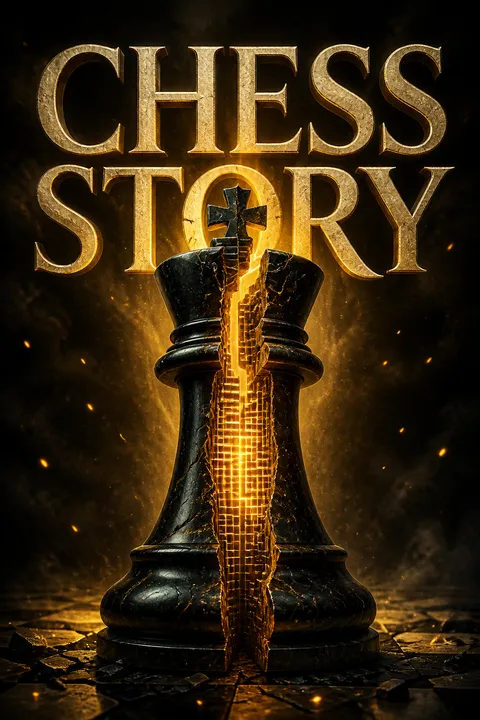


Plot Summary
The Champion at Sea
As a passenger steamer leaves New York for Buenos Aires, the narrator3 learns that Mirko Czentovic,2 the world chess champion,2 is aboard. A friend8 describes a man whose extraordinary skill at chess exists beside near-total ignorance of other subjects. Czentovic2 keeps to his cabin, where he studies games, and sidesteps educated passengers who might question him.
The narrator,3 fascinated by people consumed by a single pursuit, decides to get close to him during the twelve-day voyage. His first efforts fail: Czentovic2 crosses the deck briskly and refuses the social spaces where the other travelers gather. The champion’s2 absence becomes a challenge of its own, and the narrator3 devises a way to draw him toward a chessboard.
The opening makes curiosity the narrator’s engine, but it also defines the limits of that curiosity. He wants to inspect Czentovic as a psychological specimen, while Czentovic controls access by refusing conversation. Chess is already more than a game: it is the narrow territory in which the champion is legible and powerful. The narrator’s plan to lure him with play makes observation less passive. To understand Czentovic, he will have to create an encounter, and the encounter will expose more than the champion’s talent.
The Parish Chess Prodigy
The narrator’s friend8 recounts how Czentovic2 grew up after his bargeman father died. A village parson5 took in the slow, taciturn boy, who struggled with lessons but obediently completed chores. One winter evening, the parson5 left an unfinished chess game when called to a dying parishioner.
Czentovic2 took the vacant seat and beat the constable,9 then defeated the returning parson.5 The parson5 brought him to a nearby chess club, where Czentovic2 soon overcame its strongest players.
Count Simczic6 funded his training in Vienna, and the boy’s single talent carried him to the Hungarian title and then the world championship. Though unable to play blind, Czentovic2 defeated more imaginative rivals and grew proud, calculating, and eager to charge for his fame.
Czentovic’s rise unsettles the assumption that intellectual breadth is the same as intelligence. His mind is extraordinarily capable within chess and resistant elsewhere; neither quality cancels the other. The parson’s discovery gives that isolated talent an institutional path, while the count’s money turns it into a profession. Czentovic’s later pride is not simply a flaw added to genius. His winnings and public victories offer the measure of worth he understands, so he guards his status with the same single-mindedness he applies to the board.
McConnor's Paid Challenge
To attract Czentovic,2 the narrator3 sits at a chessboard with his wife. Scottish engineer McConnor4 joins them, bringing the forceful competitiveness of a man accustomed to winning in business. When Czentovic2 glances at their play and walks away, McConnor4 takes the slight personally. He tracks the champion2 down, pays his fee, and arranges a group match.
Czentovic2 defeats the amateurs in twenty-four moves, barely acknowledging them. McConnor,4 stung by the loss and the champion’s2 contempt, insists on a rematch. The group reaches a better position the next day, but their apparent chance to promote a pawn is a trap they cannot solve. As McConnor4 reaches for the piece, a pale, unfamiliar passenger catches his arm and prevents the move.
McConnor’s money makes the first match possible, but his wounded pride supplies its momentum. He treats a chess loss as a public verdict on his authority, so Czentovic’s indifference provokes him more than the defeat itself. The narrator initially regards this stubbornness as useful bait; the second game shows its cost, as the group’s thinking narrows under pressure. The stranger’s intervention breaks that pattern at the exact moment when confidence might have turned into disaster. A new kind of intelligence enters the contest, one that can read both the board and the amateurs’ danger.
The Stranger's Intervention
The stranger1 explains that promoting the pawn would let Czentovic2 force a winning attack. He gives the amateurs a safer line, predicts Czentovic’s2 replies, and guides them into a draw. For the first time, the champion2 sits to think; he has recognized a serious opponent among the passengers. McConnor4 eagerly proposes a direct match, but the stranger1 retreats, saying he has not played for more than twenty years.
The narrator3 later finds him reading on deck and learns that he is Dr. B.,1 an Austrian lawyer. When the narrator3 asks him to face Czentovic2 the following day, Dr. B.1 agrees only after hesitation and warns that he may not be able to play a normal game. He then offers to explain why chess is dangerous for him.
The draw changes the social geometry of the ship. Until now, Czentovic has dictated the terms: he decides who is worth playing and how long they must wait. Dr. B. unsettles that authority without seeking recognition, then withdraws as soon as the others turn his skill into a spectacle. His reluctance matters as much as his calculation. The narrator’s invitation draws him back toward a past he has kept at a distance, setting up the story’s central contrast between chess as controlled expertise and chess as a condition that can seize control.
Four Months Without Time
Dr. B.1 explains that he and his father managed the finances of monasteries and members of Austria’s imperial family, quietly helping protect assets from Nazi seizure. After the Gestapo arrested him on the eve of Hitler’s occupation of Vienna, interrogators tried to make him reveal what they knew he had handled.
Instead of sending him to a camp, they confined him alone in a hotel room stripped of books, paper, clocks, and human contact. After two weeks, interrogations began, and every return to the same room drove him to replay his answers and fear that he had endangered others.
Months of this sameness eroded his concentration. Near collapse, he almost offered the Gestapo everything he knew. During a long wait outside an interrogation, he noticed a book bulging from an officer’s coat pocket.
The Gestapo’s method attacks Dr. B. through the conditions of thought rather than visible injury. Without news, objects, or another person, he cannot test his fears against reality; each interrogation therefore continues inside him long after it ends. His professional discretion becomes a burden, since every answer might expose someone else. The book’s appearance interrupts the closed circuit of speculation with the possibility of another mind and another subject. The scene turns reading into a material need, not a cultural luxury: a printed page may preserve the prisoner’s ability to think beyond his own fear.
The Book in the Coat
Dr. B.1 steals the book and carries it back to his cell beneath his clothes. It is an anthology of master chess games, not the literature he had hoped to find, but he uses his checked bedspread as a board and shapes pieces from bread crumbs. By learning the notation, he reconstructs the games until he can replay all 150 in his mind.
Their planned sequence gives his days structure and sharpens his concentration during Gestapo questioning. For a time, the borrowed games protect him from the cell’s emptiness. Then repetition strips them of surprise. With no new book or opponent available, Dr. B.1 begins inventing games and tries to play both sides himself, seeking a fresh task inside the same confined world.
The manual saves Dr. B. by giving his attention an object outside the prison’s immediate violence. The bedspread, crumbs, and notation show how resourcefully he converts deprivation into a working environment. Yet the refuge carries a structural danger: the master games are finite, and their reassuring repetition cannot remain new. When Dr. B. turns from replaying other minds to competing against himself, he removes the separation that made chess safe. The same discipline that restores his concentration now prepares an impossible mental split, with no external board or opponent to impose limits.
Two Minds, One Board
Dr. B.1 describes how self-play first demanded intense concentration, then became a contest between imagined white and black selves. Each side wanted to win, so he rushed from one game into another, lost sleep, forgot meals, and grew feverishly thirsty. During a manic episode, he attacked a guard and smashed a corridor window, badly cutting his hand.
He woke in a hospital, where a sympathetic doctor10 shielded him from another return to Gestapo custody. Dr. B.1 was released after signing a promise to leave Austria within fourteen days. The doctor’s10 warning that the chess obsession could recur stayed with him. On the ship, seeing the passengers’ real board made him forget, for a moment, that chess could again become dangerous.
The breakdown grows from a paradox: chess requires two minds with separate intentions, but Dr. B. forces both into one consciousness. The game’s rules remain stable while his sense of self fractures under the effort of maintaining opposing plans. His bodily symptoms make the cost concrete: thirst, exhaustion, injury. Release ends the Gestapo’s custody, but not the learned vulnerability. The real board aboard ship reconnects his abstract training to physical play, and the doctor’s warning gives Dr. B. a reason to fear not only defeat, but the pleasure and speed that precede losing control.
One Game, No More
Dr. B.1 tells the narrator3 that he intervened because the amateurs’ game had suddenly reminded him that chess could be played between two people at a real board. He had acted instinctively, absorbed by the familiar positions before he understood the situation. Now that he knows Czentovic2 is the world champion,2 curiosity draws him toward a test: he wants to learn whether his prison games were genuine chess or a fevered imitation.
He agrees to play once, insisting that the encounter must not become a series. The narrator3 passes on that condition, but the crowd sees only the possibility of an unknown talent challenging the champion.2 The next afternoon, the players take their places as passengers gather to watch.
Dr. B.’s decision is motivated by an unresolved question about his own mind, not by ambition or public acclaim. He wants to distinguish skill from illness, but the test he chooses is also the trigger most likely to blur that distinction. His one-game boundary is an act of self-protection, and the narrator’s role becomes ethically complicated: he has secured the encounter, yet cannot control what it will awaken. The crowd’s excitement reduces a private experiment to entertainment, echoing the way Czentovic’s professional status turns chess into a contest of spectacle.
The Board Becomes a Cell
Czentovic2 thinks slowly through the first match, while Dr. B.1 calculates quickly and explains positions during pauses. After nearly three hours, Dr. B.1 makes a decisive queen move; Czentovic2 studies it, then sweeps the pieces away and concedes. Dr. B.1 immediately accepts another game, despite his promise, and Czentovic’s2 deliberate delays begin to agitate him.
As the second match continues, Dr. B.1 mutters, paces, and eventually calls a check that belongs to a different imagined position. The narrator3 grips his arm and points to the scar from his prison injury. Dr. B.1 recognizes his disorientation, apologizes, and leaves the board. The others remain confused, but the narrator3 understands why Dr. B.1 will not play again.
The first victory is not a clean recovery or a simple triumph. Czentovic’s resignation confirms that Dr. B.’s prison training produced real skill, while the second game reveals that mastery and danger have become inseparable. Czentovic’s slow pace is a tactical choice, but for Dr. B. it recreates the suspended, uncontrollable time of confinement. The narrator’s reminder through the scar reconnects Dr. B. to his body and to the history his abstraction has begun to erase. The ending grants him self-recognition, not cure: he can stop, but only after the boundary has nearly failed.
Analysis
Chess Story sets two forms of mastery against each other. Czentovic’s2 talent is narrow, visible, and professionally rewarded; Dr. B.’s1 arises from forced isolation and carries a psychological cost that no victory can erase. Their difference is not simply genius versus madness. Czentovic2 depends on a physical board and deliberate calculation, while Dr. B.1 learned to hold positions in his mind because the Gestapo denied him objects, company, and ordinary ways to measure time. The same game that gives him structure also becomes the instrument through which his divided attention turns against him.
The novella’s political violence is strikingly procedural. Dr. B.1 is not beaten into disclosure; he is deprived of variation until his own thoughts repeat the work of interrogation. His stolen manual counters that method by introducing structure and other minds. Yet a survival strategy can become dangerous when it is mistaken for freedom. Replaying existing games keeps Dr. B.1 in the role of observer. Inventing games against himself makes him both attacker and target, with no external opponent to restore distance.
The shipboard match brings these histories into public view. McConnor4 sees a chance to recover pride, the passengers anticipate a spectacle, and Czentovic2 treats the game as paid work. Dr. B.1 seeks evidence about his own past, but winning tempts him beyond the limit he set. The narrator’s3 intervention cannot undo the danger; it can only return Dr. B.1 to the present before the game consumes him again. The final withdrawal is therefore neither defeat nor cure. It is a hard-won act of recognition, an acknowledgment that skill does not guarantee safety and that the boundary between disciplined thought and compulsion must sometimes be defended from within.
Review Summary
Chess Story is a powerful novella exploring the psychological impacts of isolation and obsession. It follows two contrasting chess players - a world champion and a mysterious man who learned chess while imprisoned by Nazis. Readers praise Zweig's masterful portrayal of the human mind under extreme circumstances. The story is seen as an allegory for the clash between fascism and democracy during World War II. Despite its brevity, the novella leaves a lasting impression, delving into themes of mental resilience, the nature of genius, and the fine line between sanity and madness.
People Also Read




Characters
Dr. B.
Cultivated Austrian lawyerDr. B. is an Austrian lawyer from a discreet, well-connected family, accustomed to protecting sensitive affairs through patience and precision. He is courteous and self-contained, but his reserve is not indifference: he feels responsibility keenly and is alert to the consequences of careless choices. His relationship to chess is unusually intense, joining analytical brilliance to a need for strict boundaries. He does not seek public recognition, and he is wary of being mistaken for a conventional competitor. The contrast between his measured manners and the speed of his mind makes him difficult for others to read, while his careful qualifications reveal someone trying to remain in command of his own attention.
Mirko Czentovic
Impassive chess championMirko Czentovic is a world champion whose exceptional chess ability contrasts with his limited education and narrow interests. Raised in a poor village, he learned to turn a rare, highly specialized talent into professional success. He is reserved around educated company and confident in the status his victories have earned him. Money matters to him without apology, and he treats chess as both a craft and a livelihood. His dependence on a physical board, rather than imagined play, marks a boundary in his abilities, but it does not diminish his practical strength. Czentovic’s calm, deliberate manner can make opponents feel dismissed before a move is played.
The narrator
Curious voyage observerThe unnamed narrator travels from New York toward Buenos Aires and becomes the story’s attentive observer. Fascinated by minds organized around a single pursuit, he initially approaches Czentovic2 as a puzzle to study. He uses his own casual chess playing to attract other passengers, then finds himself responsible for bringing Dr. B.1 into a public match. His curiosity is intelligent but not neutral: he helps create situations whose emotional risks he cannot fully predict. As the events sharpen, he shifts from spectator to protector, watching for signs that Dr. B.1 has lost contact with the present.
McConnor
Proud amateur challengerMcConnor is a Scottish civil engineer who made his fortune in oil drilling. Used to asserting himself in business, he experiences chess losses as personal affronts rather than ordinary defeats. He pays Czentovic’s2 fee because he wants a direct test, then presses for a rematch when the champion2 humiliates the group. His money makes the contest possible, but his wounded pride also intensifies it. McConnor is neither a villain nor a skilled player; he is a forceful amateur whose desire to win gives the shipboard games their urgency.
The parson
Czentovic's first teacherThe village parson takes in Czentovic2 after the boy’s father dies and tries to educate him while giving him work and a home. His daily chess games with the constable9 reveal the talent he had not found in school. Rather than dismissing the boy’s first victories, he brings him to a local club, helping a hidden ability find its first audience.
Count Simczic
Patron of the prodigyCount Simczic is an elderly chess enthusiast who recognizes Czentovic’s2 unusual promise. He provides the money for the boy’s professional training in Vienna, turning a local discovery into the beginning of an international career.
Koller
Chess talent agentKoller is an agent who arranges professional chess training for Czentovic2. His proposal connects the young player’s village reputation to the wider chess world and helps make the talent financially viable.
The narrator's friend
Czentovic's biographical sourceThe narrator’s friend recognizes Czentovic2 on the ship and supplies the history the narrator3 lacks. A keen reader of newspapers, he knows the champion’s2 rise and public reputation, giving the opening its essential context.
The constable
First chess opponentThe local constable plays evening chess with the parson5. When called upon to finish an interrupted game against young Czentovic2, he discovers that the quiet boy can defeat experienced players.
The hospital doctor
Protective physicianThe doctor who treats Dr. B.1 recognizes the political circumstances behind his collapse and responds with discretion. He provides care, explains the injury, and helps prevent the authorities from returning Dr. B.1 to the same conditions.
Plot Devices
The chessboard
A mind made visibleThe board gives the novella a shared, visible structure for conflicts that would otherwise remain internal. Czentovic2 uses its fixed squares to calculate with extraordinary precision, while Dr. B.1 first encounters chess through notation and imagined positions. The same arrangement can therefore signify professional control, intellectual refuge, or psychological danger. Its physical pieces also make shifts in power observable: Czentovic2 must sit when the amateurs resist him, and Dr. B.’s1 confusion becomes evident when he responds to a position that is not on the table. The board does not change, but the meaning each player gives it does.
The isolated hotel room
Silence as coercionThe Gestapo confines Dr. B.1 in a private room stripped of ordinary sources of stimulation. The tactic aims to make him disclose protected information by leaving him alone with repetitive thought and uncertainty. With no clock, reading material, writing tools, or conversation, he cannot mark time or test his suspicions against another person’s account. Interrogation is only one part of the pressure: the return to the unchanged room forces him to revisit every answer without resolution. The room turns mental activity into a trap and establishes why even a stolen book can become a lifeline.
The chess anthology
A borrowed mindThe stolen manual supplies Dr. B.1 with 150 recorded games, each one a sequence of decisions made by other players. He builds a makeshift board from his bedspread and bread crumbs, then learns to replay the games without physical pieces. At first, this work gives structure to days that would otherwise dissolve into solitude and helps him regain concentration. Its finite contents eventually lose their novelty, however, and the book’s success leads him toward the perilous attempt to invent games against himself. The anthology is both rescue and catalyst: it gives his mind work, then leaves him needing more.
The layered narrator
A story within testimonyThe first-person narrator3 reports the shipboard events, while other people supply the histories he cannot witness. His friend8 recounts Czentovic’s2 childhood and rise; Dr. B.1 gives the account of his arrest and the chess practice that followed. This structure keeps the central experiences intimate without pretending the narrator3 has direct access to them. It also makes listening itself consequential: the narrator3 must decide what to believe, what to ask, and when observation should become intervention. The layered account allows the reader to discover the two very different paths to chess mastery as the narrator3 does.
FAQ
Synopsis & Basic Details
What is Chess Story about?
- Psychological chess duel: Chess Story explores the psychological battle between a world chess champion, Czentovic, and a mysterious amateur, Dr. B., whose chess skills were honed during a traumatic period of isolation.
- Trauma and obsession: The novella delves into the effects of extreme isolation and the development of obsessive behaviors as a coping mechanism, using chess as a central metaphor.
- Genius and madness: It examines the fine line between intellectual brilliance and mental instability, questioning the true cost of genius and the fragility of the human mind.
Why should I read Chess Story?
- Intense psychological drama: The story offers a gripping exploration of the human psyche under duress, with a focus on the internal struggles of its characters.
- Thought-provoking themes: It raises profound questions about the nature of genius, the impact of trauma, and the power of obsession, making it a compelling read for those interested in psychological depth.
- Masterful storytelling: Stefan Zweig's elegant prose and skillful narrative techniques create a captivating and unforgettable reading experience.
What is the background of Chess Story?
- Historical context of Nazism: The story is set against the backdrop of Nazi Germany's rise to power, with Dr. B.'s imprisonment and torture reflecting the horrors of the era.
- Psychological exploration: Zweig uses the historical context to delve into the psychological impact of oppression and isolation, exploring how individuals cope with extreme circumstances.
- Personal reflection: Written in exile shortly before Zweig's suicide, the novella can be seen as a personal reflection on the loss of his world and the psychological toll of displacement.
What are the most memorable quotes in Chess Story?
- "Nothing on earth puts more pressure on the human mind than nothing.": This quote encapsulates the psychological torture of isolation and the desperate need for mental stimulation.
- "The more one limits oneself, the closer one is to the infinite.": This quote highlights the paradoxical nature of monomania and the intense focus that can lead to both genius and madness.
- "I don't want to fall again into that passionate chess fever, which I recall with nothing but horror.": This quote reveals Dr. B.'s fear of relapsing into his obsessive state and the lasting impact of his trauma.
What writing style, narrative choices, and literary techniques does Stefan Zweig use?
- Frame narrative: Zweig employs a frame narrative, with a first-person narrator who introduces the story and then allows Dr. B. to recount his experiences, creating a sense of intimacy and distance.
- Psychological realism: The writing style is characterized by its focus on the inner lives of the characters, with detailed descriptions of their thoughts, feelings, and motivations.
- Symbolism and metaphor: Chess serves as a powerful symbol for the human mind and the battle between reason and madness, while the game itself becomes a metaphor for the characters' internal struggles.
Hidden Details & Subtle Connections
What are some minor details that add significant meaning?
- Czentovic's pocket chess set: The detail that Czentovic always carries a pocket chess set highlights his inability to visualize the game without a physical board, revealing his lack of imaginative depth.
- The calendar in the anteroom: The calendar in the Gestapo anteroom, with the date "July 27," becomes a symbol of hope and a turning point for Dr. B., as it leads to his discovery of the chess book.
- The raindrop on the coat: The description of a raindrop clinging to a coat in the anteroom emphasizes Dr. B.'s heightened sensory awareness and his desperate need for any form of stimulation during his isolation.
What are some subtle foreshadowing and callbacks?
- McConnor's competitive nature: McConnor's initial frustration with losing at chess foreshadows his later obsession with defeating Czentovic, highlighting his pride and competitive spirit.
- Dr. B.'s twitch: The recurring twitch at the corner of Dr. B.'s mouth foreshadows his mental instability and the lasting effects of his trauma, becoming more pronounced as he plays chess.
- The doctor's warning: The doctor's warning to Dr. B. about the dangers of chess foreshadows his relapse into obsessive behavior during the final game, emphasizing the fragility of his recovery.
What are some unexpected character connections?
- Czentovic and Dr. B. as opposites: Despite their contrasting backgrounds and personalities, both Czentovic and Dr. B. are defined by their singular focus on chess, highlighting the diverse ways in which obsession can manifest.
- McConnor and the narrator: The narrator's initial curiosity about Czentovic is mirrored by McConnor's desire to challenge him, creating an unexpected connection between the two characters.
- The ship's passengers as a collective: The passengers' shared fascination with chess and their collective desire to see Czentovic defeated create a sense of community, despite their individual differences.
Who are the most significant supporting characters?
- McConnor: McConnor's wealth and competitive nature drive the plot, as he funds the games against Czentovic and provides a foil to Dr. B.'s intellectual depth.
- The narrator: The narrator acts as a conduit for the story, providing context and observations that enhance the reader's understanding of the characters and their motivations.
- The Gestapo guard: The silent guard in Dr. B.'s cell represents the dehumanizing nature of oppression and the psychological toll of isolation, highlighting the cruelty of the Nazi regime.
Psychological, Emotional, & Relational Analysis
What are some unspoken motivations of the characters?
- Czentovic's need for validation: Czentovic's arrogance masks a deep-seated insecurity and a need to prove his worth through his chess victories, stemming from his humble beginnings.
- Dr. B.'s desire for self-discovery: Dr. B.'s decision to play chess again is driven by a desire to understand the nature of his madness and to test the limits of his mental resilience.
- McConnor's quest for recognition: McConnor's obsession with defeating Czentovic is fueled by a need for recognition and a desire to assert his dominance, reflecting his competitive nature.
What psychological complexities do the characters exhibit?
- Czentovic's intellectual limitations: Czentovic's inability to grasp concepts outside of chess reveals a narrowness of mind and a lack of emotional depth, highlighting the limitations of his genius.
- Dr. B.'s fractured psyche: Dr. B.'s experience with isolation and self-imposed chess games leads to a fractured sense of self, with his mind divided between his rational and obsessive tendencies.
- McConnor's fragile ego: McConnor's easily bruised ego and his need for constant validation reveal a deep-seated insecurity and a lack of self-awareness.
What are the major emotional turning points?
- Dr. B.'s discovery of the chess book: This moment marks a turning point in Dr. B.'s captivity, as it provides him with a means of escape and a focus for his mental energy, albeit one that leads to obsession.
- Dr. B.'s intervention in the game: Dr. B.'s unexpected intervention in the game against Czentovic marks a shift in the narrative, as it reveals his hidden talent and sets the stage for the final confrontation.
- Dr. B.'s breakdown during the final game: Dr. B.'s loss of control during the final game highlights the fragility of his mental state and the lasting impact of his trauma, emphasizing the dangers of his obsession.
How do relationship dynamics evolve?
- Initial curiosity to rivalry: The initial curiosity of the passengers towards Czentovic evolves into a collective desire to see him defeated, highlighting the power of shared experience.
- Mentor to opponent: Dr. B.'s initial role as a mentor to the passengers shifts as he becomes Czentovic's opponent, revealing the complex dynamics of competition and rivalry.
- Uneasy alliance to concern: The narrator's initial fascination with Dr. B. evolves into concern as he witnesses his mental instability, highlighting the complexities of human relationships.
Interpretation & Debate
Which parts of the story remain ambiguous or open-ended?
- Dr. B.'s long-term recovery: The story leaves Dr. B.'s long-term mental health ambiguous, with his decision to never play chess again suggesting a fragile recovery and a lingering fear of relapse.
- Czentovic's inner thoughts: Czentovic's motivations and inner thoughts remain largely unexplored, leaving his character somewhat enigmatic and open to interpretation.
- The narrator's role: The narrator's personal biases and limited perspective leave room for interpretation, as his observations may not always be entirely objective.
What are some debatable, controversial scenes or moments in Chess Story?
- Dr. B.'s "chess sickness": The concept of "chess sickness" as a form of mental overstimulation is open to debate, as it raises questions about the nature of obsession and the limits of human endurance.
- Czentovic's resignation: Czentovic's sudden resignation in the first game can be interpreted as either a sign of his defeat or a strategic move to unsettle Dr. B., highlighting the complexities of his character.
- Dr. B.'s final breakdown: Dr. B.'s breakdown during the final game can be seen as either a tragic relapse or a necessary step in his recovery, depending on one's interpretation of his mental state.
Chess Story Ending Explained: How It Ends & What It Means
- Dr. B.'s self-imposed exile: Dr. B.'s decision to never play chess again signifies his recognition of the dangers of his obsession and his commitment to preserving his mental stability, highlighting the cost of his genius.
- Czentovic's continued arrogance: Czentovic's final remark about Dr. B.'s talent, while seemingly generous, reinforces his arrogance and his inability to understand the psychological toll of the game, emphasizing his limited emotional depth.
- The enduring power of trauma: The ending underscores the lasting impact of trauma and the ongoing struggle for mental equilibrium, suggesting that the scars of the past can never be fully erased.
About the Author
Other books by Stefan Zweig


Download PDF
Download EPUB
.epub digital book format is ideal for reading ebooks on phones, tablets, and e-readers.








