

Plot Summary
The King’s Unwanted Guest
At twenty-four, Shivaria has spent her life being shaped into a weapon for La’tari: an orphan rescued from a burned village, trained by the severe Leanna, and burdened by dreams of bloody deaths. She is also being prepared as a consort, though her real assignment is to kill A’kori’s reclusive king.
The mission is urgent because La’tari’s land is failing and its people are starving, while the treaty promises that the southern king will inherit A’kori if its ruling line ends. Leanna sends Shivaria north with fine dresses, poisons, and warnings not to trust the feyn. Her old friend and shadow tutor, Vakesh, unexpectedly joins the voyage, offering her both companionship and a reminder that the target can control minds.
The assignment gives Shivaria a purpose that has been mistaken for a self. Her training has made obedience feel like survival, while the mission turns an immense political crisis into a single body she is supposed to kill. The contrast between assassin’s leathers and consort’s silk captures the split in her design: she is asked to perform femininity as a weapon while suppressing the person underneath. Her nightmares complicate the state’s claim that violence is simple; her body already registers a history she cannot consciously explain.
A Friend in the Killing Ground
Eight years earlier, Shivaria resents the arrival of Vakesh, the new master of shadows, but his patient instruction soon unsettles her certainty that every kindness conceals a trap. During a lesson in the woods, five armed feyn attack them. Shivaria fights one of the soldiers, but his companion catches her and nearly kills her.
Vakesh takes a blade to the shoulder to free her, then kills the remaining attackers. On the walk back, he tells her that surviving a stronger opponent can itself be a victory and offers her friendship without demanding trust in return. Shivaria accepts the offer cautiously. For the first time, she gives someone a smile because she wants to, not because Leanna has trained her to use one.
The fight gives Shivaria a concrete experience that contradicts both her prejudice and her training. The feyn are dangerous, but Vakesh’s willingness to take an injury for her cannot be reduced to strategy. His friendship offers reciprocity in a world where Leanna has taught Shivaria to treat every interaction as a transaction. Her hesitant acceptance matters precisely because she does not suddenly become trusting. She tests the possibility of attachment while keeping her defenses intact, making friendship a choice rather than a weakness imposed upon her.
The Smudge’s Price
Six years before the mission, Vakesh takes Shivaria beyond La’tari’s censored southern border, into a fertile but forbidden region she calls the Smudge. When a viper poisons him, Shivaria finds a healing herb but cannot distinguish it from a lethal lookalike. A ragged crone called Bagya appears and offers the correct plant in exchange for a piece of the lie binding Shivaria.
Desperate to save Vakesh, Shivaria agrees without learning what the price means. He recovers, but that night Shivaria’s familiar nightmares become vivid and physically overwhelming. Vakesh gives her obsidian daggers to anchor herself, and she keeps the bargain secret. The first bargain saves his life while beginning a mystery inside her own.
The bargain establishes the story’s central distinction between a price and an understood choice. Shivaria consents, but she has neither time nor knowledge enough to grasp what she is surrendering. Bagya’s language makes the exchange feel intimate and metaphysical rather than commercial, and the consequence appears first in Shivaria’s dreams, a change she misreads as a private defect. Her willingness to pay anything for Vakesh exposes how deeply their bond has already formed. It also plants the possibility that what she calls her darkness may be a severed part of herself.
Leanna Breaks the Bond
Four years before the voyage, Leanna discovers that Shivaria and Vakesh have grown close. She binds Shivaria’s arm, beats her in the sparring ring, breaks a rib, and uses the beating to end their lessons. She has already sent Vakesh away on a long assignment, making clear that his return is uncertain.
Leanna presents the violence as instruction: trust makes Shivaria vulnerable, and affection can be used against her. When Vakesh comes back months later, Shivaria avoids him and refuses his offer to resume training, concealing the reason for her distance. She believes silence will spare him Leanna’s wrath. Instead, the separation leaves her without the one person who had seen her fear without treating it as a flaw.
Leanna’s control operates through a coercive logic: she injures Shivaria, then calls the injury evidence that intimacy is dangerous. This is not merely a lesson in discipline; it is an attempt to monopolize the meaning of care. Shivaria’s decision to hide the beating from Vakesh is protective, but it repeats the isolation Leanna is imposing. The scene also explains why Shivaria later struggles to accept tenderness without suspecting a hidden cost. Her self-protection is real, yet it has been engineered by someone who benefits from keeping her emotionally alone.
Silk Over the Blades
On the present-day voyage, Vakesh brings Shivaria meals, listens to her account of the recurring dreams, and shows her how physical pleasure can interrupt them. When she cannot reproduce the relief alone, he offers patient guidance rather than mockery. He later returns from shore battered, carrying a rare sedative for her sleep, and Shivaria realizes he risked himself to obtain it.
When she admits she wants him, he answers with a warning that trust is dangerous, repeating the lesson Leanna once taught through violence. His words leave her shaken, but she dresses for her arrival and steps ashore as Felias’s supposed niece. The divide between the woman Vakesh knows and the courtly mask Leanna designed is now harder to maintain.
The crossing compresses intimacy and danger into the same cramped cabin. Vakesh provides care that Shivaria can accept through her body before she can name it emotionally, but his later rebuke turns that care into a source of uncertainty. Her desire does not erase her training; she keeps translating closeness into risk and utility. The sedative is especially revealing because Vakesh acts protectively while insisting that no one should be trusted. He embodies the contradiction Shivaria has been taught to fear: a person may care for her and still wound her.
A Court Full of Strangers
Felias welcomes Shivaria to his wealthy manor across from the palace and launches her into A’kori’s social season. At his celebration, she meets Awri and her brother Riesh, two powerful figures close to the absent king, and the stern General Xeyvian, who initially mistakes her for an intruder. Awri invites Shivaria to spend time with her, while Xeyvian watches her with suspicion.
The estate’s feyn display small gifts openly, growing flowers and tending fires with a flick of power. Shivaria, raised to see feyn as enemies, must perform charm among people she has been ordered to deceive. Her mission stalls when the king is away, so access to Awri’s circle becomes both a practical necessity and a personal temptation.
A’kori’s beauty challenges Shivaria before its politics do. The living garden and casually visible gifts make the north feel materially different from the dying homeland she has been taught to avenge. Her social role is therefore not just camouflage; it forces her to inhabit a version of the enemy that cannot be dismissed as a monster. Awri’s openness and Xeyvian’s distrust also establish two distinct forms of access: friendship may welcome Shivaria in, while suspicion forces her to prove herself. Both threaten the clean moral categories on which her mission depends.
The Orphans’ Wooden Swords
Awri takes Shivaria to an orphanage where human and feyn children share food, schooling, and shelter. A boy named Elian hopes the king will make him a toy sword, and Awri promises to carry the request to him. Xeyvian accuses Shivaria of judging A’kori without understanding it; she counters that La’tari cannot afford such care.
Later, after a nightmare sends Shivaria running into the woods, Xeyvian finds her and apologizes for his assumptions. He gives her a ride to deliver the wooden sword herself, and tells her that A’kori sends food south, though La’tari’s military may be taking it from the villagers. Shivaria remembers a starving boy whose apple was stolen and begins to doubt her king’s account of the famine.
The orphanage turns political disagreement into a question of actual children and material care. Shivaria’s defense of La’tari is not abstract loyalty; she has seen hunger and believes the state’s explanations because they are the only framework she has. The possibility that her own military confiscates aid unsettles her precisely because it links her childhood memory to institutional harm. Xeyvian’s apology matters less as a romantic gesture than as a refusal to treat accusation as proof. The wooden sword becomes a small counterexample to the belief that all kindness is recruitment or propaganda.
The Naiad’s Bargain
During a hunt for a boar, Shivaria ignores Xeyvian’s warning to cross a river by its bridge. A naiad drags her underwater, where she breaks a rib and is swept into the current. Xeyvian reaches her, carries her to shelter, warms her through the storm, and stays close while she recovers. To secure her life, he bargains away part of his own gift to the naiad.
Shivaria later seeks the naiad again with help from the wood sprites, offering a piece of the binding she once gave Bagya in exchange for Xeyvian’s lost power. Their contact restores his gift. Xeyvian asks her to consider becoming his companion, but she hesitates, still convinced that closeness must end in loss.
The river makes Shivaria’s independence both admirable and costly: she reads the warning as a challenge to her competence and pays with her body. Xeyvian responds not by demanding obedience but by accepting a real loss to save her. Her return to the naiad reverses the direction of care, as she risks another bargain to restore what he sacrificed. Yet the episode does not dissolve her defenses. Their mutual actions create intimacy faster than either can trust it, revealing that reciprocity alone cannot repair a history built around concealed pain.
A Viper’s Invitation
After mistaking a beautiful red-haired visitor, Siserie, for Xeyvian’s lover, Shivaria rejects his offer and returns to Felias’s manor. She then breaks into the home of Siserie’s powerful family, seeking an alliance against the king. Instead, she overhears them planning to exploit a rare gift and remove the sovereign, then purge mortals and fea alike.
Shivaria laces their drinks with thalis to loosen their speech, but a powerful woman senses the herb and pursues her. Shivaria escapes through the streets. The discovery destroys any hope that the king’s enemies share her goal of helping La’tari. The danger is no longer only the target she was sent to kill; the replacement rulers may be far worse.
Shivaria initially treats political opposition as a tool, assuming that a rival faction can be used against the king. Her break-in exposes the weakness of that instrumental reasoning: the conspirators’ ambition is not a version of her own cause but a project of domination. The thalis allows her to gather evidence, yet it also reveals the limits of her preparation; she can manipulate a room only until a more powerful actor notices. Her rejection of Xeyvian is likewise shaped by inference rather than knowledge, showing how her suspicion repeatedly creates the very distance she fears.
The Sprite Below Deck
La’tari warships appear near A’kori, and Xeyvian moves Shivaria under palace protection. When she secretly investigates one ship, she finds Rej, a battered wood sprite held among captured fea. Rej trusts her after she speaks the sprites’ language, and she carries him to Tig and Eon, the sprite sisters who have become her companions.
Awri is furious that Shivaria hid knowledge of the language, but Xeyvian recognizes that she acted to save a prisoner. The incident widens the breach between Shivaria’s false identity and her growing loyalties. It also confirms that someone is trafficking fea from the south, while the La’tari crew’s presence turns the peace between continents into an immediate military threat.
The rescue is a moral choice made before Shivaria can calculate its strategic value. Rej’s trust exposes a connection she has kept hidden even from allies, and the language itself becomes evidence that her relationship to the fea is older and deeper than her cover permits. Awri’s anger is understandable because secrecy has consequences for everyone around her, but the act also shows that Shivaria’s compassion is not a performance for court. She risks her mission and safety for a vulnerable stranger, moving beyond the state’s definition of whom she is permitted to protect.
Kezik Falls in the Road
After recovering Xeyvian’s gift from the naiad, Shivaria rides with Lieutenant Riah toward the palace. Five riders intercept them, including a Vatruke and four La’tari fighters. Riah warns Shivaria to avoid a fight, but the attackers try to take them alive. Shivaria throws her feynstone daggers, killing the Vatruke Kezik and two human assailants; Riah kills the others.
The survivor Vos is Kezik’s mate, and she sees the killers escape. At the palace, Xeyvian identifies the danger: Vos will seek revenge. Shivaria has now killed members of her own people to protect an A’kori soldier, making neutrality impossible even before she understands the history behind the Vatruke.
The fight is a point of no return because Shivaria’s body acts faster than her political allegiance. She saves Riah rather than preserving her cover, then discovers that one of the dead is tied to a powerful enemy by a bond she does not yet understand. The feynstone blades, given to her as protection, make the killing possible and foreshadow how dangerously intimate her ties to A’kori have become. Her loyalty is no longer merely an emotion she can conceal; it has created consequences that travel beyond the battlefield.
The History La’tari Buried
At the palace, Media and the student Faidra challenge Shivaria’s account of history. They explain that the Vatruke are ancient feyn who opposed the Sundering, when Terr’s soul was divided into five veils. According to their account, the Vatruke manipulated mortals into fighting the feyn, then helped ignite the later war by using the Drakai to burn villages and take children.
Xeyvian confirms that he and other feyn were in the south trying to find Valtoura when the fires began, but villagers saw only monsters amid the destruction. Shivaria also learns that A’kori sends food south and that La’tari’s military may seize it. Her childhood story of righteous vengeance begins to collapse.
The revelation does not replace one simple history with another; it makes memory itself a contested political resource. Shivaria’s experience of burning villages remains real, but the identity of the perpetrators and the purpose of the violence shift beneath it. The most devastating claim concerns La’tari’s own regime, which may have prolonged the famine it cites as justification for war. By locating the Vatruke inside both sides’ institutions, the story refuses the comfort of a clean enemy. Shivaria must now judge actions rather than inherit verdicts.
A Bond Without Armor
As the Vatruke threat closes in, Shivaria and Xeyvian grow closer. She restores his stolen power through the naiad bargain, and after he protects her from an assassin, she accepts his offer of companionship. Their intimacy deepens into a feyn bond, marked on Xeyvian’s body, and he asks her to remain in A’kori permanently.
Shivaria says she wants to stay, though she still intends to confess her mission to the king. At a later dinner, Nurai, an ancient friend of Xeyvian’s, recounts how her friend Muri once bargained with a sprite and how the Vatruke’s split from the other feyn began. Shivaria decides to seek the king and disclose what she has done.
The bond raises the emotional stakes beyond attraction: Shivaria is no longer imagining a relationship as a temporary shelter from nightmares, but as a life she wants. Her decision to confess preserves a moral distinction between desire and deception; she will not use Xeyvian’s love as permission to conceal her purpose forever. Nurai’s history also gives Shivaria a model of how bargains and loyalties can reshape entire lives. The scene’s tenderness is therefore edged with foreknowledge. Shivaria chooses the relationship while understanding that the truth may end it.
The Masque’s Hidden War
Before the masquerade, Shivaria prepares to meet the king and ask permission to remain with Xeyvian. The party fills the palace with nobles, but the Vatruke danger has already tightened security. Toren escorts Shivaria toward a private audience and asks whether she came to kill the king.
She admits that she was trained as a Drakai and sent to assassinate him, though she now means to confess rather than strike. Vos enters before the audience can happen. She recognizes Shivaria as Valtoura, the being connected to the old blood of the fea, and blames her for killing Kezik. Vos throws Toren aside and corners Shivaria, while Xeyvian fights elsewhere in the palace.
The masquerade makes concealment literal, but the decisive exposure is not the assassin’s identity alone. Vos names Shivaria as Valtoura, connecting her private nightmares and the sprites’ cryptic recognition to a larger history. The timing removes her last opportunity to confess on her own terms. This matters psychologically: Shivaria has spent the novel trying to control when and how the truth emerges, only to have another person define her identity in the moment of greatest danger. Her agency is sharply reduced just as her hidden significance becomes visible.
The Crone Opens the Cage
Vos captures Shivaria and carries her aboard a ship, where she and her brother Nix torture her for information and demand she reveal her true form. A healer’s attempts to mend Shivaria fail against her resistance, and Nix begins to assault her. Bagya appears in the brig and offers freedom in exchange for the lie that binds Shivaria.
Shivaria accepts. The bargain releases the force she has carried as nightmares: she senses Terr’s living pulse, changes into a feyn form, and discovers she can move through shadow. She locks Nix in her cell and escapes onto the storm-tossed deck. Rather than return to Vos, she dives into the sea and lets the current carry her toward Brax.
The second bargain revises the first: Bagya is not simply removing a burden but returning Shivaria to a self that has been made inaccessible. Her transformation arrives through pain, not triumph, and her first use of power is practical escape rather than conquest. The choice to dive into the sea is striking because it rejects both captivity and the familiar safety of the palace. Shivaria accepts uncertainty over another person’s definition of her. Freedom begins not as mastery of the world, but as refusal to remain an object in someone else’s hands.
The Shadow Master Unmasked
On Brax’s shore, Xeyvian pulls Shivaria from the water and a healer closes her wounds. When she wakes, she finds Vakesh beside her, no longer disguised as the shadow master she knew in La’tari. He admits that he came south to find her, recognized her connection to Valtoura, and concealed the truth while training her and gaining her trust.
Shivaria understands that the general she loved and the mentor who shaped her were the same man, living under different appearances. She accuses him of choosing deception, even when he calls it protection. Then she leaves the ship, enters the forest, and invites Tig to accompany her toward an unknown future, determined to discover who she is without another person naming her.
The ending makes protection morally ambiguous. Vakesh may have acted from care, but his secrecy deprived Shivaria of the ability to understand her own life and consent to its direction. The revelation therefore damages more than romantic trust; it recasts the lessons that formed her and the moments she believed were freely shared. Her departure is not proof that she feels nothing for him. It is the first boundary she sets without asking whether he approves. By walking into Brax with Tig, she chooses self-definition over the safety of a familiar authority.
Analysis
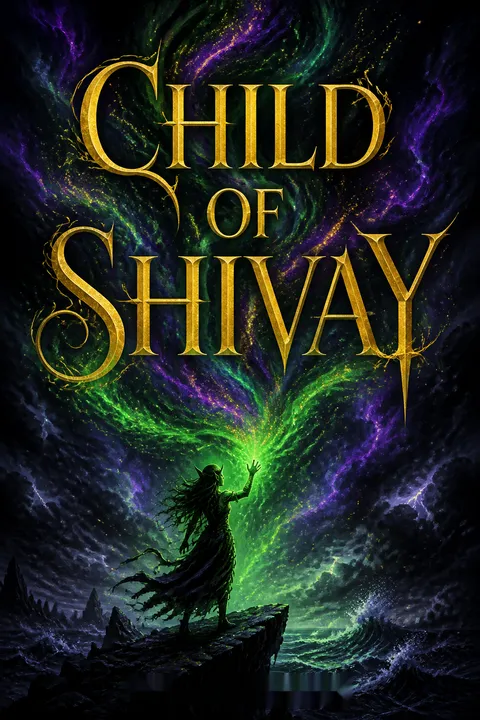
Child of Shivay treats identity as a political inheritance before it treats it as a private mystery. Shivaria is trained to see herself as La’tari’s instrument, and her nightmares, mixed ancestry, and unusual connection to the fea are interpreted as defects rather than evidence. The competing histories of the war expose how states manufacture moral certainty: real suffering can be used to support a false account of who caused it and who benefits from it. Shivaria’s journey is therefore not a simple conversion from one nation to another. It is the painful process of judging institutions by what they do to vulnerable people, including the hungry children of La’tari and the captured fea of Brax.
The novel also distinguishes care from control. Leanna calls coercion training; Vakesh calls secrecy protection; Xeyvian’s instinct is to keep Shivaria close because he fears losing her. These motives are not identical, but the ending insists that good intentions do not cancel the other person’s right to know and choose. Shivaria’s changing relationships matter because she gradually learns to act from compassion rather than assigned usefulness. She gives an apple to a starving boy, rescues Rej, protects Riah, and eventually refuses to kill a king whose death may serve the wrong power.
The bargains give that ethical development a supernatural form. Each exchange forces Shivaria to decide under pressure, while the price remains obscure until later. Her final transformation is both liberation and another wound: she gains access to the self others have concealed, but discovers that the man she loved helped shape the concealment. Ending with her walking into Brax rather than returning to either court leaves identity unresolved in the productive sense. She has not yet found a home, but she has begun choosing the direction of her own life.
People Also Read





Characters
Shivaria
The trained bladeAn orphan raised in La’tari’s military system, Shivaria is a skilled fighter and reluctant courtly beauty whose assignment is to kill A’kori’s king. She relies on discipline, quick observation, and a practiced mask, but her recurring nightmares and capacity for attachment resist the identity imposed on her. She wants to protect her people, yet also responds to individual suffering with a compassion her training cannot easily explain. Her central conflict is not simply choosing between nations; it is learning whether the loyalties she inherited still deserve her obedience.
Xeyvian
The guarded generalA’kori’s battle-hardened general, Xeyvian is watchful, strategic, and deeply protective of the people under his care. His distrust of strangers comes from a long history of war, but he is capable of revising his judgments when Shivaria’s actions challenge them. He values responsibility and loyalty, sometimes expressing care through overprotection before he can articulate what he fears. His attraction to Shivaria is inseparable from his wish to keep her safe, a wish that tests whether protection can respect another person’s choice.
Vakesh
The shadow tutorVakesh is Shivaria’s former teacher in stealth and a rare source of warmth in her severe upbringing. Patient, teasing, and observant, he encourages her to learn beyond the limits set by her other instructors. Their friendship becomes foundational because he treats her as a person rather than a weapon, even when he remains guarded about his own history. He understands the dangers of intimacy and secrecy, but his protective instincts can make him decide what another person is ready to know.
Awri
The generous illusionistAwri is a powerful feyn with an illusion gift, a close friend of the king, and the person who first welcomes Shivaria into A’kori’s social world. Warm and lively, she combines genuine kindness with a sharp ability to organize people and get what she needs. Her devotion to her brother and mate makes her fiercely loyal, while her willingness to befriend a foreigner shows an openness uncommon in a society shaped by war. She wants connection to be honest, which makes secrecy between friends especially difficult for her.
Leanna
The iron mentorLeanna rescues Shivaria after the destruction of her childhood home and raises her according to the demands of the La’tari crown. A disciplined trainer and political operator, she prizes usefulness, beauty, and control, treating vulnerability as a liability to be corrected. Her care is real but conditional, expressed through preparation and command rather than comfort. Leanna’s influence leaves Shivaria highly capable and intensely guarded, while making it difficult for her to distinguish protection from possession.
Felias
The courtly uncleFelias presents himself as Shivaria’s wealthy uncle and helps her enter A’kori’s elite circles. Charming and socially deft, he knows how to use hospitality as both welcome and strategy. He offers information selectively, guiding Shivaria toward useful people while keeping some of his own commitments private. His affection for her coexists with political calculation, making him a valuable but not entirely transparent guide.
Riesh
The gift amplifierAwri’s brother and a trusted royal ally, Riesh has a gift that can strengthen or suppress another person’s power. He is perceptive, sociable, and often amused by the clashes between Shivaria and Xeyvian. His loyalty to his sister and the king gives him a strong sense of duty, while his curiosity makes him willing to test assumptions. He is one of the first A’kori figures to take Shivaria’s fighting ability seriously.
Kishek
The sleepless healerA trusted member of the king’s circle, Kishek is quiet and thoughtful, with a gift that can help others in ways he cannot always use for himself. He makes herbal sleep remedies and understands the persistence of war trauma. His bond with Awri grounds their household in tenderness, while his habit of pushing beyond his own limits reveals the danger of defining care as self-sacrifice.
Bront
The retired sparring masterA scarred former general, Bront trains Shivaria in combat and becomes her most reliable early teacher of physical skill. Blunt and disciplined, he offers respect through challenge rather than praise. Their dawn sparring gives Shivaria a way to manage the pressure of her nightmares while strengthening the very abilities her mission will demand.
Bagya
The bargain-making croneBagya appears when desperation has narrowed Shivaria’s choices, offering aid in exchange for an obscure part of the truth binding her. She is unsettling because she never explains more than the bargain requires and treats a person’s unrecognized identity as a negotiable thing. Her presence connects Shivaria’s childhood crisis to the later revelation of what she is, while raising the question of whether freedom can come from surrendering a lie.
Tig
The bold wood spriteTig is an outspoken wood sprite who attends Shivaria and uses her knowledge of plants and the forest to help her. She is protective of her sister, suspicious of outsiders, and direct in a way that cuts through courtly evasions. Tig’s growing presence gives Shivaria access to the language and customs of the fea, while their companionship offers an alternative to the political bonds surrounding her.
Eon
The shy spriteEon is Tig’s more timid sister, initially wary of Shivaria but increasingly willing to share her space and language. Her caution makes her trust meaningful rather than automatic. Eon is closely connected to the woodland and its hidden community, and her affection for her mate shows the tenderness beneath the sprites’ sharp teeth and playful manner.
Rej
The rescued wood spriteA wounded male wood sprite held aboard a La’tari ship, Rej is frightened and defensive after captivity. He responds to Shivaria when she speaks his language, showing that trust can cross a barrier her training had taught her to ignore. His rescue becomes a test of whether Shivaria will act for the fea even when doing so endangers her cover.
Riah
The scarred lieutenantA disciplined A’kori lieutenant, Riah is an accomplished fighter and a perceptive judge of skill. She trains Shivaria, challenges her evasions, and becomes a frank companion who can laugh at her without underestimating her. Her loyalty to the general and the palace does not prevent her from forming an independent view of Shivaria.
Toren
The scarred commanderToren commands A’kori forces and carries visible scars from his history with La’tari. Suspicious and severe, he values discipline and the lives of those under his command. His guarded manner is balanced by a practical respect for service and fairness, and he is unwilling to treat Shivaria as harmless simply because she appears to be a court guest.
Nurai
The ancient confidanteNurai is an ancient feyn and a longtime friend of Xeyvian’s, carrying memories from before the wars that shaped Shivaria’s world. Composed and perceptive, she is selective about what she reveals and alert to the power hidden in personal bonds. Her recollections connect present political conflict to the first divisions among the feyn.
Vos
The vengeance-driven VatrukeVos is an ancient and formidable feyn whose grief and anger have hardened into a pursuit of power and revenge. Her attachment to her family gives her a private tenderness, but it does not soften the danger she poses to those she blames for her losses. She believes the world’s old order was unjustly taken from her and acts as though restoring it can justify almost any cost.
Nix
The brutal Vatruke brotherNix is a physically imposing member of Vos’s circle, confident in his strength and quick to use it against others. His certainty that power grants permission makes him an immediate threat wherever he appears. He represents the Vatruke’s more openly coercive approach, in contrast to the patient disguises and political schemes used by their allies.
Arda
The hidden conspiratorArda is a Vatruke ally with a gift that can conceal people and activity from view. He moves quietly through political spaces, helping the faction remain difficult to locate. His connection to the other Vatruke is longstanding, and his caution makes him less visible than their more aggressive members.
Siserie
The rejected court beautySiserie is a striking feyn woman who pursues Xeyvian and resents Shivaria’s place in his life. Her beauty and social confidence conceal a capacity for manipulation and anger. She is accustomed to being desired, and her difficulty accepting rejection reveals how easily entitlement can masquerade as affection.
Ishara
The ambitious noblewomanIshara belongs to a powerful A’kori family with aspirations near the throne. Polished and socially skilled, she understands how to turn a gathering into a contest for influence. Her ambition makes her dangerous not because she is openly violent, but because she is willing to align herself with people whose aims exceed ordinary court rivalry.
Media
The keeper of memoryMedia is an elderly human from La’tari who has lived in A’kori for decades and helped raise Awri and Riesh. Warm, blunt, and well informed, she challenges Shivaria’s inherited history with accounts of the Sundering and the Vatruke. Her own losses give her no reason to romanticize war, but she refuses to let grief become an excuse for repeating falsehoods.
The A’kori king
The absent sovereignThe A’kori king is the target of Shivaria’s mission and the absent center of court politics for much of the story. Rumored to possess a rare mind-bending gift, he has kept away from public view for decades while receiving visitors from La’tari. His choices affect both the treaty and the safety of the fea, even before Shivaria has a chance to meet him.
Plot Devices
The fea bargains
Price hidden in mercyBagya and the other fea offer help in exchange for something that may not be clear to the person agreeing. Shivaria accepts bargains to save Vakesh and later to restore Xeyvian’s power, then faces a final exchange that changes her understanding of herself. The bargains turn urgent choices into long-running consequences and make consent more complicated than a simple yes. Each one asks what a person is willing to give up before they know its value.
The divided veils
A world split into fiveThe Sundering divides Terr’s soul into five adjacent realms, leaving the feyn with only a fraction of their former power and reshaping the world’s history. La’tari’s people inherit a different account of what happened than A’kori’s, and those competing memories feed generations of war. As Shivaria uncovers the truth, the veils explain why knowledge, power, and even the meaning of a species depend on where one stands.
The recurring nightmares
A buried self callingShivaria’s repeated dreams of a murdered woman, a dying man, and a pursuing demon begin as an affliction she manages through sparring, blades, drink, and herbs. Their worsening follows her first bargain with Bagya, while fragments of unfamiliar names and images surface as her identity becomes harder to conceal. The nightmares dramatize a conflict her conscious mind cannot yet interpret: she is fighting against memories and powers that belong to her own history.
Feynstone
A weapon against the oldFeynstone is an exceptionally rare material that draws in light and can kill even powerful feyn. Xeyvian gives Shivaria feynstone daggers so she can defend herself, not knowing how decisive they will become. They help her survive the Vatruke attack, but their presence also marks her as a serious threat. The stone is both protection and warning: a tool of defense that makes violence easier, and an object whose significance depends on who holds it.
The hidden identity
One man, two appearancesShivaria knows Vakesh as her shadow tutor and old friend, while A’kori knows Xeyvian as its formidable general. Their different appearances and roles allow the same man to move through her life without her understanding the connection. This concealment gives him access to Shivaria’s trust, but it also makes his protection inseparable from deception. The reveal at the end forces her to reinterpret years of training, intimacy, and political choices.
Download PDF
Download EPUB
.epub digital book format is ideal for reading ebooks on phones, tablets, and e-readers.








